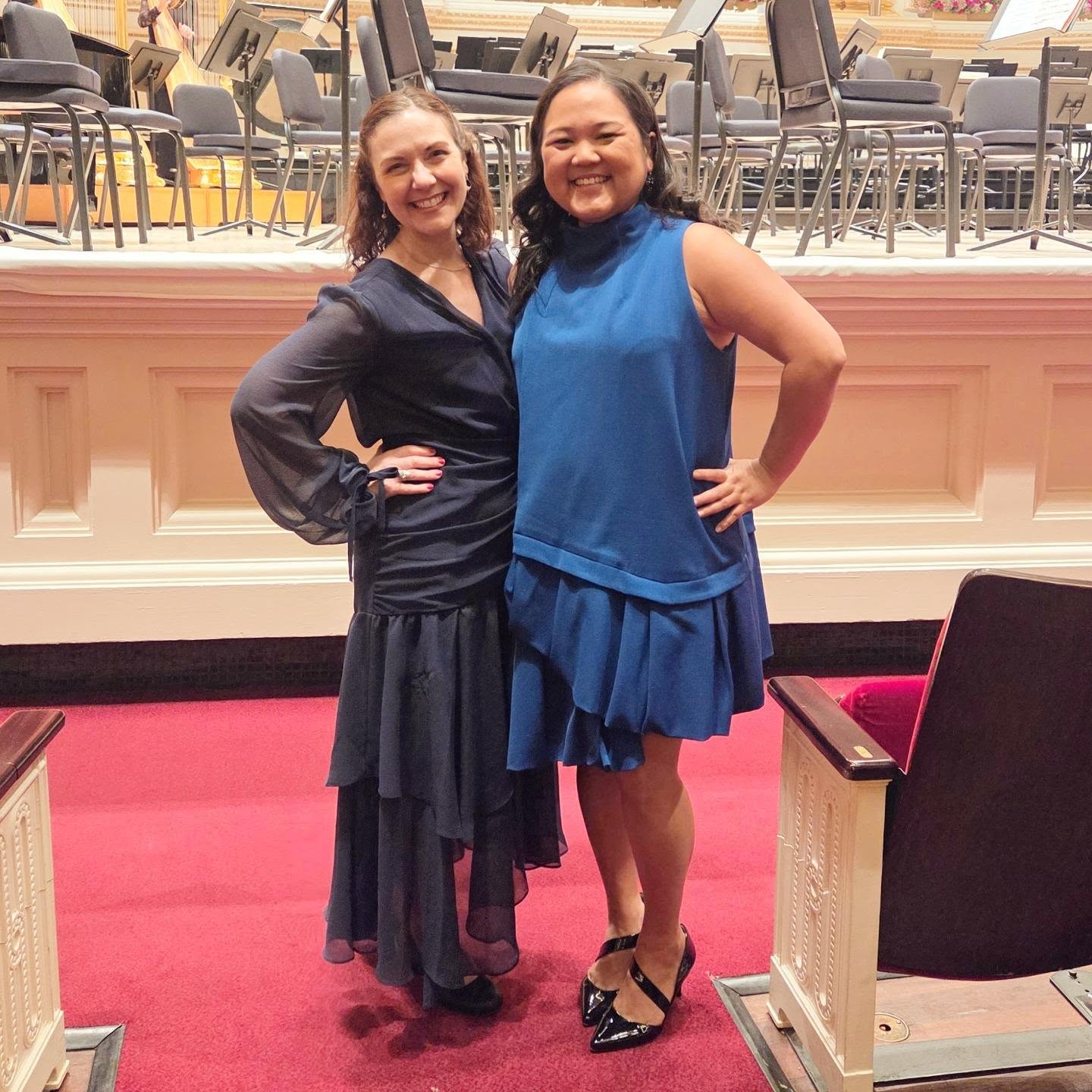
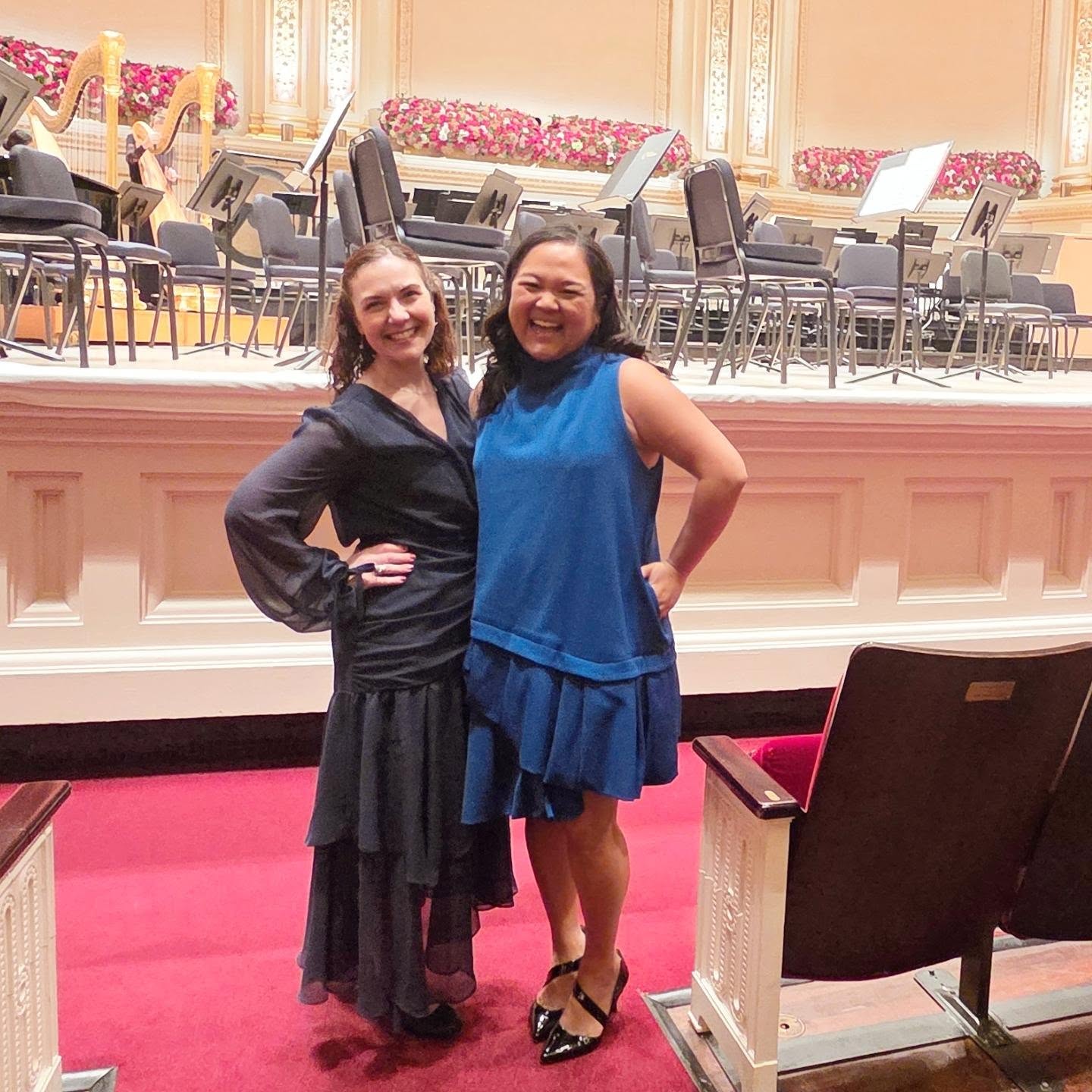
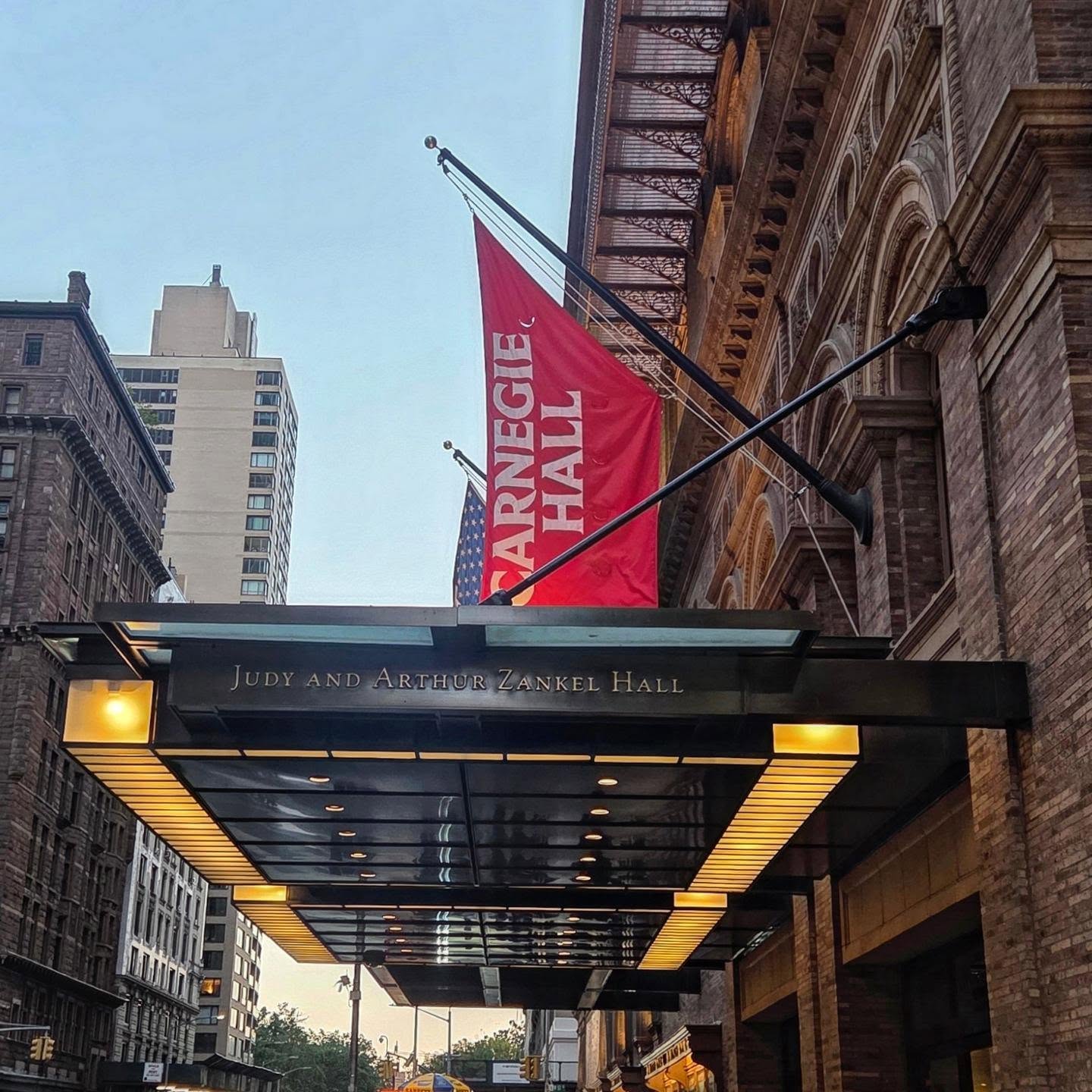
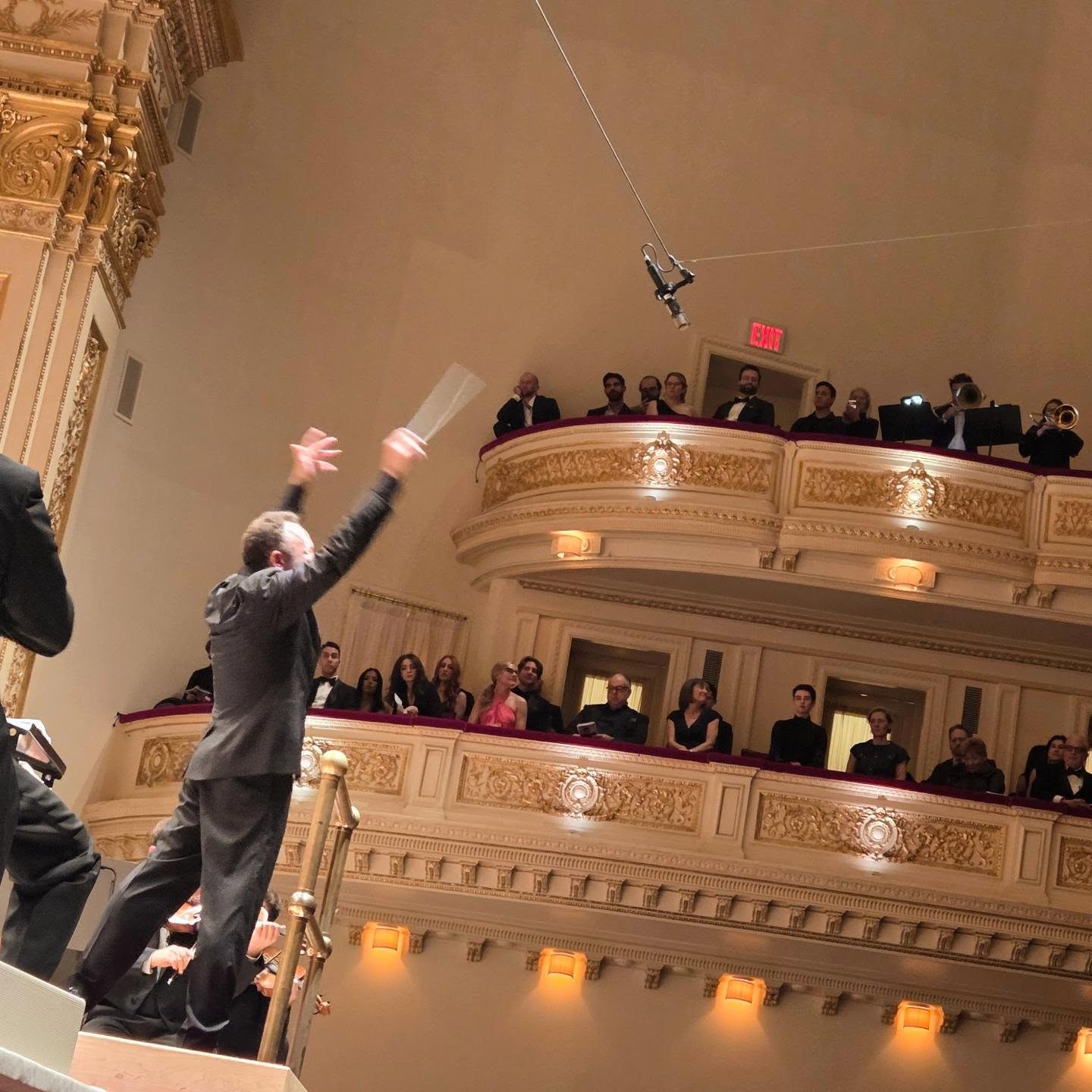
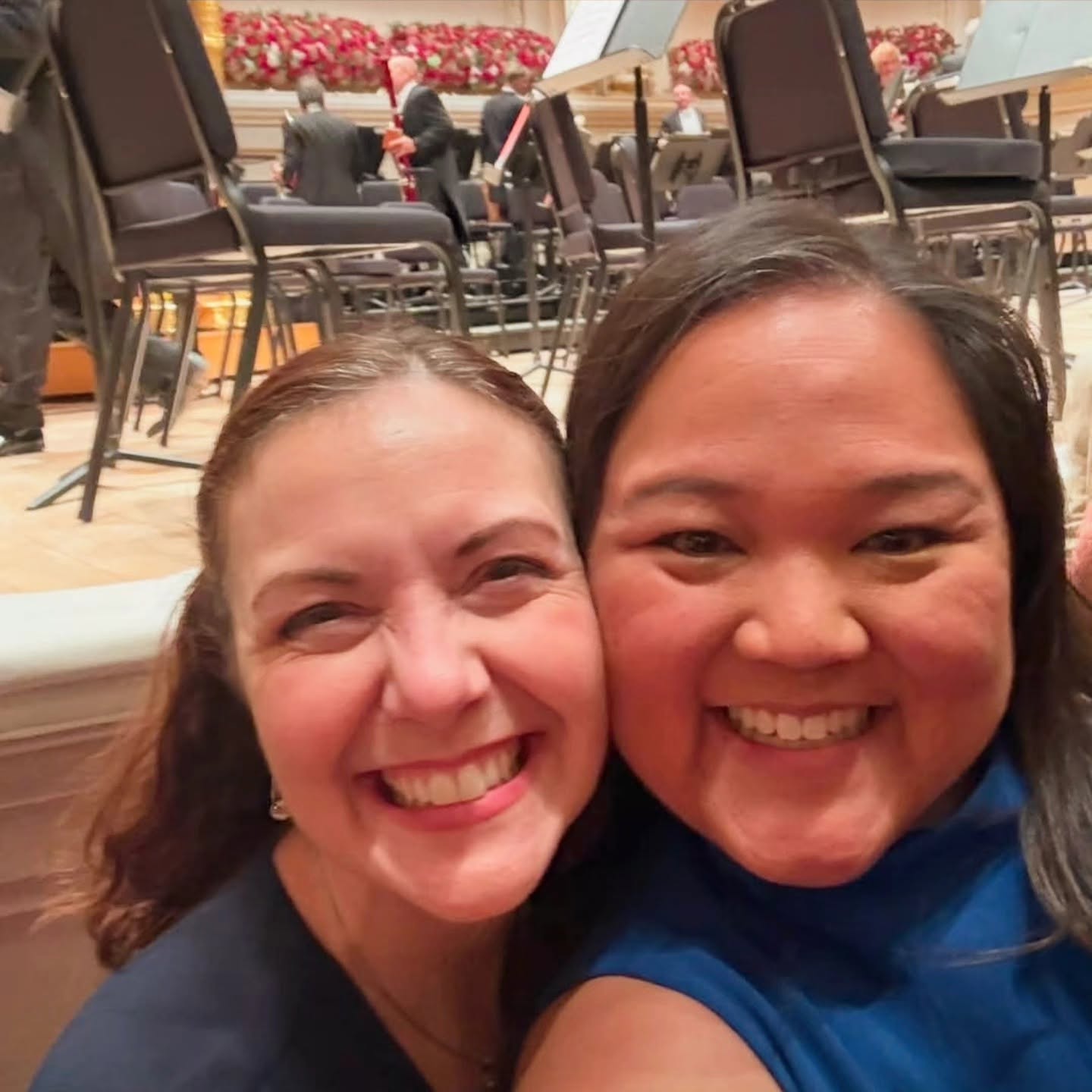
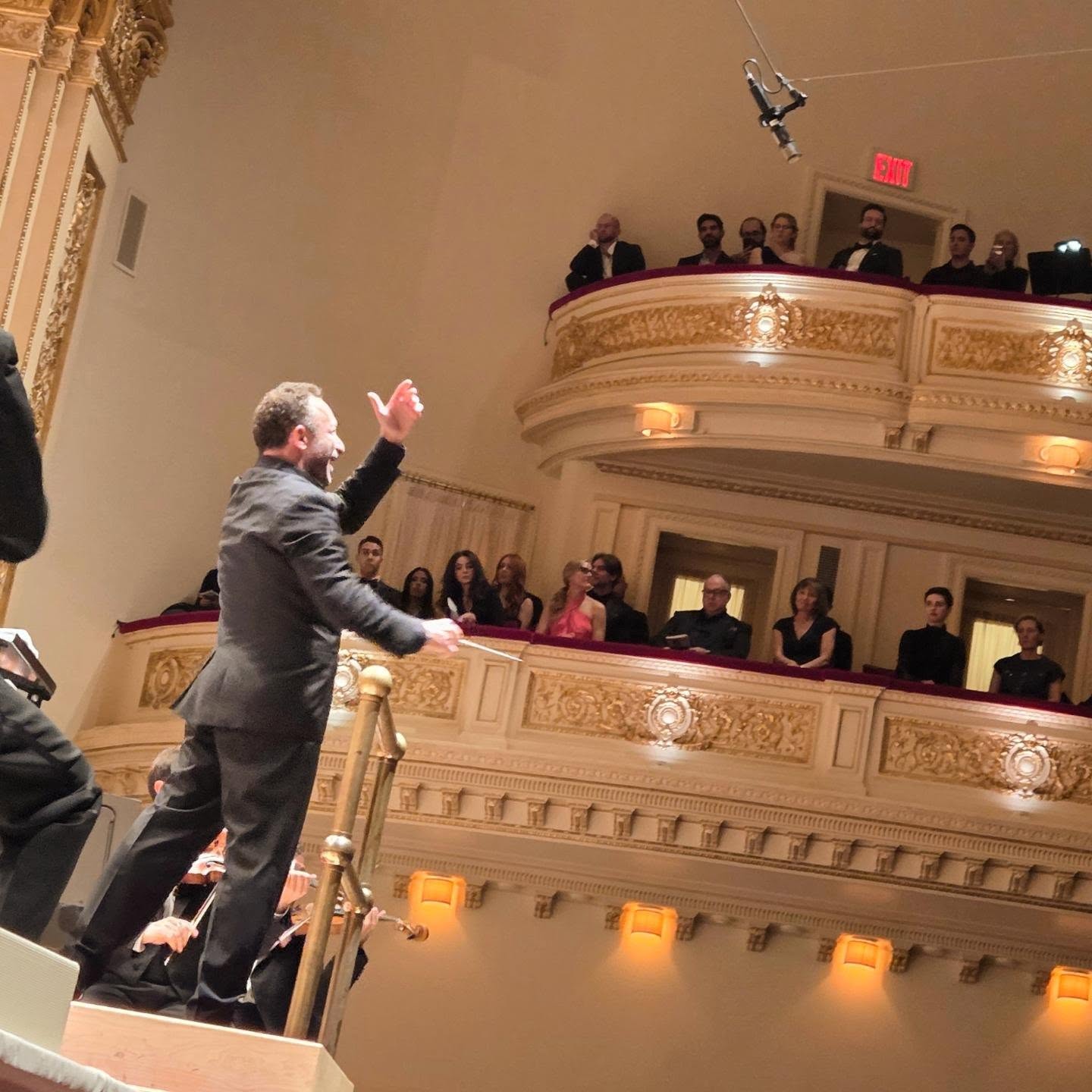
It’s always such a special experience to feel music as well as hear it. That’s what happened at Carnegie Hall‘s opening night this week when I sat in the front row with my fabulous friend, Tara. The Berlin Philharmonic was conducted by Kirill Petrenko with Jonas Kaufmann as the soloist. Because we were sitting so close, we could see every expression and feel the emotion from Petrenko and every performer on the stage. We were immersed in the physicality of their performance, feeling their joy, pain, regret, and inspiration.
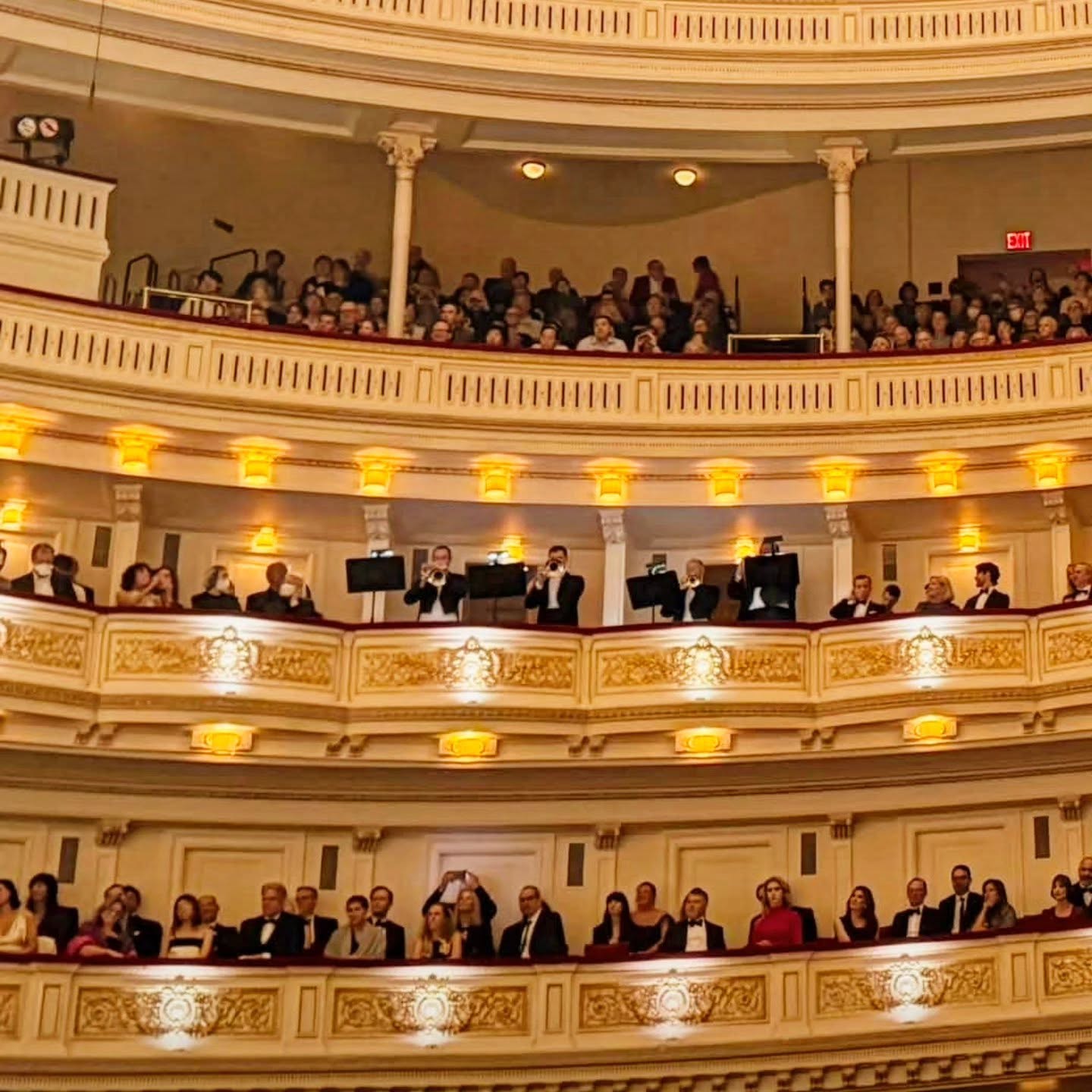
While I loved every piece, the one that still has me smiling is Pini di Roma (Pines of Rome) by Ottorino Respighi. I had never heard of the piece or the composer. It premiered in the U.S. 100 years ago at Carnegie Hall, performed by the New York Philharmonic. Its 4 sections are alternately playful, solemn, wonder-filled, frightening, and triumphant. To close out the piece and the performance, horn players were staged in the balcony of the Hall, announcing the hope and victory of better days. My eyes were misty and so were Tara’s. The audience jumped up for a standing ovation. Petrenko was thrilling to watch. Smiling and cheering for the orchestra members, and having them acknowledge the praise, elevated the whole evening for us.
I feel lucky to work for an organization that gives people this kind of experience—one that stays with them long after the final note, an organization that connects people through music, an organization that is an instrument of peace, awe, curiosity, and sheer happiness.
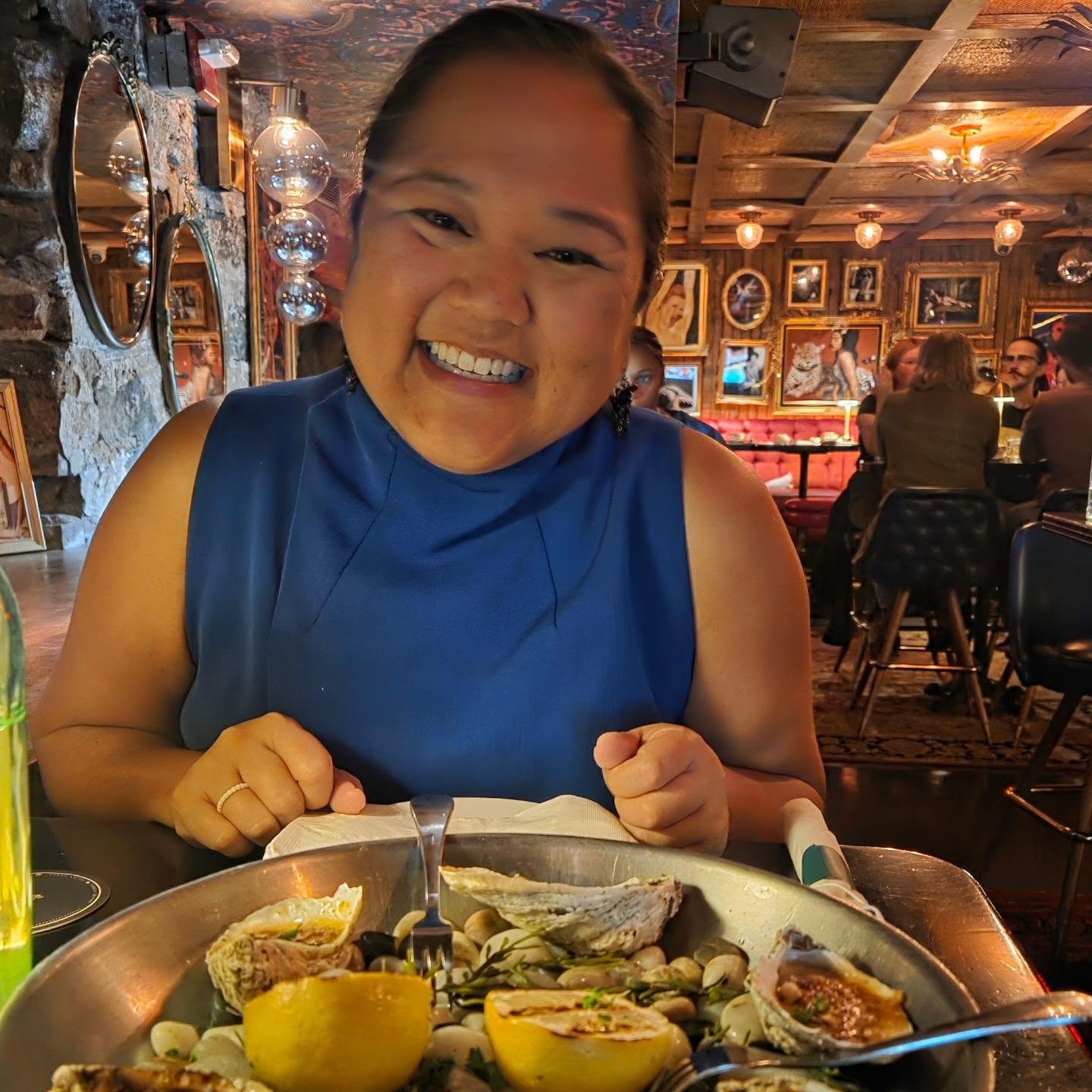
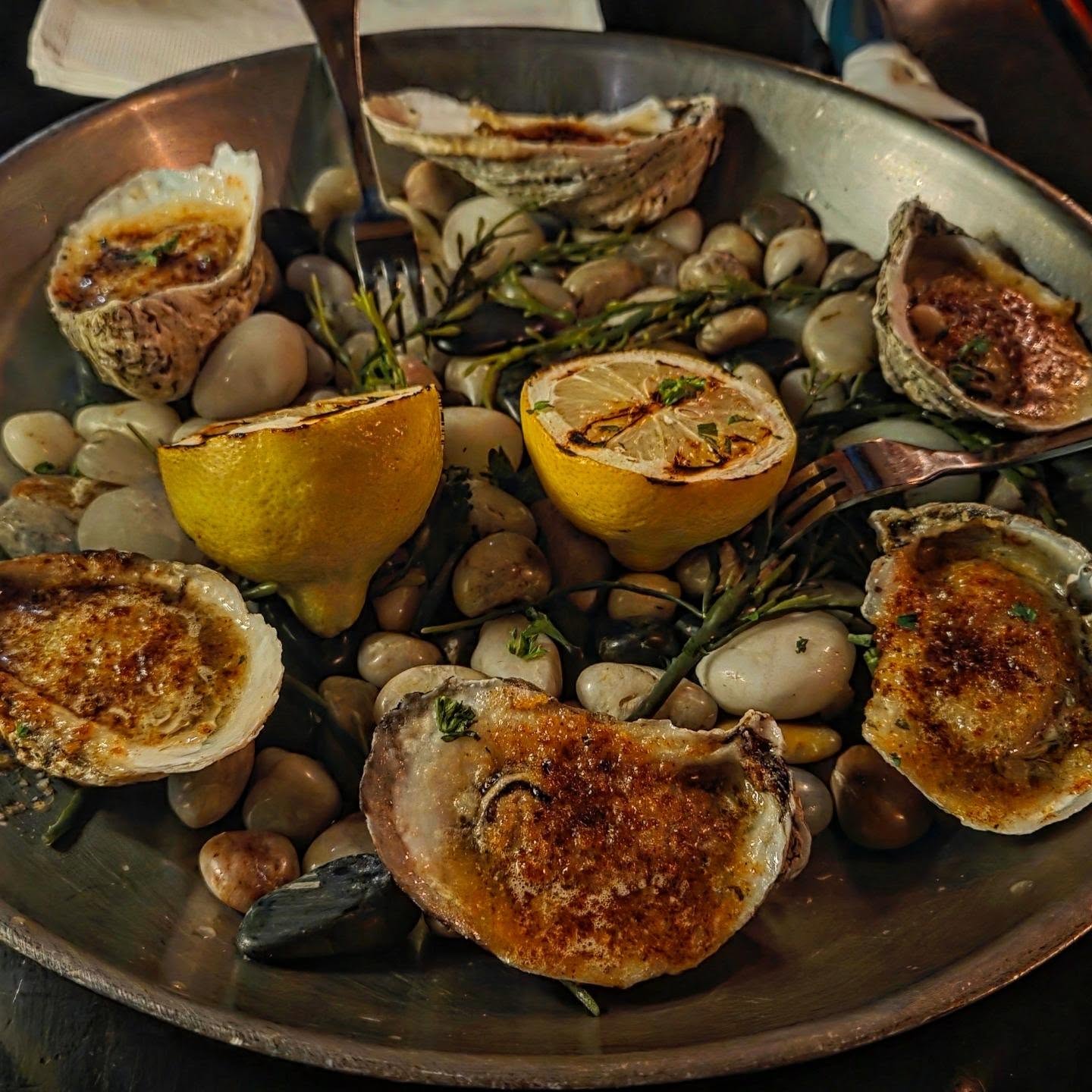
(And of course we had to round out the evening with delicious charbroiled oysters and NA prosecco at Tanner Smith’s, one of my favorite places in the neighborhood!)
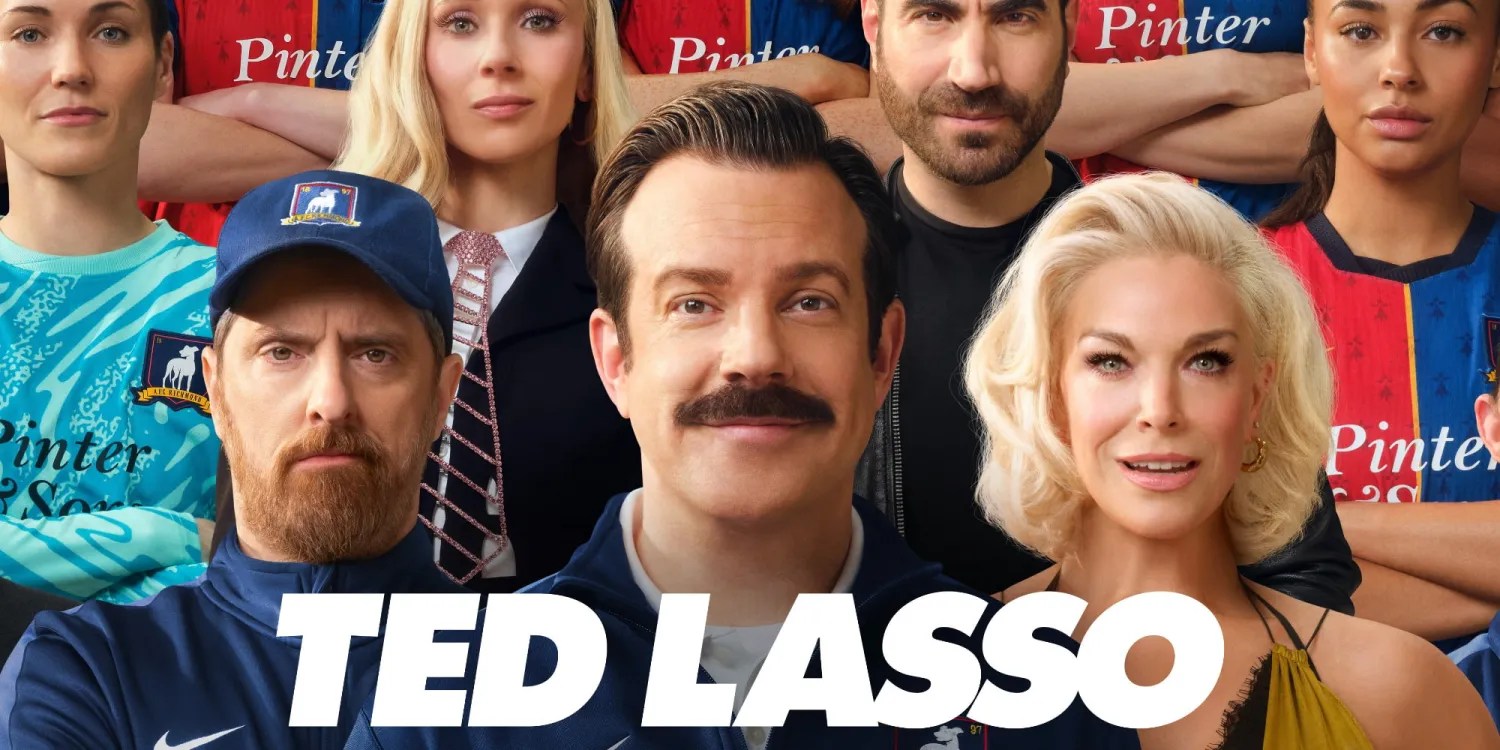
With the premiere of the 4th season of Ted Lasso launching today on Apple TV, millions of us are tuning back in for a dose of something that feels increasingly rare in the real world: unbridled optimism, radical empathy, and a deep commitment to collective care.
At first glance, a show about an American football coach running an English soccer team feels like pure entertainment. But at its heart, Ted Lasso is a masterclass in human connection. When we talk about building resilient cities, adapting to a changing world, rewilding, or strengthening our neighborhoods and ecosystems, we often focus on physical and tactile systems we can see. But none of those matter if we don’t have the trust and love that form the foundational connections to hold us together in both joyful and difficult times.
Ted and the Richmond crew give us a living playbook for how to care for our communities and each other. Here is a look at the show’s wisdom on leadership, cooperation, mental health, friendship, and why work must be about more than trading hours for a paycheck.
1. Leadership: Be Curious, Not Judgmental
“Guys have underestimated me my entire life… and it used to really bother me. Then one day, I was driving my son to school, and I saw this quote by Walt Whitman, and it was painted on the wall there. It said, ‘Be curious, not judgmental.’ I like that.” — Ted Lasso, Season 1, Episode 8 “The Diamond Dogs”
Ted’s famous dart-game ethos is the ultimate lesson for navigating complex times. When faced with opposition or someone we just don’t understand, our knee-jerk reaction is often to either dismiss their point-of-view or try to win the argument.
True leaders lead with inquiry instead of authority. Whether you’re managing a team at work or organizing a community event or collaborative creative project, leading with curiosity lowers defenses and opens the door to genuine connection. You can’t build a strong community if you’ve already decided who someone is before listening to their story.
2. Cooperation: Build for the Team, Not the Ego
“For me, success is not about the wins and losses. It’s about helping these young fellas be the best versions of themselves on and off the pitch.” — Ted Lasso,Season 1, Episode 3 “Trent Crimm: The Independent”
Richmond doesn’t succeed because one star player carries the team; they succeed when every person—from the star striker to the kit man to the back office team members—recognizes their worth and supports the collective whole.
In community life, ego breaks things apart. Real cooperation requires psychological safety: creating an environment where people feel safe to make mistakes, speak up, and bring their full selves to the table. When Jamie Tartt learns to pass the ball instead of hogging the spotlight, the entire team rises. When everyone feels ownership over the group’s wellbeing, the whole neighborhood thrives. (This is also the leadership mindset of Jalen Brunson as the captain of the Championship New York Knicks basketball team – more on that in a forthcoming post!)
3. Work as Purpose: Life Is Too Short to Stay Miserable
Ted: “Why the heck weren’t you at the press conference?” Trent: “Because I am no longer a reporter. I was fired when they found out I revealed an anonymous source.” Ted: “Oh, snap. I… I didn’t say anything, I promise.” Trent: “No, I know, Ted. I did. I’m looking for something different. Deeper.” Season 2, Episode 12 “Inverting the Pyramid of Success”
A heartbreaking reminder crossed my inbox: a long-time colleague at work who retired in 2019 passed away this week. He got just seven years in retirement. None of us know how much time we have on this planet, and trading our most precious, non-renewable resource—time—for a job that drains our soul is not only a shame, but wasteful. We deserve so much better. We deserve work that fills us up.
Every central character on Ted Lasso reaches a moment where staying in a toxic, comfortable, or soul-crushing situation threatens their spirit, forcing them to make a terrifying leap:
Rebecca Welton transforms AFC Richmond from a weapon of revenge against her ex-husband into a sanctuary of collective joy, choosing vulnerability and genuine leadership over bitterness and anger.
Keeley Jones walks away from being a model to work in PR that ultimately leads to her building her own PR firm from scratch, trusting her innate emotional intelligence.
Nate Shelley has to confront his desperate desire for status and unlearn the belief that title equals worth before finding his way back to honest connection. It’s a rocky journey for him, and he makes some difficult and painful turns before learning the deeper lessons.
Roy Kent has to retire from playing the game that defined his entire identity. He mourns that loss, and discovers who he is and what he’s capable of when the crowd stops cheering.
Ted leaves his comfort zone in the U.S. to step into an environment where everyone expects him to fail, prioritizing human growth over safe routine, all while navigating massive changes in his family life and confronting his past and his own mental health challenges.
When a job becomes a source of misery rather than purpose, leaving isn’t just a career move—it’s an act of self-preservation, self-care, and self-love. Work should be a place where we grow, connect, and serve others, not a place where we park our spirits while waiting for life to start.
4. Mental Health: Carrying Heavy Loads Together
“I promise you there is something worse out there than being sad, and that is being alone and being sad. Ain’t nobody in this room alone.” — Ted Lasso, Season 1, Episode 10 “The Hope that Kills You”
Perhaps the most radical move the show ever made was pulling back the curtain on Ted’s signature relentless optimism to reveal his deep pain and the mental health challenges he’s been hiding his whole life. Behind the jokes and baked goods, Ted was carrying the devastating grief of his divorce, the heartbreaking distance from his son Henry back in Kansas, the loss of his father in tragic circumstances, and severe panic attacks that left him incapacitated on the pitch, in his office and locker room, and at home.
Ted’s journey to his therapy sessions with Dr. Sharon Fieldstone teaches us that toxic positivity and denial won’t save us. Real resilience isn’t pretending everything is fine when your world is falling apart; it’s having the courage to say, “I’m not okay, and I need help.”
We cannot build strong, caring communities with exhausted people who feel forced to suffer in silence while wearing a brave face that’s just a mask. Normalizing therapy as a resource to help us speak openly about anxiety and accept care when we’re down to nothing aren’t signs of failure—they are how we survive and stay whole (or become whole again) so we can thrive.
5. Friendship: The Power of the “Diamond Dogs”
“To believe in yourself, to believe in one another. Man, that’s fundamental to being alive.” — Ted Lasso,Season 3, Episode 5 “Signs”
Adult friendship is often treated as a luxury in a world obsessed with professional output. But Ted Lasso shows us that intentional, vulnerable friendship is a vital life-support system.
When Ted, Higgins, Coach Beard, Nate, and Roy gather as the Diamond Dogs, they don’t meet to give unsolicited advice or fix each other’s problems with aggressive solutions. They meet to listen, offer perspective, hold space, and normalize each other’s emotional struggles. (Of course, there’s a big plot twist late in Season 2 that shows what happens when that trust is broken.)
In a world plagued by an epidemic of loneliness, building your own Diamond Dogs—a circle of friends or peers where you can drop the tough exterior and speak honestly—is one of the most revolutionary acts of community care available to us.
6. Being in Community: Belonging Over Fitting In
“I suppose the best brand is just being yourself.” — Ted Lasso, Season 1, Episode 3 “Trent Crimm: The Independent View”
True community isn’t about conformity or changing who you are to be accepted; it’s about creating a space where everyone belongs as their authentic selves. Ted doesn’t try to make Roy Kent act like Keeley, or Sam act like Jamie. He honors their distinct backgrounds, cultures, and personalities while weaving them into a cohesive support system.
Building community in our neighborhoods and workplaces works the exact same way. It isn’t about flattening our differences—it’s about building a big enough table so that everyone’s unique lived experience strengthens the whole.
7. Career Resilience: How to Bounce Back from Difficulty
“You know what the happiest animal on Earth is? It’s a goldfish. You know why? It’s got a 10-second memory. Be a goldfish.” — Ted Lasso, Season 1, Episode 2 “Biscuits”
In our careers and personal growth, we often carry the weight of past missteps, failed projects, or awkward interactions like heavy baggage. Ted’s advice to Sam Obisanya after a tough play is a lesson in professional grace and resilience.
Progress requires letting go of perfectionism. The most fulfilling, impactful careers aren’t built by people who never make mistakes; they’re built by people who process a setback, learn the quick lesson, forgive themselves, and get right back to lifting up the team.
Takeaways
Resilience isn’t just about what we build—it’s about the love, care, courage, and camaraderie we offer each other while building it.
Reframe Your Time: Take an honest audit of where you spend your energy this week. If you’re staying in a toxic situation out of habit or fear, start exploring what a leap toward purpose might look like.
Practice Radical Curiosity: The next time you encounter a perspective in your workplace or neighborhood that frustrates you, pause before reacting. Channel your inner Ted and ask one genuinely curious question to understand where they are coming from.
Form Your Diamond Dogs: Create a safe space with a few trusted friends, neighbors, or colleagues where you can speak openly about your personal challenges without fear of judgment.
Normalize the Check-In: Make a practice of reaching out and checking in with friends or colleagues so that if and when difficulties arise for them, they know you are someone they can turn to for support.
Like Ted says, taking on a challenge is a lot like riding a horse. If you’re comfortable while you’re doing it, you’re probably doing it wrong. Let’s keep leaning into the uncomfortable, beautiful work of caring for one another—and making every moment count.
At the Milan Olympics, ice skater and gold medal winner, Alysa Liu, proved we don’t have to carry the heavy expectations others try to place on us. We can choose joy on our own terms instead.
Jaybeeinbigd22, CC0, via Wikimedia Commons. Link to image.
The typical Olympic broadcast follows a strict script. The music swells with drama. Commentators emphasize the crushing weight of the moment, the years of agonizing sacrifice, and the unbearable pressure on the athletes. We watch the screen and expect to see stress etched into every competitor’s face. We treat suffering as the ultimate proof of dedication.
Then Alysa Liu stepped onto the ice in Milan.
The media desperately wanted the classic, grueling redemption arc. They wanted the tears and the drama of a comeback. Alysa simply declined to participate. She refused to let the sport, the commentators, or anyone else tell her how to feel.
When interviewers tried to hand her a narrative of crushing pressure, she set a firm boundary. She clarified that their anxiety belonged to them, not to her. She left them with their own heavy baggage and skated with pure joy, freedom, and love for the sport.
She performed her way.
The Performative Stress Trap
That level of boundary-setting offers a profound lesson for all of us, especially in our professional lives.
Every day, people try to hand us their stress. A chaotic workplace demands our panic. A frantic project timeline insists we sacrifice our well-being. We absorb this urgency as if it is mandatory. People tell us this is the job and there is no other way; it is a job after all, right? We learn to perform stress to prove we care about our jobs, our communities, and our goals. If you aren’t exhausted and worn out, you don’t care enough about anything.
Alysa proves this burden is optional. You can care deeply and perform at the highest level without letting anxiety consume you.
Bring the Olympic Ice to the Office
Figure skating is Alysa Liu’s actual job. She treats it with immense respect and masters her craft, but she refuses to let the job dictate her emotional state. We can apply this exact framework to our own careers to protect our energy and reclaim our joy.
Reject the manufactured panic: Colleagues and clients often treat minor delays as catastrophes. You do not have to participate in their panic. You can calmly solve the problem without absorbing the frantic energy.
Decouple exhaustion from value: Corporate culture often rewards burnout as a badge of honor. Challenge that standard. You can deliver exceptional results on a project while maintaining firm boundaries around your evenings and weekends.
Treat joy as a performance enhancer: Alysa performs better because she skates free of anxiety. We execute our best ideas, strategies, and creative work when we feel relaxed and engaged, not when we feel terrified of failure.
We often believe that caring about our work requires us to suffer for it. We confuse anxiety with dedication.
This week, look closely at the emotional loads you carry at work. Are they yours, or did someone else hand them to you? You have the power to reject the default setting of suffering. You can choose to execute your work, live your life, and navigate your challenges with relaxation and fun.
You get to decide how you experience your own career. We are all a work in progress, and there is a freedom in knowing, living, and working with that truth. Your freedom and joy can and will inspire others. Alysa proved that to all of us. Let your own light shine, and go out there and be a light for others.
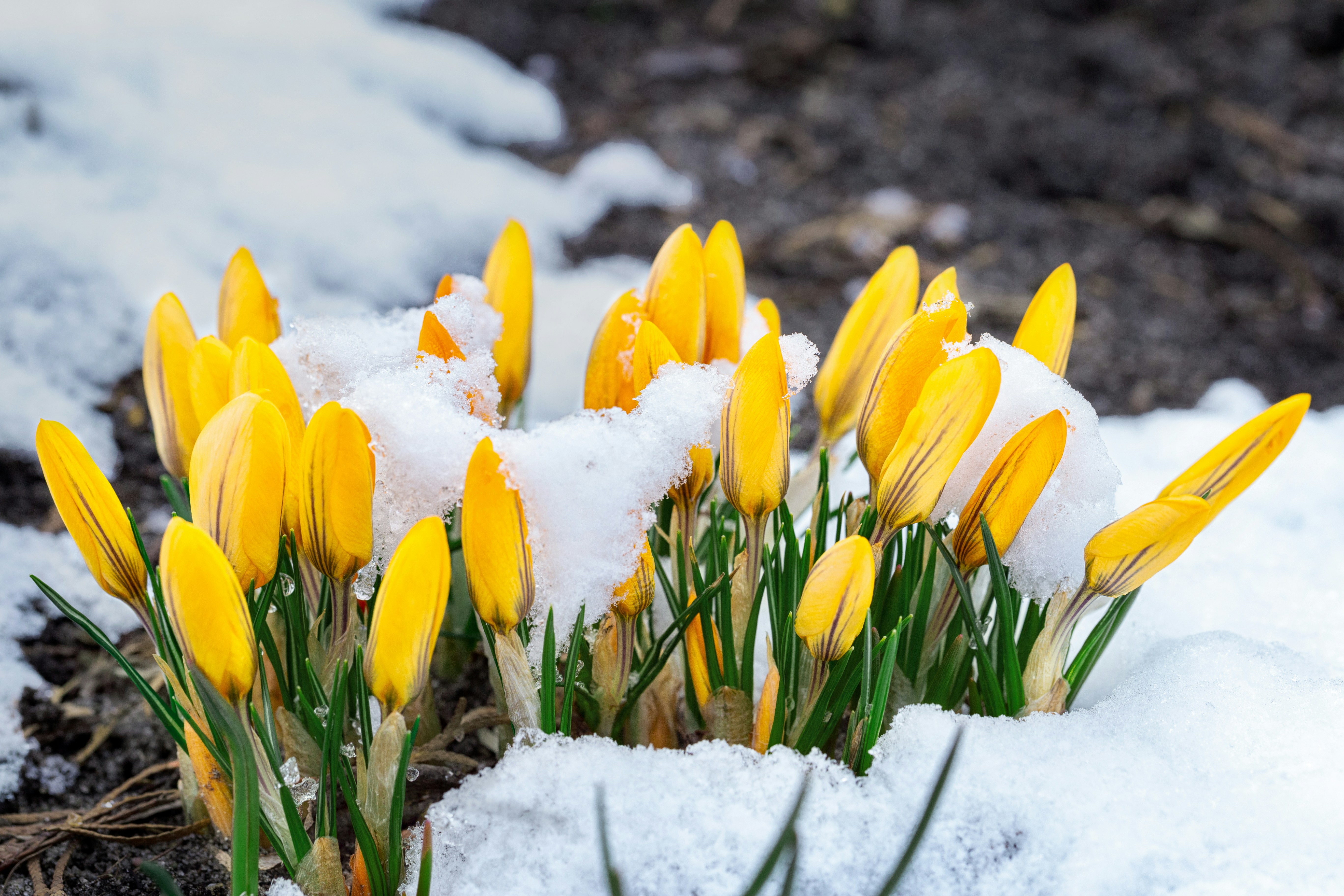
We think spring begins when the first flower blooms. But biologically, it starts right now—in the freezing cold.
If you’ve spent this winter in New York City like me, you’ve likely been dreaming of the arrival of spring during the freezing, snowy, and gray days. You also probably shook your fists at the sky when the groundhogs saw their shadow on February 2nd.
“When will this end?” you thought.
But if you ask a sugar maple or a wildflower seed, they will tell you that spring started while the snow was falling.
We tend to measure the season by what we can see—the green bud, the crocus, the robin. But nature does her most important preparation underground, long before the visuals arrive. In fact, she uses the harshness of late winter to fuel the growth of spring. Without the present cold, there is no future warmth—literally and figuratively, for nature and for us.
Here is how nature is prepping for spring right now in this last month of winter, and what we can learn from her and translate into our own lives.
1. The Cold Is the Key (Stratification)
We often complain about the bitter cold, gray skies, and damp days of February, wishing them away. But for many native plants, this weather in this season is non-negotiable. It’s the foundation of their flourishing future.
This process is called stratification. Seeds like milkweed, coneflower, and lavender have tough outer shells that keep them dormant. They literally cannot grow until they have gone through a period of intense cold and moisture. The freeze acts as a signal, softening the shell and telling the embryo inside that it is safe to wake up.
Without the hard winter, there is no spring bloom. The obstacle is also the key that turns the lock.
2. Use the Pressure and Change (Sap Flow)
Right now, maple syrup farmers are busy. Why? Because the sap is running.
But sap doesn’t run just because it gets warm. It runs because of the fluctuation. While the shifts in transitions may drive us crazy, it’s the alternation between freezing nights and thawing days that creates pressure changes inside the sugar maple trees, acting as a natural pump to move sugar from the roots up to the branches.
The tree uses the instability of the season to fuel its growth. Being off-balance all the time helps the tree find their secure center.
The Togetherhood Takeaway
We often want to jump straight from winter rest to full-bloom success. We want the project to launch, the book to sell, or the answer to appear.
But right now, today, nature is in the stratification phase. We are, too.
If you feel like nothing is happening right now, that you’re stuck and that the world is off-kilter, or if things feel cold and hard and impossible right now in your local community and our global community, remember the seed. You aren’t stuck. You’re just softening your shell so you can break through in the days ahead as the light and warmth return.
Use this time, today, tomorrow, and the rest of this month before spring, to prepare your roots. Organizing, planning, and laying the groundwork for our future—collectively and individually—is active growth, even if no one else can see it yet.
Photo by National Cancer Institute on Unsplash. Chanelle Case Borden, Ph.D., a postdoctoral fellow in the National Cancer Institute’s Experimental Immunology Branch, pipetting DNA samples into a tube for polymerase chain reaction, or PCR, a laboratory technique used to make multiple copies of a segment of DNA.
Earlier this week, I wrote in my Togetherhood newsletter about the history and scientific research of Gila monster venom that led to Novo Nordicks’s medications Ozempic and Wegovy. This research began at the National Institutes of Health and led to some of the most profitable and promising drugs. These types of advances are now in danger because the Trump administration has frozen much of the $47 billion the US spends annually on biomedical research like this through 60,000 NIH grants.
The US houses the world’s leading medical labs that research cancer, dementia and Alzheimer’s, heart disease, child health, and diabetes to name just a few. NIH grants provide significant funding to these labs. To make sure the grants are used efficiently and ethically, there’s an extensive review process of grant applications. When the Trump administration froze the funding, they stopped all these review processes. These frozen funds also caused many research labs and universities that house them to halt hiring and PhD and post-doc admissions. Even if they released the funding today, it would take weeks or months to restart all these processes.
Additionally, freezing these funds is negatively impacting the economy and US competitiveness on the world stage. Every $1 of NIH spending generates more than $2 dollars in US economic activity. Healthcare is the biggest industry in the US. Without the foundation of NIH-funded research, the industry is in crisis. The US produces more influential health science research than the next 10 leading countries, combined. Every day that goes by, lives and livelihoods of Americans are in jeopardy. Please call your reps today and tell them to fight to restore NIH funding. Your life and the lives of those you love depend on it.
At the summit, I had the good fortune of sitting next to Neal McCarthy, Associate Director of Digital Programs at Oxfam America. I asked him what work he’s most excited about. He told me about the Digital Doughnut model, an excellent example of researchers and practitioners collaborating and building upon one another’s work to create a better world. The irony isn’t lost on me that my most valuable insight from a summit about digital technology came from sitting next to and talking to someone in-person.
Digital Doughnut Model Kate Raeworth developed the theory of Doughnut Economics. The outer ring of the doughnut consists of the ecological ceiling (maintain balance in the natural world that supports life). The inner ring of the doughnut consists of the social foundation (the minimum standards that we need to live a healthy life). The sweet spot, the doughnut itself, exists in the space between the rings where our societal needs are met, and nature’s boundaries are respected.
In their 2022 pilot workshops, Hannah and Alistair worked with digital technology professionals to:
explore a broad definition of sustainability;
look deeper into the root causes of what is going wrong and how the digital technology industry has been culpable in eroding sustainability;
imagine a better future for the industry and actions that the digital technology industry can take to create that better future for all.
The Doughnut Flower The workshop discussions and insights led to the creation of The Digital Tech Industry Doughnut Flower. It shows which social foundations and ecological ceilings were most related to the digital tech industry.
Discussion themes Three main themes were brought up in the workshops. These theme were woven throughout all of the discussions.
Issues around gender/ethnicity, especially pay inequality and exclusion. differentials of pay, but also exclusion were major concerns of participants. These issues were clearly seen by many attendees as essential — and central — to any meaningful discussion on sustainability.
Work culture was a theme, with “toxic” tech culture referred to repeatedly, as well as exploitation and overlong work hours.
Quality of life issues, and in particular our unhealthy relationship to technology that drive addiction to tech and disinformation.
Solutions The workshops then moved to discuss possible solutions. These solutions showcase four solutions of how the digital tech industry can mitigate its challenges and contribute to a more sustainable world.
Stop the relentless consumption/depletion of resources — attention-based revenue is driving the wrong behaviors.
Pointless — and endless — growth is getting us nowhere — the exponential growth bubble needs to burst.
Build things that last and can be reused — the strategy of planned obsolescence only serves shareholders and not society.
Detoxify tech culture — replace with fairness, inclusion and better ways of working.
What’s next Reading through their website, I’m considering how the Doughnut Economics model could be applied to the strategy and operations of any organization in any industry that seeks to make sustainability its foundation. In my own work at Double or Nothing Media, I’m developing a proof of concept for a new company focused on rewilding and in the research phase of developing a food waste mitigation tech platform. How might you use the Doughnut in your work? I’d love to hear your thoughts in the comments.
What would you do if the work you do right now ended tomorrow? I’ve been thinking about this question since I was at University of Cambridge / Cambridge Institute for Sustainability Leadership (CISL) in December for my Masters in Sustainability Leadership program. My wonderful friend, Karen, in my cohort found me one morning to show me a Stanford TEDx talk titled 5 Steps to Designing the Life You Want by Bill Burnett that she felt I needed to see. She was right.
The whole talk is worth watching and the part that affected me most is a future visioning exercise called 3 lives. You imagine the next 5 years of your career in these scenarios:
1. Keep doing exactly what you’re doing now and it’s going to turn out great. What does great look like? In your career and life?
2. What would you do if what you’re doing right now ends tomorrow? How would your career and life change? What would that look and feel like?
3. Now for your wildcard plan. You have enough money to pursue any career you want, and no one would laugh at you for it. What would you do? What would your life and career look like then?
Which of these lives feels like the best path? Put aside the inner critic. Which one makes you happier and more fulfilled? For various reasons, that one may not be the one you choose to pursue but having a sense of these different paths helps us get unstuck.
Futures visioning is a part of my Cambridge dissertation so doing this exercise was a part of practicing what I preach. I sat down and sketched out these 3 lives for myself. It helped me uncover hidden ideas, interests, and desires I didn’t even know I had. It also helped me realize a few things that Bill speaks to in his talk:
1. The really interesting opportunities present themselves in our periphery. They are the things we didn’t see coming and didn’t plan for. Realizing this encourages me to be open to new people, information, learnings, ideas, and opportunities.
2. Bill encourages us to look at these three lives with our head and our heart. Decisions made from your emotions are just as valid, if not more so, than those made from our logic and reasoning. Emotions have much more wisdom than we give them credit for.
3. There isn’t one way to build a life or career. We can and will grow into different lives, and that can happen at any and every age. There is no timeline that we must follow. We can trust the timing of our lives and career. Things unfold in ways we don’t always understand. That’s okay. Be open, and be prepared to be lucky.
Let me know how it goes for you if you try this exercise. I’d love to hear about what you discover and I’d also love to support your journey.
My view on the train to Bristol, UK. Photo by Christa Avampato.
It is the season of soft things. Warm tea. Thick blankets. Crackling fires. Cozy sweaters. Candle light. Woollen socks. Hugs. Laughter. Kindness. Whispers. Dreams. The world seems especially hard right now, with sharp edges that cut and harm. I find myself craving comfort, ease, and quiet. Seeking out people who exude warmth, welcome, and joy.
Our world, especially our working world, often demands structure and immutable processes. Too often telling us what is and has been must continue to be. This relentless beat can make me tired and worn. It’s in these moments that I remind myself the value of flexibility, the ability to bend so we don’t break.
We so often prize efficiency and abhor redundancy, until we recognize that nature in all her glorious wisdom has survived and thrived for nearly 4 billion years because of her integrated systems that are stronger than the sum of the parts, with pieces that back up one another so that as a united whole they can weather the storms, accommodate change, and retain balance, even and especially in crisis. And there are always storms, and change, and crises.
Nature built herself to flex, to make room, to expect the unexpected, to support. What if that became our goal, for ourselves, our organizations, our government, our world? How then might be change, grow, evolve, and be? I suspect that in this season of soft things, I may find answers to those questions by the time the light of spring returns.
“If I don’t work, I don’t eat so I have to be out here, even when there’s a flood.” This was a quote from a NYC delivery worker on the news during the September 29th, 2023 flash floods. His electric bike failed in the knee-deep water. He was pushing it against the current to deliver food.
NYC now has the largest income gap of any large city in the country — the top 20% make 53 times more than the bottom 20%. We’re failing our people with no social safety net, no protection from climate hardship, and few pathways out of their circumstances. City workers often live in temporary shelter and public housing because they don’t earn enough to make rent but residency is often required for their jobs.
This city is run by service workers. They are the lifeblood that keeps the city moving. Failing them will cause the city to crumble.
We also have the migrant crisis. Right now at the U.S.-Mexico border, the city is distributing these fliers:
I cried reading it. This has been the city of dreams for decades. Now it is the city of dreams only for those who are already of means. That cannot continue.
New York is a city of immigrants. It always has been. They enrich and enliven the social and economic fabric on which this city’s creativity thrives. Without them, we lose who we are and what we stand for.
The economics and business side of my brain spends the bulk of my waking hours thinking about how to support New Yorkers, present and future. How do we boost the economy and provide opportunity to everyone who wants to be a New Yorker? How do we rebuild this city, not just for the privileged few but for all the huddled masses yearning to be free so that everyone wins together?
The historian and storyteller side of my brain always sifts the sands of the past to see what I can find and use. As the late great John Lewis, who was at one time a New Yorker and is one of my greatest inspirations, often said, “We must make a way out of no way.”
That’s just a start of how NYC can work with nature so that everyone is cared for. There are dozens of other solutions that are relatively low-cost, efficient, and proven to clean the air, water, and land—benefits that benefit every resident, visitor, and commuter.
This doesn’t have to be a concrete jungle. It can be a green, verdant, healthy, thriving place for all beings who want to be New Yorkers. It’s going to take a massive mobilization, and the relentless pursuit to match needs with resources to transform our challenges into opportunities. We have to do this work, and we have to do it now while we still have time. I’m tired of a dirty, flooded, and unequal New York. Aren’t you? I love this city. I love New Yorkers. And I want us to do better. We have to do better, and we can—together.
This week I’m working with one of my biomimicry clients to explore the use of OpenAI, makers of ChatGPT. It has several models within it, including Davinci which we’ve found has the most detailed, natural sounding results but not necessarily the most accurate information. We are using this technology to ingest a wide variety of scientific papers and produce plain-language text that can be used by designers and engineers who want to explore nature-based solutions and biomimicry inventions and applications.
We tried five tests with different biomimicry topics. I compared the source papers and the two versions of AI-generated text to assess them. Of the five tests, four were decent first drafts that need a human editor to refine them. Most of the scientific data was presented in a plain text way that maintained accuracy and integrity. It missed some key findings that would be valuable for engineers and designers, and the tests need to be edited for clarity. It had some trouble extrapolating the information into potential biomimicry applications and nature-based solutions. In other words, it could create plain-language text based on complicated, jargon-filled text reasonably well as a first draft. It could not creatively interpret the data to imagine many new possibilities. The one failed test completely missed the mark on the main points of the scientific paper.
Overall, it was exciting to see how this innovation could democratize access to information that is concealed in jargon. As with any simplification task, the accuracy has to be evaluated by someone who can reliably translate from language that needs deep expertise to language that’s accessible to those without that expertise. Proliferation of misinterpreted, oversimplified, and inaccurate translations is a risk and a danger. We’re in the early days of this tool and it will undoubtedly improve over time.
Some have expressed concern that writers will no longer be needed and that all writers will be forced into becoming editors. As a writer and an editor, I don’t share that fear. Human creativity, ingenuity, and imagination will never be obsolete. My hope is that tools like AI-generated text will free up our time, energy, and headspace to spend more time on creative projects.