creativity

The Ted Lasso Way: Rebuilding How We Show Up for Each Other

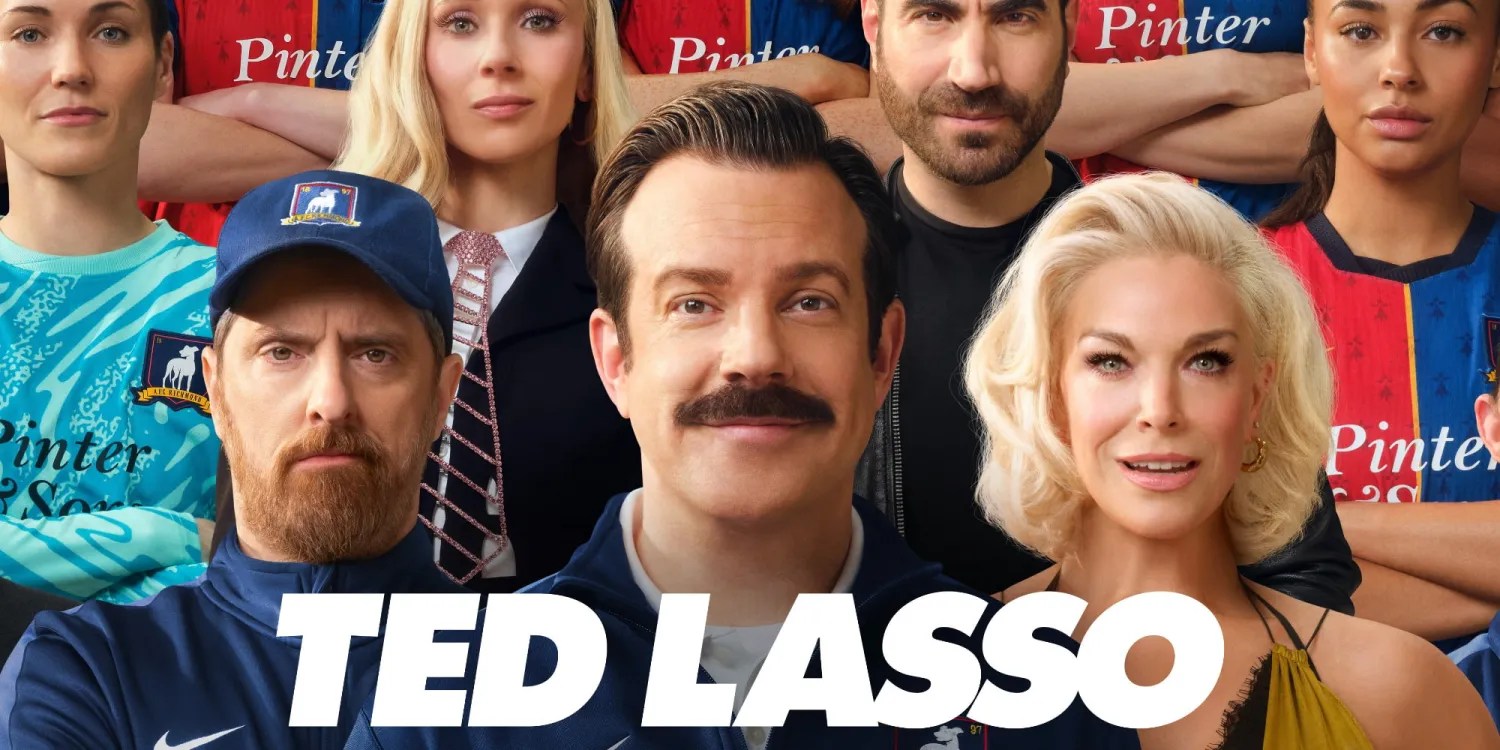
Ted Lasso. Image from Apple TV.

With the premiere of the 4th season of Ted Lasso launching today on Apple TV, millions of us are tuning back in for a dose of something that feels increasingly rare in the real world: unbridled optimism, radical empathy, and a deep commitment to collective care.

At first glance, a show about an American football coach running an English soccer team feels like pure entertainment. But at its heart, Ted Lasso is a masterclass in human connection. When we talk about building resilient cities, adapting to a changing world, rewilding, or strengthening our neighborhoods and ecosystems, we often focus on physical and tactile systems we can see. But none of those matter if we don’t have the trust and love that form the foundational connections to hold us together in both joyful and difficult times.

Ted and the Richmond crew give us a living playbook for how to care for our communities and each other. Here is a look at the show’s wisdom on leadership, cooperation, mental health, friendship, and why work must be about more than trading hours for a paycheck.

1. Leadership: Be Curious, Not Judgmental

“Guys have underestimated me my entire life… and it used to really bother me. Then one day, I was driving my son to school, and I saw this quote by Walt Whitman, and it was painted on the wall there. It said, ‘Be curious, not judgmental.’ I like that.”Ted Lasso, Season 1, Episode 8 “The Diamond Dogs”

Ted’s famous dart-game ethos is the ultimate lesson for navigating complex times. When faced with opposition or someone we just don’t understand, our knee-jerk reaction is often to either dismiss their point-of-view or try to win the argument.

True leaders lead with inquiry instead of authority. Whether you’re managing a team at work or organizing a community event or collaborative creative project, leading with curiosity lowers defenses and opens the door to genuine connection. You can’t build a strong community if you’ve already decided who someone is before listening to their story.

2. Cooperation: Build for the Team, Not the Ego

“For me, success is not about the wins and losses. It’s about helping these young fellas be the best versions of themselves on and off the pitch.”Ted Lasso, Season 1, Episode 3 “Trent Crimm: The Independent”

Richmond doesn’t succeed because one star player carries the team; they succeed when every person—from the star striker to the kit man to the back office team members—recognizes their worth and supports the collective whole.

In community life, ego breaks things apart. Real cooperation requires psychological safety: creating an environment where people feel safe to make mistakes, speak up, and bring their full selves to the table. When Jamie Tartt learns to pass the ball instead of hogging the spotlight, the entire team rises. When everyone feels ownership over the group’s wellbeing, the whole neighborhood thrives. (This is also the leadership mindset of Jalen Brunson as the captain of the Championship New York Knicks basketball team – more on that in a forthcoming post!)

3. Work as Purpose: Life Is Too Short to Stay Miserable

Ted: “Why the heck weren’t you at the press conference?”
Trent: “Because I am no longer a reporter. I was fired when they found out I revealed an anonymous source.”
Ted: “Oh, snap. I… I didn’t say anything, I promise.”
Trent: “No, I know, Ted. I did. I’m looking for something different. Deeper.”
Season 2, Episode 12 “Inverting the Pyramid of Success”

A heartbreaking reminder crossed my inbox: a long-time colleague at work who retired in 2019 passed away this week. He got just seven years in retirement. None of us know how much time we have on this planet, and trading our most precious, non-renewable resource—time—for a job that drains our soul is not only a shame, but wasteful. We deserve so much better. We deserve work that fills us up.

Every central character on Ted Lasso reaches a moment where staying in a toxic, comfortable, or soul-crushing situation threatens their spirit, forcing them to make a terrifying leap:

  • Rebecca Welton transforms AFC Richmond from a weapon of revenge against her ex-husband into a sanctuary of collective joy, choosing vulnerability and genuine leadership over bitterness and anger.
  • Keeley Jones walks away from being a model to work in PR that ultimately leads to her building her own PR firm from scratch, trusting her innate emotional intelligence.
  • Nate Shelley has to confront his desperate desire for status and unlearn the belief that title equals worth before finding his way back to honest connection. It’s a rocky journey for him, and he makes some difficult and painful turns before learning the deeper lessons.
  • Roy Kent has to retire from playing the game that defined his entire identity. He mourns that loss, and discovers who he is and what he’s capable of when the crowd stops cheering.
  • Ted leaves his comfort zone in the U.S. to step into an environment where everyone expects him to fail, prioritizing human growth over safe routine, all while navigating massive changes in his family life and confronting his past and his own mental health challenges.

When a job becomes a source of misery rather than purpose, leaving isn’t just a career move—it’s an act of self-preservation, self-care, and self-love. Work should be a place where we grow, connect, and serve others, not a place where we park our spirits while waiting for life to start.

4. Mental Health: Carrying Heavy Loads Together

“I promise you there is something worse out there than being sad, and that is being alone and being sad. Ain’t nobody in this room alone.”Ted Lasso, Season 1, Episode 10 “The Hope that Kills You”

Perhaps the most radical move the show ever made was pulling back the curtain on Ted’s signature relentless optimism to reveal his deep pain and the mental health challenges he’s been hiding his whole life. Behind the jokes and baked goods, Ted was carrying the devastating grief of his divorce, the heartbreaking distance from his son Henry back in Kansas, the loss of his father in tragic circumstances, and severe panic attacks that left him incapacitated on the pitch, in his office and locker room, and at home.

Ted’s journey to his therapy sessions with Dr. Sharon Fieldstone teaches us that toxic positivity and denial won’t save us. Real resilience isn’t pretending everything is fine when your world is falling apart; it’s having the courage to say, “I’m not okay, and I need help.”

We cannot build strong, caring communities with exhausted people who feel forced to suffer in silence while wearing a brave face that’s just a mask. Normalizing therapy as a resource to help us speak openly about anxiety and accept care when we’re down to nothing aren’t signs of failure—they are how we survive and stay whole (or become whole again) so we can thrive.

5. Friendship: The Power of the “Diamond Dogs”

“To believe in yourself, to believe in one another. Man, that’s fundamental to being alive.” — Ted Lasso, Season 3, Episode 5 “Signs”

Adult friendship is often treated as a luxury in a world obsessed with professional output. But Ted Lasso shows us that intentional, vulnerable friendship is a vital life-support system.

When Ted, Higgins, Coach Beard, Nate, and Roy gather as the Diamond Dogs, they don’t meet to give unsolicited advice or fix each other’s problems with aggressive solutions. They meet to listen, offer perspective, hold space, and normalize each other’s emotional struggles. (Of course, there’s a big plot twist late in Season 2 that shows what happens when that trust is broken.)

In a world plagued by an epidemic of loneliness, building your own Diamond Dogs—a circle of friends or peers where you can drop the tough exterior and speak honestly—is one of the most revolutionary acts of community care available to us.

6. Being in Community: Belonging Over Fitting In

“I suppose the best brand is just being yourself.”Ted Lasso, Season 1, Episode 3 “Trent Crimm: The Independent View”

True community isn’t about conformity or changing who you are to be accepted; it’s about creating a space where everyone belongs as their authentic selves. Ted doesn’t try to make Roy Kent act like Keeley, or Sam act like Jamie. He honors their distinct backgrounds, cultures, and personalities while weaving them into a cohesive support system.

Building community in our neighborhoods and workplaces works the exact same way. It isn’t about flattening our differences—it’s about building a big enough table so that everyone’s unique lived experience strengthens the whole.

7. Career Resilience: How to Bounce Back from Difficulty

“You know what the happiest animal on Earth is? It’s a goldfish. You know why? It’s got a 10-second memory. Be a goldfish.”Ted Lasso, Season 1, Episode 2 “Biscuits”

In our careers and personal growth, we often carry the weight of past missteps, failed projects, or awkward interactions like heavy baggage. Ted’s advice to Sam Obisanya after a tough play is a lesson in professional grace and resilience.

Progress requires letting go of perfectionism. The most fulfilling, impactful careers aren’t built by people who never make mistakes; they’re built by people who process a setback, learn the quick lesson, forgive themselves, and get right back to lifting up the team.

Takeaways

Resilience isn’t just about what we build—it’s about the love, care, courage, and camaraderie we offer each other while building it.

  • Reframe Your Time: Take an honest audit of where you spend your energy this week. If you’re staying in a toxic situation out of habit or fear, start exploring what a leap toward purpose might look like.
  • Practice Radical Curiosity: The next time you encounter a perspective in your workplace or neighborhood that frustrates you, pause before reacting. Channel your inner Ted and ask one genuinely curious question to understand where they are coming from.
  • Form Your Diamond Dogs: Create a safe space with a few trusted friends, neighbors, or colleagues where you can speak openly about your personal challenges without fear of judgment.
  • Normalize the Check-In: Make a practice of reaching out and checking in with friends or colleagues so that if and when difficulties arise for them, they know you are someone they can turn to for support.

Like Ted says, taking on a challenge is a lot like riding a horse. If you’re comfortable while you’re doing it, you’re probably doing it wrong. Let’s keep leaning into the uncomfortable, beautiful work of caring for one another—and making every moment count.

creativity

Outer Space Innovation at the World Cup: Survival of the (Out)Fittest?

adidas Cooling Vest – an Innovation for FIFA WORLD CUP 2026™. Image is free to use from here: http://bit.ly/4p61XLk

If you’ve been following the World Cup matches over the last few weeks, you’ve witnessed some of the most intense athleticism on the planet. To win, teams aren’t just strategizing against their opponents—they’re actively managing nature’s wrath. A brutal summer heatwave has blanketed the host cities, pushing the physical limits of human performance to a dangerous breaking point.

To keep players from overheating, teams turned to outer space engineering. As reported by The Athletic, players are donning specialized cooling vests and silver space jackets during warm-ups and half-time breaks, using materials originally designed to keep astronauts safe in hostile conditions.

It’s a brilliant feat of adaptation. As we watch multi-million-dollar athletes use aerospace technology to perform at the top of their game, it begs the question: will all of us eventually need this kind of adaptation to survive on a warming planet?

The Illusion of the Tech Fix

There’s a dangerous comfort in high-tech climate solutions. When we see space-age cooling gear or air-conditioned stadium hubs, it’s easy to fall into the trap of believing that human ingenuity will always engineer a way out of a crisis. We tell ourselves that as the planet warms, we’ll just adapt our way through it.

But this World Cup is exposing the deep inequality of technological adaptation. We can build specialized, high-conductive cooling gear for elite athletes, but we can’t wrap a space jacket around the construction workers building the stadiums, the transit staff moving the crowds, and the local communities whose power grids are strained to the limit by the surrounding infrastructure. In my own Brooklyn neighborhood, ConEd has to reduce everyone’s voltage to avoid a blackout for several days. If you aren’t a million-dollar-athlete (and I’m certainly not!), then you’re asked to adapt in a way where you give up something that provides comfort. In many parts of the world, air conditioning doesn’t exist at all. What becomes of them when the heatwaves are the summer norm, not an anomaly for a few days?  

When Adaptation Hits a Hard Wall

This is the exact tension at the heart of our ongoing climate choice. Adaptations like cooling vests are vital for immediate safety, but they are a backstop for a privileged few, not a solution. When open-air stadiums face temperatures that FIFA deems unsafe for play, we aren’t looking at a management challenge—we’re looking at a systemic failure that’s much bigger than FIFA.

If we rely entirely on tech patches to shield us from a changing climate, we’re choosing a path of continuous, exhausting defense. Real progress happens when the friction of these extreme events forces us to move past temporary fixes and start investing in systemic mitigation—greening our local grids with renewables, restructuring our public spaces with natural shade from trees and vegetation, and designing infrastructure that works within the planet’s boundaries rather than trying to out-engineer them. We’ll never beat nature in the long game. We can’t burn down (or overheat) our home and expect to be able to live in it. That goes for our built homes as well as the planet we share with every other living being.

The Togetherhood Takeaway

Resilience means recognizing the difference between a temporary shield and long-term safety.

  • Audit Your Local Shields: Think about the adaptations you rely on during a heatwave: your home’s AC, the food and drink you consume, neighborhood cooling centers (our public libraries in New York stayed open despite the 4th of July holiday to give people a cool place to go), the clothing you wear, etc. Are these available and sustainable for your entire community over the next decade, or are they temporary fixes? What will you do if summer temps over 100 degrees become the norm, when heatwaves are simply just how summer goes?
  • Look for the Living Infrastructure, and Advocate for its Expansion: Tech is great, but nature is often a more effective, efficient, and less expensive cooling mechanism. Support local initiatives that plant urban tree canopies, install green roofs, and create public shade structures that cool entire neighborhoods and cities, not just individuals.
  • Advocate for the Whole Team: True community agency means ensuring that climate protections apply to everyone, not just you and your household. When local labor advocates push for mandatory heat-safety standards for outdoor workers, back them up. Survival and comfort shouldn’t require elite status.

We can’t out-engineer a warming planet with silver jackets alone (though they are arguably cool in more ways than one!) Our collective and individual future depends on our willingness to cool the planet we all share.

creativity

Leave No Trace: Japanese World Cup Fans Demonstrate Collective Care

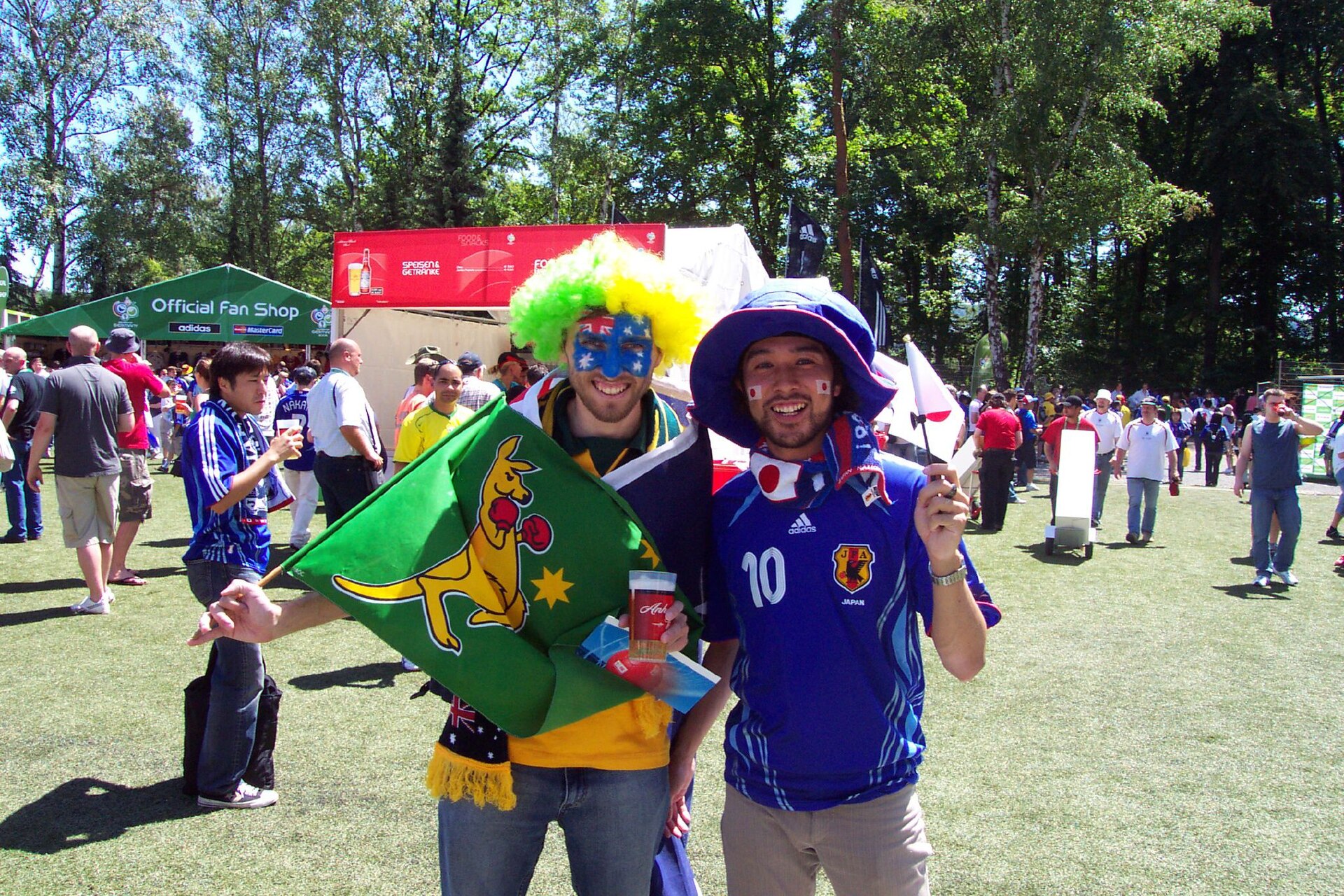
This file is licensed under the Creative Commons Attribution 2.0 Generic license. Photo by Brendio.

If you’ve been watching the international matches lately, you’ve likely seen a familiar scene play out after the final whistle. While thousands of fans stream toward the exits, dodging discarded cups and food wrappers, the Japanese supporters stay behind. They quietly move down the rows, filling large blue bags with garbage—not just their own, but the litter left behind by total strangers.

To the western eye, this looks like an extraordinary act of volunteerism. But to the people doing the sweeping, it isn’t an extraordinary act at all. It’s simply routine.

This viral tradition first broke onto the global stage during the 1998 World Cup in France. For nearly thirty years, these fans have acted as unofficial ambassadors, proving that how we treat our public spaces is a direct reflection of our collective character. It forces us to ask a vital question about our own neighborhoods: Why do we treat shared spaces as someone else’s problem?

The Root of the Ritual

In the West, we’re often socialized to believe that public maintenance is a service we pay for through taxes or ticket prices—that it’s someone else’s job to wipe down the counter or pick up the stadium floor.

But in Japan, civic responsibility is an educational milestone on par with reading and mathematics. From their first days in elementary school, children participate in osouji jikan, or 15 – 20 minutes of daily cleaning time. Because schools don’t hire janitorial staff to clean up after the children, the students themselves sweep the halls, clean the desks, and care for the physical structure. Many hands and hearts make the work go quickly because everyone does their part.

This creates an entirely different relationship with the built environment. When you spend your childhood cleaning your own classroom, you grow into an adult who can’t look at a littered stadium step without seeing a collective failure.

Leaving No Trace

This behavior is anchored by an ancient proverb: Tatsu tori ato wo nigosazu, “the bird taking flight does not leave the water muddy.” It means that when you leave a place, a job, or a situation, you should do so gracefully—cleaning up after yourself, settling all your affairs, and leaving things in pristine condition for those who come next. It pairs with the core Japanese aesthetic and moral value of awareness and respect for others (omoiyari).

When we view our shared space not as temporary commodities to consume, but as shared ecosystems to protect, our behavior naturally shifts. True sustainability isn’t just about big corporate climate policies or high-tech recycling grids. It’s found in the everyday culture of respect for the places we inhabit and the people who will occupy them after we leave.

The Togetherhood Takeaway

One of the ways to build a strong sense of community resilience is by caring for our shared public spaces, and right now you can embrace this idea and act.

  • Adopt the Bird’s Philosophy: This week, practice the art of leaving no trace. Whether you’re spending an afternoon in a public park, a seat on the subway, or a local coffee shop, make it a point of pride to leave the space cleaner than when you arrived.
  • Reframe the Labor: Take a moment to notice the people who clean up your workplace, your local streets, or your apartment building. Acknowledge that public cleanliness is a human effort, and make their jobs easier by managing your own footprint.
  • Teach Local Custodianship: If you have children, nieces, or nephews, involve them in the active maintenance of their spaces. Normalizing the idea that cleaning up is an act of community care builds the foundation for a more resilient future.

We don’t own the places where we gather—we are gifted them by the people who came before us and we borrow them from the people who use them after us. Let’s make sure the only remnant of us we leave behind is a space that’s even better than we found it.

Photo link: https://commons.wikimedia.org/wiki/File:Japanese_fan_at_FIFA_World_Cup_2006.jpg#metadata

creativity

Museum of the Dog and NYC’s Secrets & Lies Team Up to Give Knicks Fans Freebies on June 18th!

June 18th: Knicks parade, free admission to AKC Museum of the Dog, and a special storytelling show by NYC’s Secrets & Lies with free snacks, exclusive after-hours museum access, special guests, and raffle prizes!

NYC is PUMPED for the New York Knicks 🏀 parade on Thursday, June 18th! The AKC Museum Of The Dog and NYC’s Secrets & Lies are teaming up to do something special for Knicks fans because the Knicks love dogs – we’ve all seen the viral posts about Jalen Brunson, Josh Hart, and Kona & Stevie (Jalen’s pups!) 🐾🫶

🖼 The Museum of the Dog is offering free admission all day on Thursday June 18th from 11am – 6pm for everyone who wears any Knicks gear 💙🧡

🎤 Then at 6:30pm NYC’s Secrets & Lies is doing a special storytelling show all about NYC dogs! The show requires a ticket and along with the show you get:

🥨 Salty and sweet snacks

🏛️ Exclusive after-hours access to the museum

🐕 A rare chance to meet a real working transit dog and their handler who work the MTA subway every day

🎟 You’ll be entered into a drawing for 2 tickets to the American Kennel Club event Meet the Breeds

Where: AKC Museum of the Dog (101 Park Ave at 40th Street, Manhattan)

When: Thursday, June 18 at 6:30 PM

Info and tickets for the storytelling show: You can buy at the door of the museum or reserve in advance at https://museumofthedog.org/mc-events/good-dogs-of-gotham-the-working-dogs-who-built-new-york/

creativity

Gold Medals & Grit on March 29th – my next storytelling show plus a discount code

My NYC’s Secrets & Lies storytelling show is heading back to the South Street Seaport Museum on Sunday, March 29th at 3pm. Our first-ever afternoon show and first-ever weekend show. I would love to see you there and I’ve got a special deal available for you!

Buy your tickets at https://southstreetseaportmuseum.org/sports-secrets-lies/. Enter the code SECRETS20 after you put in your billing info and you’ll get the tickets for $12, which includes the show, museum entry, snacks, drinks, and the chance to win a sail on the museum’s 1885 Schooner Pioneer. Did you already buy your tix? Just let me know when you arrive and I’ll give you an extra set of lottery tickets for the prize drawing.

About this show’s theme and cast:

Keep the competitive spirit high with an afternoon of New York City’s most incredible secret sports history stories. We’re excited to dive into the grit and glory of the city’s athletic past, from legendary boxing gyms to behind-the-scenes at the NBA.

We’ve got two special guests for this show (also a first for us!) and they are two elite sports history experts: renowned photojournalist Arlene Schulman, who spent years documenting the raw world of NYC boxing, and Gina Antoniello, Academic Director at NYU’s Tisch Institute for Global Sport and a pioneer in professional sports communications. They will share unbelievable, firsthand accounts of how they broke barriers in NYC sports alongside other rising stars.

Then, the game is on! Public historian Alexa Rast and I will face off in a high-stakes battle, trading increasingly wild mini-stories from NYC’s sports history. All are true—except for one. Can you spot the masterful lie to win an exclusive prize – a sail on the Seaport Museum’s 1885 Schooner Pioneer?

We’ll have plenty of light bites and drinks on hand, included in your ticket. After all, what’s a sporting event without a snack?

I hope you’ll join us on Sunday at 3pm!

creativity

The Rebellion of Joy: Finding Your Inner Alysa Liu at Work

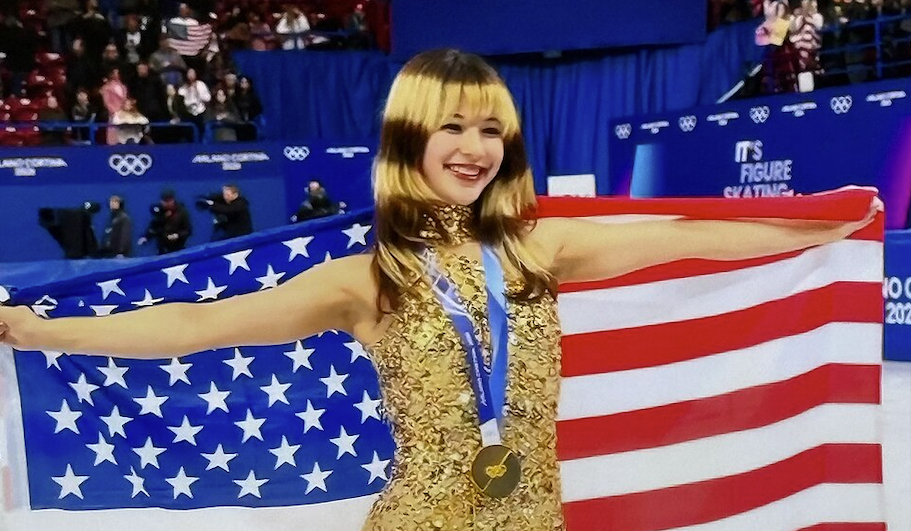
At the Milan Olympics, ice skater and gold medal winner, Alysa Liu, proved we don’t have to carry the heavy expectations others try to place on us. We can choose joy on our own terms instead.

Jaybeeinbigd22, CC0, via Wikimedia Commons. Link to image.

The typical Olympic broadcast follows a strict script. The music swells with drama. Commentators emphasize the crushing weight of the moment, the years of agonizing sacrifice, and the unbearable pressure on the athletes. We watch the screen and expect to see stress etched into every competitor’s face. We treat suffering as the ultimate proof of dedication.

Then Alysa Liu stepped onto the ice in Milan.

The media desperately wanted the classic, grueling redemption arc. They wanted the tears and the drama of a comeback. Alysa simply declined to participate. She refused to let the sport, the commentators, or anyone else tell her how to feel.

When interviewers tried to hand her a narrative of crushing pressure, she set a firm boundary. She clarified that their anxiety belonged to them, not to her. She left them with their own heavy baggage and skated with pure joy, freedom, and love for the sport.

She performed her way.

The Performative Stress Trap

That level of boundary-setting offers a profound lesson for all of us, especially in our professional lives.

Every day, people try to hand us their stress. A chaotic workplace demands our panic. A frantic project timeline insists we sacrifice our well-being. We absorb this urgency as if it is mandatory. People tell us this is the job and there is no other way; it is a job after all, right? We learn to perform stress to prove we care about our jobs, our communities, and our goals. If you aren’t exhausted and worn out, you don’t care enough about anything.

Alysa proves this burden is optional. You can care deeply and perform at the highest level without letting anxiety consume you.

Bring the Olympic Ice to the Office

Figure skating is Alysa Liu’s actual job. She treats it with immense respect and masters her craft, but she refuses to let the job dictate her emotional state. We can apply this exact framework to our own careers to protect our energy and reclaim our joy.

  • Reject the manufactured panic: Colleagues and clients often treat minor delays as catastrophes. You do not have to participate in their panic. You can calmly solve the problem without absorbing the frantic energy.
  • Decouple exhaustion from value: Corporate culture often rewards burnout as a badge of honor. Challenge that standard. You can deliver exceptional results on a project while maintaining firm boundaries around your evenings and weekends.
  • Treat joy as a performance enhancer: Alysa performs better because she skates free of anxiety. We execute our best ideas, strategies, and creative work when we feel relaxed and engaged, not when we feel terrified of failure.

We often believe that caring about our work requires us to suffer for it. We confuse anxiety with dedication.

This week, look closely at the emotional loads you carry at work. Are they yours, or did someone else hand them to you? You have the power to reject the default setting of suffering. You can choose to execute your work, live your life, and navigate your challenges with relaxation and fun.

You get to decide how you experience your own career. We are all a work in progress, and there is a freedom in knowing, living, and working with that truth. Your freedom and joy can and will inspire others. Alysa proved that to all of us. Let your own light shine, and go out there and be a light for others.

creativity

Scoring Green Goals: Making the 2026 FIFA World Cup in NY/NJ a Model of Sustainability

Award-winning artist and NJ native Rich Tu designed the NY/NJ poster intended to “reflect the vibrancy and diversity that define this region.” Image from City of Jersey City Official Government Facebook Page.

The excitement for the 2026 FIFA World Cup is already building, and as New York and New Jersey prepare to host a significant portion of this global spectacle including the final at MetLife Stadium on July 19, 2026, there’s a powerful opportunity to set a new standard for environmentally sustainable mega-events. Large-scale sporting events inherently have a substantial environmental footprint, from carbon emissions due to travel and energy consumption to vast amounts of waste generated. However, by embracing innovative and comprehensive green strategies, the NY/NJ World Cup can truly “score green goals” and leave a lasting positive legacy for our planet.

FIFA has already outlined a sustainability and human rights strategy for the 2026 World Cup, focusing on sustainable infrastructure, mitigating climate impact, reducing air pollution, and promoting water efficiency. Building on this, here’s how New York and New Jersey can lead the way:

1. Transportation Transformation: Moving the Masses Sustainably

  • Prioritize Public Transit: This is perhaps the single most impactful area. With New York and New Jersey’s extensive public transportation networks, a concerted effort to heavily promote and incentivize their use for fans, staff, and athletes is crucial. This includes clear signage, dedicated routes, extended service hours, and potentially even event-specific transit passes.
  • Active Travel Promotion: Encourage walking and cycling to venues where feasible. This means creating safe and accessible pedestrian pathways and ample, secure bike parking facilities.
  • Low-Emission Fleets: For official tournament vehicles, prioritize electric or hybrid vehicles. This extends to shuttle services for teams and VIPs.
  • Efficient Air Travel: Work with airlines to encourage direct flights and optimize routes to reduce emissions from air travel, which is a major contributor to the event’s carbon footprint.

2. Venue Virtuosity: Sustainable Infrastructure and Operations

  • Energy Efficiency and Renewables: Leverage existing stadiums like MetLife Stadium and Red Bull Arena. Implement aggressive energy efficiency measures, such as LED lighting and smart HVAC systems. Explore opportunities for on-site renewable energy generation (solar panels) and ensure all electricity used for the tournament is sourced from renewable energy providers.
  • Waste Not, Want Not: Implement a robust, multi-stream waste management system across all venues and fan zones. This means clearly labeled bins for recycling, composting, and landfill. The goal should be to minimize waste to landfill, focusing on a circular economy approach where materials are reused or recycled. Eliminate Single-Use Plastics: Ban single-use plastic bottles and foodware, encouraging reusable alternatives or offering compostable options. Food Waste Reduction: Partner with local food banks to donate unconsumed food and implement composting programs for food scraps.
  • Water Conservation: Implement water-saving fixtures and practices at venues and associated facilities. Explore rainwater harvesting for irrigation and other non-potable uses.
  • Sustainable Procurement: Prioritize sourcing materials, merchandise, and food from local, ethical, and environmentally responsible suppliers. This reduces transportation emissions and supports the local economy. Consider sustainable building certifications for any necessary temporary structures.

3. Fan and Community Engagement: A Collective Effort

  • Educate and Empower: Use the World Cup platform to raise awareness about environmental issues and promote sustainable practices among fans. This can be done through interactive displays, public service announcements, and engagement campaigns.
  • “Green Team” Volunteers: Recruit and train a dedicated “green team” of volunteers to assist with waste sorting, guide fans on sustainable transportation, and promote eco-friendly behaviors. If you’d like to get involved as a volunteer for the event in any capacity (green or otherwise!), you can sign up now at https://www.fifa.com/en/tournaments/mens/worldcup/canadamexicousa2026/volunteers
  • Local Partnerships: Collaborate with local environmental organizations, community groups, and businesses to implement sustainability initiatives and foster a lasting green legacy beyond the tournament.
  • Carbon Offsetting: While reduction is paramount, for unavoidable emissions, invest in high-quality, verifiable carbon offsetting projects that benefit local communities and ecosystems. However, transparency and accuracy in reporting are crucial to avoid “greenwashing.”

A Lasting Legacy

The 2026 FIFA World Cup offers more than just thrilling matches; it’s a chance for New York and New Jersey to demonstrate global leadership in sustainable event management. By meticulously planning and rigorously implementing these green initiatives, the tournament can inspire future large-scale events and leave a tangible, positive environmental legacy for generations to come. Let’s make the 2026 World Cup a true testament to the power of sport to drive positive change for our planet.

creativity

JoyProject Podcast: The Joy of Water Skiing with Kate McGormley

Let Kate McGormley describe the rush and unbridled joy she experiences every time she goes water skiing, a sport she’s done every year since she was 6 years old. An advocate for mental health and the power of kindness, she takes us through how she got into the sport, the mechanics of getting up on skis, and how being outside on the water helps her appreciate her body, her health, and the goodness that always exists in the world. Her infectious laugh is something that will brighten your day and may just convince you to give water skiing a try!

At the end of the podcast, I share something that brought me joy this week related to the episode. Given Kate’s focus on the joy of the outdoors, please check out the latest Fix Solutions Lab publication—The Joy Issue. Fix is a storytelling team at Grist, a nonprofit, independent media organization dedicated to telling stories of climate solutions and a just future. Fix was founded on a simple premise: promising solutions to the climate crisis exist — they just haven’t yet gained sufficient momentum to tip the scales.

The Joy Issue has stories about using joy as a tool for climate change activism. It’s the perfect blend of so many things I love that create the foundation for my life and career—top-notching writing and storytelling, joy, curiosity, and protecting our beautiful planet.

Topics discussed in this episode:
– When Kate started water skiing
– How she got started water skiing
– The mechanics of water skiing
– How water skiing make her grateful for so many things

Links to resources:
– Kate on Instagram – @kathryn.mcgormley
– Kate on Facebook – @Kate McGormley
– Kate’s blog – KindnessMatters365
– The Joy Issue by Fix at Grist – The Joy Issue
– Christa on Twitter – @christanyc
– Christa on Instagram – @christarosenyc
– Christa on Facebook – @AuthorChrista 
– Christa on Medium – @christaavampato
– Christa on TikTok – @christanyc
– Christa’s website – ChristaAvampato.com

About Kate:
Kate McGormley is a higher education professional living in Indianapolis with her husband and two sons.  Kate is a champion for mental health advocacy and kindness. She spent 2013 doing a kindness act each day with her young sons and blogging about it at KindnessMatters365. She spends most of her time with family and friends, but also loves serving on the board of her local Habitat for Humanity and occasionally pounding some nails.  Her greatest obsession in life is her English Bulldog, Mack!

creativity

A Year of Yes: Lessons on going for broke from Olympic ice skaters

Here’s a lesson we should adopt from Olympic ice skaters: they receive more points for attempting a difficult jump and falling than they do from downgrading the jump to something easier and landing perfectly. Why isn’t that the norm in our entire society. Let’s reward and celebrate one another for daring greatly and failing rather than taking the easy path.

creativity

In the pause: This 5th grade basketball team in NJ exemplifies unity and equality

Need a feel-good story to fill your heart today? Here’s one. This 5th grade basketball team voted unanimously to forfeit the rest of their season because they refused to play without the two girls who are on their team. This is what unity and equality look like. So proud of these kids! Warning: you’ll need a tissue when you read the details in the article. It will bring tears to your eyes in the best possible way.

5th grade coed basketball team chooses to forfeit season instead of kicking girls off the team