
creativity

The Wild Heart of New York City: Earth Day in Inwood Hill Park

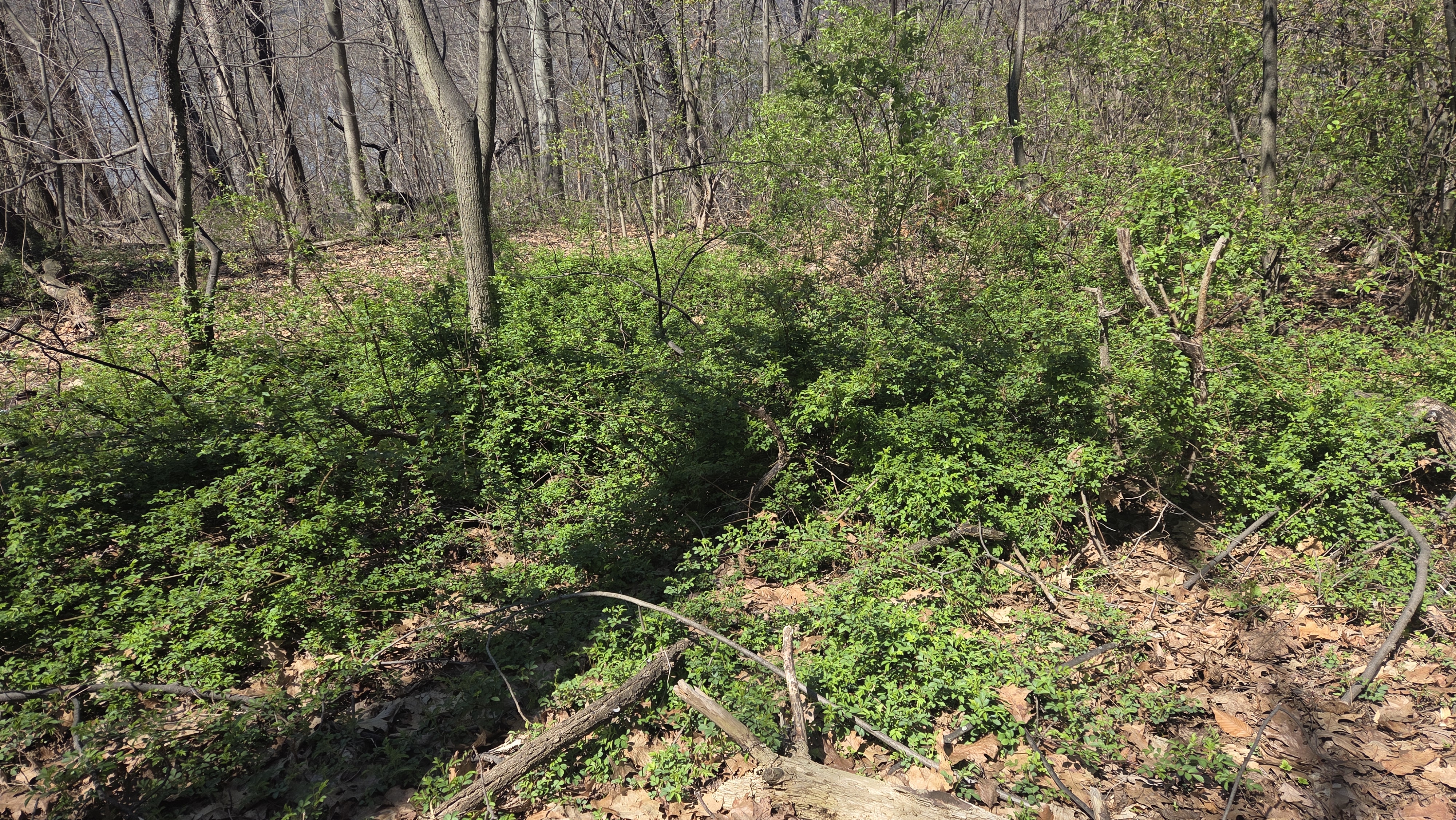
Inwood Hill Park. Photo by Christa Avampato.

“I wasn’t expecting so many flowers and trees!”

A friend of mine said this to me when she was visiting New York last week. I was so happy to tell her about the vital work of the Natural Areas Conservancy and so many other organizations and individuals working to protect and expand our urban tree canopy and green spaces.

I completely understand her surprise. When we visualize New York City, we usually picture a dense grid of concrete, steel, and glass. We rarely picture an ancient, old-growth forest. Yet, at the very northern tip of Manhattan, a profoundly wild place defies every urban stereotype.

For Earth Day this year, we are looking at the ultimate example of urban resilience: Inwood Hill Park.

A Living Time Capsule Inwood Hill Park holds the last natural old growth forest and the final remaining natural salt marsh in Manhattan. Walking its trails completely transports you. The relentless hum of the city fades, replaced by the rustle of leaves from the massive tulip trees and the calls of migratory birds. The land bears the marks of the retreating glaciers that shaped the island and holds the ghosts of the Revolutionary War. Through centuries of explosive, relentless urban development, this singular forest continues to survive and thrive.

Ancestral Land and Ongoing Stewardship Long before European colonizers arrived, the Lenape people stewarded this land for thousands of years. They utilized the geological formations of the area, relying on the natural caves for shelter and the rivers for sustenance. Inwood Hill Park remains the ancestral homeland of the Lenape. Their connection to this forest does not simply exist in the past; it is an active, living relationship. Today, the Lenape Center leads vital, continuous work across New York City. They actively preserve their cultural heritage, advance indigenous narratives, and nurture their enduring relationship with this place. Recognizing their profound, ongoing stewardship is absolutely essential when we celebrate the survival of this forest.

The Lungs of New York Inwood Hill Park does much more than just provide shade; it performs critical environmental work that keeps our city clean and sustainable. The towering oak, tulip, maple, and cherry trees act as the literal lungs of Manhattan. They actively filter harmful particulate matter and pollutants from the air we breathe. Simultaneously, they absorb massive amounts of carbon dioxide, locking it securely away in their wood and soil to combat climate change right here in our backyard.

Below the canopy, the deep, undisturbed root systems act as a giant sponge. Whenever heavy rains hit the city, the forest floor captures thousands of gallons of stormwater. It prevents devastating runoff from overwhelming our sewer systems and flooding our streets. Furthermore, the thick foliage drastically cools the surrounding neighborhoods, actively fighting the deadly urban heat island effect during the brutal summer months. This single stretch of woods provides millions of dollars in free ecological services to the city every single year, and this is one of the main reasons that we have to increase funding to protect it and the city’s other green and wild spaces.

A Sanctuary for Healing Beyond the environmental benefits, nature provides profound physical and mental healing. Long before modern clinical studies proved that time spent in nature reduces cortisol levels and lowers blood pressure, New Yorkers intuitively understood the medicinal value of these woods.

In the late nineteenth and early twentieth centuries, the House of Rest for Consumptives operated right inside the boundaries of what is now Inwood Hill Park. This tuberculosis sanatorium treated patients not with complex medical interventions, but by prescribing the healing power of the forest. Doctors specifically utilized the deep woods and high elevation to provide patients with pristine fresh air, offering a sanctuary away from the smog of the dense city below. Today, doctors are increasingly prescribing time in nature for many health reasons. We need quiet trails to soothe our nervous systems, lower our stress, decrease blood pressure, bolster mental health, and escape the hyper-connected demands of modern life.

The Power of Preservation We often assume that to build a thriving city, we must completely pave over the natural world. Inwood Hill Park proves we can orchestrate a different reality.

Preserving this old-growth forest within the densest city in the country is a triumph of community stewardship. It demonstrates that we do not have to choose between human progress and ecological preservation. We can protect our wild spaces right alongside our built environment, allowing them to protect us in return. If anything, we should expand our green space to ensure human health and progress.

The Togetherhood Takeaway This Earth Day, we can draw inspiration from the resilience of the forest.

  • Discover your local wild: You do not need to leave the city to find nature. Seek out the untamed green spaces in your own borough or neighborhood.
  • Protect the old growth: Whether it is a historic community garden, a single massive street tree, or a local park, advocate for nature in your area.
  • Acknowledge the history: When you walk through a green space, take time to learn the archaeological and social history of the land. Support organizations like the Lenape Center that actively protect indigenous relationships with nature.

Step Into the Forest This Saturday Reading about the magic of the forest is one thing; experiencing it firsthand is life changing.

This Saturday, April 25, I am leading a guided nature walk through Inwood Hill Park. We will step off the pavement and explore the rich environmental, social, and archaeological history of Manhattan’s last natural forest together. We will look closely at the exact ecosystems keeping our city sustainable and experience the profound health benefits of walking under an old-growth canopy.

I have just a few spaces remaining on the tour, and I would love for you to join us. You can grab your spot and register right here: inwoodhillparknyc.eventbrite.com

Let’s celebrate Earth Day by getting our boots a little muddy and taking in the glory of nature together.

creativity

The Overview Effect: Solving Earth’s Problems From 250,000 Miles Away

Earth setting on April 6, 2026. Taken by the crew of Artemis II. Photo from NASA.
https://www.nasa.gov/image-article/earthset/

This week, four astronauts aboard the Artemis II Orion spacecraft achieved something humanity has not done in over fifty years. They flew around the far side of the moon, traveling farther from Earth than any humans in history – 252,760 miles. As they passed behind the lunar surface, they turned their cameras back toward home and captured a breathtaking Earthset, watching our bright blue planet sink behind the desolate, cratered edge of the moon. Looking at all of the media coming from the mission gives me chills in the best way.

The Cognitive Shift
When astronauts view our planet from this immense distance, they often experience a profound cognitive shift known as the Overview Effect. From 250,000 miles away, they can’t see political borders, neighborhood disputes, or ideological divides. They see a single, fragile ecosystem. They realize that every being, be they a person, animal, or plant, shares the same life support system and collectively, the same destiny. We all only have one home and it belongs to all of us.

A Floating Laboratory for a Sustainable Earth
People frequently wonder why we invest in space exploration when we face so many massive challenges right here on Earth. The answer is that a deep space capsule is the ultimate testbed for our future. We do not explore space to abandon our home planet; we explore space to discover the exact tools necessary to protect it.

To survive a lunar mission, astronauts cannot waste a single resource and a vast group of people with different talents and experiences must work together as a cohesive team with a singular shared mission – bring them all home safely. They must operate a circular economy. NASA engineers design advanced filters to scrub carbon dioxide directly out of the cabin air—technology that now forms the foundation of direct air capture facilities fighting global warming today. They develop systems to recover and purify every drop of moisture, translating directly to water filtration for drought-stricken communities. They conduct experiments on high-yield indoor agriculture to feed the crew without the benefits of direct sunlight or nutrient-rich soil, helping us understand how we can grow food in harsh environments. Staging this mission also requires the development of stronger, lighter materials that translates into the conservation of valuable resources.

Alongside this climate engineering, the Artemis II crew is conducting experiments that directly advance medical science. They carry microchips containing living human bone marrow tissue to study exactly how deep-space radiation and microgravity affects human cells. They monitor their own biological responses to understand why and how extreme stress alters the human immune system. Solving these medical challenges in space paves the way for individualized cancer treatments, tools to predict and treat chronic conditions, and advanced healthcare innovations that test drugs and vaccines. All of this research means that the astronauts are both scientists and test subjects. What we learn from these missions directly translates to helping all of us build a better healthcare system.

Orchestration on a Massive Scale
The mission also represents the ultimate example of community orchestration. Sending a crew around the moon and safely bringing them back is never the work of one isolated visionary. It requires a massive, synchronized ecosystem of engineers, technicians, and scientists across the globe. Thousands of people must set aside their individual egos and operate with absolute trust in one another to navigate the unknown.

The Takeaway
We do not need to launch into orbit to apply the Overview Effect to our daily lives. When we get stuck in the weeds of local disputes or feel overwhelmed by the friction of community building, we simply need to change our vantage point.

We can actively choose to step back and look at our neighborhoods as unified ecosystems.

  • Change your altitude to change your attitude: When a conflict arises in your community, intentionally zoom out. Ask yourself how this specific disagreement affects the overall health of the neighborhood ecosystem rather than just your immediate block. Then help other people zoom out as well to gain the same benefits of perspective.
  • Acknowledge the shared ship and the shared journey: Remind yourself and your neighbors that you all rely on the same local infrastructure and green spaces, and that collectively you are building your local economy to benefit everyone. You succeed or fail together.
  • Orchestrate across borders: Look for ways to connect your local initiatives with efforts in neighboring communities. A thriving garden in your neighborhood benefits the pollinators across your city and beyond.
  • Translate the research: Take inspiration from the Artemis crew. Look for ways to do small experiments and use the solutions you develop through those experiments to help your community and share with adjacent communities.

Nature requires us to act as a unified whole. We just need the right perspective to see it. Luckily for us, the crew of Artemis II is helping all of us to keep looking up.

creativity

Cultivating Hope: How Altadena, California Is Orchestrating Its Own Superbloom

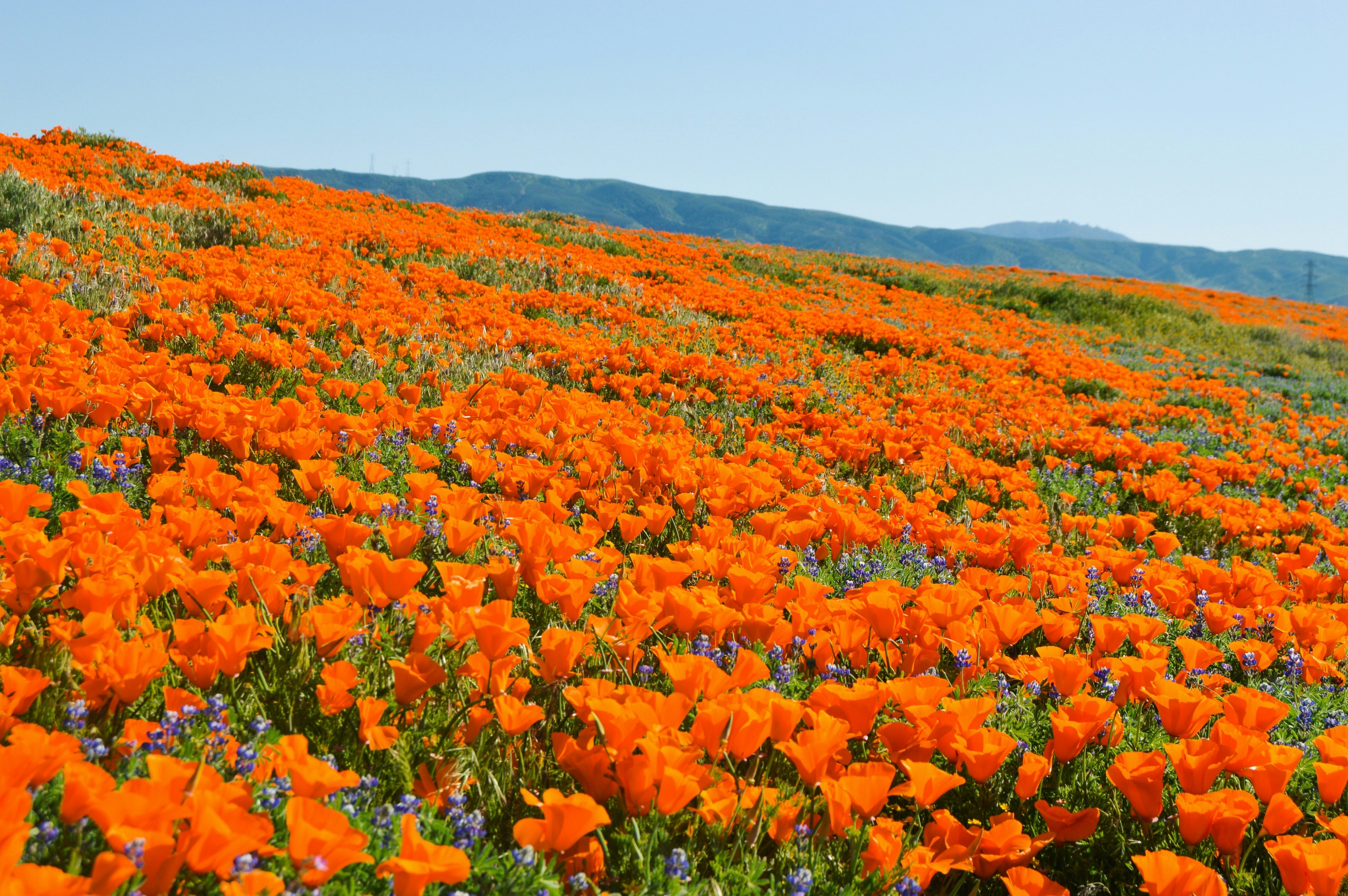
Poppies in California. Photo by Sarah Wood on Unsplash.

The California poppy is a masterclass in resilience. As a universal symbol of remembrance and hope, this delicate flower possesses a rugged secret. It thrives in some of the most challenging environments on earth, specifically germinating and flourishing in the harsh, scarred soil left behind by wildfires.

While a desert superbloom relies entirely on the unpredictable rhythms of weather, one community in Southern California decided not to wait for perfect conditions. They chose to actively orchestrate their own recovery.

The Ashes of Altadena In January 2025, the devastating Eaton Fire swept through the foothills of Altadena, California. The blaze destroyed thousands of structures, claiming homes, businesses, and irreplaceable personal histories.

Among the survivors was René Amy, a longtime community activist. The fire consumed his home and, in a cruel twist of irony, his native wildflower seed business called Altadena Maid Products. He lost his entire inventory to the flames. But instead of surrendering to the devastation, he immediately began volunteering at local shelters and looking for ways to heal his neighborhood.

The Great Altadena Poppy Project Understanding the deep psychological toll of the fire, René launched the Great Altadena Poppy Project. His vision was breathtakingly simple but massively ambitious: blanket the fire-scarred town in vibrant color by planting poppies – millions of them.

A century ago, golden poppy fields covered Altadena so densely that tourists traveled from across the country just to witness the bloom. René wanted to restore that legacy and offer his neighbors a tangible sign of life returning to their barren lots.

He initially purchased 120 million seeds with $20,000 of his own money and invited fire-impacted residents to sign up for free seeding services on their impacted properties. The response was overwhelming. Hundreds of homeowners asked to participate. Thanks to an outpouring of community support and anonymous donations, the project expanded its goal to sow a quarter of a billion seeds across more than 700 properties.

Orchestrating a Bloom This effort is the ultimate example of community orchestration. René and his crew of volunteers traverse the burn zones, spreading seeds across empty lots and blackened earth. Local scout troops pack envelopes of seeds to distribute globally, allowing friends and family far away to plant their own flowers in solidarity.

They are not just planting flowers; they are actively rehabilitating the degraded soil, preventing erosion, and providing a massive food source for local pollinators. Most importantly, they are giving traumatized residents a reason to look forward to the spring.

The Togetherhood Takeaway When we face immense loss or walk through a difficult season, it is easy to look at the scorched earth and assume nothing will ever grow there again. The residents of Altadena remind us that we do not have to passively wait for healing to arrive. We can plant the seeds of our own recovery.

Perhaps the most inspiring aspect of this entire project is its absolute lack of formal bureaucracy. René Amy did not wait to incorporate a nonprofit, assemble a board of directors, or build a complex fundraising platform. He just bought seeds and started asking his neighbors to help. This operates as pure mutual aid. It proves that you do not need a massive organizational apparatus or a corporate budget to orchestrate a community transformation. You simply need a good idea and the willingness to do the work.

Imagine what our country would look like if we all took this grassroots approach to our local ecosystems. A nationwide sight of vibrant, resilient flowers pushing through the cracks would be a powerful testament to our collective strength.

You can get involved with the Altadena project directly and bring this exact DIY energy to your own neighborhood right now.

  • Fund the recovery: While the poppy planting operates informally, the community still needs immense support for ongoing rebuilding and soil rehabilitation. Donating to the Altadena Community Preservation Fund provides direct financial assistance to the fire survivors.
  • Send seeds of solidarity: The project actively encourages people nationwide to purchase and plant native seeds in their own yards in solidarity with the residents, creating a networked superbloom across the country.
  • Plant a local blend: While California poppies thrive out West, creating a resilient ecosystem locally requires native species adapted to our specific climate. Instead of planting poppies, source a specific wildflower blend native to your area. In New York, that blend could contain Lanceleaf Coreopsis, Purple Coneflower, and Black-Eyed Susan. Scattering these in tree beds, empty lots, or window boxes around NYC creates a vital food source for local bees and birds.
  • Support local restoration: Channel the energy of the poppy project into ongoing efforts in our home area. In New York City, volunteering with the Brooklyn Greenway Initiative or local community gardens helps build the exact same kind of resilient infrastructure René Amy is building in California.
  • Be the orchestrator: Do not wait for someone else or a formal organization to beautify your street. Organize your neighbors, share resources, and create the conditions for your community to thrive.

Nature teaches us that even the most devastating fires eventually give way to new growth. We just have to be willing to do the planting and ask others to join us in our efforts.