
creativity

Cultivating Hope: How Altadena, California Is Orchestrating Its Own Superbloom

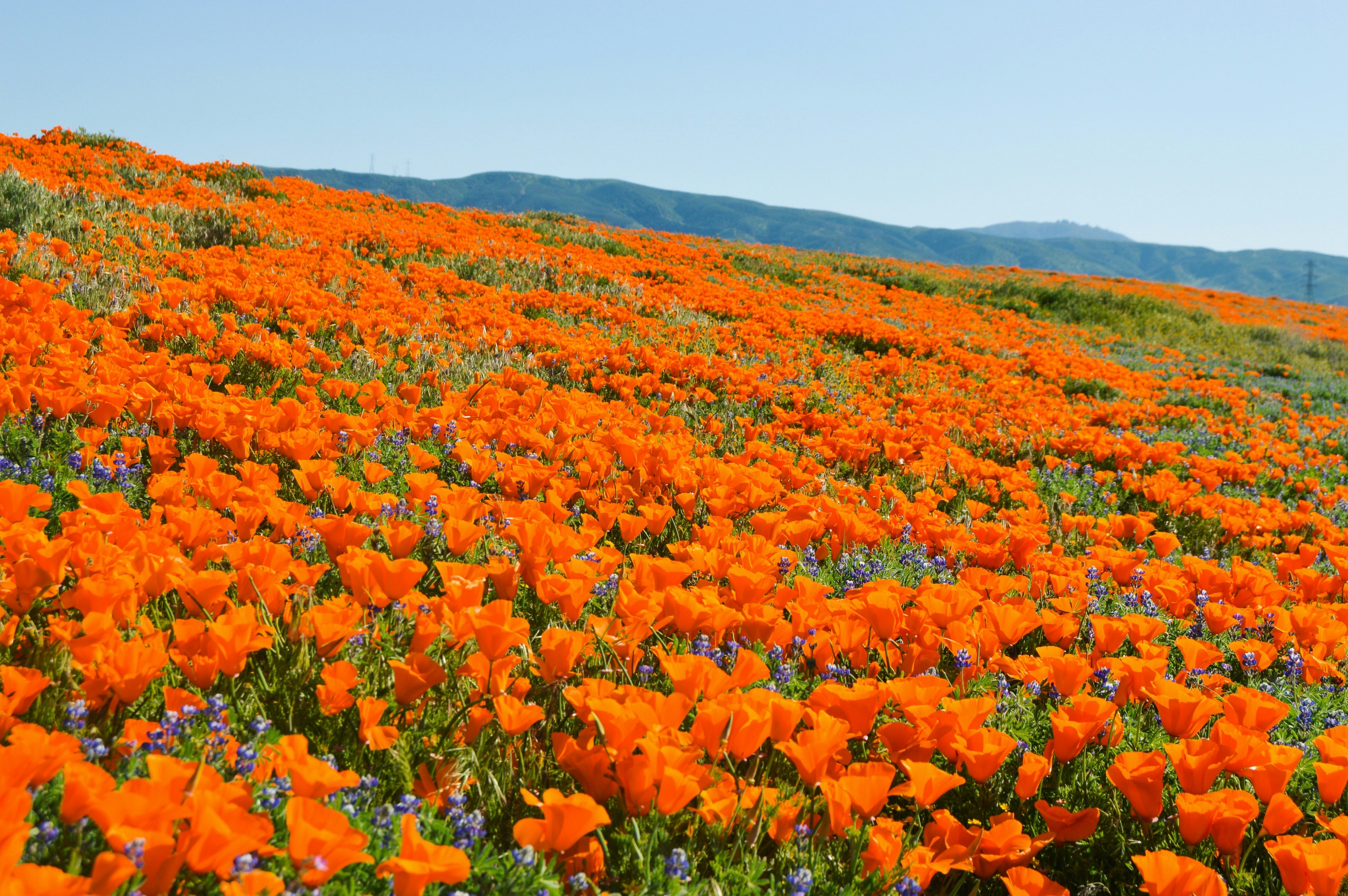
Poppies in California. Photo by Sarah Wood on Unsplash.

The California poppy is a masterclass in resilience. As a universal symbol of remembrance and hope, this delicate flower possesses a rugged secret. It thrives in some of the most challenging environments on earth, specifically germinating and flourishing in the harsh, scarred soil left behind by wildfires.

While a desert superbloom relies entirely on the unpredictable rhythms of weather, one community in Southern California decided not to wait for perfect conditions. They chose to actively orchestrate their own recovery.

The Ashes of Altadena In January 2025, the devastating Eaton Fire swept through the foothills of Altadena, California. The blaze destroyed thousands of structures, claiming homes, businesses, and irreplaceable personal histories.

Among the survivors was Renรฉ Amy, a longtime community activist. The fire consumed his home and, in a cruel twist of irony, his native wildflower seed business called Altadena Maid Products. He lost his entire inventory to the flames. But instead of surrendering to the devastation, he immediately began volunteering at local shelters and looking for ways to heal his neighborhood.

The Great Altadena Poppy Project Understanding the deep psychological toll of the fire, Renรฉ launched the Great Altadena Poppy Project. His vision was breathtakingly simple but massively ambitious: blanket the fire-scarred town in vibrant color by planting poppies – millions of them.

A century ago, golden poppy fields covered Altadena so densely that tourists traveled from across the country just to witness the bloom. Renรฉ wanted to restore that legacy and offer his neighbors a tangible sign of life returning to their barren lots.

He initially purchased 120 million seeds with $20,000 of his own money and invited fire-impacted residents to sign up for free seeding services on their impacted properties. The response was overwhelming. Hundreds of homeowners asked to participate. Thanks to an outpouring of community support and anonymous donations, the project expanded its goal to sow a quarter of a billion seeds across more than 700 properties.

Orchestrating a Bloom This effort is the ultimate example of community orchestration. Renรฉ and his crew of volunteers traverse the burn zones, spreading seeds across empty lots and blackened earth. Local scout troops pack envelopes of seeds to distribute globally, allowing friends and family far away to plant their own flowers in solidarity.

They are not just planting flowers; they are actively rehabilitating the degraded soil, preventing erosion, and providing a massive food source for local pollinators. Most importantly, they are giving traumatized residents a reason to look forward to the spring.

The Togetherhood Takeaway When we face immense loss or walk through a difficult season, it is easy to look at the scorched earth and assume nothing will ever grow there again. The residents of Altadena remind us that we do not have to passively wait for healing to arrive. We can plant the seeds of our own recovery.

Perhaps the most inspiring aspect of this entire project is its absolute lack of formal bureaucracy. Renรฉ Amy did not wait to incorporate a nonprofit, assemble a board of directors, or build a complex fundraising platform. He just bought seeds and started asking his neighbors to help. This operates as pure mutual aid. It proves that you do not need a massive organizational apparatus or a corporate budget to orchestrate a community transformation. You simply need a good idea and the willingness to do the work.

Imagine what our country would look like if we all took this grassroots approach to our local ecosystems. A nationwide sight of vibrant, resilient flowers pushing through the cracks would be a powerful testament to our collective strength.

You can get involved with the Altadena project directly and bring this exact DIY energy to your own neighborhood right now.

  • Fund the recovery: While the poppy planting operates informally, the community still needs immense support for ongoing rebuilding and soil rehabilitation. Donating to the Altadena Community Preservation Fund provides direct financial assistance to the fire survivors.
  • Send seeds of solidarity: The project actively encourages people nationwide to purchase and plant native seeds in their own yards in solidarity with the residents, creating a networked superbloom across the country.
  • Plant a local blend: While California poppies thrive out West, creating a resilient ecosystem locally requires native species adapted to our specific climate. Instead of planting poppies, source a specific wildflower blend native to your area. In New York, that blend could contain Lanceleaf Coreopsis, Purple Coneflower, and Black-Eyed Susan. Scattering these in tree beds, empty lots, or window boxes around NYC creates a vital food source for local bees and birds.
  • Support local restoration: Channel the energy of the poppy project into ongoing efforts in our home area. In New York City, volunteering with the Brooklyn Greenway Initiative or local community gardens helps build the exact same kind of resilient infrastructure Renรฉ Amy is building in California.
  • Be the orchestrator: Do not wait for someone else or a formal organization to beautify your street. Organize your neighbors, share resources, and create the conditions for your community to thrive.

Nature teaches us that even the most devastating fires eventually give way to new growth. We just have to be willing to do the planting and ask others to join us in our efforts.
creativity

Spring Is Already Here (You Just Canโ€™t See It Yet)

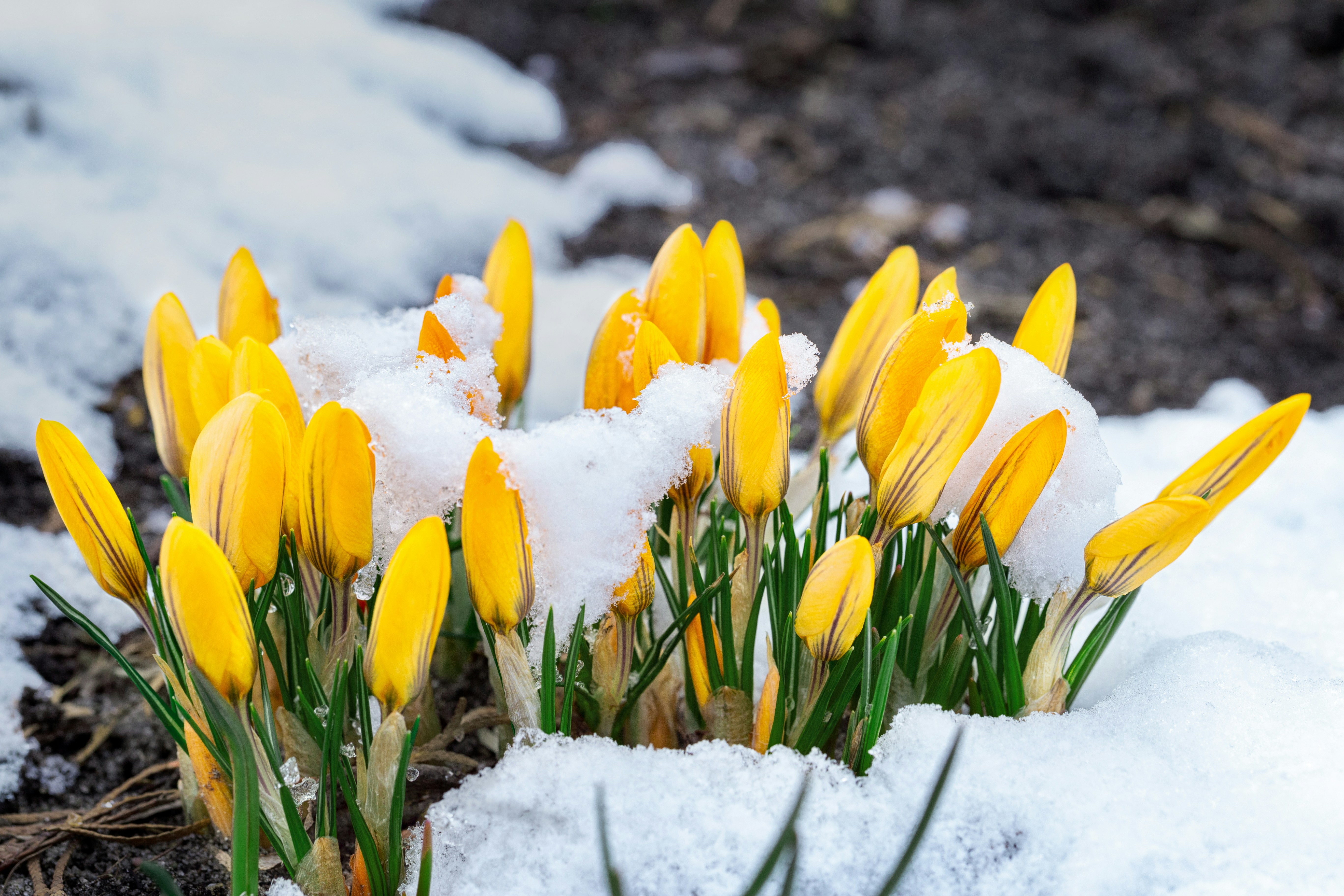
Crocuses in the snow. Photo by Alexandra Vo on Unsplash.

We think spring begins when the first flower blooms. But biologically, it starts right nowโ€”in the freezing cold.

If you’ve spent this winter in New York City like me, you’ve likely been dreaming of the arrival of spring during the freezing, snowy, and gray days. You also probably shook your fists at the sky when the groundhogs saw their shadow on February 2nd.

“When will this end?” you thought.

But if you ask a sugar maple or a wildflower seed, they will tell you that spring started while the snow was falling.

We tend to measure the season by what we can seeโ€”the green bud, the crocus, the robin. But nature does her most important preparation underground, long before the visuals arrive. In fact, she uses the harshness of late winter to fuel the growth of spring. Without the present cold, there is no future warmthโ€”literally and figuratively, for nature and for us.

Here is how nature is prepping for spring right now in this last month of winter, and what we can learn from her and translate into our own lives.

1. The Cold Is the Key (Stratification)

We often complain about the bitter cold, gray skies, and damp days of February, wishing them away. But for many native plants, this weather in this season is non-negotiable. It’s the foundation of their flourishing future.

This process is called stratification. Seeds like milkweed, coneflower, and lavender have tough outer shells that keep them dormant. They literally cannot grow until they have gone through a period of intense cold and moisture. The freeze acts as a signal, softening the shell and telling the embryo inside that it is safe to wake up.

Without the hard winter, there is no spring bloom. The obstacle is also the key that turns the lock.

2. Use the Pressure and Change (Sap Flow)

Right now, maple syrup farmers are busy. Why? Because the sap is running.

But sap doesn’t run just because it gets warm. It runs because of the fluctuation. While the shifts in transitions may drive us crazy, it’s the alternation between freezing nights and thawing days that creates pressure changes inside the sugar maple trees, acting as a natural pump to move sugar from the roots up to the branches.

The tree uses the instability of the season to fuel its growth. Being off-balance all the time helps the tree find their secure center.

The Togetherhood Takeaway

We often want to jump straight from winter rest to full-bloom success. We want the project to launch, the book to sell, or the answer to appear.

But right now, today, nature is in the stratification phase. We are, too.

If you feel like nothing is happening right now, that you’re stuck and that the world is off-kilter, or if things feel cold and hard and impossible right now in your local community and our global community, remember the seed. You aren’t stuck. You’re just softening your shell so you can break through in the days ahead as the light and warmth return.

Use this time, today, tomorrow, and the rest of this month before spring, to prepare your roots. Organizing, planning, and laying the groundwork for our futureโ€”collectively and individuallyโ€”is active growth, even if no one else can see it yet.

Spring is coming. But the work starts now.

creativity

What a Corn Stalkโ€™s DNA Taught Me About Solving the Climate Crisis

The urgent global challenge is feeding a rapidly growing population while fighting the uncertainty of climate change. As a storyteller and a biomimicry scientist, I often ask: How does nature solve a massive, existential crisis? The answer, it turns out, lies not in some distant super-technology, but in the subtle genius of a single plant cell.

New research from the Cold Spring Harbor Laboratory has illuminated a fundamental biological “master switch” in the DNA of food crops like corn, giving us an actual blueprint for creating a resilient, thriving future. This isn’t just botany; it’s a profound lesson in survival written right into the plant kingdom.

The Inner Wisdom of the Plant

Plant growth, from the deepest root to the ripest ear of corn, is governed by its stem cellsโ€”unspecialized cells that hold the potential to become any part of the plant. The challenge facing plant scientists has always been figuring out how to balance these cells: when should they grow and when should they specialize into, say, a fruit or a thick stalk?

In a breakthrough study, scientists mapped the gene expression in these cells, revealing the network of regulators that act as the plantโ€™s precise internal control panel. This network balances growth and stress response, allowing the plant to strategically allocate its resources for survival.

This knowledge is a gift to us all because it shows how nature manages risk. A plant facing drought doesn’t just despair; it shifts resources to deepen its roots. A plant under pest attack doesn’t just succumb; it redirects energy to fortify its cell walls. It’s a marvelous, elegant system of risk mitigation through metabolic flexibility.

A Blueprint for Humanityโ€™s Resilience

As my work focuses on biomimicryโ€”integrating nature’s genius into the human worldโ€”I see in this discovery a direct path to solving our human challenge of food security. We are not meant to struggle endlessly against the elements; we are meant to learn from the masters of endurance.

This plant study provides us with three clear takeaways for building a better world:

  1. Precision over Force: Instead of overwhelming fields with more fertilizer and water, we can use this genetic knowledge to engineer plants to be more efficientโ€”to use nitrogen more effectively and direct energy precisely where it’s needed most for resilience.
  2. Unlocking Latent Potential: We are now able to see and manipulate the plantโ€™s own evolutionary solutions. We can develop crops with deep-seated, natural defenses against drought and disease, built on the plant’s own wisdom, not on chemical dependency.
  3. The Power of the Foundational System: The corn stalk teaches us that true resilience comes from perfecting the foundation. By understanding and replicating the simplest, deepest biological controls, we can build human systems that are robust and adaptable, just like an ecosystem.

A Brighter Future Ahead

This breakthrough is more than just a scientific finding; it is a fundamental shift in our relationship with nature. By finally decoding the genetic “master switch” that plants use to govern their own destiny, we are handed a powerful blueprint for survival. The challenge of global food security has never been greater, but this research proves that the solution is not an endless technological sprint, but a deeper engagement with the patient, profound wisdom of the living world. The era of resilient agriculture is not just on the horizonโ€”it has already begun, written in the complex, hopeful language of a plant’s own DNA.


If you’re interested in learning more about how I apply nature’s genius to human challenges, check out my work on biomimicry here: Christa Avampato: Biomimicry Stories Can Help Us Build a More Sustainable World


Now, I want to hear from you: How can we apply the corn plant’s principle of ‘metabolic flexibility’ to urban planning in our own cities?

creativity

Ditch the Mower, Find the Wonder! ๐ŸŒฟ Your Guide to a Wild(ish) Lawn

Photo by Elisa on Unsplash

As spring flourishes in all its glory (hello, sunshine!), you might be eyeing that lawnmower with a familiar sigh. But what if I told you less work for you could mean more life in your lawn? This week, letโ€™s talk about a trend thatโ€™s buzzing with benefits: letting your lawn go a little wild!

Forget the pressure of a perfectly manicured green carpet. In reality, that perfect lawn is nearly dead. A wilder lawn isnโ€™t about letting things run completely rampant (unless thatโ€™s your jam!). Itโ€™s about consciously creating a more natural, vibrant, and wonderfully low-maintenance space thatโ€™s teeming with life. And that wild lawn has benefits for you, your bank account, wildlife, and this beautiful planet we all share.

Why Let Your Lawn Loosen Up? More Buzz, Less Fuss!

  • Become a Local Wildlife Hotspot: Think of itโ€Šโ€”โ€Šyour very own mini-nature reserve! Longer grasses and native โ€œweedsโ€ (I prefer โ€œwildflowers-in-disguiseโ€ like clover and dandelions) become a five-star restaurant and hotel for bees, butterflies, ladybugs, and songbirds. Youโ€™ll be amazed at who shows up!
  • Kick Back & Relax (More!) and Save Money: Less mowing, less watering, less fertilizingโ€ฆ need we say more? A wilder lawn means more time for you to actually enjoy your outdoor space, not just work on it. And it also saves you money.
  • Better For You, Better for the Planet: Wild lawns are surprisingly powerful. Their diverse plant life helps soak up rainwater (reducing runoff), improves soil health, and even captures more carbon. Youโ€™ll also naturally reduce (or eliminate!) the need for chemical pesticides and fertilizers, which is a win for everyone. And again, it saves you money.
  • A Feast for the Senses: Swap out the monotonous green for a shifting tapestry of textures, colors, and gentle movement. Watch wildflowers bloom and seed, listen to the hum of happy pollinators, and discover the intricate beauty of a natural ecosystem right outside your door.

Ready to Embrace Your Lawnโ€™s Wild Side? Itโ€™s Easier (and Less Expensive) Than You Think!

Going wild doesnโ€™t mean your yard needs to look messy. Itโ€™s about intentional choices that welcome and embrace nature. Hereโ€™s how to get started:

  1. Start Small, Mow Tall: You donโ€™t have to go all-in at once. Designate a section of your lawnโ€Šโ€”โ€Šmaybe the back corner, or a strip along the fenceโ€Šโ€”โ€Što let grow longer. Even raising your mower blades to 3โ€“4 inches on the parts you do mow makes a big difference for tiny critters and plant health.
  2. โ€œNo Mow Mayโ€ (and Beyond!): You might have heard of โ€œNo Mow Mayโ€โ€Šโ€”โ€Šitโ€™s a fantastic initiative by Bee City USA, a nonprofit that connects communities of people and pollinators in mutually-beneficial ways, to give emerging pollinators a head start! Why not extend the idea? Try mowing less frequently throughout the growing season. Every two weeks? Once a month for certain areas? Experiment and see what works for you.
  3. Love Your โ€œWeedsโ€: Those dandelions? Early spring food for bees! Clover? Itโ€™s a nitrogen-fixer, meaning it naturally fertilizes your soil, and pollinators adore it. Thereโ€™s a lot to love about these volunteer plants.
  4. Sprinkle Some Native Charm: Consider overseeding parts of your lawn with native low-growing wildflowers (spread wildflower seed over an existing lawn without disturbing the soil) or a โ€œbee lawnโ€ mix suitable for your geographic region. These plants are adapted to our climate and provide the best resources for local wildlife. A quick search for โ€œbee lawnโ€ mix or a visit to a local native plant nursery can provide great options.
  5. Create โ€œCues to Careโ€: Worried about what the neighbors might think? Keep the edges of your wilder areas neatly mown. This creates a look of โ€œintentional wildnessโ€ and shows your landscape is cared for, not neglected. A small, friendly sign explaining your lawn is a โ€œPollinator Paradiseโ€ or โ€œWildlife Lifeโ€ area can also work wonders and tell your story, raising awareness, advocating for wildlife, and encouraging your neighbors to give it a try, too.
  6. Patience is Your Superpower: Transforming a conventional lawn into a mini-meadow takes time. Donโ€™t get discouraged. Enjoy observing the changes each week and season. Youโ€™re creating a living landscape, and every small step is a win.

Wild Fact: Allowing your grass to grow taller encourages deeper root systems, making your lawn more drought-tolerant. Less watering for you, less money spent, fewer resources used, and more resilience for your yard!

Ready to trade some mowing time for more butterflies and birdsong? Letting your lawn go a little wild is a simple, rewarding way to make a big difference for your local ecosystem and your own well-being.

Happy wilding!

creativity

Static electricity is natureโ€™s gift that feeds us

Photo byย Christophย onย Unsplash

Static electricity may not top your list of things youโ€™re grateful for this holiday season. Itโ€™s definitely on the nice list because the food we eat and enjoy wouldnโ€™t be possible without it. Hereโ€™s a wonder of nature that changed how I see food.

Simply put: Plants grounded in soil have a negative charge. Bees have a positive charge. When a bee lands on a flower, the pollen jumps onto the bee due to the attraction of the opposite charges. (This is the same electricity transfer that happens when we walk across a carpet and then touch something that gives us a little shock.) When the bee flies away with the pollen, the flower now has a neutral charge. When a second bee arrives, that bee skips the neutrally charged flower knowing all the pollen has been taken by the first bee. This means the second bee doesnโ€™t waste their time, energy, and resources on that flower, and moves on. Over time, that flower will build up a positive charge and pollen again. Once that happens, another bee will again be attracted to the flower and the cycle repeats. This is how plants are pollinated and serve as the base of our food system.

Imagine if we could embrace that communication that occurs between bees and flowers. How much time, energy, and resources have we wasted in relationships, jobs, or environments that we knew werenโ€™t right for us? Rather than embracing the wisdom of a bee, we work so hard to try to make it work and it falls apart. Many times, itโ€™s no oneโ€™s fault. It just wasnโ€™t a match. Itโ€™s better to just move on and find the places where we can experience equal and generous reciprocity โ€” a place where we can offer our gifts and receive the gifts of others.

Iโ€™ve spent a lot of time thinking about this wonder of nature, envisioning how this principle could transform my life and our shared world. How might we align talents and gifts, matching needs and resources to create sustainable change? How might we build systems that appreciate, value, and utilize everyoneโ€™s contributions so that everyone has what they need? Answering these questions is the work that lies ahead for all of us, and nature is our wise and successful guide.