
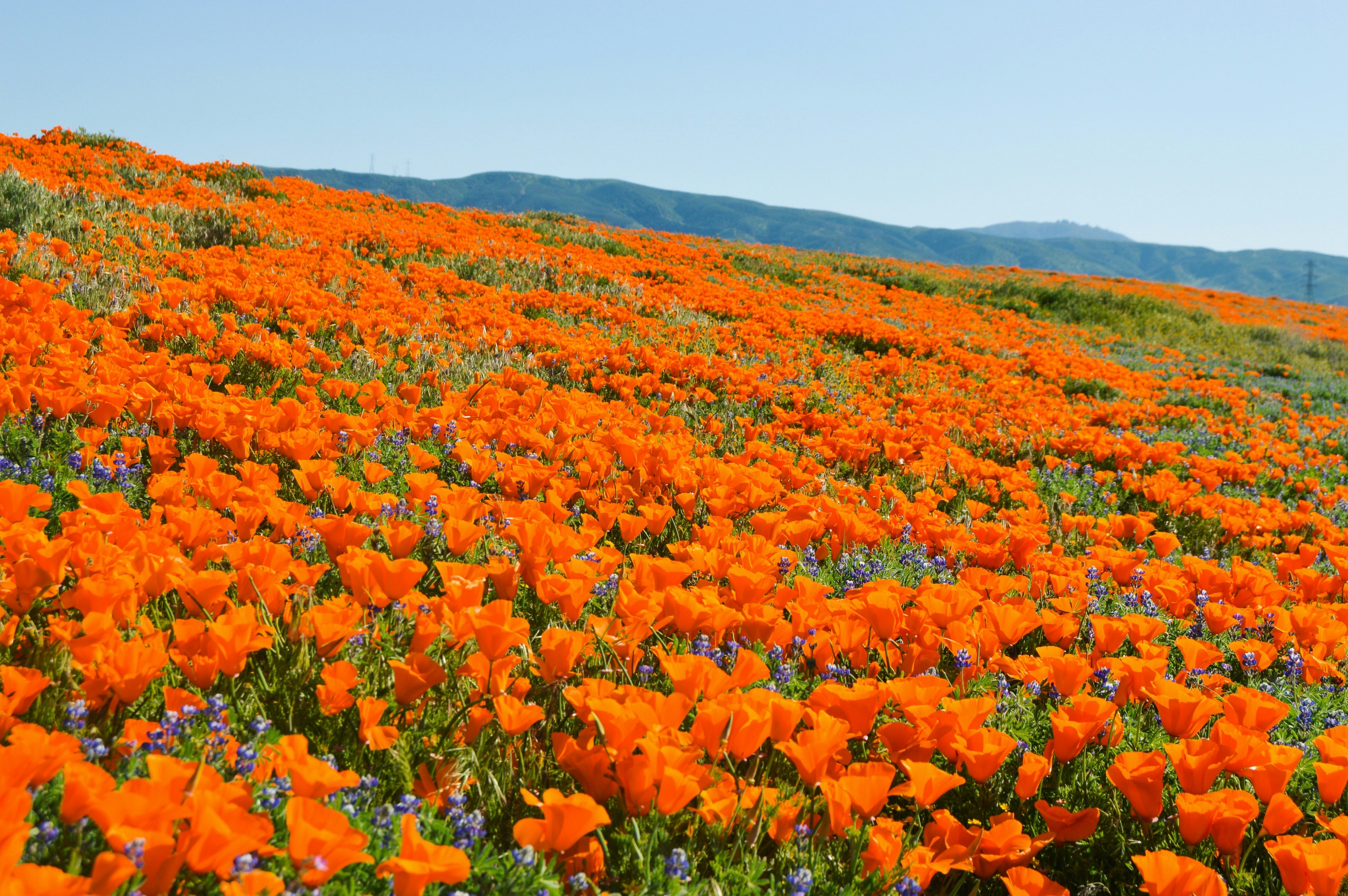
The California poppy is a masterclass in resilience. As a universal symbol of remembrance and hope, this delicate flower possesses a rugged secret. It thrives in some of the most challenging environments on earth, specifically germinating and flourishing in the harsh, scarred soil left behind by wildfires.
While a desert superbloom relies entirely on the unpredictable rhythms of weather, one community in Southern California decided not to wait for perfect conditions. They chose to actively orchestrate their own recovery.
The Ashes of Altadena In January 2025, the devastating Eaton Fire swept through the foothills of Altadena, California. The blaze destroyed thousands of structures, claiming homes, businesses, and irreplaceable personal histories.
Among the survivors was René Amy, a longtime community activist. The fire consumed his home and, in a cruel twist of irony, his native wildflower seed business called Altadena Maid Products. He lost his entire inventory to the flames. But instead of surrendering to the devastation, he immediately began volunteering at local shelters and looking for ways to heal his neighborhood.
The Great Altadena Poppy Project Understanding the deep psychological toll of the fire, René launched the Great Altadena Poppy Project. His vision was breathtakingly simple but massively ambitious: blanket the fire-scarred town in vibrant color by planting poppies – millions of them.
A century ago, golden poppy fields covered Altadena so densely that tourists traveled from across the country just to witness the bloom. René wanted to restore that legacy and offer his neighbors a tangible sign of life returning to their barren lots.
He initially purchased 120 million seeds with $20,000 of his own money and invited fire-impacted residents to sign up for free seeding services on their impacted properties. The response was overwhelming. Hundreds of homeowners asked to participate. Thanks to an outpouring of community support and anonymous donations, the project expanded its goal to sow a quarter of a billion seeds across more than 700 properties.
Orchestrating a Bloom This effort is the ultimate example of community orchestration. René and his crew of volunteers traverse the burn zones, spreading seeds across empty lots and blackened earth. Local scout troops pack envelopes of seeds to distribute globally, allowing friends and family far away to plant their own flowers in solidarity.
They are not just planting flowers; they are actively rehabilitating the degraded soil, preventing erosion, and providing a massive food source for local pollinators. Most importantly, they are giving traumatized residents a reason to look forward to the spring.
The Togetherhood Takeaway When we face immense loss or walk through a difficult season, it is easy to look at the scorched earth and assume nothing will ever grow there again. The residents of Altadena remind us that we do not have to passively wait for healing to arrive. We can plant the seeds of our own recovery.
Perhaps the most inspiring aspect of this entire project is its absolute lack of formal bureaucracy. René Amy did not wait to incorporate a nonprofit, assemble a board of directors, or build a complex fundraising platform. He just bought seeds and started asking his neighbors to help. This operates as pure mutual aid. It proves that you do not need a massive organizational apparatus or a corporate budget to orchestrate a community transformation. You simply need a good idea and the willingness to do the work.
Imagine what our country would look like if we all took this grassroots approach to our local ecosystems. A nationwide sight of vibrant, resilient flowers pushing through the cracks would be a powerful testament to our collective strength.
You can get involved with the Altadena project directly and bring this exact DIY energy to your own neighborhood right now.
- Fund the recovery: While the poppy planting operates informally, the community still needs immense support for ongoing rebuilding and soil rehabilitation. Donating to the Altadena Community Preservation Fund provides direct financial assistance to the fire survivors.
- Send seeds of solidarity: The project actively encourages people nationwide to purchase and plant native seeds in their own yards in solidarity with the residents, creating a networked superbloom across the country.
- Plant a local blend: While California poppies thrive out West, creating a resilient ecosystem locally requires native species adapted to our specific climate. Instead of planting poppies, source a specific wildflower blend native to your area. In New York, that blend could contain Lanceleaf Coreopsis, Purple Coneflower, and Black-Eyed Susan. Scattering these in tree beds, empty lots, or window boxes around NYC creates a vital food source for local bees and birds.
- Support local restoration: Channel the energy of the poppy project into ongoing efforts in our home area. In New York City, volunteering with the Brooklyn Greenway Initiative or local community gardens helps build the exact same kind of resilient infrastructure René Amy is building in California.
- Be the orchestrator: Do not wait for someone else or a formal organization to beautify your street. Organize your neighbors, share resources, and create the conditions for your community to thrive.
Nature teaches us that even the most devastating fires eventually give way to new growth. We just have to be willing to do the planting and ask others to join us in our efforts.


