“I like living. I have sometimes been wildly, despairingly, acutely miserable, racked with sorrow; but through it all I still know quite certainly that just to be alive is a grand thing.” ~Agatha Christie
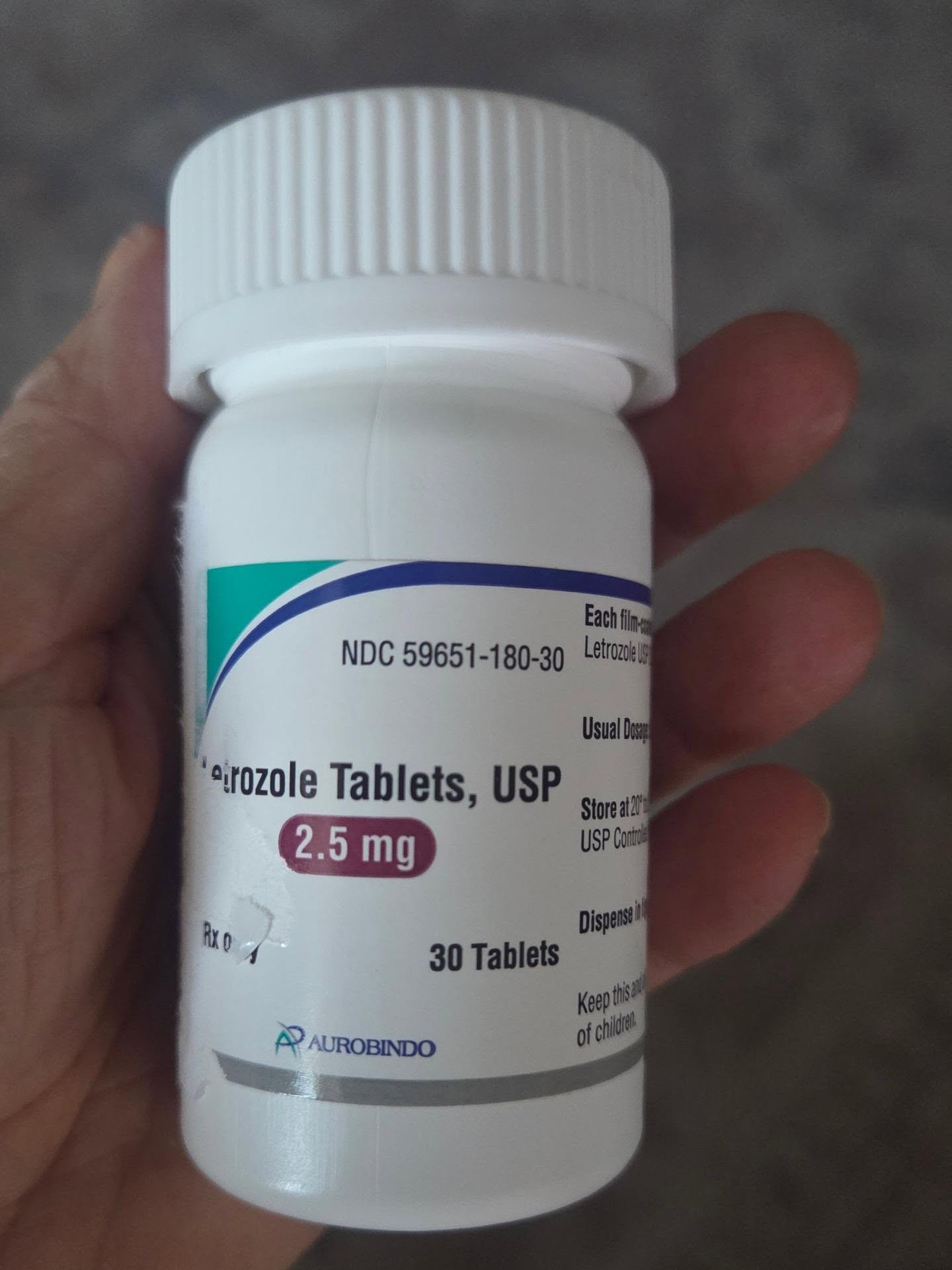
To make sure I never forget to take my meds and supplements, I parse them out each week. Today, I parsed out my last 2 pills of letrozole and tossed the empty bottle in this photo into the recycling bin. And I smiled and cried.
I’m grateful for its service; it’s kept me alive and cancer-free for the 5 years and 3 months I’ve taken it. And I’m so looking forward to bidding it farewell; the painful and difficult physical, mental, and emotional side effects have been a daily struggle to bear. And I have mostly carried them in silence so they wouldn’t overtake me.
Inching closer to ending one chapter and beginning another, I’ve felt a shift. That something in me is changing. That my small corner of the world around me is changing. That this is about so much more than switching medications.
It’s about getting to begin again. To reshape my life. To build back better, from the inside out. In the immortal words of Whitesnake, I don’t know where I’m going but I sure know where I’ve been. And I can’t wait to see what lies ahead. It will be grand just because I get to live it. I’m ready for an adventure.
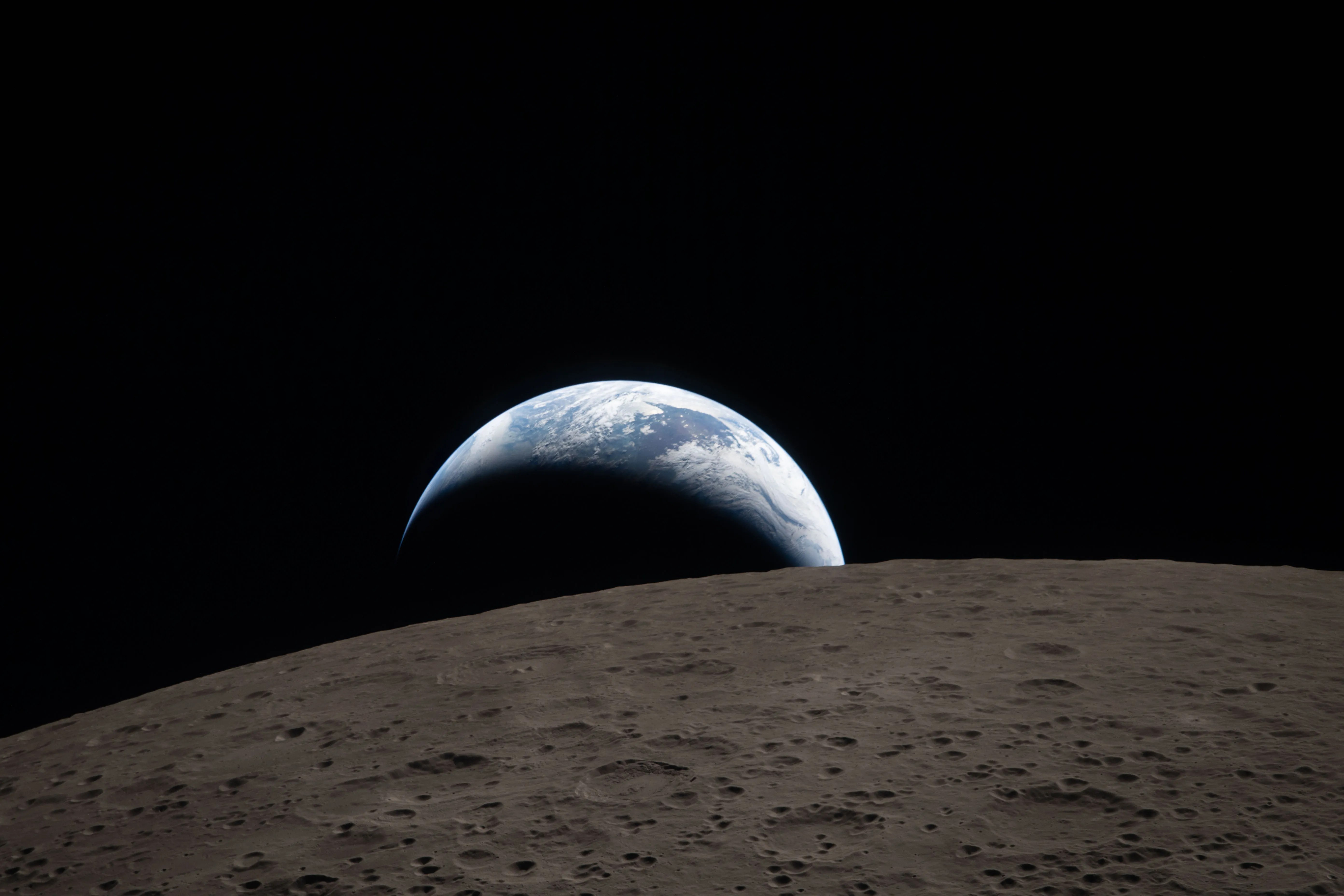
This week, four astronauts aboard the Artemis II Orion spacecraft achieved something humanity has not done in over fifty years. They flew around the far side of the moon, traveling farther from Earth than any humans in history – 252,760 miles. As they passed behind the lunar surface, they turned their cameras back toward home and captured a breathtaking Earthset, watching our bright blue planet sink behind the desolate, cratered edge of the moon. Looking at all of the media coming from the mission gives me chills in the best way.
The Cognitive Shift When astronauts view our planet from this immense distance, they often experience a profound cognitive shift known as the Overview Effect. From 250,000 miles away, they can’t see political borders, neighborhood disputes, or ideological divides. They see a single, fragile ecosystem. They realize that every being, be they a person, animal, or plant, shares the same life support system and collectively, the same destiny. We all only have one home and it belongs to all of us.
A Floating Laboratory for a Sustainable Earth People frequently wonder why we invest in space exploration when we face so many massive challenges right here on Earth. The answer is that a deep space capsule is the ultimate testbed for our future. We do not explore space to abandon our home planet; we explore space to discover the exact tools necessary to protect it.
To survive a lunar mission, astronauts cannot waste a single resource and a vast group of people with different talents and experiences must work together as a cohesive team with a singular shared mission – bring them all home safely. They must operate a circular economy. NASA engineers design advanced filters to scrub carbon dioxide directly out of the cabin air—technology that now forms the foundation of direct air capture facilities fighting global warming today. They develop systems to recover and purify every drop of moisture, translating directly to water filtration for drought-stricken communities. They conduct experiments on high-yield indoor agriculture to feed the crew without the benefits of direct sunlight or nutrient-rich soil, helping us understand how we can grow food in harsh environments. Staging this mission also requires the development of stronger, lighter materials that translates into the conservation of valuable resources.
Alongside this climate engineering, the Artemis II crew is conducting experiments that directly advance medical science. They carry microchips containing living human bone marrow tissue to study exactly how deep-space radiation and microgravity affects human cells. They monitor their own biological responses to understand why and how extreme stress alters the human immune system. Solving these medical challenges in space paves the way for individualized cancer treatments, tools to predict and treat chronic conditions, and advanced healthcare innovations that test drugs and vaccines. All of this research means that the astronauts are both scientists and test subjects. What we learn from these missions directly translates to helping all of us build a better healthcare system.
Orchestration on a Massive Scale The mission also represents the ultimate example of community orchestration. Sending a crew around the moon and safely bringing them back is never the work of one isolated visionary. It requires a massive, synchronized ecosystem of engineers, technicians, and scientists across the globe. Thousands of people must set aside their individual egos and operate with absolute trust in one another to navigate the unknown.
The Takeaway We do not need to launch into orbit to apply the Overview Effect to our daily lives. When we get stuck in the weeds of local disputes or feel overwhelmed by the friction of community building, we simply need to change our vantage point.
We can actively choose to step back and look at our neighborhoods as unified ecosystems.
Change your altitude to change your attitude: When a conflict arises in your community, intentionally zoom out. Ask yourself how this specific disagreement affects the overall health of the neighborhood ecosystem rather than just your immediate block. Then help other people zoom out as well to gain the same benefits of perspective.
Acknowledge the shared ship and the shared journey: Remind yourself and your neighbors that you all rely on the same local infrastructure and green spaces, and that collectively you are building your local economy to benefit everyone. You succeed or fail together.
Orchestrate across borders: Look for ways to connect your local initiatives with efforts in neighboring communities. A thriving garden in your neighborhood benefits the pollinators across your city and beyond.
Translate the research: Take inspiration from the Artemis crew. Look for ways to do small experiments and use the solutions you develop through those experiments to help your community and share with adjacent communities.
Nature requires us to act as a unified whole. We just need the right perspective to see it. Luckily for us, the crew of Artemis II is helping all of us to keep looking up.
Yesterday I spent some time talking to a friend of mine who’s a real estate agent. She’s helping me get on a path to homeownership here in New York, which is not a task for the faint-hearted. After talking about my financial picture, we talked about the idea of willing dreams into existence. This last set of years have at times been extraordinarily difficult for me and greatly blessed. All in, they have led me to the place I am now: in my favorite neighborhood in my favorite city, starting what I have high hopes will be a dream job, and a book 8 years in the making about to be published in just over a month. A year ago, this scenario was unlikely. Hell, it felt flat-out impossible. Today, it’s my everyday life, and I don’t take a single moment of it for granted. It’s not perfect, but I’m extraordinarily grateful for it, even in the moments when I’m most challenged. With effort and a belief in the wisdom of what we don’t yet know or understand, life becomes exactly what we imagine it can be. Every difficulty and blessing I’ve had was needed; each one played a role in making my life today possible. Perspective is a beautiful thing.
“I like nonsense, it wakes up the brain cells. Fantasy is a necessary ingredient in living; it’s a way of looking at life through the wrong end of a telescope. Which is what I do, and that enables you to laugh at life’s realities.” ~Dr. Seuss
Escaping through books is a valuable exercise whether you’re a writer, a reader, or both. When we let go of the world we know and enter into another world, that distance gives us greater perspective. We breathe a little easier. Our muscles relax. A little distance, a short escape, can help us see more clearly and act with more purpose.
If you’re wrestling through a challenge right now—personal or professional—take a break. Read a book, preferably one that has absolute nothing to do with the challenge you’re trying to manage. Let the dust settle and let your mind go somewhere else for a while. You’ll be surprised by what appears.
“You made a misstep, but you were walking in the right direction.” ~Frank Reagan, Blue Bloods
Sometimes the best intentions and efforts don’t get us exactly what we want or exactly where we’d like to go. Life isn’t always a linear path. (My life is never a linear path!) I used to bemoan my missteps and chastise myself for making them. On occasion, I still do. Maybe you do, too. This quote above gave me a different way of thinking about my missteps.
I’ve always put my best foot forward in everything I’ve done and because of that, I’ve started to look at my efforts over time rather than only as individual events. Over time, the missteps in the right direction added up to something larger than the sum of its parts. They added up to a life and career that has been anything but dull and something far more exciting than I ever imagined they would be. So what’s next? Who knows? But I know it’s going to be in the direction of building a better world.
“Dear Ocean, thank you for making us feel tiny, humble, inspired, and salty…all at once.” ~Unknown
Nature has a way of doing this to us—giving us perspective while also giving us a deep strength and resolve. We begin to see that we are part of something bigger, and that has the dual-advantage of giving of humility and confidence. I can’t think of a better way to feel better about the world and our role in it than to spend time outside. A little fresh air helps us realize that anything is possible.
“Enlightenment is that moment when a wave realizes it is the ocean.” ~Thich Nhat Hanh
We have more options than we think we do. I had two great back-to-back conversations yesterday that helped me realize just how many possibilities are open to me and how to bring them to fruition. It was one of the most empowering and hopeful afternoons I’ve had in a long time. Those conversations didn’t change any of my circumstances; they just helped me see things in a different way. They changed my mind and my perspective; in other words, they changed everything.
“I don’t consider myself an optimist or a pessimist, but rather a possibilist.” ~Hans Rosling, edutainer, data scientist, and inspiration
I like Hans’s outlook. It helps us make the most of good times, and keep tough times in perspective. It keeps us looking forward instead of looking back. It keeps us from getting stuck in a job, or a city, or a relationship that doesn’t work for us. It keeps hope alive, and makes us grateful for what we have while preventing us from getting bitter about what we don’t have. And that is a very good thing to be.
We lost Han Rosling a few weeks ago. His belief that our best days are ahead of us played out every day in his work and in his life. That’s a goal worth striving for.
Whenever something falls through and we get disappointed, it’s easy to let it ruin our day. My friend, Alex, gave me a different way of seeing disappointment. As usual, her very wise words really stuck with me and she delivered them at the exact moment I needed them. She told me that disappointment can be an opportunity to open ourselves up to unexpected fun. With the right mindset, we can turn it around. In about 30 seconds, I was feeling better. This is the power of positive thinking, and the gift of having friends like Alex to help us find our way through difficult moments.