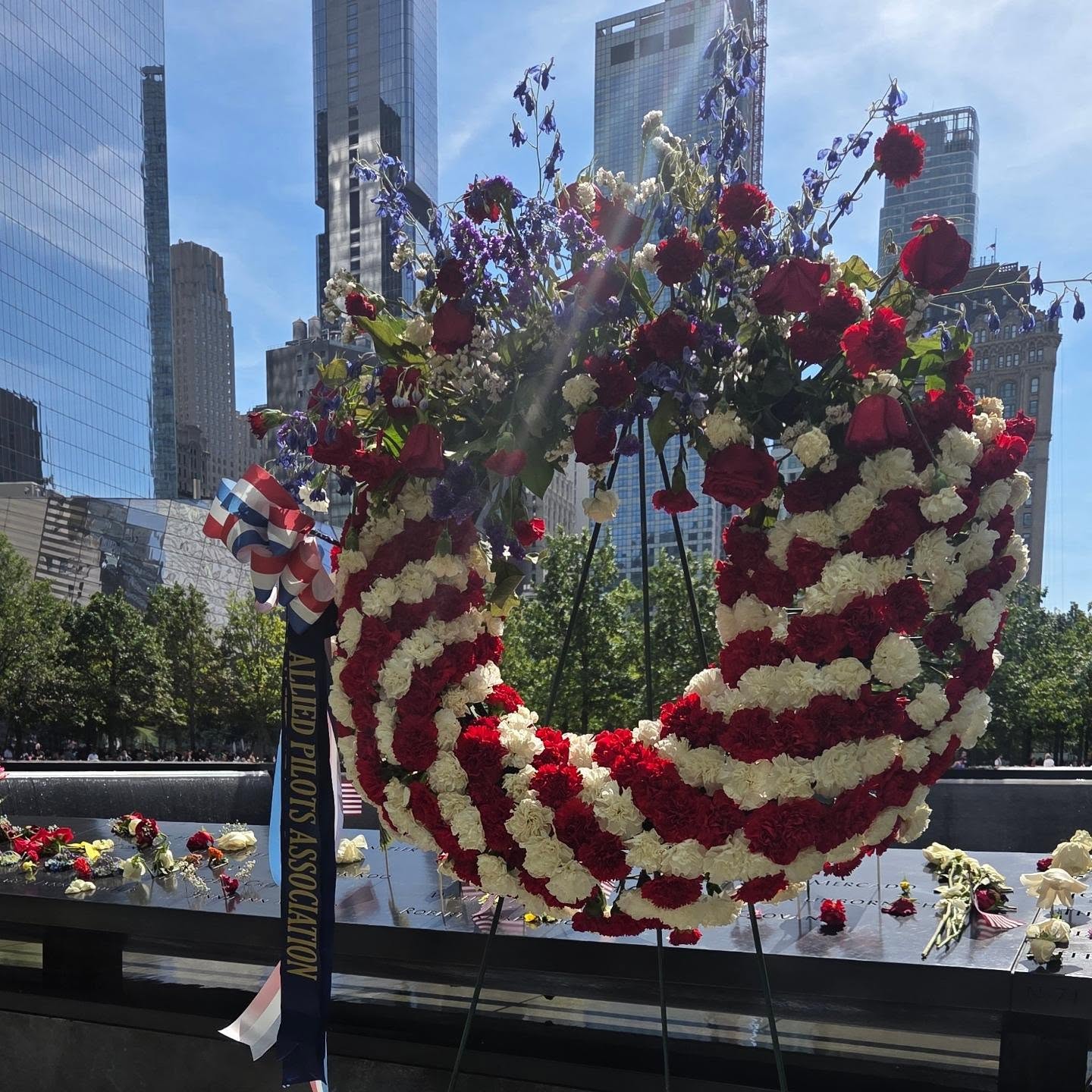
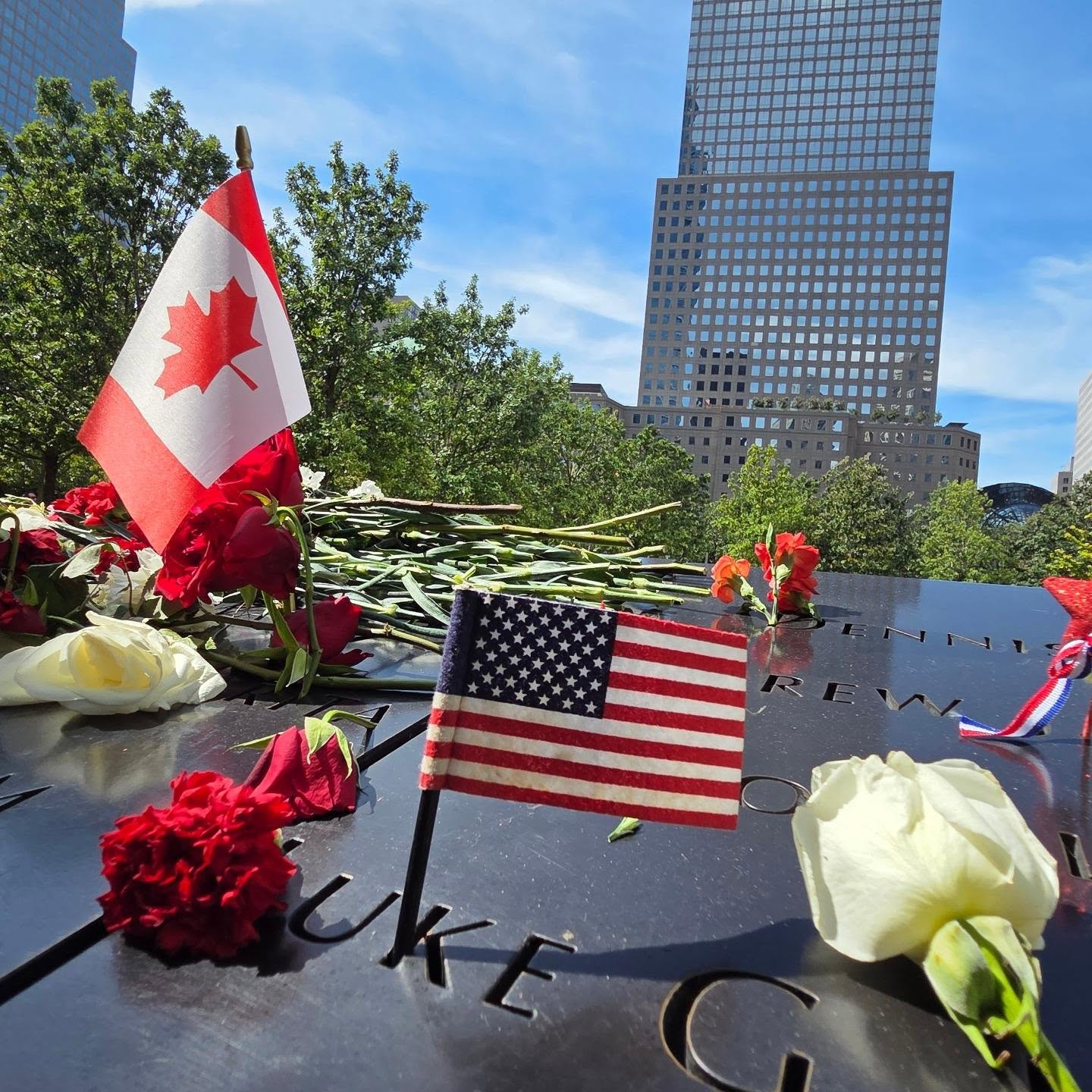
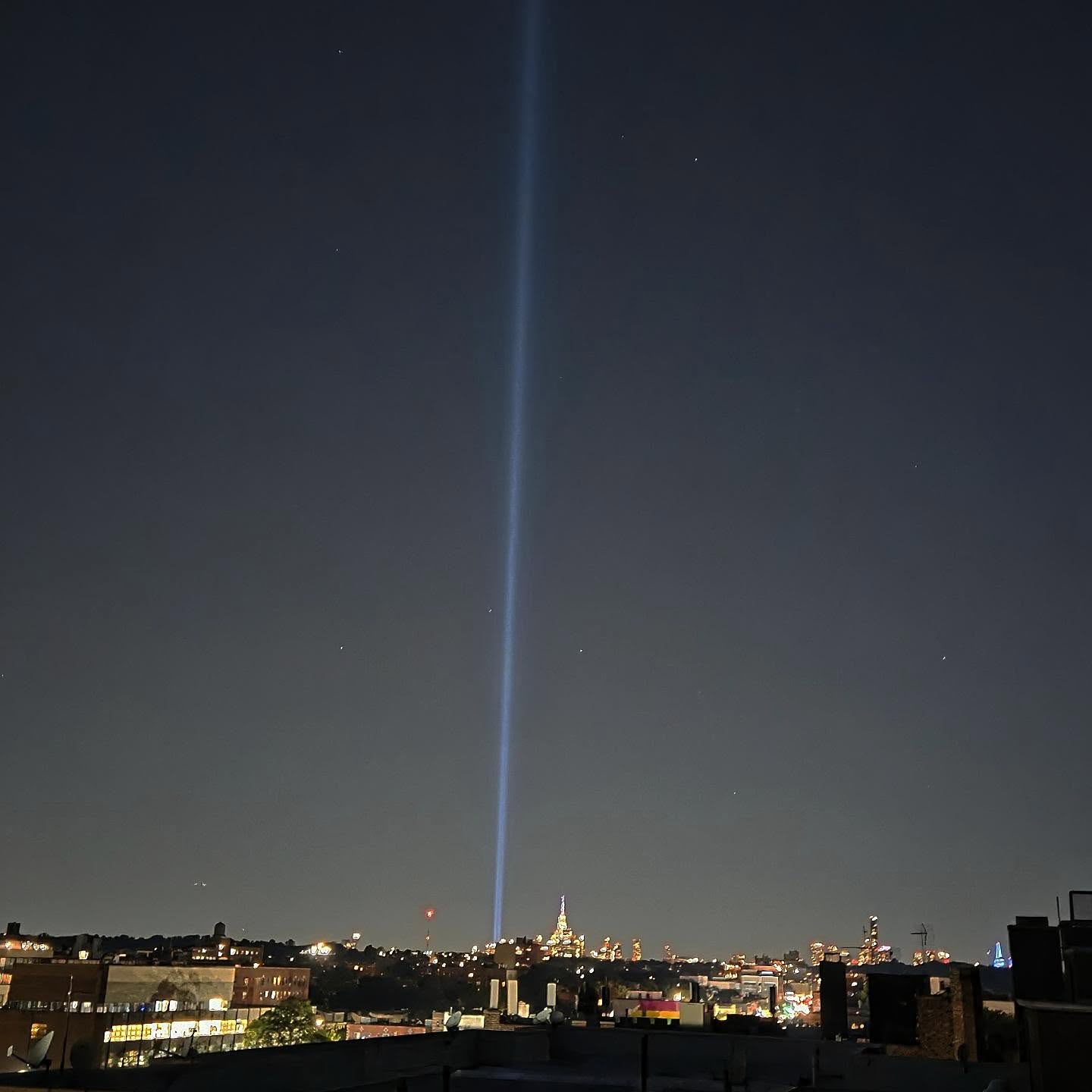
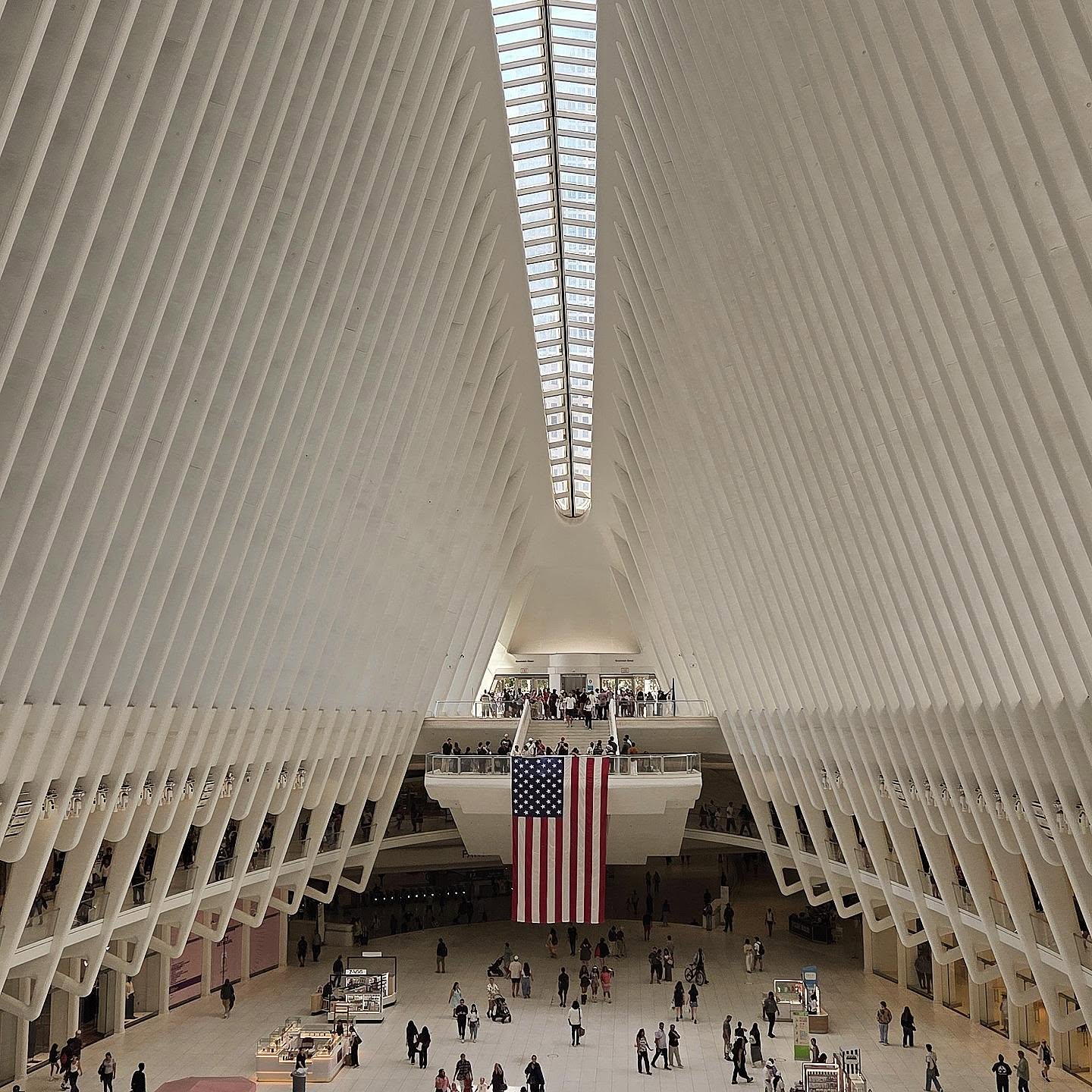
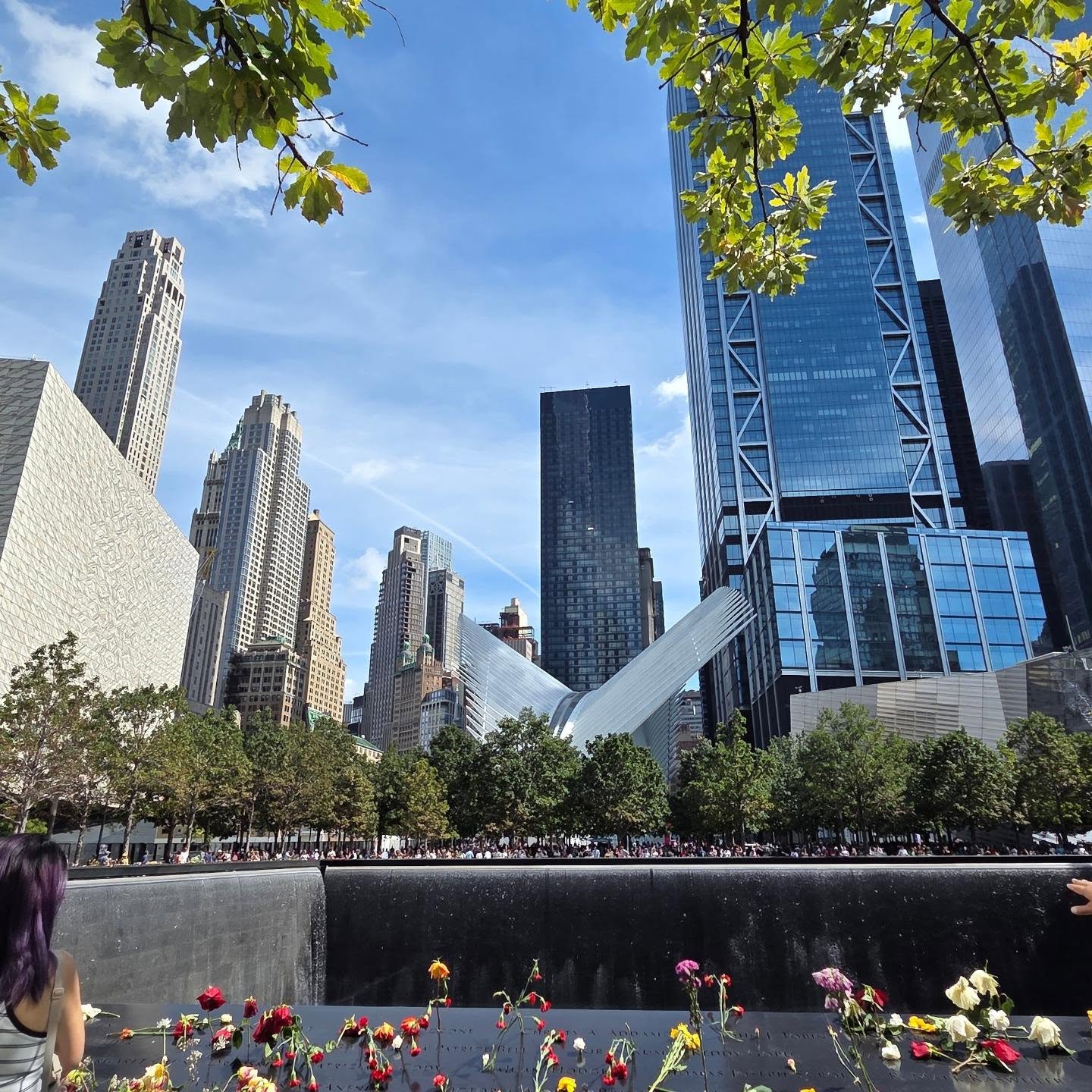
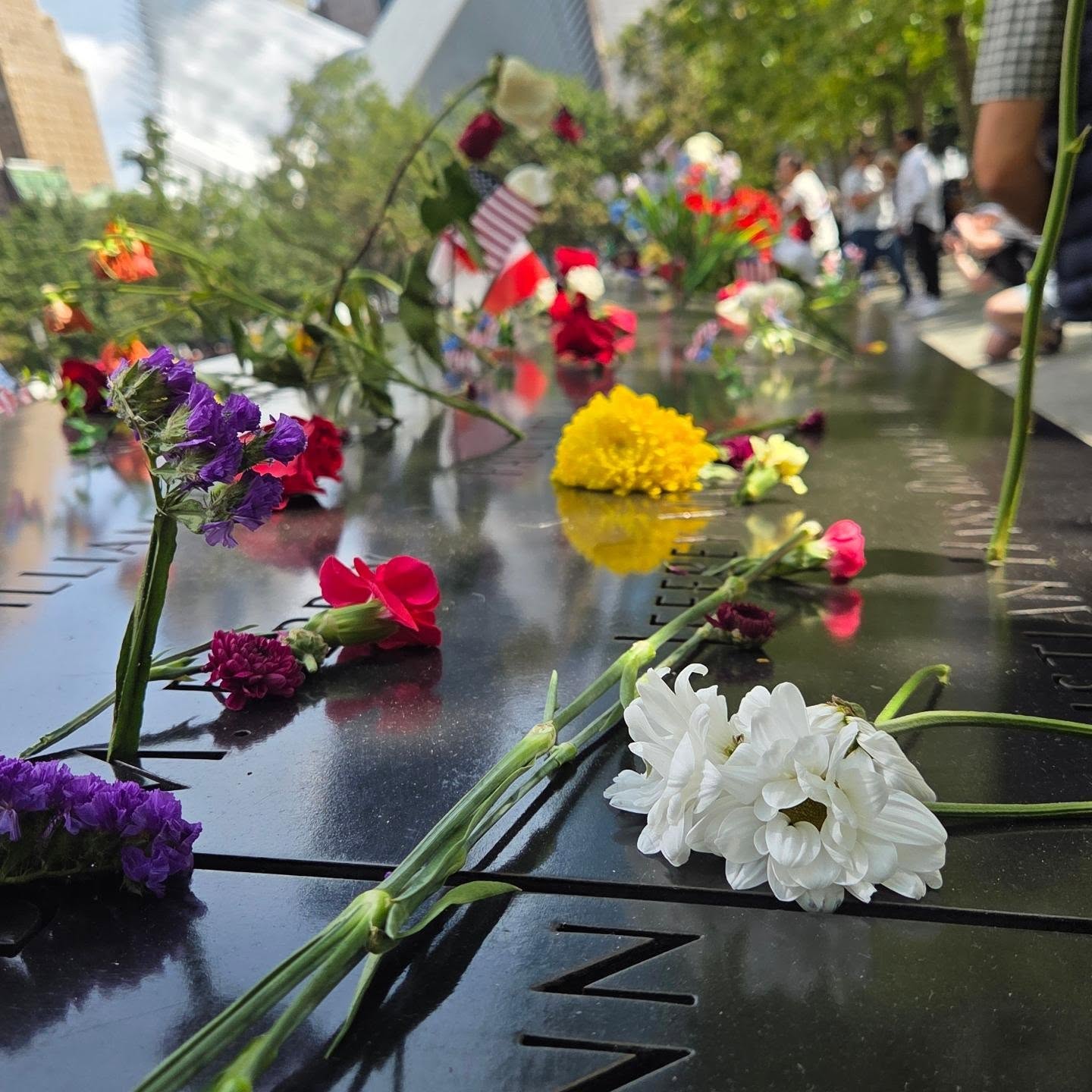
Wreath at 9/11 Memorial, NYC. Photo by Christa Avampato.
It’s my tradition to visit the 9/11 Memorial on September 12th to honor all of the challenges our city has faced every day since that tragic day. Though many people are always there, it often maintains a quiet that can be hard to find in that area of NYC. People put their hands on the names etched into the panels surrounding the pools of water flowing into the ground outlining the footprints of the 2 towers.
Last week, I read a piece where a teenager insightfully said he believes people who were alive during 9/11 look at that memorial and see something that’s no longer there, existing only in their memories. It’s such a true and beautiful observation.
I am always surprised when I go to that area now because it’s never how I imagine it. When I think of that area, I recall the many, many years it was an open pit with construction crews facing numerous hurdles while building the memorial and museum that honors everyone we lost and everyone impacted by 9/11. I worked at American Express for 4 years, and every day I walked over a footbridge that crossed that construction site. All of that is gone now, but it continues to live in my mind from those formative years of my career.
Every year, I’m reminded of how powerful memory is. How memory is often just as alive, if not more so, than what physically exists in the present. I think about how much these beloved people have missed. How much they are missed. How much they will always be missed. I think about how many people are still impacted by illnesses caused by that terrible day and the many days after. And how all of them, and all who love them, deserve justice and are still waiting for it.
Photos of the 9/11 Memorial, the Oculus, and the light beams symbolizing the towers blazing toward the sky last week from the roof of my apartment building in Brooklyn. Photos by Christa Avampato.
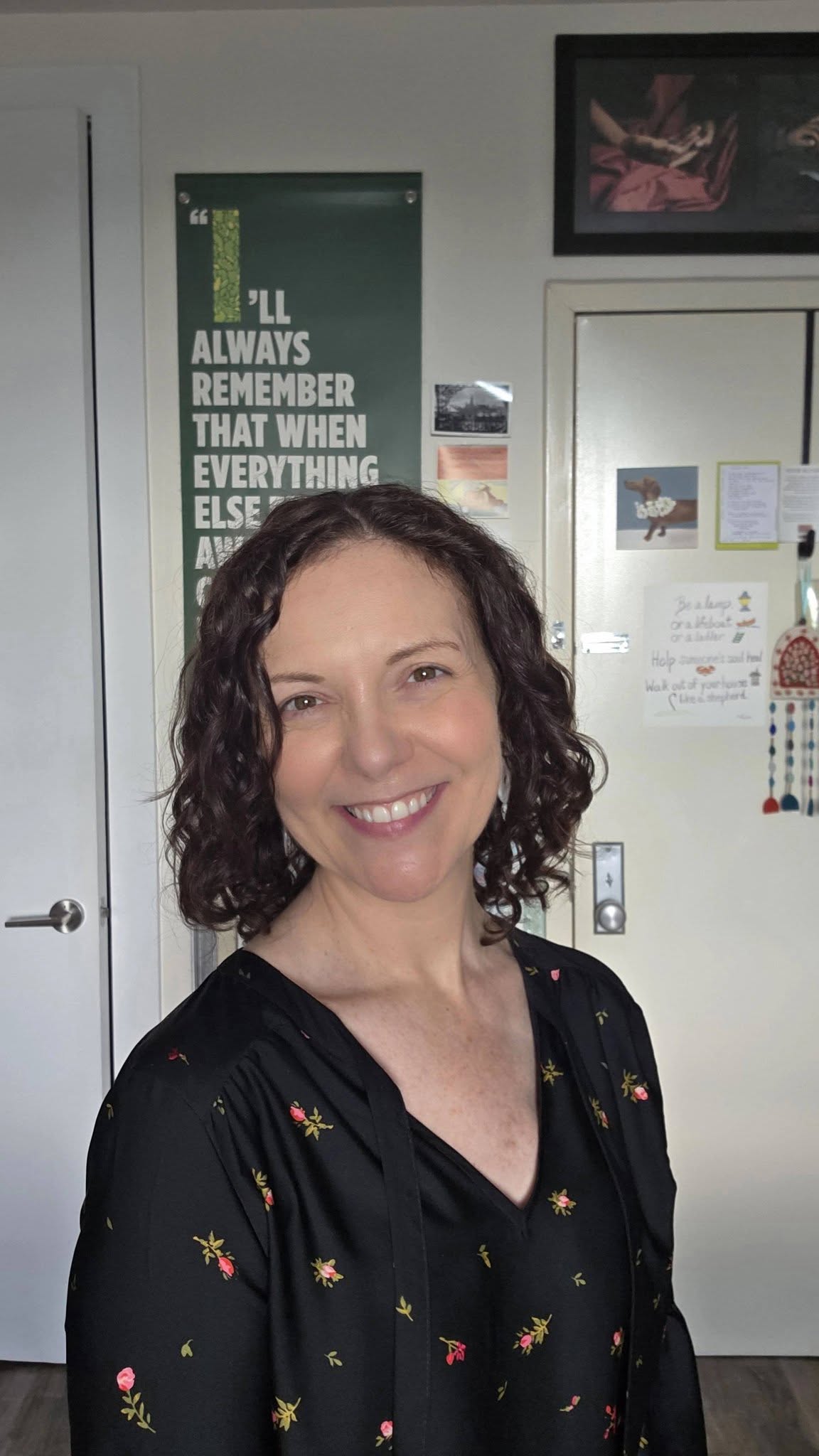
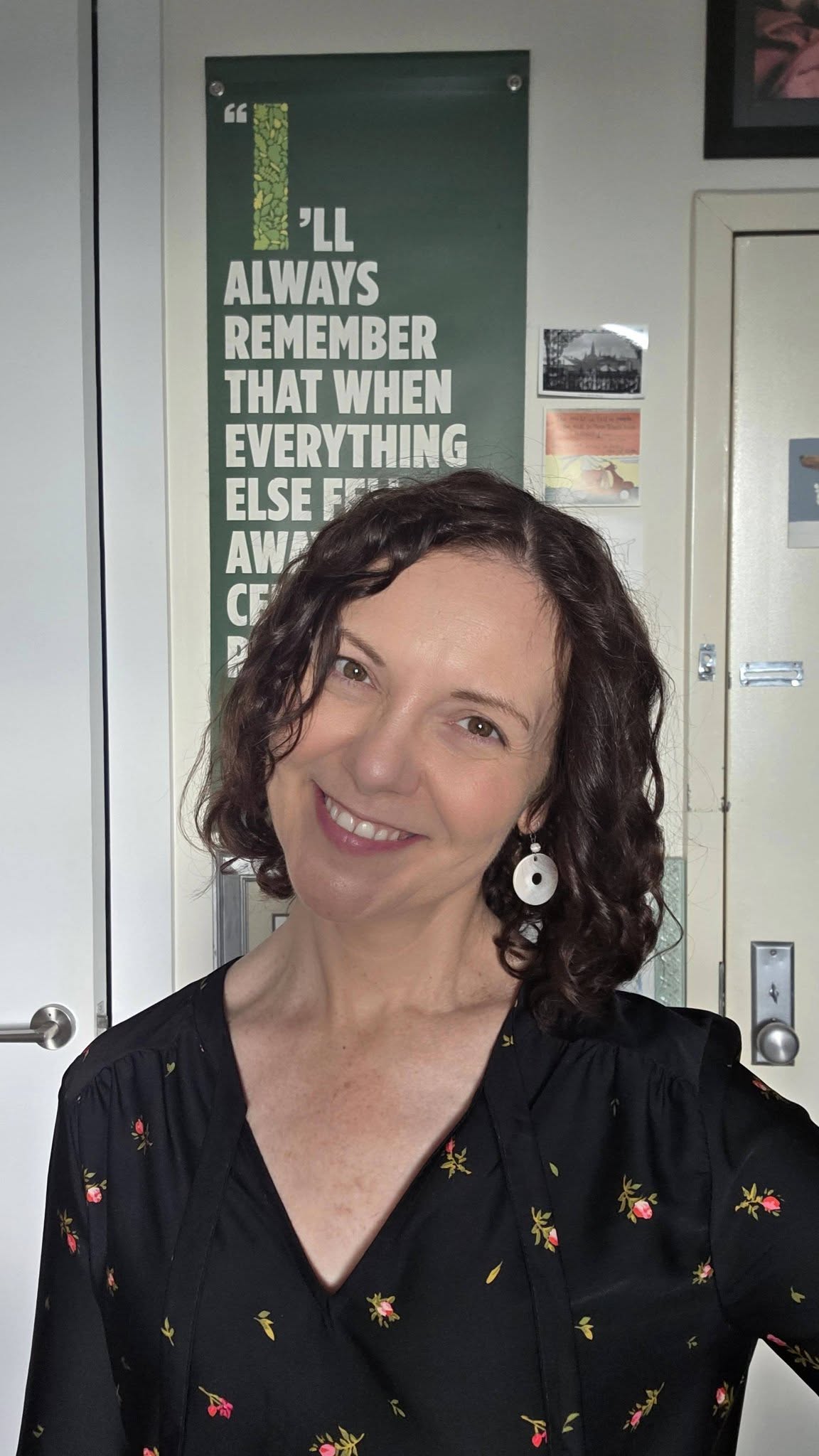
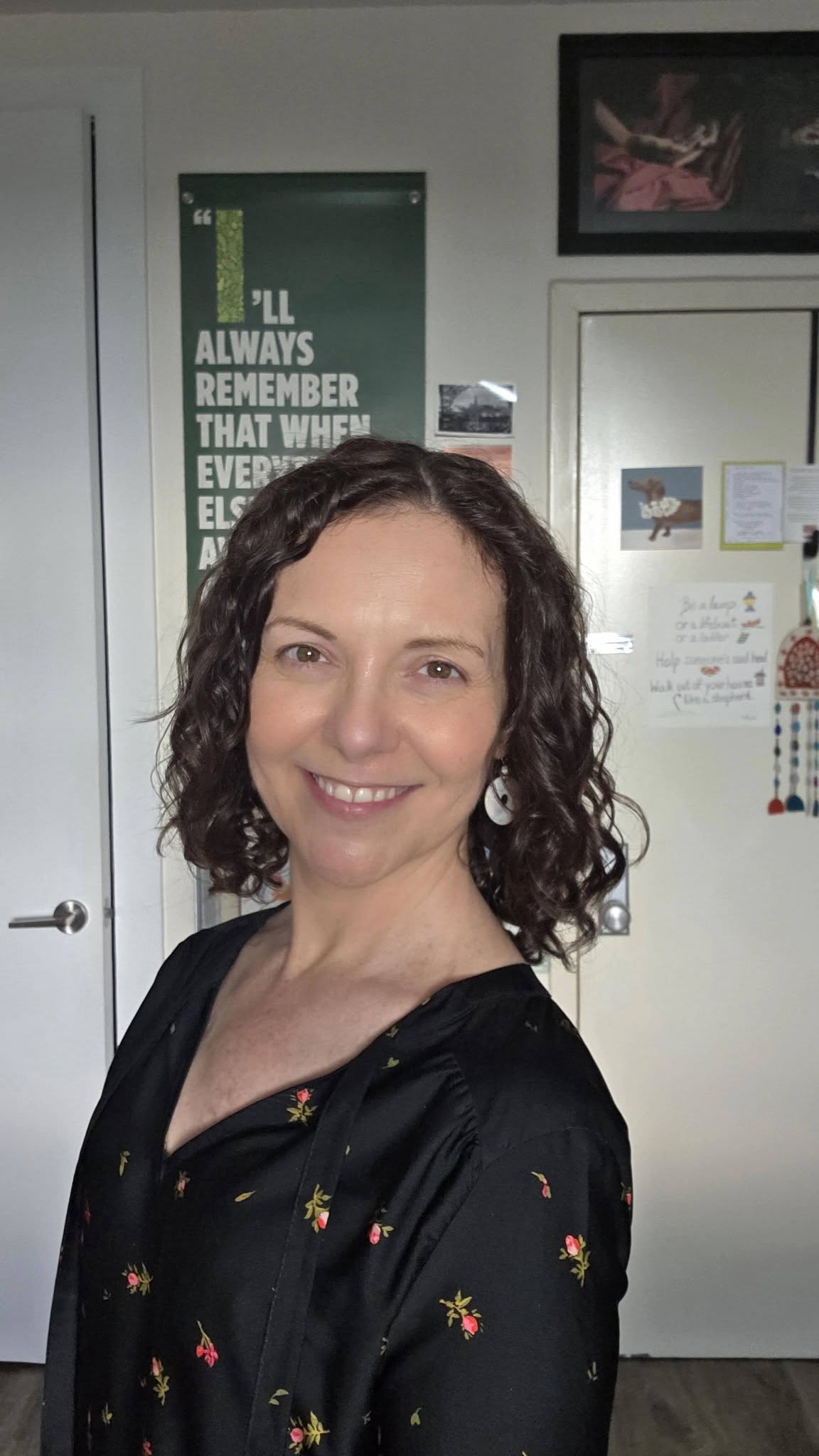
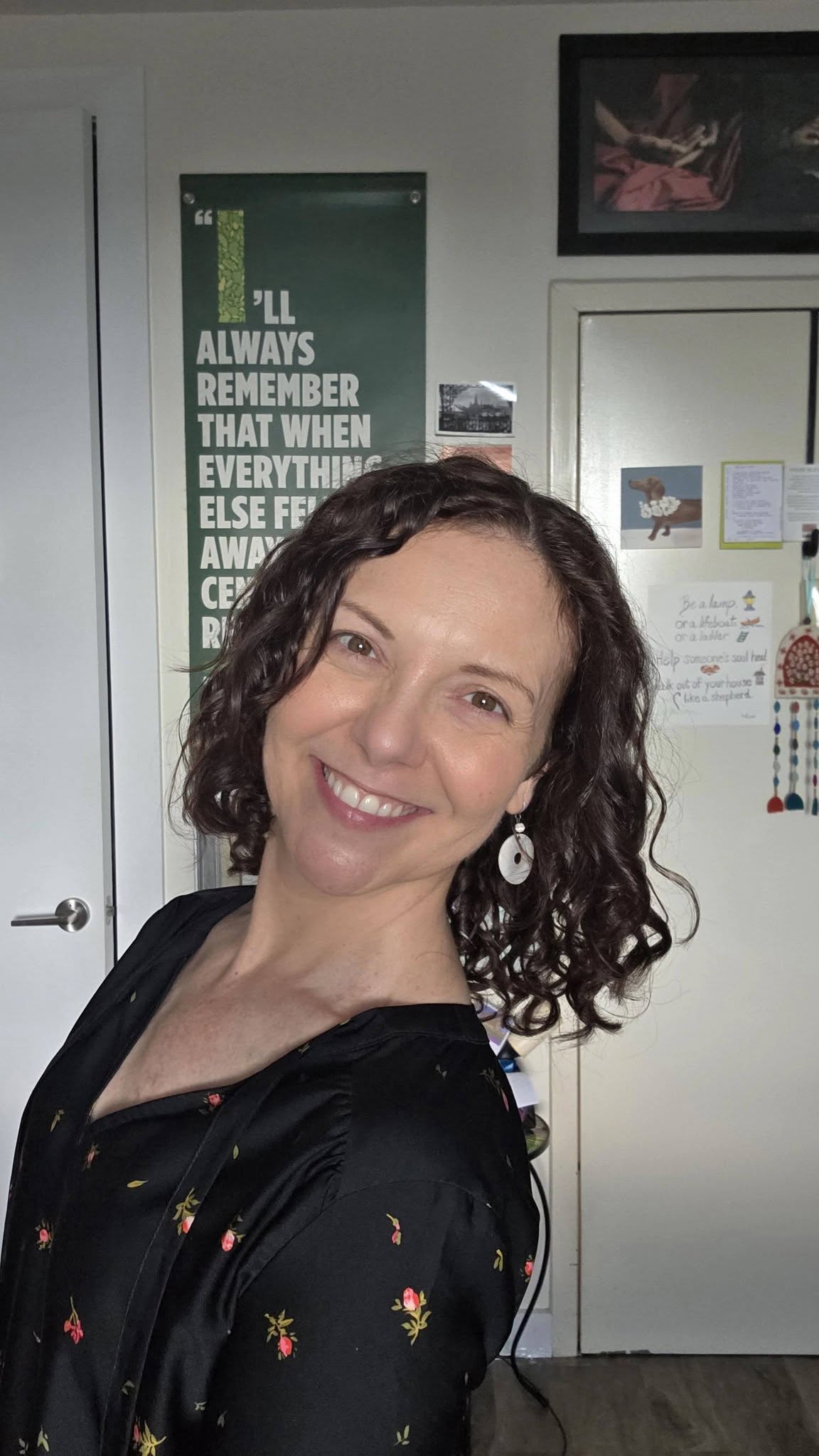
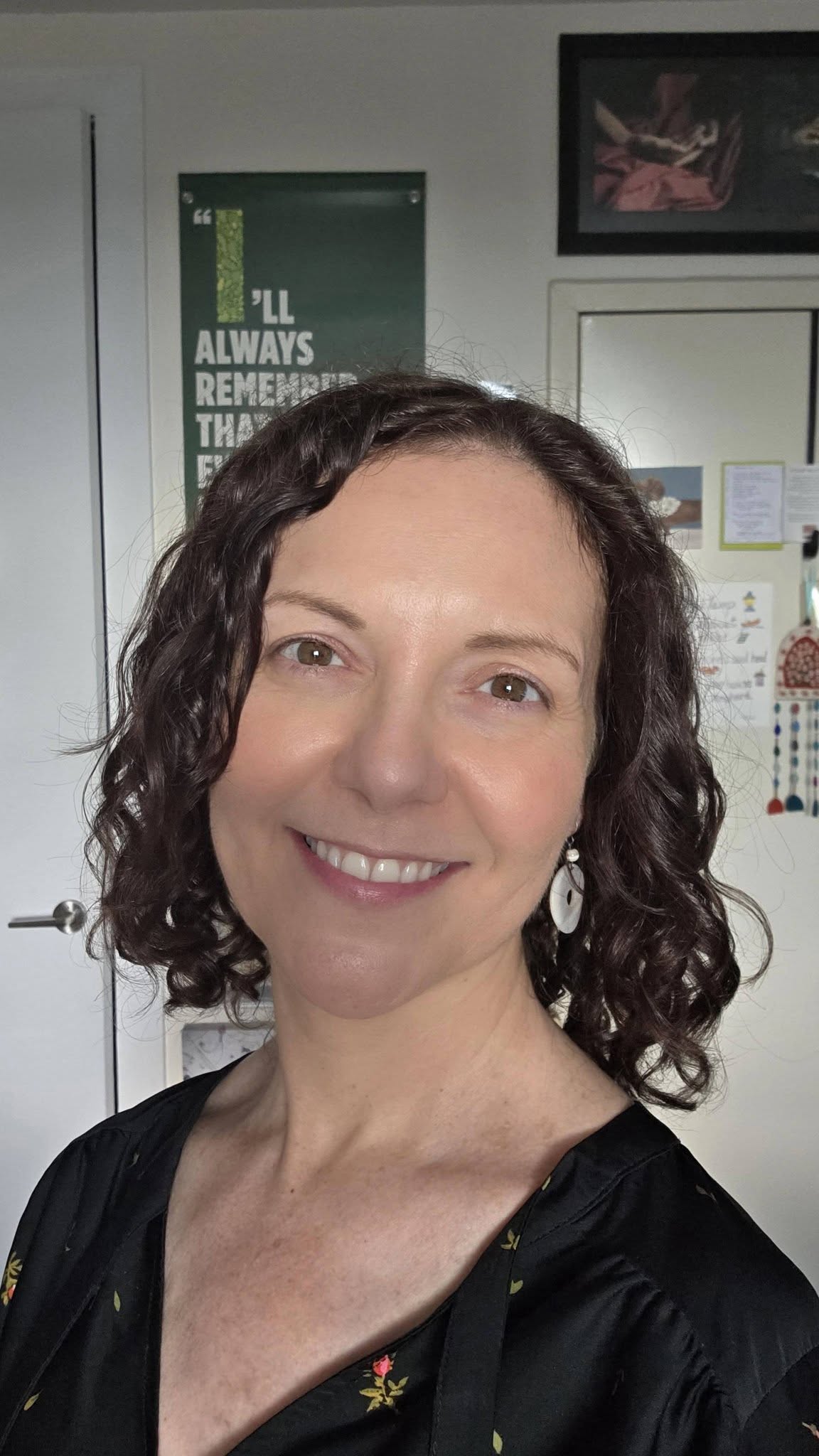
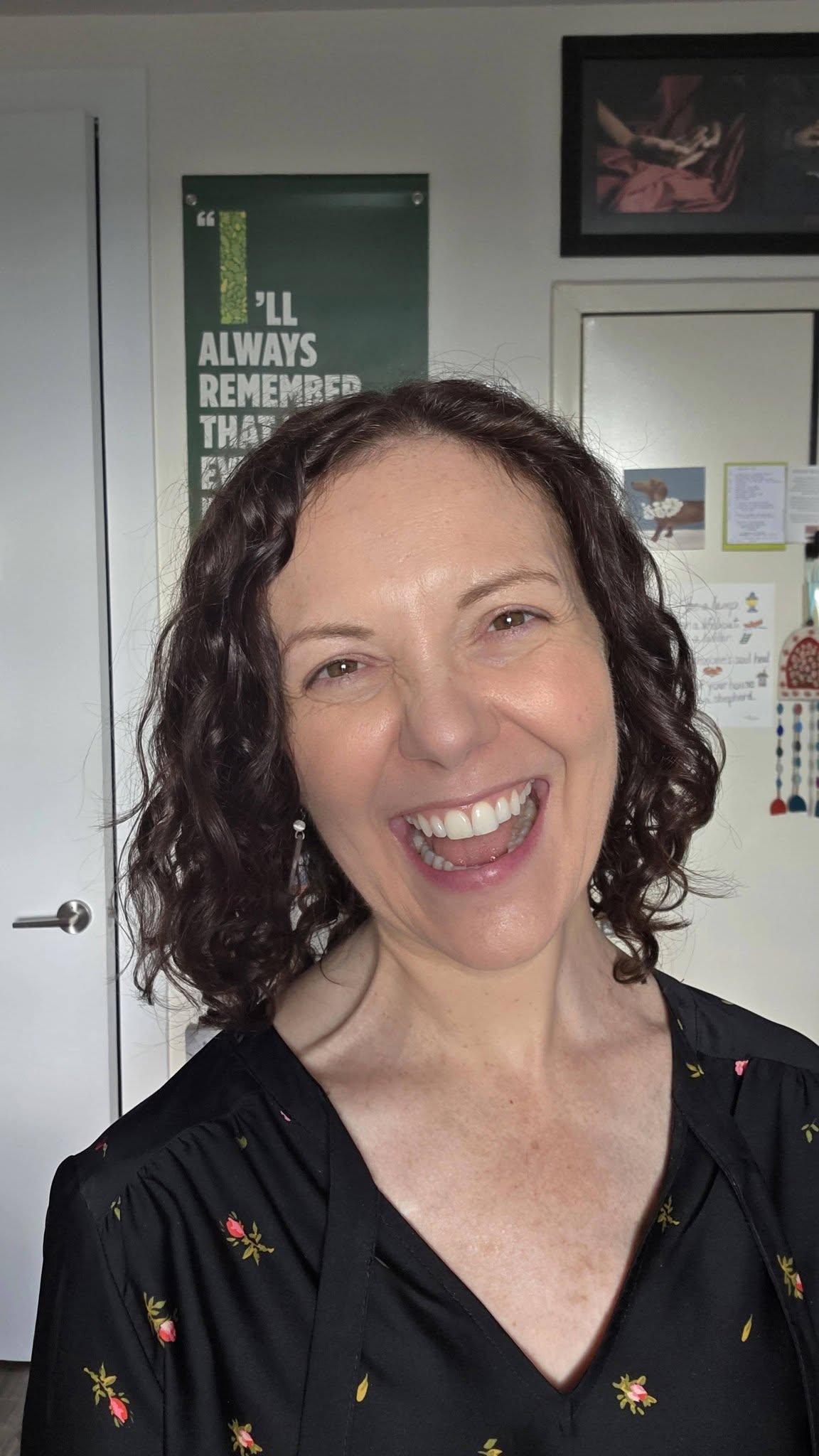
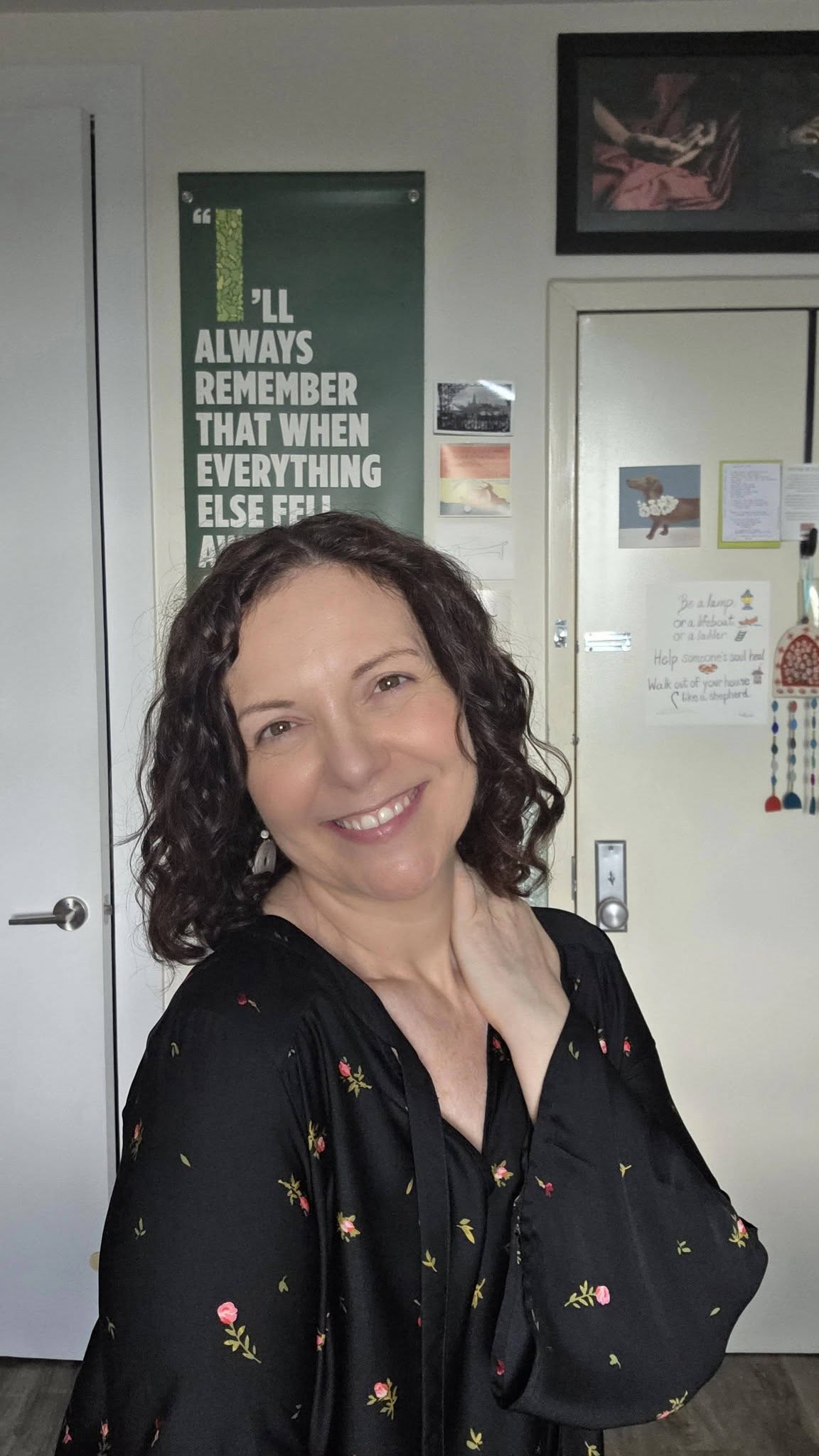
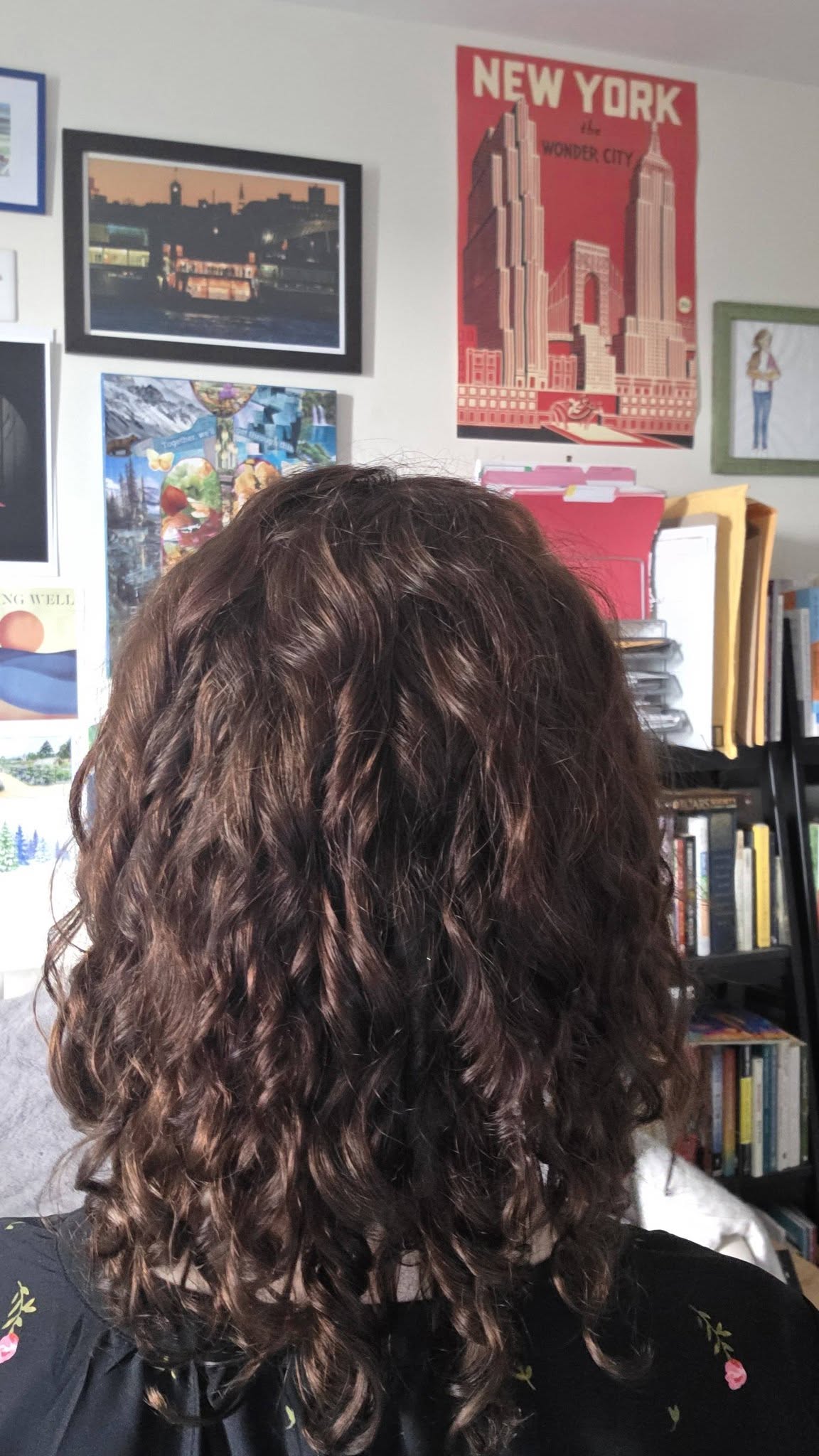
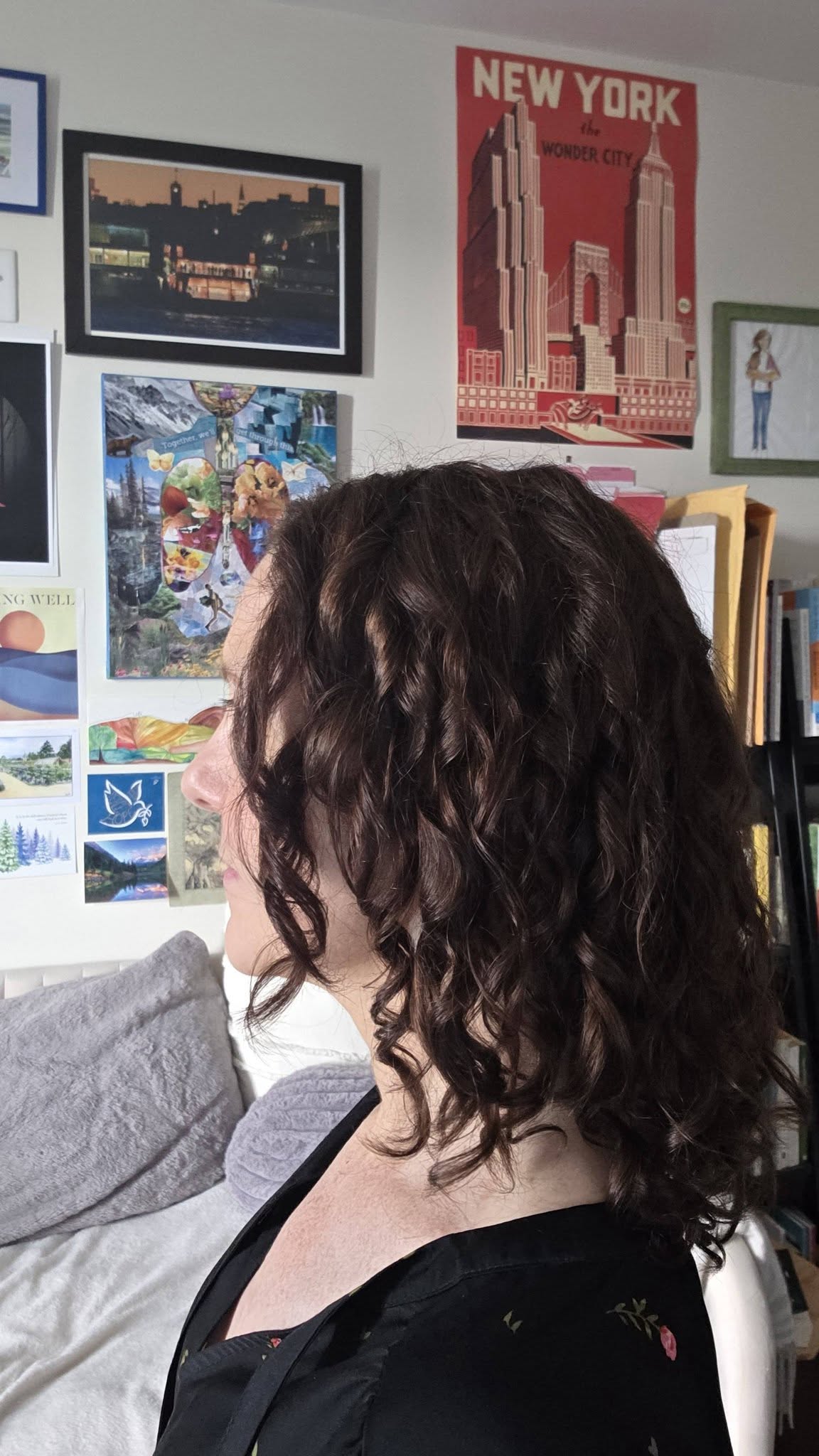
New hair. New me. My hair has quite a backstory. I haven’t sat in a hair salon chair in 5.5 years. Chemo, hormone suppression therapy, and regrowth took a lot longer than I expected, and the fear of letting go of any of my hair didn’t help. But I faced up to that fear, and here are the results from my first professional haircut since December 2020.
I’m so grateful to Penelope Love at Happy Sunshine Hair (and my wonderful Jane Cooke who connected me to Penelope!) for teaching me how to love and take care of my chemo curls that are now here to stay. She used my existing products. No upsells. No criticism. Just her talents, teaching, and support. She’s an independent stylist who rents her chair at a hair collective meaning the fee for the cut goes entirely to her, not a big brand. Happy Sunshine is a collective of 10 stylists making their way together in the beauty industry in NYC, a fashion capital of the world. (I’ll put a link to their site and Penelope’s in the comments below if you want to check them out!)
For most people, chemo curls fade after a couple of years, but I’m one of the few who is now a permanent curly girl. Penelope showed me how to own that with pride instead of mourning my original hair.
This weekend also marked a big medical shift. About 99% of the letrozole is now out of my system. The lupron will be hanging around in my system for a few more months while the tamoxifen ramps up. We’ll see how that goes!
I’m already feeling a lot better: less chronic pain in my joints and muscles, more flexibility, less fatigue and insomnia, fewer hot flashes, and less depression.
Cheers to starting a new chapter. I’m excited to celebrate with a vacation in Canada starting Monday. Let’s go have an adventure. I’m ready!
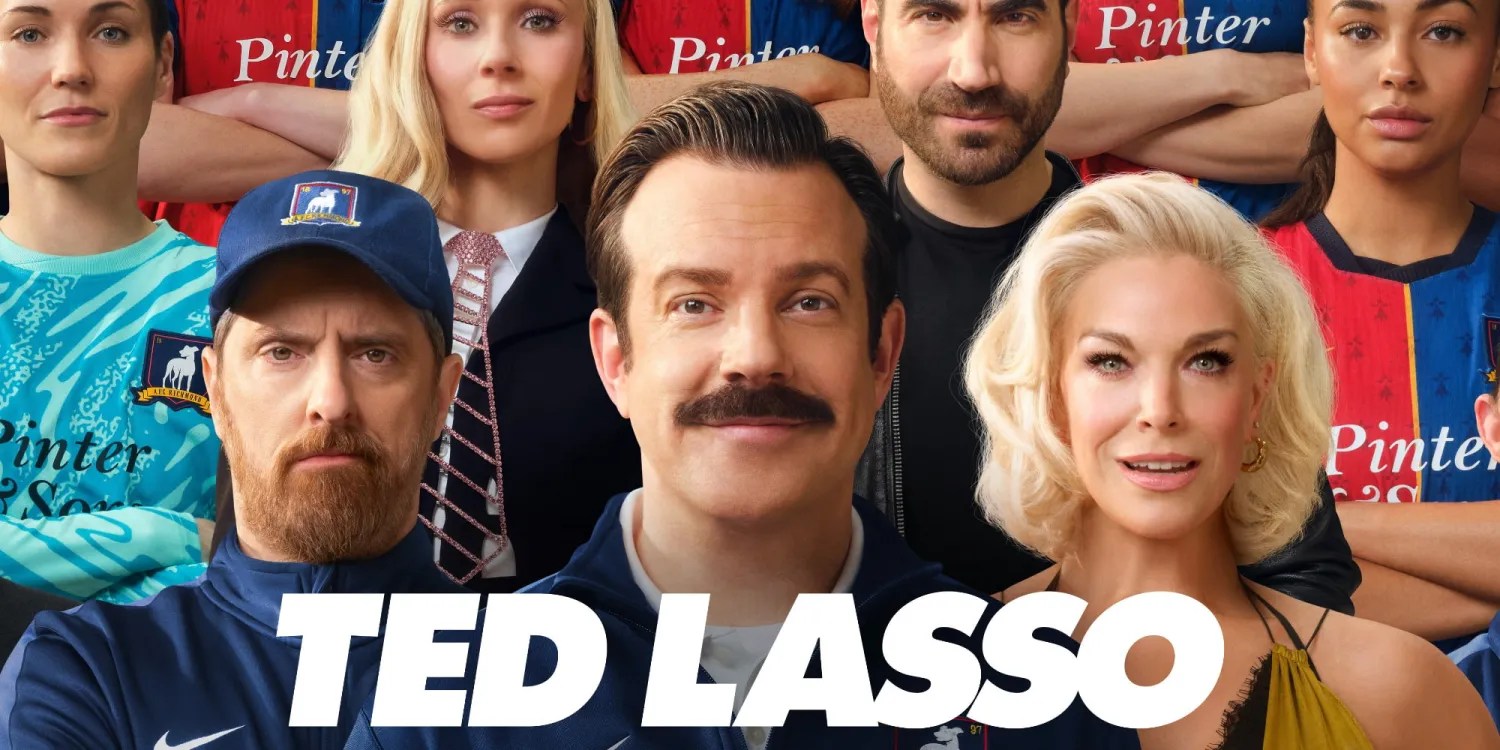
With the premiere of the 4th season of Ted Lasso launching today on Apple TV, millions of us are tuning back in for a dose of something that feels increasingly rare in the real world: unbridled optimism, radical empathy, and a deep commitment to collective care.
At first glance, a show about an American football coach running an English soccer team feels like pure entertainment. But at its heart, Ted Lasso is a masterclass in human connection. When we talk about building resilient cities, adapting to a changing world, rewilding, or strengthening our neighborhoods and ecosystems, we often focus on physical and tactile systems we can see. But none of those matter if we don’t have the trust and love that form the foundational connections to hold us together in both joyful and difficult times.
Ted and the Richmond crew give us a living playbook for how to care for our communities and each other. Here is a look at the show’s wisdom on leadership, cooperation, mental health, friendship, and why work must be about more than trading hours for a paycheck.
1. Leadership: Be Curious, Not Judgmental
“Guys have underestimated me my entire life… and it used to really bother me. Then one day, I was driving my son to school, and I saw this quote by Walt Whitman, and it was painted on the wall there. It said, ‘Be curious, not judgmental.’ I like that.” — Ted Lasso, Season 1, Episode 8 “The Diamond Dogs”
Ted’s famous dart-game ethos is the ultimate lesson for navigating complex times. When faced with opposition or someone we just don’t understand, our knee-jerk reaction is often to either dismiss their point-of-view or try to win the argument.
True leaders lead with inquiry instead of authority. Whether you’re managing a team at work or organizing a community event or collaborative creative project, leading with curiosity lowers defenses and opens the door to genuine connection. You can’t build a strong community if you’ve already decided who someone is before listening to their story.
2. Cooperation: Build for the Team, Not the Ego
“For me, success is not about the wins and losses. It’s about helping these young fellas be the best versions of themselves on and off the pitch.” — Ted Lasso,Season 1, Episode 3 “Trent Crimm: The Independent”
Richmond doesn’t succeed because one star player carries the team; they succeed when every person—from the star striker to the kit man to the back office team members—recognizes their worth and supports the collective whole.
In community life, ego breaks things apart. Real cooperation requires psychological safety: creating an environment where people feel safe to make mistakes, speak up, and bring their full selves to the table. When Jamie Tartt learns to pass the ball instead of hogging the spotlight, the entire team rises. When everyone feels ownership over the group’s wellbeing, the whole neighborhood thrives. (This is also the leadership mindset of Jalen Brunson as the captain of the Championship New York Knicks basketball team – more on that in a forthcoming post!)
3. Work as Purpose: Life Is Too Short to Stay Miserable
Ted: “Why the heck weren’t you at the press conference?” Trent: “Because I am no longer a reporter. I was fired when they found out I revealed an anonymous source.” Ted: “Oh, snap. I… I didn’t say anything, I promise.” Trent: “No, I know, Ted. I did. I’m looking for something different. Deeper.” Season 2, Episode 12 “Inverting the Pyramid of Success”
A heartbreaking reminder crossed my inbox: a long-time colleague at work who retired in 2019 passed away this week. He got just seven years in retirement. None of us know how much time we have on this planet, and trading our most precious, non-renewable resource—time—for a job that drains our soul is not only a shame, but wasteful. We deserve so much better. We deserve work that fills us up.
Every central character on Ted Lasso reaches a moment where staying in a toxic, comfortable, or soul-crushing situation threatens their spirit, forcing them to make a terrifying leap:
Rebecca Welton transforms AFC Richmond from a weapon of revenge against her ex-husband into a sanctuary of collective joy, choosing vulnerability and genuine leadership over bitterness and anger.
Keeley Jones walks away from being a model to work in PR that ultimately leads to her building her own PR firm from scratch, trusting her innate emotional intelligence.
Nate Shelley has to confront his desperate desire for status and unlearn the belief that title equals worth before finding his way back to honest connection. It’s a rocky journey for him, and he makes some difficult and painful turns before learning the deeper lessons.
Roy Kent has to retire from playing the game that defined his entire identity. He mourns that loss, and discovers who he is and what he’s capable of when the crowd stops cheering.
Ted leaves his comfort zone in the U.S. to step into an environment where everyone expects him to fail, prioritizing human growth over safe routine, all while navigating massive changes in his family life and confronting his past and his own mental health challenges.
When a job becomes a source of misery rather than purpose, leaving isn’t just a career move—it’s an act of self-preservation, self-care, and self-love. Work should be a place where we grow, connect, and serve others, not a place where we park our spirits while waiting for life to start.
4. Mental Health: Carrying Heavy Loads Together
“I promise you there is something worse out there than being sad, and that is being alone and being sad. Ain’t nobody in this room alone.” — Ted Lasso, Season 1, Episode 10 “The Hope that Kills You”
Perhaps the most radical move the show ever made was pulling back the curtain on Ted’s signature relentless optimism to reveal his deep pain and the mental health challenges he’s been hiding his whole life. Behind the jokes and baked goods, Ted was carrying the devastating grief of his divorce, the heartbreaking distance from his son Henry back in Kansas, the loss of his father in tragic circumstances, and severe panic attacks that left him incapacitated on the pitch, in his office and locker room, and at home.
Ted’s journey to his therapy sessions with Dr. Sharon Fieldstone teaches us that toxic positivity and denial won’t save us. Real resilience isn’t pretending everything is fine when your world is falling apart; it’s having the courage to say, “I’m not okay, and I need help.”
We cannot build strong, caring communities with exhausted people who feel forced to suffer in silence while wearing a brave face that’s just a mask. Normalizing therapy as a resource to help us speak openly about anxiety and accept care when we’re down to nothing aren’t signs of failure—they are how we survive and stay whole (or become whole again) so we can thrive.
5. Friendship: The Power of the “Diamond Dogs”
“To believe in yourself, to believe in one another. Man, that’s fundamental to being alive.” — Ted Lasso,Season 3, Episode 5 “Signs”
Adult friendship is often treated as a luxury in a world obsessed with professional output. But Ted Lasso shows us that intentional, vulnerable friendship is a vital life-support system.
When Ted, Higgins, Coach Beard, Nate, and Roy gather as the Diamond Dogs, they don’t meet to give unsolicited advice or fix each other’s problems with aggressive solutions. They meet to listen, offer perspective, hold space, and normalize each other’s emotional struggles. (Of course, there’s a big plot twist late in Season 2 that shows what happens when that trust is broken.)
In a world plagued by an epidemic of loneliness, building your own Diamond Dogs—a circle of friends or peers where you can drop the tough exterior and speak honestly—is one of the most revolutionary acts of community care available to us.
6. Being in Community: Belonging Over Fitting In
“I suppose the best brand is just being yourself.” — Ted Lasso, Season 1, Episode 3 “Trent Crimm: The Independent View”
True community isn’t about conformity or changing who you are to be accepted; it’s about creating a space where everyone belongs as their authentic selves. Ted doesn’t try to make Roy Kent act like Keeley, or Sam act like Jamie. He honors their distinct backgrounds, cultures, and personalities while weaving them into a cohesive support system.
Building community in our neighborhoods and workplaces works the exact same way. It isn’t about flattening our differences—it’s about building a big enough table so that everyone’s unique lived experience strengthens the whole.
7. Career Resilience: How to Bounce Back from Difficulty
“You know what the happiest animal on Earth is? It’s a goldfish. You know why? It’s got a 10-second memory. Be a goldfish.” — Ted Lasso, Season 1, Episode 2 “Biscuits”
In our careers and personal growth, we often carry the weight of past missteps, failed projects, or awkward interactions like heavy baggage. Ted’s advice to Sam Obisanya after a tough play is a lesson in professional grace and resilience.
Progress requires letting go of perfectionism. The most fulfilling, impactful careers aren’t built by people who never make mistakes; they’re built by people who process a setback, learn the quick lesson, forgive themselves, and get right back to lifting up the team.
Takeaways
Resilience isn’t just about what we build—it’s about the love, care, courage, and camaraderie we offer each other while building it.
Reframe Your Time: Take an honest audit of where you spend your energy this week. If you’re staying in a toxic situation out of habit or fear, start exploring what a leap toward purpose might look like.
Practice Radical Curiosity: The next time you encounter a perspective in your workplace or neighborhood that frustrates you, pause before reacting. Channel your inner Ted and ask one genuinely curious question to understand where they are coming from.
Form Your Diamond Dogs: Create a safe space with a few trusted friends, neighbors, or colleagues where you can speak openly about your personal challenges without fear of judgment.
Normalize the Check-In: Make a practice of reaching out and checking in with friends or colleagues so that if and when difficulties arise for them, they know you are someone they can turn to for support.
Like Ted says, taking on a challenge is a lot like riding a horse. If you’re comfortable while you’re doing it, you’re probably doing it wrong. Let’s keep leaning into the uncomfortable, beautiful work of caring for one another—and making every moment count.
This week I was working on a big self-imposed deadline. I’ve been chipping away at a nonfiction book proposal for a publisher’s open call. I’ve thrown a lot of time and heart into this proposal. I was almost to the finish line. I had polished one of the sample chapter and had two more to go.
And I just didn’t want to finish it. Not like this for this publisher. I was frustrated and stressed. So I stopped. That’s when a valuable question rose to the surface: What am I really trying to do with this deadline?
I was going to spend my entire long weekend exhausted to churn out something that wouldn’t be representative of what I wanted to do for a publisher that, while aligned with my ethos and perspective of the world, wouldn’t be able to offer much support for my book. They have a big heart but limited resources and an even more limited track record.
So I stopped. I’m proud of the work I did on it, and I can use that work for other projects. But I let myself cross this off my to-do list without getting it done right now in this way for this purpose. Once I made that choice, I breathed a sigh of relief.
One thing this past 5 years has taught me is that our most precious resource is time. We can’t make more of it. Once it’s spent, it’s gone. I don’t spend time doing anything I don’t want to do. If I can’t do it with my whole heart, then I don’t do it. If I’m in the midst of something and getting no joy from it, I stop. I don’t feel obligated to continue. I stopped pushing through just to prove I could. To live, sure. Out of of some made up obligation? Nah.
The word “should” has left my vocabulary. Good riddance to it.
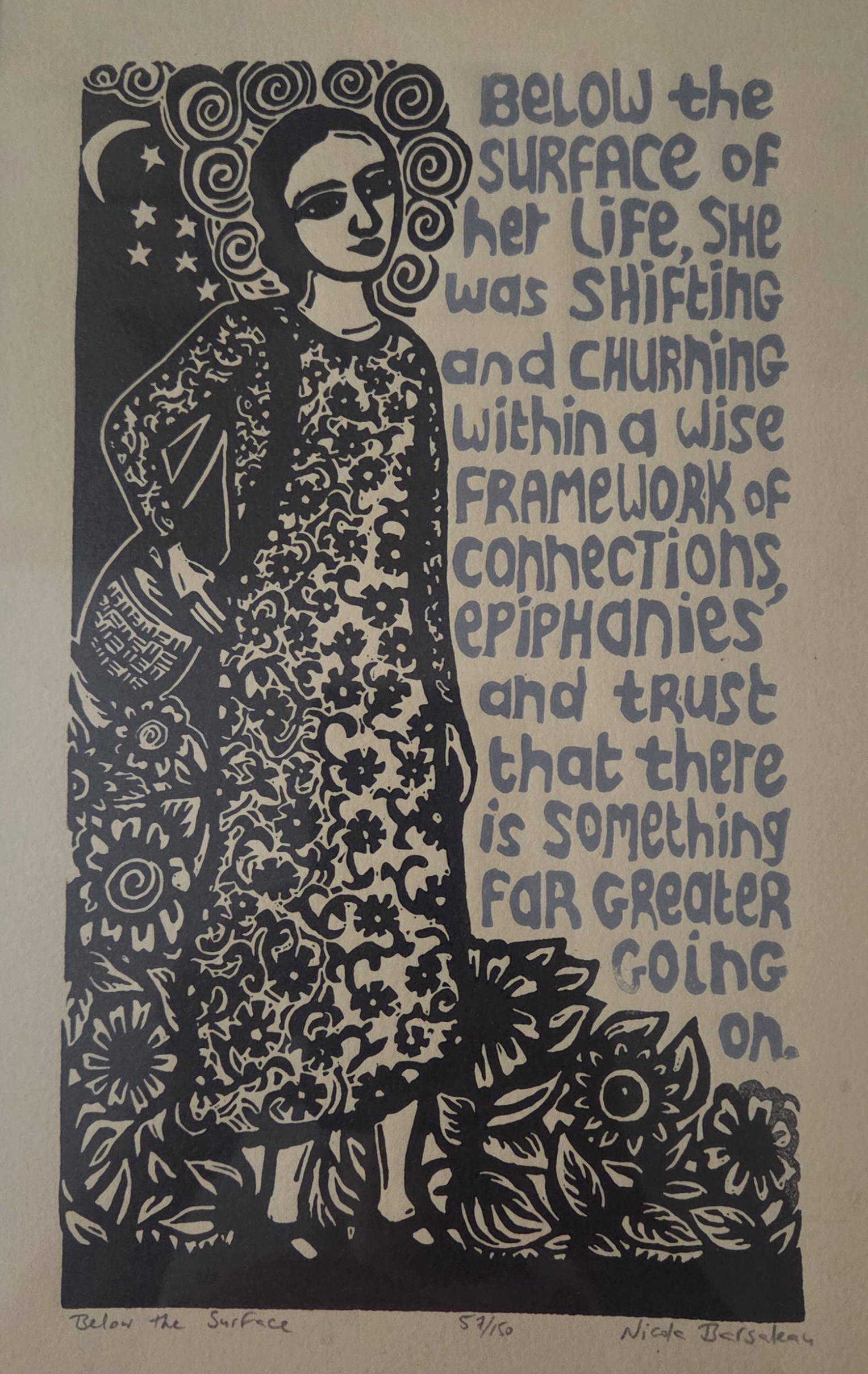
Print by Nicole Barsaleau. Photo by Christa Avampato.
My friend, Alex, sent me this print by Nicole Barsaleau a few years ago. I have it framed in my kitchen and I read it often. It reminds me of something my therapist, Brian, said to me many moons ago: “The prana (the all-knowing energy) cares about you and also cares about the system.” In other words, as we get better, we make everything around us better, too.
When I first got sick, I was angry and confused. How could this happen to ME? I try to do everything right. I follow all the rules and best practices. I take care of myself. How could I get cancer at a young age? Scientifically, I knew I was exposed to toxic fertilizers and industrial pollution in my hometown where I grew up. I understood cancer happens when one of our cells has a mutation that our immune system misses and then it quickly replicates while masquerading as a normal cell. Cancer is a sneaky little f*cker.
“This cancer came to hone you,” Brian said in one of our sessions as I was preparing for surgery and the long treatment road. “There will be a kind of death. And also a rebirth.”
To which I responded, “The Universe couldn’t hone me with something that WASN’T cancer?!”
I didn’t choose cancer but I could choose how to approach it and learn from it. Part of living is to make meaning of the things that happen to us. To do some good with whatever finds us, particularly if we didn’t choose it. What good was I going to do with cancer if I lived to restore my health? That puzzle kept me looking forward and reaching out. It still does. Universe willing, I’ll be learning from cancer and using what I learn to help others for many years to come.
I’ve coached people through their own illnesses, many of them different types of cancer. I’ve participated in clinical trials that yielded new medications and treatments. I’ve referred friends to my doctors. I’ve written articles and done interviews about my experience and they’ve helped thousands of patients and caregivers make a way out of no way. My nearly dying from Taxol changed the way my cancer center evaluates bloodwork to identify a rare but potentially lethal side effect at its earliest stages. I’ve signed off to have my data join with thousands of others in enormous databases for scientists to use today and in the future.
“Use this body for science,” I tell my doctors. They did. They still do. They will continue to.
In an ironic way, cancer made me healthier, happier, more grateful, and less stressed because I learned to make my own health my single biggest priority. Without it, I can’t do anything for anyone.
Do I wish I could have learned that without cancer? Sure. Do I think I would have? Maybe briefly but it wouldn’t have stuck. Now, my body, mind, and spirit force me to maintain it.
“Of all the paths you take in life, make sure a few of them are dirt.” ~John Muir
I grew up in the dirt, literally. There was (and still is) a tractor crossing sign across the street from the house where I grew up. My rural hometown fostered a childhood that involved climbing trees and making mud pies. When I was little, I was convinced that there was a dinosaur skeleton hiding under the ground in my backyard. I enlisted my sister, Weez, to help me dig and dig and dig. All we found was a small mouse skeleton, but I thought it was clearly a prehistoric mouse!
Nature and science have been sources of healing for me on this journey and throughout my life. Other kids wanted to be doctors, firefighters, or teachers. I wanted to be a paleontologist. I still do. Whenever I get to see my dear friend, mentor, and science hero, Dr. Ken Lacovara, I get to soak in all his paleontology wisdom. (More in a separate post later about his beautiful science museum, the Edelman Fossil Park, that I just visited with my wonderful friends, Wayne and Ernie.
My childhood was far from idyllic, but there were some very positive things about growing up in the sticks. I got my hands dirty in the process of making things. I grew up in a farming community. Animals were my friends and companions, as much as people. Maybe even more than people. I learned to appreciate the Earth, her majesty and her power. Weather was a way of life, and I still watch it with fascination and wonder. I also thought long and hard about being a meteorologist, and that dream led me to study environmental sustainability at University of Cambridge.
More people today talk about being eager to get into mud. There’s a trend of younger people returning to the land and regenerative farming. I completely understand that calling. It lives in my bones.
There’s something to be said for the slow life, the life we build rather than the life we buy shrink-wrapped and delivered right to our doorstep. Creation builds confidence and bolsters the imagination. It makes us self-sufficient. I’m all for it, for all of us. There’s a lot of beauty and authenticity down there in the mud.
In late August, I’m taking a trip north to get into the dirt, sand, and water. I just finalized those plans today. Adventure awaits. I can’t wait to take you with me.
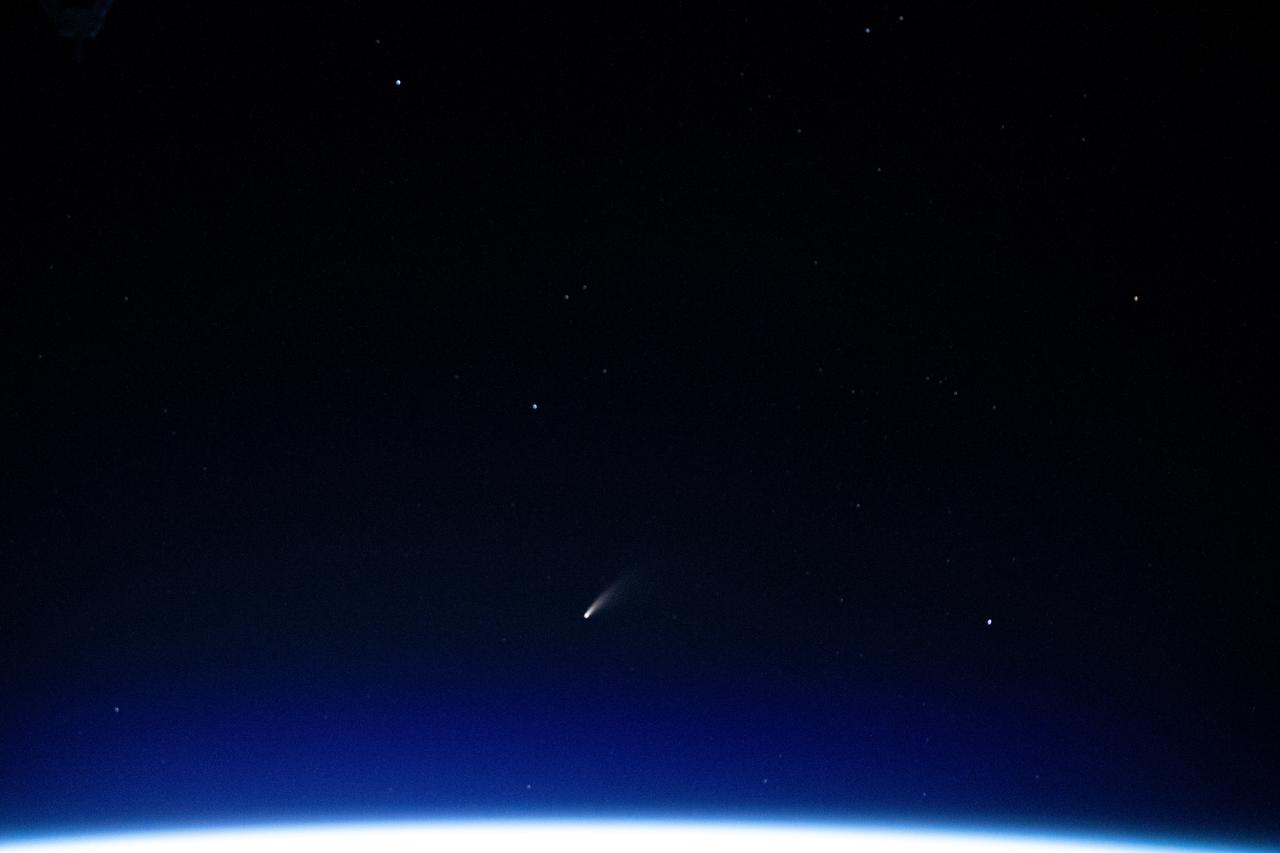
The tiny shooting star in the lower center of this image is Comet Neowise pictured from the International Space Station as it orbited above the Mediterranean Sea in between Tunisia and Italy. July 5, 2020. NASA’s Johnson Space Center. Original image: images-assets.nasa.gov/image/iss063e040067/iss063e040067~orig.jpg
“Twenty years from now you will be more disappointed by the things that you didn’t do than by the ones you did do. So throw off the bowlines. Sail away from the safe harbor. Catch the trade winds in your sails. Explore. Dream. Discover.” ~ Author H. Jackson Brown, Jr.
Here’s something I caught myself saying too often for a long time, “I’ll do X when…” as if I was waiting for the perfect time, the perfect circumstances, the perfect me to emerge to do something.
Every once in a while I still find myself in that headspace. Habits are hard to break and they are annoyingly good at re-emerging just when we thought we’d changed them for good. Thankfully I catch myself when this happens now. As soon as this thought crosses my mind, I give myself a talking to.
“Honey,” I say to myself, “Perfection isn’t on its way. Not today. Not ever. Do it. Or don’t. But stop waiting. Just choose.”
Then I laugh and get on with it, or decide not to.
I’ve got a little list of things I’ve been waiting to do. Slowly but surely, I’m getting them done or at least giving them my best shot.
Three fun things I did recently:
1.) I applied to be an independent content creator for NASA. It was quite the administrative web to navigate but I did it and put in my application just before the deadline.
2.) I submitted a vulnerable piece of writing for the Modern Love column in The New York Times.
3.) I put in my application to be a volunteer at the 2028 Olympics.
Will any of this work out? Maybe, maybe not! But you know what? I’ll always be glad I shot my shot!
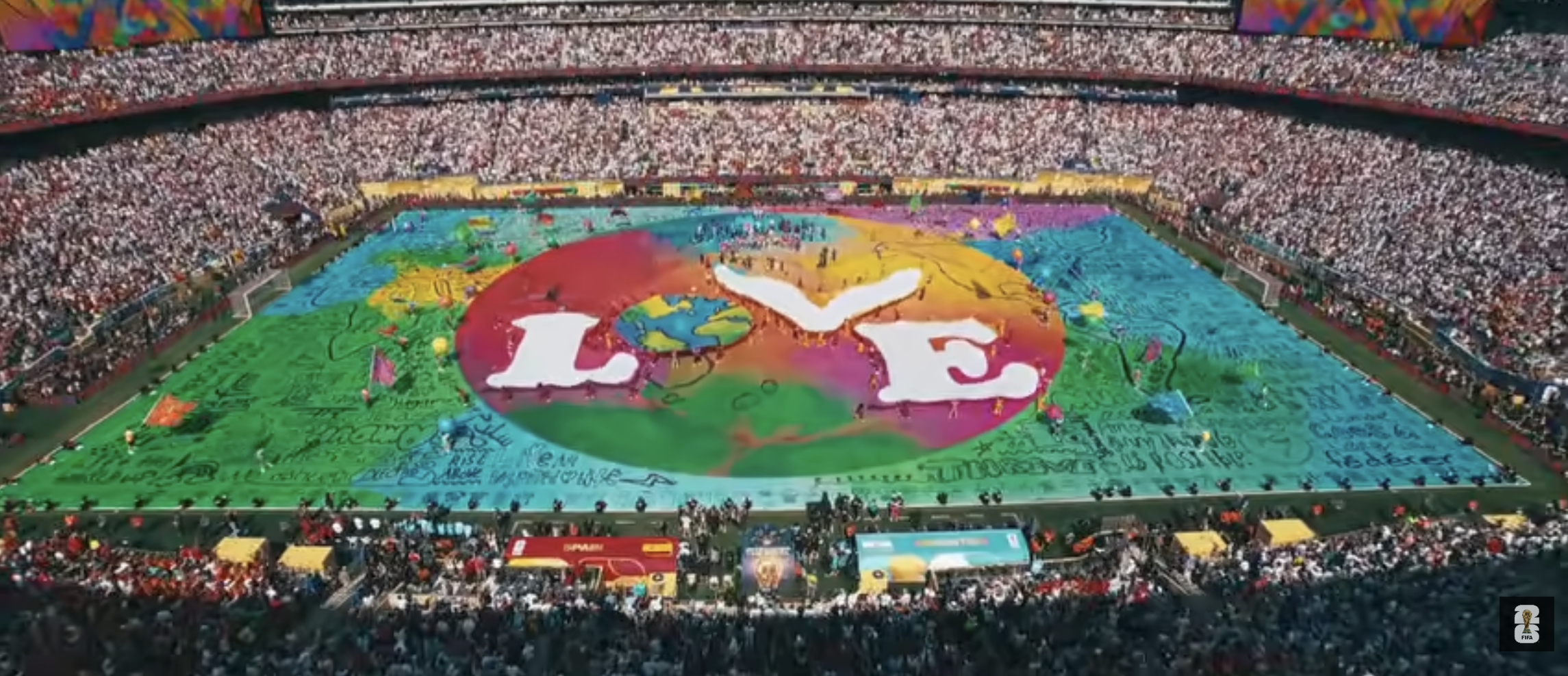
I’ve never cried during a halftime show of a sports event until today. During the FIFA World Cup between Spain and Argentina, the halftime show had a theme of love and the unifying power of music. For each other and for ourselves. Chris Martin of Cold Play and Global Citizen created it. I danced around my living room and sang along, so excited to see the breadth and depth of the performers from across the world: The Muppets including Sesame Street characters and The Electric Mayhem, Shakira with Burna Boy and Ghetto Kids, Staten Island’s PS22 Chorus, Jason Sudeikis in full Ted Lasso mode, conductor Gustavo Dudamel leading the New York Philharmonic and the Simón Bolívar Symphony Orchestra, Madonna, BTS, Justin Bieber, and Emmanuel Kelly. I’ll be watching it on repeat here. An eclectic mashup full of unbridled joy is the boost I needed.
Joy was part of my care plan when I went through cancer. Every day, no matter what happened, I found something that brought me joy. Sometimes it was a song, a show or movie, a friend, a good test result, my dog, something delicious, taking a walk with my sister, sunshine. It didn’t take long after I was diagnosed to realize the secret of life is to love and be loved. It’s that simple and that complex.
Love saved me more than once on that journey – friends who got me to the ER and took care of my dog, care packages, cards, flowers, texts, phone calls, and emails when I needed to know I wasn’t alone in all this, my sister staying with me for many weeks while I recovered from surgeries, friends who got me grocery gift cards that I used when I was finally strong enough to shop for myself again, my business school friends who put together a recorded zoom and daily emails to spell out a secret message – “Stay Strong And Full Of Light.” I’m going to get that as a tattoo.
I’m reminded that in the midst of tragedy and sadness, a beauty emerges that isn’t always as apparent in good times. Maybe that’s because difficulty strips away some kind of inhibition that holds us back too often from saying and showing how we feel. During cancer I had the chance to hear things from people that are often only said during someone’s eulogy. One of the great gifts of cancer and almost dying is that I got to hear those things while very much alive. I’ll always be grateful for that and all the love that surrounded me. When I was down to nothing, love shone brighter than ever. Isn’t that something?
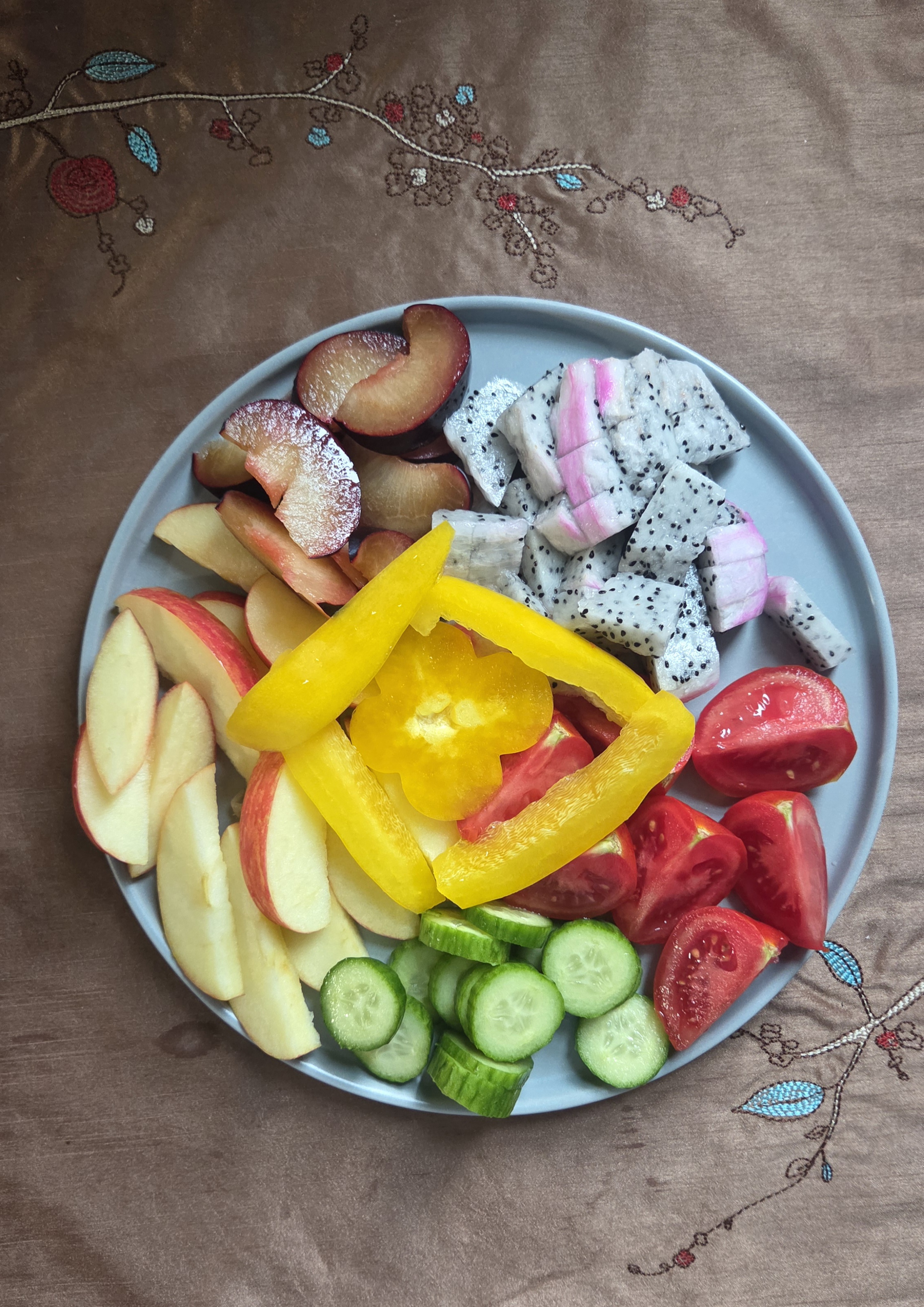
Using my new Beautiful by Drew plates today. Just for me.
We’ve all uttered the phrase, “Someday I’ll…” It applies to big dreams and small delights. Earlier this year, I’d planned to make brunch for friends. I’d worked out a lovely feast as cooking and baking are two of my favorite pastimes. I bought new cookware, bakeware, and plates for the occasion (thank you Drew Barrymore!)
The winter being what it was meant we decided to cancel, and sadly never rescheduled. I was sad about this. I never even opened the box of Beautiful by Drew plates. I just put the sealed box in the back of my closet for someday. After all, why should I have new plates just for myself. I’d wait until a special occasion. Every time I saw it, I felt a little pang. Missed opportunity. Missed connection. Missed fun.
Today as I was cleaning and reorganizing, I saw the sealed box. What was I waiting for, exactly? Why not use the new beautiful plates myself? I opened it, took out the new plates, and swapped out my old ones which are chipped and have seen better days. And thoroughly enjoyed them.
Over the past few months, I’ve been redecorating my apartment and rewarding myself with tiny splurges. These new plates, cookware, and bakeware. A few new small appliances in my kitchen. Painting my apartment. A few new pieces of furniture. New art. New books I’m excited to read. A new yoga mat. I’ve even learned to successfully take those spiderettes from spider plants and make whole new plants from them (a massive accomplishment for someone with no green thumb!) These are all small things that have brought me daily joy and they’ve added up to something wonderful – making someday today. We deserve it. We’re worth it.
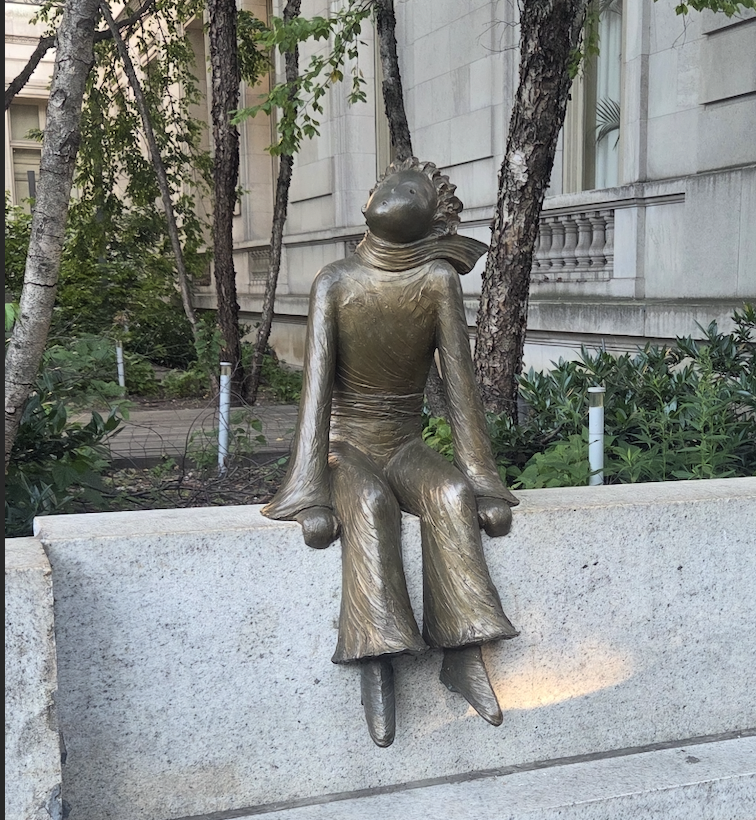
The Little Prince statue outside of Villa Albertine. NYC. Photo by Christa Avampato
“You never know how strong you are until being strong is your only choice.” ~Bob Marley
When I was going through cancer, a lot of people said to me that they couldn’t do what I was doing if faced with the same situation. They meant it as a compliment and I absolutely appreciated it. The truth is that strength was my only option. The choice was be strong or die. Blunt but true (this is basically the best description of me. Ha!)
A few years ago a dear friend of mine was diagnosed with breast cancer and she had to start making the lightning fast decisions I had to make. When I was going through it, she sent me care packages and messages of love and support. The first time I saw her after her diagnosis, she gave me a huge hug and said, “I knew you were going through a lot but I had no idea just how much it was. And you had to do it during the pandemic and on your own.”
She almost sounded apologetic. I told her very truthfully, “There’s no way you could have know. There’s no way to explain to someone what it’s like to have to face a bilateral mastectomy, reconstruction, chemo, radiation, and heavy doses of medications for a decade to try to save my life.” There just aren’t words to sum up all of that – the physical, mental, emotional, and spiritual strain. The only people who really understand are people who live it.
I recently heard about a program called Camp Breastie, a summer camp of sorts for breast cancer survivors organized by the nonprofit The Breasties. The article said one of the most profound benefits of the camp is that attendees don’t have to explain what they went through or how it felt because everyone there just knows. Everyone gets it. And there’s a real freedom in that. And so, I’m thinking about going next year. I’ve coached a number of people through cancer and health challenges after surviving my own. I think going to this kind of event would be a way to fill my own cup, to care for myself. It could be another source of strength; after all, building community builds us up.