creativity

The Ted Lasso Way: Rebuilding How We Show Up for Each Other

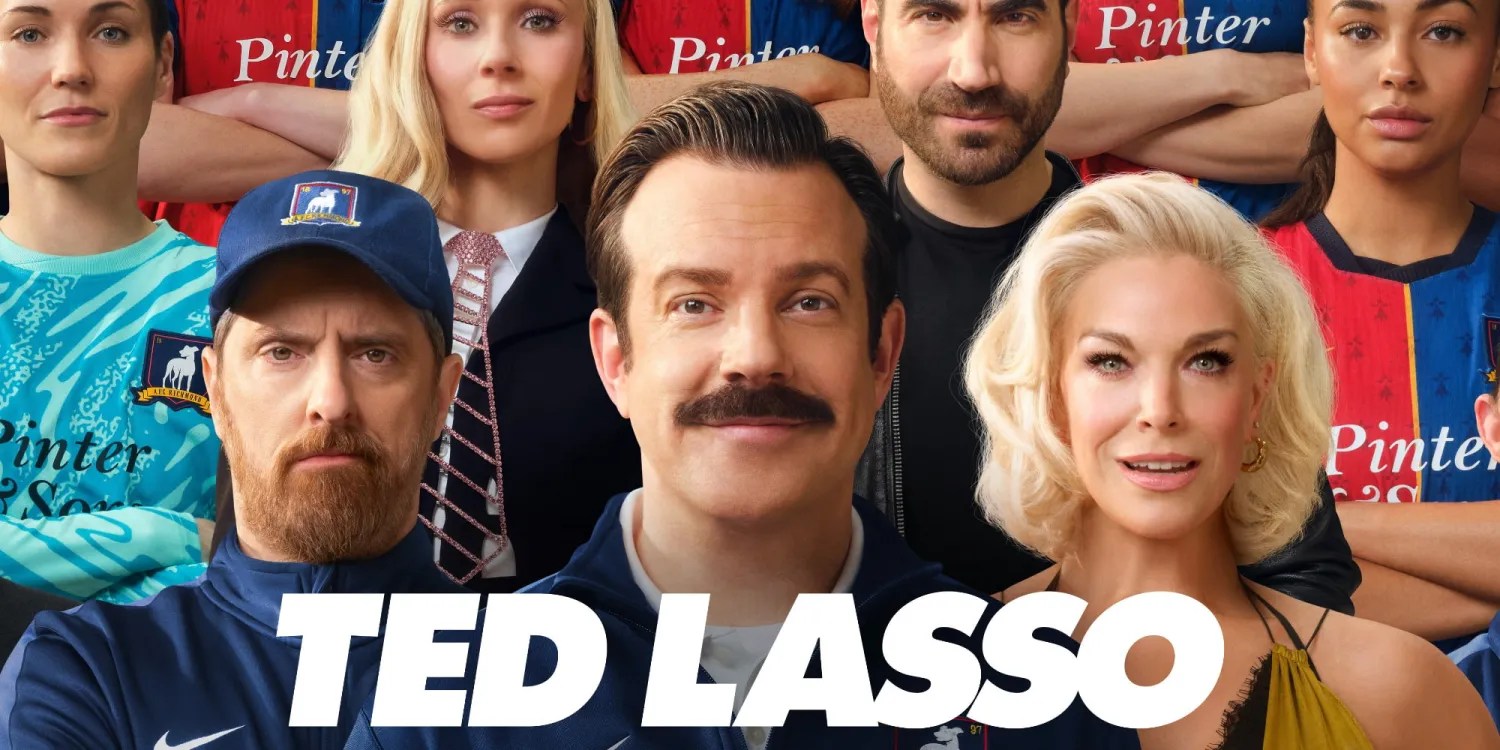
Ted Lasso. Image from Apple TV.

With the premiere of the 4th season of Ted Lasso launching today on Apple TV, millions of us are tuning back in for a dose of something that feels increasingly rare in the real world: unbridled optimism, radical empathy, and a deep commitment to collective care.

At first glance, a show about an American football coach running an English soccer team feels like pure entertainment. But at its heart, Ted Lasso is a masterclass in human connection. When we talk about building resilient cities, adapting to a changing world, rewilding, or strengthening our neighborhoods and ecosystems, we often focus on physical and tactile systems we can see. But none of those matter if we don’t have the trust and love that form the foundational connections to hold us together in both joyful and difficult times.

Ted and the Richmond crew give us a living playbook for how to care for our communities and each other. Here is a look at the show’s wisdom on leadership, cooperation, mental health, friendship, and why work must be about more than trading hours for a paycheck.

1. Leadership: Be Curious, Not Judgmental

“Guys have underestimated me my entire life… and it used to really bother me. Then one day, I was driving my son to school, and I saw this quote by Walt Whitman, and it was painted on the wall there. It said, ‘Be curious, not judgmental.’ I like that.”Ted Lasso, Season 1, Episode 8 “The Diamond Dogs”

Ted’s famous dart-game ethos is the ultimate lesson for navigating complex times. When faced with opposition or someone we just don’t understand, our knee-jerk reaction is often to either dismiss their point-of-view or try to win the argument.

True leaders lead with inquiry instead of authority. Whether you’re managing a team at work or organizing a community event or collaborative creative project, leading with curiosity lowers defenses and opens the door to genuine connection. You can’t build a strong community if you’ve already decided who someone is before listening to their story.

2. Cooperation: Build for the Team, Not the Ego

“For me, success is not about the wins and losses. It’s about helping these young fellas be the best versions of themselves on and off the pitch.”Ted Lasso, Season 1, Episode 3 “Trent Crimm: The Independent”

Richmond doesn’t succeed because one star player carries the team; they succeed when every person—from the star striker to the kit man to the back office team members—recognizes their worth and supports the collective whole.

In community life, ego breaks things apart. Real cooperation requires psychological safety: creating an environment where people feel safe to make mistakes, speak up, and bring their full selves to the table. When Jamie Tartt learns to pass the ball instead of hogging the spotlight, the entire team rises. When everyone feels ownership over the group’s wellbeing, the whole neighborhood thrives. (This is also the leadership mindset of Jalen Brunson as the captain of the Championship New York Knicks basketball team – more on that in a forthcoming post!)

3. Work as Purpose: Life Is Too Short to Stay Miserable

Ted: “Why the heck weren’t you at the press conference?”
Trent: “Because I am no longer a reporter. I was fired when they found out I revealed an anonymous source.”
Ted: “Oh, snap. I… I didn’t say anything, I promise.”
Trent: “No, I know, Ted. I did. I’m looking for something different. Deeper.”
Season 2, Episode 12 “Inverting the Pyramid of Success”

A heartbreaking reminder crossed my inbox: a long-time colleague at work who retired in 2019 passed away this week. He got just seven years in retirement. None of us know how much time we have on this planet, and trading our most precious, non-renewable resource—time—for a job that drains our soul is not only a shame, but wasteful. We deserve so much better. We deserve work that fills us up.

Every central character on Ted Lasso reaches a moment where staying in a toxic, comfortable, or soul-crushing situation threatens their spirit, forcing them to make a terrifying leap:

  • Rebecca Welton transforms AFC Richmond from a weapon of revenge against her ex-husband into a sanctuary of collective joy, choosing vulnerability and genuine leadership over bitterness and anger.
  • Keeley Jones walks away from being a model to work in PR that ultimately leads to her building her own PR firm from scratch, trusting her innate emotional intelligence.
  • Nate Shelley has to confront his desperate desire for status and unlearn the belief that title equals worth before finding his way back to honest connection. It’s a rocky journey for him, and he makes some difficult and painful turns before learning the deeper lessons.
  • Roy Kent has to retire from playing the game that defined his entire identity. He mourns that loss, and discovers who he is and what he’s capable of when the crowd stops cheering.
  • Ted leaves his comfort zone in the U.S. to step into an environment where everyone expects him to fail, prioritizing human growth over safe routine, all while navigating massive changes in his family life and confronting his past and his own mental health challenges.

When a job becomes a source of misery rather than purpose, leaving isn’t just a career move—it’s an act of self-preservation, self-care, and self-love. Work should be a place where we grow, connect, and serve others, not a place where we park our spirits while waiting for life to start.

4. Mental Health: Carrying Heavy Loads Together

“I promise you there is something worse out there than being sad, and that is being alone and being sad. Ain’t nobody in this room alone.”Ted Lasso, Season 1, Episode 10 “The Hope that Kills You”

Perhaps the most radical move the show ever made was pulling back the curtain on Ted’s signature relentless optimism to reveal his deep pain and the mental health challenges he’s been hiding his whole life. Behind the jokes and baked goods, Ted was carrying the devastating grief of his divorce, the heartbreaking distance from his son Henry back in Kansas, the loss of his father in tragic circumstances, and severe panic attacks that left him incapacitated on the pitch, in his office and locker room, and at home.

Ted’s journey to his therapy sessions with Dr. Sharon Fieldstone teaches us that toxic positivity and denial won’t save us. Real resilience isn’t pretending everything is fine when your world is falling apart; it’s having the courage to say, “I’m not okay, and I need help.”

We cannot build strong, caring communities with exhausted people who feel forced to suffer in silence while wearing a brave face that’s just a mask. Normalizing therapy as a resource to help us speak openly about anxiety and accept care when we’re down to nothing aren’t signs of failure—they are how we survive and stay whole (or become whole again) so we can thrive.

5. Friendship: The Power of the “Diamond Dogs”

“To believe in yourself, to believe in one another. Man, that’s fundamental to being alive.” — Ted Lasso, Season 3, Episode 5 “Signs”

Adult friendship is often treated as a luxury in a world obsessed with professional output. But Ted Lasso shows us that intentional, vulnerable friendship is a vital life-support system.

When Ted, Higgins, Coach Beard, Nate, and Roy gather as the Diamond Dogs, they don’t meet to give unsolicited advice or fix each other’s problems with aggressive solutions. They meet to listen, offer perspective, hold space, and normalize each other’s emotional struggles. (Of course, there’s a big plot twist late in Season 2 that shows what happens when that trust is broken.)

In a world plagued by an epidemic of loneliness, building your own Diamond Dogs—a circle of friends or peers where you can drop the tough exterior and speak honestly—is one of the most revolutionary acts of community care available to us.

6. Being in Community: Belonging Over Fitting In

“I suppose the best brand is just being yourself.”Ted Lasso, Season 1, Episode 3 “Trent Crimm: The Independent View”

True community isn’t about conformity or changing who you are to be accepted; it’s about creating a space where everyone belongs as their authentic selves. Ted doesn’t try to make Roy Kent act like Keeley, or Sam act like Jamie. He honors their distinct backgrounds, cultures, and personalities while weaving them into a cohesive support system.

Building community in our neighborhoods and workplaces works the exact same way. It isn’t about flattening our differences—it’s about building a big enough table so that everyone’s unique lived experience strengthens the whole.

7. Career Resilience: How to Bounce Back from Difficulty

“You know what the happiest animal on Earth is? It’s a goldfish. You know why? It’s got a 10-second memory. Be a goldfish.”Ted Lasso, Season 1, Episode 2 “Biscuits”

In our careers and personal growth, we often carry the weight of past missteps, failed projects, or awkward interactions like heavy baggage. Ted’s advice to Sam Obisanya after a tough play is a lesson in professional grace and resilience.

Progress requires letting go of perfectionism. The most fulfilling, impactful careers aren’t built by people who never make mistakes; they’re built by people who process a setback, learn the quick lesson, forgive themselves, and get right back to lifting up the team.

Takeaways

Resilience isn’t just about what we build—it’s about the love, care, courage, and camaraderie we offer each other while building it.

  • Reframe Your Time: Take an honest audit of where you spend your energy this week. If you’re staying in a toxic situation out of habit or fear, start exploring what a leap toward purpose might look like.
  • Practice Radical Curiosity: The next time you encounter a perspective in your workplace or neighborhood that frustrates you, pause before reacting. Channel your inner Ted and ask one genuinely curious question to understand where they are coming from.
  • Form Your Diamond Dogs: Create a safe space with a few trusted friends, neighbors, or colleagues where you can speak openly about your personal challenges without fear of judgment.
  • Normalize the Check-In: Make a practice of reaching out and checking in with friends or colleagues so that if and when difficulties arise for them, they know you are someone they can turn to for support.

Like Ted says, taking on a challenge is a lot like riding a horse. If you’re comfortable while you’re doing it, you’re probably doing it wrong. Let’s keep leaning into the uncomfortable, beautiful work of caring for one another—and making every moment count.

creativity

Day 11: Minding Our Time

Photo by Aron Visuals on Unsplash

This week I was working on a big self-imposed deadline. I’ve been chipping away at a nonfiction book proposal for a publisher’s open call. I’ve thrown a lot of time and heart into this proposal. I was almost to the finish line. I had polished one of the sample chapter and had two more to go.

And I just didn’t want to finish it. Not like this for this publisher. I was frustrated and stressed. So I stopped. That’s when a valuable question rose to the surface: What am I really trying to do with this deadline?

I was going to spend my entire long weekend exhausted to churn out something that wouldn’t be representative of what I wanted to do for a publisher that, while aligned with my ethos and perspective of the world, wouldn’t be able to offer much support for my book. They have a big heart but limited resources and an even more limited track record.

So I stopped. I’m proud of the work I did on it, and I can use that work for other projects. But I let myself cross this off my to-do list without getting it done right now in this way for this purpose. Once I made that choice, I breathed a sigh of relief.

One thing this past 5 years has taught me is that our most precious resource is time. We can’t make more of it. Once it’s spent, it’s gone. I don’t spend time doing anything I don’t want to do. If I can’t do it with my whole heart, then I don’t do it. If I’m in the midst of something and getting no joy from it, I stop. I don’t feel obligated to continue. I stopped pushing through just to prove I could. To live, sure. Out of of some made up obligation? Nah.

The word “should” has left my vocabulary. Good riddance to it.

creativity

My book birthday wish for the world (and a free gift)

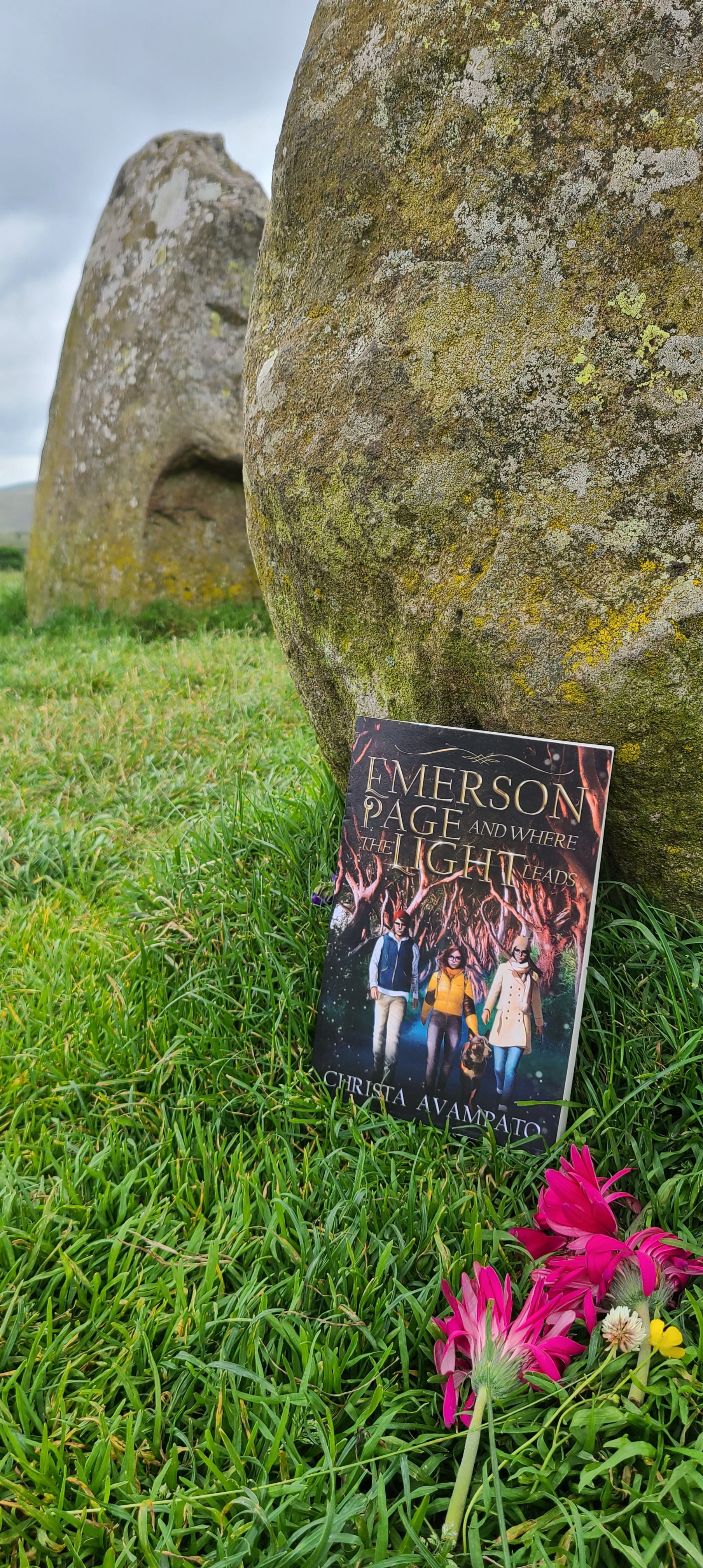
Me holding Emerson Page and Where the Light Leads on top of Arthur’s Seat, an ancient extinct volcano that is the main peak of the group of hills in Holyrood Park in Edinburgh, Scotland. June 2024.

Today marks one year since my second novel, Emerson Page and Where the Light Leads, was published. To celebrate, the eBook of my first novel, Emerson Page and Where the Light Enters, is free today and tomorrow, May 14th and May 15th. Get it here.

Creativity is a lifeline for me. I’m so grateful to have writing as a spiritual practice that offers me the chance to bring my whole self to the page, and I’m grateful for every kind word, review, and note I’ve received from all of you. You raise me up.

In the author’s note of Emerson Page and Where the Light Leads, I wrote, “Since Emerson emerged in 2017 in my first novel, Emerson Page and Where the Light Enters, our world has been turned upside down. The pandemic, climate change, conflict across the world—all of it is cause for anxiety and distress. It’s okay to not be okay with any of this, to be scared in a world that seems so far out of our control. But what’s also true is that there is so much love, light, wonder, and beauty in this world, and in you. Emerson’s story is a mix of the joys and difficulties that are part of every life. She rises, falls, and rises again. And so do we.”  

I believed that when I wrote it on February 29, 2024, and I believe it today. If ever there was a time to create, celebrate, and elevate love, light, wonder, and beauty, it’s now. Right now.

So, on this first birthday of Emerson Page and Where the Light Leads, this is my book birthday wish for all of us: that we will continue to create and love, that we will live out loud, that we will express our joy, without fear and without reservation. As Mary Oliver so beautifully wrote in her poem, Don’t Hesitate: “Life has some possibility left…Joy is not made to be a crumb.” Please, make your joy the whole damn cake. Today and every day.

These two photos are from that same trip as the photos above. On the left, I’m at Castlerigg Stone Circle in Keswick, England, a town in the Lake District. On the right, that’s a photo I took on the Isle of Skye, Scotland. Both June / July 2024.

creativity

Can ecofiction inspire climate action?

Created by Christa Avampato using AI.

While on vacation I wrote my first full piece of ecofiction for a climate fiction writing competition. It’s a short story (5,000 words) that provides a slice of life in New York City in the year 2200, and grew out of the research I did for my University of Cambridge dissertation.

It’s told through the eyes of a journalist walking his dog who by chance meets the 90-year-old former mayor who galvanized the rebuilding of NYC after it was destroyed by floods caused by climate change. Biomimicry figures prominently in it. I tried to incorporate humor, heart, and redemption alongside the heartbreak, loss, and destruction. Ultimately, it’s a story about leadership, community, and vision.

No matter the outcome of the competition, I enjoyed writing it and plan to do more with these characters and in this genre. The predominant channels and messages we’re using for climate storytelling now are not generating the scale and speed of the changes we need. Fiction can play a bigger role is painting the picture of what a world transformed can look like, what it will take to get there, and how we might work together to make it so. The fandoms around fiction can be a unifying force for good, which is exactly what we need, now more than ever.

(I created the images below with AI, inspired by the story I wrote.)

creativity

Cut scenes from my upcoming novel, Emerson Page and Where the Light Leads

Almost all my writing is re-writing. I write my first draft of a book in a month, and then spend many months re-writing and editing. This means a lot of content never makes it into the book. Now, for the first time, I’m sharing a few of these cut scenes with you!

Here are three cut scenes from my upcoming novel, Emerson Page and Where the Light Leads. I’d love to know what you think — drop me a line. The novel is available now for pre-order and will be released everywhere books are sold on Tuesday, May 14th.

We’re Having a Party

Image by Christa Avampato. Made with Canva Magic Media.

A Stranger in the Night

Image by Christa Avampato. Made with Canva Magic Media.

The Scroll of Erato

Image by Christa Avampato. Made with Canva Magic Media.
creativity

A Year of Yes: What I Love Best About Writing a Novel

I am a meticulous outliner, especially when it comes to my fiction writing. Still, you know what I love best about the practice of writing fiction? I never quite know what will be on the page when I’m done with any single block of work. I sit down and I think I know exactly where I’m going. Then, my characters will do something or say something I never expected. A stranger will arrive. A discovery will be made. I’m living this story in the moment with my characters, and I feel lucky to be along for the ride. 

creativity

A Year of Yes: How fiction helps us survive reality

How are you doing? This week was a heavy one. I hope you’re taking good care of yourselves and each other.

Whenever I feel like reality is too heavy and I need a break, I turn to fiction. This passage was particularly powerful for me:

Harry: I’ve been thinking about something Dumbledore said to me.

Hermione: What’s that?

Harry: That even though we got a fight ahead of us, we’ve got one thing Voldemort doesn’t.

Ron: Yeah?

Harry: Something worth fighting for

creativity

In the pause: West Side Rag reviews my book, Emerson Page and Where the Light Enters

West Side Rag is one of my favorite neighborhood publications on the Upper West Side. I’m so excited that they reviewed my book, Emerson Page and Where the Light Enters. My thanks to writer and reviewer Nancy Novick. Check out the review on West Side Rag.

creativity

In the pause: A 5-star review from Readers’ Favorite for my young adult book, Emerson Page and Where the Light Enters

It’s with so much joy that I’m proud to share the first professional review of my book, Emerson Page and Where the Light Enters. Thank you to Readers’ Favorite and to writer Romuald Dzemo for this 5-star review across the board in the categories of Appearance, Plot, Development, Formatting, Marketability, and Overall Opinion. I am humbled and honored!

“This is a fascinating story deftly told, a tale of courage and a gritty investigation, featuring a young protagonist who will take readers by surprise. The plot is fast-paced and readers are pulled into an exciting world filled with mystery and exciting stuff. Emerson Page and Where the Light Enters features excellent writing, brimming with vivid descriptions and dialogues that are compelling as they enhance the different elements of the story. Here is a story that will enthrall both young adult readers and adults, a well-plotted story with powerful themes seamlessly woven into its fabric. Christa Avampato was able to win my heart from the very beginning of the story with a powerful hook, and managed to keep my eyes glued to the pages, unable to stop reading. The prose is excellent and seduces the reader right off the bat. This story is engaging. A huge success for a novel!”

creativity

In the pause: Whispers in the night—how our books speak to us as writers

A few days ago, I mentioned that I was having trouble writing Emerson‘s second book. Last night, I just decided to tag along with her to see where she was going, what she was doing, and who she was with. I didn’t expect or ask for anything. I just stayed quiet and listened. I was helped by the idea of a dæmon in The Golden Compass; Lyra’s dæmon sometimes hitches a ride on her shoulder to join the adventure. I did the same with Emerson.

It’s odd what your characters will tell you when you just listen to them. I found out Emerson’s birthday is January 1st, that there are now hundreds, maybe even thousands, of people who are looking for the same treasure that she seeks, and that her travels take her not to one place in Book 2 but many places. There’s some romance, heartbreak, and loss. She will be plunged into memories she would rather not see but are vital to her pursuits and her destiny. There are portals hidden in plain sight. The line between the physical world and the world of the mind is blurred to the point where they’re really no different at all. Time and space are much more fluid than we imagine them to be.

So today, I’m putting my ear to the ground, closing my eyes, and listening intently to the adventures Emerson has taken. I imagine her now, much older and wiser, entertaining a woman (me) who just showed up at her door and asked to hear the story of her life. She has a lot to tell me. She just needs some time.