creativity

The Power Paradox: Can the AI Boom Force the Green Transition?

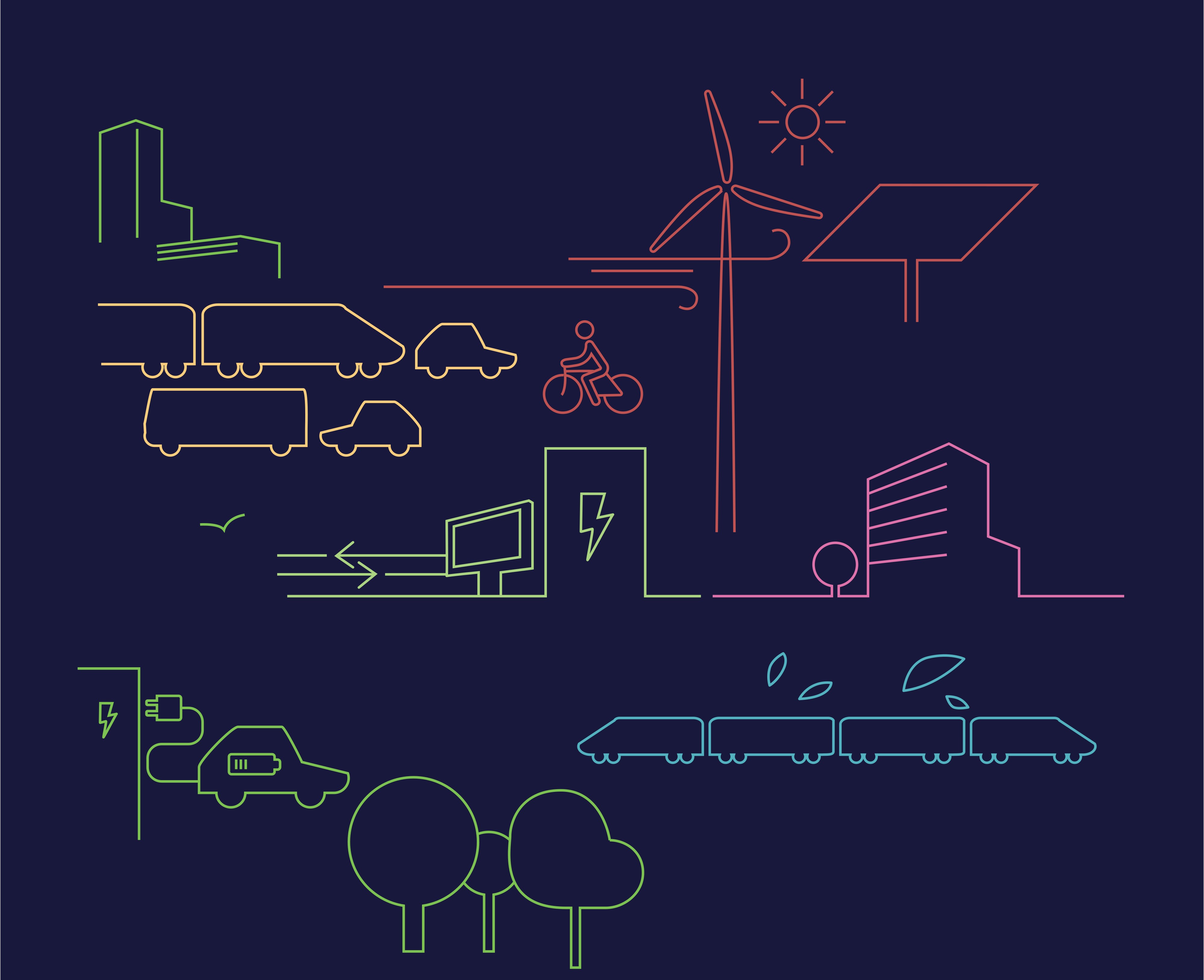
Illustration by Manuel Campagnoli on Unsplash

We are currently watching two seemingly unstoppable forces collide. On one side is the relentless corporate race to integrate artificial intelligence into every corner of our digital lives. On the other side is a fragile, aging energy grid and communities across the country that are refusing to let massive, resource-hungry data centers steamroll their neighborhoods.

The environmental toll of this digital gold rush is undeniable. A single AI query can use ten times the electricity of a standard internet search, and the data centers required to process these models require billions of gallons of water for cooling and unprecedented amounts of power. Trying to slow down this technological train feels nearly impossible.

But what if the sheer velocity of the AI boom is exactly what forces our hand? What if this crisis becomes the ultimate catalyst that forces tech giants and governments to finally accelerate the green energy transition?

The Corporate Collision Course

For years, tech conglomerates have enjoyed a sterling public relations narrative centered on ambitious net-zero carbon pledges. But the energy and resources demands of generative AI are obliterating those goals. To keep their AI systems running, these companies need power immediately, and they are quickly exhausting the capacity of our current infrastructure.

This is where the leverage lies. Tech giants cannot afford to let their AI ambitions starve for power, but they also cannot afford the reputational destruction of abandoning their climate goals to say nothing about the potential that these ambitions have to create more havoc on an already delicate planet. This paradox could force an unprecedented shift in corporate behavior: Instead of waiting for municipal utilities to green the grid, could tech companies put their massive balance sheets to work—directly funding utility-scale solar, wind, and geothermal projects to create the very clean energy they require and that would benefit people and the planet?

Friction Breeds Innovation

Local communities are proving that they are not passive backdrops for industrial expansion. From Virginia to Oregon, residents are organizing against the noise, land use, and water strain of new data centers.

This hyper-local resistance is creating a massive operational bottleneck for tech companies. When communities refuse to lie down, companies cannot just build bigger; they have to build smarter and they have to listen to these concerns to build partnerships with local residents. This friction could bring about a wave of structural innovation. Advanced liquid cooling systems that eliminate water waste, architectural designs that blend into local landscapes because they’re quiet and unobtrusive, and decentralized data centers that can operate on microgrids without straining the local town’s power supply would be wins for communities, tech companies, and nature.

Government action often lags until a system faces a breaking point. The sheer, unyielding demand of the digital race might be the exact pressure needed to force regulatory policy. Imagine a world where we have modern our grids that run on abundant clean energy and embrace radical efficiency.

The Togetherhood Takeaway

AI often feels like a runaway train, an inevitability. But it needs energy to operate. there isn’t any way around that. If we in the climate community flip the script, it could just be the lever that redirects its energy toward real, meaningful progress.

  • Audit the Corporate Promises: This week, look at the AI tools you use and research the climate pledges of the companies behind them. Hold them accountable to the idea that digital progress cannot come at the expense of ecological stability. Write to them. Call them. And call your reps to demand that they demand these companies keep their climate pledges intact, especially if they want to expand data centers in your city or town.
  • Support Local Demands: When communities near you advocate for stricter zoning laws and resource transparency from data centers, back them up. Local friction is the primary driver of corporate innovation. Show up at meetings and again, call your reps on the local, state, and national levels.
  • Advocate for Grid Modernization: The conversation around data centers is ultimately a conversation about our grid. Support regional policies that prioritize upgrading transmission lines and scaling renewable energy storage. Start with your local utility company. Contact them and find out what they’re doing.

We may not be able to stop the digital race, but we can demand that the machinery running it is built in a way that preserves the planet for all beings who call this home.
creativity

The AI Backstop: Erin Brockovich Maps Human Cost of AI Through Community Voices

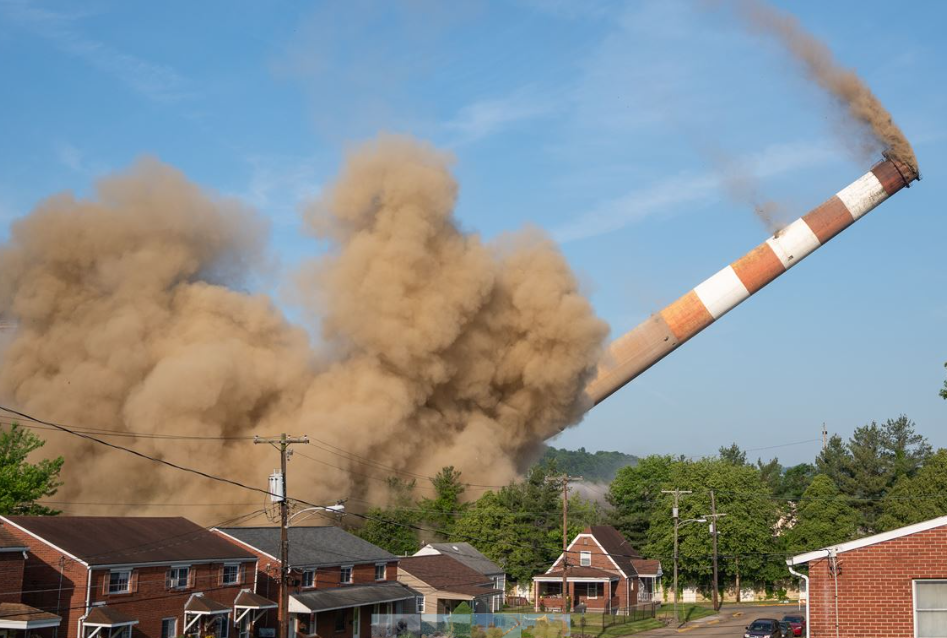
Smokestack collapses as an industrial site is demolished among residential homes. Community photo from Brockovich AI Data Center Reporting website: https://brockovichdatacenter.com/

We’re told the future is in the cloud. But the cloud isn’t an ethereal, weightless concept; it is a physical network of massive, energy-hungry data centers that require vast amounts of land and water to survive. As the race to build out artificial intelligence accelerates, these industrial hubs are quietly rewriting the landscape of rural and suburban communities across the country.

Often, the decisions to build these facilities happen in closed-door corporate and political meetings, leaving local residents to deal with the aftermath without having their voices heard and considered. The results: overburdened power grids that fail to provide for communities; strained water tables that bleed faucets dry; noisy cooling systems generating air pollution; a loss of jobs and decimation to the local economy. The list goes on and on.

To prevent these community voices from being lost or overlooked, environmental advocate Erin Brockovich is flipping the script. She launched Brockovich AI Data Center Reporting, a crowd-sourced mapping initiative designed to track the expansion of AI data centers through the eyes of the people who live next door to them.

Uniting the Collective Voice

Brockovich’s initiative isn’t about halting progress; it’s about establishing radical transparency to make sure the stories and concerns of communities aren’t sidelined by business and politicians. By creating a centralized map where community members can log the location, environmental impacts, and local concerns surrounding data centers, she’s turning isolated complaints into a powerful, unified database.

When a multi-billion-dollar tech company enters a small town, individual residents often feel powerless to ask for accountability. The company is big and powerful, and the individuals are made to feel small. But Brockovich knows data can be an equalizer. When communities unite their voices and aggregate their lived experiences onto a single map, they create a visible, undeniable record – the power of one amplifies with the power of many. They shift the conversation from corporate promises to real-world impacts to people.

The Reality of Local Agency

True sustainability cannot be achieved if we sacrifice the resilience of our local neighborhoods for the sake of digital expansion. Brockovich’s map is a tool for local agency. It reminds us that technology must serve human communities, not the other way around. By tracking these facilities together, people and communities ensure the human and ecological costs of our digital infrastructure are out in the open, where they belong. This projects makes the invisible visible.

The Togetherhood Takeaway

Resilience means refusing to let your local environment be managed entirely from the top down.

  • Check out Erin’s initiative, Brockovich AI Data Center Reporting: At her website for this initiative (https://brockovichdatacenter.com/), Erin has so many resources of information paired with ways you can take action right now. It’s the most comprehensive and actionable resource I’ve ever seen on this topic!
  • Look Beyond the Screen: This week, find out where the data centers that power your digital life are actually located. Are they concentrated in specific regions, and how is their resource consumption affecting local utility bills or water tables? you can start by looking at resources like https://www.datacentermap.com/ and click “Explore Map” to see how the data centers are clustered around the world.
  • Contribute to the Map: If you see data center expansion happening in your region, participate in crowd-sourced tracking initiatives like Erin’s. Sharing local data ensures your neighborhood’s reality is part of the national conversation.
  • Demand Transparency: When local officials debate zoning laws for new industrial technology, show up and ask the hard questions about long-term power and water usage. Contact your local official’s office to find out when these meetings are happening. Collective accountability starts with local inquiry.

The digital future is being built on real ground. We have a responsibility to protect our communities and all beings who call them home.

creativity

What does a sustainable New York City look like?

What does a sustainable New York City look like to you? I imagine lush micro gardens, biophilic architecture (a building methods that connects people with nature), rooftop farms, and clean transit, air, and water as pathways that give people, plants, and wildlife the opportunity to live side-by-side-by-side in ways that benefit all.

In biomimicry, we begin our design process by asking how nature would solve a specific problem we have with a question framed as “How would nature (the problem we want to solve)?”. My question above would be framed as “How would nature build a sustainable New York City?” This is a question that has occupied by headspace for years as I traverse through different projects and future visioning sessions.

In the spirit of an image being worth 1,000 words, I created these images with Canva Magic Studio AI to show how nature might build a sustainable New York. Is this a city you’d like to visit? Is this a city where you’d be happy to live? What are the first steps we can take now to make this our New York?

creativity

Which job skills will be most needed in an AI-dominated world? The answer may surprise you.

Photo by Steve Johnson on Unsplash

With AI rapidly advancing, which skills will be most needed in the future? I guessed STEM. However, Christopher Pissarides Nobel Prize-winning economist and professor at The London School of Economics and Political Science (LSE) told Bloomberg that empathy, leadership, communication, and creative skills may be the ones most needed in an AI-dominated world and job market. This is because those skills are much more difficult for AI to replace, and they are skills needed to make AI useful and impactful. Humanities friends, rejoice!

Do you agree with Pissarides? How do you feel about the rise of artificial intelligence? What do you think the biggest opportunities and risks are with AI?

creativity

Will writers be replaced by OpenAI, makers of ChatGPT?

This week I’m working with one of my biomimicry clients to explore the use of OpenAI, makers of ChatGPT. It has several models within it, including Davinci which we’ve found has the most detailed, natural sounding results but not necessarily the most accurate information. We are using this technology to ingest a wide variety of scientific papers and produce plain-language text that can be used by designers and engineers who want to explore nature-based solutions and biomimicry inventions and applications.

We tried five tests with different biomimicry topics. I compared the source papers and the two versions of AI-generated text to assess them. Of the five tests, four were decent first drafts that need a human editor to refine them. Most of the scientific data was presented in a plain text way that maintained accuracy and integrity. It missed some key findings that would be valuable for engineers and designers, and the tests need to be edited for clarity. It had some trouble extrapolating the information into potential biomimicry applications and nature-based solutions. In other words, it could create plain-language text based on complicated, jargon-filled text reasonably well as a first draft. It could not creatively interpret the data to imagine many new possibilities. The one failed test completely missed the mark on the main points of the scientific paper.

Overall, it was exciting to see how this innovation could democratize access to information that is concealed in jargon. As with any simplification task, the accuracy has to be evaluated by someone who can reliably translate from language that needs deep expertise to language that’s accessible to those without that expertise. Proliferation of misinterpreted, oversimplified, and inaccurate translations is a risk and a danger. We’re in the early days of this tool and it will undoubtedly improve over time.

Some have expressed concern that writers will no longer be needed and that all writers will be forced into becoming editors. As a writer and an editor, I don’t share that fear. Human creativity, ingenuity, and imagination will never be obsolete. My hope is that tools like AI-generated text will free up our time, energy, and headspace to spend more time on creative projects.

creativity

Wonder: A new kind of artificial intelligence

Can we build algorithms for compassion, empathy, kindness, understanding, and love? We build all kinds of algorithms to process enormous data sets and to cull through endless masses of information in a variety of formats in a variety of fields. Can we also build them to help us become better people and make choices that improve our sense of humanity?

In other words, does artificial intelligence only apply to IQ or can it also extend to EQ (emotional quotient)? What about the lesser known Understanding Quotient (UQ), Passion Quotient (PQ), Courage quotient (CQ), Communication Quotient (COMQ), and Spiritual Quotient (SQ)?

We know they can be used to guide weapons. Can they be used to stop war and violence? Could they make our neighborhoods safer and more efficient? What kind of data would they need to do that, and what kind of output would help us achieve these goals?

These are some questions I’m thinking about as I consider my next career move. Comments, ideas, and suggestions welcome.