On Monday, I felt like I walked through a portal into a different world. Not through a book or movie, but in real life. This is a story about determination, the power of technology to improve our health, and the desire to heal through a combination of Eastern and Western medicine.
The Long Tail of Cancer Treatment
When I went through ACT chemo, a notoriously difficult treatment, I received acupuncture with Ryan Smith after every round. I responded exceptionally well, experiencing fewer side effects than most because of acupuncture. Now five years into cancer survivorship, I face a lot of daily side effects that I need to manage: fatigue, pain, anxiety, hot flashes, insomnia, and weight management are just a few of them. In August, my med regimen changes because I am (thankfully and gratefully!) five years out from active treatment and disease-free. Med changes are frightening for me because when I transitioned from ACT chemo to Taxol, Taxol nearly killed me twice. It turns out I have a deathly allergy to it and I received dense-dose treatment. So, add that to my anxiety load.
I knew acupuncture could help with these side effects and ease my August med transition. However, the cost of regular individual sessions has gotten prohibitive in NYC, where I live. I searched relentlessly for an acupuncturist skilled at cancer survivorship who also took my insurance. I came up empty-handed every time. For years, I heard the common refrain: acupuncturists do not take insurance. Stop looking, bite the bullet, and pay the small fortune as an investment in your health.
And then I tried one last time. I called United Healthcare, my insurance company, to ask if I could submit partial reimbursement for anyone in their network. The agent came back with something even better: a list of medical doctors practicing acupuncture in my insurance network. I was floored. And then I immediately assumed the experience would not match the care I received from Ryan during my chemo days.
Hacking the System with AI
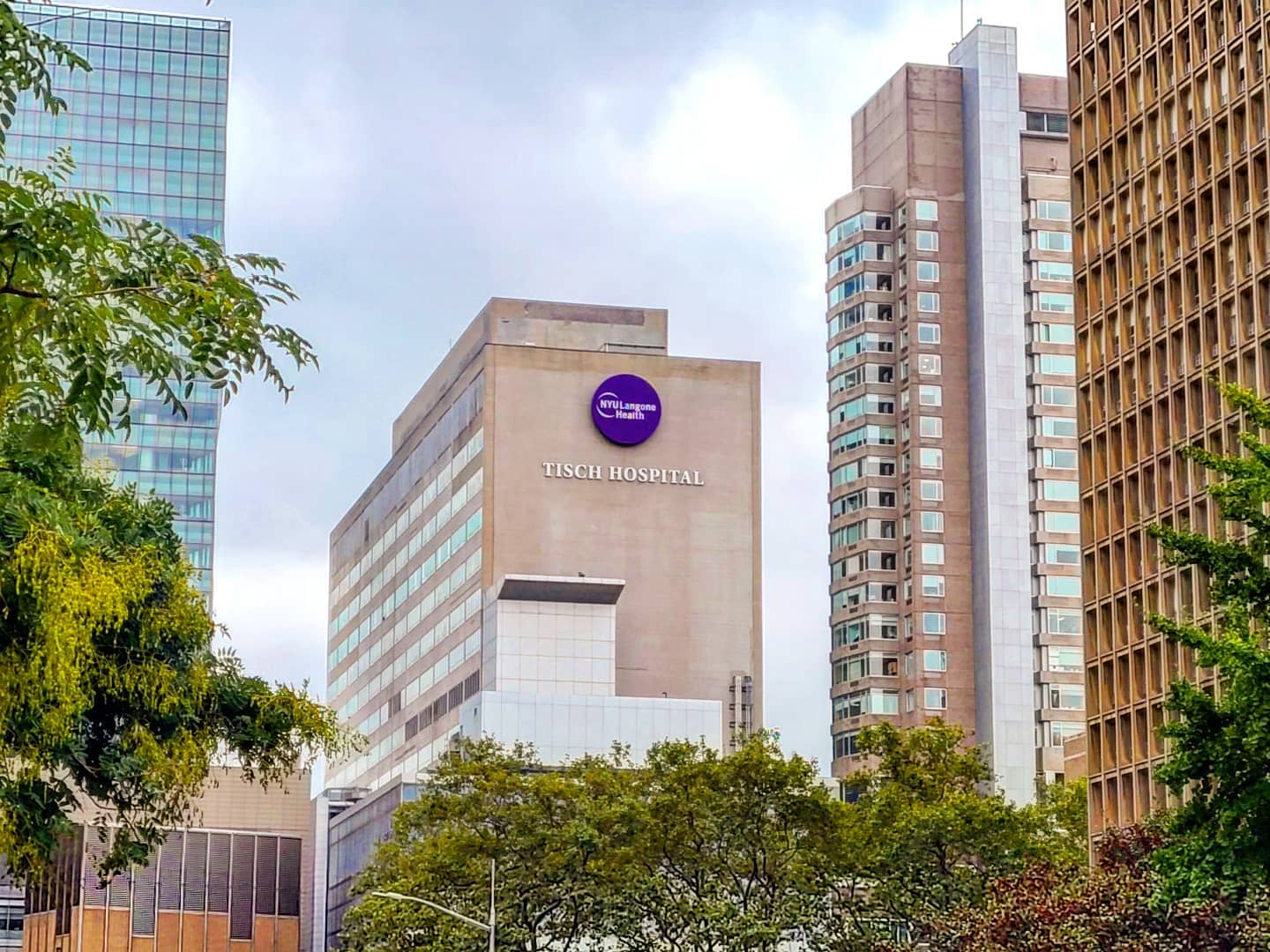
I popped the list of providers into AI, explained my needs, and asked if it could identify a doctor who met my criteria. AI returned one name and identified the perfect provider for me: an MD, MPH, and acupuncturist who takes my insurance, conveniently located in midtown Manhattan at NYU Langone (where I already get all my medical care) with stellar reviews of 4.8 out of 5 stars after almost 3,000 patient ratings. Rather than paying almost $200 per session, I will pay my $40 co-pay. My mouth fell open. Could this be the diamond I searched for all these years?
I went in for my consultation a month ago, and in 15 minutes he showed me exactly how acupuncture could alleviate my side effects because they all stem from my body’s structure. I wrinkled my forehead. Structural? He explained the radiation I received on my left side essentially split my body in half, tightening my entire left side from my neck to my toes, which directly contributed to my symptoms. Through a few quick mobility tasks, he demonstrated that the strength and flexibility of my right and left sides were so different it felt as if I was two different people. All of that tension originated from the radiation on my left side, causing my left shoulder to tighten and roll forward compared to my right. Acupuncture, over time, could unblock all of that, allowing us to reteach my left side how to stay open.
I told him I believed completely in the power of acupuncture, and he said I did not have to believe. I will actually see the effects after every session. We do mobility tests before the treatment, and then we repeat the mobility tests afterward.
The Moment of Release
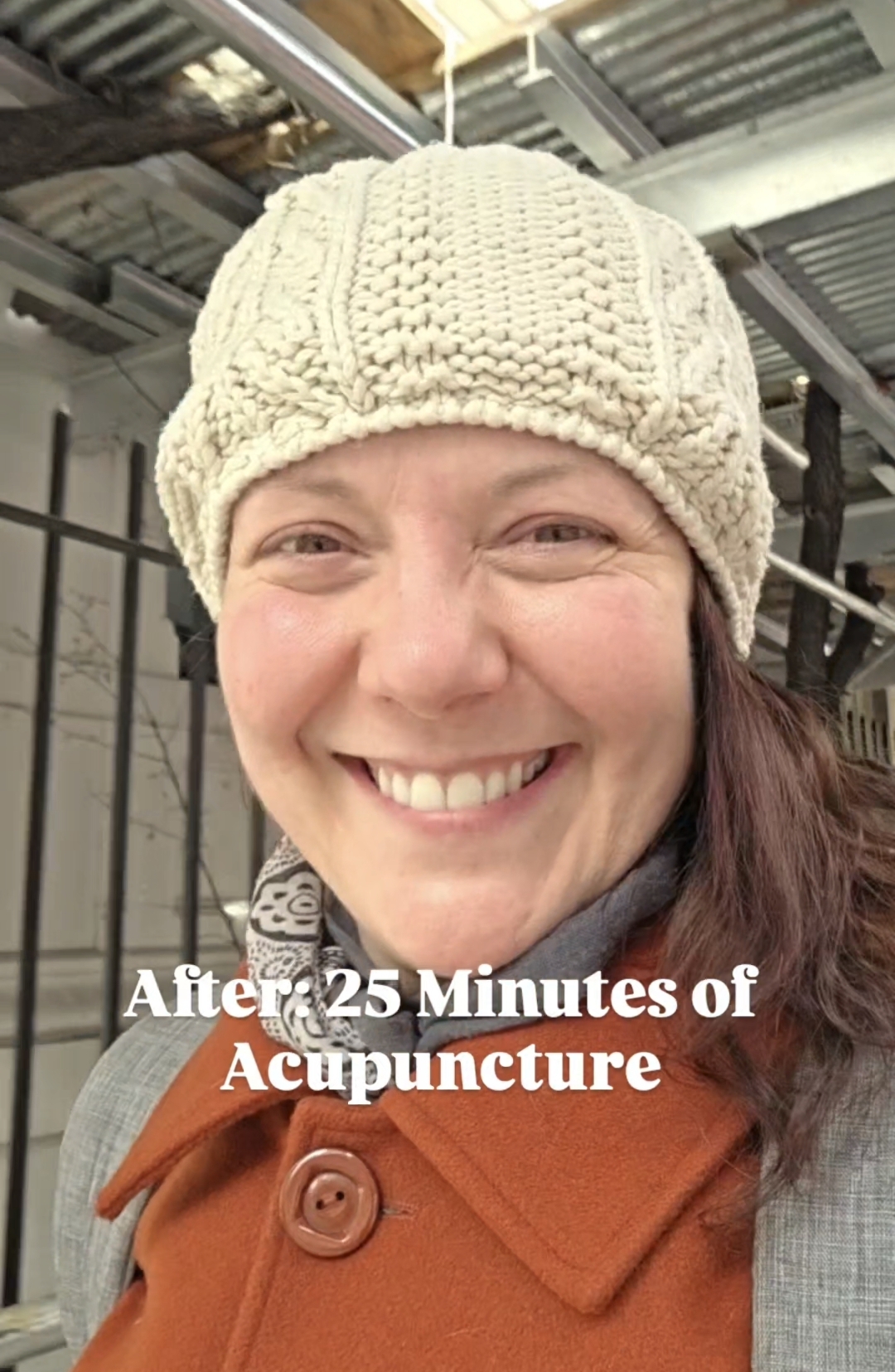
On Monday, he combined acupuncture, heat, and electrode stimulus for my first session. My body accepted the treatment so readily that my left side was actually freer than my right side post-treatment. Even he was surprised at how much my body wants to heal. That release lasted for about 72 hours. Not bad for being crunched for five years. As I left the office, I felt my life begin to shift. I felt unleashed.
What Comes Next
Our plan includes weekly sessions for four weeks. Then we will re-evaluate. We also plan to try a few other complimentary treatments, including a saline drip he developed to release the layers of fascia in my scar tissue from one another. I cannot wait to see what lies ahead, and how healing myself will help heal the world around me. And I cannot wait to share it all with you.
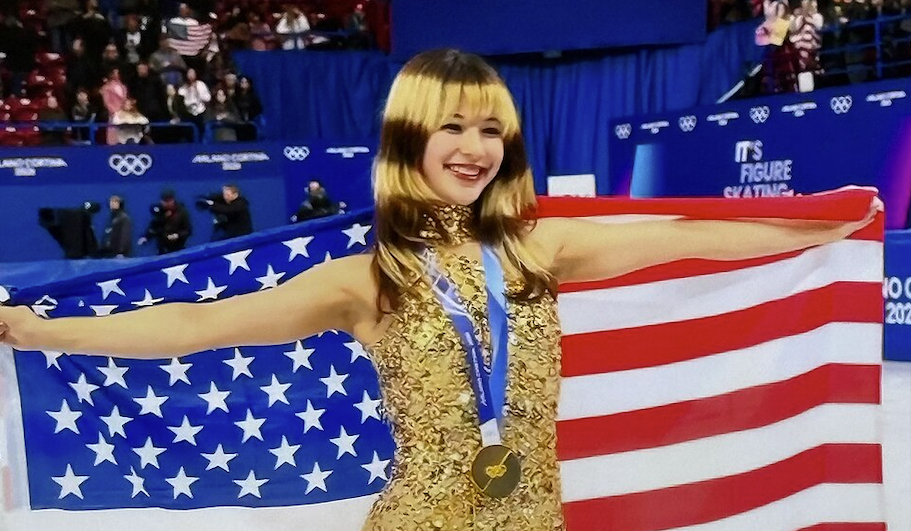
At the Milan Olympics, ice skater and gold medal winner, Alysa Liu, proved we don’t have to carry the heavy expectations others try to place on us. We can choose joy on our own terms instead.
Jaybeeinbigd22, CC0, via Wikimedia Commons. Link to image.
The typical Olympic broadcast follows a strict script. The music swells with drama. Commentators emphasize the crushing weight of the moment, the years of agonizing sacrifice, and the unbearable pressure on the athletes. We watch the screen and expect to see stress etched into every competitor’s face. We treat suffering as the ultimate proof of dedication.
Then Alysa Liu stepped onto the ice in Milan.
The media desperately wanted the classic, grueling redemption arc. They wanted the tears and the drama of a comeback. Alysa simply declined to participate. She refused to let the sport, the commentators, or anyone else tell her how to feel.
When interviewers tried to hand her a narrative of crushing pressure, she set a firm boundary. She clarified that their anxiety belonged to them, not to her. She left them with their own heavy baggage and skated with pure joy, freedom, and love for the sport.
She performed her way.
The Performative Stress Trap
That level of boundary-setting offers a profound lesson for all of us, especially in our professional lives.
Every day, people try to hand us their stress. A chaotic workplace demands our panic. A frantic project timeline insists we sacrifice our well-being. We absorb this urgency as if it is mandatory. People tell us this is the job and there is no other way; it is a job after all, right? We learn to perform stress to prove we care about our jobs, our communities, and our goals. If you aren’t exhausted and worn out, you don’t care enough about anything.
Alysa proves this burden is optional. You can care deeply and perform at the highest level without letting anxiety consume you.
Bring the Olympic Ice to the Office
Figure skating is Alysa Liu’s actual job. She treats it with immense respect and masters her craft, but she refuses to let the job dictate her emotional state. We can apply this exact framework to our own careers to protect our energy and reclaim our joy.
Reject the manufactured panic: Colleagues and clients often treat minor delays as catastrophes. You do not have to participate in their panic. You can calmly solve the problem without absorbing the frantic energy.
Decouple exhaustion from value: Corporate culture often rewards burnout as a badge of honor. Challenge that standard. You can deliver exceptional results on a project while maintaining firm boundaries around your evenings and weekends.
Treat joy as a performance enhancer: Alysa performs better because she skates free of anxiety. We execute our best ideas, strategies, and creative work when we feel relaxed and engaged, not when we feel terrified of failure.
We often believe that caring about our work requires us to suffer for it. We confuse anxiety with dedication.
This week, look closely at the emotional loads you carry at work. Are they yours, or did someone else hand them to you? You have the power to reject the default setting of suffering. You can choose to execute your work, live your life, and navigate your challenges with relaxation and fun.
You get to decide how you experience your own career. We are all a work in progress, and there is a freedom in knowing, living, and working with that truth. Your freedom and joy can and will inspire others. Alysa proved that to all of us. Let your own light shine, and go out there and be a light for others.
Happy New Year! Each year I select a word to guide my thoughts and actions. In 2025, I chose Rebuild. Now, with that foundation, I’m ready to scale the efforts I’ve loved most.
2026 at a Glance:
The Word:Momentum (finding the moment within the movement).
The Focus: Scaling NYC’s Secrets & Lies, adopting a heart dog, and publishing in a dream publication.
The Goal: Moving from “rebuilding” to intentional acceleration in community, health, and creativity.
Within the word “Momentum” is the word “Moment”. That’s where I want to be in 2026 – in the moment, in every moment. I want to focus on my lived experience each day.
Even with all the challenges and difficulties in the world, in 2025 I found ways to build community through longer tables and creative projects that inspire wonder and curiosity. It’s made me so happy to reflect on that and think about how that can continue in 2026.
Here are some of the areas that interest me most. What are you thinking of in 2026?
Storytelling
I am beyond thrilled that my show NYC’s Secrets & Lies is back and that so many lovely people have filled out audience and graced the stage with their knowledge and humor. This show encapsulates so many things I love: storytelling, a celebration of NYC, history, laughter, and awe. I know how lucky I am to call this city home and I love nothing more than sharing all the wild stories of our collective past that still exists on every street. I’ve also made some of my very best friends because of this show, and those relationships have saved and transformed my life.
We started doing location-based shows with partners in 2025, the dream I always had, and I can’t wait to create more of those immersive environments for our audiences in 2026. Our show at the Seaport Museum was a huge success and they were wonderful to work with so I’m hoping we can do more projects together.
We’re already working on some fun plans during this very momentous year in our city’s history to celebrate:
NYC’s 400th anniversary
The country’s 250th anniversary
100th anniversary of Houdini‘s death on Halloween (yep – he was a New Yorker!)
National Pet Adoption Week in March
Our first outdoor show in April with Natural Areas Conservancy for Earth Day
Climate Week shows in San Francisco (nature in the San Francisco area) and in NYC (NYC food history)
A few things we’re considering in addition to our shows:
Free field trips where a group of us go to an interesting location in NYC and learn about its history
Reading club on historical topics
Potluck dinners with historical recipes
Entering the Great Borough Bake-off at Museum of the City of New York
Dogs
In January 2024, I lost my soul dog, Phineas, after 13 1/2 years together.2024 was a painful year. Sometimes I could barely breathe because the grief was so heavy. It was the worst grief I’ve ever felt. At the very end of 2024 and through 2025, I fostered 10 dogs through Muddy Paws Rescue and became an active volunteer with the organization. I never imagined I would become as involved as I am. More than anything else I’ve done, fostering and volunteering to save shelter dogs has helped me heal. I still miss Phinny every single day. I will miss him every day for the rest of my life.
2025 taught me how to carry the grief of losing Phinny and the joy of rescuing other dogs like him. He never left me, not really. I feel his spirit with me always. There are, sadly, so many shelter dogs who need forever homes. In 2026, I want to get even more involved with helping more shelter dogs. I don’t know exactly what that looks like yet.
I am ready to adopt my heart dog and especially excited to go through therapy dog training with them. My hope is that we’ll become a certified team so we can visit chemo patients and participate in library programs where kids read to dogs.
Writing
At the end of 2025, I pitched an article to my dream publication and they accepted it! This is the good news I hinted at yesterday—I’m so thrilled to finally share it. I’m working on the piece right now and will share it once it’s published.
I spent 2025 further honing my writing skills in different genres and formats, and now I’m excited to put more of it out into the world in more publications and platforms. I learn so much as a writer by reading, and I’m trying to read more books and better track the books I read in a fun analog way.
Learning
2025 brought me many opportunities to learn new skills and grow my areas of expertise. Some of them came through work and many of them I explored on my own. I continued my language learning and I want to build on that in the new year. I signed up for Masterclass again because a few of their courses caught my eye and there was a massive 50% off sale for the new year. My interests vary widely so a platform like Masterclass is perfect for me. I loved their programs that I took a few years ago so I’m excited to dive back into it. I’d also like to find more opportunities to learn alongside others.
Nature
In 2025, I graduated with my Master’s in Sustainability Leadership at University of Cambridge. That was an enormous personal and professional accomplishment. I fulfilled my dream of studying abroad with the most incredible group of people who inspire me every day.
I had hoped to transition my full-time work into climate but political circumstances being what they are in the U.S., that didn’t happen. Through writing my Togetherhood newsletter, storytelling, and advocacy work, I’ve been able to be involved with the climate community and aid collective efforts. In 2026, I’d like to explore more ways that I can help even if my full-time work is not rooted in sustainability. Sometimes, dreams take longer than we’d like. The route isn’t as clear as we planned. The planet needs tending, and in 2026 I want to find opportunities to use what I have where I am to be useful.
Travel
In 2025, I finally got to Italy and Scandinavia, two places that have been on my list for some time. In June, I’ll skip back across the pond to reunite with my Cambridge classmates in London for our now-annual get-together. I’m already looking forward to that. I also decided to plan more weekends away. That’s something I don’t typically do. I’m not sure why I’ve not planned that more often – maybe because I love NYC so much and there is always a lot to do here.
In 2026, I’m going to make the effort to explore more and visit more friends who live outside of NYC. I’m hoping to finally get to Asia, another area of the world I’ve not yet visited.
Home and Finance
I’m very lucky to have a stable living situation after years of being a market-rate renter in a city that is insanely expensive. I love my Brooklyn neighborhood and my apartment. In 2025, I crunched the numbers many times and it didn’t make financial sense to buy a place of my own because of the deal I have in my place now and the soaring interest rates and downpayment requirements. I’ll continue to keep an eye on that in 2026 to see if anything changes. In the meantime, I’m working closely with my financial planner to save for a home down the line. I’m also refreshing my space with some new design touches.
Love Dating apps did not bring me joy in 2025. Even the mechanics of them are off-putting to me. I know they work for lots of people, so I’ve not abandoned them completely. I’d like to put myself in situations to meet more people who share my interests, and maybe that will also include a partner who is as wonderful as my friends. That’s the only kind of partner I’m interested in having. It’s worth trying. At the very least, I’ll meet interesting people who become friends.
Health
And finally, my health is the basis of all my dreams. It’s really true that health is the first wealth. I learned a lot in 2025 about medicine, nutrition, exercise, and the value of rest. I healed from a few injuries and in the process learned how to better care for my body. In 2026, I’d like to refocus on more meditation – that’s a practice I fell away from in 2025 and I always feel better when it’s part of my routine. I experimented a lot with new recipes, and loved the art and eating of cooking and baking. I want to continue that and invite more people to have meals with me in my home.
2025 marked 5 years since my cancer diagnosis and I’m grateful for my restored health. In 2026, I’ll mark 5 years since the end of active treatment and finish taking one of my medications that may also lead to a change in another of my medications. While these are all positive changes, I’m always wary of new meds and med changes because of past experiences I’ve had. I’m exploring ways to support myself in that process – maybe through acupuncture, saunas, and other holistic modalities.
Some closing thoughts
2025 saw a lot of upheaval and pain around the world. Through donations to and volunteering with organizations doing work, I was able to help others and that is something I will always continue to do. Improving the lives of all beings and the planet has to happen as a collective, and I’m looking forward to using my good health, resources, and skills to further cultivate community and cheer loudly for others in 2026.
Happy New Year. I’m glad we’re here together. Long may that continue.
What is one area where you’re looking to find momentum this year?
In November 2025, a college friend of mine passed away. He was just two years older than me. He had recently decided to leave his long-term job, where he’d been very successful, to finally pursue a passion project in this next season of his life. Six months later, he was diagnosed with an aggressive form of cancer. Eighteen months after that, he was gone. He was so young, and his battle was both short and harrowing.
If you could know how and when your life would end, would you want to know? And what would you do with that information? How might you live differently when you know the end?
Start at the End
When I write anything, I either write backwards or, at least, with the end in mind. That’s also how I live life—knowing just how precious it always is and knowing that it may very well be much shorter than I’d like.
This isn’t just a somber reflection; it’s a necessary call to action. I recently heard an interview with the actor Minnie Driver where she said: “Don’t wait. For anything. What are you waiting for? Go live! Right now!” I feel that in my bones. That element of time is always front of mind for me. Maybe it’s a bit too front of mind sometimes, but in my opinion, that’s better than not thinking of it at all.
The Gift of “Extra” Time
I know how short life can be. I know how short my life almost was while I was going through cancer treatment and all the complications I faced. Because of that, I know this is all “extra.” I know I’m lucky to be here at all, and lucky to be healthy and able-bodied.
So, I don’t wait. I’m doing my passion projects now. I spend my time exactly the way I want and with whom I want. I don’t care about titles and money and prestige. Those things were meaningless when I was lying in a hospital bed surrounded by the whirring of breathing machines hoping to live to see the sunrise the next day.
All I wanted then was my dog and my friends. That’s it. That’s all I want now, too. Instead of chasing a title, I choose work that brings me joy. Instead of prestige, I choose the creative projects that might never make a dime but make me feel alive.
The Heartbreaking Truth
Since that hospital stay, my soul dog and several of my friends and family members have passed away. The time with them was too brief. We never, ever get enough time with those we love. That is the powerful and heartbreaking truth of life: It is never long enough, no matter how long it is.
My wish for all of us as we head into a new year is that we don’t wait another second to live a life we love. Do exactly what you want to do right now and every day you have. Don’t wait on passion projects. Don’t wait on love—for yourself, the beings you care about, and your community.
Don’t wait for “someday.” None of us have that luxury.
3 weeks ago, I hurt my back volunteering at a dog adoption event. Old shoes. 8 hours standing on concrete in cold weather. Lifting things far too heavy for me to lift alone and lifting them incorrectly. Anti-cancer meds for 5 years that impact my joints, muscles, and bones. A strenuous workout 2 days before. A big grocery shop and carry that evening. It was a recipe for a back emergency, and I’d served it up to myself like a master of disaster.
Healing isn’t linear; it’s a continuum. The last few weeks have been a bumpy road. I went to my oncology appointment on Tuesday. (I go every 3 months to see my team, get bloodwork, and get a shot and infusion.) I was in the waiting room for 30 minutes and wondered why I hadn’t been called for my bloodwork yet. They forgot to tell me I needed to go to a different floor. I was worried all my appointments would now be delayed so I grabbed my bag in a hurry and threw my back into a spasm. I yelped.
Then of course my blood pressure and one of my blood levels that’s a marker for muscle damage was slightly elevated (weeks of back pain will do that.) With great empathy and understanding, my doctor gave me muscle relaxers. She said to come back in a month to recheck that blood level. “I’m not at all worried, Christa,” she said. “But I know you and I know you’ll worry so we’ll recheck for your peace of mind.”
When I got home, I sunk into a warm bath and cried because my back hurt; I hate the side effects of my meds; I miss my dog, so much of life feels unfair and out of my control. Sometimes it all feels like a house of cards; one shakes and the tower falters. So, I let it crash around me, shattering.
I pulled myself together and got out of the tub. A few minutes later the full extent of the spasm really kicked in. The pain surged to a frightening level-10/10– like my body was breaking. I gobbled the muscle relaxer and climbed into bed, praying it would kick in. I tried to empty my mind and count my blessings. Then I just let the thoughts come without trying to direct them. I had survived so many dark nights before. Surely this couldn’t be as bad as the worst of them. I woke up 10 hours later. Stiff but the terrifying knot in my back was gone, replaced with a dull ache.
For the next few days, the pain kept moving around my back. My body was trying to re-center herself. Trying to protect me while also asking my mind for help. I was so afraid I’d never feel better. Now would I always be a person with a bad back?
I called my friend, Alex, which I often do when I don’t know what to do. As always, she talked me down off the ledge. It turns out I don’t have a bad back, I had a battered back. Alex assured me all my fears were normal. Get yourself a friend like Alex. Learning to move in a different and ever-changing body requires effort. With this injury, my mind and body were doing the necessary work. When we got off the phone, my back felt better. The next day it felt even better. I turned the corner thanks to muscle relaxers, heat therapy, massage, a sauna visit, stretching, time, and Alex. Healing isn’t a solo sport; it’s as much about community as it is about medicine.
Our back is the foundation of our health and ability to move, literally and figuratively. When the foundation falters, everything built on top of it shifts. We have to maintain the foundation. Castles in the air don’t rise. They need a stable base, and so do we. Rest, heat, stretch, repeat until the healing’s complete.
My back showed me I’ve been holding myself back on a number of fronts, and I’m done doing that. As my therapist, Brian, has told me many times, our injuries often come to hone us, not harm us. It’s worth the time and energy to do this fundamental work. We are worthy of our own time, attention, and care.
Me outside the Perlmutter Cancer Center in NYC on October 29th after seeing my surgeon on the 5-year anniversary of my discharge from surgery
Last week I celebrated 5 years since the bilateral mastectomy that saved my life and removed any sign of cancer from my body. My friend, Wayne, describes journeys like this as a log flume. When we begin, we’re at the top of a terrifying drop. We’re scared, nervous, unsure, hopeful, confused, anxious. All the emotions of the human condition are raw and tumbled in our minds and hearts. We’re trying to keep our head up and our eyes ahead. we don’t want to take that plunge into the unknown. But we have to. We can’t turn around. The only way out is through.
And so, we take a deep breath, and we let ourselves fall. We face all the things we were afraid of, and then some. In every health challenge journey, circumstances arise that we never expected. In my case, I had to have another surgery 3 weeks later because lymph nodes that biopsied negative came back positive in the pathology. All the nodes from that second surgery were, thankfully, negative. Then I nearly died, twice, from a life-threatening allergy to Taxol, a common chemo drug, that shut down my lungs in the middle of COVID. My oncologist at the time thought I was being overly dramatic about my side effects when in fact I was suffocating. (I fired her from my care team, and she no longer sees patients.) My pulmonology team thought my lungs might be permanently scarred and I may need to have an oxygen tank for the rest of my life. Thanks to science and diligence, I fully recovered and now I’m healthier and stronger than ever.
I spent the evening of my 5-year surgery anniversary producing and hosting NYC’s Secrets & Lies – Ghost Stories. The irony isn’t lost on me—that I nearly became a ghost myself with so much life I still wanted to live and that storytelling and creativity have been two of my greatest teachers and healers.
In the wee hours of the morning after my surgery, I woke up in recovery. High as a kite on a massive amount of drugs, my nurse ran around the hospital to find me a turkey sandwich and to this day it’s the best thing I’ve ever eaten. I happily gobbled it down, watched a Harry Potter film on my tablet, and cried enormous tears of gratitude. There was less of my body in the world, but I was still alive, still breathing, and cancer-free. My greatest wish that morning was to see the sunrise so my nurse got me out of bed and wheeled me to one of the lounge spaces in the recovery wing so I could see the sun come up over the East River and the FDR Drive. I will never forget that view.
My surgery team members came to see me before I was discharged. My plastic surgeon who had placed the first installment of my reconstruction – the tissue expanders that would go on to cause 14 months of constant pain – told me that I woke up from anesthesia very quickly, before I’d even left the operating room. I began gushing how grateful and thankful I was to the whole surgery team. She said the entire team was laughing and crying right along with me. I have zero memory of this, and I wish I’d been fully conscious to remember it. Leave it to me to bring the funny in the darkest of times!
Then my breast surgeon came to check me before discharge. Through our masks, I thanked her for saving me and she said, “Sweetie, I’m just part of the team. And every person in this hospital shows up every day with the only goal being to help you heal. And you will heal. And how you feel now – the pain and the fear – it won’t always feel this way. We’re going to get through this together.” My dear friend, Marita, picked me up from the hospital and drove me home to where my sister and my dog were waiting for me. In the following months, so many beautiful friends sent me care packages, messages, cards, and food, and came to visit me from a distance – outside and masked. The trying times we made it through! I’m so thankful for everyone who cheered me on and helped me in a million different ways. I wouldn’t be here without you.
It’s fitting that exactly 5 years at that exact time she came to see me in recovery that I had my 5-year check-up with my breast surgeon. She gave me a clean bill of health, and we talked about the next 5 years of meds. She eased my mind and soothed my heart, as she always does, with science and compassion. We have a plan to keep me cancer-free, and I feel ready to start this next chapter.
I left her office with tears in my eyes and my head, heart, and spirit filled with gratitude for every second of these past 5 years. I’m even grateful for the worst days on this journey because I got to live them. Every morning, my first thought is, “Whew, I got another one!” Long may that tradition continue.
Below are photos of me on the day of my surgery and the morning after when I woke up and saw the sunrise
The urgent global challenge is feeding a rapidly growing population while fighting the uncertainty of climate change. As a storyteller and a biomimicry scientist, I often ask: How does nature solve a massive, existential crisis? The answer, it turns out, lies not in some distant super-technology, but in the subtle genius of a single plant cell.
New research from the Cold Spring Harbor Laboratory has illuminated a fundamental biological “master switch” in the DNA of food crops like corn, giving us an actual blueprint for creating a resilient, thriving future. This isn’t just botany; it’s a profound lesson in survival written right into the plant kingdom.
The Inner Wisdom of the Plant
Plant growth, from the deepest root to the ripest ear of corn, is governed by its stem cells—unspecialized cells that hold the potential to become any part of the plant. The challenge facing plant scientists has always been figuring out how to balance these cells: when should they grow and when should they specialize into, say, a fruit or a thick stalk?
In a breakthrough study, scientists mapped the gene expression in these cells, revealing the network of regulators that act as the plant’s precise internal control panel. This network balances growth and stress response, allowing the plant to strategically allocate its resources for survival.
This knowledge is a gift to us all because it shows how nature manages risk. A plant facing drought doesn’t just despair; it shifts resources to deepen its roots. A plant under pest attack doesn’t just succumb; it redirects energy to fortify its cell walls. It’s a marvelous, elegant system of risk mitigation through metabolic flexibility.
A Blueprint for Humanity’s Resilience
As my work focuses on biomimicry—integrating nature’s genius into the human world—I see in this discovery a direct path to solving our human challenge of food security. We are not meant to struggle endlessly against the elements; we are meant to learn from the masters of endurance.
This plant study provides us with three clear takeaways for building a better world:
Precision over Force: Instead of overwhelming fields with more fertilizer and water, we can use this genetic knowledge to engineer plants to be more efficient—to use nitrogen more effectively and direct energy precisely where it’s needed most for resilience.
Unlocking Latent Potential: We are now able to see and manipulate the plant’s own evolutionary solutions. We can develop crops with deep-seated, natural defenses against drought and disease, built on the plant’s own wisdom, not on chemical dependency.
The Power of the Foundational System: The corn stalk teaches us that true resilience comes from perfecting the foundation. By understanding and replicating the simplest, deepest biological controls, we can build human systems that are robust and adaptable, just like an ecosystem.
A Brighter Future Ahead
This breakthrough is more than just a scientific finding; it is a fundamental shift in our relationship with nature. By finally decoding the genetic “master switch” that plants use to govern their own destiny, we are handed a powerful blueprint for survival. The challenge of global food security has never been greater, but this research proves that the solution is not an endless technological sprint, but a deeper engagement with the patient, profound wisdom of the living world. The era of resilient agriculture is not just on the horizon—it has already begun, written in the complex, hopeful language of a plant’s own DNA.
Friday, September 5th, was my Alive Day – many years ago on that day I ran out of a burning building to save my life. I’ve written about that event many times, here, here, and here for example.
It was a wild ride to recover from that and from past traumas that had piled up. It prepared me for everything that came after: becoming a novelist, the pandemic, cancer, and helping my soul dog, Phineas, cross the rainbow bridge when it was his time. Now with all this perspective, what was once one of the worst days of my life became a turning point that changed my life in ways I never imagined were possible. Yes, that fire took almost everything from me. It also gave me everything I needed.
A special thanks always to Brian McCormack who helped me embrace my darkness and my light in equal measure by walking the path to wellness with me every step of the way. I’m forever grateful to be here, to be well, and to be whole.
Me at Ravinia when I visited friends in Chicago this weekend
Some personal health news and a story about the power of science. 2 years ago, I went for a bone density test. Unsurprisingly it showed that my current “f*ck cancer” meds had decreased my bone density numbers into the osteopenia range with 1 number from my low back on the border for osteoporosis.
At that point, my oncology team and I decided to play defense. I added the equivalent of Harry Potter’s Skele-gro to my arsenal of daily weight-bearing exercises, a very healthy diet, and no alcohol that I was already doing. The hope was the new med would stabilize my numbers and keep osteoporosis at bay.
I just had my 2 year bone density test. Some of my numbers have improved by a lot. A couple stayed the same. The number for my low back tipped by -.1, taking me into osteoporosis.
I bursted into tears. I spend an incredible amount of time and effort looking after my health. Ani DiFranco wasn’t joking when she sang, “self-preservation is a full-time occupation.” How was this fair? What else was I supposed to do to stop this?
I pulled myself together and messaged my oncologist to ask about next steps.
I took myself for a walk and gave myself a pep talk. The med is working. Healing isn’t linear. I know this. Like an arrow, sometimes we have to be pulled back a bit to fly forward.
By the time I got home, my oncologist had responded. I expected to see a recommendation for more meds. “This is status quo. You’re on protective meds and will be done with the meds causing this side effect in a year. This will get better.”
The new medications I’ll switch to in a year, which will mark 5 years since the end of my active cancer treatment, don’t diminish bone density. They will likely protect my bone health and possibly improve my numbers. And my oncologist will keep me on the Skele-gro until I’m out of osteoporosis land.
My bone health isn’t where I want it to be. Not yet. I’ll get there, one day at a time, thanks to science.
For a city known for its concrete jungle, New York City is making a bold and exciting commitment to its natural side — the city’s first-ever Urban Forest Plan, a monumental undertaking that promises to transform our urban landscape and bring the benefits of nature to every corner of the five boroughs.
What is the Urban Forest Plan?
Mandated by Local Law 148 of 2023, this groundbreaking plan sets an ambitious goal: to increase New York City’s tree canopy cover from its current 22% to a robust 30% by 2035. But it’s more than just planting trees; it’s a comprehensive roadmap for managing, protecting, and equitably expanding the city’s entire “urban forest”—which includes over 7 million trees on public and private land, from street trees and parks to natural forests and even private yards.
Why is this Plan So Important?
The benefits of a thriving urban forest are immense and crucial for a city like ours:
Cooler City: Trees are natural air conditioners, mitigating the urban heat island effect that makes our city hotter, especially in neighborhoods with less green space. They can lower street temperatures by several degrees, providing vital relief during scorching summers.
Cleaner Air: Our urban trees act as natural filters, removing thousands of tons of air pollutants annually, which can significantly improve public health, particularly for those with respiratory issues.
Stormwater Management: Tree roots absorb millions of gallons of stormwater runoff, helping to reduce flooding and protect our waterways from pollution.
Enhanced Well-being: Studies consistently show that access to green spaces improves mental health, reduces stress, and promotes physical activity. A greener city means a healthier, happier populace.
Biodiversity Boost: Expanding the tree canopy creates vital habitats for birds, insects, and other wildlife, enriching the city’s biodiversity.
Environmental Justice: Historically, tree canopy has been unequally distributed across the city, with lower-income neighborhoods often having fewer trees and facing greater environmental burdens. This plan aims to address these disparities by prioritizing equitable tree planting in disadvantaged communities.
Community at the Core
One of the most exciting aspects of the Urban Forest Plan is its emphasis on community involvement. The city recognizes that for this plan to truly succeed, it needs the input, experiences, and recommendations of New Yorkers from all walks of life. Various community engagement events—including workshops and “walk-shops” in different boroughs—have been held, and a public survey is open (though note that the deadline for input is June 30, 2025 – so if you haven’t participated, there’s still a brief window!). This collaborative approach ensures that the plan reflects the diverse needs and desires of our neighborhoods.
Looking Ahead
The Urban Forest Plan is a testament to New York City’s commitment to a more sustainable, resilient, and livable future. It acknowledges that trees are not just a luxury, but essential infrastructure that provides invaluable services to our communities. As this plan takes root, we can look forward to a greener, healthier, and more equitable New York City for generations to come.





 Christa Avampato