creativity

Nature is our ally, not our adversary

Photo by Lukasz Szmigiel on Unsplash

You know what you need to produce oil and gas? Water. Lots of it. For fracking. You know who produces the most oil and gas worldwide? I guessed Saudi Arabia. I was wrong. The U.S. is now the world’s largest oil and gas producer. 

In the last 13 years, the U.S. has used 1.5 trillion gallons of water for fracking. That’s the amount of water used annually by the state of Texas with a population of nearly 30 million people. It’s a triple whammy against the planet by America — the emissions created by these fossil fuels, the extensive use of water to complete fracking exercises to get those fossil fuels out of the ground, and the immense damage done to ecosystems by fracking, a process that creates vast amounts of wastewater, emits greenhouse gases such as methane, releases toxic air pollutants and generates noise, destroys animal and plant habitats, causes species decline, disrupts animal migrations, and degrades land.

But don’t worry, says one of the wealthiest and most prominent scientists in the world, because human ingenuity and technology are going to save us. According to him, nature-based solutions are “nonsense” and “idiotic”. “There are effects on humanity,” he said last week at Climate Week NYC, assessing the overall threats posed by climate change. “The planet, less so. It’s a fairly resilient thing.”

I used to be grateful that he was in the climate conversation. Now, I’m disappointed by yet another prominent scientist who has gone off-the-rails and is ignoring science. Maybe it’s fear. Maybe it’s wishful thinking. Maybe it’s desperation at the dire state of the planet.

This is what I know to be true — the wisdom of nature far exceeds any wisdom of any human who has ever lived. To claim otherwise, is the height of ignorance and arrogance. It’s dangerous to listen to someone who puts himself above nature, especially when he has one of the highest personal carbon footprints in the world and the health of the natural world underpins half of global GDP (~$40 trillion).

Nature knows how to create conditions conducive to life. The human track record on supporting life, including our own, is abysmal. I’m banking on nature’s wisdom every single day. She’s an ally, not an adversary, and we must listen and respect her before it’s too late. Nature made our existence possible. 

Human ingenuity, while offering many gifts, has given us climate change, fracking, and perhaps the recipe for our own extinction. The most ingenious actions humans could take now are to listen to and learn from nature, and work with her, not against her. She’s ready to play ball. She always has been. The question now is, are we?


creativity

Games and Climate Action at the UN’s inaugural Games and SDG Summit

United Nations HQ in NYC – Games for Change

I spent my first year at University of Cambridge researching and writing about the role of video games to encourage climate action. I was fortunate to collaborate with the incredible team at ustwo Games on this work, especially Jennifer Estaris who is a shining star in the games for good space. They are a group of passionate, talented, and deeply committed people. Through our work, I realized that video games can and will play a part in building a healthier, more joyful, safer, and more sustainable world.

Games are for everyone. They unify people across cultures, continents, and every demographic designation. Their stories are timely and timeless. They allow us to reconcile with our past, make sense of our present, and simulate our future with a high degree of accuracy and an abundance of empathy. They help us not only to imagine a better and brighter future, but also create the roadmap to get there. Games can do what so many other tools can’t: they can transcend politics, cross the chasm of experience, and help establish common ground. They are a map, a compass, and a guidebook to the very highest calling of humanity—to be humane to all beings.

Today I’m at the United Nations for the inaugural Games and SDG (Sustainable Development Goals) Summit at the UN Headquarters, the kick-off to the 20th Games for Change Festival. I’m honored to be invited with industry professionals, government officials, and sustainable development experts, and look forward to all of the incredible conversations, ideas, and ambitions that will flow through each and every person in the room. Together, we’re building the path to higher ground, and I can’t wait to see what we find. 

creativity

I’ll be at Games for Change 2023 as press

I’ll be attending this year’s Games for Change festival in New York City in July with press credentials. I’m a freelancer so I’m looking forward to submitting pieces to a number of publications. If you’re interested in having me write for your publication, please get in touch at christa.avampato@gmail.com.

I spoke at the festival a decade ago for the 10th anniversary when I was with Sesame Workshop managing the National STEM Video Game Challenge. At this year’s 20th anniversary, I’m looking forward to meeting and learning from all of the attendees, and being inspired by how games are helping to build a better world for all beings. I’m particularly interested in games and developers focused on climate issues and the environment.

If you’ll be there, let me know. I’d love to meet you, and hear about what you’re doing. You can reach out to me at christa.avampato@gmail.com.

creativity

How Matthew McConaughey helped me through cancer

Photo by Greg Rakozy on Unsplash

On the Calm app, Matthew McConaughey reads a sleep story titled Wonder. In the earliest days of my cancer diagnosis and treatment, in the middle of the pandemic before vaccines when death tolls were skyrocketing, I waited for biopsy results and surgery. I would lie in bed praying for sleep, knowing cancer was in my body. I’d often wake up in the middle of the night—alone, afraid, and lost.

I would turn on Wonder, and Matthew McConaughey’s voice would help me escape from my panicked and fearful mind. I needed to build my own anchor, and that story one was of my tools. It features a 7-year-old girl named Zoe who loves dinosaurs, art, and the cosmos. Her stargazing grandfather is wise and kind, and lives on a lake. When Zoe can’t sleep because of her worries about the world and her future, he reassures her of the beauty and comfort we can find in the darkness if only we are willing to step into it with curiosity and courage.

In those nights of drifting liminal space, caught in the sea of time between no longer and not yet, between living and dying, between this world and what’s next, Zoe, her grandfather, and Matthew helped me became limitless, fearless, and amazed. They kept the tiny light within me burning bright. Awe became my salvation.

I was Zoe, and her grandfather and Matthew were my guides. They reminded me again and again that in this moment, I was alive. “What might happen in the future can’t happen now,” they assured me. That truth was my North Star and I clung to it like the life raft that it was. I listened to this story so many times that I could recite it from memory.

Now, over two years cancer-free, I’m in the midst of re-imagining my future home and career. Recently I woke up in the middle of the night, concerned about what’s ahead. I listened to Wonder again for the first time in a long time. Again, as then, Matthew, Zoe, and her grandfather soothed my worried mind. They reminded me of how far I’ve come, how far we’ve all come, since those terrifying nights when, in the wise and timeless words of Ani DiFranco, self-preservation was a full-time occupation (and then some.)

That’s the thing about stories. They give us hope and joy. They help us rest and recharge. They give us an escape so we can re-enter our lives with new perspective and renewed strength. Stories have saved my life more than once. They continue to be that solid core of my being every time I’m afraid “the centre cannot hold,” as Yeats speaks of so poignantly in his poem “The Second Coming”. He talks of revelation and rebirth in the middle of chaos, darkness, and doubt—exactly the same spirit of Wonder. 

When we are most unsure, we can be certain of this: if we can find something, anything, to help us hang on, there is so much beauty and wisdom to be gained in the struggle. Someday, our struggle and triumph will be the inspiration that helps someone else survive their own long night. That is reason enough to keep going—to have the honor of paying it forward. 

creativity

Will writers be replaced by OpenAI, makers of ChatGPT?

This week I’m working with one of my biomimicry clients to explore the use of OpenAI, makers of ChatGPT. It has several models within it, including Davinci which we’ve found has the most detailed, natural sounding results but not necessarily the most accurate information. We are using this technology to ingest a wide variety of scientific papers and produce plain-language text that can be used by designers and engineers who want to explore nature-based solutions and biomimicry inventions and applications.

We tried five tests with different biomimicry topics. I compared the source papers and the two versions of AI-generated text to assess them. Of the five tests, four were decent first drafts that need a human editor to refine them. Most of the scientific data was presented in a plain text way that maintained accuracy and integrity. It missed some key findings that would be valuable for engineers and designers, and the tests need to be edited for clarity. It had some trouble extrapolating the information into potential biomimicry applications and nature-based solutions. In other words, it could create plain-language text based on complicated, jargon-filled text reasonably well as a first draft. It could not creatively interpret the data to imagine many new possibilities. The one failed test completely missed the mark on the main points of the scientific paper.

Overall, it was exciting to see how this innovation could democratize access to information that is concealed in jargon. As with any simplification task, the accuracy has to be evaluated by someone who can reliably translate from language that needs deep expertise to language that’s accessible to those without that expertise. Proliferation of misinterpreted, oversimplified, and inaccurate translations is a risk and a danger. We’re in the early days of this tool and it will undoubtedly improve over time.

Some have expressed concern that writers will no longer be needed and that all writers will be forced into becoming editors. As a writer and an editor, I don’t share that fear. Human creativity, ingenuity, and imagination will never be obsolete. My hope is that tools like AI-generated text will free up our time, energy, and headspace to spend more time on creative projects.

creativity

Joy today: How Tech Sabbath is helping my writing

Last week, I tried taking a Tech Sabbath. Started by Casper ter Kuile via Twitter with the hashtag #TechSabbath, it’s a ritual of shutting off social media, email, your computer, and your phone as much as you can after work on Friday night to Saturday night. I mostly disconnected from technology for that 24 hours and it was amazing. I finished outlining my third novel that I’ll write as part of National Novel Writing Month this November and then spent Saturday with friends in Philly. I came back to tech today with a little less attachment to it and more joy. So it’s safe to say that I’ll be making #TechSabbath a part of my self-care.

creativity

Joy today: Learning to edit film with Adobe Premiere

Today I’m rolling up my sleeves and starting to learn how to edit film footage with the Premiere software package by Adobe. Please send me any of your tips, tutorials, and resources that you think would be helpful! I’m so excited to dive in and learning this new skill.

creativity

Joy today: One step closer to a fatberg free NYC

This is what a failed product development experiment looks like. I’m sharing this because I think it’s important to talk more about failure, especially in science.

I spoke to Michael DeLoach & NYC Water about the #FatbergFreeNYCinitiative. As a grad student at The Biomimicry Center I’m learning to use biomimicry principles and my experience in product development to invent a flushable wipe to eliminate fatbergs.
http://fatbergfree.nyc

This was my green chemistry solution and my finished product. My dachshund, Phineas, is my lab assistant. He’s a bit like Beaker so I guess that makes me Bunsen Honeydew. We listened to the podcasts Harry Potter and the Sacred TextOlogies Podcast, and The Story Collider to stay inspired as we did our research.

This was only the 1st attempt. It failed. And that’s okay. I stand by the green chemistry solution. I just need to find a sturdier delivery material that quickly biodegrades. Trial #2 is already underway.

And given that it’s May Day, a day when we celebrate those who work, toil, tinker, and invent, here’s 3 cheers for all of you working to solve our world’s toughest challenges and make this a better planet for all beings.

creativity

Joy Today: Opportunity

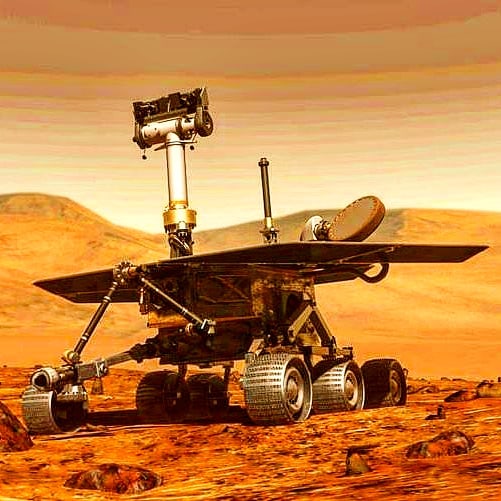
51960747_10104789291263726_1676595936316358656_nOpportunity’s last words from Mars: “My battery is low & it’s getting dark.”
May we all have lives as rich with discovery and a final chapter as peaceful. We’re lucky to have known you, Opportunity, and to see this world through your eyes. Thank you for your service.


creativity

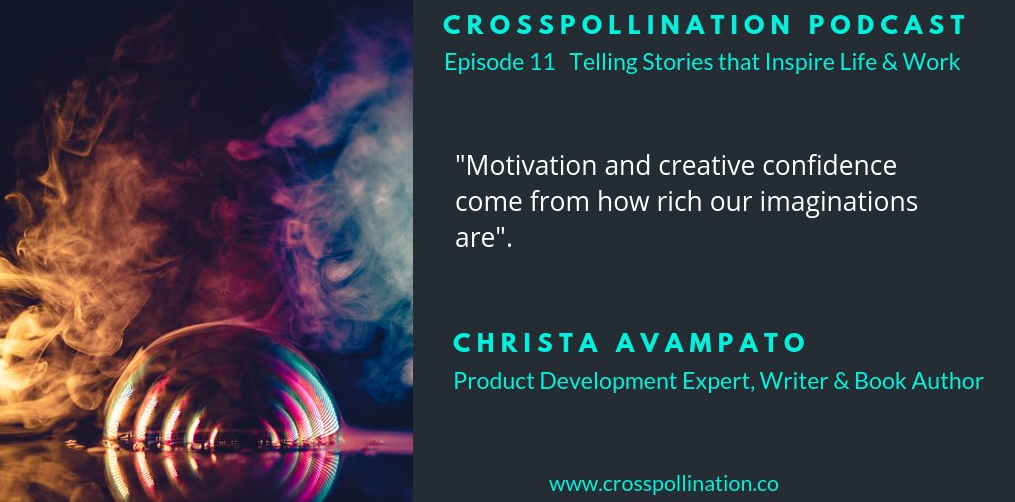
A Year of Yes: Cross-polliNation podcast about everything I love about my career

8df410eb-5004-4241-b7de-8fdbd820fdff-originalExcited to share this podcast episode where I talk about everything I love in my career: product development, science, biomimicry, the arts, writing, my book, storytelling, technology, and the power of our imagination coupled with curiosity. Thank you to host N.B., and to Carolyn Kiel for recommending me! You can listen at this link (www.crosspollination.co) and wherever you get your podcast feeds!