Death Valley is the hottest, driest, and lowest place in North America. Most of the time, it looks like a barren, windswept land. Unforgiving. Hopeless. On the surface, it looks as if nothing could ever survive here. In line with its name, dead.
And yet, out of sight, millions of tiny seeds, bits of magic, lie in wait for just the right conditions to fulfill their potential. Patiently, they track rainfall, temperature, and wind. They have one shot to show us what they can do so they wait for the odds to be ever in their favor.
November 2025 – January 2026 set the stage for them to shine. In those months, a year’s worth of rain fell. The record rains leached salts from the soil and that triggered massive germination. The temperatures were exceptionally mild without becoming scorching hot. A mild winter and early spring temperatures gave the seeds the exact level of warmth they needed without burning them. The winds were calm, allowing the seeds to anchor themselves and root into the soil at their earliest growth stage rather than being blown away.
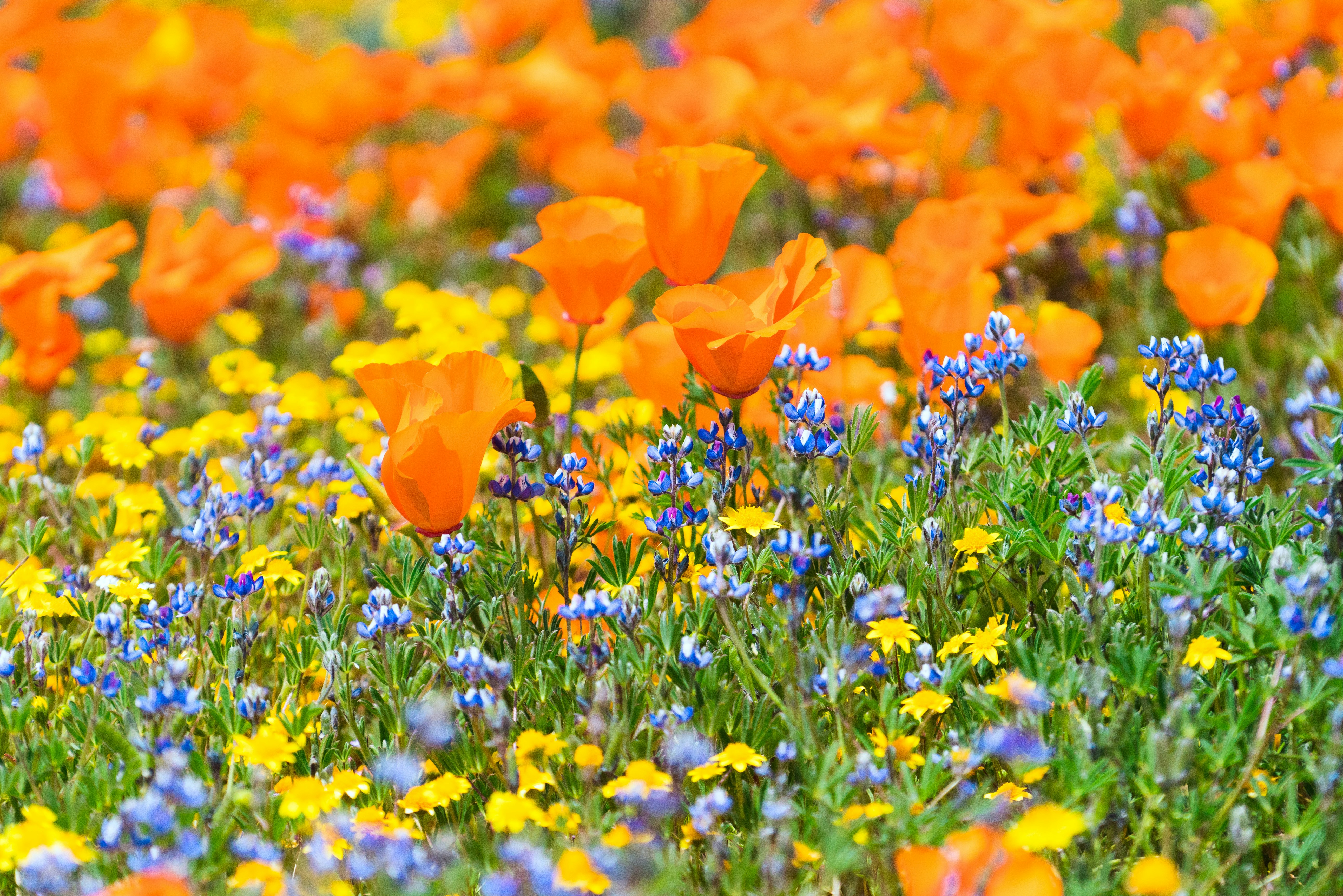
The patience of the seeds was rewarded, and so were we. The 2026 superbloom of wild flowers in Death Valley was the most significant in a decade, and on par with those in 2016, 2005, and 1998. Desert Gold, Poppy, Verbena, Golden Evening Primrose, and Purple Phacelia bloomed in such density that they looked like swaths of color rather than individuals flowers. The monotonous, dry land of Death Valley was transformed into a thing of beauty that rivals, and I would argue exceeds, any work of human art.
Bees buzz. Hummingbirds hover. A light wind carries the perfume of the flowers. Sights, sounds, and scents for sore eyes, weary souls, and hearts that need to be made whole in a way that only nature can provide. It will not last forever, and will be gone all too soon. But while it’s here, in all its blooming glory, we revel in it.
The Togetherhood Takeaway Long after the flowers wilt and Death Valley fades back to its seemingly empty landscape, we can carry the superbloom’s lessons into our lives, communities, and careers.
We don’t do anything alone The context and environment in which we find ourselves impacts our growth and progress. I’m obsessed with settings and orchestration. It’s my favorite thing to work on. How can I create the conditions to thrive, for myself and for others? How can I help us all to grow together?
Timing matters We are so quick to judge our own efforts and the efforts of others as if we solely control how successful something is. While we have control over our own efforts, we do not own the results. That is a difficult lesson for creators of any kind to learn and accept. It’s why I spend a lot of time and effort on creating environments and ecosystems where the people I work with can become the best versions of themselves. Some of our experiments work right out of the gate. Some of them don’t. And many times, our successes and failures are truly a matter of timing. The good news is we can always learn and try again. Improvement, no matter where we start, is a continuous process.
Quiet work is foundational It’s healthy to take a break, regroup, reflect, and come back stronger and more well-rested, and perhaps in a totally different form. Just because someone isn’t showing off what they’re doing doesn’t mean they aren’t building something worthy. In a world that is addicted to social media and recording every single moment for public consumption, there’s a profound sense of peace to be found in doing work in our own space without outside distractions. We don’t need to accept that all eyes have to be on us all the time. Underground work has immense value. We can choose the time to bloom when it’s right for us.
We think spring begins when the first flower blooms. But biologically, it starts right now—in the freezing cold.
If you’ve spent this winter in New York City like me, you’ve likely been dreaming of the arrival of spring during the freezing, snowy, and gray days. You also probably shook your fists at the sky when the groundhogs saw their shadow on February 2nd.
“When will this end?” you thought.
But if you ask a sugar maple or a wildflower seed, they will tell you that spring started while the snow was falling.
We tend to measure the season by what we can see—the green bud, the crocus, the robin. But nature does her most important preparation underground, long before the visuals arrive. In fact, she uses the harshness of late winter to fuel the growth of spring. Without the present cold, there is no future warmth—literally and figuratively, for nature and for us.
Here is how nature is prepping for spring right now in this last month of winter, and what we can learn from her and translate into our own lives.
1. The Cold Is the Key (Stratification)
We often complain about the bitter cold, gray skies, and damp days of February, wishing them away. But for many native plants, this weather in this season is non-negotiable. It’s the foundation of their flourishing future.
This process is called stratification. Seeds like milkweed, coneflower, and lavender have tough outer shells that keep them dormant. They literally cannot grow until they have gone through a period of intense cold and moisture. The freeze acts as a signal, softening the shell and telling the embryo inside that it is safe to wake up.
Without the hard winter, there is no spring bloom. The obstacle is also the key that turns the lock.
2. Use the Pressure and Change (Sap Flow)
Right now, maple syrup farmers are busy. Why? Because the sap is running.
But sap doesn’t run just because it gets warm. It runs because of the fluctuation. While the shifts in transitions may drive us crazy, it’s the alternation between freezing nights and thawing days that creates pressure changes inside the sugar maple trees, acting as a natural pump to move sugar from the roots up to the branches.
The tree uses the instability of the season to fuel its growth. Being off-balance all the time helps the tree find their secure center.
The Togetherhood Takeaway
We often want to jump straight from winter rest to full-bloom success. We want the project to launch, the book to sell, or the answer to appear.
But right now, today, nature is in the stratification phase. We are, too.
If you feel like nothing is happening right now, that you’re stuck and that the world is off-kilter, or if things feel cold and hard and impossible right now in your local community and our global community, remember the seed. You aren’t stuck. You’re just softening your shell so you can break through in the days ahead as the light and warmth return.
Use this time, today, tomorrow, and the rest of this month before spring, to prepare your roots. Organizing, planning, and laying the groundwork for our future—collectively and individually—is active growth, even if no one else can see it yet.
In November 2025, a college friend of mine passed away. He was just two years older than me. He had recently decided to leave his long-term job, where he’d been very successful, to finally pursue a passion project in this next season of his life. Six months later, he was diagnosed with an aggressive form of cancer. Eighteen months after that, he was gone. He was so young, and his battle was both short and harrowing.
If you could know how and when your life would end, would you want to know? And what would you do with that information? How might you live differently when you know the end?
Start at the End
When I write anything, I either write backwards or, at least, with the end in mind. That’s also how I live life—knowing just how precious it always is and knowing that it may very well be much shorter than I’d like.
This isn’t just a somber reflection; it’s a necessary call to action. I recently heard an interview with the actor Minnie Driver where she said: “Don’t wait. For anything. What are you waiting for? Go live! Right now!” I feel that in my bones. That element of time is always front of mind for me. Maybe it’s a bit too front of mind sometimes, but in my opinion, that’s better than not thinking of it at all.
The Gift of “Extra” Time
I know how short life can be. I know how short my life almost was while I was going through cancer treatment and all the complications I faced. Because of that, I know this is all “extra.” I know I’m lucky to be here at all, and lucky to be healthy and able-bodied.
So, I don’t wait. I’m doing my passion projects now. I spend my time exactly the way I want and with whom I want. I don’t care about titles and money and prestige. Those things were meaningless when I was lying in a hospital bed surrounded by the whirring of breathing machines hoping to live to see the sunrise the next day.
All I wanted then was my dog and my friends. That’s it. That’s all I want now, too. Instead of chasing a title, I choose work that brings me joy. Instead of prestige, I choose the creative projects that might never make a dime but make me feel alive.
The Heartbreaking Truth
Since that hospital stay, my soul dog and several of my friends and family members have passed away. The time with them was too brief. We never, ever get enough time with those we love. That is the powerful and heartbreaking truth of life: It is never long enough, no matter how long it is.
My wish for all of us as we head into a new year is that we don’t wait another second to live a life we love. Do exactly what you want to do right now and every day you have. Don’t wait on passion projects. Don’t wait on love—for yourself, the beings you care about, and your community.
Don’t wait for “someday.” None of us have that luxury.
The moon and the stars through the trees. Image by Christa Avampato.
Tonight, as we usher in the longest night of 2025, may we give ourselves the permission and grace to rest. Yes, the light begins to return slowly and surely as we move forward. But before us tonight lies the gift of darkness.
It is a time for dreaming, for reflecting, for remembering. It allows the light to shine brightest—from stars, from the moon, and from the people around us. Just as stars require the dark to be seen, we often find the best in others and ourselves during the darkest times. When confronted with difficulty, we rise to help each other.
We cannot get through this life alone. Relationships are the center of everything. Love is the center of everything.
This winter, I wish you peace. As the daylight grows, I hope the light within you and the light within me grows, too.
This week was filled with more than its fair share of disappointments: a few people I trusted let me down; the heavy emotional challenge of having a foster pup who not only isn’t happy to see me when I get home but who actively runs away from me because of the tough life he’s had is a painful circumstance for both of us; opportunities that I hoped would work out and didn’t despite my best efforts.
Of course there were bright spots this week, too: NYC’s Secrets & Lies, my storytelling show on the 28th, sold out and I’ve hit upon a great ghost story to tell; I had a great conversation about the show with a podcast host I admire; I was finally able to get supportive meds for my foster pup so both of us could get a full night’s sleep; I read, researched, and wrote about topics that matter to me.
Also, this month is my 5-year cancer-free anniversary so really that far outweighs any disappointment life will ever throw at me. I looked death in the eye and didn’t flinch, multiple times. A few disappointments? I’ll take ’em!
After a long work meeting this afternoon for a new project I’m about to begin, I walked home through Green-Wood Cemetery. The sun on my face and the scent of autumn leaves felt like a gift. It occurred to me that the challenges I’ve had this week are pointing me in the direction I’m meant to go. The universe is closing some doors so that the path for me to take going forward is clear.
Over the past year I’ve felt a bit stuck and unsure of which way to go, and so I’ve waited – hoping some insights would emerge. While I prefer insights with positive outcomes, learning where not to spend my time and effort is also valuable. It just doesn’t feel as good when the revelation arrives. I put a lot of effort into making plans and when those plans don’t work, it can feel discouraging.
Looking back on my life, the best things that happened to me aren’t things I planned. They were opportunities that found me and that I grabbed with both hands because they were even better than what I had planned. Maybe this week has again taught me to be open to possibility, to change, to growth. Maybe there’s some even more wonderful than I could ever imagine just up ahead, around the bend, and what I need to do to find it is to keep going.
In the meantime, I made myself a sunny bake – something I often do when I don’t know what to do. This week my lovely friend, Stephanie, posted a recipe for zucchini lemon cake and I gave it a whirl. Fuel for the sweet journey ahead.
Italians have their priorities straight. I had the privilege to be in Rome for a week with my sister. It’s her favorite city and I see why. (Also huge thanks to her for arranging our entire trip and for taking this photo of St. Peter’s through Rome’s Aventine Keyhole with a line of ornery, inpatient teenagers behind her!) It was so fun to see dear friends, Julie and Brian, who were also in Rome. And Julie was one of the people who encouraged me to take this whole trip!
Rome is a thriving, livable city. It feels comfortable and easy. Forgiving. It takes its time because it knows it has time. Weathering thousands of years of history, often brutal and bloody, gives Romans perspective. People don’t rush in a place that’s eternal. They go out late. They linger. They rest.
Art is everywhere. Everything is art – a statue, the way the water runs through a fountain, a twirl of spaghetti, the language, the winding of a road, a sculpted scoop of gelato, a swirl of rich balsamic vinegar in green-tinted, earthy olive oil. A Roman life is a masterpiece that goes on and on.
Only take what you need. Just enough food. Just enough water. Your salad doesn’t need to drown in dressing. Your house doesn’t need to make a statement. Your tiny car is parked sideways to make room for more people traveling via different modes of transport. Take what you need and leave the rest for others. It’s a minimalist life, not a maximalist one, that offers a greater reward – freedom from the weight of physical things and knowing that neighbors have what they need because you didn’t overindulge.
Walk the streets at any time and be entertained, be joyful, be at ease. It’s not about spectacle. It’s just about living every simple, singular moment. That’s all there is. That’s all there needs to be.
There’s fresh spring water from fountains available to everyone all over the city. More hydration, less plastic bottle trash. Laughter and live music provide the soundtrack for the streets. On these days of simple microjoys, I wanted for nothing. Everything I needed was here. In a city of abundance, I found it made me want less because I wasn’t worried about having enough. What a gift.
Now back home in America, I’m going to keep Roman living top of mind and close to my heart. It has much to teach us about living well and sustainably, thriving in hard times, and caring for our neighbors.
A gnarled, ancient bristlecone pine on White Mountain Road in Bishop, California. Photo by Donna Elliot on Unsplash
Have you ever wondered what it takes to survive for thousands of years in some of the most unforgiving environments on Earth? Look no further than the remarkable bristlecone pine (Pinus longaeva.) They are living legends, silent witnesses to millennia of history, and powerful teachers for us all.
Found clinging to rocky, high-altitude slopes in the White Mountains of California, the Great Basin, and other western ranges, bristlecone pines endure brutal winds, extreme temperature swings, nutrient-poor soil, and minimal moisture. Yet, they don’t just survive; they thrive with an astonishing longevity. One of the oldest known living organisms on Earth is a Bristlecone Pine named Methuselah, estimated to be over 4,800 years old! Imagine, it was a seedling when the pyramids of Egypt were being built!
What’s their secret to such incredible resilience?
Slow and Steady Wins the Race: Unlike many faster-growing trees, bristlecones grow incredibly slowly. They conserve energy and resources, focusing on long-term survival over rapid expansion. (In our world obsessed with growth, what a business lesson that is!)
Always Run Defense: Their dense wood contains a high amount of resin — a sticky substance produced by trees as a defense mechanism. It hardens when exposed to air and that forms a protective barrier, making them highly resistant to insects, fungi, and rot.
Adaptability is Key: Their root systems are shallow but extensive, allowing them to capture what little moisture and nutrients are available from a wide swath of land. Their needles, which they can retain for decades, are adapted to retain water in dry conditions.
Embrace Adversity and Go Where Others Won’t: The very conditions that would kill other trees seem to strengthen bristlecones. The harsh winds sculpt their trunks into gnarled, twisted masterpieces, giving them a unique and beautiful character that inspires every artist who sees them. The lack of competition at high altitudes allows them to dominate their niche. (As we know, unsexy business niches can be wildly successful for this reason, too!)
The Power of Perseverance: Even when parts of the tree die, the bristlecone continues to live and grow from the remaining sections, often forming dramatic “flagged” branches that appear to be dead or dying. These branches are like scars worn as badges of honor — testaments to the tree’s enduring struggles.
What can these ancient sages teach us about navigating our own lives?
The bristlecone pine offers profound lessons in resilience, adaptability, and perseverance — qualities that are invaluable in our fast-paced and often challenging world, especially in business.
Embrace “Slow Growth”: In a society that often glorifies rapid success, the bristlecone reminds us of the power of steady, sustainable progress. Don’t be discouraged by seemingly slow advancements; true strength and longevity often come from a deliberate, methodical approach. I recently read a quote by Sharon Olds that really hit home: “I was a late bloomer. But anyone who blooms at all, ever, is very lucky.”
Find Your Niche and Adapt: Like the bristlecone thriving where others falter, identify your unique strengths and adapt to your environment. Instead of fighting against challenges, look for ways to work with them, turning obstacles into opportunities.
Resilience Through Adversity: Life will inevitably throw harsh conditions our way. The bristlecone teaches us that these very struggles can sculpt us, making us stronger and more unique. Don’t fear the difficult times; learn from them and let them shape your character.
Persevere, Even When Parts Feel Worn: There will be moments when we feel depleted or broken. The bristlecone shows us that even when parts of us feel exhausted, we can continue to grow and thrive from the remaining, healthy parts. Focus on what still functions and keep moving forward.
Find Beauty in Your Scars: The gnarled, twisted forms of the bristlecone pines are considered incredibly beautiful. Our own struggles and challenges leave marks on us, but these scars can be a testament to our strength and resilience, making us uniquely beautiful with stories to tell.
The next time you face a challenge, take a moment to reflect on the bristlecone pine. Let its ancient wisdom inspire you to stand tall, adapt to the winds of change, and embrace the slow, steady process of becoming stronger, wiser, and more resilient.
Have you ever thought about bees as your life or career coaches? As an aspiring beekeeper, I’m fascinated by how these incredible creatures live and work. Their hives are a model combination of structure and flexibility.
Experts versus generalists
Some bees are genetically predisposed to have certain talents making them suitable for specific jobs. Others prefer to learn new skills and have new experiences, so they may hold a whole host of different jobs. Some have multiple jobs at the same time. Most bees are generalists; they cycle through different jobs at different stages of their lives and depending upon what the hive needs at any one time.
By nature, I’m curious and have an interest in a lot of different areas. None of us is just one thing. We contain multitudes. We can live our lives spherically, in many different directions, and be better for it.
Unified by a common purpose
While each bee has their talents and preferences, all of them work in service of their hive. They have one guiding mission – to perpetuate the health and longevity of their hive long after any one individual has passed away. For example, middle aged bees usually begin foraging. However, if the population of the hive needs to increase to maintain its health, a middle-aged bee will delay the foraging portion of their lives in favor of tending to the brood of baby bees (known as larvae.) Similarly, if the population of the hive is booming and more foragers are needed to collect nectar, pollen, and water to keep the hive healthy, she will begin to forage sooner than middle age.
This reminds of looking at our career choices through three lenses: what are we good at, what does the world need, and what do we enjoy doing? What is our higher purpose, and how do our lives and careers serve that purpose?
Managing career transitions
Though a worker honeybee only lives for a month or two, she often holds many jobs in that time and sometimes has more than one job at once. As soon as she emerges from her cell, a young bee gets to work around the hive, cleaning brood cells (including the one from which she just emerged) so that the queen bee can lay new eggs. Younger bees work inside the hive (like a child learning to do chores around the house) and older, more experienced bees work outside the hive, foraging for nectar, pollen, and water. Bees are never afraid to try something new, to be beginners. They are secure in their abilities, and they believe in one another’s abilities.
Whenever I’m trying something new, I think of bees and try to have the courage and confidence they have. Being part of a team means we’re never alone in our work. We’re all in it together.
Caring for the next generation
Taking care of their community is the north star for bees. Caring for future generations is the whole reason they do what they do. A nurse bee feeds and cares for thousands of developing bees, as well as the adult bees in the hive. Nurse bees also build new comb while caring for their bee family and build it with surprising speed. It’s a collaborative effort, with each bee playing their part in service to all the other bees and their collective future.
No one is an island. Taking care of each other in our community is also a way to take care of ourselves.
Minding their home
In addition to building comb, some bees are especially skilled at helping to maintain the temperature and humidity of the hive as weather conditions change. A hive is a dynamic place. When the temperature rises or plummets, or when drought sets in, environmentally inclined bees get to work using their bodies to heat and cool the hive so that their home and the bees who live there remain in tip top shape.
It’s easy for us to be heads-down on our work and consumed with our own lives. It’s worth taking a look around and seeing how we might be able to help the whole system in which we operate. We’ll be better off, and so will our neighbors, if the whole system works better for everyone.
Adventure awaits
As stated before, middle-aged bees begin the foraging chapter of their lives. They start by taking some test flights close to the hive to get their bearings. Within a matter of hours, they get the lay of the land and begin foraging for nectar, pollen, and water. What they collect, how much they collect, how many foraging trips they take per day, how far they travel, and if they attempt to multi-task by collecting more than one kind of material in a single trip depends upon the needs of the hive and the depth of the bee’s experience. Once she arrives back at her hive with the goods, she passes them off to receivers at the entrance of the hive before she either takes a rest or heads back out to forage again.
We spend a lot of time in our comfort zone. Getting out into the world gives us new perspective and benefits our community when we return with new knowledge and new experience.
Communication
The exchange of goods between foragers and receivers is thought to be a time for the bees to communicate. It’s possible that the receiver is letting the forager know what’s happening around the hive so that the forager is able to head out into the world to collect what the hive needs. The forager is letting the collector know what’s happening outside the hive.
If a forager is waiting a long time for a collector to take what she’s brought back, she will also begin to recruit more bees inside the hive to act as collectors, maximizing the efficiency of all of the foragers. She has agency to create a change. Foragers only travel from sunrise to sunset, and sleep through the night, so time is of the essence during daylight hours. Communication keeps the hive humming, literally and figuratively.
Our communities are healthier and happier when communication flows freely between members. Tell your stories and listen to the stories of others. We’re all better off when we share.
Rest
While we’ve given the proverbial title of worker bee to someone who’s always busy, bees prioritize rest for a very good reason – a tired bee doesn’t communicate nor navigate as well as a rested bee. The world is a treacherous place. To survive and thrive, and help her hive do the same, a bee must be well-rested and well-fed.
How many times do we tell ourselves, “Just push through,” when what we really need is to rest and recharge? Make like a bee and take a break. Nourish yourself. You’ll feel and work better when you take better care of yourself.
Looking to the future
No one home will suit a hive forever. While many bees spend their lives tending to the present needs of the hive, someone has to be on the lookout for what’s next. Scouts, who know the neighborhood well from their foraging, are consistently searching for the next home, and the next food and water sources. They will sometimes overnight in a new place to check it out as a potential future home for her hive. Once a home is chosen by the hive, a scout leads the entire swarm to that home, as she is one of the only bees in the hive to have ever been there.
While it’s important to be present, there’s also value to looking ahead every so often, too. Where might we want to go? What might be a future area of learning and experience for us? How might we refill the well?
So often the way we live and work is out of sync with how nature operates. How might our lives and careers be transformed if we took a page out of the bees’ book, establishing a flexible structure in our lives, careers, and communities that takes care of every member and allows every member to contribute?
While we grapple with the battle that lies ahead in our country, I’m finding joy, solace, and rest when I need it in nature. I’m fortunate to live in a neighborhood in New York with a lot of green space. I’m close to Brooklyn’s Prospect Park and my neighborhood’s streets are lined with towering London Plane trees that are nearly 130 years old.
When I walk outside of my apartment, I always pause to look at the trees on my block. They have seen so much change, and have continued to rise, to survive. In my meditations, I imagine myself as one of them, reaching ever upward toward the light.
As I was coming home last week, I saw a small vine, climbing up the side of one of the London Plane trees. Small and purposeful, determined to defy gravity through its efforts, on tiny step at a time. How can we keep moving forward, reaching up, even as forces attempt to drag us back?
Crocuses
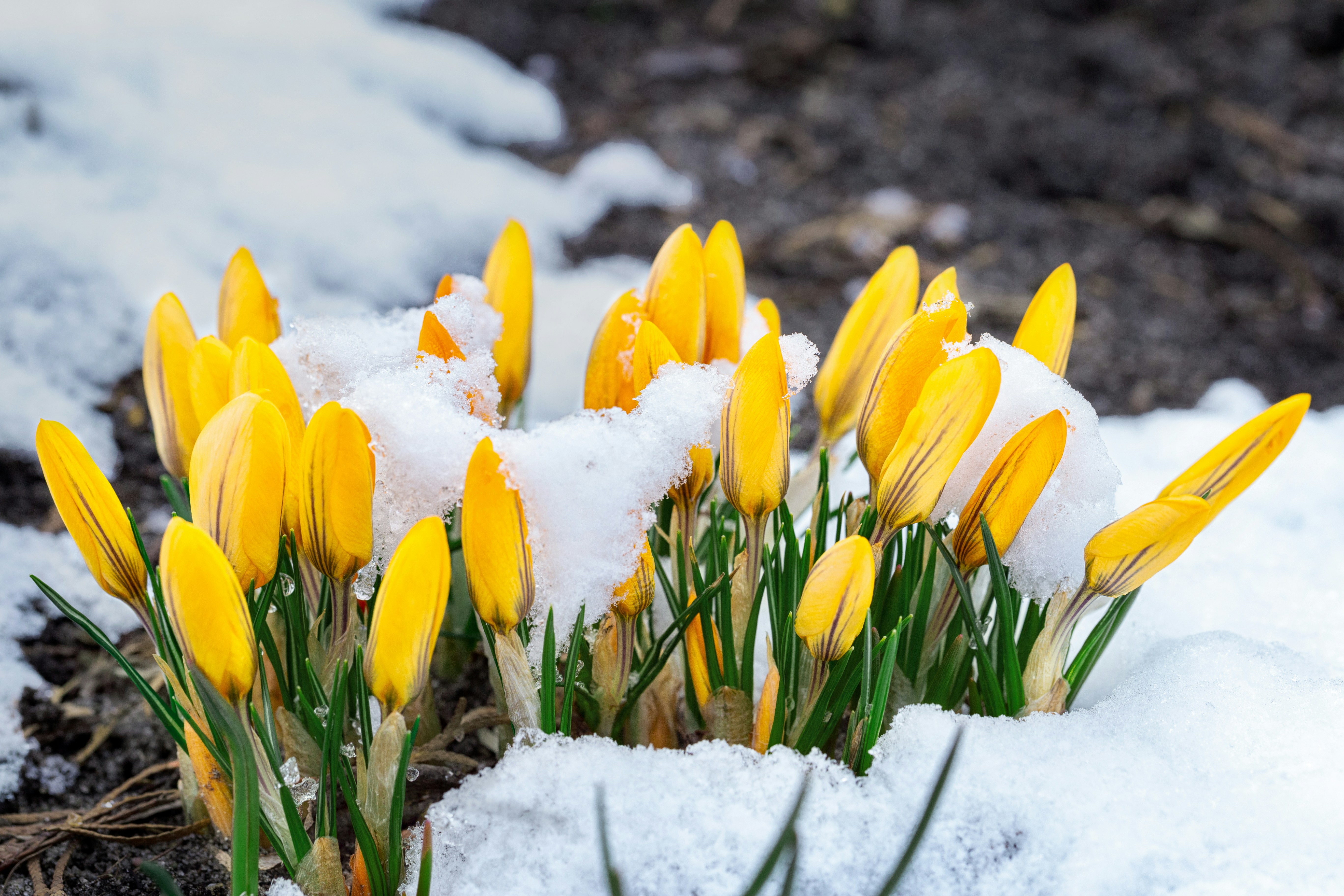
On a particularly cold day, I saw the crocuses pushing through the bare, frozen ground. They would not be kept from the sun any more. It was time to bloom. I saw them in a small garden at Bowling Green near the ferry terminal, waiting for my friend, Ashley, so we could go together to Ellis Island. (More on that adventure in a separate post.)
“Aren’t they beautiful?” I heard a man’s voice say.
“They are,” I replied as I turned to face him. “Crocuses are small and mighty flowers.”
“What did you call them?” he asked me.
“Crocuses,” I repeated. “They’re the first flowers to bloom. They tell us spring will be here soon.”
“You mean they tell us we made it? We made it through winter?” he asked.
I laughed. “Yes, that’s right. We made it.”
We high-fived. “I learned something today. Miss, God bless you. I’m gonna tell the people who take care of this garden about this.”
I’m stilling think about this man’s joy as he realized we had made it through, that perhaps our best days are still ahead of us. How can we hang onto that idea in the midst of turmoil?
Daffodils in Prospect Park
March’s flower is the daffodil. As a March baby, I always associate their arrival with my birthday. It’s also the official flower of New York City. My dear soul dog, Phineas, loved to put his beautiful, formidable snoot right into them when we’d walk together in Central Park so they always remind me of his beautiful spirit.
My soul dog, Phineas, smelling daffodils in Central Park
On my way to an appointment on Thursday, the first day of spring, I smiled as I saw legions of daffodils swaying in the soft wind. Nothing would keep them from heralding a new season. Nothing would keep them from their joy. Not the rain or the cold or the grey skies. They were born to sing. So are we.
Here’s a reminder I know I need every day, and maybe it will help you, too — At any age and stage in life, you can:
– Start over – Start again – Try something brand new – Be a beginner – Learn – Grow – Change – Evolve – Say goodbye – Say hello – Forgive – Ask for forgiveness – Pause – Reflect – Discover
You are allowed to do all those things, and many at the same time. You are never just one thing or one way. Who you’ve been, what you’ve done, and where you’ve been are prologue to who you will be, what you will do, and where you will go. The past is merely setting the scene and dressing the set for all the choices you will make and the adventures you will have that lie ahead.



 Christa Avampato