creativity

The West Coast Has Underwater Forests. NYC Could Have Underwater Farms.

Sugar kelp can grow in the waters around NYC, and thrives during the cold winter months

I recently read a fascinating piece in Smithsonian Magazine about the “underwater forests” returning to life off the coast of California. It details the restoration of Giant Kelpโ€”towering, 100-foot strands that form cathedrals of biodiversity, sequester carbon, and shelter marine life.

Itโ€™s an inspiring success story of ecological recovery. But as I read about the Chumash people and marine biologists working together in the Pacific, I couldn’t help but ask a question closer to home: Could we apply this to the waters of New York City?

The answer is a resounding yesโ€”but it looks a little different here. And itโ€™s already beginning.

Different Coast, Different Kelp

In California, the focus is on restoration: bringing back wild Giant Kelp forests that have been decimated by urchins and climate change.

In New York and the broader Northeast, our opportunity lies in regenerative ocean farming. We don’t have the deep-water Giant Kelp; we have Sugar Kelp (Saccharina latissima). This golden-brown algae is shorter, but it is a powerhouse. It thrives in our cold winter watersโ€”growing rapidly when most marine life is dormantโ€”and acts as a “scrubbing brush” for our harbors.

Sugar Kelp absorbs carbon dioxide (fighting ocean acidification) and, crucially for NYC, it soaks up excess nitrogen from urban runoff, which is the main driver of harmful algae blooms.

We aren’t just “restoring” nature here; we are building a blue economy. Here are the local pioneers turning this idea into reality right now.

1. The Indigenous Lead: Shinnecock Kelp Farmers

Just as the Chumash people are leading efforts in California, the Shinnecock Indian Nation is leading the way on Long Island. The Shinnecock Kelp Farmers are a multi-generational collective of Indigenous women leveraging thousands of years of traditional ecological knowledge to heal the water.

They have established the first Indigenous-owned kelp farm on the East Coast in Shinnecock Bay. Their work proves that kelp isn’t just a crop; it’s a tool for sovereignty and survival, actively filtering the waters that sustain their community.

2. The Science: It Works in the East River

You might think kelp needs pristine, open ocean to survive. Think again.

Researchers Dr. Christopher Gobler and Mike Doall from Stony Brook University have been running pilot studies to see if kelp could survive the urban waters of the East River. The results were surprising: the kelp didn’t just survive; in some cases, it grew better in the nutrient-rich waters of the harbor than in cleaner, deeper waters. This suggests that NYCโ€™s “working waterfront” could double as a biological filtration system.

3. The Pioneers: Breaking the Regulatory Barrier

The technology exists, but the permits have been the hard part. The industry is so new that New York State didn’t have a regulatory framework for it until very recently.

In 2023, Violet Cove Oyster Co., led by former WNBA star Susan Wicks, secured the first-ever commercial permit to grow kelp in New York state waters (Moriches Bay). It took years of advocacy to get there. Her success paves the way for oyster farmers across the region to become “multitrophic” farmersโ€”growing shellfish and seaweed together to maximize the environmental benefit.

The Vision for a “Blue” NYC

Organizations like GreenWave are already training the next generation of ocean farmers, with a goal of creating thousands of jobs. Imagine a future where the New York harbor isn’t just a transit lane for ferries and cargo, but a grid of regenerative farms.

These farms would provide local food, sustainable fertilizer, and bioplastics, all while cleaning the water and capturing carbon.

Californiaโ€™s underwater forests are a reminder of natureโ€™s resilience. NYCโ€™s underwater farms could be a testament to our innovation. The seeds (or rather, the spores) have been planted. Now, we just need to support the regulations and organizations that will let them grow.

creativity

Baking up NYC history in cookie form

For the December NYC’s Secrets & Lies storytelling show at the South Street Seaport Museum, I baked 300+ cookies for our guests. All the recipes had a historical backstory and a maritime connection to match the theme of our show and the beautiful venue.

Iโ€™ve gotten messages asking for the recipes and the stories behind them, so here they are! Swipe through the photos to find the recipe cards and the history behind each cookie.

I hope you enjoy baking up a bit of NYC history with:

– The Captain’s Lie (New Amsterdam Lemon Jumbles)

– Sweet Corruption (Spiced Molasses Gingerbread)

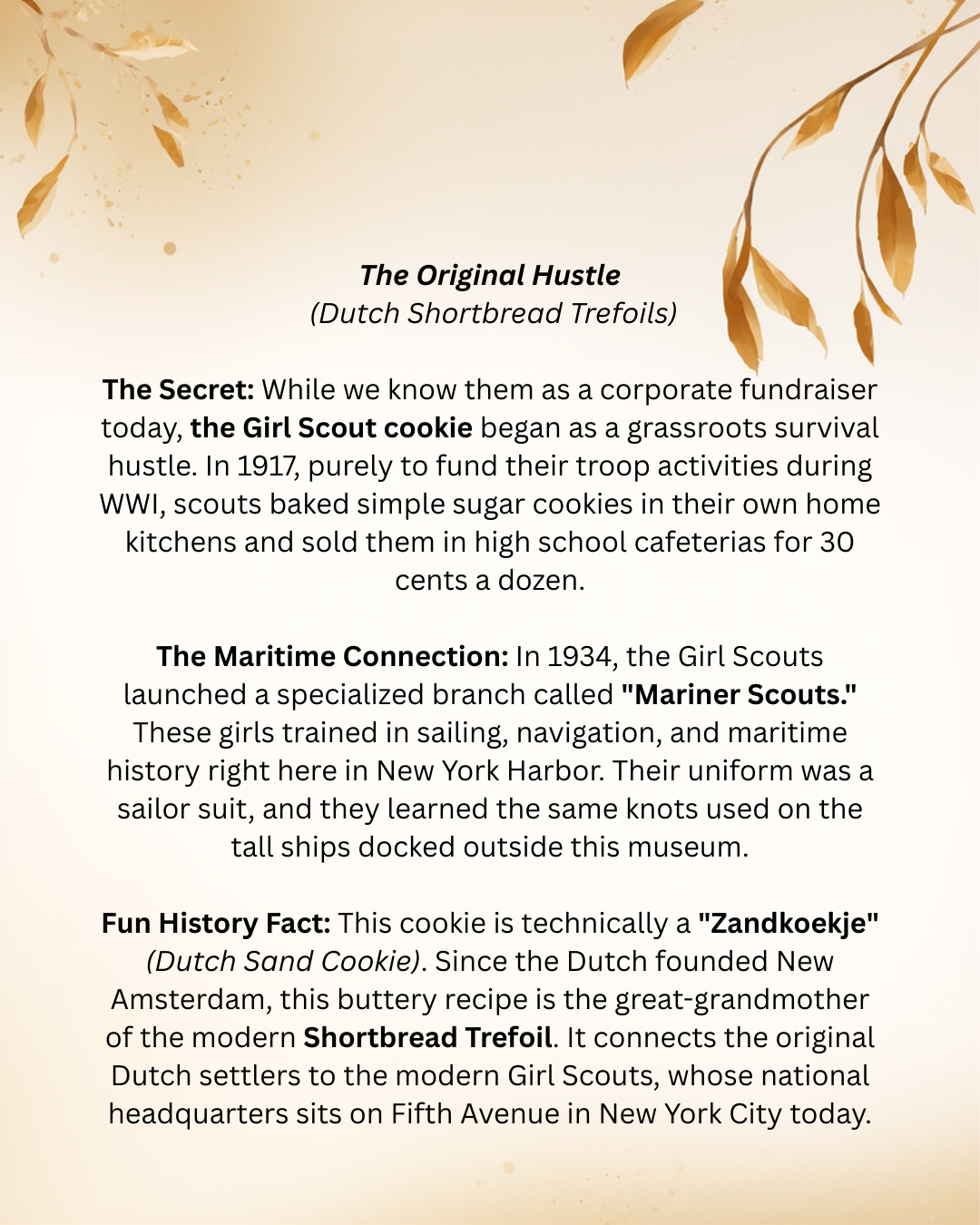
– The Original Hustle (Dutch Shortbread Trefoils a la the Girl Scouts)

Since itโ€™s cookie season, I’d love to see your baking pics! Happy baking! โ„๏ธ

creativity

Found: The Most Meaningful Dinner Reservation You Can Make in NYC Right Now

Community Kitchen. Lower Eastside – Manhattan.

Do you want to pay $15 or $125 for the same dinner in NYC? There’s a restaurant that lets you choose, no questions asked. And it showcases how nature and human communities work in sync to improve all lives.

Itโ€™s called Community Kitchen, located on the Lower East Side inside The Lower Eastside Girls Club. Most of us talk about “fixing the food system” in the abstract. But Community Kitchen is actually doing it. Founded by Mark Bittman, itโ€™s running a radical experiment: A sliding-scale restaurant where you pay pay what you wish for the same meal.

And it just keeps getting better:

– It heals the planet: The dinner menu served Wednesday – Saturday, created by James Beard award-winning chef Mavis-Jay Sanders, is plant-forward and prioritizes ingredients from farmers using agroecological (sustainable farming) practices. This minimizes chemicals running into our waterways and soil, and supports biodiversity, treating the farm as an ecosystem rather than a factory.

– It heals the community: They utilize a “sliding scale” payment model. You pay what you canโ€”$15, $45 (the cost of the meal), or $125 (to help others who can’t afford the meal.) If you have the means to pay the higher tier, you are directly helping a neighbor enjoy a nutritious, dignifying meal.

– It respects the worker: Unlike the industry standard, they pay a living wage with full benefits to their team members, correcting the inequities often found in restaurant labor.

– It’s delicious: They prepare top-quality food from scratch that appeals to all members of our communities, using primarily local and seasonal ingredients. Each meal has multiple courses.

It is a rare example of a “closed loop” of kindnessโ€”where caring for the soil and caring for the neighbor are part of the same meal.

If you are looking for a way to give back this season (or just want an incredible dinner), Community Kitchen is a wonderful place to dine with purpose. Itโ€™s a powerful reminder that “nature” isn’t just “out there”โ€”it’s on our forks, and in how we care for one another.

Learn more at https://www.communitykitchen.us/

๐Ÿฆƒ๐ŸŒฟHappy eating, and happy giving.


Key details about Community Kitchen:

  • Location: Lower Eastside Girls Club (East Village).
  • Chef: Mavis-Jay Sanders
  • Pricing: Sliding scale for the same meal – you choose the price you pay ($15/$45/$125)
  • Sustainability: Menu prioritizes plant-forward dishes and agroecological (sustainable farming) practices
  • Note: If you canโ€™t find the reservation youโ€™re looking for on the site, please check back! They release seats at all price levels gradually. Walk-ins are also welcome.
creativity

๐ŸŽ40,000 Pounds of Produce in 1 Morning. This is How We Fight Food Waste AND Food Insecurity in NYC

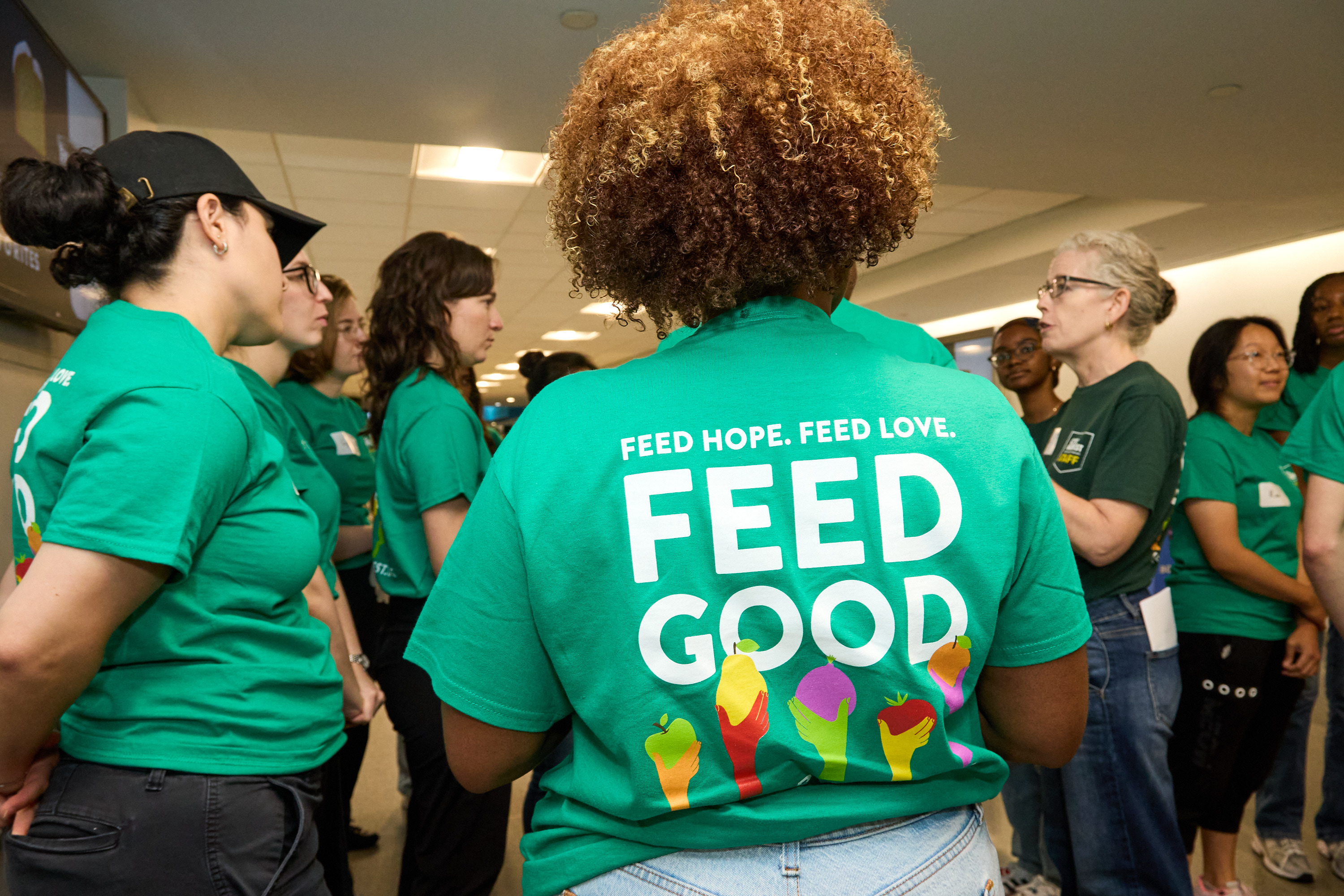
Our team of volunteers at last week’s City Harvest repack event

The Repack: What Happens When a Community Shows Up

Last week, I was deeply moved by the incredible generosity and hard work of the volunteers at City Harvest. We were there because of the enormous, urgent need created by current economic pressures and the fallout of the government shutdown, which is impacting vital food assistance programs for New Yorkers.

Together, we accomplished something phenomenal:

  • We helped repack 40,000 pounds of bulk fresh produce into 7,710 household-sized bagsโ€”the second-highest number of bags ever packed at the City Harvest Food Rescue Center since 2022!
  • This food is critical right now as City Harvest ramps up to serve neighborhoods with the highest populations of SNAP recipients. They expect to distribute over 1 million more pounds of food this November than they did last November.

We showed up and showed out, and it was a joy to be part of this community effort, even though I wish it wasn’t necessary.


The NYC Food Insecurity Crisis is Real

The need for this emergency support is stark, especially as the government shutdown has delayed or complicated critical aid. Our fellow workers, friends, and neighbors are struggling to put food on the table.

  • In New York City, approximately 1.73 million residents receive SNAP benefits. That’s 1 in 5 New Yorkers.
  • In Brooklyn alone (where I live and where City Harvest has its headquarters), that number is over 700,000. That’s 1 in 4 Brooklyn residents.

This work with City Harvest is personal to me because I grew up food insecure and my family received government-backed public assistance including WIC funding and at my school I was part of the free lunch program. As an adult who climbed out of that situation though education, hard work, and the generosity of these supportive government programs, giving back means a lot to me.


Why City Harvest is a Game-Changer (A Two-Part Solution)

City Harvest doesn’t just feed people; it’s a massive champion for the environment, tackling the staggering problem of food waste head-on.

From City Harvest

How You Can Be Part of the Solution

The work we did last week is ongoing. Join the City Harvest family!

This work isn’t just about charity; it’s about Togetherhood. Let’s continue to show up for our community and ensure that healthy, quality food goes to tables, not landfills.

Click to volunteer, donate, and advocate. I hope to see you at a future City Harvest event!

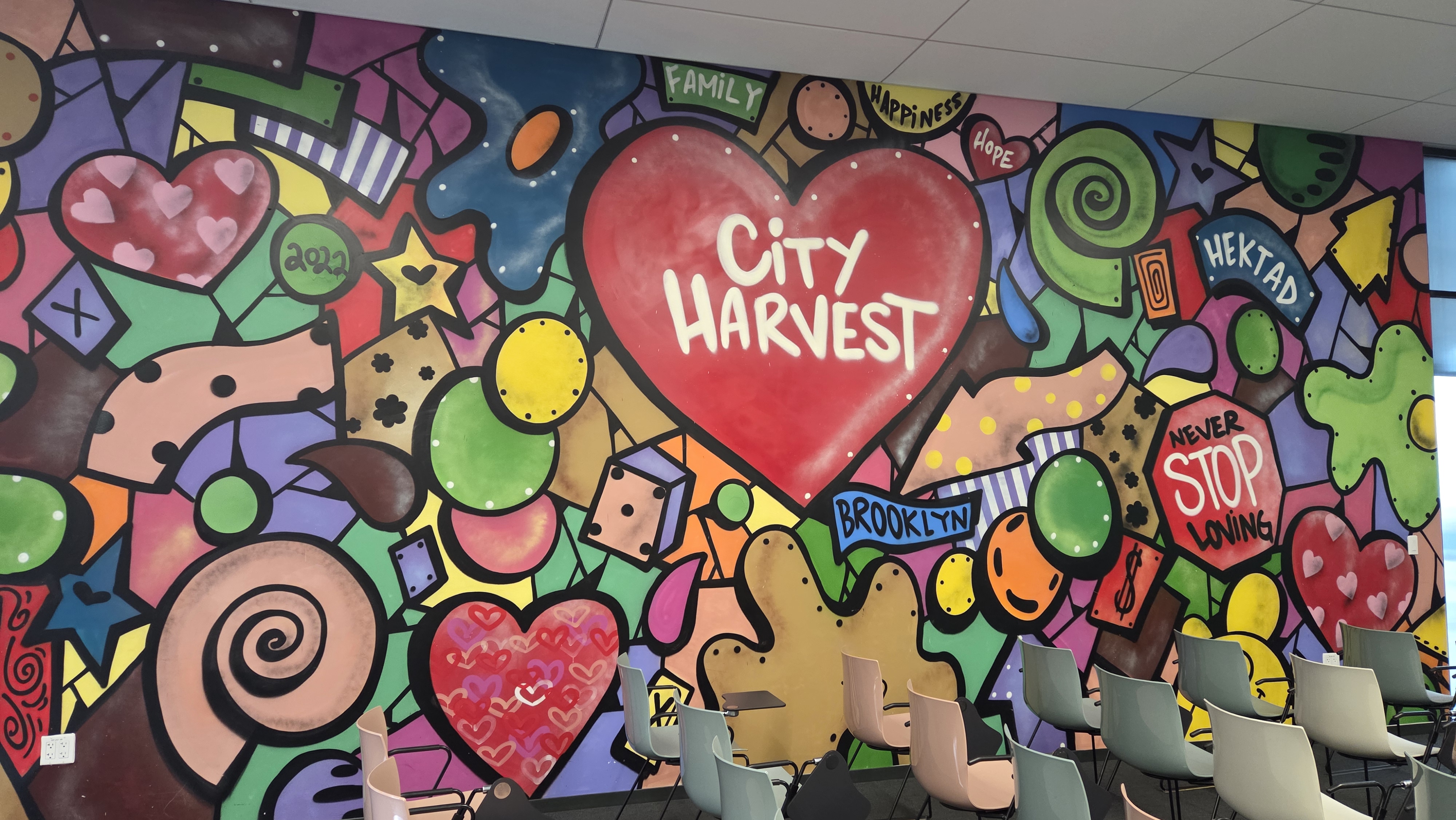
Mural at the City Harvest HQ in Brooklyn, NYC
creativity

What a Corn Stalkโ€™s DNA Taught Me About Solving the Climate Crisis

The urgent global challenge is feeding a rapidly growing population while fighting the uncertainty of climate change. As a storyteller and a biomimicry scientist, I often ask: How does nature solve a massive, existential crisis? The answer, it turns out, lies not in some distant super-technology, but in the subtle genius of a single plant cell.

New research from the Cold Spring Harbor Laboratory has illuminated a fundamental biological “master switch” in the DNA of food crops like corn, giving us an actual blueprint for creating a resilient, thriving future. This isn’t just botany; it’s a profound lesson in survival written right into the plant kingdom.

The Inner Wisdom of the Plant

Plant growth, from the deepest root to the ripest ear of corn, is governed by its stem cellsโ€”unspecialized cells that hold the potential to become any part of the plant. The challenge facing plant scientists has always been figuring out how to balance these cells: when should they grow and when should they specialize into, say, a fruit or a thick stalk?

In a breakthrough study, scientists mapped the gene expression in these cells, revealing the network of regulators that act as the plantโ€™s precise internal control panel. This network balances growth and stress response, allowing the plant to strategically allocate its resources for survival.

This knowledge is a gift to us all because it shows how nature manages risk. A plant facing drought doesn’t just despair; it shifts resources to deepen its roots. A plant under pest attack doesn’t just succumb; it redirects energy to fortify its cell walls. It’s a marvelous, elegant system of risk mitigation through metabolic flexibility.

A Blueprint for Humanityโ€™s Resilience

As my work focuses on biomimicryโ€”integrating nature’s genius into the human worldโ€”I see in this discovery a direct path to solving our human challenge of food security. We are not meant to struggle endlessly against the elements; we are meant to learn from the masters of endurance.

This plant study provides us with three clear takeaways for building a better world:

  1. Precision over Force: Instead of overwhelming fields with more fertilizer and water, we can use this genetic knowledge to engineer plants to be more efficientโ€”to use nitrogen more effectively and direct energy precisely where it’s needed most for resilience.
  2. Unlocking Latent Potential: We are now able to see and manipulate the plantโ€™s own evolutionary solutions. We can develop crops with deep-seated, natural defenses against drought and disease, built on the plant’s own wisdom, not on chemical dependency.
  3. The Power of the Foundational System: The corn stalk teaches us that true resilience comes from perfecting the foundation. By understanding and replicating the simplest, deepest biological controls, we can build human systems that are robust and adaptable, just like an ecosystem.

A Brighter Future Ahead

This breakthrough is more than just a scientific finding; it is a fundamental shift in our relationship with nature. By finally decoding the genetic “master switch” that plants use to govern their own destiny, we are handed a powerful blueprint for survival. The challenge of global food security has never been greater, but this research proves that the solution is not an endless technological sprint, but a deeper engagement with the patient, profound wisdom of the living world. The era of resilient agriculture is not just on the horizonโ€”it has already begun, written in the complex, hopeful language of a plant’s own DNA.


If you’re interested in learning more about how I apply nature’s genius to human challenges, check out my work on biomimicry here: Christa Avampato: Biomimicry Stories Can Help Us Build a More Sustainable World


Now, I want to hear from you: How can we apply the corn plant’s principle of ‘metabolic flexibility’ to urban planning in our own cities?

creativity

Fighting hunger in NYC with City Harvest

Me outside the Javits Center on Tuesday to volunteer with City Harvest

Iโ€™m smiling because this week I completed my first volunteer shift with City Harvest. With a group of 200 volunteers and staff, we rescued over 75,500 pounds of food after the close of the Fancy Food Show on Tuesday evening at the Javits Center. This food will be distributed to food pantries, soup kitchens, and community organizations all over the city to people who need our support. This work is deeply personal to me. I grew up with food insecurity (meaning we worried about where our next meal would come from) and I was a free lunch kid. 

The hunger issue in NYC is dire. 50% of working-age households in NYC are struggling to make ends meet. 1.4 million New Yorkers are food insecure. Thatโ€™s nearly 1:6 New Yorkers, including 1:4 children.ย 

This work is also personal to me because of my passion to protect our natural world. On Tuesday, we also saved all of this food and packaging from ending up in the trash. 30%โ€Šโ€”โ€Š40% of the food in the U.S. (108 billion pounds!) is wasted every year, to say nothing of all the resources it took to create that food and packaging. This costs Americans $473 billion every year. Nearly 1/4 of all landfill waste in the U.S. is food, and it is one of the largest producers of methane gas, which is causing climate change, weather-related disasters, and hunger.

Given the scale of this challenge, Iโ€™m excited about doing more work with City Harvest and helping more New Yorkers. I hope youโ€™ll join meโ€Šโ€”โ€Šthere are so many ways to be a volunteer! Visit https://www.cityharvest.org/volunteer/ to learn more.

Below are some pictures from the Tuesday event! All photos by City Harvest.

creativity

Embracing stakeholder theory inย Finland this summer

Photo from https://events.tuni.fi/stakeholdertheory/sustainability/

Finland, I canโ€™t wait to meet you! I was accepted into the 2025 Summer Seminar in Stakeholder Theory at Tampere University with University of Virginia Darden School of Business (my alma mater), Darden-The Institute for Business in Society (IBIS), and RESPMAN Research Group. Iโ€™ll join an incredible global group of faculty, researchers, and PhD students to learn and share how to best integrate stakeholder theory into my work in sustainability and climate change mitigation. As part of the program, Iโ€™m revising and refining the work I started in my University of Cambridge / Cambridge Institute for Sustainability Leadership (CISL) dissertation on the role of storytelling to engage family offices in climate investments. Iโ€™ve spent the last 2 months editing (cutting it in half!) and am excited to get feedback on it. In addition to that paper, Iโ€™ll also work on 3 more research projects:

  • The Stories We Eat: Narratives to Shape Stakeholder Behavior and Policy for Sustainable Food Futures
  • Narrative Power: Using Digital Media to Convey the Voice of Future Generations and Nature in Sustainability Storytelling
  • From Self-Interest to Shared Benefit: How to Adapt Finlandโ€™s Exemplar of Public Trust Amidst Power Asymmetries in U.S. Businesses

Iโ€™m so grateful for this opportunity to learn and engage with these incredible people in one of the most sustainable communities in the world. Iโ€™m most looking forward to spending time with my professor, mentor, and dear friend R. Edward Freeman, who is one of my heroes and the founder of the seminar. As the originator of stakeholder theory that transformed business ethics, his work has fundamentally changed how businesses and business leaders around the world operate. Heโ€™s the reason I went to Darden and he changed how I see the world and my role in it. Iโ€™m honored to have had his support and encouragement for all these years.

Itโ€™s going to be an incredible summer of learning. Iโ€™m excited to experience all of it and to see where it leads! Nรคhdรครคn pian, Finland!

creativity

Philosophy in figs

It’s fresh fig season! I picked up these beauties at my neighborhood produce market. My favorite way to have them is sliced with a dab of goat cheese and drizzled with honey. (I’m so lucky to have delicious local honey from a beekeeper friend.)

As I prepared my plate, I felt a twinge of sadness that fresh fig season is so short – only a few weeks. Yes, you can dry them or turn them into jam but nothing beats fresh figs.

Loving every bite, I reminded myself that maybe the short window for anything – produce, cherry blossoms, and even the blip of a long life on the scale of deep time – is exactly the point. Savor what we have while we have it so that we always have the memory to enjoy.

creativity

Digging Deep: How Healthy Soil Can Help Heal Our Planet

Photo by Steven Weeks on Unsplash

We often look to the skies, the oceans, or technological innovations when discussing climate change solutions. But what if a powerful tool lies right beneath our feet? Healthy, living soil is an unsung hero in the fight against climate change and a cornerstone of a truly healthier planet.

To educate myself on soil health, I watched the documentaries Kiss the Ground and Common Ground on Amazon Prime Video. After watching them, I immediately visited their resources website filled with free ebooks and guides that can help all of us advocate for this climate solution and immediately take action in our everyday lives.

For too long, we’ve treated soil like dirt โ€“ an inert medium to hold plants up. In reality, healthy soil is a complex, dynamic ecosystem teeming with billions of microbes, fungi, insects, and worms. This underground world plays a crucial role in regulating our climate and supporting life on Earth.

How Does Soil Fight Climate Change? The Carbon Connection

The key lies in carbon sequestration. Here’s how it works:

  1. Photosynthesis: Plants pull carbon dioxide (CO2โ€‹), a major greenhouse gas, from the atmosphere.
  2. Carbon Transfer: Through photosynthesis, plants convert this carbon into sugars to fuel their growth. Some of this carbon builds their leaves and stems, but a significant amount is channeled down into their roots.
  3. Soil Storage: Plants release carbon compounds through their roots (exudates) to feed soil microbes. When plants and microbes die and decompose, this carbon becomes part of soil organic matter (SOM) โ€“ a complex, dark material rich in carbon.
  4. Locking it Away: In healthy, undisturbed soil with a thriving microbial community, this carbon can remain stable and locked away for decades, centuries, or even millennia, effectively removing it from the atmosphere where it would otherwise trap heat.

The Problem with Degraded Soil

Unfortunately, many modern agricultural and land management practices have degraded our soils worldwide. Practices like intensive tilling, overuse of synthetic fertilizers and pesticides, deforestation, and leaving soil bare disrupt the soil structure, kill beneficial microbes, and lead to erosion.

When soil is degraded:

  • It loses its ability to store carbon. Tilling, for instance, exposes SOM to oxygen, causing microbes to rapidly consume it and release the stored carbon back into the atmosphere as CO2โ€‹.
  • It can release other potent greenhouse gases like nitrous oxide (N2โ€‹O) due to synthetic nitrogen fertilizer overuse.
  • Its capacity to absorb and hold water diminishes, increasing runoff, erosion, and vulnerability to both droughts and floods.

Beyond Carbon: The Ripple Effects of Healthy Soil

Improving soil health isn’t just about carbon. It creates a cascade of benefits for a healthier planet:

  • Improved Water Management: Healthy soil with good structure absorbs more water, reducing runoff, preventing erosion, and recharging groundwater. This makes landscapes more resilient to both floods and droughts.
  • Enhanced Biodiversity: Thriving soil ecosystems support a vast array of life, from microscopic bacteria and fungi to earthworms and insects, forming the base of terrestrial food webs.
  • Reduced Pollution: Healthy soil filters water and can break down certain pollutants. By reducing the need for synthetic fertilizers and pesticides, soil-friendly practices also decrease chemical runoff into waterways.
  • Increased Food Security & Nutrition: Healthy soils produce more resilient and nutrient-dense crops, contributing to a more stable and nutritious food supply.
  • Reduced Need for Inputs: Soils rich in organic matter and microbial life naturally provide more nutrients to plants, lessening the dependence on synthetic fertilizers, the production of which is energy-intensive and contributes to greenhouse gas emissions.
  • Reduced Erosion: Strong soil structure, held together by roots and microbial glues, resists being washed or blown away, preserving our precious topsoil.
  • Cleaner Air: By reducing wind erosion, healthy soils contribute to cleaner air with less dust and particulate matter.

How Can We Improve Soil Health?

The good news is that we know how to regenerate soil health. These key practices, often grouped under the umbrella of regenerative agriculture or soil health management systems, have proven benefits for soil health:

  • Minimize Soil Disturbance: Reducing or eliminating tillage (plowing) keeps the soil structure intact, protects soil organisms, and prevents carbon release.
  • Keep the Soil Covered: Planting cover crops or leaving crop residue on the surface protects the soil from erosion, suppresses weeds, and adds organic matter.
  • Increase Plant Diversity: Rotating diverse crops and integrating cover crops feeds different types of soil microbes and improves soil structure.
  • Keep Living Roots in the Ground: Continuous plant cover ensures the soil microbiome is consistently fed via root exudates.
  • Integrate Livestock (Managed Grazing): Well-managed grazing can stimulate plant growth, add manure (nutrients and organic matter), and improve soil health.
  • Reduce/Eliminate Synthetic Inputs: Minimizing chemical fertilizers and pesticides allows the natural soil ecosystem to thrive.
  • Composting: Adding compost to gardens and farms directly increases soil organic matter.

What Can You Do?

  • Support Regenerative Farmers: Look for food grown using soil-healthy practices. Ask questions at farmers’ markets.
  • Compost: Turn your food scraps and yard waste into valuable soil amendments for your garden or community garden.
  • Garden Smarter: Practice no-dig gardening, use mulch, plant cover crops, and avoid synthetic chemicals.
  • Advocate: Support policies that incentivize farmers to adopt soil-healthy practices.
  • Learn & Share: Learn more and spread the word about the critical importance of soil health. Watching Kiss the Ground and Common Ground on Amazon Prime Video, and visiting their resources website are great ways to start!

Conclusion

Healing our planet requires looking down as much as we look up. By focusing on regenerating the health of our soils, we can actively draw down atmospheric carbon, enhance water cycles, boost biodiversity, improve food security, and build resilience to climate extremes. Healthy soil is a powerful, natural climate solution hiding in plain sight โ€“ it’s time we recognized its potential and started digging deep for a healthier future.

creativity

Having fun protects our health

โ€œThe best thing you can do for your health? Hang onto your sense of fun, Christa. Especially in your work. Itโ€™s important.โ€ This is what my wonderful general practitioner, Dr. Peter Lotfi, said to me at the end of my annual physical this week.

Iโ€™m feeling great though I still get some anxiety going to the doctor. I breathed a huge sigh of relief when all my bloodwork and tests came back with perfect results.

Iโ€™m always asking Dr. Lotfi what I can do to safeguard my health after going through active cancer treatment and now receiving maintenance treatment to prevent cancer recurrence. While we talked about diet, exercise, stress reduction, and the different medications I take, his biggest advice was to never lose my sense of fun.

We talked about how difficult the world is, especially in our country, with the current political climate. In the midst of all that, he doesnโ€™t want me to lose my sense of joy, which is a way to preserve mental and physical health that doesnโ€™t cost anything and has only good side effects.

In that spirit, last night one of my best friends, Ashley, and I got dressed up and went to a cocktail party on the 87th floor of a building on Wall Street. It was for Silhouette Eyewear, a sustainable eyewear brand that manufactures glasses from biowaste. I was invited because I write about sustainability and Ashley was happy to join me. The glasses are colorful, extremely lightweight, comfortable, flexible, and durableโ€Šโ€”โ€Šall the benefits of plastic without using fossil fuel. (Iโ€™m sporting a cute pink pair that I love in the first photo.)

After the party, we wandered around the Financial District, reveling in all of the hidden art deco that people pass by every day. The fun door with mirrors in the photo below is an example. Ashley and I are tour guides, historians, and writers who love this beautiful town.

To end the night, we found a new favorite pizza place called Siena Pizza & Cannoli on Rector Street, named after that gorgeous Italian city in Tuscany.

Tucking into our delicious pizza slices, I said a silent thank you to Dr. Lotfi. A sense of fun in everything we do and everywhere we go really does make life better.