creativity

From Scenic Retreat to Stormwater Sponge: Inside Central Parkโ€™s $35 Million Flood Overhaul in NYC

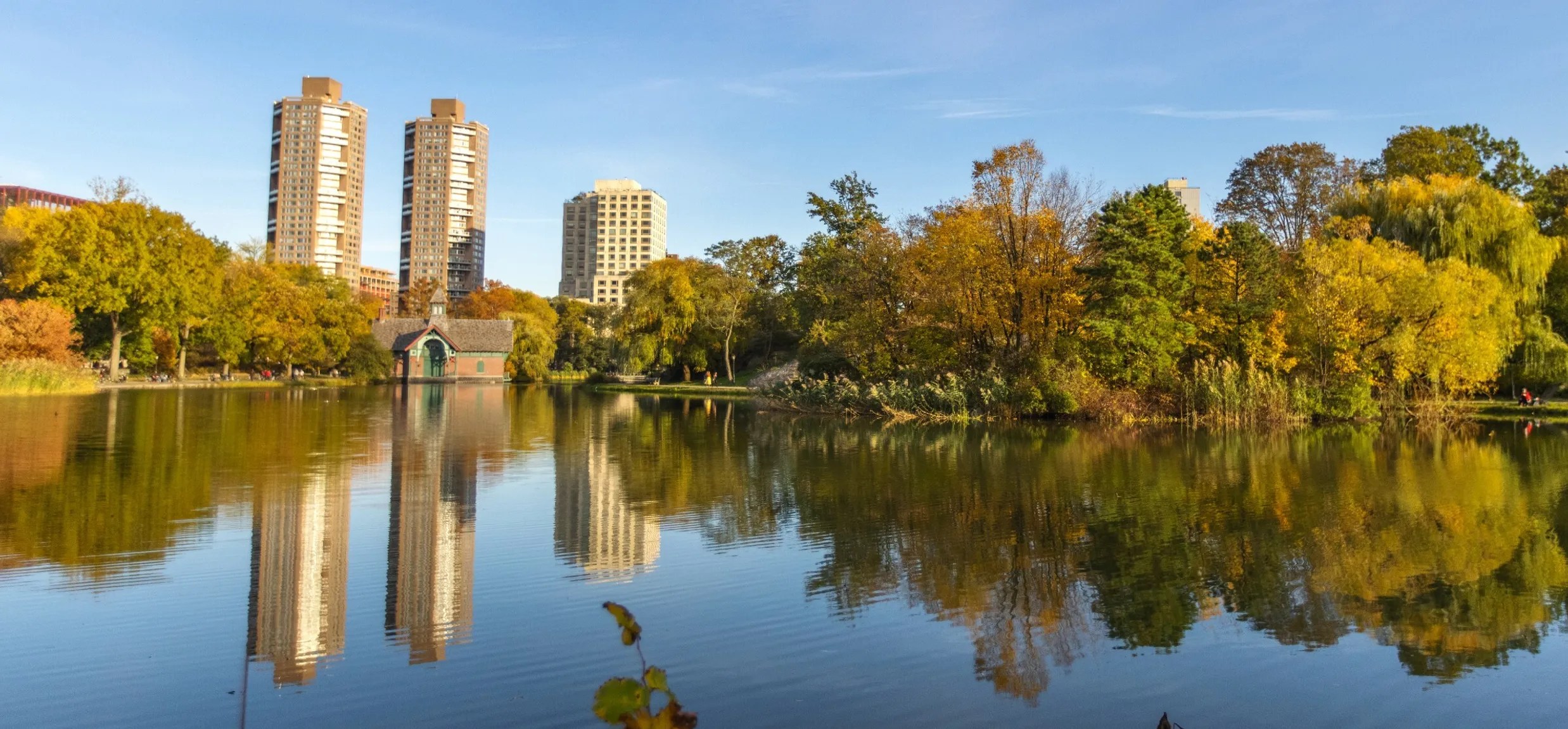
Harlem Meer. Photo from Central Park Conservancy. https://www.centralparknyc.org/locations/harlem-meer

Standing near the edge of the Harlem Meer this week, NYC’s Mayor Zohran Mamdani framed an ambitious underground civil engineering project in an unexpected way. Evoking the animated lore of Avatar: The Last Airbender, he introduced the cityโ€™s newest infrastructure overhaul as an act of civic waterbending: steering the flow of water across urban landscapes to serve and protect neighborhoods rather than swamp them with flood waters during storms.

For over 160 years, New Yorkers have seen Central Park as a scenic sanctuaryโ€”a place to wander wooded trails, watch seasonal and resident birds drift across calm ponds and soar from tree to tree, and take refuge from the city’s busyness.

Yet behind that tranquil landscape lies an ongoing operational dilemma:

  1. To keep the north end water bodies full during dry spells, the city continually pumps in roughly 175 million gallons of municipal drinking water every year.
  2. When severe storms hit, heavy runoff cascades off park terrain and adjacent streets, overwhelming local storm sewers and forcing floodwaters into basements, subway entrances, and avenues across Central and East Harlem.

The newly launched $35.7 million North End Recirculation Project transforms this 19th-century scenic retreat into an active, protective stormwater sponge.

The Unseen Problem: Drinking Water In, Storm Sewage Out

Frederick Law Olmsted and Calvert Vaux shaped the northern park waterways between 1862 and 1865, creating three interconnected bodies of water: The Pool, The Loch, and The Harlem Meer.

While these ponds look natural, their levels are maintained by the city. Every year, Central Park draws an estimated 175 million gallons of clean municipal drinking water simply to keep those ponds replenished.

Meanwhile, extreme rainfall events are increasing across New York City. The surrounding combined sewers can’t manage that sudden deluge. Runoff rapidly fills the Meer to capacity, backing up local drainage lines and forcing sewage-laden water into street intersections and ground-floor homes along the park’s boundaries.

Treating park water bodies purely as decorative scenery wastes clean drinking water during heatwaves and floods neighbors during storms.

How Central Park Acts as a Living Sponge Works

Rather than excavating massive subterranean concrete holds, the project uses the natural slope of Olmstedโ€™s original layout across a 204-acre watershed.

  • Closed-Loop Recirculation: During dry periods, water from the Harlem Meer is continuously pumped back up to the top of The Pool, flowing downhill by gravity through The Loch and back into the Meer. Natural filtration keeps the water clean and circulating, eliminating the need to top off the ponds with city tap water.
  • Protective Catchment: When meteorologists forecast a heavy storm, park managers will lower the water level of the Harlem Meer in advance so it can take on the extra water and keep it in the park rather than flood the surrounding streets.
  • The Neighborhood Benefit: By temporarily draining part of the Meer, the city creates a vast empty space right before the storm. Rainwater from park hills and surrounding streets surges naturally into the Meer instead of rushing into neighborhood storm drains.

Once the storm passes, the captured water is filtered and recirculated, keeping 132 million gallons of stormwater out of neighborhood sewers every yearโ€”a massive 90% drop in sewer runoff from this watershed.

Environmental Justice at the Park Boundaries

Resilience infrastructure must protect the communities that face the greatest risk.

For years, East Harlem residents and advocates from organizations like WE ACT for Environmental Justice have highlighted how low-lying northern Manhattan streets bear the brunt of storm waters. Basement apartments flood, street corners become like impassable lakes, and sewer overflows dump untreated waste into open waterways and onto the streets.

By reimagining Central Park not just as a respite (which it certainly is!), but also as protective green infrastructure for Central and East Harlem, this project proves that green spaces can do the heavy lifting to help people as climate change intensifies.

The Togetherhood Takeaway

Every public green space can play an active defensive role against extreme weather.

  • Rethink Decorative Water: Examine ponds and decorative fountains in your neighborhood. Advocate for retrofits that replace tap-water top-offs with recirculating, naturally filtered systems.
  • Demand Dynamic Infrastructure: Storage basins should not sit full during storms. Urge city managers to install smart valves and retention ponds that empty ahead of storms to catch neighborhood runoff.
  • Connect Park Boundaries to Community Needs: Beautiful parks should never be disconnected from the streets around them. Ensure public investments protect adjacent neighborhoods from runoff and sewer back-ups.

When we turn greenspaces into allies and collaborators, we save our drinking water, protect homes and businesses, and maintain the health of all beings who live in our communities.
creativity

From Runway to Resilience: Turning a Brooklyn Airfield into an Outdoor Public School Campus

Runway Green

At the southern edge of Brooklyn, where Flatbush Avenue dead-ends into Jamaica Bay, lies Floyd Bennett Field.

For decades, this massive stretch of historic aviation runways and decommissioned hangars has felt suspended in time. It was New York Cityโ€™s first municipal airport, the takeoff point for historic transatlantic flights, and an active naval air station during World War II. Before that, it was Barren Island, absorbing the discarded waste of a rapidly developing city.

Today, this federal land is getting a new lease on lifeโ€”an outdoor educational campus dedicated entirely to New York City public school students.

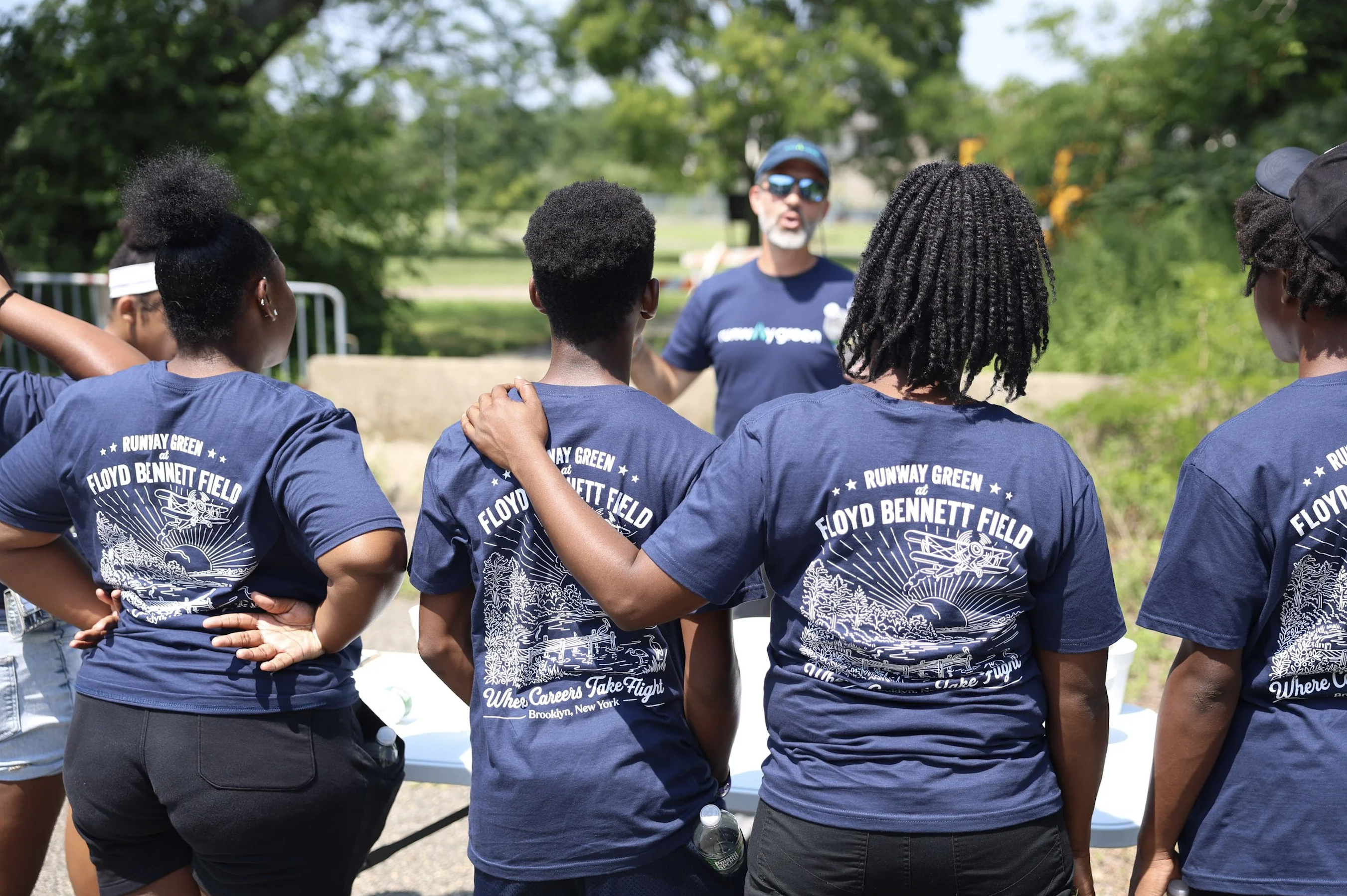
Runway Green, an ambitious nonprofit initiative founded by Brooklyn educator Geoff Roehm, recently secured a 60-year lease on seven acres of this airfield. Six decades of guaranteed land access for public education is an extraordinary civic commitment that builds the city’s resilience to climate change.

Breaking ground in 2027, the site will begin its first phase: turning three acres into a productive urban farm and ecological training ground in partnership with The Campaign Against Hunger.

More Than a Field Trip

Traditional environmental education in New York often looks like a four-hour school bus excursion outside the city. Runway Green is creating an interconnected, multi-organization ecosystem where students move from curious visitors to credentialed practitioners within the five boroughs.

  • Hands-on Exposure: A student might start with a single-day visit, getting their hands dirty in a maritime garden or exploring living shorelines with partners like Billion Oyster Project and New York Sun Works.
  • Immersive Fieldwork: Through partnerships with New York City Outward Bound Schools, teenagers can participate in multi-day leadership intensives and overnight camping on the bay.
  • Dual College Credit: Through a new collaboration with CUNY Kingsborough Community College, students will earn both high school and college credits through hands-on courses based directly on the fieldโ€™s unique ecosystems.
  • Career Pathways: Instead of abstract career days, high schoolers will spend dedicated days each week working alongside environmental scientists, urban farmers, and green infrastructure builders, graduating with concrete credentials for clean-economy careers.
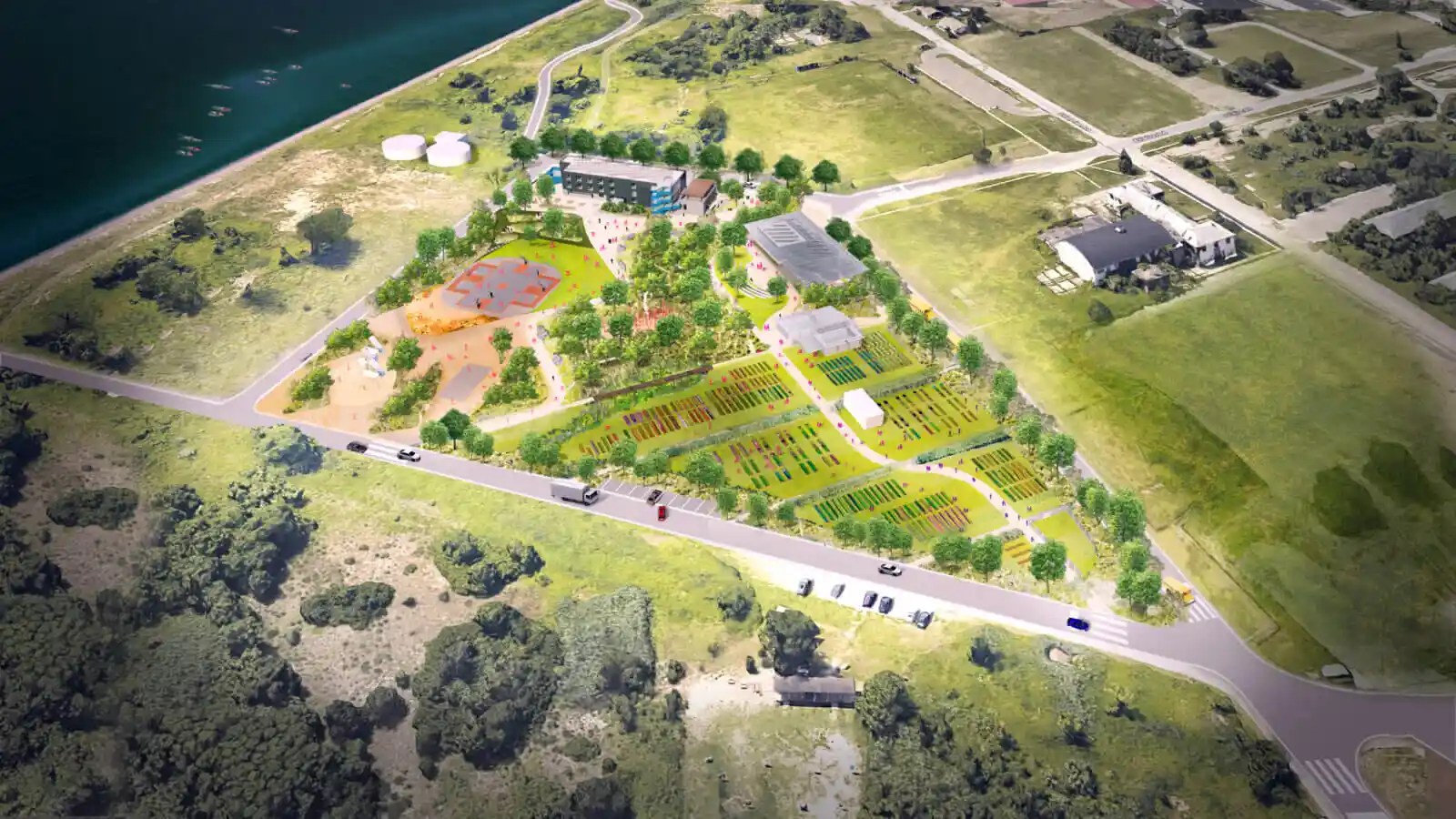
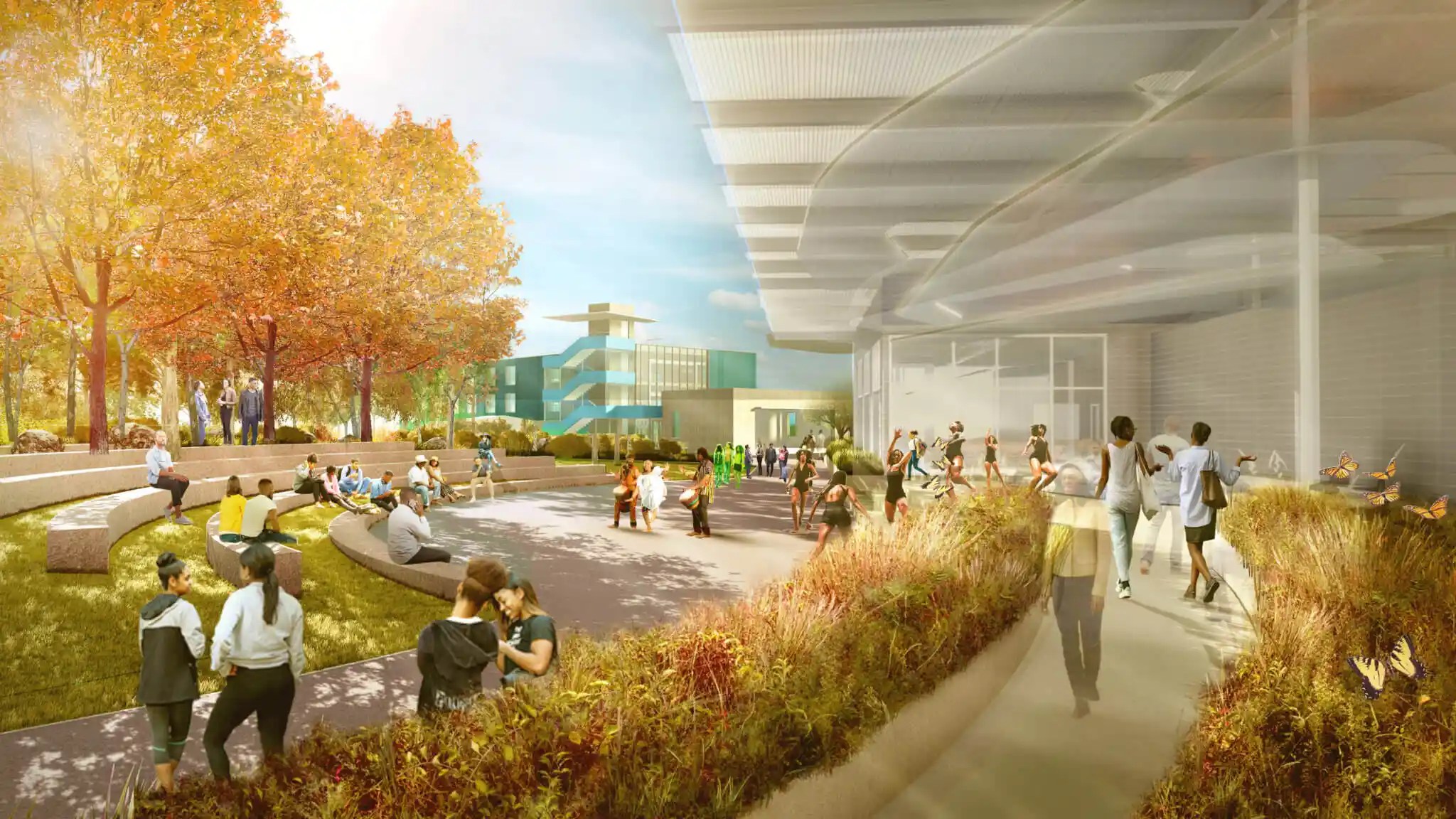
A rendering of the future charter school campus at Floyd Bennett Field. Photo courtesy of Launch at Floyd Bennett Field.

The Power of Place-Based Problem Solving

Climate resilience is best taught and learned when immersed in nature. Coastal ecology, food security, and storm surge management require tactile, multi-sensory engagement with the natural world.

By placing this campus directly inside Jamaica Bayโ€™s dynamic coastal zone, the landscape becomes the teacher. Students will study the layered history of Barren Island and historic municipal flight while simultaneously restoring salt marshes, monitoring soil health, tracking wildlife, and learning how nature-based solutions protect southern Brooklyn neighborhoods from storm surges and flooding.

As emerging technologies and automated systems reshape our workforce (particularly entry-level white-collar desk jobs), the demand for grounded, physical problem-solving is increasing. Practical knowledgeโ€”how to restore a shoreline, construct a community solar project, manage a sustainable farm, and repair community infrastructureโ€”will become ever-more important.

โ€˜An unprecedented opportunityโ€™ Brooklyn charter school plans new campus on Floyd Bennett Field.Courtesy of Launch Floyd Bennett Field.

The Togetherhood Takeaway

Community collaboration and visionary long-term capital can generate solutions that benefit people and the planet.

  • Reimagine Public Lands: Look at underused federal, state, and city plots in your own borough. Advocate for long-term leases that protect parkland and dedicate space to civic, educational, and ecological renewal that benefits the entire community.
  • Support Hands-On Career Pipelines: Follow and champion organizations like Runway Green and The Campaign Against Hunger as they build pathways for city students to enter green trades, coastal restoration, and local food production.
  • Bridge Classrooms with Living Systems: Encourage your local school districts and community boards to invest in experiential, place-based learning partnerships where students earn college credits by solving neighborhood environmental challenges.

This transformation of Floyd Bennett Field does more than teach students about the environment. It empowers them to imagine and physically craft their future, and gives them a direct stake in protecting and running the city they call home.

creativity

Sunken Suppers: Walking Lower Manhattanโ€™s Shifting Shorelines and Coastal Secrets for Climate Week NYC

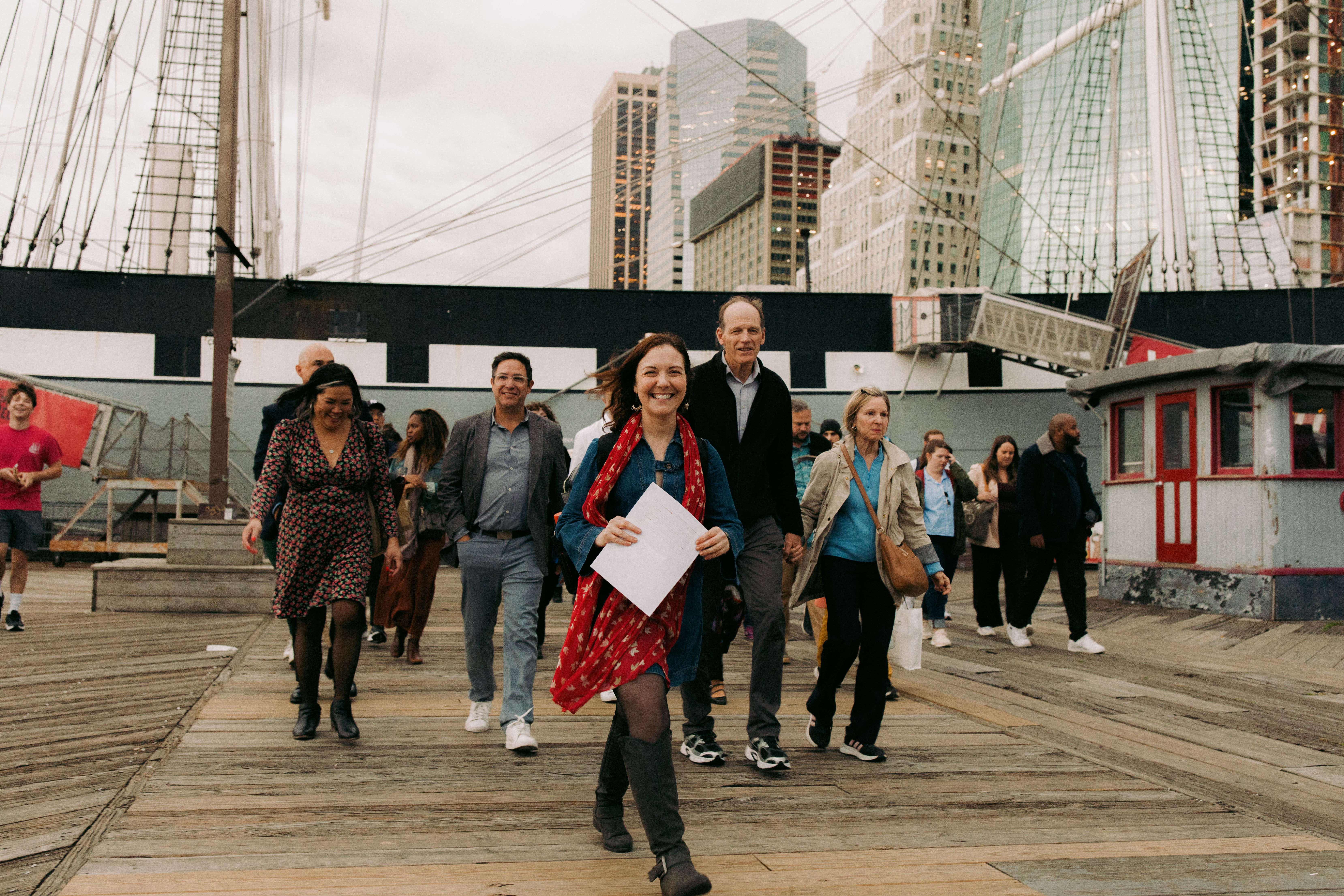
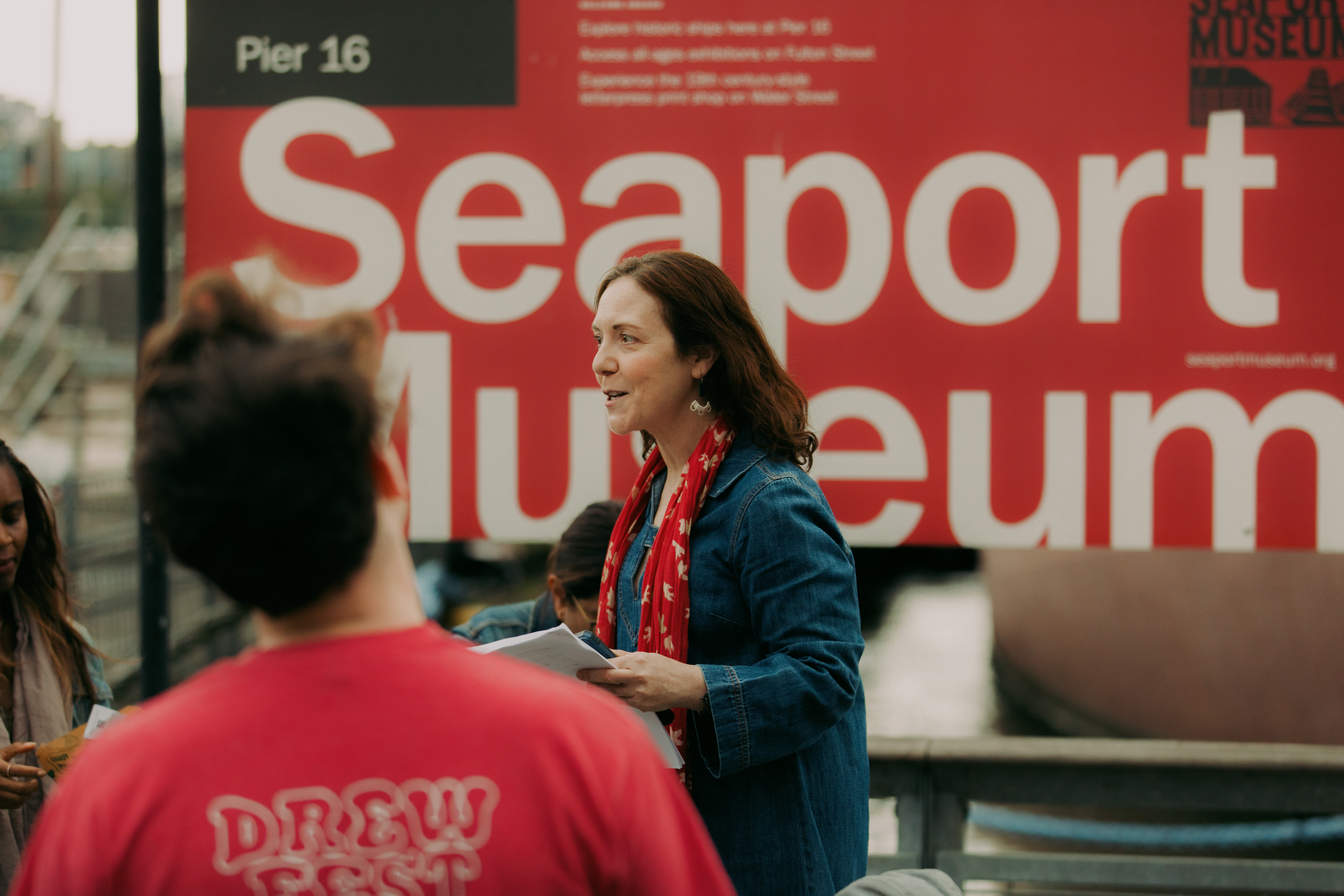
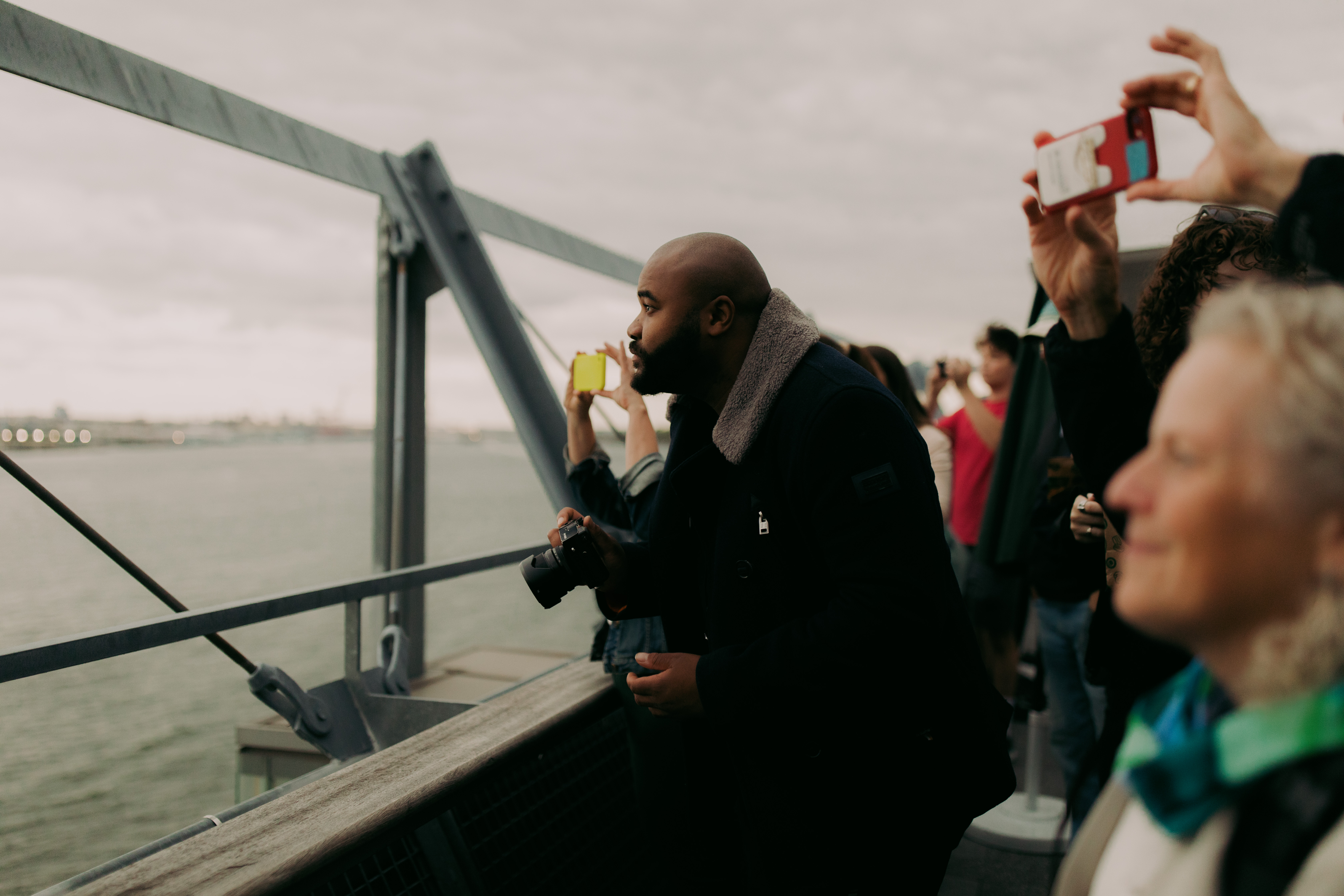
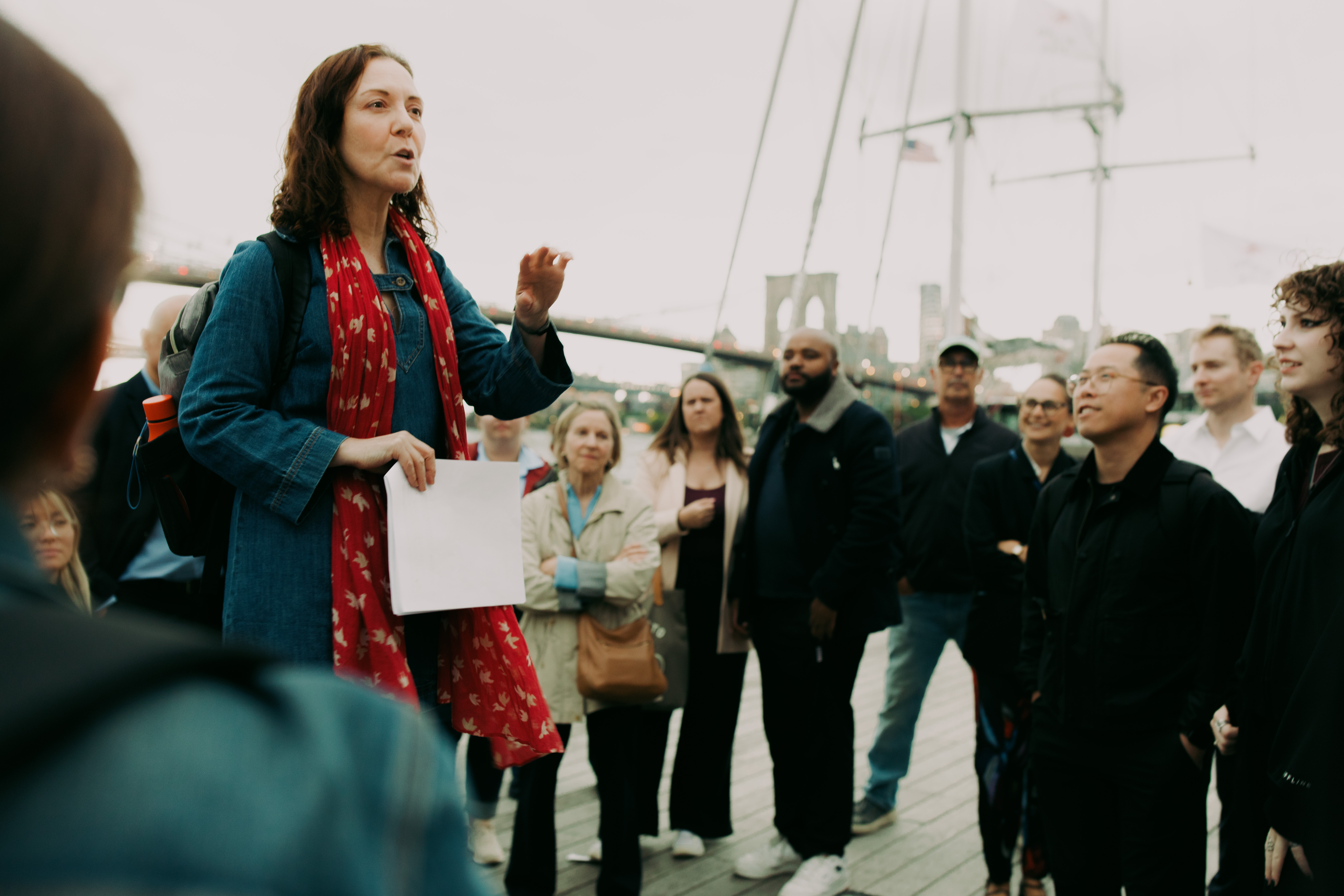
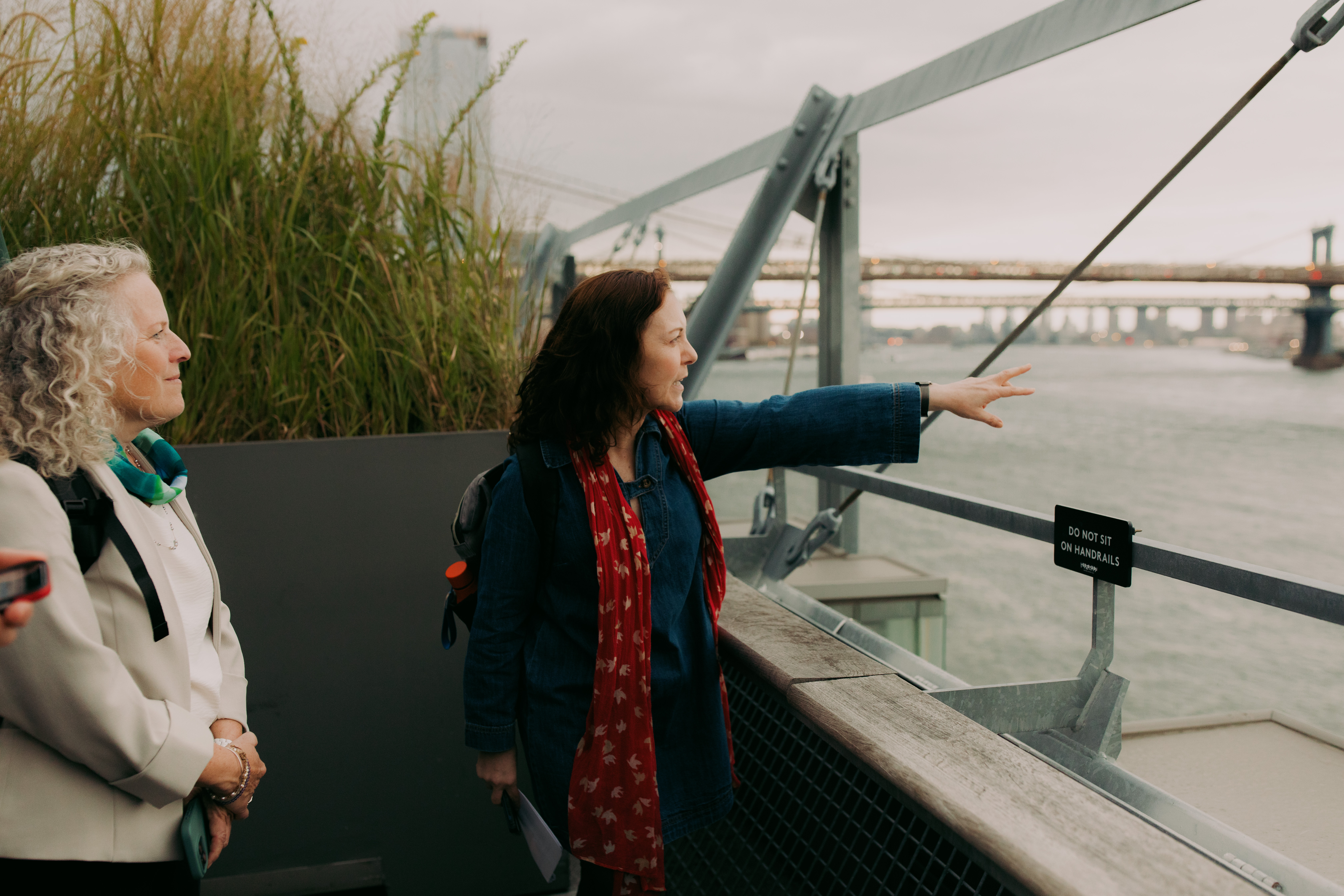
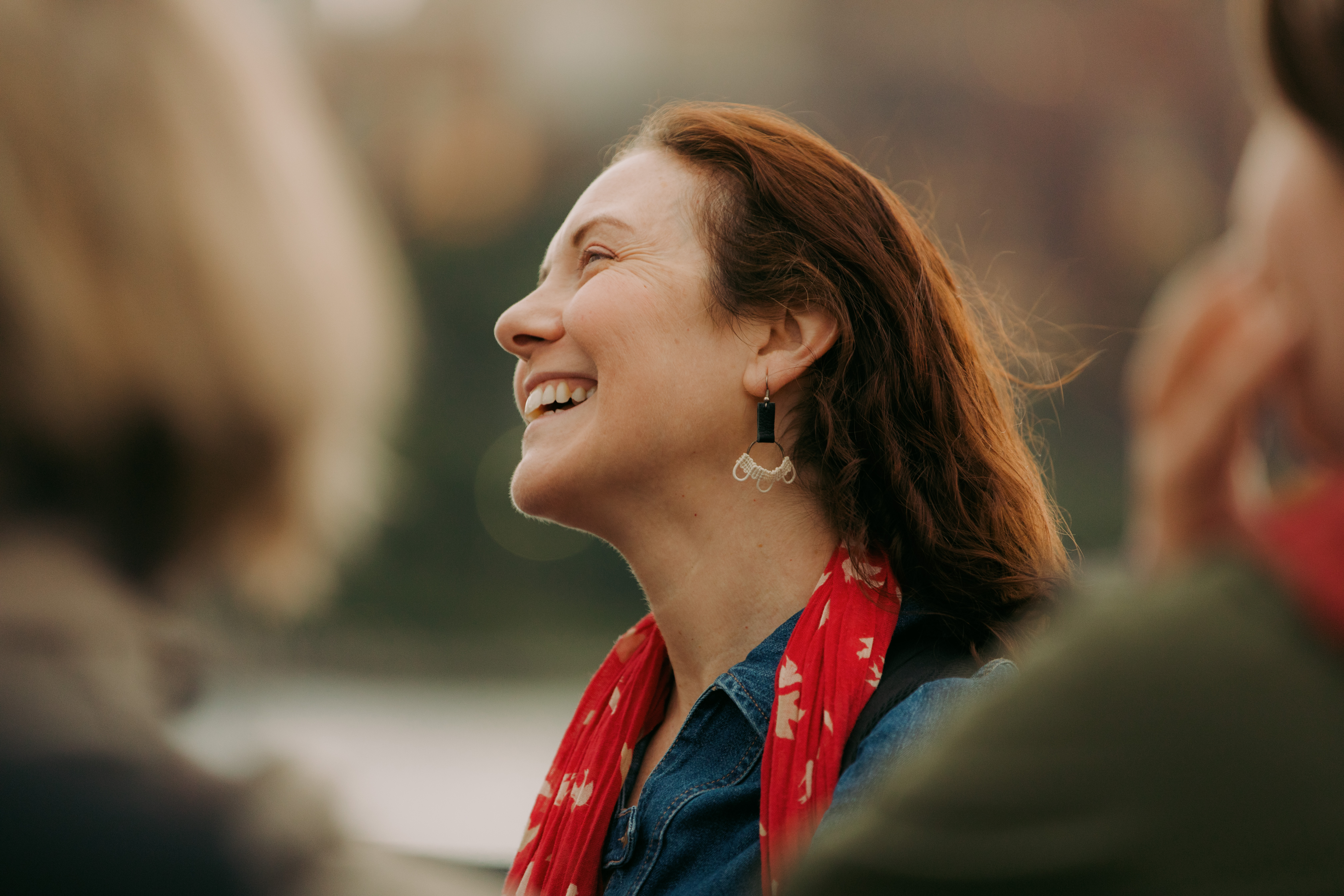
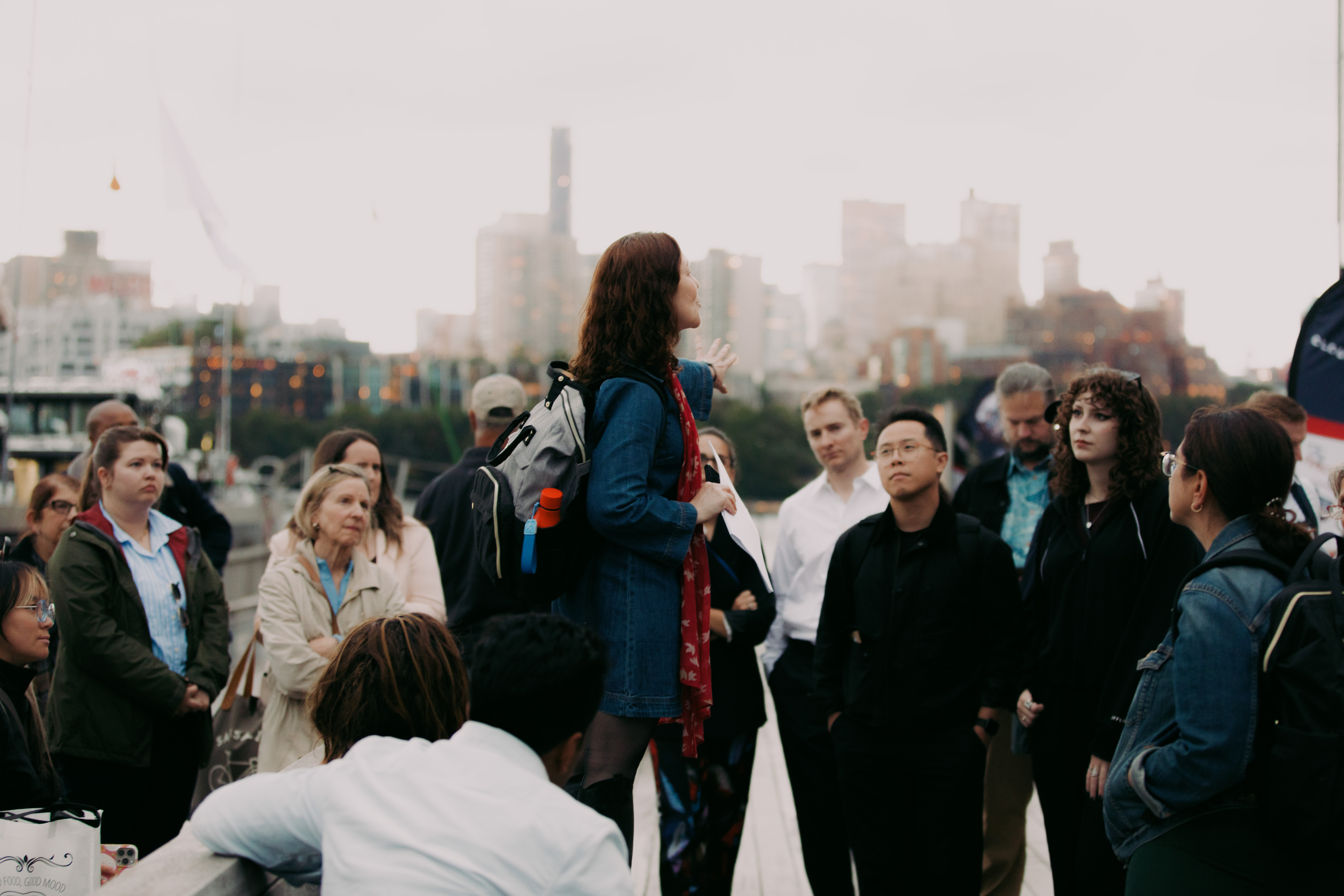
Me leading our tour group. Photo by Shannon Carroll.

This is me in my happy place: sharing stories about New York City’s secret past, weaving together narratives about food, nature, and people. My second official Climate Week NYC event was a huge success!

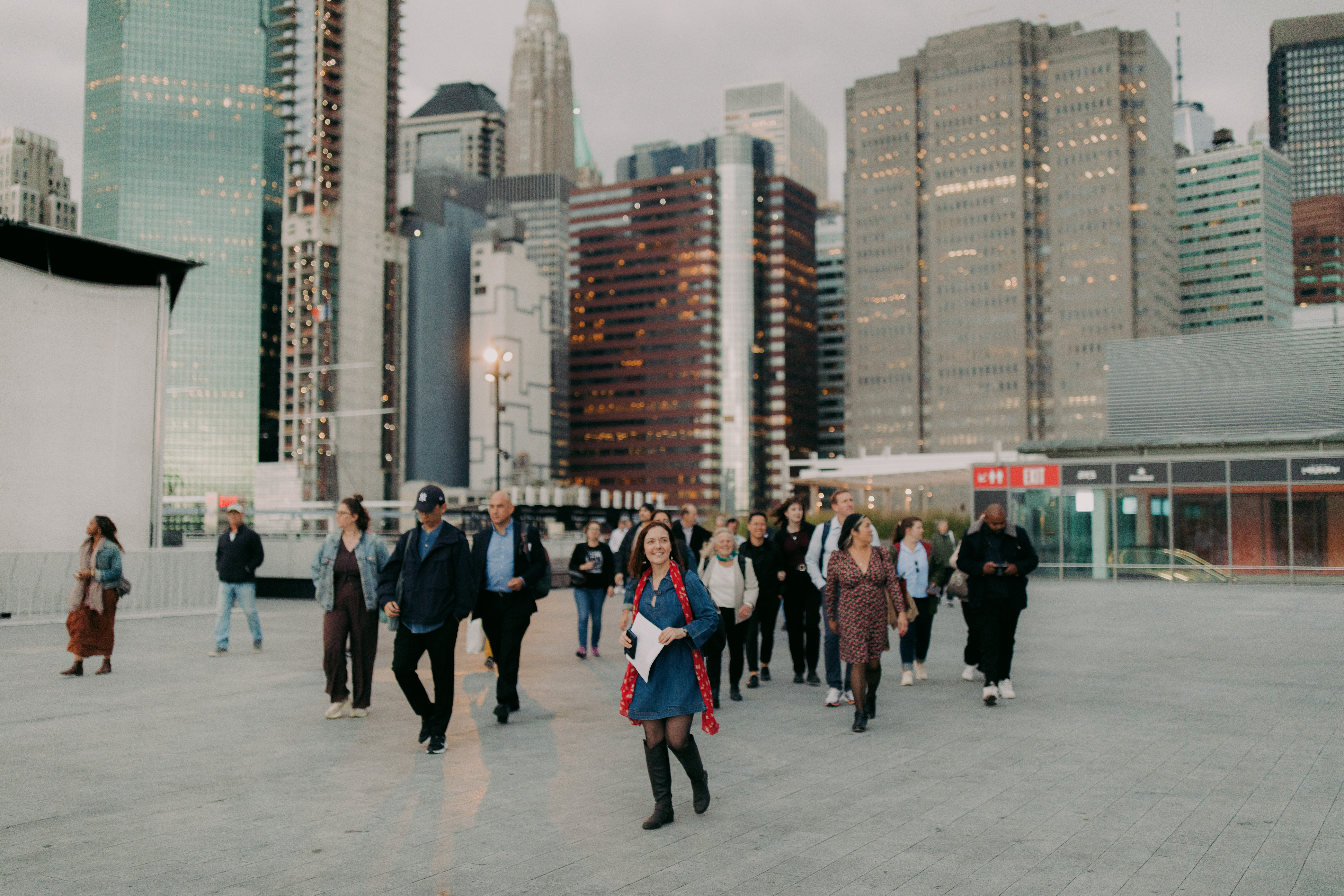
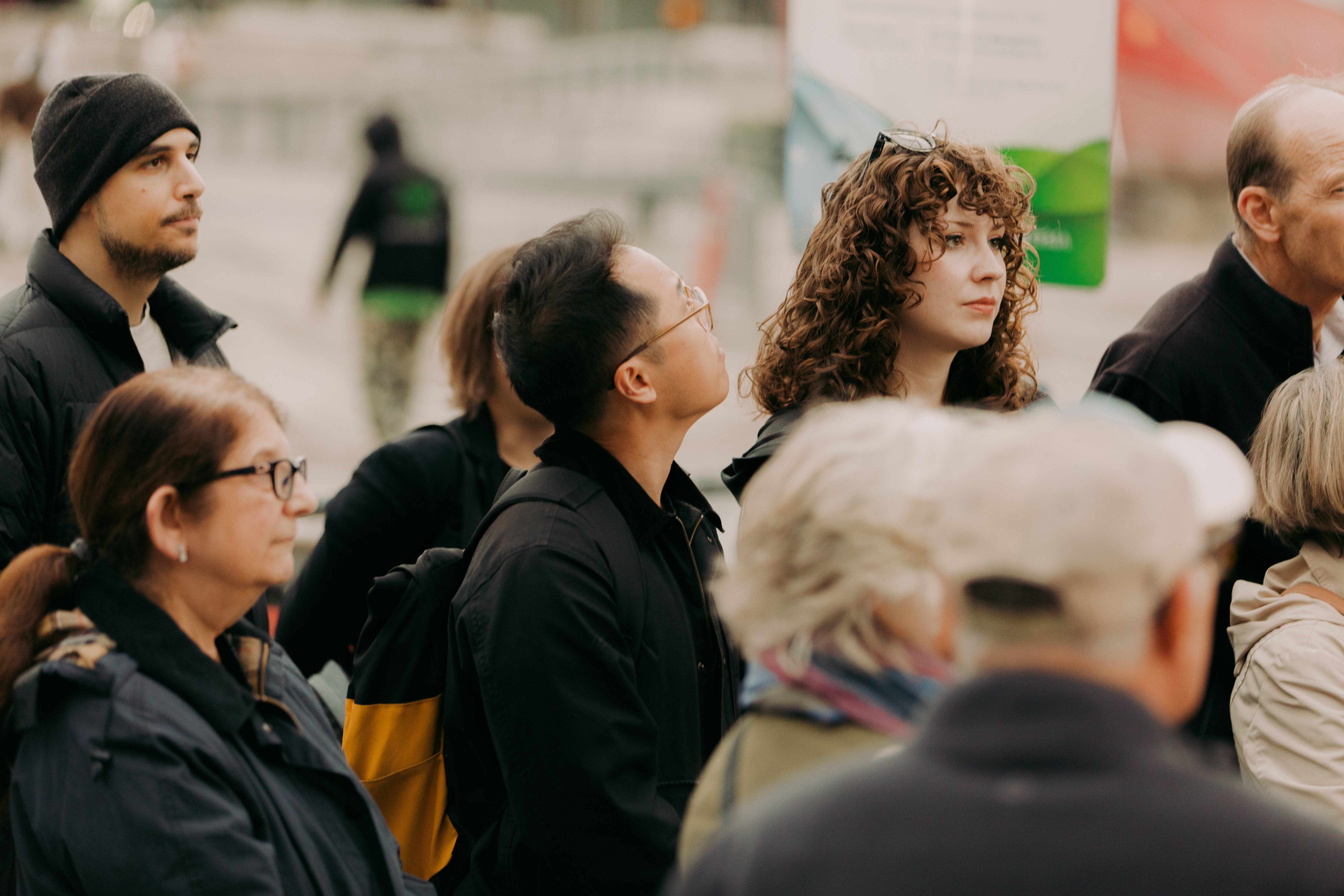
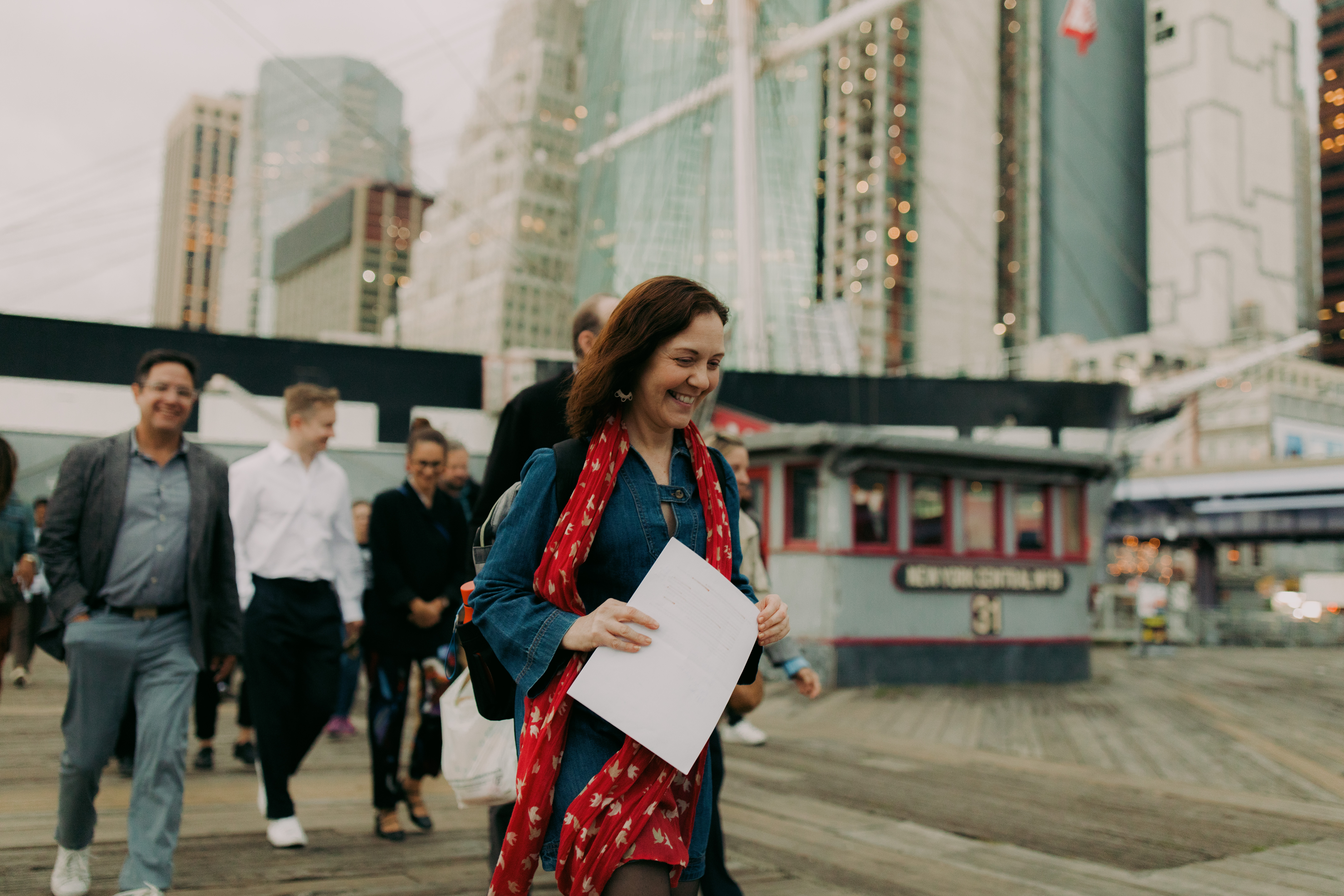
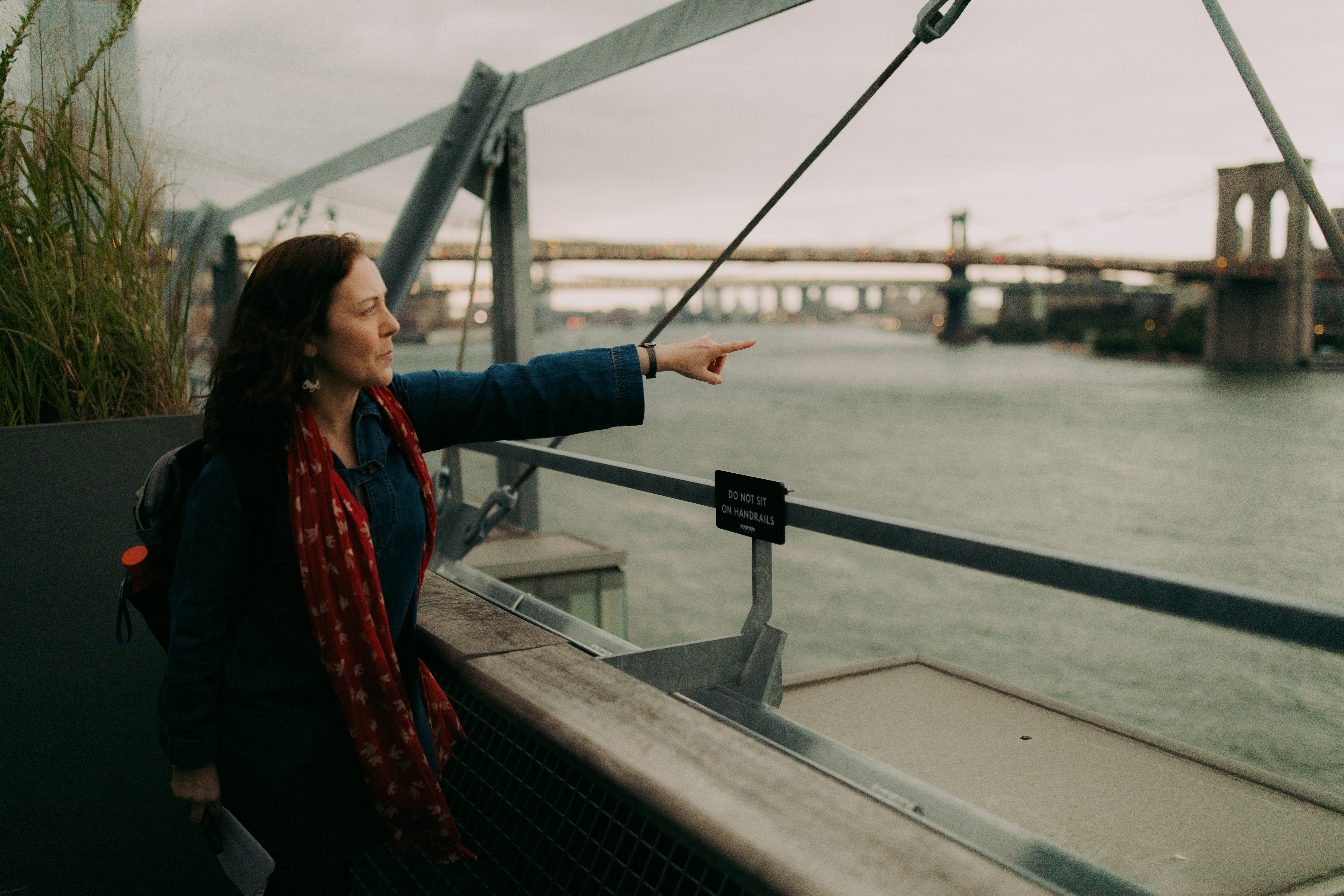
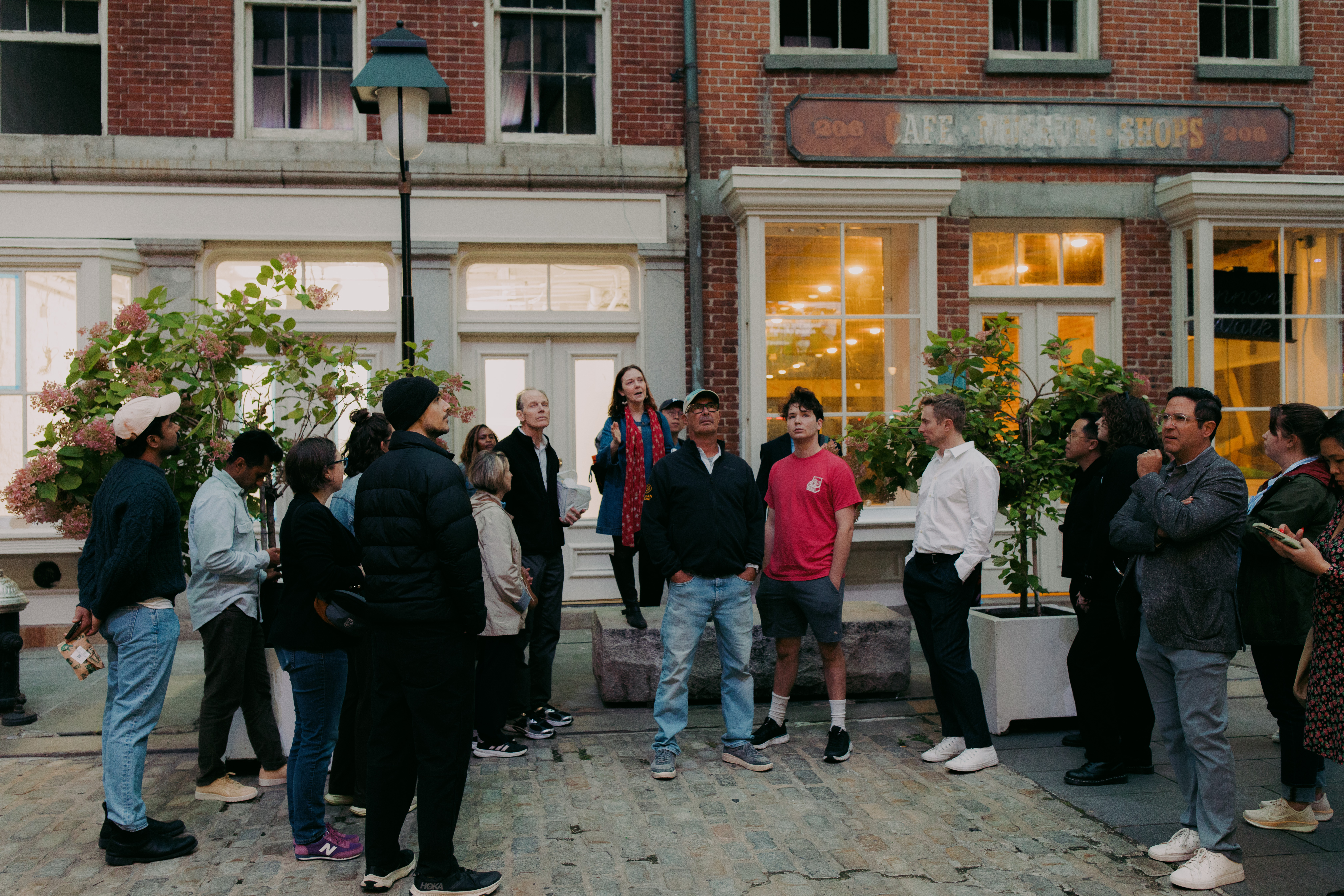
On Tuesday evening, we gathered at South Street Seaport for the NYC’s Secrets & Lies walking tour, Sunken Suppers & Coastal Secrets, as part of Climate Week NYC. Together, we walked through centuries of changing coastlinesโ€”from ancient oyster reefs that once buffered this harbor against storm surges to colonial wharves, historic street markets, and the nature-based solutions along the water that are reimagining and rebuilding coastal resilience today.

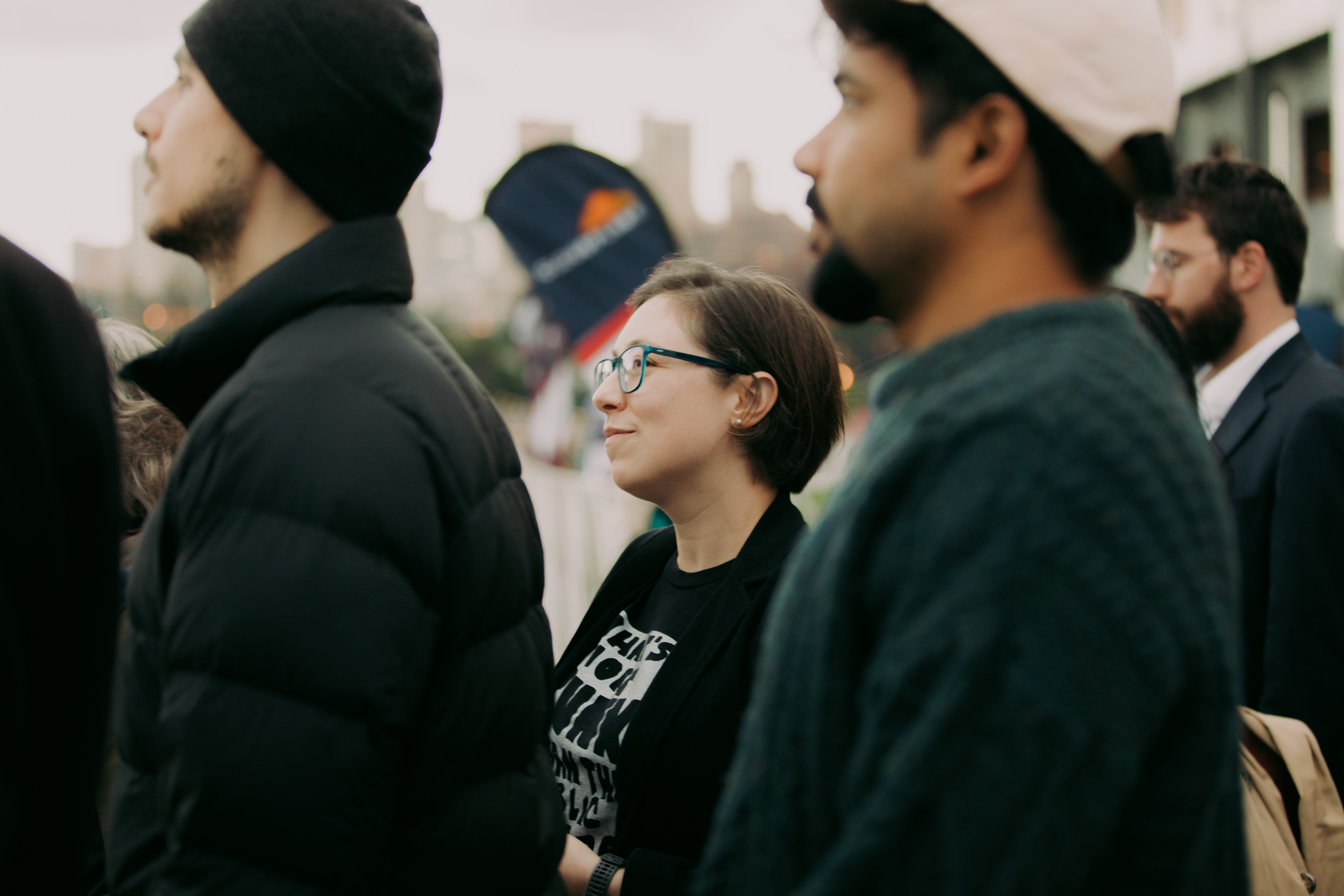
A huge thank you to the 44 people who bought tickets. You are all stars with insightful questions, boundless curiosity, and great energy for the entire evening.

Tremendous gratitude to photographer Shannon Carroll for capturing the spirit of our group so brilliantly throughout the evening, and to Climate Group for sending Shannon to photograph our event, all the support you gave to us, and an incredible week. ๐Ÿ™

Where should we take our secret history stories next? ๐ŸŒŠ๐Ÿฆช

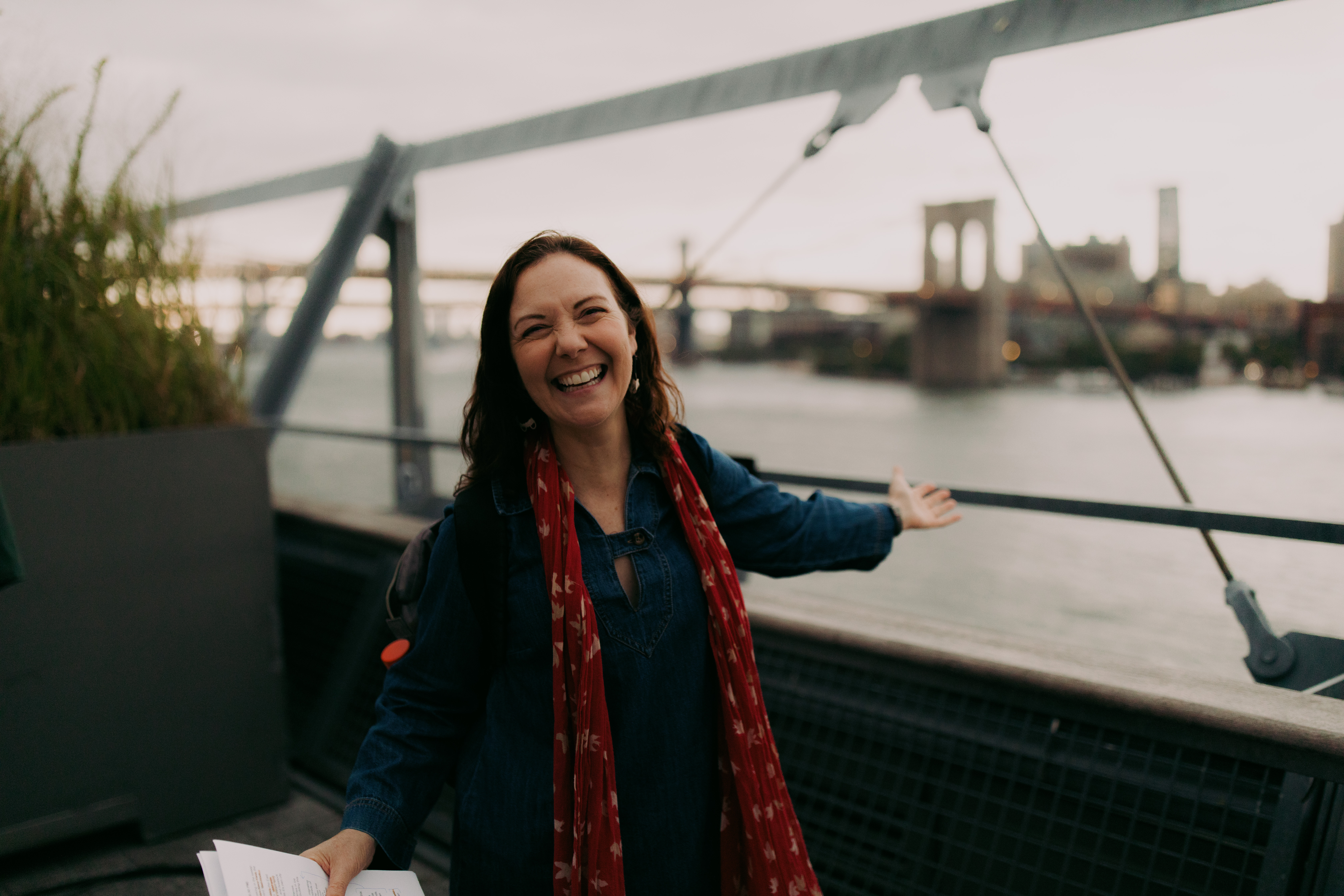
All photos by Shannon Carroll for Climate Week NYC

creativity

Museum of the Dog and NYC’s Secrets & Lies Team Up to Give Knicks Fans Freebies on June 18th!

June 18th: Knicks parade, free admission to AKC Museum of the Dog, and a special storytelling show by NYC’s Secrets & Lies with free snacks, exclusive after-hours museum access, special guests, and raffle prizes!

NYC is PUMPED for the New York Knicks ๐Ÿ€ parade on Thursday, June 18th! The AKC Museum Of The Dog and NYC’s Secrets & Lies are teaming up to do something special for Knicks fans because the Knicks love dogs – we’ve all seen the viral posts about Jalen Brunson, Josh Hart, and Kona & Stevie (Jalen’s pups!) ๐Ÿพ๐Ÿซถ

๐Ÿ–ผ The Museum of the Dog is offering free admission all day on Thursday June 18th from 11am – 6pm for everyone who wears any Knicks gear ๐Ÿ’™๐Ÿงก

๐ŸŽค Then at 6:30pm NYC’s Secrets & Lies is doing a special storytelling show all about NYC dogs! The show requires a ticket and along with the show you get:

๐Ÿฅจ Salty and sweet snacks

๐Ÿ›๏ธ Exclusive after-hours access to the museum

๐Ÿ• A rare chance to meet a real working transit dog and their handler who work the MTA subway every day

๐ŸŽŸ You’ll be entered into a drawing for 2 tickets to the American Kennel Club event Meet the Breeds
Where: AKC Museum of the Dog (101 Park Ave at 40th Street, Manhattan)

When: Thursday, June 18 at 6:30 PM

Info and tickets for the storytelling show: You can buy at the door of the museum or reserve in advance at https://museumofthedog.org/mc-events/good-dogs-of-gotham-the-working-dogs-who-built-new-york/

creativity

Math, Not Myth: A Clear-Eyed Guide to NYCโ€™s $12 Billion Crisis

We’re seeing a lot of headlines and finger pointing about NYC’s budget crisis. Here’s a clear-eyed breakdown I wrote of what’s actually happening and why, and what we can do about it.

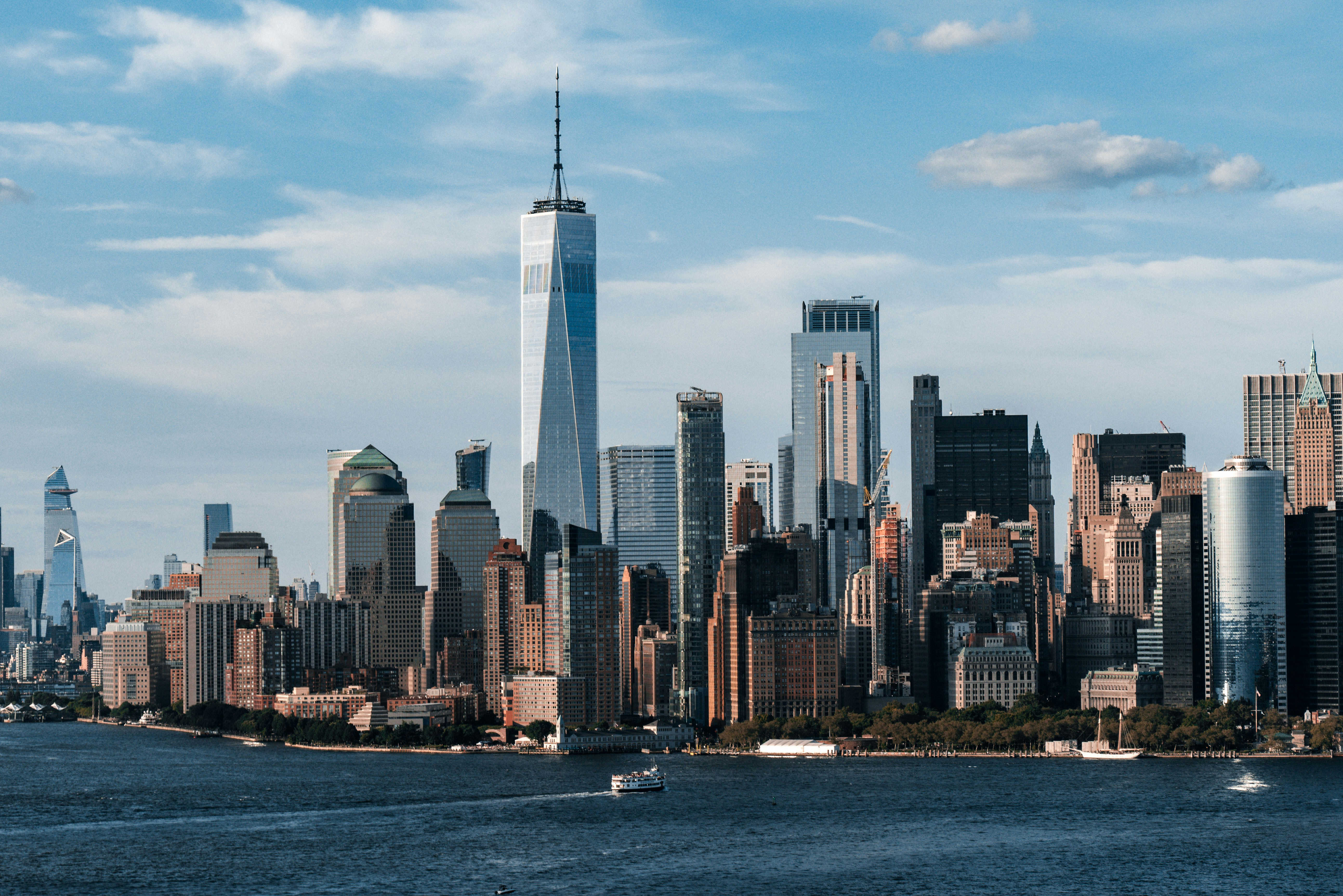
A picture of the NYC skyline as seen from the water looking at Lower Manhattan
Photo by Jermaine Ee on Unsplash

New York City is currently staring down a projected budget gap of $12.6 billion over the next two fiscal years ($2.2 billion for 2026 and $10.4 billion for 2027). While headlines often focus on political blame, the math behind this crisis is driven by three specific, documented factors:

1. The “Funding Cliff”

During the pandemic, the city received billions in one-time federal aid. This money was used to launch or expand recurring programs, such as 3-K, mental health services, and summer youth employment. Now that the federal funds have dried up, the city must either find its own tax revenue to pay for them or shut the programs down. This “cliff” accounts for roughly $700 million to $1 billion in new annual costs.

2. Chronic Underbudgeting

Non-partisan watchdogs like the IBO have flagged a trend of “underbudgeting” known expenses. This occurs when the cityโ€™s budget lists a cost (like police overtime or housing vouchers) far below what history suggests will actually be spent.

  • The Reality: In FY 2026 alone, unbudgeted costs for rental assistance (CityFHEPS), uniformed overtime (NYPD/FDNY), and special education legal cases are projected to create a $3.8 billion hole that wasn’t fully accounted for in initial plans.

3. State Mandates

New York State laws often require the city to spend more without providing the full funding to cover it. The most significant example is the Class Size Mandate, which requires smaller classes in NYC schools. The IBO estimates this will cost the city an additional $700 million to $1.6 billion annually by 2027.


What Can Be Done? (Mamdani & Levineโ€™s Path Forward)

Mayor Zohran Mamdani and Comptroller Mark Levine are now tasked with closing this gap. Here is what they are proposing (or could do) to mitigate the crisis in both the short and long term:

Short-Term Fixes (Closing the 2026 Gap)

  • Targeted Efficiency (PEGs): The Mayor can implement a Program to Eliminate the Gap (PEG). Rather than across-the-board cuts, this targets “administrative efficiencies”โ€”like consolidating back-office functions or reducing the $1 billion spent annually on vacant positions that haven’t been filled in years.
  • Re-evaluating the “Rainy Day Fund”: The city currently has billions in reserves. While monitors warn against using these for recurring costs, a one-time draw could prevent immediate, “destabilizing” service cuts while more permanent solutions are negotiated.
  • Revenue Generation: Mayor Mamdani has proposed taxing the cityโ€™s highest earners and most profitable corporations. This would require state approval and is a central part of his strategy to avoid “austerity” cuts to services.

Long-Term Solutions (Stabilizing the 2027+ Gaps)

Healthcare Savings: The Citizens Budget Commission (CBC) has suggested that rebidding the cityโ€™s massive health insurance contracts for employees could save upwards of $1 billion annually without reducing benefits, by leveraging the city’s massive size to get better rates.

Budgetary Transparency: Comptroller Levine has pushed for a “Truth in Budgeting” approach. This means accurately budgeting for overtime and housing vouchers from day one, rather than pretending the costs will be lower. This prevents mid-year “surprises” and allows for more honest long-term planning.

State Level Negotiation: The city is currently pushing Albany to foot more of the bill for the Class Size Mandate and to increase the city’s share of state tax revenue. (Currently, NYC provides over 50% of state revenue but receives back much less in aid).


For further reading and raw data, visit these non-partisan resources:

creativity

Uncovering the secret stories of Prohibition at NYC’s Secrets & Lies

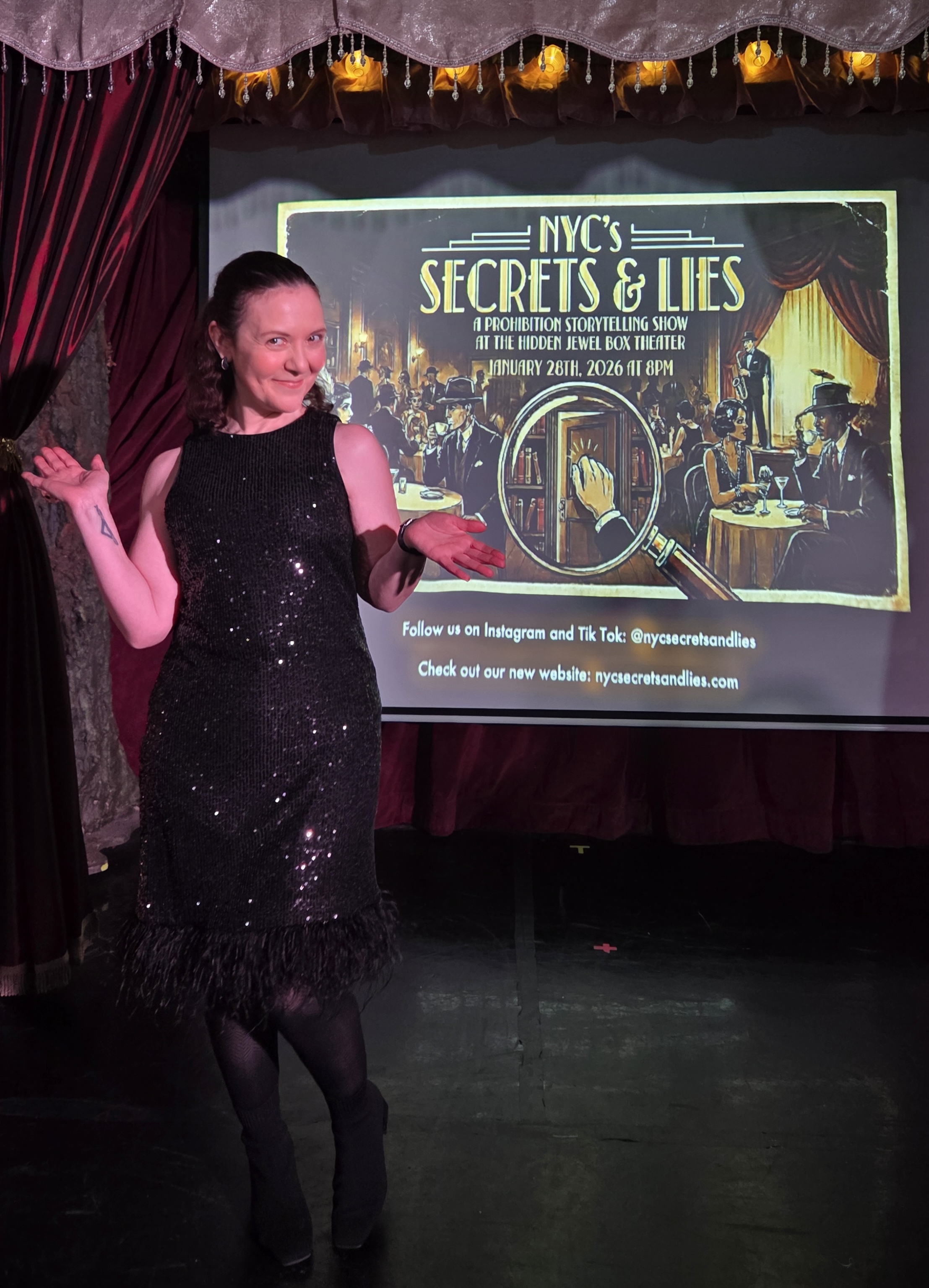
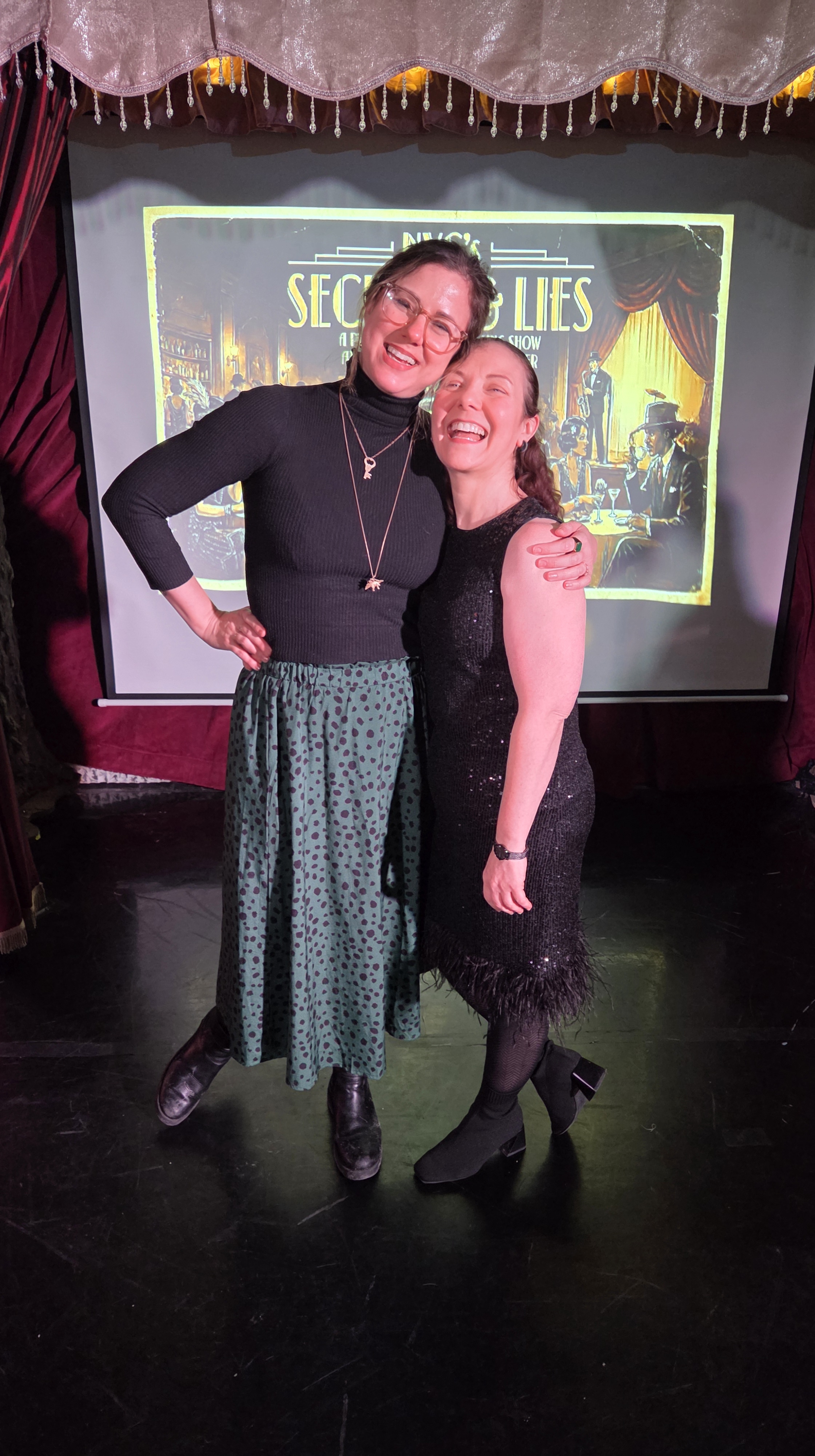
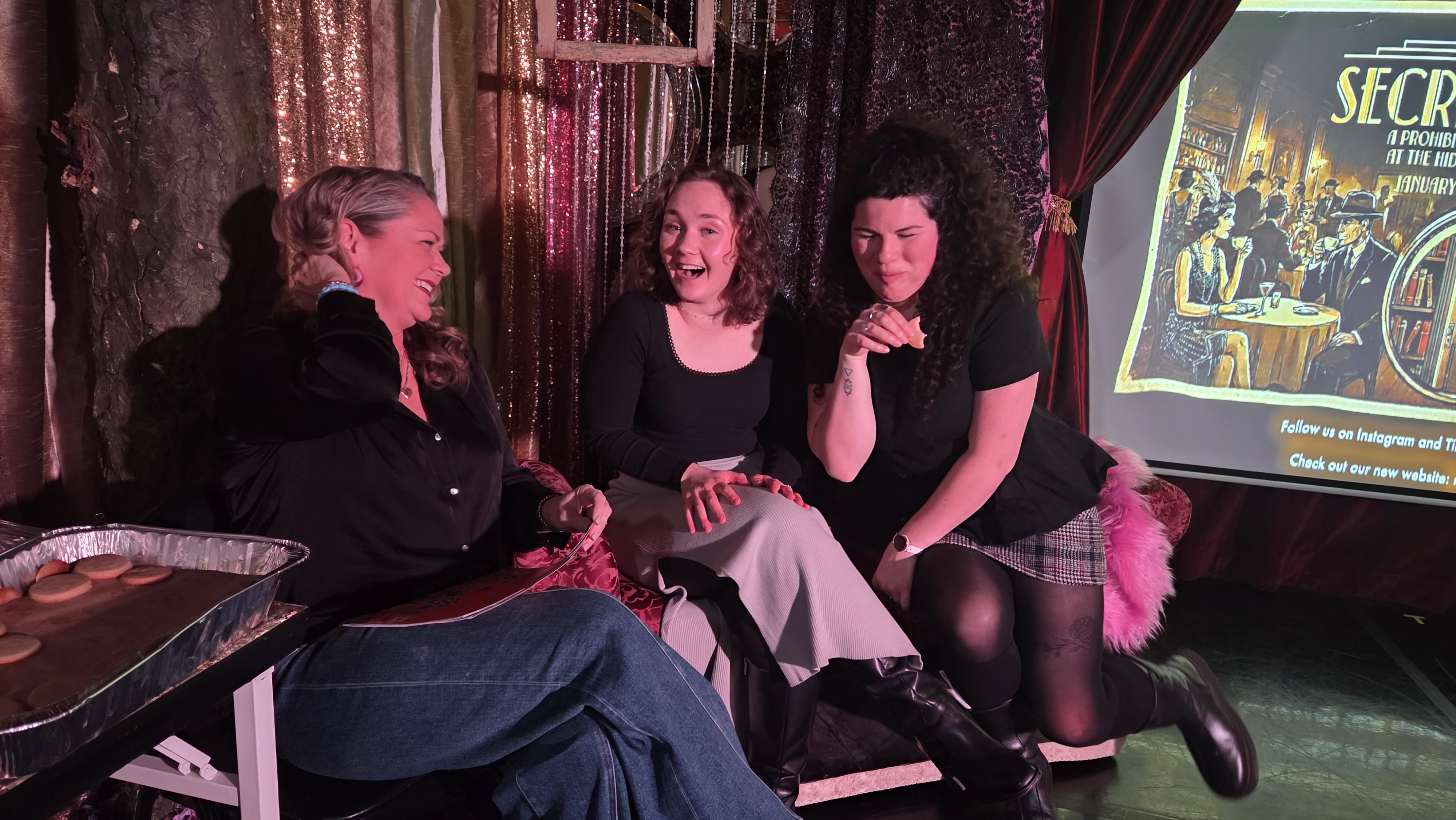
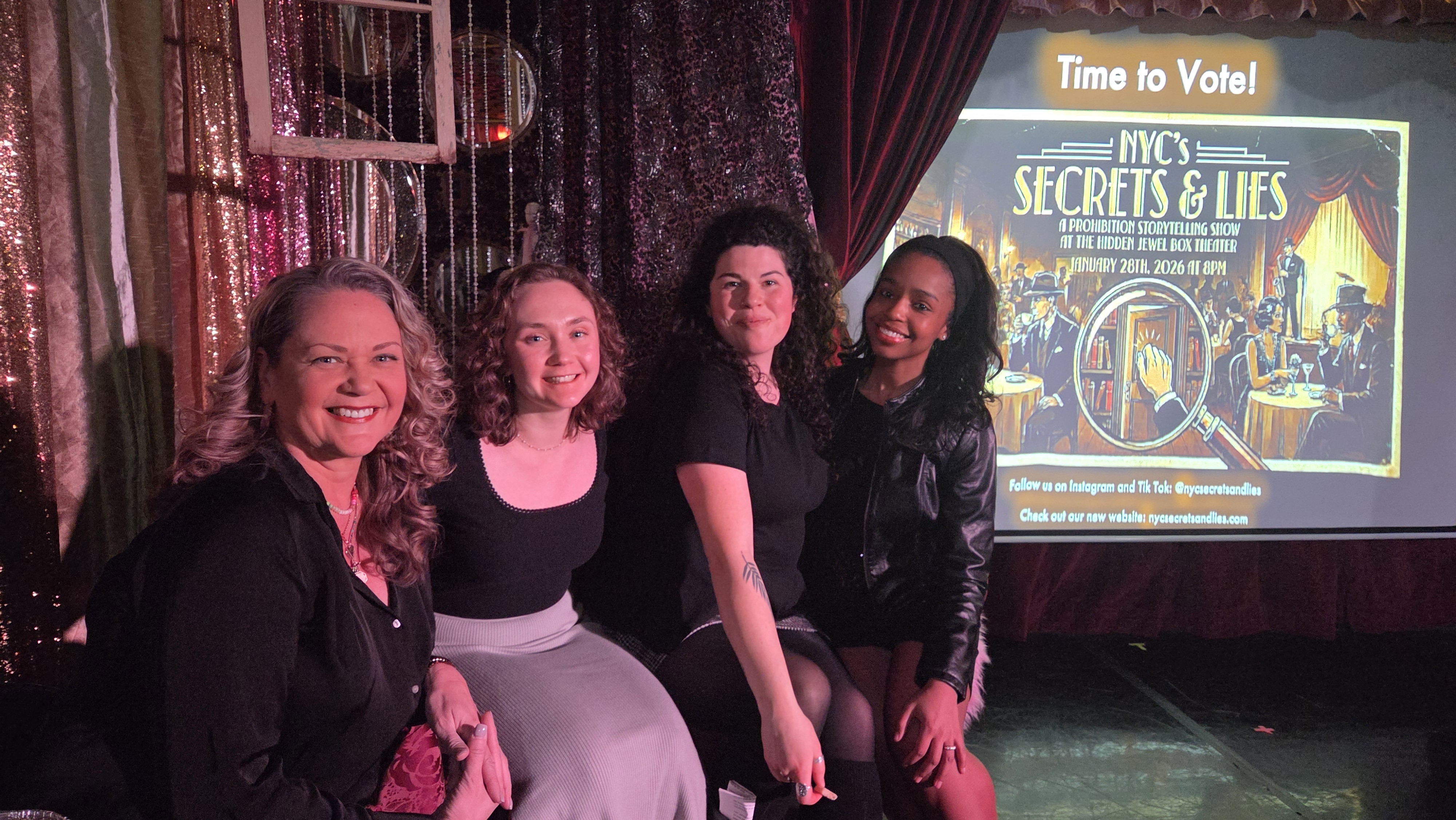
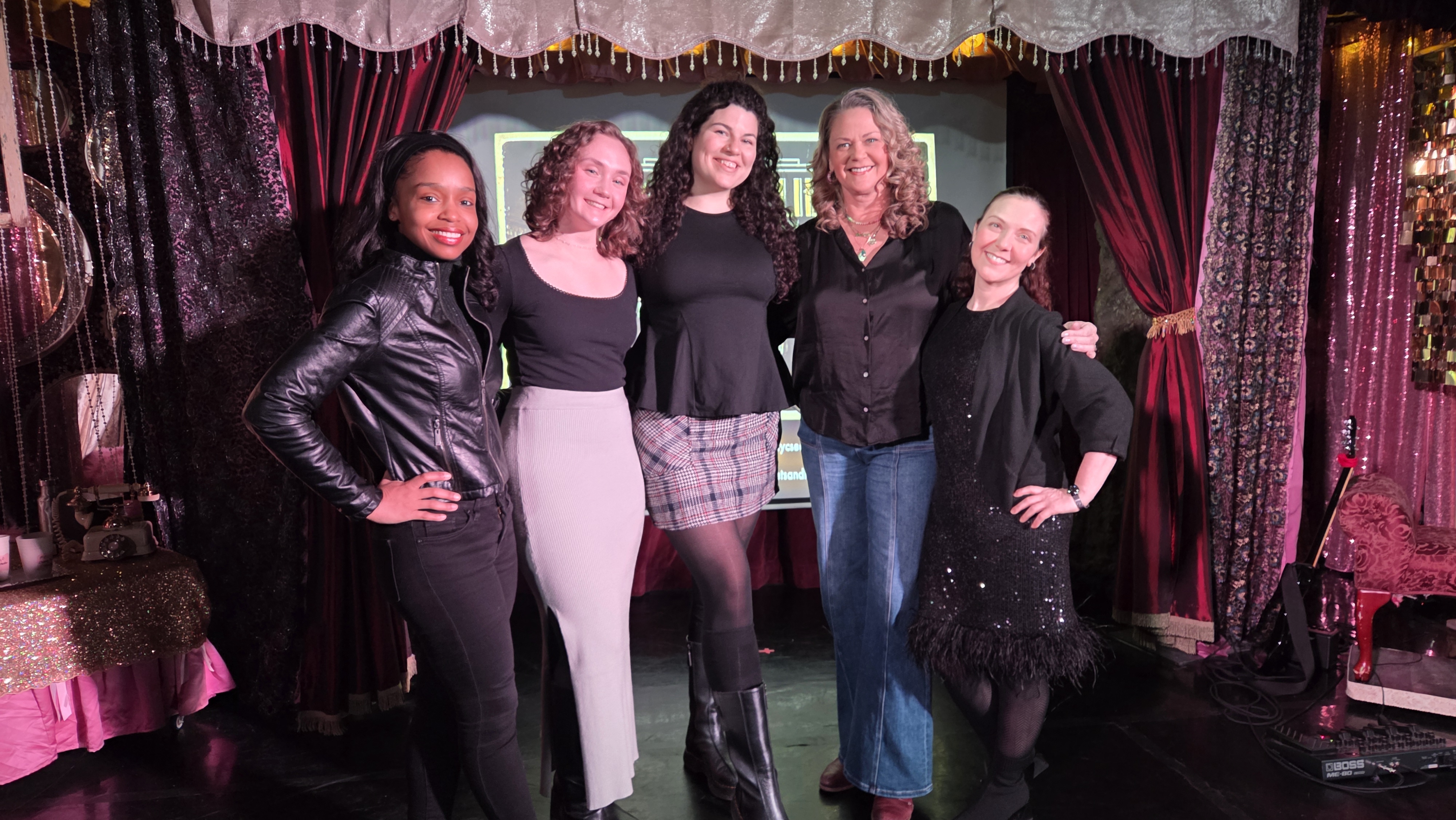
What a night! Last night, we gathered in a hidden speakeasy in the heart of the city for a sold-out edition of NYCโ€™s Secrets & Lies: Prohibition.๐Ÿฅ‚

There is nothing quite like the energy of a room full of New Yorkers leaning in to hear the hidden histories of their city. I am so proud of the community we are building with this show. ๐ŸŒ

A massive shoutout to our storytellers Melissa, Bethany, Margo, and Taylor who were phenomenal! ๐Ÿ‘ฉโ€๐ŸŽค And as always I have unending gratitude for our amazing audience, and my friends Ashley, Vicki, and Erin who care so deeply about this show ๐Ÿซถ and always provide me with such excellent advice, input, and counsel. ๐Ÿ™Œ

If you missed this one, don’t worry! We have two shows coming up in March and April, both back at the South Street Seaport Museum ๐Ÿ›ณ๏ธ – the history of NYC sports ๐Ÿ€ and the history of women who defined the NYC waterfront! ๐Ÿ‘ทโ€โ™€๏ธ Your $15 ticket includes our storytelling show, the museum exhibit, drinks, & snacks. Links to buy tickets:

March 29th – NYC Sports History:
seaportmuseum.org/sports-secrets-lies

April 30th – Women of the NYC Waterfront:
seaportmuseum.org/waterfront-secrets-lies

Check out some of the photos from our Prohibition show below! Which one is your favorite? ๐Ÿ‘‡

creativity

NYC’s Secrets & Lies: The Power of Partnership and Resilience in Live Events

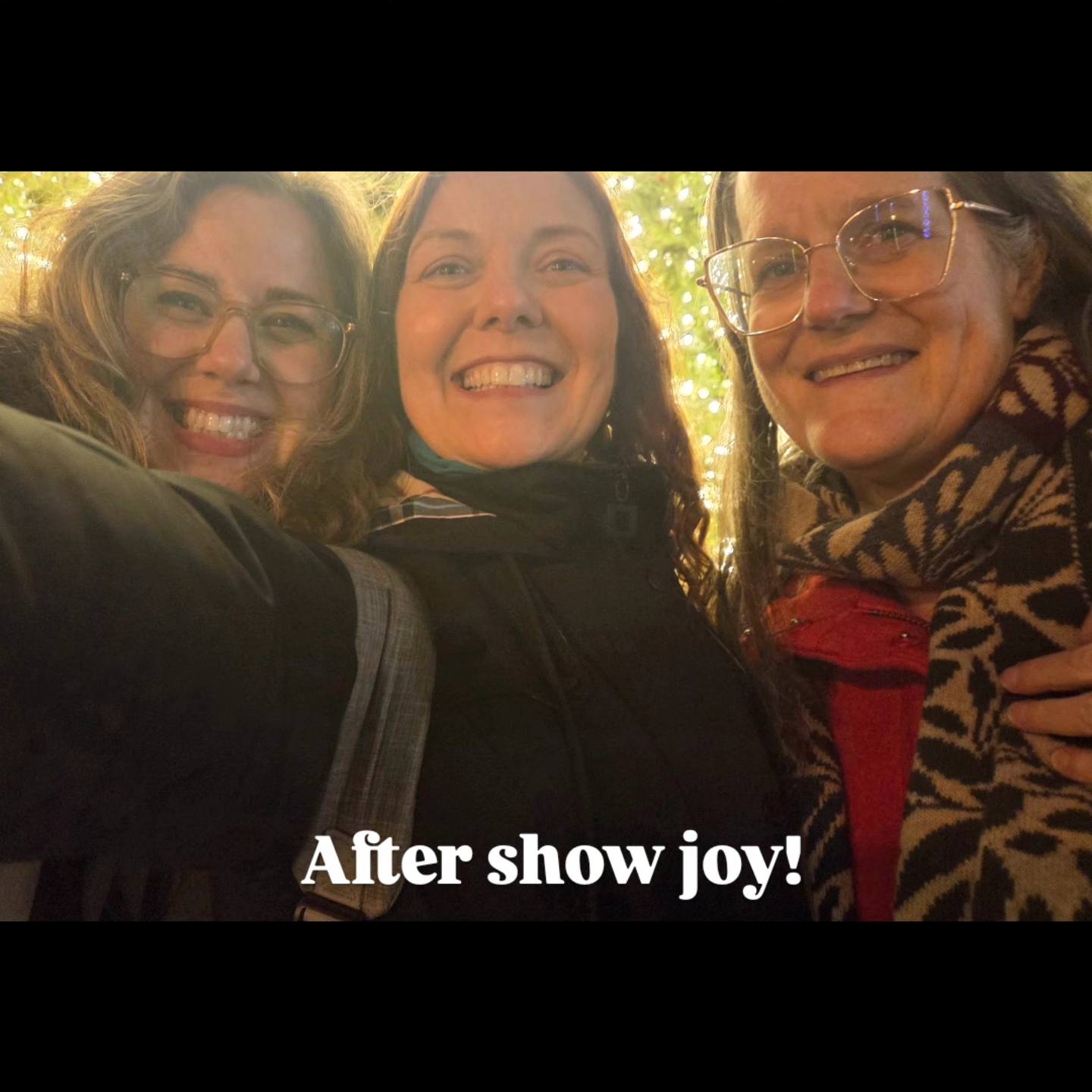
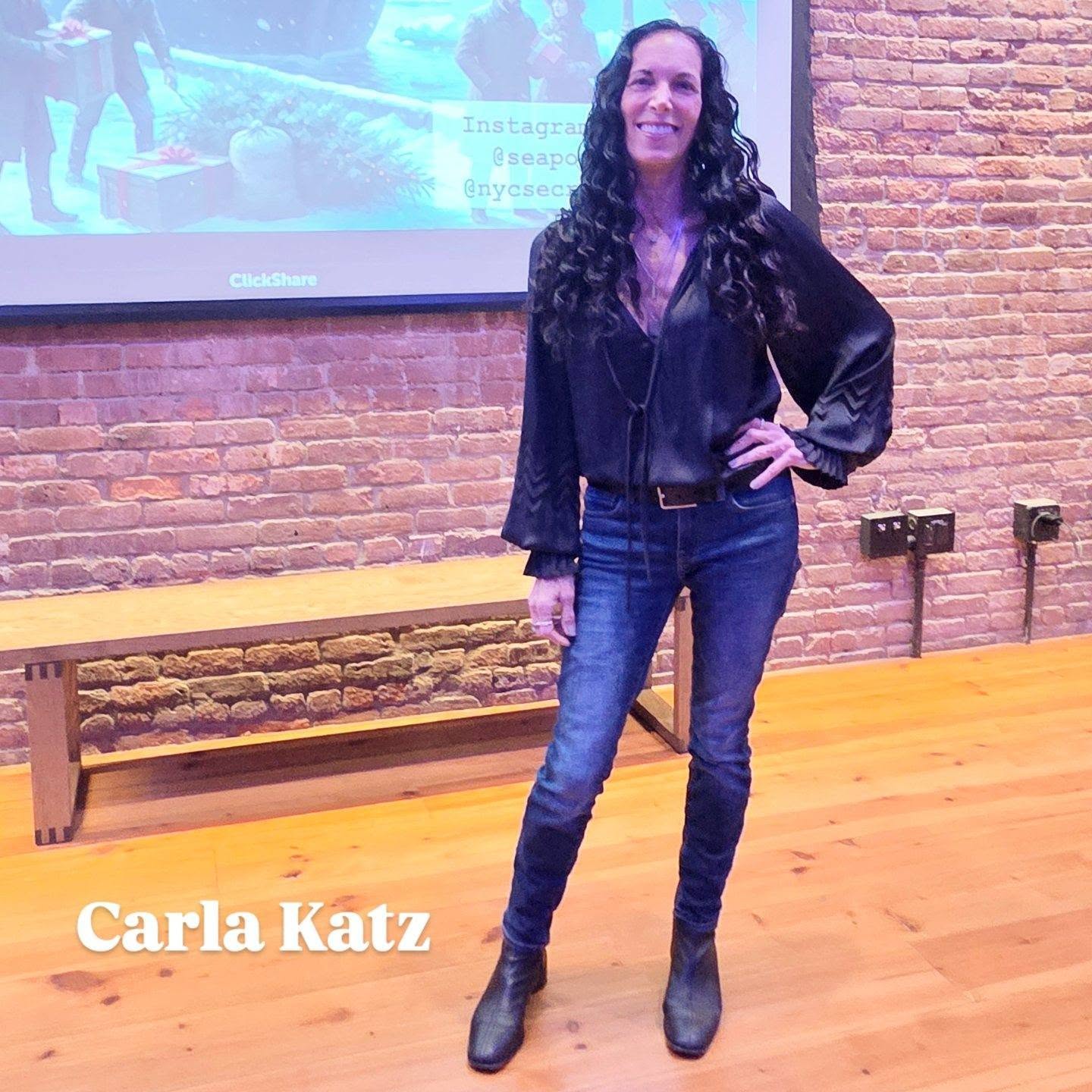
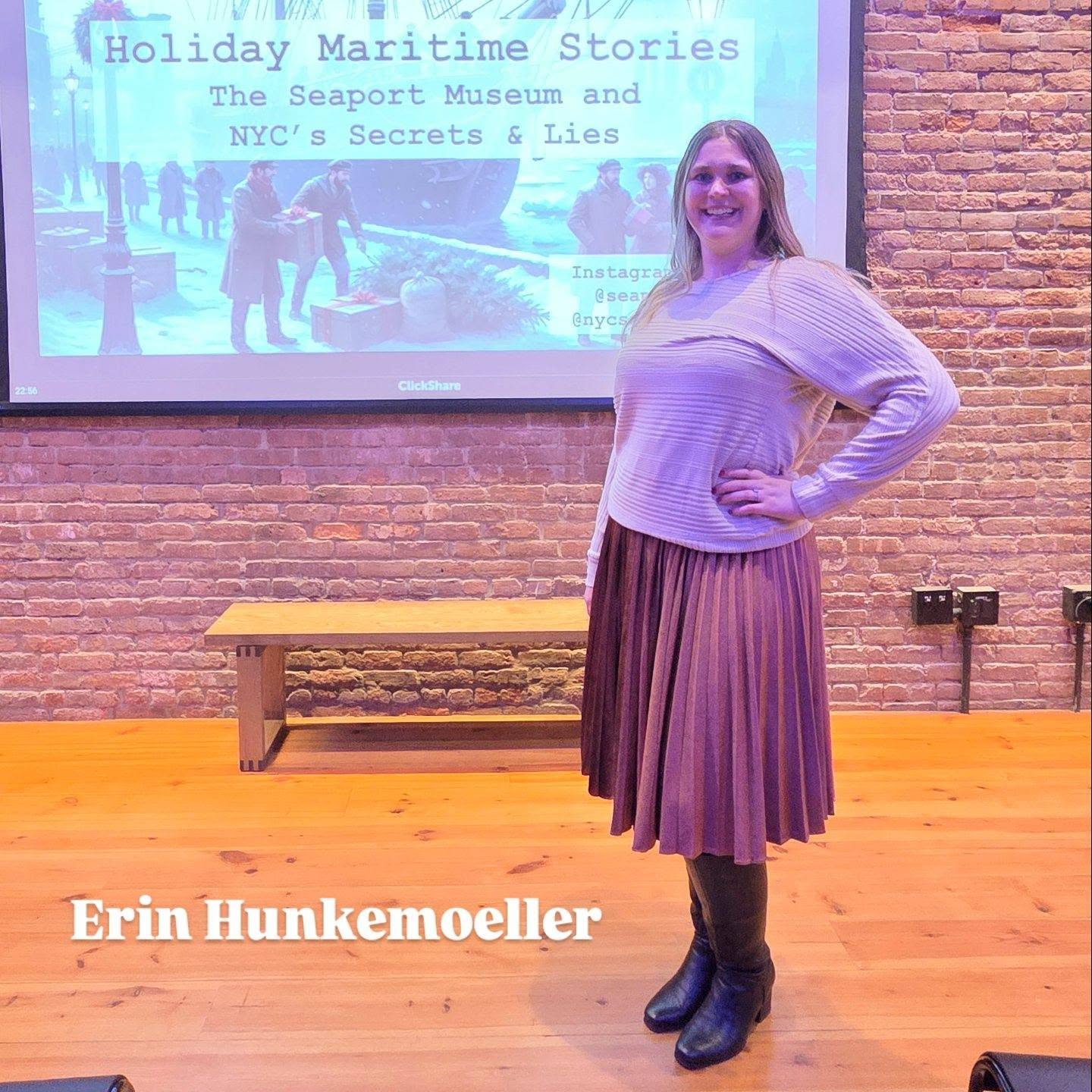
Ashley Semrick, Erin Hunkemoeller, Carla Katz, and Christa Avampato

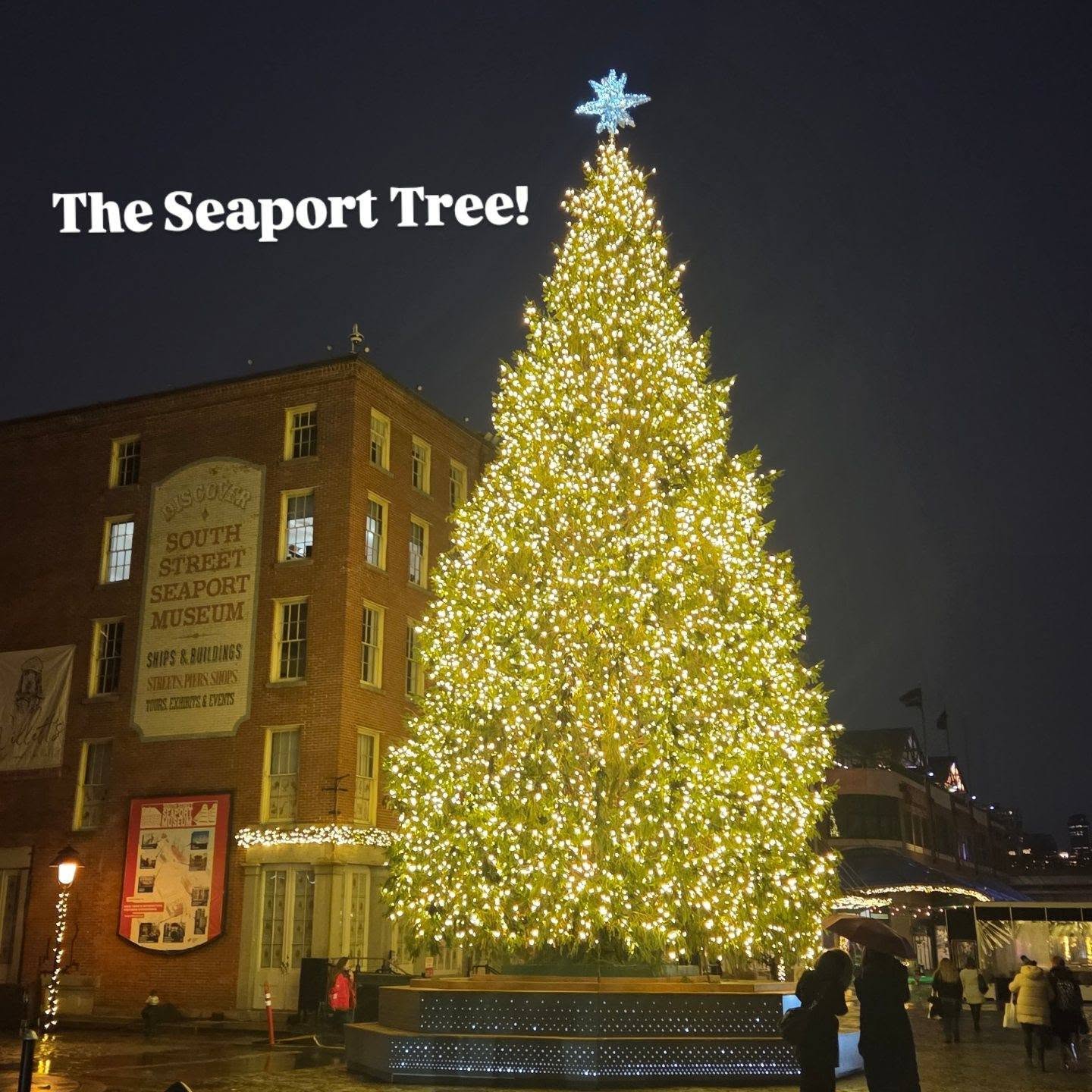
I’m proud to share that the NYC’s Secrets & Lies holiday show this week about secret NYC maritime history at the South Street Seaport Museum was a huge success! I’m still GLOWING from all the good cheer. โœจ๏ธ

This show is a dream passion project for me, and I feel so lucky to do this work. The phenomenal storytellers, the engaged and joyful audience, and the perfect museum partner team and venue made for such a special holiday celebration. I’m beyond grateful to everyone who came out to the show.

We had a packed house that enjoyed a special evening of history and stories, complete with snack table filled with historically accurate treats that all had a backstory! This event was our first location-based event; all the stories were thematically linked to the space where we performed creating an immersive environment where the audience didn’t just hear the stories but could feel them.

It was also a powerful case study in the critical value of collaboration. Working with the Seaport Museum team was seamless, proving that when partners share a clear vision, we can create an immersive meaningful experience for our audience that stays with them long after the show ends.

Live events are a masterclass in crisis management. As the creator and producer, successfully navigating the unexpected is part of the job description. Though it might sound crazy to some, this is what I love about producing: problem-solving, thinking on my feet, and taking care of everyone involved in making the show possible. The ultimate reward is delivering a high-quality experience for the audience and seeing the talented storytellers shine.

A little behind-the-scenes secret – I was more nervous about this show than any show we’ve ever done. Between my back injury, the cookie baking, a brand new venue with a brand new partner, this being our first location-based show, and a last minute emergency I didn’t expect, my natural stage fright was flying high. But through collaboration and partnership and joy, it all worked out. Once I focused solely on the storytellers, our audience, and our museum partner, the nerves finally faded. We are always stronger and better together.๐Ÿซถ

And good news (a la Buddy the Elf!): I saw a dachshund outside the museum as I arrived and another dachshund outside the museum on my way home. My Phinny is always with me!๐Ÿพ

Thank you again to the phenomenal team, the storytellers, and everyone who came out to support live storytelling and New York history. This is proof that focused passion and strong partnerships can achieve anything!

Below are some photos from the show. Happy Holidays!

creativity

Found: The Most Meaningful Dinner Reservation You Can Make in NYC Right Now

Community Kitchen. Lower Eastside – Manhattan.

Do you want to pay $15 or $125 for the same dinner in NYC? There’s a restaurant that lets you choose, no questions asked. And it showcases how nature and human communities work in sync to improve all lives.

Itโ€™s called Community Kitchen, located on the Lower East Side inside The Lower Eastside Girls Club. Most of us talk about “fixing the food system” in the abstract. But Community Kitchen is actually doing it. Founded by Mark Bittman, itโ€™s running a radical experiment: A sliding-scale restaurant where you pay pay what you wish for the same meal.

And it just keeps getting better:

– It heals the planet: The dinner menu served Wednesday – Saturday, created by James Beard award-winning chef Mavis-Jay Sanders, is plant-forward and prioritizes ingredients from farmers using agroecological (sustainable farming) practices. This minimizes chemicals running into our waterways and soil, and supports biodiversity, treating the farm as an ecosystem rather than a factory.

– It heals the community: They utilize a “sliding scale” payment model. You pay what you canโ€”$15, $45 (the cost of the meal), or $125 (to help others who can’t afford the meal.) If you have the means to pay the higher tier, you are directly helping a neighbor enjoy a nutritious, dignifying meal.

– It respects the worker: Unlike the industry standard, they pay a living wage with full benefits to their team members, correcting the inequities often found in restaurant labor.

– It’s delicious: They prepare top-quality food from scratch that appeals to all members of our communities, using primarily local and seasonal ingredients. Each meal has multiple courses.

It is a rare example of a “closed loop” of kindnessโ€”where caring for the soil and caring for the neighbor are part of the same meal.

If you are looking for a way to give back this season (or just want an incredible dinner), Community Kitchen is a wonderful place to dine with purpose. Itโ€™s a powerful reminder that “nature” isn’t just “out there”โ€”it’s on our forks, and in how we care for one another.

Learn more at https://www.communitykitchen.us/

๐Ÿฆƒ๐ŸŒฟHappy eating, and happy giving.


Key details about Community Kitchen:

  • Location: Lower Eastside Girls Club (East Village).
  • Chef: Mavis-Jay Sanders
  • Pricing: Sliding scale for the same meal – you choose the price you pay ($15/$45/$125)
  • Sustainability: Menu prioritizes plant-forward dishes and agroecological (sustainable farming) practices
  • Note: If you canโ€™t find the reservation youโ€™re looking for on the site, please check back! They release seats at all price levels gradually. Walk-ins are also welcome.
creativity

Join me in NYC for free wine and secret holiday maritime stories

It’s official! The tickets for my December NYC’s Secrets & Lies storytelling show at the South Street Seaport Museum are now on sale and they’re only $10

I am so excited for this oneโ€”itโ€™s going to be a gorgeous night of holiday secret stories, exclusive access to the museum’s exhibit on NYC maritime history,ย freeย wine, and free holiday treats with a cast that includes Carla Katz, Erin Hunkemoeller, and Ashley Semrick. ๐Ÿท

We’re expecting a great crowd so don’t wait on this one! Grab your $10 ticket now at https://southstreetseaportmuseum.org/holiday-secrets-lies/

creativity

Be one of our storytellers for NYC’s Secrets & Lies

Iโ€™m so excited to share this update: NYCโ€™s Secrets & Lies, my storytelling show about secret NYC history, is officially looking for new storytellers for our 2026 season!

This show is a dream come true for me and incorporates everything I love – NYC, history, research, game shows, storytelling, and collaboration. We’re thrilled to be back on stage and growing.

Read the full Playbill listing, including the link to submit at http://bit.ly/46UcuAz.

Please feel free to share this with anyone whom you think would be interested.

Here is the full text of the listing:

NYC’s SECRETS & LIES: Storytellers Wanted

PRODUCTION DESCRIPTION:
NYC’s Secrets & Lies is aย critically acclaimed, dynamic live storytelling showย that blendsย deep historical researchย withย high-energy theatrical performance. We bringย little-known NYC storiesย to life, pairing each storyteller’s script withย synchronized, original visual presentationsย (slides/images). Each performer acts as a historian, researcher, and entertainer.


SEEKING DIVERSE STORYTELLERS (18+)

We seek diverse, charismatic performers who are passionate about historical research and engaging presentation.

Storytellers: Individuals comfortable conducting independent historical research, writing a compelling script (typically 8โ€“12 minutes in length), and delivering it with theatrical flair.

Key Skills:

  • Ability to translate complex historical facts into anย accessible, entertaining narrative.
  • Familiarity with creating simple visual aids (slides/Keynote) is helpful, but not required.

Experience: Prior experience in educational performing, tour guiding, or narrative podcasting is a plus, but not a requirement. The only true requirement is a passion for NYC history and a desire to share it with an audience in a fun way.


SUBMISSION INSTRUCTIONS: VIDEO FIRST OPEN CALL

We are accepting self-tape video submissions for the first round. (A phone video is perfectly fine; please minimize the file size.)

Required Materials:

  1. Headshot and Resume/CV:ย Highlight any experience in research, writing, public speaking, performance, or tour guiding.
  2. Short Video (Self-Tape):ย Aย 2-minute excerptย of a historical story or topic you are passionate about. Focus on captivating delivery and clarityโ€”imagine you are telling a fantastic secret tidbit to a good friend.ย No visuals needed.
  3. Cover Letter:ย Please include the following:
  • Relevant experience (research, performance, etc.)
  • Your interest in the show and NYC history.
  • If you’ve seenย NYC’s Secrets & Liesย (or plan to attend in October or December.)
  • Social media handles (if applicable.)

Please submit all materials via email at nycsecretsandlies@gmail.com. Email us if you have any questions.


HIGHLY RECOMMENDED: LEARN ABOUT OUR SHOW

To understand the unique blend of entertainment, historical research, and performance, we highly encourage you to attend one of our upcoming live shows:

October Show: “Ghost Stories”

  • Date:ย Tuesday, October 28th, 2025
  • Location:ย The Hidden Jewel Box Theater –ย a secret theater hidden inside Port Authority Bus Terminal!
  • Time:ย Doors 7:30pm; Show 8:00pm
  • Link for Tickets/Info:ย http://lies.eventbrite.com

December Show: “Holiday Maritime History” (includes a holiday party!)

  • Date:ย Thursday, December 11th, 2025
  • Location:ย South Street Seaport Museum (Our Partner)
  • Link to tickets will be available soon and will be emailed to all who submit.

Salary: $50.00 โ€“ $200.00 per show