
creativity

The Dignity of Relief: What Finland Can Teach NYC About Public Restrooms

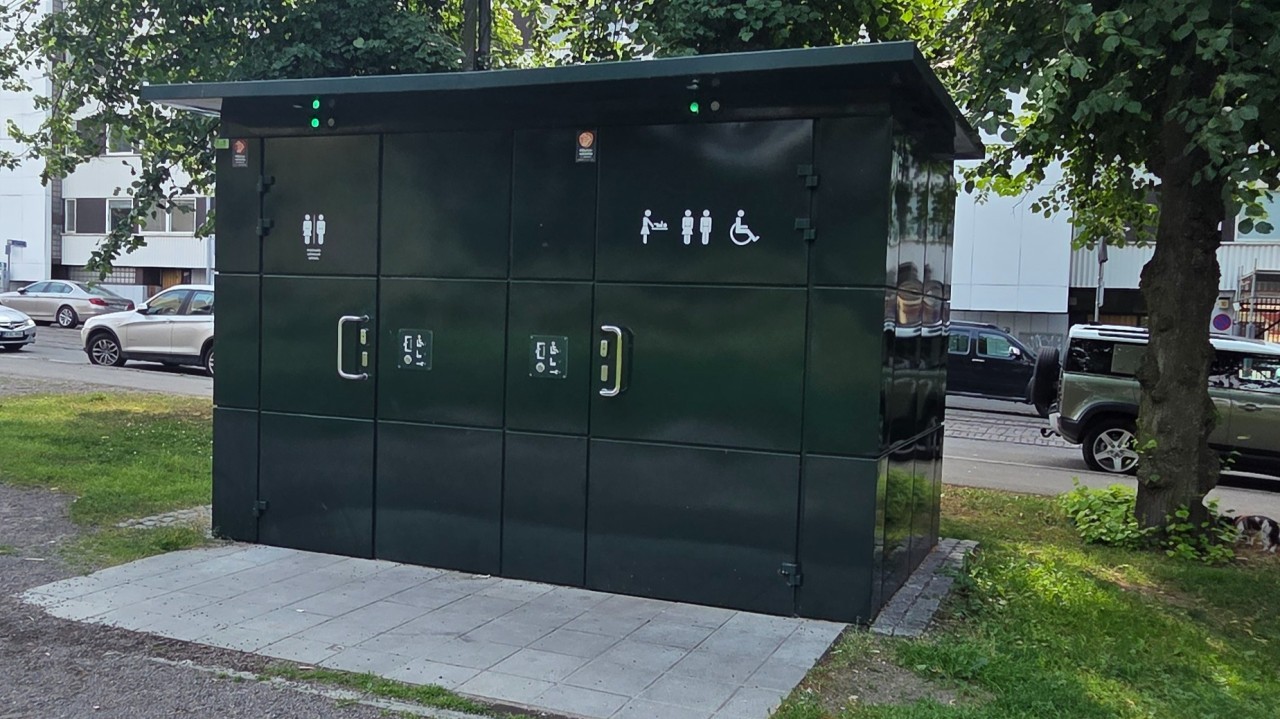
The public restroom I used in a park in Helsinki, Finland. Photo by Christa Avampato.

I was winding my way through Helsinki, and I really needed to pee.

I had just taken a long run along the waterfront. I was so taken with how beautiful and peaceful everything looked that I just kept going, suddenly finding myself well over 30 minutes from my hotel. I pulled out my phone and searched for a public restroom nearby on Google Maps. One popped up close by… inside a public park.

A park bathroom? Did I dare?

As a New Yorker, every instinct screamed caution. Every New Yorker knows the quiet panic of being stranded outdoors with nowhere to go. Back home, we calculate emergency walking routes to department stores, buy unsolicited coffees to unlock bathroom door codes, or peer through subway station gates hoping for an open door. For decades, finding a clean, safe public restroom in New York City has felt like an impossible obstacle course. Denying people access to basic sanitation does not erase bodily needs. It degrades our streets, punishes working-class commuters and delivery workers, isolates families with young children, and strips basic dignity from public life.

Standing on that Finnish path, nature called and I had zero choice. I pushed open the door, braced myself, and had my eyes blown wide open.

Finnish public park bathrooms feel like a serene retreat. They are gorgeous, immaculate, crafted with metal that’s so clean it sparkles, and even carry a lovely, fresh scent.

Now, New York City is testing a new approach to our own street-level crisis. The Mamdani administration has begun installing 17 free, modular, ADA-accessible public restrooms across all five boroughs. Awarded through a 4 million dollar pilot contract with Throne Labs, these standalone units operate off-grid without requiring direct hookups to municipal water, power, or sewer mains. They feature running water, flushing toilets, touchless access, and solar-supported climate control.

At roughly 235,000 dollars per unit to build, install, and service, City Hall views this pilot as an enormous bargain. Building a single traditional plumbed restroom in a New York City park routinely costs between 1 million and 3 million dollars due to complex utility trenching, multi-agency permitting, and construction red tape.

Yet while New York leans into venture-backed modular technology to bypass utility headaches, my run through Helsinki showed me a very different truth: cities can provide clean, universal public sanitation at a fraction of that cost by reimagining civic design from the ground up.

Lessons from Helsinki: Two Paths to Affordable Public Access

Finland has treated public sanitation as vital civic infrastructure for centuries, tracing back to the first wooden public facilities built at the Suomenlinna fortress in 1748. Today, Helsinki provides reliable public relief through two complementary models:

1. The Zero-Dollar Street Furniture Model

Downtown sidewalks and busy transit squares feature sleek, automated green restrooms designed and operated by street furniture innovators like JCDecaux and Nordic manufacturer Danfo.

  • The Economics: These units cost municipal taxpayers virtually zero dollars. Helsinki exchanges commercial display rights on city bus shelters and information kiosks for the contractor manufacturing, installing, powering, and maintaining self-cleaning restrooms around the clock.
  • The Result: The public receives dependable, automated, clean street facilities funded entirely through private ad revenue rather than tax dollars.

2. The Ecological Dry Toilet (The Helsinki Huussi)

In public parks, island reserves, and along the very waterfront trails where I went running, Helsinki embraces the huussi—a beloved traditional Finnish composting outhouse modernized for urban life. Led by Chief Design Officer Hanna Harris, the city worked with architectural teams like The Dry Collective and ecological manufacturers like Pikkuvihreä to build stylish, prefabricated timber dry restrooms.

  • The Economics: Each prefabricated timber unit costs between 15,000 and 45,000 euros to build and install. Annual maintenance runs roughly 3,000 to 5,000 euros per unit to swap collection drums, restock natural wood shavings, and service the cabin.
  • The Ecological Loop: The system uses zero water. Instead of flushing gallons of treated drinking water down the drain, it diverts organic matter into batch-composting drums, safely curing waste into nutrient-rich soil and biogas for regional green spaces.

Helsinki installs and maintains an ecological dry restroom for about 10 to 20 percent of what New York pays for a single modular pilot unit.

High-Tech Workarounds vs. Resilient Public Systems

Comparing these programs exposes two contrasting philosophies of urban problem-solving:

Article content
Comparison of NYC pilot project and Helsinki public restrooms

New York opted for a high-tech stopgap: proprietary software, remote cellular access, and heavy tanker truck service routes to skirt the city’s broken capital construction bureaucracy.

Finland opted for systemic design: either using advertising revenue to fund public goods, or deploying low-tech, biomimetic solutions that eliminate water use and mechanical failure points altogether.

Sanitation is climate resilience. When cities lack public bathrooms, human waste washes into storm drains during heavy downpours, polluting local estuaries and overloading combined sewer systems. Clean, accessible restrooms protect our waterways, safeguard street health, and give residents the freedom to walk, bike, and use public transit without anxiety.

New York’s 17 new restrooms mark a welcome first step. As our city works toward doubling its public bathroom network by 2035, embracing the financial creativity and ecological simplicity of models like Finland will help us build public spaces that truly welcome everyone.

The Togetherhood Takeaway

Transforming civic infrastructure requires us to look beyond expensive stopgaps and demand smarter, circular design.

  • Rethink Public-Private Value: Advocate for municipal policies that channel commercial advertising revenue and developer concessions directly into neighborhood public amenities like restrooms, water fountains, and benches.
  • Pilot Low-Water and Composting Infrastructure: Urge local parks conservancies, community gardens, and urban farms to experiment with modern dry-composting facilities. Sustainable designs can bring clean sanitation to green spaces at a fraction of the cost of plumbed concrete buildings.
  • Use and Share Restroom Locators: Map out local facilities using community platforms like Got2Go and the city’s pilot bathroom tracker. Crowdsourcing data highlights neighborhood transit corridors that still lack basic coverage.
  • Demand Procurement Reform: Speak up at community board meetings and municipal hearings to demand streamlined park construction. Cities should not have to spend millions of dollars or hire private tech vendors just to install a basic, clean public restroom.

True civic care does not require over-engineered gadgets. It requires the collective will to build simple, durable, sustainable, and dignified shared spaces that respect every person who calls the city home.
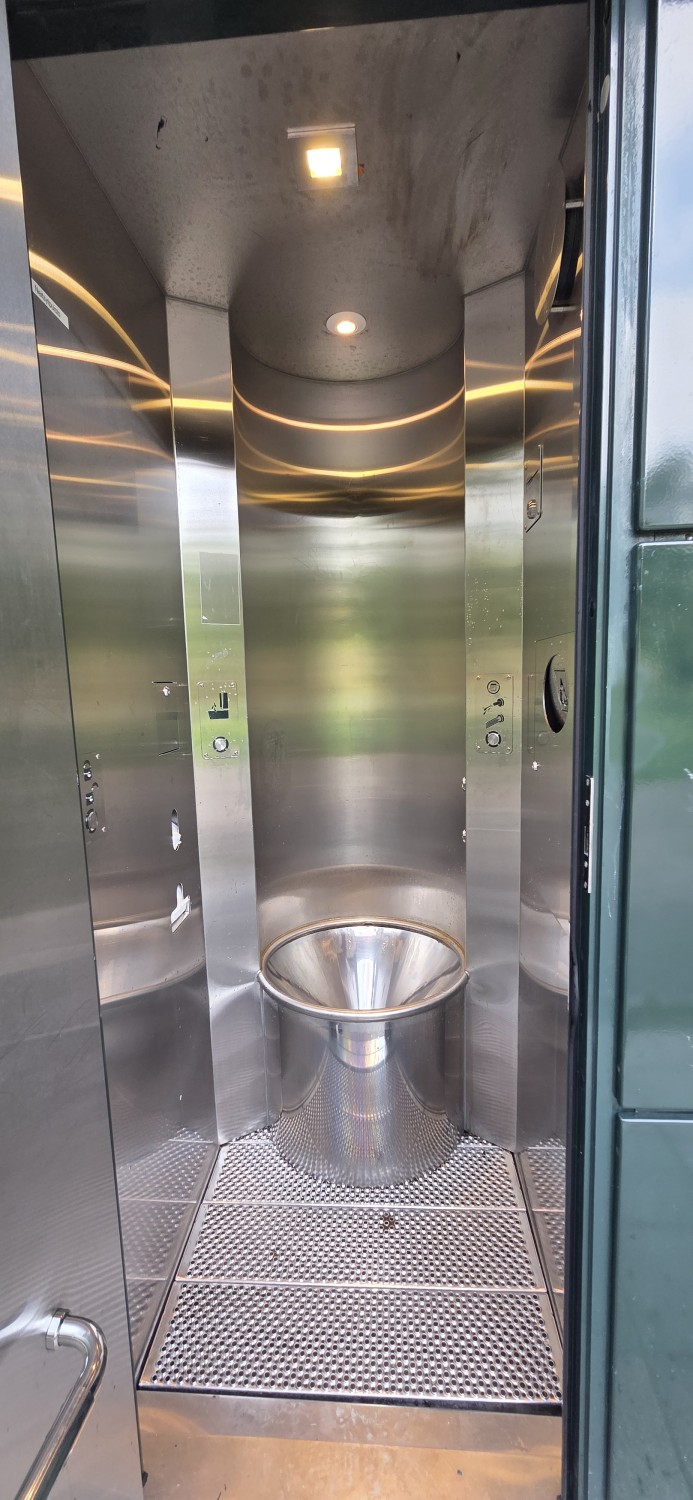
The inside of the restroom I used in a park in Helsinki, Finland. Photo by Christa Avampato.
creativity

Embracing stakeholder theory in Finland this summer

Photo from https://events.tuni.fi/stakeholdertheory/sustainability/

Finland, I can’t wait to meet you! I was accepted into the 2025 Summer Seminar in Stakeholder Theory at Tampere University with University of Virginia Darden School of Business (my alma mater), Darden-The Institute for Business in Society (IBIS), and RESPMAN Research Group. I’ll join an incredible global group of faculty, researchers, and PhD students to learn and share how to best integrate stakeholder theory into my work in sustainability and climate change mitigation. As part of the program, I’m revising and refining the work I started in my University of Cambridge / Cambridge Institute for Sustainability Leadership (CISL) dissertation on the role of storytelling to engage family offices in climate investments. I’ve spent the last 2 months editing (cutting it in half!) and am excited to get feedback on it. In addition to that paper, I’ll also work on 3 more research projects:

  • The Stories We Eat: Narratives to Shape Stakeholder Behavior and Policy for Sustainable Food Futures
  • Narrative Power: Using Digital Media to Convey the Voice of Future Generations and Nature in Sustainability Storytelling
  • From Self-Interest to Shared Benefit: How to Adapt Finland’s Exemplar of Public Trust Amidst Power Asymmetries in U.S. Businesses

I’m so grateful for this opportunity to learn and engage with these incredible people in one of the most sustainable communities in the world. I’m most looking forward to spending time with my professor, mentor, and dear friend R. Edward Freeman, who is one of my heroes and the founder of the seminar. As the originator of stakeholder theory that transformed business ethics, his work has fundamentally changed how businesses and business leaders around the world operate. He’s the reason I went to Darden and he changed how I see the world and my role in it. I’m honored to have had his support and encouragement for all these years.

It’s going to be an incredible summer of learning. I’m excited to experience all of it and to see where it leads! Nähdään pian, Finland!

creativity

How I embrace Finland’s nature-based wisdom in Brooklyn

Photo of Lake Summanen, Saarijärvi, Finland by Tapio Haaja on Unsplash

In this moment in time, I’m looking for comfort and advice in nature and books. I recently read The Finnish Way: Finding Courage, Wellness, and Happiness Through the Power of Sisu by journalist Katja Pantzar. A Canadian with Finnish heritage, she moved to Finland for work. What she never expected and found is that embracing the Finnish lifestyle would radically transform her mental and physical health. Curious to see if I could adopt these lessons myself in my Brooklyn life, this is what I’ve tried and how it’s going:

Nature heals

Finns spend time outside in all sorts of weather all year long, even when the days are short and cold. They bike to work. They go out of their way to take the scenic route, spending as much time in nature as they can. They take winter swims (or dunks!) in the frigid sea followed by warm and cozy saunas. Cold water dips have been shown to have health benefits: circulation, reduced inflammation, and enhanced mood, along with a possible boost to the immune system. (However, if you have heart issues, please consult a doctor before trying cold water swimming.)

People in Finland put away their technology and embrace being together with others, often outside and in natural settings. They see nature as a generous neighbor. Yes, it takes effort and time, but the benefits far exceed the work and planning required to experience them.

Once Pantzar took on this view of nature, and practices like cold water swims and warm saunas, she noticed her mental and physical health improve. She felt clear-headed and physically stronger. Her gratitude for nature grew. Her relationships flourished.

My take:

I’m fortunate to live close to Prospect Park in Brooklyn. It’s a sprawling green space of over 500 acres. I’ve been trying to get there more often, even when it’s cold, either before or after work or at lunch time. I’ve also been trying to spend time in nature with others, a walking meet up.

I’m about a 20-minute subway ride from the ocean. However, there’s no sauna close by so I’ve not done the cold plunges in the open water. Instead, at the end of my morning shower, I turn the water to cold and try to bear 10 seconds. Though I can’t say I love the cold water, I have found them helpful. From the first time I tried this, I felt a rush afterwards. Something about doing this makes me smile. I feel alert and ready to take on the day.

I also learned that in NYC, we have a few saunas. Brooklyn Bathhouse and Bathhouse Flatiron to name just two.

The beauty of difficulty

Doing things that are difficult carries a certain level of pride and accomplishment. When we realize we can do hard things, our confidence grows. Whether that’s a cold-water swim, a strenuous hike or bike ride, learning a new skill, or simply getting through a long and difficult winter, there is joy to be found in overcoming obstacles and challenges. We don’t need to shy away from something because we’re afraid of failing, nor because we’re complete beginners trying to find out way. We can embrace that, one step at a time.

My take:

I really love being a beginner. I’m always trying to do new things, with varying degrees of success and learning! Whether it’s learning a new language, cooking and baking, in my writing and paper collage work, a new academic pursuit, or new sports, workouts, and physical challenges, I approach things with curiosity. The older I get, the more comfortable I am saying, “I have no idea how to do this but I’m just going to see how it goes.” I’ve especially loved taking on tasks that I initially think are way too difficult for me to do. I like practice. I like seeing progress and improvement, however small. And when I do make it up that mountain, the views are really spectacular.

Food and exercise

When it comes to diet and exercise, Finns take a sensible approach. They eat more vegetables and fruit than anything else. They bake movement and exercise into their everyday routines. And they make it all fun and engaging. Feeding themselves and exercising is not work; they’re essential to their well-being and a source of joy.

My take:

Having been through cancer, I have seen how what I eat and how I exercise can improve my health outcomes. I got through cancer treatment and continue to get through my current medication side effects largely through diet and exercise rather than taking more medications with even more side effects. My medications impact my muscles, joints, mental health, bone health, and everyday life. They’re not a picnic to manage, but I find when I eat well and move more, I feel better, and the side effects are lessened. Being in good physical shape also helps my medications be as effective as possible. Diet and exercise are within my control, and therefore empowering. Though I’m an omnivore, I’m a plant-based eater and I love cooking and baking. I exercise every day. For my health, I gave up alcohol. I’ve never felt better!

Body-mind communication

One of the many things I admire about the Finns is their growth mindset at every age. They understand the connection between their minds and bodies as part of their culture. Reducing stress is a big part of their motivation of how they live their lives.

My take:

In different chapters of my life, I’ve gone back and forth on whether the body influences the mind more than the mind influences the body. Now I see them as truly equal partners. Sometimes, my mind helps my body level up. Other times, embracing physical challenges helps clear and calm my mind. Their partnership makes me whole.

Though I live over 4,000 miles from Finland, this book helped me bring a bit of the Finnish lifestyle to Brooklyn. I’m excited to keep exploring and to see where this all leads.