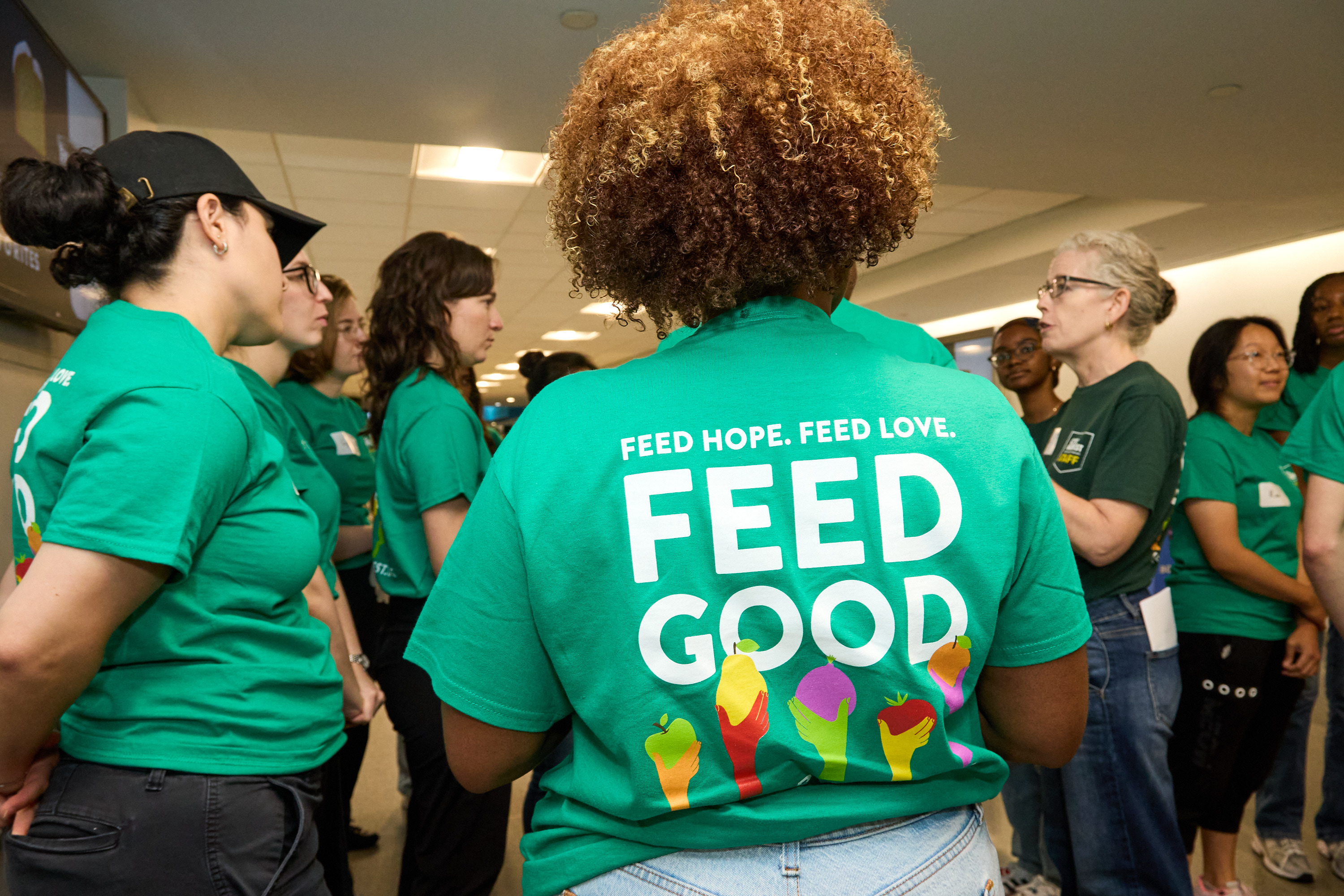
Me outside the Javits Center on Tuesday to volunteer with City Harvest
I’m smiling because this week I completed my first volunteer shift with City Harvest. With a group of 200 volunteers and staff, we rescued over 75,500 pounds of food after the close of the Fancy Food Show on Tuesday evening at the Javits Center. This food will be distributed to food pantries, soup kitchens, and community organizations all over the city to people who need our support. This work is deeply personal to me. I grew up with food insecurity (meaning we worried about where our next meal would come from) and I was a free lunch kid.
The hunger issue in NYC is dire. 50% of working-age households in NYC are struggling to make ends meet. 1.4 million New Yorkers are food insecure. That’s nearly 1:6 New Yorkers, including 1:4 children.
This work is also personal to me because of my passion to protect our natural world. On Tuesday, we also saved all of this food and packaging from ending up in the trash. 30% — 40% of the food in the U.S. (108 billion pounds!) is wasted every year, to say nothing of all the resources it took to create that food and packaging. This costs Americans $473 billion every year. Nearly 1/4 of all landfill waste in the U.S. is food, and it is one of the largest producers of methane gas, which is causing climate change, weather-related disasters, and hunger.
Given the scale of this challenge, I’m excited about doing more work with City Harvest and helping more New Yorkers. I hope you’ll join me — there are so many ways to be a volunteer! Visit https://www.cityharvest.org/volunteer/ to learn more.
Below are some pictures from the Tuesday event! All photos by City Harvest.
The Stories We Eat: Narratives to Shape Stakeholder Behavior and Policy for Sustainable Food Futures
Narrative Power: Using Digital Media to Convey the Voice of Future Generations and Nature in Sustainability Storytelling
From Self-Interest to Shared Benefit: How to Adapt Finland’s Exemplar of Public Trust Amidst Power Asymmetries in U.S. Businesses
I’m so grateful for this opportunity to learn and engage with these incredible people in one of the most sustainable communities in the world. I’m most looking forward to spending time with my professor, mentor, and dear friend R. Edward Freeman, who is one of my heroes and the founder of the seminar. As the originator of stakeholder theory that transformed business ethics, his work has fundamentally changed how businesses and business leaders around the world operate. He’s the reason I went to Darden and he changed how I see the world and my role in it. I’m honored to have had his support and encouragement for all these years.
It’s going to be an incredible summer of learning. I’m excited to experience all of it and to see where it leads! Nähdään pian, Finland!
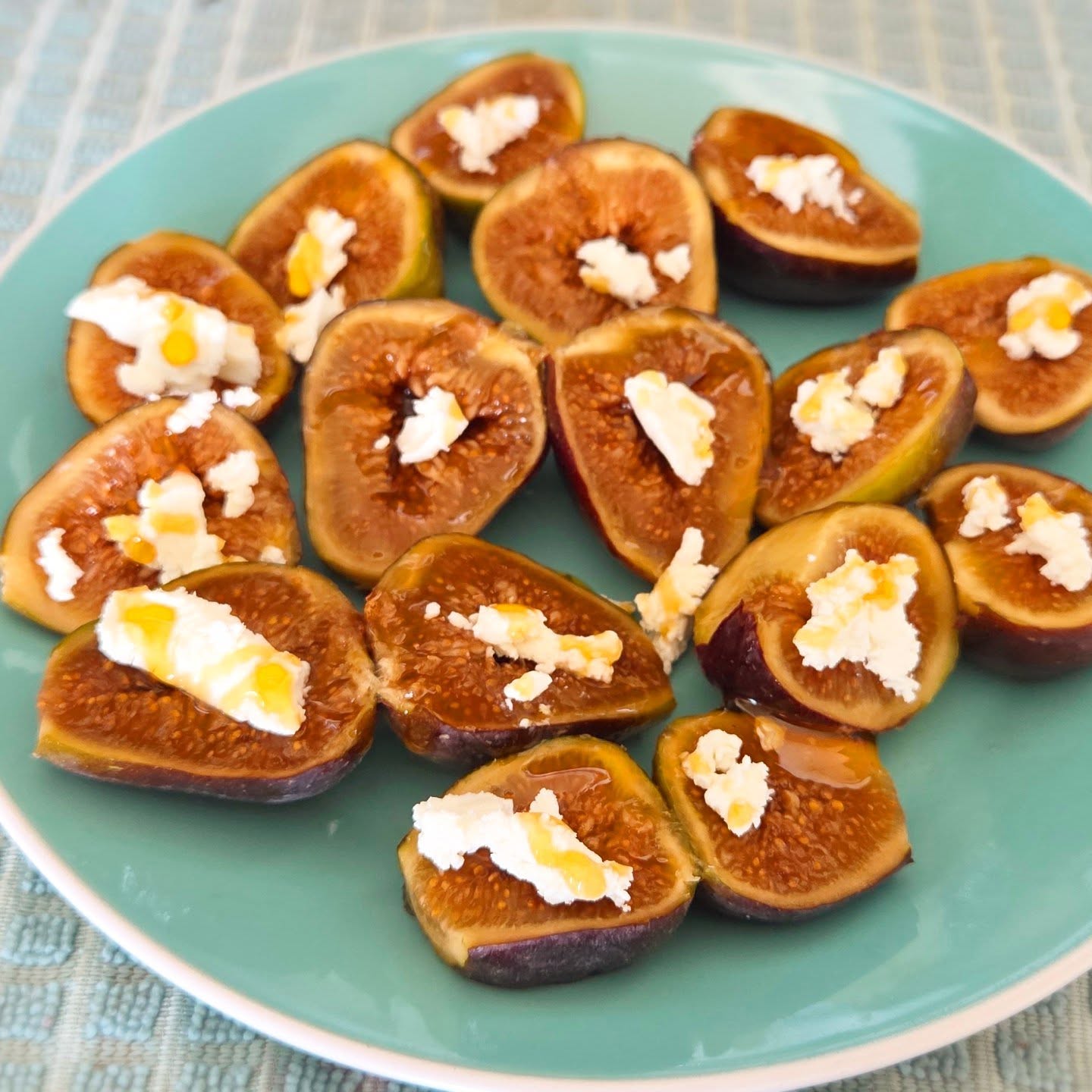
It’s fresh fig season! I picked up these beauties at my neighborhood produce market. My favorite way to have them is sliced with a dab of goat cheese and drizzled with honey. (I’m so lucky to have delicious local honey from a beekeeper friend.)
As I prepared my plate, I felt a twinge of sadness that fresh fig season is so short – only a few weeks. Yes, you can dry them or turn them into jam but nothing beats fresh figs.
Loving every bite, I reminded myself that maybe the short window for anything – produce, cherry blossoms, and even the blip of a long life on the scale of deep time – is exactly the point. Savor what we have while we have it so that we always have the memory to enjoy.
We often look to the skies, the oceans, or technological innovations when discussing climate change solutions. But what if a powerful tool lies right beneath our feet? Healthy, living soil is an unsung hero in the fight against climate change and a cornerstone of a truly healthier planet.
To educate myself on soil health, I watched the documentaries Kiss the Ground and Common Ground on Amazon Prime Video. After watching them, I immediately visited their resources website filled with free ebooks and guides that can help all of us advocate for this climate solution and immediately take action in our everyday lives.
For too long, we’ve treated soil like dirt – an inert medium to hold plants up. In reality, healthy soil is a complex, dynamic ecosystem teeming with billions of microbes, fungi, insects, and worms. This underground world plays a crucial role in regulating our climate and supporting life on Earth.
How Does Soil Fight Climate Change? The Carbon Connection
The key lies in carbon sequestration. Here’s how it works:
Photosynthesis: Plants pull carbon dioxide (CO2), a major greenhouse gas, from the atmosphere.
Carbon Transfer: Through photosynthesis, plants convert this carbon into sugars to fuel their growth. Some of this carbon builds their leaves and stems, but a significant amount is channeled down into their roots.
Soil Storage: Plants release carbon compounds through their roots (exudates) to feed soil microbes. When plants and microbes die and decompose, this carbon becomes part of soil organic matter (SOM) – a complex, dark material rich in carbon.
Locking it Away: In healthy, undisturbed soil with a thriving microbial community, this carbon can remain stable and locked away for decades, centuries, or even millennia, effectively removing it from the atmosphere where it would otherwise trap heat.
The Problem with Degraded Soil
Unfortunately, many modern agricultural and land management practices have degraded our soils worldwide. Practices like intensive tilling, overuse of synthetic fertilizers and pesticides, deforestation, and leaving soil bare disrupt the soil structure, kill beneficial microbes, and lead to erosion.
When soil is degraded:
It loses its ability to store carbon. Tilling, for instance, exposes SOM to oxygen, causing microbes to rapidly consume it and release the stored carbon back into the atmosphere as CO2.
It can release other potent greenhouse gases like nitrous oxide (N2O) due to synthetic nitrogen fertilizer overuse.
Its capacity to absorb and hold water diminishes, increasing runoff, erosion, and vulnerability to both droughts and floods.
Beyond Carbon: The Ripple Effects of Healthy Soil
Improving soil health isn’t just about carbon. It creates a cascade of benefits for a healthier planet:
Improved Water Management: Healthy soil with good structure absorbs more water, reducing runoff, preventing erosion, and recharging groundwater. This makes landscapes more resilient to both floods and droughts.
Enhanced Biodiversity: Thriving soil ecosystems support a vast array of life, from microscopic bacteria and fungi to earthworms and insects, forming the base of terrestrial food webs.
Reduced Pollution: Healthy soil filters water and can break down certain pollutants. By reducing the need for synthetic fertilizers and pesticides, soil-friendly practices also decrease chemical runoff into waterways.
Increased Food Security & Nutrition: Healthy soils produce more resilient and nutrient-dense crops, contributing to a more stable and nutritious food supply.
Reduced Need for Inputs: Soils rich in organic matter and microbial life naturally provide more nutrients to plants, lessening the dependence on synthetic fertilizers, the production of which is energy-intensive and contributes to greenhouse gas emissions.
Reduced Erosion: Strong soil structure, held together by roots and microbial glues, resists being washed or blown away, preserving our precious topsoil.
Cleaner Air: By reducing wind erosion, healthy soils contribute to cleaner air with less dust and particulate matter.
How Can We Improve Soil Health?
The good news is that we know how to regenerate soil health. These key practices, often grouped under the umbrella of regenerative agriculture or soil health management systems, have proven benefits for soil health:
Minimize Soil Disturbance: Reducing or eliminating tillage (plowing) keeps the soil structure intact, protects soil organisms, and prevents carbon release.
Keep the Soil Covered: Planting cover crops or leaving crop residue on the surface protects the soil from erosion, suppresses weeds, and adds organic matter.
Increase Plant Diversity: Rotating diverse crops and integrating cover crops feeds different types of soil microbes and improves soil structure.
Keep Living Roots in the Ground: Continuous plant cover ensures the soil microbiome is consistently fed via root exudates.
Integrate Livestock (Managed Grazing): Well-managed grazing can stimulate plant growth, add manure (nutrients and organic matter), and improve soil health.
Reduce/Eliminate Synthetic Inputs: Minimizing chemical fertilizers and pesticides allows the natural soil ecosystem to thrive.
Composting: Adding compost to gardens and farms directly increases soil organic matter.
What Can You Do?
Support Regenerative Farmers: Look for food grown using soil-healthy practices. Ask questions at farmers’ markets.
Compost: Turn your food scraps and yard waste into valuable soil amendments for your garden or community garden.
Garden Smarter: Practice no-dig gardening, use mulch, plant cover crops, and avoid synthetic chemicals.
Advocate: Support policies that incentivize farmers to adopt soil-healthy practices.
Learn & Share: Learn more and spread the word about the critical importance of soil health. Watching Kiss the Ground and Common Ground on Amazon Prime Video, and visiting their resources website are great ways to start!
Conclusion
Healing our planet requires looking down as much as we look up. By focusing on regenerating the health of our soils, we can actively draw down atmospheric carbon, enhance water cycles, boost biodiversity, improve food security, and build resilience to climate extremes. Healthy soil is a powerful, natural climate solution hiding in plain sight – it’s time we recognized its potential and started digging deep for a healthier future.
“The best thing you can do for your health? Hang onto your sense of fun, Christa. Especially in your work. It’s important.” This is what my wonderful general practitioner, Dr. Peter Lotfi, said to me at the end of my annual physical this week.
I’m feeling great though I still get some anxiety going to the doctor. I breathed a huge sigh of relief when all my bloodwork and tests came back with perfect results.
I’m always asking Dr. Lotfi what I can do to safeguard my health after going through active cancer treatment and now receiving maintenance treatment to prevent cancer recurrence. While we talked about diet, exercise, stress reduction, and the different medications I take, his biggest advice was to never lose my sense of fun.
We talked about how difficult the world is, especially in our country, with the current political climate. In the midst of all that, he doesn’t want me to lose my sense of joy, which is a way to preserve mental and physical health that doesn’t cost anything and has only good side effects.
In that spirit, last night one of my best friends, Ashley, and I got dressed up and went to a cocktail party on the 87th floor of a building on Wall Street. It was for Silhouette Eyewear, a sustainable eyewear brand that manufactures glasses from biowaste. I was invited because I write about sustainability and Ashley was happy to join me. The glasses are colorful, extremely lightweight, comfortable, flexible, and durable — all the benefits of plastic without using fossil fuel. (I’m sporting a cute pink pair that I love in the first photo.)
After the party, we wandered around the Financial District, reveling in all of the hidden art deco that people pass by every day. The fun door with mirrors in the photo below is an example. Ashley and I are tour guides, historians, and writers who love this beautiful town.
To end the night, we found a new favorite pizza place called Siena Pizza & Cannoli on Rector Street, named after that gorgeous Italian city in Tuscany.
Tucking into our delicious pizza slices, I said a silent thank you to Dr. Lotfi. A sense of fun in everything we do and everywhere we go really does make life better.
It was a happy Easter Sunday with friends, food, books, Central Park, and supporting local NYC businesses. I spent it with my friends, Amy and Charlotte, and then took a winding walk through Manhattan in the glorious warm sunshine. It was a day we’d been planning for almost 2 months!
Easter was my favorite holiday as a kid and with Phinny. We’d always go to the Easter Parade on Fifth Avenue, the oldest in the world, started in the 1870s. We loved to see everyone dressed up and happy, and everyone always fawned over Phinny (obviously), and he loved it (obviously.) To keep him close to me while I was out and about, I wore the forget-me-not locket I have with a lock of his fur inside and in my purse, I had the stuffy replica of Phineas that my friend, Liz, had made for me when Phinny passed away.
At long last, I made it to Golden Diner – renowned for its worth-the-wait, best-in-NYC, honey maple butter pancakes finished with lemon zest. We got there at about 9:15am. The line was already around the corner. They opened at 10am and by then the line was all the way down the block. It’s situated in the Two Bridges neighborhood of Manhattan, under the Manhattan Bridge. While that doesn’t sound appealing, and yes, it is loud when a train roars by, the grittiness somehow adds something to their already spectacular food.
Just after 10am, the wait was already an hour to get in, but they put our names down and said they’d send us a text when our table was ready. They did and the food was every bit as good as I’d heard. A little tip from Charlotte and Amy that really works – just get an order of pancakes for the table – and then get one of their other great items. We also got a Caesar salad for the table – it’s vegan and the best I’ve ever had. Amy and I got breakfast burritos. Charlotte got the Chinatown Egg and Cheese. All of it delicious, and reasonably priced. Plus, we got to sit outside in the sunshine.
While waiting for our table, we went around the corner to Dreamers Coffee Shop, a cozy, dog-friendly spot with a pinboard where customers can leave a message on a card for others to see. It was no surprise that Phinny’s spirit showed up at Dreamers – the first card I saw on the pin board while waiting in line for my coffee said “If you have a dachshund, please send me a pic” – with a cell phone number. (I’ve sent over a photo of Phinny, so I’ll let you know when I hear back.) Later that day, we also strolled by a gift shop loaded with dachshund items. He is a very loud ghost.
We wound our way through the Lower East Side to P&T Knitwear, a family-owned and operated indie bookstore with an incredible history worthy of its own post which I’ll write later this week. As Amy wisely says, they’re known for showcasing books that are good, not just what’s hot, which is a rare and wonderful thing in publishing.
We also stopped into Sweet Pickle Books, another indie bookshop which I’d never heard of. And yes, one day a week you really can trade in your used books for a jar of their homemade pickles. The store was bustling with merch, new and used books, and lots of shoppers.
Heading west, we stopped into Goods for the Study, a stationary and writing store owned by McNally Jackson, one of my favorite bookstores. (And Charlotte happened to be wearing their sweatshirt – an unplanned coincidence!) Amy and Charlotte bought me a tiny ceramic kitty that now sits on my desk. We all have one now. So, every time I look at it, I think “Amy’s writing”, “Charlotte’s editing film”, and “okay, I’m writing and editing, too.” Writing and editing are lovely jobs, and they can be lonely so it helps to know that so many others are in their own spaces doing this work, too.
After a walk through the garden district, which really does feel cooler and with cleaner air – thank you, plants! – Amy and Charlotte headed home and I continued on to the American Museum of Natural History and Central Park. Every spring, Phinny, and our friends Ashley and Cricket, would have a bagel and coffee picnic under the blooming cherry blossoms along the Reservoir in Central Park that is near our old upper west side apartment. I was worried we’d missed them with how busy the world is.
I went past the museum, thinking of how many times Phinny and I had wandered around those grounds over the year. The tulips and trees were putting on a show. The Rose Center for Earth and Space has the full name “The Frederick Phineas and Sandra Priest Rose Center for Earth and Space”. This always makes me laugh because it has his name, my mom’s name, Sandra, and my middle name Rose.
As I entered the park, I was flooded with memories of Phinny and friends. All the walks, talks, and afternoons spent together there over many years. I have a hilarious photo of Phinny seated in front of a live jazz trio that was playing there a number of years ago. He seemed to think all the spectators were applauding for him. Of course, yesterday that same exact trio was playing in the park. I can’t help but think he had a hand in that, too.
Then it was on to the cherry blossoms he loved best, the ones along the west side of the reservoir, the ones that are the backdrop of Phinny’s portrait that my friends, Jane, Vince, Ken, Tom, Bobby, Joanne, and Joe had made for me, the ones that my friend, Ashley, used as the setting for the watercolor she made for me of my boy and his happy life over the rainbow bridge, the ones where I always imagine him now in the Great Hereafter.
Walking toward them, I kept saying to Phinny, “I’m so sorry if I missed them, Buddy, and if I broke our tradition.” He kept telling me not to worry. I thought he just didn’t want me to feel sad or that I’d disappointed him.
I teared up when I went around the bend and realized what happened. While a tiny fraction of the flowers on the lower branches had opened, almost all of them were still in the bud stage and hadn’t yet bloomed into that glorious archway. I messaged Ashley immediately and we’re hoping to go next weekend if the weather is okay. We haven’t missed them! Our tradition continues.
Walking back to the subway to go home, I looked across the lawn and down the hill at 86th Street. The scene reminded me of a modern version of the Georges Seurat painting, “A Sunday Afternoon on the Island of La Grande Jatte.” There were Easter egg hunts, dogs, picnics, music, and laughter. It felt like collectively New York was taking a deep breath, finally.
I have so many memories of that hill, the daffodils nearby where Phineas loved to put his formidable snoot every spring. His little trot along that path hundreds of times over the years. Meeting all our friends in all kinds of weather. And every day, it’s the setting for the dreams and memories of so many people from all walks of life.
I thought about how life in New York often feels like a dreamy movie with twists and turns and moments of poignancy and memory in-between. The Muppet Movie finale began to play through my mind, “Life’s like a movie, write your own ending, keep believing, keep pretending, we’ve done just what we’ve set out to do, thanks to the lovers, the dreamers, and you.” I don’t know yet in this next chapter of my life what ending I’m writing. I do know that I still believe in goodness and light and love. That I’m setting out to do something beautiful and joyful and helpful for my New York neighbors. I know I’m in the right place, and for now, that is enough to know.
Image created by Christa Avampato with Canva Magic Media
When you think about ways to improve the health of human babies, you may not immediately think of helping bats stay healthy. You should. The journal Science published a shocking paper linking a rise in human infant mortality to a declining bat population.
Plagued by an outbreak of the deadly white-nose syndrome, a fungal disease that kills bats, North American bat populations are dropping. This means there are fewer bats to eat insects that infest crops. That’s caused farmers to use more chemical insecticide. This insecticide leaches into crops, land, and water. This toxin has increased infant mortality. It’s also lowered crop yields, decreasing farmers’ crop revenue and the availability of fresh fruits and vegetables.
This is just the latest study to show how the health of ecosystems is directly linked to human health and the economy. As much as I’d love for municipalities and companies to care about the planet because we depend on nature for our survival, as climate communicators and nature advocates we often have to make the economic business case to protect the environment. Studies like the one in Science linking bats and infant mortality provide a solid example of how to quantify the cost and value of biodiversity and ecosystem health.
I often hear the media vilify animals like bats without recognizing the vital role they play in our lives and in nature. If we can’t get people to care about bats because they are sentient beings and a part of nature, maybe now we can get people to care about them because they affect babies, the food supply, and our economy. If that’s the argument that works, it’s the argument I’ll make, backed up with research-based science and facts.
Static electricity may not top your list of things you’re grateful for this holiday season. It’s definitely on the nice list because the food we eat and enjoy wouldn’t be possible without it. Here’s a wonder of nature that changed how I see food.
Simply put: Plants grounded in soil have a negative charge. Bees have a positive charge. When a bee lands on a flower, the pollen jumps onto the bee due to the attraction of the opposite charges. (This is the same electricity transfer that happens when we walk across a carpet and then touch something that gives us a little shock.) When the bee flies away with the pollen, the flower now has a neutral charge. When a second bee arrives, that bee skips the neutrally charged flower knowing all the pollen has been taken by the first bee. This means the second bee doesn’t waste their time, energy, and resources on that flower, and moves on. Over time, that flower will build up a positive charge and pollen again. Once that happens, another bee will again be attracted to the flower and the cycle repeats. This is how plants are pollinated and serve as the base of our food system.
Imagine if we could embrace that communication that occurs between bees and flowers. How much time, energy, and resources have we wasted in relationships, jobs, or environments that we knew weren’t right for us? Rather than embracing the wisdom of a bee, we work so hard to try to make it work and it falls apart. Many times, it’s no one’s fault. It just wasn’t a match. It’s better to just move on and find the places where we can experience equal and generous reciprocity — a place where we can offer our gifts and receive the gifts of others.
I’ve spent a lot of time thinking about this wonder of nature, envisioning how this principle could transform my life and our shared world. How might we align talents and gifts, matching needs and resources to create sustainable change? How might we build systems that appreciate, value, and utilize everyone’s contributions so that everyone has what they need? Answering these questions is the work that lies ahead for all of us, and nature is our wise and successful guide.
Today is Giving Tuesday, a day during the holiday season that raises awareness for giving to nonprofit organizations. I’ve worked professionally in the nonprofit space for many years in different capacities including fundraising, product development and product management, program direction, strategy, operations, and communications. These have been some of my most gratifying career experiences. I’ve also been fortunate to be an active volunteer and donor.
If you want to make donations this holiday season, and / or get more involved with nonprofit organizations, here is a list of the ones I support as a donor and volunteer:
Animals and Pets Muddy Paws Rescue I’m a foster parent for dogs through Muddy Paws Rescue. The support, guidance, advice, and services they provide to dogs, fosters, and adopters is unparalleled. Through a partnership with Tito’s Vodka, donations today will be matched.
Animal Care Centers of NYC (NYCACC) This is our city shelter system for animals who are homeless. They don’t turn away any animals and work closely with groups such as Muddy Paws to help these animals find forever homes. With the help of the Mayor’s Office of Animal Welfare, they also provide support for people who are struggling financially to take care of their pets with food assistance and medical care so that people can keep their beloved pets. With the help of the pet food company, Ollie, I’ve arranged to have an entire pallet of Ollie treats shipped to NYCACC to support the shelter pups.
White Whiskers Senior Dog Sanctuary I learned about this organization when I wanted to make a gift to a senior dog organization in honor of my soul dog, Phineas, who passed away in January. I love their mission to find loving homes for sweet senior pups.
15/10 Foundation This organization is doing the tough work of providing funds for medical care for pets to help them find forever homes. This is the same group that runs We Rate Dogs, famous for their joyful posts on social media that make everyone’s day. I adore them. I became a monthly donor as a way to thank all the people who have supported my Emerson Page novels which feature Friday, Emerson’s service dog who is also a rescue!
Climate and Environment Prospect Park Alliance I moved to Brooklyn in June 2023, a short 15-minute walk to Prospect Park. I love having that nature sanctuary as my backyard and I’m happy to support them. Today, your donations will be doubled.
National Parks Association The U.S. is so fortunate to have so much protected public land in our national parks. In 2025, they will need our help more than ever as we navigate a new federal administration. Today, all donations will be tripled!
Arbor Day Foundation Trees provide us with so many gifts – clean air, water filtration, food, and storm protection to name just a few! A gift to the Arbor Day Foundation makes sure our trees receive the protection and care they deserve.
The Climate Reality Project Since 2006, Vice President Al Gore has trained over 45,000 climate leaders and change makers in all 50 states and 190 countries, me included. (I was trained in NYC in April 2024.) Today, all gifts will be matched.
Humanitarian and Health World Central Kitchen Hands-down, World Central Kitchen founded by Chef Jose Andres is the premiere organization for humanitarian relief. With a small staff, mostly employing local people on the ground in areas they serve, they feed anyone and everyone in need. I’m a proud monthly donor.
Coalition for the Homeless This year I provided a donation to support their back-to-school program that provides new backpacks filled with new school supplies for New York City children who are homeless. They do so much to help our most vulnerable neighbors.
Fisher House Foundation Most of the members of my small family have served in the U.S. military. As a Christmas gift every year for my uncle who served in Vietnam, I donate to Fisher House. With 98 locations, they have housed 500,000 military families for free when a loved one is in the hospital.
Education Brooklyn Public Library I use my local library all the time and our city is made better for all of the services our library systems provide to everyone. All donations to Brooklyn Public Library will be matched today!
Letters to a Pre-Scientist (LPS) I’m now in my second year of being a STEM pen pal for students in grades 5 through 10 in low-income communities. LPS pairs students with a worldwide network of STEM professionals for a yearlong pen pal program during science class. We help broaden students’ awareness of what STEM professionals look like and do at work and inspire all students to explore a future in STEM.
Thanksgiving is 2 weeks from today and menu planning is in full swing. There are strategies you can put in place right now to save money and reduce food waste. These strategies will protect your finances and the natural world. Food prices today are 28% higher than they were in 2019 because of corporate price gouging, and the higher production costs and lower available supply caused by world events like the war in Ukraine.
~316 million pounds of groceries worth $556 million will be wasted on Thanksgiving Day alone in 2024. If saved, this could provide 5 meals for each one of the 47.4 million Americanswho are hungry.
It took 105 billion gallons of water to make all this wasted food — the equivalent of every American taking 18 showers
Over half of the food wasted on Thanksgiving comes from two items — turkey and milk. This is equivalent to 8.2 million whole turkeys.
The greenhouse gas emissions from Thanksgiving food waste are 798,568 metric tons — equivalent to driving 190,000 gas-powered cars for an entire year.
When the Thanksgiving food waste decomposes in landfills, it will release 5,000 metric tons of methane gas (a potent and poisonous greenhouse gas)— equivalent to the electricity used by 26,000 homes for an entire year.
Here are 5 ways you can reduce food waste, saving you money and protecting the health of the planet:
1.) Ask about your guests’ food preferences now Make sure you know everyone’s dietary restrictions and allergies ahead of time. Build your menu around them so you don’t make any dishes that people can’t eat.
2.) Make everyone’s favorites While it’s always fun to try new recipes, when prepping for large group meals stick to everyone’s favorites that are likely to be eaten and likely to be taken home by guests as leftovers. Ask them for their favorite recipes or ask them to bring their favorite dish. Share the full menu ahead of time so everyone knows what to expect and so you can catch any dietary restrictions or allergies before the big day.
3.) Use the free “Save the Food” Guestimator to make the right amount of food This guestimator helps you estimate how much food you need to make for everyone at your table to be full and happy. It’s free to use, and customizable by number of guests, appetite level of each guest, how many leftover meals you want to have when dinner is done, and the food type (classic Thanksgiving dinner, vegetarian, or a bit of each). It accounts for the main dishes, sides, and dessert. Savethefood has additional great tools to reduce food waste including storage info for different foods, meal planning and prepping, and recipes.
4.) Plan to give some leftovers to all of your guests to take home Have lots of containers on-hand so everyone can take some leftovers home to enjoy or ask guests to bring containers with them. You could also ask them in advance which types of leftovers they’d like to take and how much they want to build into your planning with the guestimator tool above.
5.) Clean out your fridge and freezer Your fridge and freezer are great tools to save food waste and have food to enjoy in the days, weeks, and even months ahead! Frozen meals, when properly stored (see Savethefood’s storage tool for more info on that!), can last for months and will help you have a nutritious meal in minutes during the busy holiday season.
All of these strategies and tools can be used for any food gathering you’re having at any time of year and will help you waste less food (and less money) all year long. Happy holidays!