creativity

From Peels to Pavers: How Food Waste Can Build Our Cities

Photo by Teo Zac on Unsplash

When we think about building sustainable cities, our focus often turns to what we should eliminate such as single-use plastics and gas-fueled appliances. What if the future of urban resilience isn’t only about reducing what we consume, but actively reimagining what we discard?

Right now, food waste represents one of the largest systemic challenges in our urban ecosystems. When organic scraps end up in landfills, they decompose anaerobically and release methane, a greenhouse gas significantly more potent than carbon dioxide. Then there’s also the matter of all the resources such as land, water, and labor that were used to create the wasted food. At the same time, our construction sector relies heavily on carbon-intensive, extractive materials like traditional concrete.

A team of designers and researchers from my undergrad alma mater, the University of Pennsylvania, decided to connect food waste with the needs of construction industry into a single, elegant solution. Their project asks a radical question: What if yesterdayโ€™s citrus peels and coffee grounds could become building materials?

The Science of Circular Construction

The project, emerging from Penn’s Weitzman School of Design, transforms discarded organic waste into durable, biodegradable building pavers.

Here is how this circular process works:

  • Harnessing Natural Binders: Instead of relying on energy-intensive synthetic polymers or Portland cement, the team extracts natural binders from citrus rinds and other fruit scraps. Pectin and cellulose fibers create structural bonds naturally when processed correctly.
  • Low-Carbon Fabrication: The mixture of shredded organic waste and natural binders cures with minimal heat and pressure compared to standard concrete manufacturing, dramatically slashing embedded carbon emissions.
  • Load-Bearing Utility: The resulting pavers are strong enough for outdoor walking paths, patio spaces, and urban gardens, providing a functional alternative to conventional masonry.
  • Return to the Soil: Unlike concreteโ€”which remains rubble foreverโ€”these biomaterial pavers can eventually degrade naturally at the end of their lifecycle, returning nutrients back to the earth without shedding toxic microplastics or chemicals.

Rethinking Waste as a Resource Stream

What makes this project so compelling for community agency is its local potential. We don’t need exotic, imported materials to create sustainable infrastructure. Every neighborhood already produces tons of organic matter every single day through local coffee shops, juice bars, grocery stores, and home kitchens.

By viewing our urban waste streams as raw material pipelines, we can decentralize manufacturing, reduce municipal hauling costs, and create localized economies that turn kitchen trash into civic assets.

The Togetherhood Takeaway

Resilience means closing the loops in our daily lives and recognizing the hidden structural value in the things we throw away.

  • Audit Your Household Waste Stream: Look at your kitchen trash this week. How much of what you throw away is organic matter that could be composted or repurposed? Supporting municipal compost programs keeps organic material out of landfills where it causes the most damage.
  • Champion Circular Procurement: In your workplace or local community projects, advocate for bio-based and circular materials. Whether choosing reclaimed wood, mushroom packaging, or bio-composite tiles, prioritize products designed with their end-of-life in mind.
  • Support Student & University Innovation: Breakthroughs in urban sustainability often start in university design labs. Follow and amplify the work of interdisciplinary research hubs working on biomaterials, circular textiles, and regenerative architecture.

The materials to build a greener world are already in our handsโ€”and in our compost bins. When we learn to design with nature rather than against it, our cities become cleaner and healthier.

creativity

๐ŸŽ40,000 Pounds of Produce in 1 Morning. This is How We Fight Food Waste AND Food Insecurity in NYC

Our team of volunteers at last week’s City Harvest repack event

The Repack: What Happens When a Community Shows Up

Last week, I was deeply moved by the incredible generosity and hard work of the volunteers at City Harvest. We were there because of the enormous, urgent need created by current economic pressures and the fallout of the government shutdown, which is impacting vital food assistance programs for New Yorkers.

Together, we accomplished something phenomenal:

  • We helped repack 40,000 pounds of bulk fresh produce into 7,710 household-sized bagsโ€”the second-highest number of bags ever packed at the City Harvest Food Rescue Center since 2022!
  • This food is critical right now as City Harvest ramps up to serve neighborhoods with the highest populations of SNAP recipients. They expect to distribute over 1 million more pounds of food this November than they did last November.

We showed up and showed out, and it was a joy to be part of this community effort, even though I wish it wasn’t necessary.


The NYC Food Insecurity Crisis is Real

The need for this emergency support is stark, especially as the government shutdown has delayed or complicated critical aid. Our fellow workers, friends, and neighbors are struggling to put food on the table.

  • In New York City, approximately 1.73 million residents receive SNAP benefits. That’s 1 in 5 New Yorkers.
  • In Brooklyn alone (where I live and where City Harvest has its headquarters), that number is over 700,000. That’s 1 in 4 Brooklyn residents.

This work with City Harvest is personal to me because I grew up food insecure and my family received government-backed public assistance including WIC funding and at my school I was part of the free lunch program. As an adult who climbed out of that situation though education, hard work, and the generosity of these supportive government programs, giving back means a lot to me.


Why City Harvest is a Game-Changer (A Two-Part Solution)

City Harvest doesn’t just feed people; it’s a massive champion for the environment, tackling the staggering problem of food waste head-on.

From City Harvest

How You Can Be Part of the Solution

The work we did last week is ongoing. Join the City Harvest family!

This work isn’t just about charity; it’s about Togetherhood. Let’s continue to show up for our community and ensure that healthy, quality food goes to tables, not landfills.

Click to volunteer, donate, and advocate. I hope to see you at a future City Harvest event!

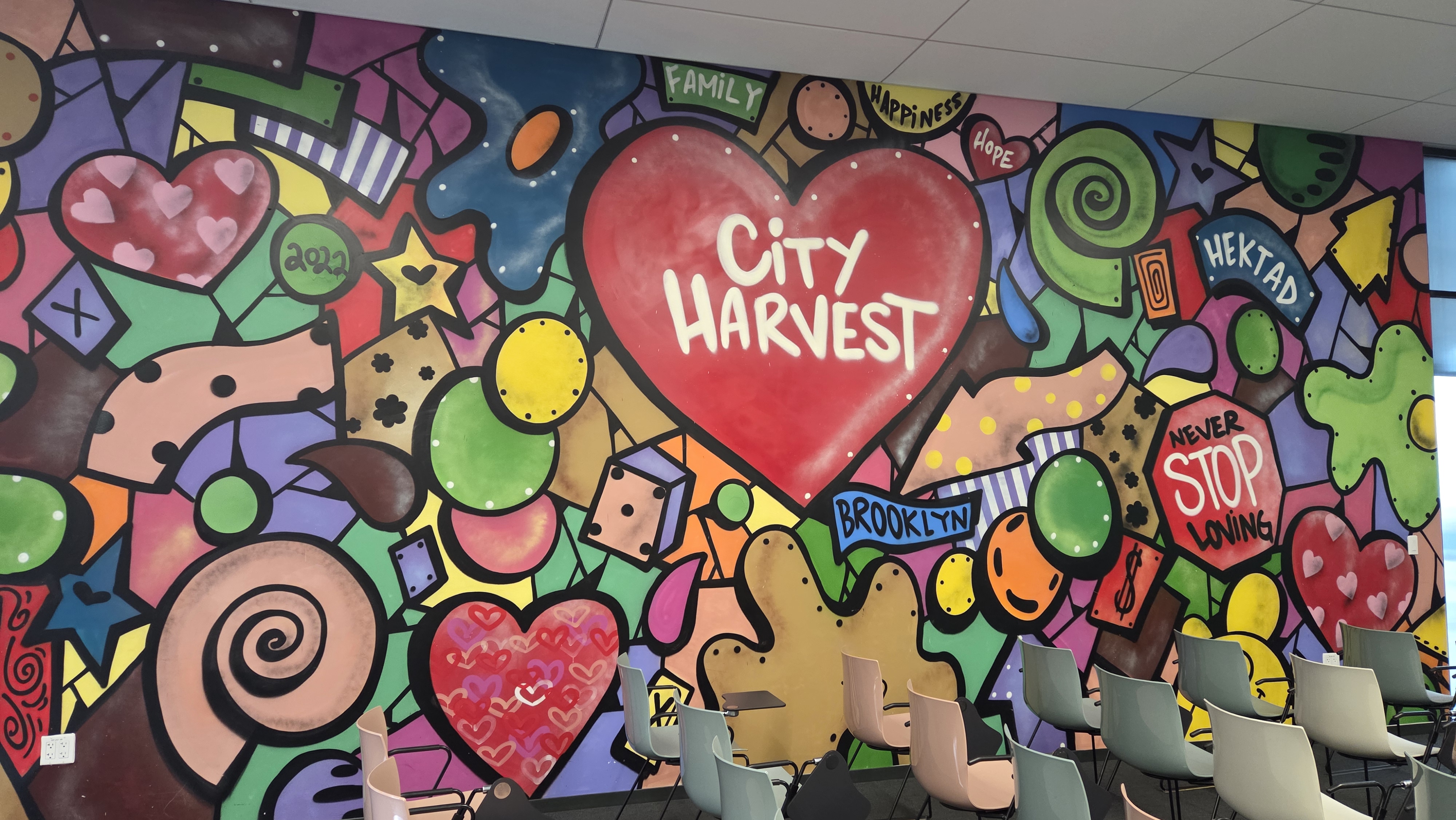
Mural at the City Harvest HQ in Brooklyn, NYC
creativity

My dual goals to end food insecurity and food waste

Photo by Ella Olsson on Unsplash

Today I started a new research project on food waste with the hope of starting an entrepreneurial venture in this space. In the U.S., 16 billion pounds of food from food retailers alone end up in landfills every year while 47.4 million Americans (13.5% of households) face food insecurity every day. 1/3 of waste in U.S. landfills is food and food waste causes 6% – 8% of global greenhouse gas emissions driving climate change. We have plenty of food to feed everyone. It’s not in the right places at the right time so the waste is a logistics and operations issue.

Utilizing the methodology from my University of Cambridge / Cambridge Institute for Sustainability Leadership (CISL) dissertation, I’m conducting interviews with food retailers, rescue organizations, distribution organizations, institutional food providers, and policy makers to find an unmet need in the market that would help prevent food waste. Today I had my first interview with the largest food rescue organization in NYC. It went very well. I’m excited to continue these conversations and work on this idea.

Solving this dual challenge of food waste and food insecurity is important to me personally as well as from an environmental and business perspective. I grew up in a home that was food insecure and we often didn’t have enough food to eat. We were lucky to have the free lunch program at school. So many are not fortunate enough to have that kind of safety net. My goal with this business is to serve them and protect the planet. If you know someone or an organization I can talk to, I’d love any referrals.