We think spring begins when the first flower blooms. But biologically, it starts right now—in the freezing cold.
If you’ve spent this winter in New York City like me, you’ve likely been dreaming of the arrival of spring during the freezing, snowy, and gray days. You also probably shook your fists at the sky when the groundhogs saw their shadow on February 2nd.
“When will this end?” you thought.
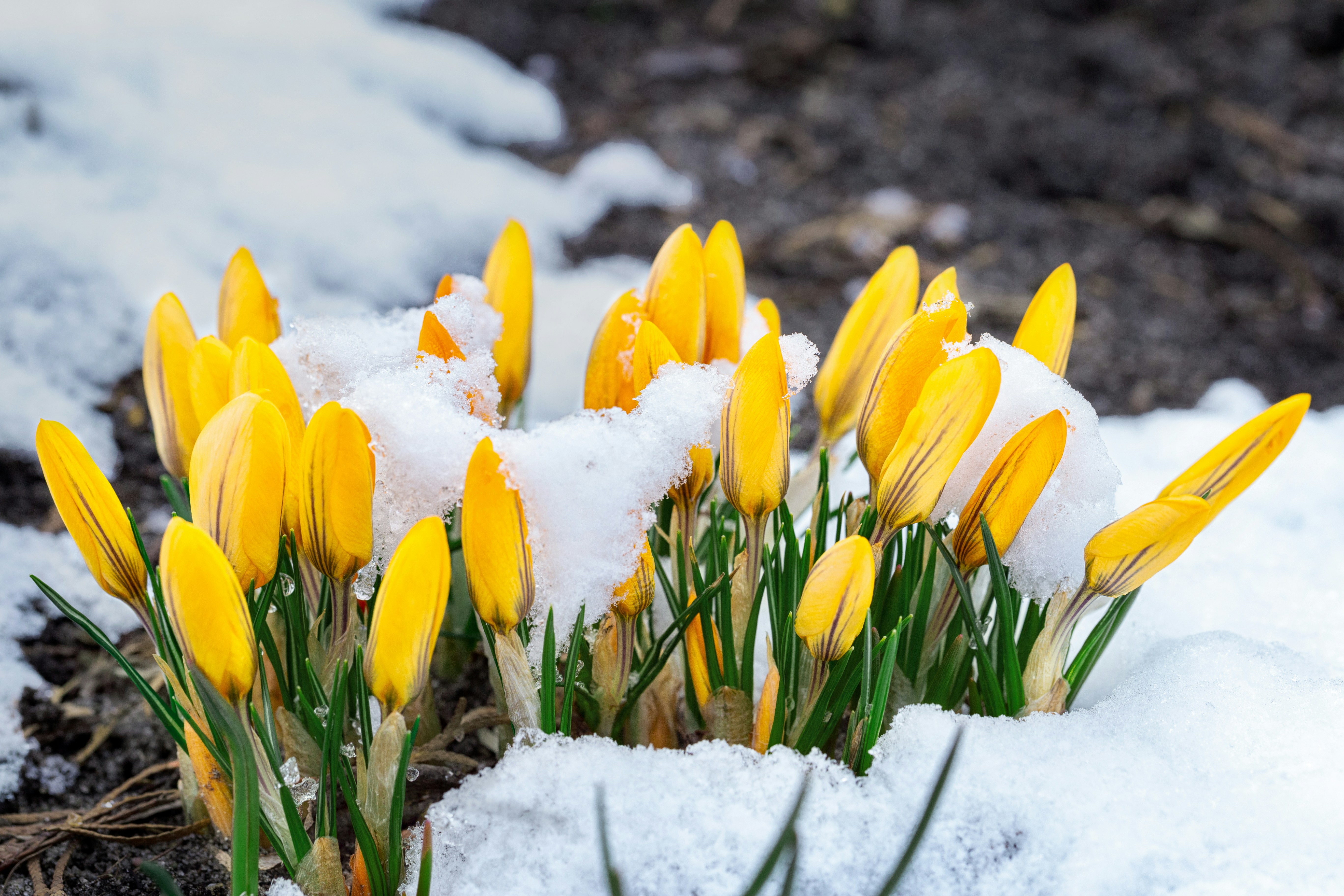
But if you ask a sugar maple or a wildflower seed, they will tell you that spring started while the snow was falling.
We tend to measure the season by what we can see—the green bud, the crocus, the robin. But nature does her most important preparation underground, long before the visuals arrive. In fact, she uses the harshness of late winter to fuel the growth of spring. Without the present cold, there is no future warmth—literally and figuratively, for nature and for us.
Here is how nature is prepping for spring right now in this last month of winter, and what we can learn from her and translate into our own lives.
1. The Cold Is the Key (Stratification)
We often complain about the bitter cold, gray skies, and damp days of February, wishing them away. But for many native plants, this weather in this season is non-negotiable. It’s the foundation of their flourishing future.
This process is called stratification. Seeds like milkweed, coneflower, and lavender have tough outer shells that keep them dormant. They literally cannot grow until they have gone through a period of intense cold and moisture. The freeze acts as a signal, softening the shell and telling the embryo inside that it is safe to wake up.
Without the hard winter, there is no spring bloom. The obstacle is also the key that turns the lock.
2. Use the Pressure and Change (Sap Flow)
Right now, maple syrup farmers are busy. Why? Because the sap is running.
But sap doesn’t run just because it gets warm. It runs because of the fluctuation. While the shifts in transitions may drive us crazy, it’s the alternation between freezing nights and thawing days that creates pressure changes inside the sugar maple trees, acting as a natural pump to move sugar from the roots up to the branches.
The tree uses the instability of the season to fuel its growth. Being off-balance all the time helps the tree find their secure center.
The Togetherhood Takeaway
We often want to jump straight from winter rest to full-bloom success. We want the project to launch, the book to sell, or the answer to appear.
But right now, today, nature is in the stratification phase. We are, too.
If you feel like nothing is happening right now, that you’re stuck and that the world is off-kilter, or if things feel cold and hard and impossible right now in your local community and our global community, remember the seed. You aren’t stuck. You’re just softening your shell so you can break through in the days ahead as the light and warmth return.
Use this time, today, tomorrow, and the rest of this month before spring, to prepare your roots. Organizing, planning, and laying the groundwork for our future—collectively and individually—is active growth, even if no one else can see it yet.
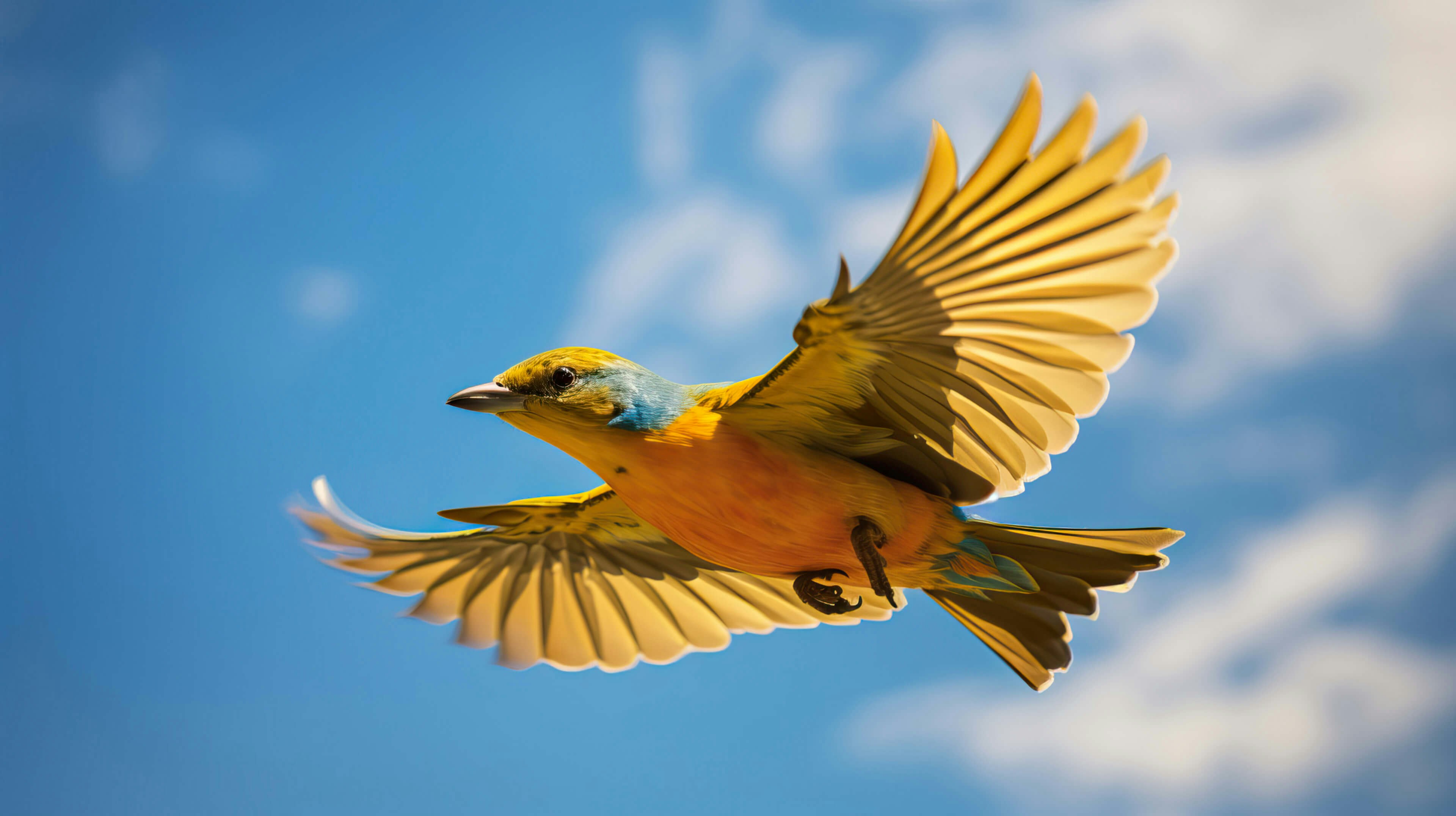
The Golden Tanager, a high-flying bird native to the Andes Mountains in South America. Photo by Bird Bird on Unsplash.
Last week we looked at why our dogs are sensitive to toxins. This week, we look up. Why birds are the most efficient breathers on Earth—and what they can teach us about stress, stamina, and clearing the air.
Last week, I wrote about how our dogs act as “biological sentinels” in our homes. Because they live on the floor and groom their fur, they are often the first to show the effects of the invisible toxins in our home environment.
But there is another biological sentinel we have relied on for centuries: The canary in the coal mine.
We often use that phrase to describe a warning sign. But have you ever stopped to ask why the canary dies first?
It isn’t just because they are small. It’s because they are superior breathers.
As I was digging into the research on environmental health last week, I learned that birds extract significantly more oxygen from the air than mammals do. While that makes them more vulnerable to pollution, it also makes them athletes of the sky.
The bar-headed goose (Anser indicus) is renowned for its ability to fly directly over the Himalayas during its biannual migration between Central Asia and India, with sightings recorded at altitudes exceeding 28,000 feet, nearly reaching the peak of Mount Everest. The air is so thin at that altitude that it would kill a human. Birds can not only survive but can exert themselves that high in the air because of the unique way they process breath.
Since February is often a month where we feel stifled by the cold of winter (especially this year!), I wondered: Can we learn to breathe like a bird?
The Science: The Circle vs. The Tide
The difference comes down to flow.
Humans breathe like the tide. We have a tidal breath system. We breathe air into an enclosed sac (our lungs), and then we have to push it back out the same way it came in. The problem? We are terrible at emptying the tank. We often leave “stale” air trapped in the bottom of our lungs, mixing fresh oxygen with old carbon dioxide. It’s inefficient.
Birds breathe in a circle. Birds have a system of air sacs that act like bellows. They push air through their lungs in one continuous direction.
When a bird inhales, it gets fresh oxygen.
The Mind-Blowing Part: When a bird exhales, it moves stored air from a rear sac into the lungs, meaning it gets fresh oxygen again.
They get oxygen on the inhale and the exhale. They never stop fueling the engine.
(If you want to see this in action, watch this 2-minute animation. It completely changed how I visualize breath: https://youtu.be/_NnBgM41jp0)
How Can We Adapt the Breath of a Bird: Focus on the Exhale
We cannot physically grow air sacs (unfortunately). But we can mimic the bird’s efficiency by changing one simple habit.
Most of us are shallow breathers. When we are stressed, we take tiny sips of air, leaving that stale air stagnant in our lungs.
To breathe like a bird, we don’t only need to inhale more; we need to exhale more.
Try this Biomimicry-inspired Bird Breath:
Empty the Tank: Instead of just letting your breath go, actively push the air out until your lungs feel completely empty. Squeeze the abs. Get rid of the “tidal” leftovers.
The Recoil: Once you are truly empty, your body will naturally reflexively gasp for a deep, full breath of fresh air.
Repeat: By focusing on the out, the in takes care of itself.
Nature designed birds to never waste a breath. We might not be able to fly over the Himalayas, but by clearing out the stale air, we can definitely navigate our day with a little more altitude.
We feel guilty for being tired in January. But for apple trees, squirrels, and bears doing nothing is the most productive thing they do all year.
I grew up on an apple farm in New York State’s Hudson Valley.
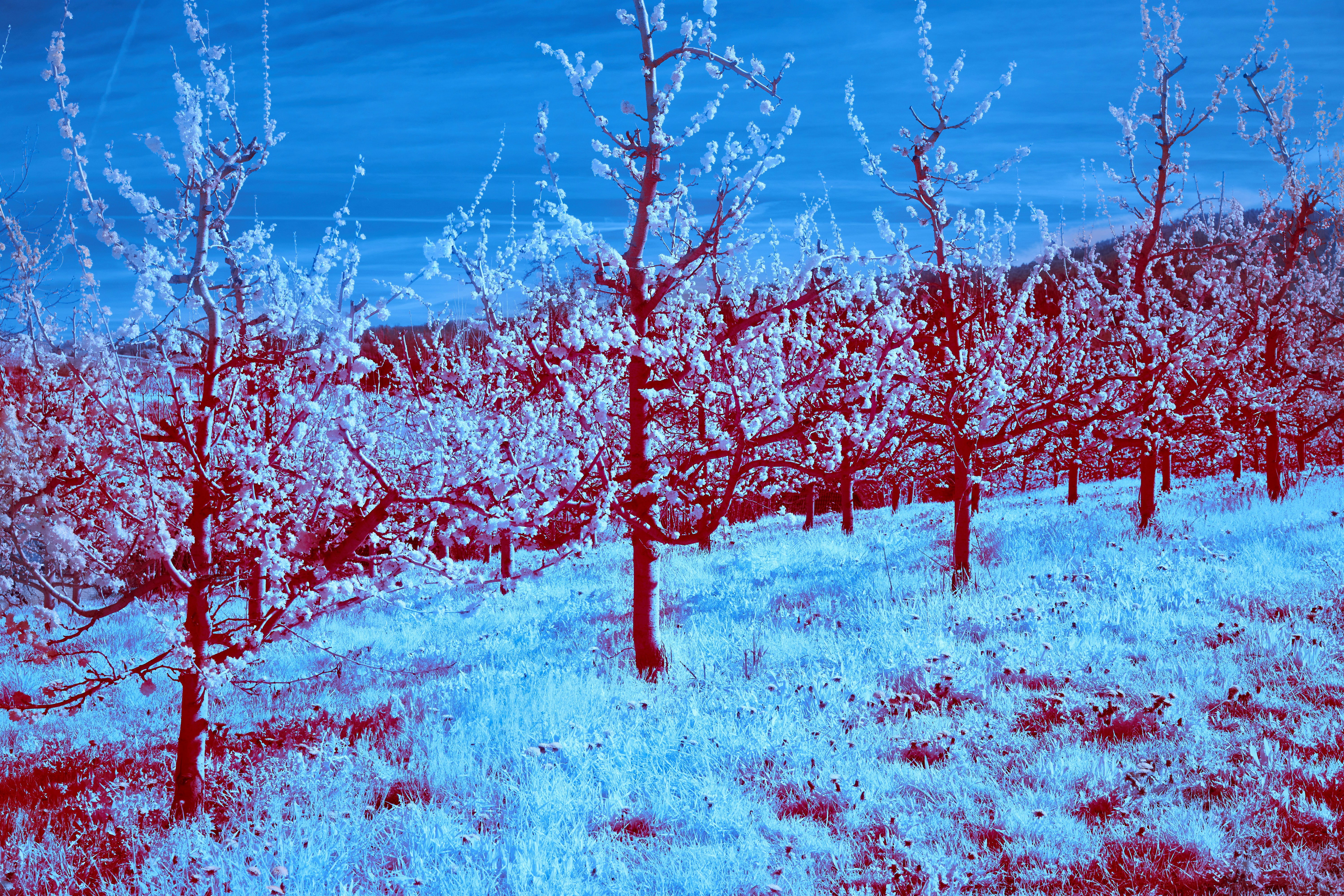
Because of that, my relationship with winter is a little different than most. To the casual observer, an apple orchard in January looks unproductive. The branches are bare, the ground is frozen, and it appears that nothing is happening.
But if you ask a farmer, they’ll tell you January is one of the most critical months of the year. It’s the month that decides the harvest.
We have a tendency in our culture to treat rest as a sign of weakness—or at best, a reward you get only after you’ve burned out. But nature has a different rulebook. She doesn’t ask herself to earn her rest. In the wild, winter isn’t a pause button; it’s an active biological process of repair.
If you’re feeling slow, foggy, or tired this week, I have good news: there’s nothing wrong with you. In fact, you’re doing everything right according to nature. You are just wintering.
Here are three examples of how nature uses the cold to build the future—and how we can adopt a few pages of her playbook.
1. The Apple Tree: Counting the Cold
On the farm, nature and farmers alike live by a concept called “Chill Hours.”
We tend to think trees just “shut off” when the temperature drops. In reality, they’re actively counting. Apple trees have a strict biological requirement to endure a specific number of hours (usually 800 to 1,000) between 32° and 45°F (0° and 7°C.)
If they don’t get those hours—if the winter is too warm or too short—the hormone that suppresses blooming won’t break down. They literally cannot produce fruit in the spring unless they have rested enough in the winter.
The lesson? The productivity of the harvest is biologically impossible without the stillness of the winter. You aren’t losing time by resting; you’re banking your Chill Hours for when the light and warmth of spring return.
2. The Arctic Ground Squirrel: Renovating the Brain
If you’ve felt a bit of “brain fog” lately, you’re in good company.
When the Arctic Ground Squirrel hibernates, their body temperature drops below freezing, and they essentially disconnects their neural pathways. Their brain synapses wither and retract—like pruning a tree—to save energy.
This sounds destructive, but it’s actually a renovation. Research shows that when they wake up, their brains undergo a massive “regrowth” phase. They regenerate those connections stronger and more efficient than before, similar to how muscle fibers when broken down by exercise knit themselves back together when we rest to become stronger.
The brain fog isn’t a failure; it’s a remodel. Sometimes the brain needs to disconnect to clear the clutter and build new pathways for the year ahead.
3. The Black Bear: The Miracle Healers
Finally, there’s the bear. We know they enter a deep sleep in the winter, but what happens while they sleep is the real miracle.
Research from the University of Minnesota found a stunning capability in hibernating black bears: they are super-healers. If a bear goes into hibernation with a wound, the bear will heal faster and with less scarring during their dormant state than they would during the active summer months.
Even with a metabolism running at a fraction of normal speed, their immune system shifts into a specialized repair mode.
It’s a powerful reminder: We heal best when we rest.
A Permission Slip for January
If nature—in all her wisdom and efficiency—requires a season of dormancy to prepare for fruit, rewire the brain, and heal wounds, why do we think we are exempt? Why do we insist on pushing through when what we really need is the sleep and rest that will help us be better versions of ourselves in the long-run? Sleep and rest are powerful tools. Use them. Appreciate them. Luxuriate in them. Your future self will thank you.
So, if you’re struggling to get into high gear this winter, stop. Take a nap. Read a book. Laugh with friends. Eat nourishing food. Breathe. Let the ground freeze knowing you’re giving yourself your necessary Chill Hours. Spring will be here soon enough. Don’t rush it. Rest.
The biggest conservation win of the year is happening this Saturday. 🌊
But the story I can’t stop thinking about this week comes from a farm in Northern Ireland.
Nature is already racking up big and small wins in January 2026:
The High Seas Treaty goes live this weekend (finally!).
A new rule in Northern Ireland stops punishing farmers for having “messy” land.
And 7,000 tiny snails pull off the greatest comeback in history.
Sometimes the best news is found in the weeds. 👇
—
Last week, we looked at the major dates on the horizon for nature in 2026. This week, the first one is already knocking on the door.
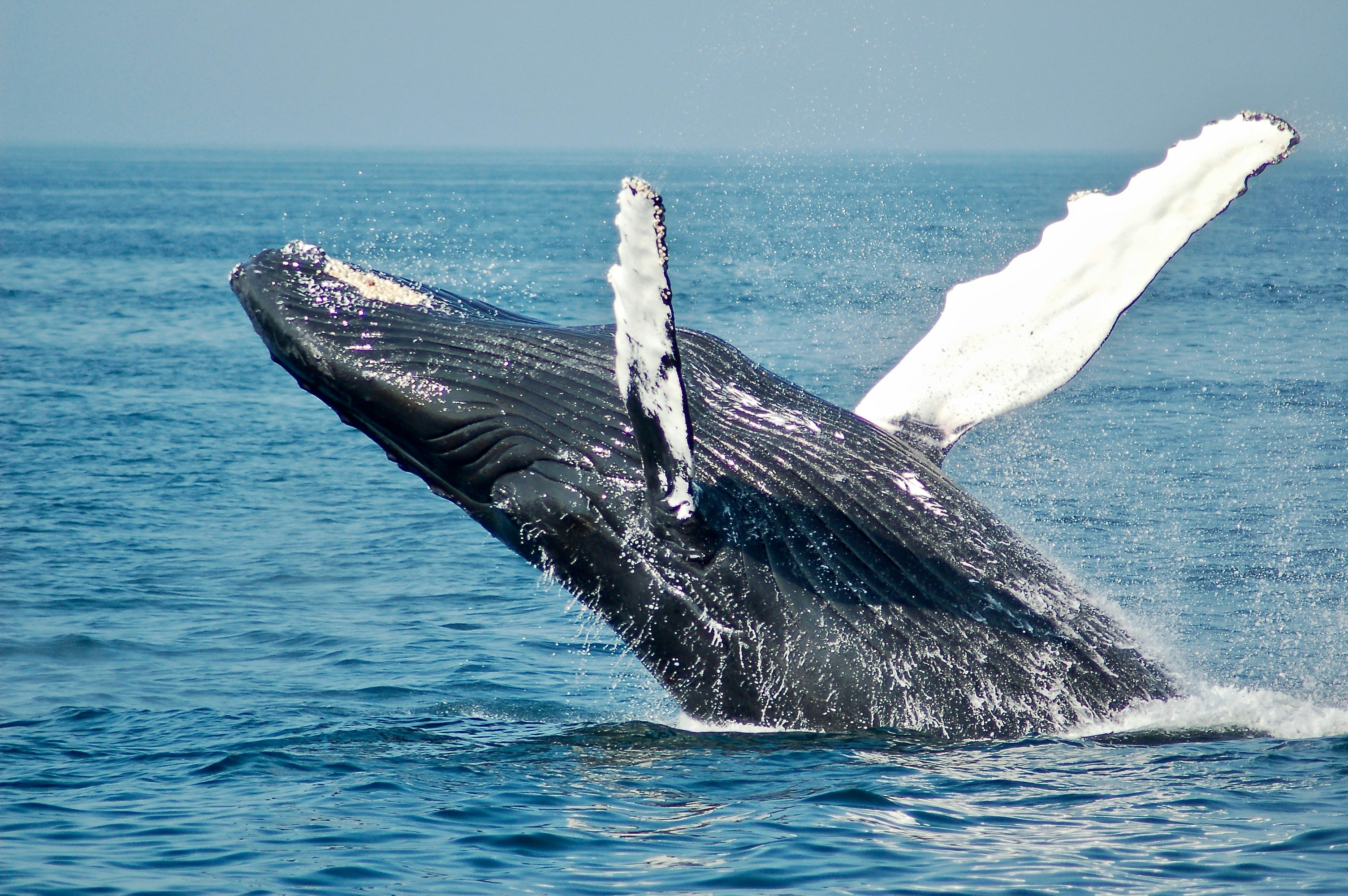
This Saturday, January 17, the High Seas Treaty officially becomes international law. It is a massive moment for global conservation—perhaps the biggest of the decade. But while the world focuses on the giant blue expanse of the ocean, there was another win this week for the tiny, messy corners of the Earth that deserves just as much attention.
Here are the wins—big and small—that are making me smile this week.
1. The Global Win: The High Seas Treaty Goes Live
Mark your calendars for this Saturday, January 17.
That is the day the High Seas Treaty finally enters into force. It transforms the “Wild West” of the open ocean into a managed, protected space.
This treaty provides the legal power to create marine sanctuaries in international waters for the first time. It has been a decades-long fight involving complex negotiations and 60+ country ratifications, but this weekend, it finally crosses the finish line. As of Saturday, the legal mechanism to protect half the planet is officially “on.”
2. The “Messy” Win: Scrub is No Longer a Crime
We often think of conservation as planting trees or saving whales, but sometimes it is just about updating a spreadsheet.
This month, a quiet but revolutionary policy shift kicked in for farmers in Northern Ireland. For years, farmers there faced financial penalties if their land had too much “scrub”—things like bracken, bog, or wild corners that weren’t “productive” for crops. The old rules literally incentivized them to clear-cut nature just to keep their funding.
As of January 1, that rule is gone. Under the new Farm Sustainability Payment scheme, “soft features” like scrub and naturally regenerating land are no longer treated as a liability. They are now recognized for what they are: vital homes for biodiversity. It is a small policy tweak that sends a huge message: Nature doesn’t have to be neat to be valuable.
3. The Comeback Win: 7,000 Snails Go Home
Finally, a story about resilience that proves it is never too late to go home.
Now, after decades of careful breeding, they are back in the forests of Tahiti and Moorea. Why does this story about snails matter? It is the largest reintroduction of a species officially declared “extinct in the wild” in history. It’s a slow, steady victory brought about by a group of people passionate about saving wildlife—and a reminder for all of us that we can fix what we’ve broken.
A Thought for the Week
Whether it is a treaty covering half the planet or a patch of scrub on a farm in Ireland, the goal is the same: making space for life to thrive.
Last week, we closed out the year by looking at the victories nature secured in 2025 that didn’t get enough coverage. Today, let’s look forward.
It is easy to dread the headlines this coming year. We know the challenges we face—political headwinds, climate tipping points, and the sheer noise of it all. But if we only look for the fires, we miss the flowers.
2026 is shaping up to be a landmark year for the wild world. From the icy steppes of Kazakhstan to the open ocean (and even the sun itself), there are massive moments on the horizon worthy of celebration.
Here are three dates I’m circling in red on my calendar this year.
1. January 17: The Ocean Gets a Shield
We don’t have to wait long for the first massive win. On January 17, the High Seas Treaty officially enters into force.
You might remember we talked about this last year when it hit the ratification threshold, but next week it becomes international law. This is the legal “go” signal that finally allows the world to establish Marine Protected Areas (MPAs) in international waters—the vast blue “wild west” that covers nearly two-thirds of our ocean. For the first time, we have a mechanism to protect life in the deep sea from unregulated exploitation.
This project has been years in the making. It involves not just moving cats, but restoring an entire ecosystem—bringing back the prey species (like Bukhara deer) and the riparian forests the tigers need to survive. It is a powerful reminder that we can do more than just protect what is left; we can rebuild what we’ve lost.
This will be the first total eclipse visible from mainland Europe since 1999. While it’s a celestial event, I always view eclipses as a profound “nature check.” They are one of the few things powerful enough to make millions of people stop, look up, and realize we are all connected and standing on the same spinning rock.
It doesn’t sound “sexy,” but rangelands cover nearly half of the Earth’s land surface. They are the carbon sinks, biodiversity hotspots, and cultural heartlands that sustain millions of people and animals (including our friend the Jaguar!). Expect to hear a lot more about the grasslands this year—they are finally getting their moment in the sun.
We have a lot of work to do this year, Togetherhood community. But we also have a lot to look forward to.
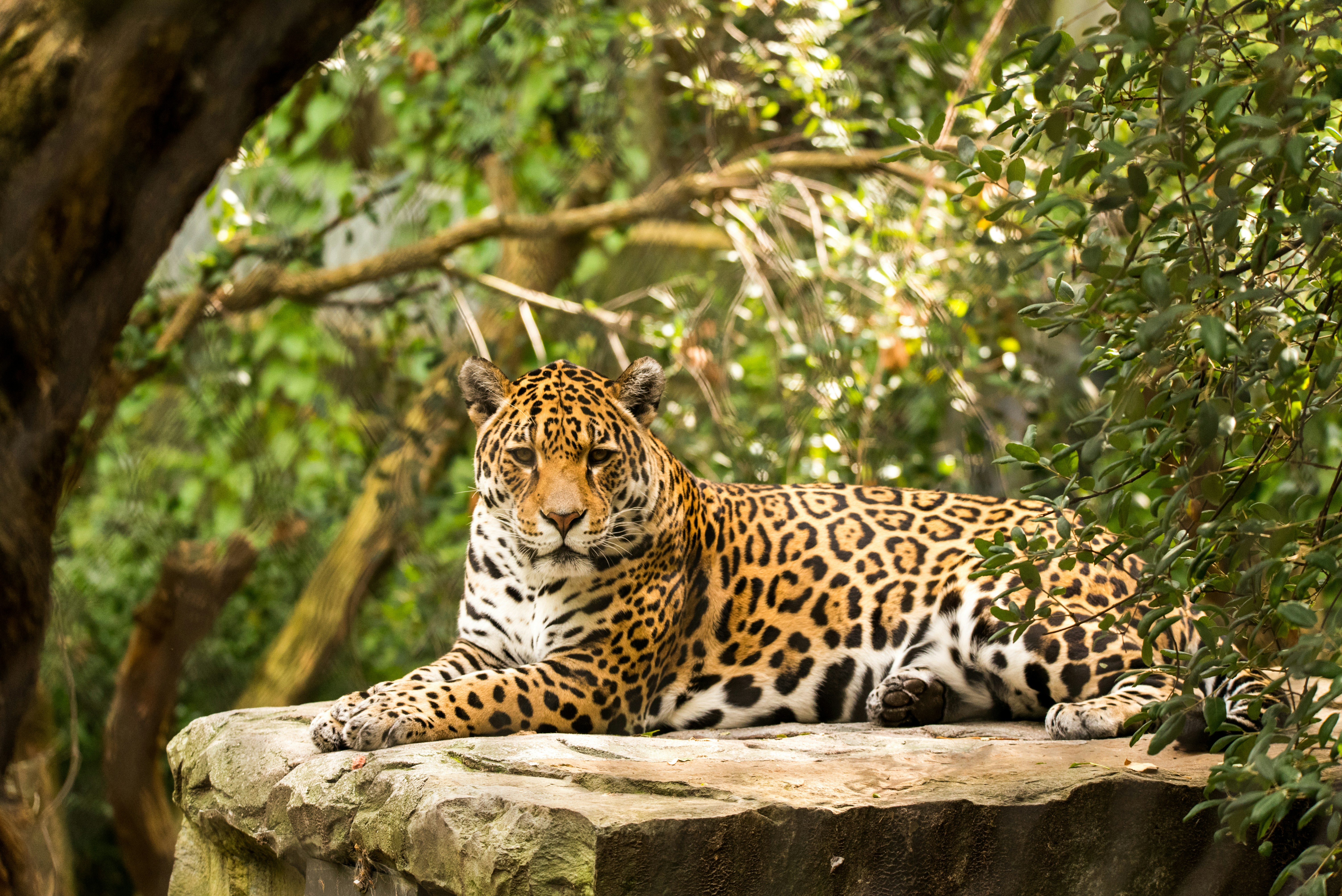
A jaguar in the wild—a symbol of the resilience we are seeing return to the American Southwest. Photo by Ramon Vloon on Unsplash
I started Togetherhood, my weekly nature newsletter, exactly one year ago, and I am so grateful to every one of you who has subscribed, read, shared, and commented on my nature stories along the way.
To mark this one-year anniversary—and the arrival of 2026—I wanted today’s post to focus on the wins nature secured in 2025. Yes, there were heartbreaking losses that felt like a gut punch. But there were also moments of joy and triumph that received far too little coverage. While we must be clear-eyed about the darkness, we must also give the light her due.
Yesterday, CBS Sunday Morning aired a segment with David Pogue on the good news of 2025. It was a perfect reminder that innovation and compassion are still alive and well. Here are two of the standout nature stories from that segment, plus a few other big wins from around the globe that we should celebrate.
The End of “Forever” Plastic? David Pogue highlighted a game-changer happening right now in Massachusetts. A company called Black Earth Compost is proving that single-use doesn’t have to mean forever. They are utilizing a new kind of “plastic” made entirely from sugar cane. Unlike the “biodegradable” labels of the past that didn’t really work, this stuff actually breaks down alongside household food scraps, turning into nutrient-rich compost rather than microplastics in our soil. It’s a closed-loop win we desperately need.
Farmers & Birds: A Surprise Alliance In California, a program is flipping the script on the usual farmer-vs-environmentalist narrative. Pogue spoke with Katie Riley from The Nature Conservancy about the “BirdReturns” program. In this initiative, farmers (like the Zuckerman family in Lodi, CA) are paid to flood their fields during specific times of the year. These pop-up wetlands create crucial rest stops and feeding grounds for migratory birds like Sandhill Cranes. The result? Farmers get a new revenue stream, and bird populations that were struggling are getting a massive lifeline.
Renewables Finally Beat Coal: This isn’t just a projection anymore; it’s a fact. In October, energy think tank Ember confirmed that for the first time in history, renewables generated more electricity globally than coal (34.3% vs 33.1%) in the first half of the year. Solar alone is doing the heavy lifting, meeting 83% of the increase in global power demand.
The High Seas Are Officially Protected: On September 19, we hit a massive milestone: The High Seas Treatysecured its 60th ratification (thanks to Morocco!), which is the magic number needed to make it international law. This triggers the treaty’s entry into force in January 2026, finally allowing us to create marine sanctuaries in the “Wild West” of the open ocean.
Species Bouncing Back:
Jaguars in Arizona: Just this month, officials confirmed a new male jaguar—dubbed “Jaguar #5”—was spotted on trail cams in Southern Arizona in late November. He is the fifth wild jaguar documented in the state since 2011, proving that despite border walls, these cats are finding a way to return home.
It’s going to be a tough year ahead, but these stories prove that when we give nature half a chance—or when we get smart about solutions—it has an incredible ability to heal.
See you in 2026! We’ve got work to do, and we’ll work together with nature to make this a better world for all beings.
Happy New Year! Each year I select a word to guide my thoughts and actions. In 2025, I chose Rebuild. Now, with that foundation, I’m ready to scale the efforts I’ve loved most.
2026 at a Glance:
The Word:Momentum (finding the moment within the movement).
The Focus: Scaling NYC’s Secrets & Lies, adopting a heart dog, and publishing in a dream publication.
The Goal: Moving from “rebuilding” to intentional acceleration in community, health, and creativity.
Within the word “Momentum” is the word “Moment”. That’s where I want to be in 2026 – in the moment, in every moment. I want to focus on my lived experience each day.
Even with all the challenges and difficulties in the world, in 2025 I found ways to build community through longer tables and creative projects that inspire wonder and curiosity. It’s made me so happy to reflect on that and think about how that can continue in 2026.
Here are some of the areas that interest me most. What are you thinking of in 2026?
Storytelling
I am beyond thrilled that my show NYC’s Secrets & Lies is back and that so many lovely people have filled out audience and graced the stage with their knowledge and humor. This show encapsulates so many things I love: storytelling, a celebration of NYC, history, laughter, and awe. I know how lucky I am to call this city home and I love nothing more than sharing all the wild stories of our collective past that still exists on every street. I’ve also made some of my very best friends because of this show, and those relationships have saved and transformed my life.
We started doing location-based shows with partners in 2025, the dream I always had, and I can’t wait to create more of those immersive environments for our audiences in 2026. Our show at the Seaport Museum was a huge success and they were wonderful to work with so I’m hoping we can do more projects together.
We’re already working on some fun plans during this very momentous year in our city’s history to celebrate:
NYC’s 400th anniversary
The country’s 250th anniversary
100th anniversary of Houdini‘s death on Halloween (yep – he was a New Yorker!)
National Pet Adoption Week in March
Our first outdoor show in April with Natural Areas Conservancy for Earth Day
Climate Week shows in San Francisco (nature in the San Francisco area) and in NYC (NYC food history)
A few things we’re considering in addition to our shows:
Free field trips where a group of us go to an interesting location in NYC and learn about its history
Reading club on historical topics
Potluck dinners with historical recipes
Entering the Great Borough Bake-off at Museum of the City of New York
Dogs
In January 2024, I lost my soul dog, Phineas, after 13 1/2 years together.2024 was a painful year. Sometimes I could barely breathe because the grief was so heavy. It was the worst grief I’ve ever felt. At the very end of 2024 and through 2025, I fostered 10 dogs through Muddy Paws Rescue and became an active volunteer with the organization. I never imagined I would become as involved as I am. More than anything else I’ve done, fostering and volunteering to save shelter dogs has helped me heal. I still miss Phinny every single day. I will miss him every day for the rest of my life.
2025 taught me how to carry the grief of losing Phinny and the joy of rescuing other dogs like him. He never left me, not really. I feel his spirit with me always. There are, sadly, so many shelter dogs who need forever homes. In 2026, I want to get even more involved with helping more shelter dogs. I don’t know exactly what that looks like yet.
I am ready to adopt my heart dog and especially excited to go through therapy dog training with them. My hope is that we’ll become a certified team so we can visit chemo patients and participate in library programs where kids read to dogs.
Writing
At the end of 2025, I pitched an article to my dream publication and they accepted it! This is the good news I hinted at yesterday—I’m so thrilled to finally share it. I’m working on the piece right now and will share it once it’s published.
I spent 2025 further honing my writing skills in different genres and formats, and now I’m excited to put more of it out into the world in more publications and platforms. I learn so much as a writer by reading, and I’m trying to read more books and better track the books I read in a fun analog way.
Learning
2025 brought me many opportunities to learn new skills and grow my areas of expertise. Some of them came through work and many of them I explored on my own. I continued my language learning and I want to build on that in the new year. I signed up for Masterclass again because a few of their courses caught my eye and there was a massive 50% off sale for the new year. My interests vary widely so a platform like Masterclass is perfect for me. I loved their programs that I took a few years ago so I’m excited to dive back into it. I’d also like to find more opportunities to learn alongside others.
Nature
In 2025, I graduated with my Master’s in Sustainability Leadership at University of Cambridge. That was an enormous personal and professional accomplishment. I fulfilled my dream of studying abroad with the most incredible group of people who inspire me every day.
I had hoped to transition my full-time work into climate but political circumstances being what they are in the U.S., that didn’t happen. Through writing my Togetherhood newsletter, storytelling, and advocacy work, I’ve been able to be involved with the climate community and aid collective efforts. In 2026, I’d like to explore more ways that I can help even if my full-time work is not rooted in sustainability. Sometimes, dreams take longer than we’d like. The route isn’t as clear as we planned. The planet needs tending, and in 2026 I want to find opportunities to use what I have where I am to be useful.
Travel
In 2025, I finally got to Italy and Scandinavia, two places that have been on my list for some time. In June, I’ll skip back across the pond to reunite with my Cambridge classmates in London for our now-annual get-together. I’m already looking forward to that. I also decided to plan more weekends away. That’s something I don’t typically do. I’m not sure why I’ve not planned that more often – maybe because I love NYC so much and there is always a lot to do here.
In 2026, I’m going to make the effort to explore more and visit more friends who live outside of NYC. I’m hoping to finally get to Asia, another area of the world I’ve not yet visited.
Home and Finance
I’m very lucky to have a stable living situation after years of being a market-rate renter in a city that is insanely expensive. I love my Brooklyn neighborhood and my apartment. In 2025, I crunched the numbers many times and it didn’t make financial sense to buy a place of my own because of the deal I have in my place now and the soaring interest rates and downpayment requirements. I’ll continue to keep an eye on that in 2026 to see if anything changes. In the meantime, I’m working closely with my financial planner to save for a home down the line. I’m also refreshing my space with some new design touches.
Love Dating apps did not bring me joy in 2025. Even the mechanics of them are off-putting to me. I know they work for lots of people, so I’ve not abandoned them completely. I’d like to put myself in situations to meet more people who share my interests, and maybe that will also include a partner who is as wonderful as my friends. That’s the only kind of partner I’m interested in having. It’s worth trying. At the very least, I’ll meet interesting people who become friends.
Health
And finally, my health is the basis of all my dreams. It’s really true that health is the first wealth. I learned a lot in 2025 about medicine, nutrition, exercise, and the value of rest. I healed from a few injuries and in the process learned how to better care for my body. In 2026, I’d like to refocus on more meditation – that’s a practice I fell away from in 2025 and I always feel better when it’s part of my routine. I experimented a lot with new recipes, and loved the art and eating of cooking and baking. I want to continue that and invite more people to have meals with me in my home.
2025 marked 5 years since my cancer diagnosis and I’m grateful for my restored health. In 2026, I’ll mark 5 years since the end of active treatment and finish taking one of my medications that may also lead to a change in another of my medications. While these are all positive changes, I’m always wary of new meds and med changes because of past experiences I’ve had. I’m exploring ways to support myself in that process – maybe through acupuncture, saunas, and other holistic modalities.
Some closing thoughts
2025 saw a lot of upheaval and pain around the world. Through donations to and volunteering with organizations doing work, I was able to help others and that is something I will always continue to do. Improving the lives of all beings and the planet has to happen as a collective, and I’m looking forward to using my good health, resources, and skills to further cultivate community and cheer loudly for others in 2026.
Happy New Year. I’m glad we’re here together. Long may that continue.
What is one area where you’re looking to find momentum this year?
The moon and the stars through the trees. Image by Christa Avampato.
Tonight, as we usher in the longest night of 2025, may we give ourselves the permission and grace to rest. Yes, the light begins to return slowly and surely as we move forward. But before us tonight lies the gift of darkness.
It is a time for dreaming, for reflecting, for remembering. It allows the light to shine brightest—from stars, from the moon, and from the people around us. Just as stars require the dark to be seen, we often find the best in others and ourselves during the darkest times. When confronted with difficulty, we rise to help each other.
We cannot get through this life alone. Relationships are the center of everything. Love is the center of everything.
This winter, I wish you peace. As the daylight grows, I hope the light within you and the light within me grows, too.
Sugar kelp can grow in the waters around NYC, and thrives during the cold winter months
I recently read a fascinating piece in Smithsonian Magazine about the “underwater forests” returning to life off the coast of California. It details the restoration of Giant Kelp—towering, 100-foot strands that form cathedrals of biodiversity, sequester carbon, and shelter marine life.
It’s an inspiring success story of ecological recovery. But as I read about the Chumash people and marine biologists working together in the Pacific, I couldn’t help but ask a question closer to home: Could we apply this to the waters of New York City?
The answer is a resounding yes—but it looks a little different here. And it’s already beginning.
Different Coast, Different Kelp
In California, the focus is on restoration: bringing back wild Giant Kelp forests that have been decimated by urchins and climate change.
In New York and the broader Northeast, our opportunity lies in regenerative ocean farming. We don’t have the deep-water Giant Kelp; we have Sugar Kelp (Saccharina latissima). This golden-brown algae is shorter, but it is a powerhouse. It thrives in our cold winter waters—growing rapidly when most marine life is dormant—and acts as a “scrubbing brush” for our harbors.
Sugar Kelp absorbs carbon dioxide (fighting ocean acidification) and, crucially for NYC, it soaks up excess nitrogen from urban runoff, which is the main driver of harmful algae blooms.
We aren’t just “restoring” nature here; we are building a blue economy. Here are the local pioneers turning this idea into reality right now.
1. The Indigenous Lead: Shinnecock Kelp Farmers
Just as the Chumash people are leading efforts in California, the Shinnecock Indian Nation is leading the way on Long Island. The Shinnecock Kelp Farmers are a multi-generational collective of Indigenous women leveraging thousands of years of traditional ecological knowledge to heal the water.
They have established the first Indigenous-owned kelp farm on the East Coast in Shinnecock Bay. Their work proves that kelp isn’t just a crop; it’s a tool for sovereignty and survival, actively filtering the waters that sustain their community.
2. The Science: It Works in the East River
You might think kelp needs pristine, open ocean to survive. Think again.
Researchers Dr. Christopher Gobler and Mike Doall from Stony Brook University have been running pilot studies to see if kelp could survive the urban waters of the East River. The results were surprising: the kelp didn’t just survive; in some cases, it grew better in the nutrient-rich waters of the harbor than in cleaner, deeper waters. This suggests that NYC’s “working waterfront” could double as a biological filtration system.
3. The Pioneers: Breaking the Regulatory Barrier
The technology exists, but the permits have been the hard part. The industry is so new that New York State didn’t have a regulatory framework for it until very recently.
In 2023, Violet Cove Oyster Co., led by former WNBA star Susan Wicks, secured the first-ever commercial permit to grow kelp in New York state waters (Moriches Bay). It took years of advocacy to get there. Her success paves the way for oyster farmers across the region to become “multitrophic” farmers—growing shellfish and seaweed together to maximize the environmental benefit.
The Vision for a “Blue” NYC
Organizations like GreenWave are already training the next generation of ocean farmers, with a goal of creating thousands of jobs. Imagine a future where the New York harbor isn’t just a transit lane for ferries and cargo, but a grid of regenerative farms.
These farms would provide local food, sustainable fertilizer, and bioplastics, all while cleaning the water and capturing carbon.
California’s underwater forests are a reminder of nature’s resilience. NYC’s underwater farms could be a testament to our innovation. The seeds (or rather, the spores) have been planted. Now, we just need to support the regulations and organizations that will let them grow.
In a recent episode of The Common Good from the Garrison Institute, science writer and Biomimicry Institute co-founder Janine Benyus joined host Jonathan F.P. Rose for an illuminating conversation. The topic was profound yet elegantly simple: uncovering “nature’s universals” — the deep, time-tested design patterns that silently guide all living systems, and how we can apply them to the human world.
Benyus, the pioneer behind the biomimicry movement, anchors her work on a single, powerful biological truth: Life creates conditions conducive to life.
This isn’t a romantic notion; it’s a design principle. Over billions of years, successful natural systems — from the vastness of a forest canopy to the complexity of a coral reef — have learned to thrive not through competition and extraction, but through cooperation, self-organization, and elegant networked intelligence. These are the strategies that generate abundance without consuming the system that supports them. When we look at nature, we are looking at a master class in sustainability, efficiency, and resilience.
The Blueprint for Human Innovation
The conversation moved beyond mere observation to practical application, identifying core natural principles that can and must guide human industry and ethics. Two standout concepts for redesigning our civilization are:
Right-Sizing: In nature, nothing is over-engineered. Organisms do what is necessary, but no more, often using modularity and local resources to solve problems. Benyus challenges us to abandon the modern human impulse for massive, centralized, and often brittle systems. Instead, we should mimic nature’s local, tailored, and efficient solutions.
Distributed Abundance: Nature’s design is fundamentally anti-monopoly. Resources and solutions are distributed — sunlight, nutrients, and water flow through a network, ensuring that the health of the whole system supports the success of individual parts. Applying this principle to economic and social systems means designing for local self-sufficiency and ensuring resources are abundant and regenerative for all, rather than concentrated at the top.
A Call for Biological Literacy
Ultimately, the episode serves as a powerful call to re-embrace our own biological literacy. For too long, Benyus contends, Western culture has viewed the world — and our place in it — as a collection of separate parts to be managed and exploited. This mindset has dictated our industrial processes, our economic models, and even our spiritual disconnection from the living planet.
The discussion highlights that re-embracing these universal patterns is not just about engineering better products; it’s about reshaping our culture and spirituality. By learning from life’s inherent genius, we move toward a worldview where we recognize the world as a single, living, interdependent whole. The greatest innovation of the next century will be applying nature’s wisdom to create human systems that are as beautiful, cooperative, and conducive to life as a thriving ecosystem.
I’d love to hear your thoughts on how we can all embrace nature’s principles to live our best lives and also care for the planet. What do you think?