creativity

How to directly help the people of Ukraine stay alive

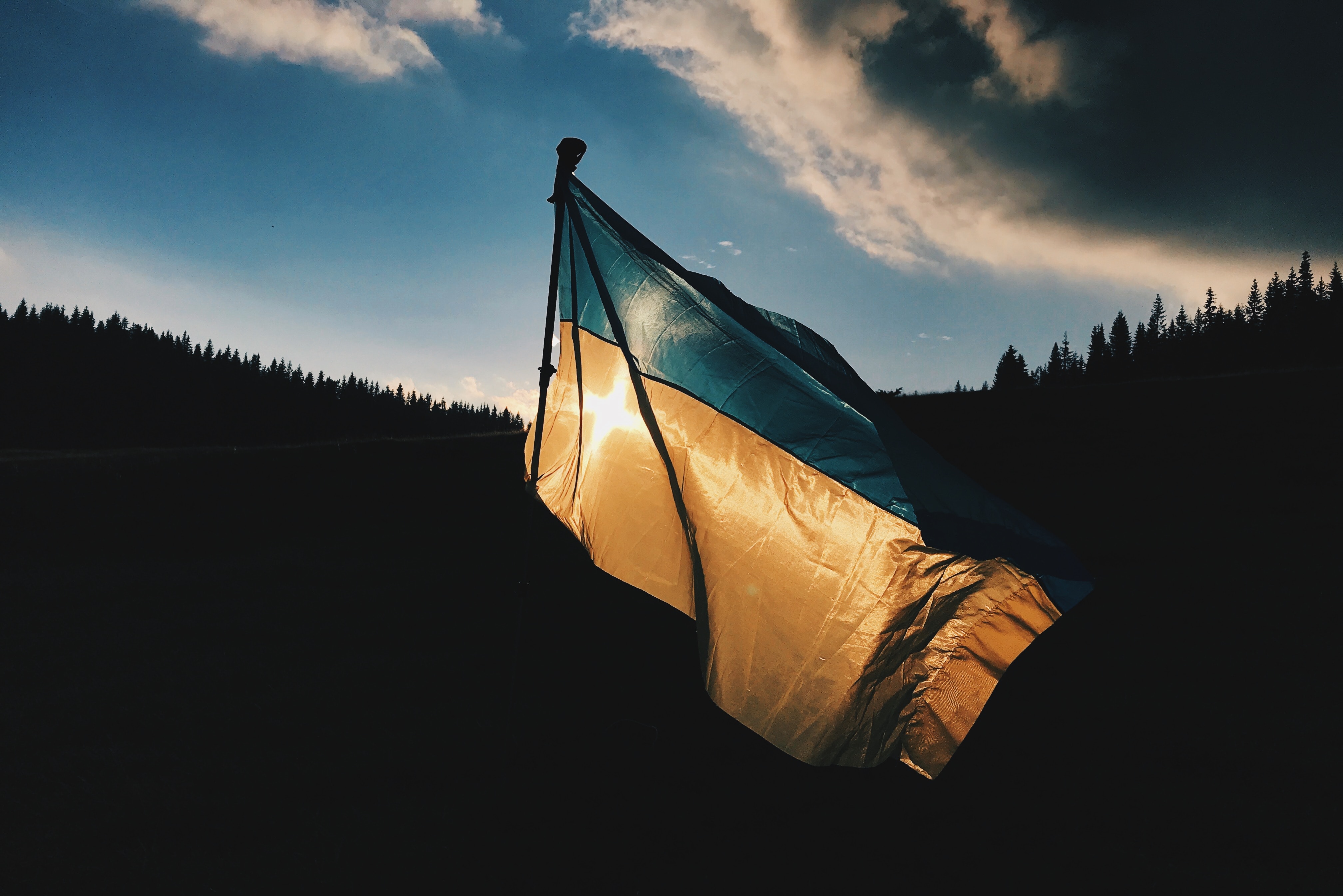
Photo by Max Kukurudziak on Unsplash

Today is my 14th Alive Day, and to mark it I’m directly helping people in Ukraine stay alive. (At the end of this post, I tell the story of my Alive Day at the end of this post for those who didn’t know me 14 years ago.)

My friend and Cambridge classmate, Iuliia Takhtarova, is from Ukraine and raising money to buy tourniquets for her fellow Ukrainians as they head to the frontlines of the war to fight for their country. All this money will be used to directly help them. Tourniquets save lives. I made a donation and I hope you will, too. 

A talented public speaker who’s curated over 150 TEDx speeches by NGO and business leaders, ambassadors, and government officials, Iuliia will provide a 45-minute individual session on impact-driven pitches and presentations to every donor who makes a $60+donation (the price of 2 high-quality tourniquets from a repurtable supplier). She will also provide all donors of any size with a detailed update on the impact of their gift. She has set up a Paypal account specifically for this fundraiser: takhtarovajulia@gmail.com. You can find more information about the fundraiser on her LinkedIn post: Iuliia’s fundraiser for Ukraine tourniquets. 

 — 
A bit more about my Alive Day for those who have never heard the story:

Though I have never been in a war, I know what it feels like to lose a home. 14 years ago on this day I had to run for my life away from flames and into the terrifying void that followed. My neighbor accidentally set fire to her gas stove. Rather than turn off the gas, she ran out of the building and the rest of the building caught fire. I was home, just out of the shower, and went into the kitchen where I heard the radiator ticking on a very hot day. A closer look and I realized the tiles on my kitchen floor were heaving up and down. I grabbed my keys and went downstairs to see what was going on.

Seconds later I was surrounded by thick, black, noxious smoke. I had no idea where the smoke was coming from but I knew I had to get out of that building if I wanted to stay alive. I couldn’t see my hand in front of my face and I ran for my life down 4 flights of stairs. At one point, I was flying so quickly that I felt as if I was being carried.

Out on the sidewalk, I was covered in soot and shaking as I stared at my building. Flames shot out of every window as the New York City fire truck sirens blared. Later I would learn that I was seconds away from running right into the flames when the fire in my neighbor’s apartment got so hot that the front door fell off its hinges and the entire hallway was engulfed in flames.

I was lucky to be alive, and the trauma from losing almost all my belongings, my home, and nearly my life started me on a difficult years-long mental health journey as I reckoned with an entire lifetime of trauma and unrelenting PTSD. It got so unbearable at one point that I considered jumping from the roof of my new apartment building months later. When PTSD has you in its clutches, life feels hopeless. I found hope in writing and in nature, but I still needed professional help.

I was lucky to get years of therapy with Brian, my incredible therapist who remains a blessing in my life today. He led me through the darkness and for the first time in my life, into the light. This experience is why I’m such an enormous advocate for mental health, and why today I don’t take a moment of life for granted. I know how chancey it can be. We have to help each other along the road in any and every way we can.

A much longer version of my Alive Day story with more details about how writing became my lifeline is at https://itstartsatmidnight.com/2017/10/shatteringstigmas-guest-post-writing-frees-us-free-others/.

creativity

Stories of climate change teach us that we are each other’s tomorrow

This morning’s joyful find—THIS is the style of academic writing I’m here for! I’m reading through an academic paper about climate change communications that quotes one of my storytelling queens, the great author Ursula Le Guin. I nearly fell out of my chair with happiness!

Paraphrasing, it says we need to lay aside stories of the one hero versus one villain and begin to tell what Ursula Le Guin in “Dancing at the Edge of the World” called “the carrier bag narrative”: collecting stories to construct transformative narratives to help us find the strength to “stay with the trouble” so that we can change and inspire change in others. Stories transform our world by affording us the chance to co-construct our shared future.

We are all in this narrative of climate change, though our personal stories of its impact are not the same. Following Le Guin’s counsel, we need to tell our stories and also listen to the stories of others to construct the narrative system of climate change. There are many voices, many perspectives, and many outcomes, simultaneously being told and lived. They are all valid. They all play a part. It is therefore our responsibility to not just make ourselves heard and understood, but also to make sure others have the opportunity to do the same.

This isn’t about getting and taking what we think is ours. It’s about the idea of being the Mother Tree in the forest, making sure that each individual in the system has what they need to grow and thrive. We are all made better when each of us is well.

creativity

When writing feels like play

Photo by Nick Morrison on Unsplash

Even though it’s Labor Day weekend, I’m laboring away at the outline for my University of Cambridge dissertation with the goal of having a single page of my literature review written and edited by the end of the day.

The weird and wonderful part of the work at this point is that it doesn’t feel like work at all, but play. Like a set of LEGO blocks, I’m linking the information and data to support the story, synthesizing everything I’ve learned after all this reading and note taking into a cohesive, communicable form that helps people and the planet.

I’m sure there will be rough spots along the way where I get jammed up on the journey. I’ve a long way to go over the next year. But for now, I’m excited to begin writing and using prose for purpose. Happy days.

creativity

The danger of Texas school libraries becoming “discipline centers”

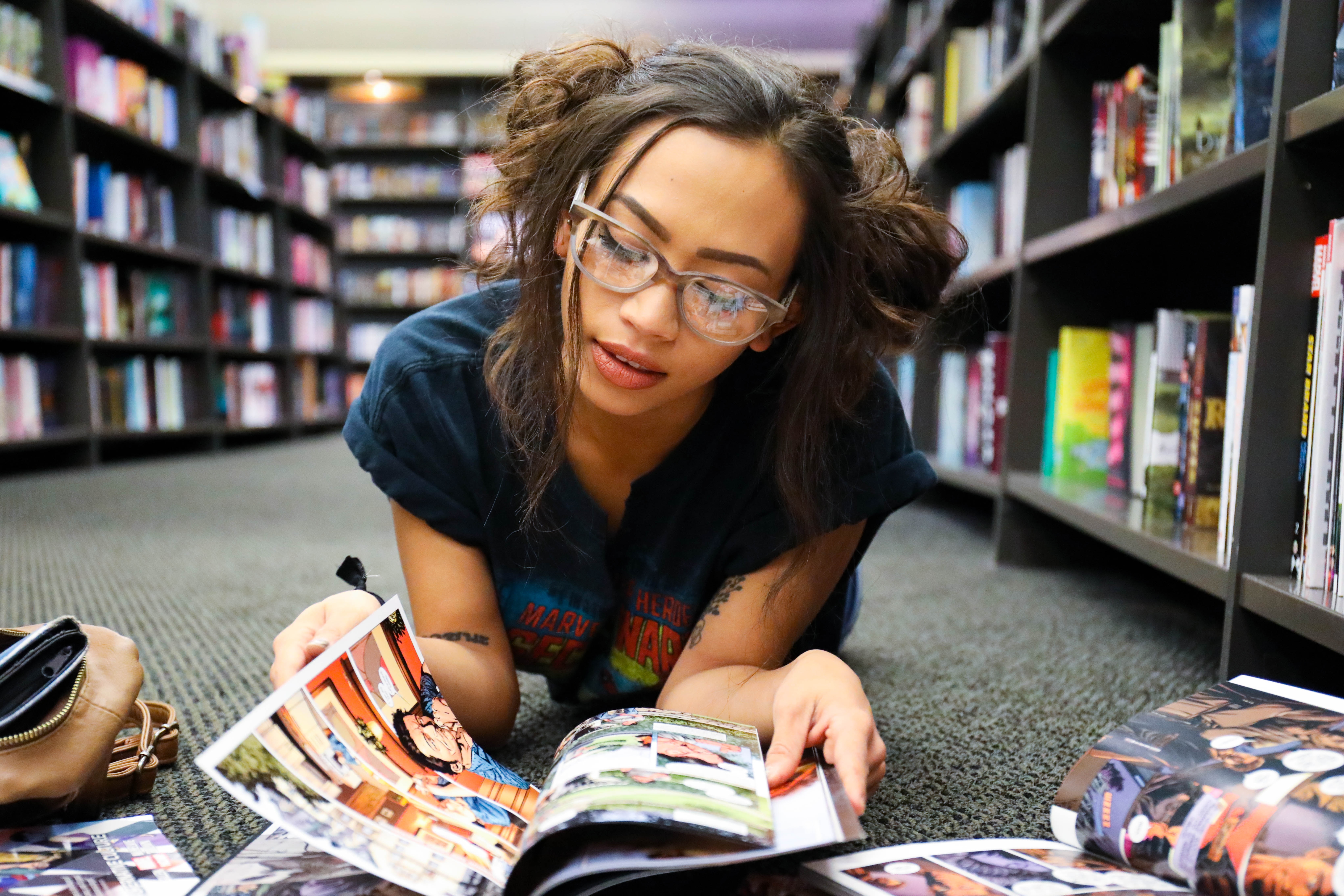
Photo by Joe Ciciarelli on Unsplash

“Libraries are about freedom. Freedom to read, freedom of ideas, freedom of communication. They are about education, about entertainment, about making safe spaces, and about access to information. We need libraries. We need books. We need literate citizens. I hope we can give our children a world in which they will read, and be read to, and imagine, and understand.” ~Neil Gaiman

When I was a kid, the school library was my refuge. I’d go there when I felt bullied, sad, and lost, and I wanted to escape. I would go to books to go into new worlds that weren’t my physical world. Through them I could travel, find adventure, and be anywhere except where I was when my world was not where I wanted to be. I returned stronger, wiser, and braver because of libraries. 

As I got older, I realized I was not alone in finding my haven in books and libraries. So many kids all over the country, and all over the world, did the same thing if they were fortunate enough to have a library. I also learned millions of children didn’t have libraries to escape to, and that broke my heart and opened my wallet to support libraries, books, authors, reading, writing, and creating in every way I could. When I became a journalist, then an essayist, and then a novelist, my dedication to libraries, books, readers, and writers grew even bigger.

So it’s with devastation that I learned last week about the dire state of school libraries in Houston, Texas that are part of the Houston independent school district (HISD). Superintendent Mike Miles will turn the city’s school libraries into “discipline centers”, and librarian and media-specialist positions will be eliminated. Teachers will be able to send “misbehaving students” to these centers to learn remotely. This is a state decision, not a city decision, and Miles was given this post by the Texas Education Agency. He thinks this will improve student performance in Texas’s largest school district and the 8th largest district in the country.

HISD has 276 schools and 196,943 students. 90% of students identify as ethnic minorities, and 59.4% are economically disadvantaged. They are students who need libraries, extra educational support, and places of refuge. I know this because I was an economically disadvantaged student. Libraries, librarians, and books saved me. They helped me dream of a better life than I had as a kid, and it’s largely because of libraries, librarians, and books that I have the life I have now, a life I love where I make a living through my creativity every day. 

I don’t live in Houston, but I care deeply about these students and what happens to them because they will eventually grow into adults who will go out into our shared world on their own. Without libraries and books, and with goodness knows what goes on in a “discipline center”, imagine how angry and deprived they will be. Imagine how deprived every student in these schools will be without libraries and librarians. What message are we sending all students by denying them free access to books, and the ideas and freedom they afford those who face an unjust uphill climb in our current society? 

Here’s my great hope for the HISD and the city of Houston: that the students, administrators, teachers, voters, politicians, and residents will rise up against Mike Miles. I hope they won’t allow students to be deprived of books, reading, and librarians, and I hope all of us outside of Houston will support them in every way they need. The students of HISD deserve better than this policy, and better than Mike Miles. We can’t allow one man to take their books and their futures from them.

creativity

New York. What a character. My latest essay for Pipeline Artists.

Feature image from dikaya888 (Adobe)

If you know me, you know how much I love New York and how proud I am to be a New Yorker. To that end, this is my toast and roast to dear old New York. Essentially a love letter to my city, published by Pipeline Artists. You can read the full piece here.

An excerpt:
“Dearly Beloved,

We are gathered here today to toast and roast our dear old chum, someone who’s like no one, someone who’s a chameleon, a shape shifter. You may know them as the Big Apple, Gotham, the City So Nice They Named It Twice, the City that Never Sleeps, the Empire City. Many simply call it The City. Me? The nickname I like best is A Beautiful Disaster.

I give you the dynamic, the dastardly, the dreamy—New York.

I’ve left New York multiple times over the years, sworn them off for good, to never return, only to eventually make my way back. I’m not alone in this pursuit to try to live without New York only to find that New York lures me back just by existing.”

You can read the full piece here.

creativity

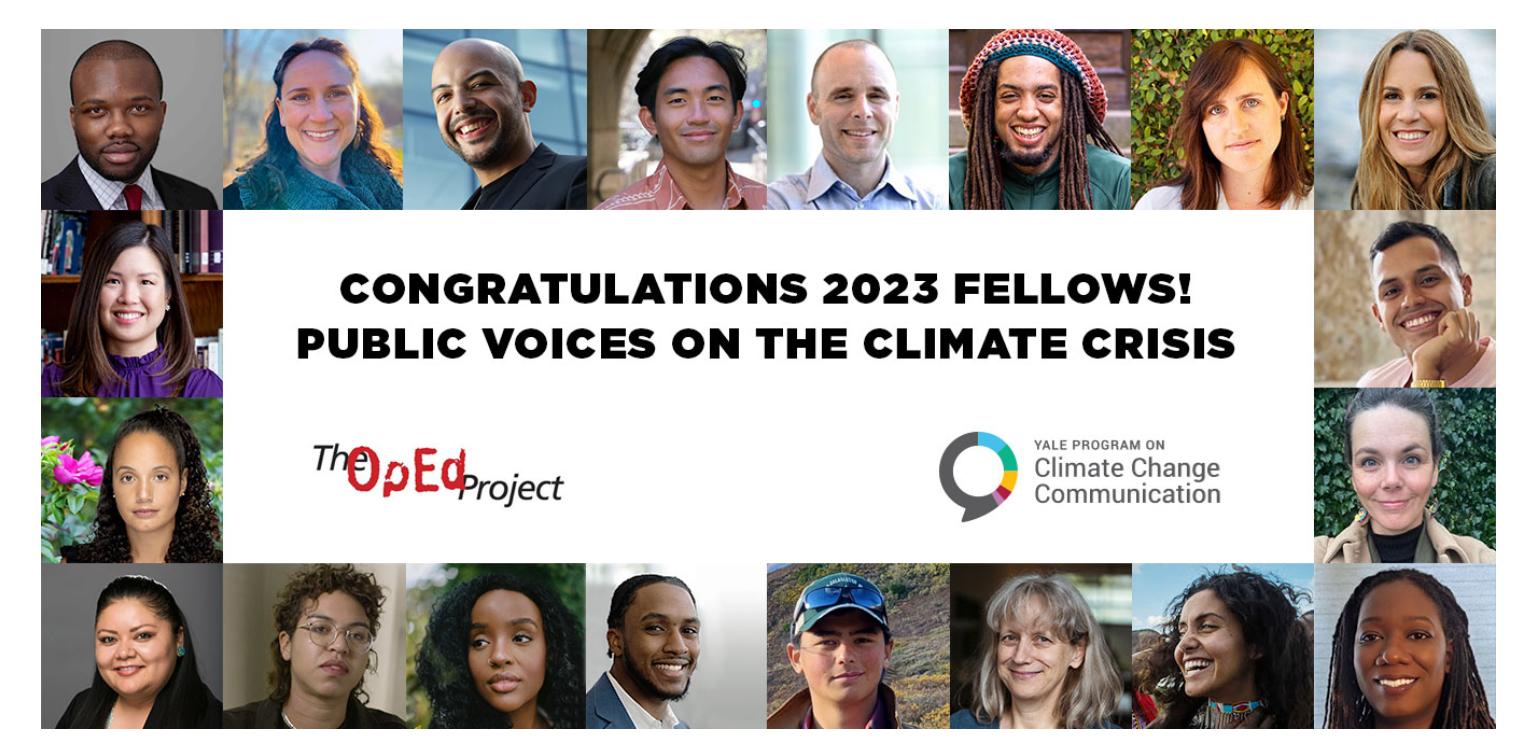
Public Voices Fellowship on the Climate Crisis at Yale University

Really proud to be a finalist for the Public Voices Fellowship on the Climate Crisis with The OpEd Project at the Yale Program on Climate Change Communication. They had 445 applications this year and though I didn’t get one of the 20 fellowship slots, as a finalist I will have some incredible opportunities this coming year to sharpen and hone my climate change storytelling. Please join me in congratulating this year’s fellows. 

creativity

Video games can create billions of new climate activists

1/3 of the global population plays video games. With engaging climate change storylines and content, video games have the potential to create billions of new climate advocates to protect the health of the natural world, and by extension the health of all beings including us. This is the topic of my first two academic papers at University of Cambridge. I got my mark and feedback on my first paper and my graders were very complimentary saying the paper was of professional quality and has a strong literature review and purposeful recommendations for the company to use going forward. They also liked the persuasive case I made for the value of hope and joy in climate activism.

This is the first time I’ve ever written a paper in this style of academic writing. My topic was unusual for them. I brought my heart and personality into the style and structure of the paper. They said that’s also an unusual choice for academic writing but it works. I wrote the paper I was passionate about creating, and I’m proud of it. I learned a lot in this process that I will use throughout the rest of my graduate degree program and in my career going forward.

A huge thank you to my friend, Jennifer Estaris, and the entire team at ustwo games for inviting me to be a part of this gorgeous video game project that brings me so much joy and hope, and has taught me so much. Thanks also to everyone who cheered me on as I spent more hours on this paper than I’ve ever spent on any one academic assignment.

Now I’m drafting the action plan for my next assignment and preparing for my next workshop in Cambridge in March. I can’t wait to be back together with my cohort in that magical place. On to the next tranche of this adventure with a grateful and open heart and mind…

creativity

Will writers be replaced by OpenAI, makers of ChatGPT?

This week I’m working with one of my biomimicry clients to explore the use of OpenAI, makers of ChatGPT. It has several models within it, including Davinci which we’ve found has the most detailed, natural sounding results but not necessarily the most accurate information. We are using this technology to ingest a wide variety of scientific papers and produce plain-language text that can be used by designers and engineers who want to explore nature-based solutions and biomimicry inventions and applications.

We tried five tests with different biomimicry topics. I compared the source papers and the two versions of AI-generated text to assess them. Of the five tests, four were decent first drafts that need a human editor to refine them. Most of the scientific data was presented in a plain text way that maintained accuracy and integrity. It missed some key findings that would be valuable for engineers and designers, and the tests need to be edited for clarity. It had some trouble extrapolating the information into potential biomimicry applications and nature-based solutions. In other words, it could create plain-language text based on complicated, jargon-filled text reasonably well as a first draft. It could not creatively interpret the data to imagine many new possibilities. The one failed test completely missed the mark on the main points of the scientific paper.

Overall, it was exciting to see how this innovation could democratize access to information that is concealed in jargon. As with any simplification task, the accuracy has to be evaluated by someone who can reliably translate from language that needs deep expertise to language that’s accessible to those without that expertise. Proliferation of misinterpreted, oversimplified, and inaccurate translations is a risk and a danger. We’re in the early days of this tool and it will undoubtedly improve over time.

Some have expressed concern that writers will no longer be needed and that all writers will be forced into becoming editors. As a writer and an editor, I don’t share that fear. Human creativity, ingenuity, and imagination will never be obsolete. My hope is that tools like AI-generated text will free up our time, energy, and headspace to spend more time on creative projects.

creativity

Ending a relationship with a writing client

Photo by Ross Findon on Unsplash

Today I ended my relationship with a client I’ve worked with since 2015. Over 8 years, 5 editors, and hundreds of interviews, I wrote 50+ pieces for them on education, travel, healthcare, science, and culture. It was a wonderful experience and I’m very grateful for all of the opportunities I had with them. I wish them all the best. Now I’m excited to write for new publications and I’m open to referrals, ideas, and suggestions.

To be true to ourselves, sometimes we have to move on from where we’ve been. It’s not easy to let go of clients or to turn down work, especially when the work is comfortable and easy. But in this new chapter of my life, I’ve committed to only doing work I can do with my whole heart. That means that I have to make tough choices, but I know they’re the right choices for me. I’m excited to see how this space I’ve created in my client book will take shape.

creativity

How writers using multi-sensory storytelling will save the planet

Photo by Marc Wieland on Unsplash

“If you want to build a ship, don’t drum up people to collect wood and don’t assign them tasks and work, but rather teach them to long for the endless immensity of the sea.” ~ Antoine de Saint Exupéry, author of The Little Prince (among many others)

Today I want to talk to you about how storytelling has a vital role to play in saving the planet. Over the past few weeks, I’ve been consumed with getting ready to start my new graduate program in Sustainability Leadership at University of Cambridge. I’ve completed my first set of assignments and the first (very long!) reading list. I’ve read well over a thousand pages of documents, reports, data collections, and science journal articles. I have 10 new books on my to-be-read list, many relating to the connections between the economy, nature, and societal structure. It will come as no surprise that much of it is bleak, and there is some hope sprinkled in here and there.

Here’s what I didn’t find on a single page I read: what will our world look, feel, sound, smell, and taste like when humans learn how to live on this planet in a sustainable way?

The science matters. We have to have the reporting and data to show what’s happening in real-time right now, and explain what can happen if we don’t turn things around and fast. We need the urgency provided by the dire warnings. The doomsday scenarios are true possibilities and we’re on a collision course with them.

We also have to give people hope by explaining all we stand to gain if we change our ways, systems, governments, businesses, cities, economies, and — here’s the kicker — our values.

For decades we’ve been obsessed with efficiency and convenience, and in the process have caused a massive number of extinctions and destroyed priceless ecosystems that we’ll never see again. We stand to lose much more if we don’t realize we must value nature because nature underpins every aspect of our lives and livelihoods.

We have no future without nature and we need to wake up to that reality.

I’ve been thinking a lot about what it would take to give people an experience of what a truly sustainable world will be like. How can we make it an experience that sticks with people long after the experience is over, motivates them to make changes in their lives, and causes them to demand change from the businesses they patronize and the governments of which they’re citizens?

How can we, in the words of Antoine de Saint Exupéry, make them long for the healthy, thriving, clean sea, literally and figuratively?

I’ve been immensely inspired by the immersive exhibits that are all the rage right now — Van Gogh: The Immersive Experience and Imagine Picasso are two examples of the tech-centric, projection-based exhibits that are everywhere. In February, The New Yorker wrote a long, exceptional piece on this trend. For many years, I’ve been a fan of immersive theater like the wildly popular Sleep No More that’s a bit like Clue meets haunted house meets Eyes Wide Shut, complete with masks for all guests so you feel like you’re at a costume party. Since I was a child, I’ve loved choose-your-own-adventure stories. And let’s be honest; I still love choose-your-own-adventure stories.

So here’s my proposal — what if we take the:

  • technology of immersive art exhibits
  • participatory storytelling of immersive theater
  • user-guided choice of choose-your-own-adventure stories
  • science of climate change

to not tell, not show, but allow people to experience how climate change will look, sound, smell, taste, and feel if we continue on our current trajectory and if we make the needed, massive changes to save the planet, save ourselves, and save all the species who call Earth home? There would then we an online component that would connect people to one another and provide support for making the changes we need and charting collective and individual progress because as we know, what gets measured gets done.

Would that be a way to use multi-sensory storytelling as a tool to motivate people, open their hearts and minds, and give us a fighting chance at building a sustainable society together? If executed flawlessly and meaningfully with heart, I think this might be part of the solution we need that doesn’t yet exist. What do you think?