creativity

Will writers be replaced by OpenAI, makers of ChatGPT?

This week I’m working with one of my biomimicry clients to explore the use of OpenAI, makers of ChatGPT. It has several models within it, including Davinci which we’ve found has the most detailed, natural sounding results but not necessarily the most accurate information. We are using this technology to ingest a wide variety of scientific papers and produce plain-language text that can be used by designers and engineers who want to explore nature-based solutions and biomimicry inventions and applications.

We tried five tests with different biomimicry topics. I compared the source papers and the two versions of AI-generated text to assess them. Of the five tests, four were decent first drafts that need a human editor to refine them. Most of the scientific data was presented in a plain text way that maintained accuracy and integrity. It missed some key findings that would be valuable for engineers and designers, and the tests need to be edited for clarity. It had some trouble extrapolating the information into potential biomimicry applications and nature-based solutions. In other words, it could create plain-language text based on complicated, jargon-filled text reasonably well as a first draft. It could not creatively interpret the data to imagine many new possibilities. The one failed test completely missed the mark on the main points of the scientific paper.

Overall, it was exciting to see how this innovation could democratize access to information that is concealed in jargon. As with any simplification task, the accuracy has to be evaluated by someone who can reliably translate from language that needs deep expertise to language that’s accessible to those without that expertise. Proliferation of misinterpreted, oversimplified, and inaccurate translations is a risk and a danger. We’re in the early days of this tool and it will undoubtedly improve over time.

Some have expressed concern that writers will no longer be needed and that all writers will be forced into becoming editors. As a writer and an editor, I don’t share that fear. Human creativity, ingenuity, and imagination will never be obsolete. My hope is that tools like AI-generated text will free up our time, energy, and headspace to spend more time on creative projects.

creativity

Joy today: How Tech Sabbath is helping my writing

Last week, I tried taking a Tech Sabbath. Started by Casper ter Kuile via Twitter with the hashtag #TechSabbath, it’s a ritual of shutting off social media, email, your computer, and your phone as much as you can after work on Friday night to Saturday night. I mostly disconnected from technology for that 24 hours and it was amazing. I finished outlining my third novel that I’ll write as part of National Novel Writing Month this November and then spent Saturday with friends in Philly. I came back to tech today with a little less attachment to it and more joy. So it’s safe to say that I’ll be making #TechSabbath a part of my self-care.

creativity

Joy today: Learning to edit film with Adobe Premiere

Today I’m rolling up my sleeves and starting to learn how to edit film footage with the Premiere software package by Adobe. Please send me any of your tips, tutorials, and resources that you think would be helpful! I’m so excited to dive in and learning this new skill.

creativity

Joy today: One step closer to a fatberg free NYC

This is what a failed product development experiment looks like. I’m sharing this because I think it’s important to talk more about failure, especially in science.

I spoke to Michael DeLoach & NYC Water about the #FatbergFreeNYCinitiative. As a grad student at The Biomimicry Center I’m learning to use biomimicry principles and my experience in product development to invent a flushable wipe to eliminate fatbergs.
http://fatbergfree.nyc

This was my green chemistry solution and my finished product. My dachshund, Phineas, is my lab assistant. He’s a bit like Beaker so I guess that makes me Bunsen Honeydew. We listened to the podcasts Harry Potter and the Sacred TextOlogies Podcast, and The Story Collider to stay inspired as we did our research.

This was only the 1st attempt. It failed. And that’s okay. I stand by the green chemistry solution. I just need to find a sturdier delivery material that quickly biodegrades. Trial #2 is already underway.

And given that it’s May Day, a day when we celebrate those who work, toil, tinker, and invent, here’s 3 cheers for all of you working to solve our world’s toughest challenges and make this a better planet for all beings.

creativity

Joy Today: Opportunity

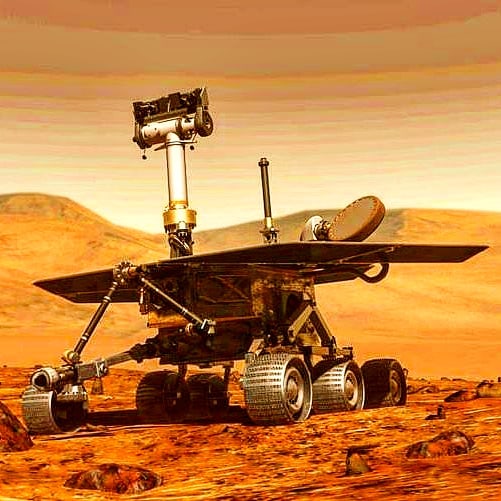
51960747_10104789291263726_1676595936316358656_nOpportunity’s last words from Mars: “My battery is low & it’s getting dark.”
May we all have lives as rich with discovery and a final chapter as peaceful. We’re lucky to have known you, Opportunity, and to see this world through your eyes. Thank you for your service.


creativity

A Year of Yes: Cross-polliNation podcast about everything I love about my career

8df410eb-5004-4241-b7de-8fdbd820fdff-originalExcited to share this podcast episode where I talk about everything I love in my career: product development, science, biomimicry, the arts, writing, my book, storytelling, technology, and the power of our imagination coupled with curiosity. Thank you to host N.B., and to Carolyn Kiel for recommending me! You can listen at this link (www.crosspollination.co) and wherever you get your podcast feeds!
creativity

A Year of Yes: Getting personal about time on a podcast about change

Yesterday, I did an interview for a podcast called How Humans Change. I spoke with hosts Josh Chambers and Leiv Parton about change, transformation, death, trauma, writing, mental health, choices, poverty, technology, career, the passage of time, therapy, science, dinosaurs, biomimicry, super powers, and how healing, while difficult, is the best motivator of all. It’s my most personal interview to-date.

Some people who hear it will be surprised, and others will have answers to some long outstanding questions that I have rarely discussed in the past. I’m making a more concerted effort to address these topics thoughtfully, authentically, and often.

I always love meeting members of my tribe and these guys are definitely part of it. Thank you to my amazing friend and mentor, John Bucher, for connecting me to them. I’ll share the episode link when it’s live. Until then, give their first season a listen by clicking here.

creativity

A Year of Yes: Crushing on my team

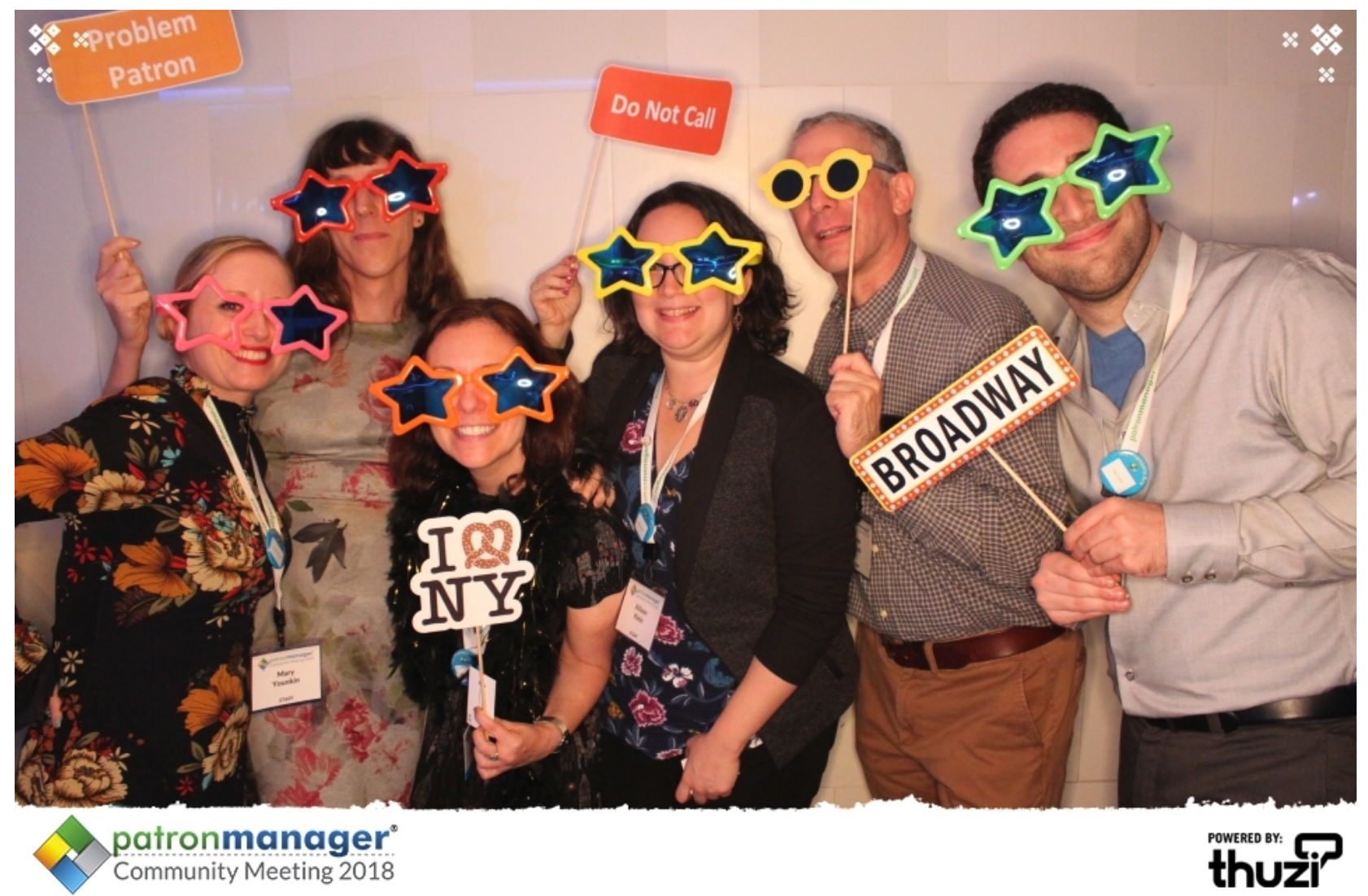
I’m having such a fantastic time at the PatronManager Community Meeting (and we still have 1 day to go!) What an absolute joy to meet so many of our incredible arts clients and to be with our stellar team members. My heart is so full. I ADORE my product team and I’m insanely lucky to work with them!

Screen Shot 2018-08-23 at 9.24.11 PM

creativity

A Year of Yes: Nature is our greatest teacher

Dinosaurs are great teachers. Kingfishers & their quick, quiet, and precise diving abilities inspired the Shinkansen Bullet Train’s design. This is the power of biomimicry. Most of the manufactured world is a mess; copying nature helps.

More info on this incredible innovation from Biomimicry Institute here: https://asknature.org/idea/shinkansen-train/#.W3Q8EPlKiUl


creativity

A Year of Yes: Why a career in the arts is the best business training you can get

About two years ago, I went to the Kennedy Center’s Arts Summit. It was a gathering of about 150 arts professionals, hosted by Yo-Yo Ma, and focused on Citizen Artistry, the idea of using the arts to influence positive change in people’s lives. I was one of the only people there who had worked in an industry other than the arts, and one of exactly two people who had an MBA. Several people asked me why I ever thought about pairing my artistic interest with business training. I told them that art and business are equal partners, not adversaries. In an artistic organization, you need business skills just as much as you need artistic talent. And in all organizations, business people have a lot to learn from artists.

This was puzzling to a lot of people, and that’s when a lightbulb went off for me. How could I bring the arts and business, and more specifically people who work in both disciplines, together to learn from one another? At the end of the Summit, everyone had to create a card to describe their career goal for the year. Here I am with my card:

“I commit to helping artists find the business people within them, and to helping business people find the artists within them.”

My life and my career have never been a binary choice between the arts and business. They’ve always been a package deal for me. And I wanted to find a way to work that mission into my career. I started my career twenty years ago in company management of Broadway shows and national theater tours. It has been a long and winding road since then. In all of these experiences, I say without hesitation that my work in theater has been the best business training I’ve ever had.

I so fervently believe this that when people ask me “how can I enhance my business skills?”, I tell them to go produce a live performance.

Why?

Here are the business skills we wield to produce a live show:

  • Meeting a preset, non-negotiable deadline (that curtain is going up on time no matter what—the show always goes on)
  • Staying below a strict budget, and likely a very small or non-existent budget to start with
  • Intense collaboration with a motley crew of colorful characters who all have different needs wants, and goals—hello competing priorities!
  • Publicity, marketing, media planning, and content creation
  • Financial management and accounting
  • Operations and logistics
  • In-person customer service
  • Bargaining and negotiation, as well as legal contracting
  • Impeccable time, people, and stress management
  • Recruitment and staffing
  • Oh, and then there’s that little matter of the show actually being high-quality
  • And, lest we forget, if any one of those balls drops, you bear all of the responsibility because you don’t have any backup

Are you kidding me? What other industry requires that much of a single person? No other industry. The production of a live show is the epitome of deft business skills in action.

I was beyond fortunate to have this kind of experience in the arts in my early twenties. It has informed and shaped my career and life as an adult, and I wouldn’t have it any other way. These skills are transferable to so many other industries, and a variety of roles within organizations and companies. The arts, and our active engagement with them, have many more gifts to give us than we realize.

My great hope and purpose in coming to work at PatronManager is to help arts managers create an environment of financial sustainability that allow your art and artists to shine, and to make your work accessible to as wide an audience as possible. The arts have never been more important than they are today, and our responsibility to produce them has never been greater. If you have ideas for us, please don’t be shy. I want to hear them so that we can help each other bring them to life.