creativity

Embracing stakeholder theory in Finland this summer

Photo from https://events.tuni.fi/stakeholdertheory/sustainability/

Finland, I can’t wait to meet you! I was accepted into the 2025 Summer Seminar in Stakeholder Theory at Tampere University with University of Virginia Darden School of Business (my alma mater), Darden-The Institute for Business in Society (IBIS), and RESPMAN Research Group. I’ll join an incredible global group of faculty, researchers, and PhD students to learn and share how to best integrate stakeholder theory into my work in sustainability and climate change mitigation. As part of the program, I’m revising and refining the work I started in my University of Cambridge / Cambridge Institute for Sustainability Leadership (CISL) dissertation on the role of storytelling to engage family offices in climate investments. I’ve spent the last 2 months editing (cutting it in half!) and am excited to get feedback on it. In addition to that paper, I’ll also work on 3 more research projects:

  • The Stories We Eat: Narratives to Shape Stakeholder Behavior and Policy for Sustainable Food Futures
  • Narrative Power: Using Digital Media to Convey the Voice of Future Generations and Nature in Sustainability Storytelling
  • From Self-Interest to Shared Benefit: How to Adapt Finland’s Exemplar of Public Trust Amidst Power Asymmetries in U.S. Businesses

I’m so grateful for this opportunity to learn and engage with these incredible people in one of the most sustainable communities in the world. I’m most looking forward to spending time with my professor, mentor, and dear friend R. Edward Freeman, who is one of my heroes and the founder of the seminar. As the originator of stakeholder theory that transformed business ethics, his work has fundamentally changed how businesses and business leaders around the world operate. He’s the reason I went to Darden and he changed how I see the world and my role in it. I’m honored to have had his support and encouragement for all these years.

It’s going to be an incredible summer of learning. I’m excited to experience all of it and to see where it leads! Nähdään pian, Finland!

creativity

New research to relieve radiation fibrosis for cancer patients

Photo by Oksana Taran on Unsplash

Some nerdy science news! Ever since my early breast cancer diagnosis in 2020, I’ve participated in a number of scientific studies and new medical treatments. Last week I began a new one after one of my doctors suggested it as a way to help support my body’s ongoing healing.

I had my bilateral mastectomy in October 2020. When the pathology was done, the research team found that lymph nodes in my left breast were positive for cancer cells even though they had biopsied negative. Additionally, I had something called “vascular invasion” on my left side. This means a few pesky breast cancer cells were trying to make their way out of my breast tissue by traveling through my blood vessels and lymphatic system. I was fortunate that my surgery removed them and brought their journey to an end before they could do any more damage. We also did a second surgery under my left arm 2 weeks after my mastectomy to test those lymph nodes. Thankfully, all of the lymph nodes under my left arm were cancer-free (just like the ones under my right arm!) However, there was a very slight possibility that one or two of those cancer cells on the left side got away without us knowing. On the off chance that this happened, my radiation oncology team suggested radiation just on the left side to ensure we stopped them. (There was no vascular invasion on my right side, so radiation on the right side wasn’t needed.) Also, there was one lymph node very close to my lung and heart on the left side that was a tiny bit enlarged. Because of its location near my heart and lung, it was too risky to biopsy or remove it. So, radiation would be used to kill any cancer cells that might be trying to hang out in that lymph node.

In total, I had 6 weeks of radiation, 5 days each week, for a total of 30 radiation sessions. The last 5 sessions were a “boost” week meaning the radiation was stepped up to a higher level and aimed right at that lymph node near my heart and lung. Though I’m grateful for these lifesaving treatments, the side effects were a bit rough. I got a 3rd degree burn the size of a baseball in the center of my chest and it caused the muscles, ligaments, and tendons on the left side to tighten up considerably. Though I’ve regained almost all of my mobility in my upper body through a lot of hard work, those muscles, ligaments, and tendons on my left side are still very tight and my left shoulder rolls in very slightly as a result. This condition is called radiation fibrosis.

All of my medical cancer care is through NYU Langone Health in New York City. They recently hired Dr. Yingrong Zhu, a physiatrist who specializes in breast cancer survivorship. A physiatrist, also known as a physical medicine and rehabilitation (PM&R) physician, is a medical doctor specializing in diagnosing and treating conditions affecting the musculoskeletal system, nervous system, and other bodily functions, with the goal of restoring function and improving quality of life.

I went to see Dr. Zhu this week and had a fantastic experience. She explained that the effects of radiation can persist for 20 years – I had no idea! – so this issues I’m having with tightness deserve attention. She also explained that because I work out and stretch every day (including stretches given to me by my physical therapy team right after my active treatment), more physical therapy wasn’t likely to help me. However, she told me about some small scientific studies that show a 6-month course of vitamin E 1000 i.u. supplements combined with a medication called pentoxifylline ER can help release tension in muscles affected by radiation fibrosis and lead to increased mobility.

Together, Dr. Zhu and I decided it was worth me trying this new medication combo. The side effects are minimal, and she’s had a few other patients who have benefitted from it. It’s too soon to tell if it will help me, but I’m always willing to try anything that helps support my health and well-being. I also see this as an opportunity to not only help myself, but also to help others by sharing my experience with this new treatment. I’m excited about the possibility of regaining more of my mobility and improving my quality of life. Here’s hoping that someday I’ll be able to do my beloved yoga backbends again!

creativity

NIH funding freeze endangers American lives and the US economy

Photo by National Cancer Institute on Unsplash. Chanelle Case Borden, Ph.D., a postdoctoral fellow in the National Cancer Institute’s Experimental Immunology Branch, pipetting DNA samples into a tube for polymerase chain reaction, or PCR, a laboratory technique used to make multiple copies of a segment of DNA.

Earlier this week, I wrote in my Togetherhood newsletter about the history and scientific research of Gila monster venom that led to Novo Nordicks’s medications Ozempic and Wegovy. This research began at the National Institutes of Health and led to some of the most profitable and promising drugs. These types of advances are now in danger because the Trump administration has frozen much of the $47 billion the US spends annually on biomedical research like this through 60,000 NIH grants.

The US houses the world’s leading medical labs that research cancer, dementia and Alzheimer’s, heart disease, child health, and diabetes to name just a few. NIH grants provide significant funding to these labs. To make sure the grants are used efficiently and ethically, there’s an extensive review process of grant applications. When the Trump administration froze the funding, they stopped all these review processes. These frozen funds also caused many research labs and universities that house them to halt hiring and PhD and post-doc admissions. Even if they released the funding today, it would take weeks or months to restart all these processes.

Additionally, freezing these funds is negatively impacting the economy and US competitiveness on the world stage. Every $1 of NIH spending generates more than $2 dollars in US economic activity. Healthcare is the biggest industry in the US. Without the foundation of NIH-funded research, the industry is in crisis. The US produces more influential health science research than the next 10 leading countries, combined. Every day that goes by, lives and livelihoods of Americans are in jeopardy. Please call your reps today and tell them to fight to restore NIH funding. Your life and the lives of those you love depend on it.

creativity

Video games can create billions of new climate activists

1/3 of the global population plays video games. With engaging climate change storylines and content, video games have the potential to create billions of new climate advocates to protect the health of the natural world, and by extension the health of all beings including us. This is the topic of my first two academic papers at University of Cambridge. I got my mark and feedback on my first paper and my graders were very complimentary saying the paper was of professional quality and has a strong literature review and purposeful recommendations for the company to use going forward. They also liked the persuasive case I made for the value of hope and joy in climate activism.

This is the first time I’ve ever written a paper in this style of academic writing. My topic was unusual for them. I brought my heart and personality into the style and structure of the paper. They said that’s also an unusual choice for academic writing but it works. I wrote the paper I was passionate about creating, and I’m proud of it. I learned a lot in this process that I will use throughout the rest of my graduate degree program and in my career going forward.

A huge thank you to my friend, Jennifer Estaris, and the entire team at ustwo games for inviting me to be a part of this gorgeous video game project that brings me so much joy and hope, and has taught me so much. Thanks also to everyone who cheered me on as I spent more hours on this paper than I’ve ever spent on any one academic assignment.

Now I’m drafting the action plan for my next assignment and preparing for my next workshop in Cambridge in March. I can’t wait to be back together with my cohort in that magical place. On to the next tranche of this adventure with a grateful and open heart and mind…

creativity

How I found the main setting for my third Emerson Page novel

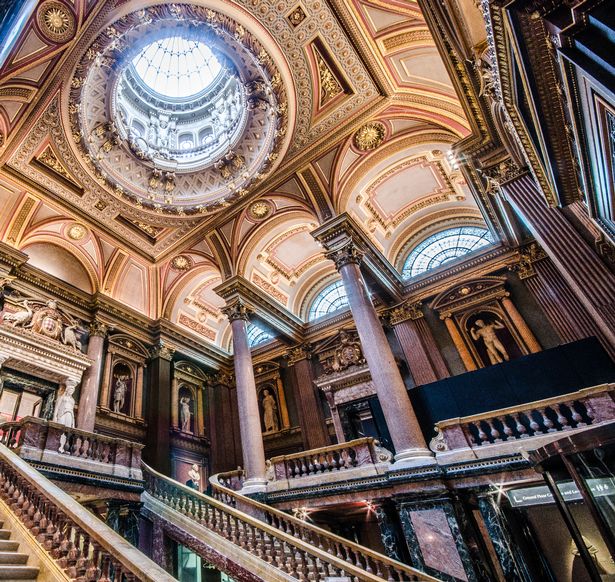
The Fitzwilliam Museum entrance

For me, the setting of a novel is a character. It sets the stage for the action and houses the many revelations of a story. Right now I’m outlining and crafting the story of my third Emerson Page novel. I’ve had some ideas of what will happen but I was struggling with where to place this action. I wanted a spectacular, magical setting. Frustrated that I couldn’t find it, I put it away and focused on something else.

I opened up Google Maps and decided to look at the street view of my walk from Fitzwilliam College, my college at Cambridge University, to the building where I’ll be taking my classes. It’s a winding 30-minute route dotted with shops and eateries tucked into centuries-old architecture through what looks like Diagon Alley. It goes past Fitzwilliam Museum, Cambridge’s main museum. I looked up some images of the museum and the second I saw the entrance, I knew I’d found the main setting for the novel.

The museum is free for all, houses a spectacular collection of antiquities and rare books and manuscripts, and has a stunning library. It’s exactly what the books needs. Get ready for more museum adventures!

creativity

How research helps writers get unstuck

Photo by Emily Morter on Unsplash

Have you ever been in the messy middle of a writing project? It’s the point where you’re not quite sure how to get from the middle of the narrative to the satisfying conclusion you have planned. It feels like you’re in quicksand, unable to clearly see the path forward. Your characters look to you for guidance, you look to them for guidance, and none of you have any answers so you just spin place, or worse—you abandon the project altogether. 

The wisdom and guidance you need to get out of the messy middle is research. Right now I’m working on a historical fiction novel. The main tentpoles of the plot have remained the same but I’ve brought in many new details to make the script come alive. It’s set in an Italian bakery in New York City in 1910, a dynamic and wild time in the city, country, and world. A myriad of historical events would have had an outsized impact on my characters so I have to research that time to get the details just right. It’s a heavy lift, and ultimately worth the time and attention.

I got myself out of that messy middle by digging into The New York Times archive for specific dates and events that figure prominently into the lives of my characters. In that research I found a plethora of information, and that information created the map I needed to find my way to the conclusion. 

If you’re in the messy middle now and ready to throw in the towel out of frustration, take a deep breath and go to the archives. Let history be your guide. Research your way across the channel to safely emerge on shore on the other side. It’s only a matter of time. The world needs your story.