June 18th: Knicks parade, free admission to AKC Museum of the Dog, and a special storytelling show by NYC’s Secrets & Lies with free snacks, exclusive after-hours museum access, special guests, and raffle prizes!
The Museum of the Dog is offering free admission all day on Thursday June 18th from 11am – 6pm for everyone who wears any Knicks gear
Then at 6:30pm NYC’s Secrets & Lies is doing a special storytelling show all about NYC dogs! The show requires a ticket and along with the show you get:
Salty and sweet snacks
Exclusive after-hours access to the museum
A rare chance to meet a real working transit dog and their handler who work the MTA subway every day
You’ll be entered into a drawing for 2 tickets to the American Kennel Club event Meet the Breeds
Where: AKC Museum of the Dog (101 Park Ave at 40th Street, Manhattan)
We are currently watching two seemingly unstoppable forces collide. On one side is the relentless corporate race to integrate artificial intelligence into every corner of our digital lives. On the other side is a fragile, aging energy grid and communities across the country that are refusing to let massive, resource-hungry data centers steamroll their neighborhoods.
The environmental toll of this digital gold rush is undeniable. A single AI query can use ten times the electricity of a standard internet search, and the data centers required to process these models require billions of gallons of water for cooling and unprecedented amounts of power. Trying to slow down this technological train feels nearly impossible.
But what if the sheer velocity of the AI boom is exactly what forces our hand? What if this crisis becomes the ultimate catalyst that forces tech giants and governments to finally accelerate the green energy transition?
The Corporate Collision Course
For years, tech conglomerates have enjoyed a sterling public relations narrative centered on ambitious net-zero carbon pledges. But the energy and resources demands of generative AI are obliterating those goals. To keep their AI systems running, these companies need power immediately, and they are quickly exhausting the capacity of our current infrastructure.
This is where the leverage lies. Tech giants cannot afford to let their AI ambitions starve for power, but they also cannot afford the reputational destruction of abandoning their climate goals to say nothing about the potential that these ambitions have to create more havoc on an already delicate planet. This paradox could force an unprecedented shift in corporate behavior: Instead of waiting for municipal utilities to green the grid, could tech companies put their massive balance sheets to work—directly funding utility-scale solar, wind, and geothermal projects to create the very clean energy they require and that would benefit people and the planet?
Friction Breeds Innovation
Local communities are proving that they are not passive backdrops for industrial expansion. From Virginia to Oregon, residents are organizing against the noise, land use, and water strain of new data centers.
This hyper-local resistance is creating a massive operational bottleneck for tech companies. When communities refuse to lie down, companies cannot just build bigger; they have to build smarter and they have to listen to these concerns to build partnerships with local residents. This friction could bring about a wave of structural innovation. Advanced liquid cooling systems that eliminate water waste, architectural designs that blend into local landscapes because they’re quiet and unobtrusive, and decentralized data centers that can operate on microgrids without straining the local town’s power supply would be wins for communities, tech companies, and nature.
Government action often lags until a system faces a breaking point. The sheer, unyielding demand of the digital race might be the exact pressure needed to force regulatory policy. Imagine a world where we have modern our grids that run on abundant clean energy and embrace radical efficiency.
The Togetherhood Takeaway
AI often feels like a runaway train, an inevitability. But it needs energy to operate. there isn’t any way around that. If we in the climate community flip the script, it could just be the lever that redirects its energy toward real, meaningful progress.
Audit the Corporate Promises: This week, look at the AI tools you use and research the climate pledges of the companies behind them. Hold them accountable to the idea that digital progress cannot come at the expense of ecological stability. Write to them. Call them. And call your reps to demand that they demand these companies keep their climate pledges intact, especially if they want to expand data centers in your city or town.
Support Local Demands: When communities near you advocate for stricter zoning laws and resource transparency from data centers, back them up. Local friction is the primary driver of corporate innovation. Show up at meetings and again, call your reps on the local, state, and national levels.
Advocate for Grid Modernization: The conversation around data centers is ultimately a conversation about our grid. Support regional policies that prioritize upgrading transmission lines and scaling renewable energy storage. Start with your local utility company. Contact them and find out what they’re doing.
We may not be able to stop the digital race, but we can demand that the machinery running it is built in a way that preserves the planet for all beings who call this home.
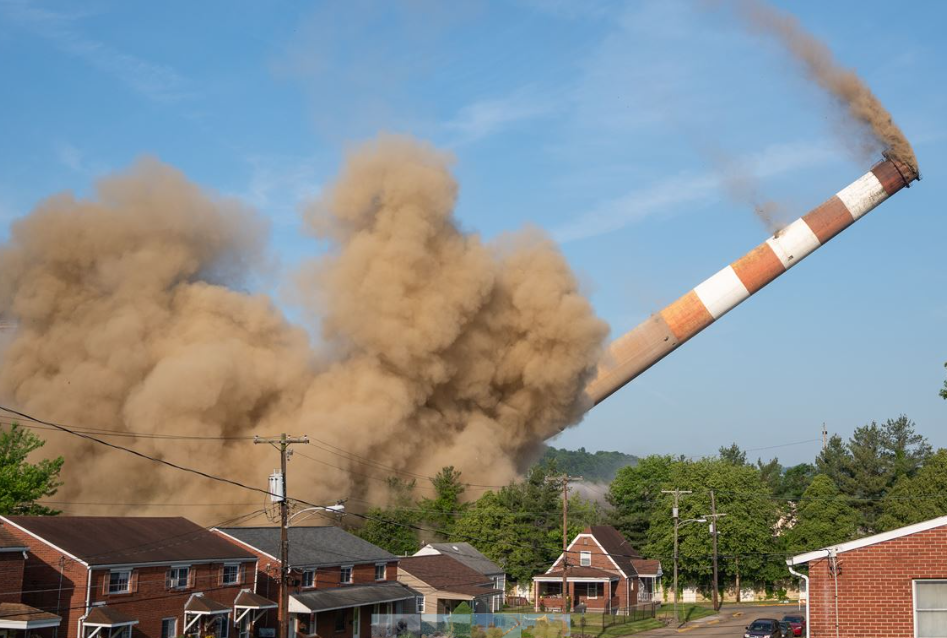
Smokestack collapses as an industrial site is demolished among residential homes. Community photo from Brockovich AI Data Center Reporting website: https://brockovichdatacenter.com/
We’re told the future is in the cloud. But the cloud isn’t an ethereal, weightless concept; it is a physical network of massive, energy-hungry data centers that require vast amounts of land and water to survive. As the race to build out artificial intelligence accelerates, these industrial hubs are quietly rewriting the landscape of rural and suburban communities across the country.
Often, the decisions to build these facilities happen in closed-door corporate and political meetings, leaving local residents to deal with the aftermath without having their voices heard and considered. The results: overburdened power grids that fail to provide for communities; strained water tables that bleed faucets dry; noisy cooling systems generating air pollution; a loss of jobs and decimation to the local economy. The list goes on and on.
Brockovich’s initiative isn’t about halting progress; it’s about establishing radical transparency to make sure the stories and concerns of communities aren’t sidelined by business and politicians. By creating a centralized map where community members can log the location, environmental impacts, and local concerns surrounding data centers, she’s turning isolated complaints into a powerful, unified database.
When a multi-billion-dollar tech company enters a small town, individual residents often feel powerless to ask for accountability. The company is big and powerful, and the individuals are made to feel small. But Brockovich knows data can be an equalizer. When communities unite their voices and aggregate their lived experiences onto a single map, they create a visible, undeniable record – the power of one amplifies with the power of many. They shift the conversation from corporate promises to real-world impacts to people.
The Reality of Local Agency
True sustainability cannot be achieved if we sacrifice the resilience of our local neighborhoods for the sake of digital expansion. Brockovich’s map is a tool for local agency. It reminds us that technology must serve human communities, not the other way around. By tracking these facilities together, people and communities ensure the human and ecological costs of our digital infrastructure are out in the open, where they belong. This projects makes the invisible visible.
The Togetherhood Takeaway
Resilience means refusing to let your local environment be managed entirely from the top down.
Check out Erin’s initiative, Brockovich AI Data Center Reporting: At her website for this initiative (https://brockovichdatacenter.com/), Erin has so many resources of information paired with ways you can take action right now. It’s the most comprehensive and actionable resource I’ve ever seen on this topic!
Look Beyond the Screen: This week, find out where the data centers that power your digital life are actually located. Are they concentrated in specific regions, and how is their resource consumption affecting local utility bills or water tables? you can start by looking at resources like https://www.datacentermap.com/ and click “Explore Map” to see how the data centers are clustered around the world.
Demand Transparency: When local officials debate zoning laws for new industrial technology, show up and ask the hard questions about long-term power and water usage. Contact your local official’s office to find out when these meetings are happening. Collective accountability starts with local inquiry.
The digital future is being built on real ground. We have a responsibility to protect our communities and all beings who call them home.
This week, four astronauts aboard the Artemis II Orion spacecraft achieved something humanity has not done in over fifty years. They flew around the far side of the moon, traveling farther from Earth than any humans in history – 252,760 miles. As they passed behind the lunar surface, they turned their cameras back toward home and captured a breathtaking Earthset, watching our bright blue planet sink behind the desolate, cratered edge of the moon. Looking at all of the media coming from the mission gives me chills in the best way.
The Cognitive Shift When astronauts view our planet from this immense distance, they often experience a profound cognitive shift known as the Overview Effect. From 250,000 miles away, they can’t see political borders, neighborhood disputes, or ideological divides. They see a single, fragile ecosystem. They realize that every being, be they a person, animal, or plant, shares the same life support system and collectively, the same destiny. We all only have one home and it belongs to all of us.
A Floating Laboratory for a Sustainable Earth People frequently wonder why we invest in space exploration when we face so many massive challenges right here on Earth. The answer is that a deep space capsule is the ultimate testbed for our future. We do not explore space to abandon our home planet; we explore space to discover the exact tools necessary to protect it.
To survive a lunar mission, astronauts cannot waste a single resource and a vast group of people with different talents and experiences must work together as a cohesive team with a singular shared mission – bring them all home safely. They must operate a circular economy. NASA engineers design advanced filters to scrub carbon dioxide directly out of the cabin air—technology that now forms the foundation of direct air capture facilities fighting global warming today. They develop systems to recover and purify every drop of moisture, translating directly to water filtration for drought-stricken communities. They conduct experiments on high-yield indoor agriculture to feed the crew without the benefits of direct sunlight or nutrient-rich soil, helping us understand how we can grow food in harsh environments. Staging this mission also requires the development of stronger, lighter materials that translates into the conservation of valuable resources.
Alongside this climate engineering, the Artemis II crew is conducting experiments that directly advance medical science. They carry microchips containing living human bone marrow tissue to study exactly how deep-space radiation and microgravity affects human cells. They monitor their own biological responses to understand why and how extreme stress alters the human immune system. Solving these medical challenges in space paves the way for individualized cancer treatments, tools to predict and treat chronic conditions, and advanced healthcare innovations that test drugs and vaccines. All of this research means that the astronauts are both scientists and test subjects. What we learn from these missions directly translates to helping all of us build a better healthcare system.
Orchestration on a Massive Scale The mission also represents the ultimate example of community orchestration. Sending a crew around the moon and safely bringing them back is never the work of one isolated visionary. It requires a massive, synchronized ecosystem of engineers, technicians, and scientists across the globe. Thousands of people must set aside their individual egos and operate with absolute trust in one another to navigate the unknown.
The Takeaway We do not need to launch into orbit to apply the Overview Effect to our daily lives. When we get stuck in the weeds of local disputes or feel overwhelmed by the friction of community building, we simply need to change our vantage point.
We can actively choose to step back and look at our neighborhoods as unified ecosystems.
Change your altitude to change your attitude: When a conflict arises in your community, intentionally zoom out. Ask yourself how this specific disagreement affects the overall health of the neighborhood ecosystem rather than just your immediate block. Then help other people zoom out as well to gain the same benefits of perspective.
Acknowledge the shared ship and the shared journey: Remind yourself and your neighbors that you all rely on the same local infrastructure and green spaces, and that collectively you are building your local economy to benefit everyone. You succeed or fail together.
Orchestrate across borders: Look for ways to connect your local initiatives with efforts in neighboring communities. A thriving garden in your neighborhood benefits the pollinators across your city and beyond.
Translate the research: Take inspiration from the Artemis crew. Look for ways to do small experiments and use the solutions you develop through those experiments to help your community and share with adjacent communities.
Nature requires us to act as a unified whole. We just need the right perspective to see it. Luckily for us, the crew of Artemis II is helping all of us to keep looking up.
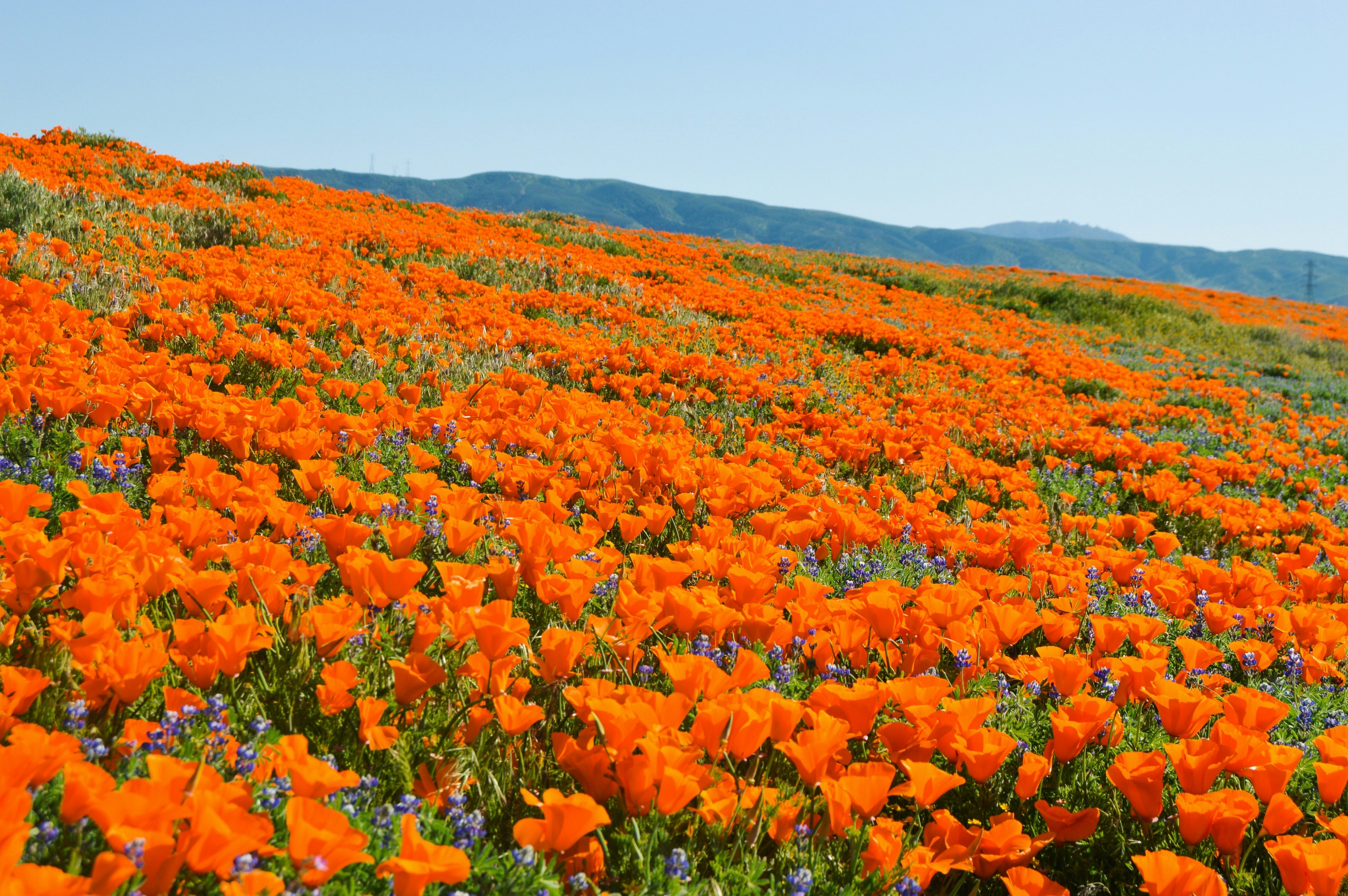
Poppies in California. Photo by Sarah Wood on Unsplash.
The California poppy is a masterclass in resilience. As a universal symbol of remembrance and hope, this delicate flower possesses a rugged secret. It thrives in some of the most challenging environments on earth, specifically germinating and flourishing in the harsh, scarred soil left behind by wildfires.
While a desert superbloom relies entirely on the unpredictable rhythms of weather, one community in Southern California decided not to wait for perfect conditions. They chose to actively orchestrate their own recovery.
The Ashes of Altadena In January 2025, the devastating Eaton Fire swept through the foothills of Altadena, California. The blaze destroyed thousands of structures, claiming homes, businesses, and irreplaceable personal histories.
Among the survivors was René Amy, a longtime community activist. The fire consumed his home and, in a cruel twist of irony, his native wildflower seed business called Altadena Maid Products. He lost his entire inventory to the flames. But instead of surrendering to the devastation, he immediately began volunteering at local shelters and looking for ways to heal his neighborhood.
The Great Altadena Poppy Project Understanding the deep psychological toll of the fire, René launched the Great Altadena Poppy Project. His vision was breathtakingly simple but massively ambitious: blanket the fire-scarred town in vibrant color by planting poppies – millions of them.
A century ago, golden poppy fields covered Altadena so densely that tourists traveled from across the country just to witness the bloom. René wanted to restore that legacy and offer his neighbors a tangible sign of life returning to their barren lots.
He initially purchased 120 million seeds with $20,000 of his own money and invited fire-impacted residents to sign up for free seeding services on their impacted properties. The response was overwhelming. Hundreds of homeowners asked to participate. Thanks to an outpouring of community support and anonymous donations, the project expanded its goal to sow a quarter of a billion seeds across more than 700 properties.
Orchestrating a Bloom This effort is the ultimate example of community orchestration. René and his crew of volunteers traverse the burn zones, spreading seeds across empty lots and blackened earth. Local scout troops pack envelopes of seeds to distribute globally, allowing friends and family far away to plant their own flowers in solidarity.
They are not just planting flowers; they are actively rehabilitating the degraded soil, preventing erosion, and providing a massive food source for local pollinators. Most importantly, they are giving traumatized residents a reason to look forward to the spring.
The Togetherhood Takeaway When we face immense loss or walk through a difficult season, it is easy to look at the scorched earth and assume nothing will ever grow there again. The residents of Altadena remind us that we do not have to passively wait for healing to arrive. We can plant the seeds of our own recovery.
Perhaps the most inspiring aspect of this entire project is its absolute lack of formal bureaucracy. René Amy did not wait to incorporate a nonprofit, assemble a board of directors, or build a complex fundraising platform. He just bought seeds and started asking his neighbors to help. This operates as pure mutual aid. It proves that you do not need a massive organizational apparatus or a corporate budget to orchestrate a community transformation. You simply need a good idea and the willingness to do the work.
Imagine what our country would look like if we all took this grassroots approach to our local ecosystems. A nationwide sight of vibrant, resilient flowers pushing through the cracks would be a powerful testament to our collective strength.
You can get involved with the Altadena project directly and bring this exact DIY energy to your own neighborhood right now.
Fund the recovery: While the poppy planting operates informally, the community still needs immense support for ongoing rebuilding and soil rehabilitation. Donating to the Altadena Community Preservation Fund provides direct financial assistance to the fire survivors.
Send seeds of solidarity: The project actively encourages people nationwide to purchase and plant native seeds in their own yards in solidarity with the residents, creating a networked superbloom across the country.
Plant a local blend: While California poppies thrive out West, creating a resilient ecosystem locally requires native species adapted to our specific climate. Instead of planting poppies, source a specific wildflower blend native to your area. In New York, that blend could contain Lanceleaf Coreopsis, Purple Coneflower, and Black-Eyed Susan. Scattering these in tree beds, empty lots, or window boxes around NYC creates a vital food source for local bees and birds.
Support local restoration: Channel the energy of the poppy project into ongoing efforts in our home area. In New York City, volunteering with the Brooklyn Greenway Initiative or local community gardens helps build the exact same kind of resilient infrastructure René Amy is building in California.
Be the orchestrator: Do not wait for someone else or a formal organization to beautify your street. Organize your neighbors, share resources, and create the conditions for your community to thrive.
Nature teaches us that even the most devastating fires eventually give way to new growth. We just have to be willing to do the planting and ask others to join us in our efforts.
March 20th marks the spring equinox and World Rewilding Day. Around the globe, conservationists and community leaders are celebrating this year’s theme: Choose Our Future.
We often operate under the assumption that we have to engineer our way out of every crisis. We build concrete seawalls to stop flooding and pour chemicals into the soil to force crops to grow. But the rewilding movement offers a radically different approach to leadership and resilience. It suggests that nature already holds the solutions. When we step back, relinquish a little control, and restore the natural balance, the ecosystem heals itself.
We can see this extraordinary transformation happening right now across diverse landscapes and communities.
The Affric Highlands In the central Highlands of Scotland, a groundbreaking, community-led coalition is leading the largest rewilding project in the United Kingdom. For centuries, intensive grazing and logging severely depleted the region, fragmenting the ancient Caledonian pinewoods.
Instead of forcing a heavily engineered recovery, the Affric Highlands project focuses on natural regeneration across 200,000 hectares of land. A diverse group of local landowners, businesses, and volunteers work together to remove barriers and simply allow native birch, rowan, and alder to reclaim the bare hillsides. As the trees return, so do the red squirrels, golden eagles, and black grouse. They are proving that large-scale nature recovery works best when deeply rooted in local collaboration, creating a landscape where both the wildlife and the rural economy thrive together.
The Naval Cemetery Landscape Rewilding does not require thousands of acres; it happens in the densest urban environments. Right here in Brooklyn, a forgotten piece of history recently experienced a profound ecological rebirth. For almost a century, a plot of land at the Brooklyn Navy Yard served as a hospital burial ground before the military decommissioned it.
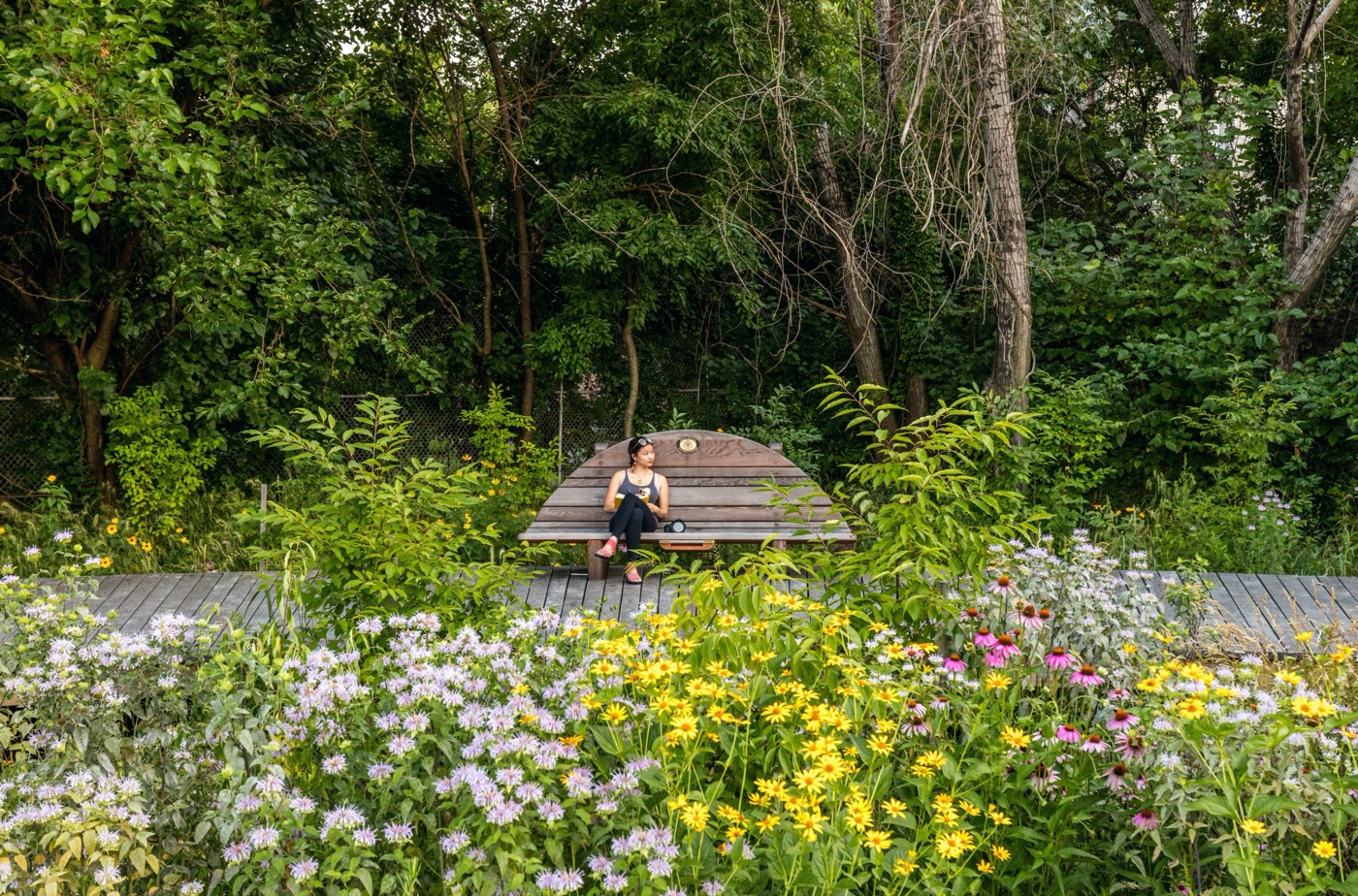
Instead of paving it over for commercial development, the Brooklyn Greenway Initiative transformed the site into the Naval Cemetery Landscape. They planted a 1.8-acre meadow teeming with over fifty native plant species like milkweed, asters, and switchgrass. Today, this formerly restricted land is a public haven buzzing with native bees, moths, and migratory birds. A raised wooden boardwalk allows visitors to experience the vibrant ecosystem without disturbing the soil. By bringing abundant life to a space that memorializes the dead, the community created a powerful sanctuary honoring the cycles of nature.
The Saw Mill River Daylighting In Yonkers, New York, city planners buried the Saw Mill River under a concrete parking lot in the 1920s. For nearly a century, the waterway vanished from the community. Recently, a coalition of residents and environmentalists championed a daylighting project to tear up the concrete and bring the river back to the surface.
Today, a thriving aquatic ecosystem runs right through the downtown plaza. American eels, snapping turtles, and migratory birds returned almost immediately. Uncovering the river revitalized the local economy and proved that removing artificial barriers allows life to rush back in with incredible speed.
The Snowchange Cooperative In Finland, decades of industrial peat mining severely damaged the boreal forests and wetlands. A network of local villages and Indigenous Sámi communities formed the Snowchange Cooperative to buy back the degraded land and restore it.
They block the old drainage ditches and allow the water to flood the peatlands once again. This simple act creates vital habitats for nesting birds and traps massive amounts of carbon. They combine traditional ecological knowledge with modern science, showing that the people who live closest to the land are often its most effective healers.
Green Forests Work Across the Appalachian region of the United States, legacy coal mining left behind millions of acres of compacted, barren land. Traditional reclamation simply planted non-native grasses, creating ecological dead zones.
An organization called Green Forests Work takes a completely different approach. They use heavy machinery to deliberately rip up the compacted earth, loosening the soil so water can penetrate. Then, volunteers plant native hardwood trees like American chestnut and oak. By breaking up the hardened surface, they allow a diverse, native forest ecosystem to replace an extractive wasteland.
The Togetherhood Takeaway Rewilding is more than an ecological strategy; it is a mindset for community building.
When we look at our own neighborhoods, our workplaces, and our creative projects, we often try to force outcomes. We exhaust ourselves trying to micromanage every detail. Rewilding teaches us to focus on the environment instead. When we cultivate healthy soil, encourage diversity, and remove the toxic barriers, we do not have to force growth. It happens naturally.
This spring, consider how you can rewild your own life. Plant native species in your window box. Support local ecosystem restoration projects. If you have a lawn, let it grow wild and free – better for you and better for the planet. Give yourself permission to grow, thrive, and create joy even in times of difficulty. Save room in your life for the unexpected and the not-yet-imagined. Be a joiner and link arms with those around you. Nature teaches us that when we uplift others, we create the conditions for everyone to rise together.
The news cycle frequently reminds us how fragile our extractive energy systems truly are. When we rely on distant supply chains and volatile markets to power our homes, a disruption on the other side of the world immediately impacts our local stability. We tether our daily lives to global anxieties.
But true energy independence looks entirely different. It comes from making nature an ally.
When we build symbiotic systems that harness the sun and the wind, we stop relying on extraction and start cultivating true resilience. Renewable energy does more than lower carbon emissions; it insulates our communities from global market shocks. The sun does not care about international borders, and the wind does not respond to market panic. They simply provide.
Across the country, communities are already proving that the best way to weather a global storm is to build a strong local energy ecosystem.
Sunset Park, Brooklyn
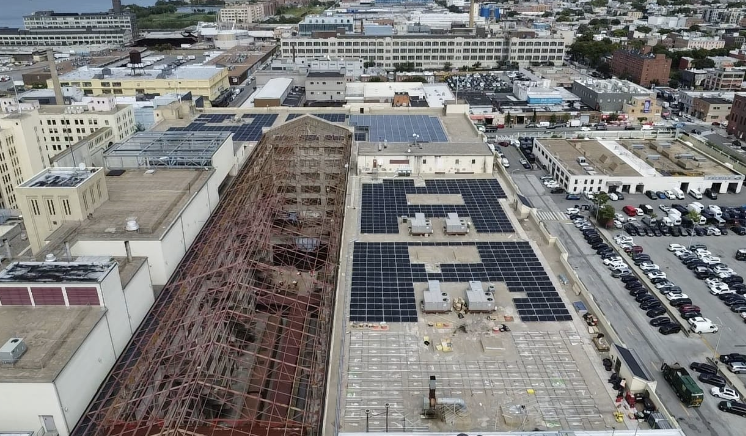
Right in our own backyard in Brooklyn, a grassroots organization called UPROSE is transforming the industrial waterfront. They spearheaded the creation of New York City’s first cooperatively owned community solar project on the roof of the Brooklyn Army Terminal. This massive solar array—a system that links hundreds of individual solar panels together so they function as one unified power plant—provides discounted, clean energy to approximately 150 local households and small businesses. Instead of traditional corporate ownership, UPROSE and the developer Working Power co-own the system alongside the community. They direct the revenue generated by the array into a community wealth fund, allowing residents to finance additional local projects based on their own priorities. This structure empowers Sunset Park residents to vote on spending the profits, such as funding additional local solar initiatives. Instead of waiting for top-down solutions, the neighborhood is building its own climate resiliency and keeping the economic benefits firmly rooted in the community.
Shungnak, Alaska
Inside the Arctic Circle, the remote Iñupiat village of Shungnak historically relied entirely on shipped-in diesel fuel to run its generators. This dependence made energy incredibly expensive (sometimes as much as $15 per gallon) and vulnerable to supply chain issues. Recently, the community installed a hybrid microgrid featuring a 225-kilowatt solar array and an advanced 384-kilowatt-hour lithium iron phosphate battery system. These batteries are grid-forming, meaning they seamlessly take over the electrical load without a flicker. They provide a safer, longer-lasting alternative to standard lithium-ion options. This technology allows the village to completely shut off its diesel engines for hours at a time during the long summer days. The community has recorded stretches of up to 11 straight hours running purely on solar and battery power. The system saves the community 15,000 to 25,000 gallons of diesel fuel annually. This translates to well over $125,000 in savings each year, bringing true energy independence and resilience to the region. This project won Solar Builder Magazine’s Project of the Year Award.
Buffalo, New York
Upstate in Buffalo, New York, a non-profit called PUSH Buffalo transformed a vacant 1927 public school building into a thriving community hub. The renovated School 77 now houses 30 affordable senior apartments, a neighborhood gymnasium, and a local theater company. They installed a 64-kilowatt community-owned solar array on the roof to supply energy to the local grid. PUSH Buffalo offers the resulting energy credits directly to the buildings low-income tenants at a steeply discounted rate compared to the standard utility company. Furthermore, the tenants engage in a participatory budgeting process to decide exactly how to spend any excess revenue generated by the system. While they initially lacked the funding for battery storage, PUSH Buffalo actively plans to add this capacity. This future upgrade will officially turn School 77 into a microgrid and resiliency hub during extreme weather conditions.
The Togetherhood Takeaway These communities are not just changing how they get their power; they are fundamentally changing their relationship with the natural world. They are moving from an extractive model that leaves them vulnerable, to a symbiotic model that makes them remarkably strong.
When we make nature our ally, we stop being passive consumers of a fragile global market and start becoming active builders of a resilient local ecosystem that benefits all beings who call it home.
Taking Action in Your Own Ecosystem Building a resilient local grid starts with small, deliberate steps, and you do not need to own a roof to participate. Here are four ways to start cultivating energy independence in your own community right now:
Find a Community Solar Farm: Platforms like EnergySage allow you to enter your zip code and find local solar arrays looking for subscribers. You simply connect your utility account and start powering your home with local sun, often at a discount.
Join a Solar Co-op: Organizations like Solar United Neighbors help neighborhoods band together to bulk-purchase solar installations, driving down costs and building collective community power.
Advocate Locally: Connect with local chapters of the Climate Reality Project to organize around local infrastructure changes and demand clean energy investments from your elected officials.
Last week, we closed out the year by looking at the victories nature secured in 2025 that didn’t get enough coverage. Today, let’s look forward.
It is easy to dread the headlines this coming year. We know the challenges we face—political headwinds, climate tipping points, and the sheer noise of it all. But if we only look for the fires, we miss the flowers.
2026 is shaping up to be a landmark year for the wild world. From the icy steppes of Kazakhstan to the open ocean (and even the sun itself), there are massive moments on the horizon worthy of celebration.
Here are three dates I’m circling in red on my calendar this year.
1. January 17: The Ocean Gets a Shield
We don’t have to wait long for the first massive win. On January 17, the High Seas Treaty officially enters into force.
You might remember we talked about this last year when it hit the ratification threshold, but next week it becomes international law. This is the legal “go” signal that finally allows the world to establish Marine Protected Areas (MPAs) in international waters—the vast blue “wild west” that covers nearly two-thirds of our ocean. For the first time, we have a mechanism to protect life in the deep sea from unregulated exploitation.
This project has been years in the making. It involves not just moving cats, but restoring an entire ecosystem—bringing back the prey species (like Bukhara deer) and the riparian forests the tigers need to survive. It is a powerful reminder that we can do more than just protect what is left; we can rebuild what we’ve lost.
This will be the first total eclipse visible from mainland Europe since 1999. While it’s a celestial event, I always view eclipses as a profound “nature check.” They are one of the few things powerful enough to make millions of people stop, look up, and realize we are all connected and standing on the same spinning rock.
It doesn’t sound “sexy,” but rangelands cover nearly half of the Earth’s land surface. They are the carbon sinks, biodiversity hotspots, and cultural heartlands that sustain millions of people and animals (including our friend the Jaguar!). Expect to hear a lot more about the grasslands this year—they are finally getting their moment in the sun.
We have a lot of work to do this year, Togetherhood community. But we also have a lot to look forward to.
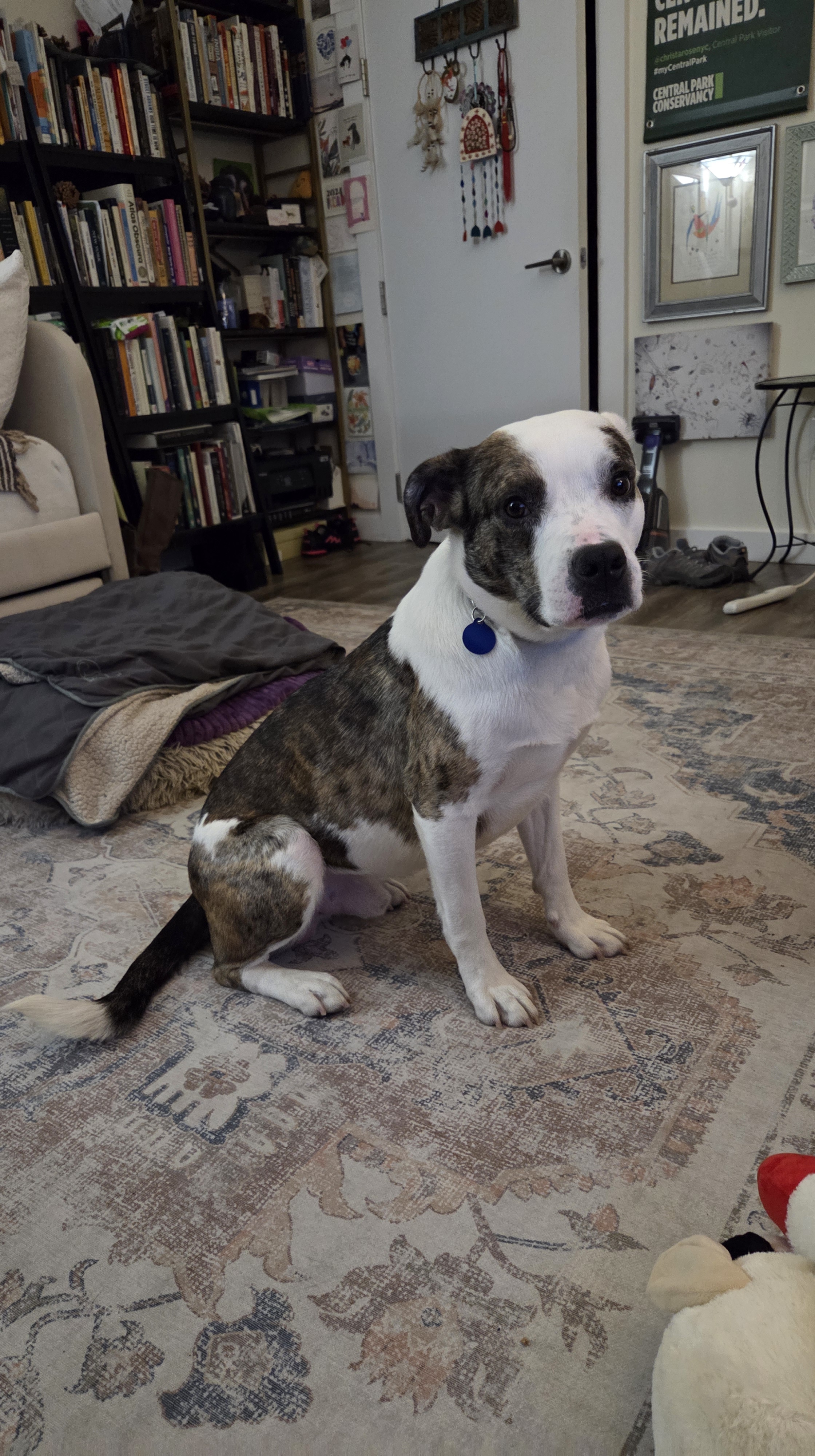
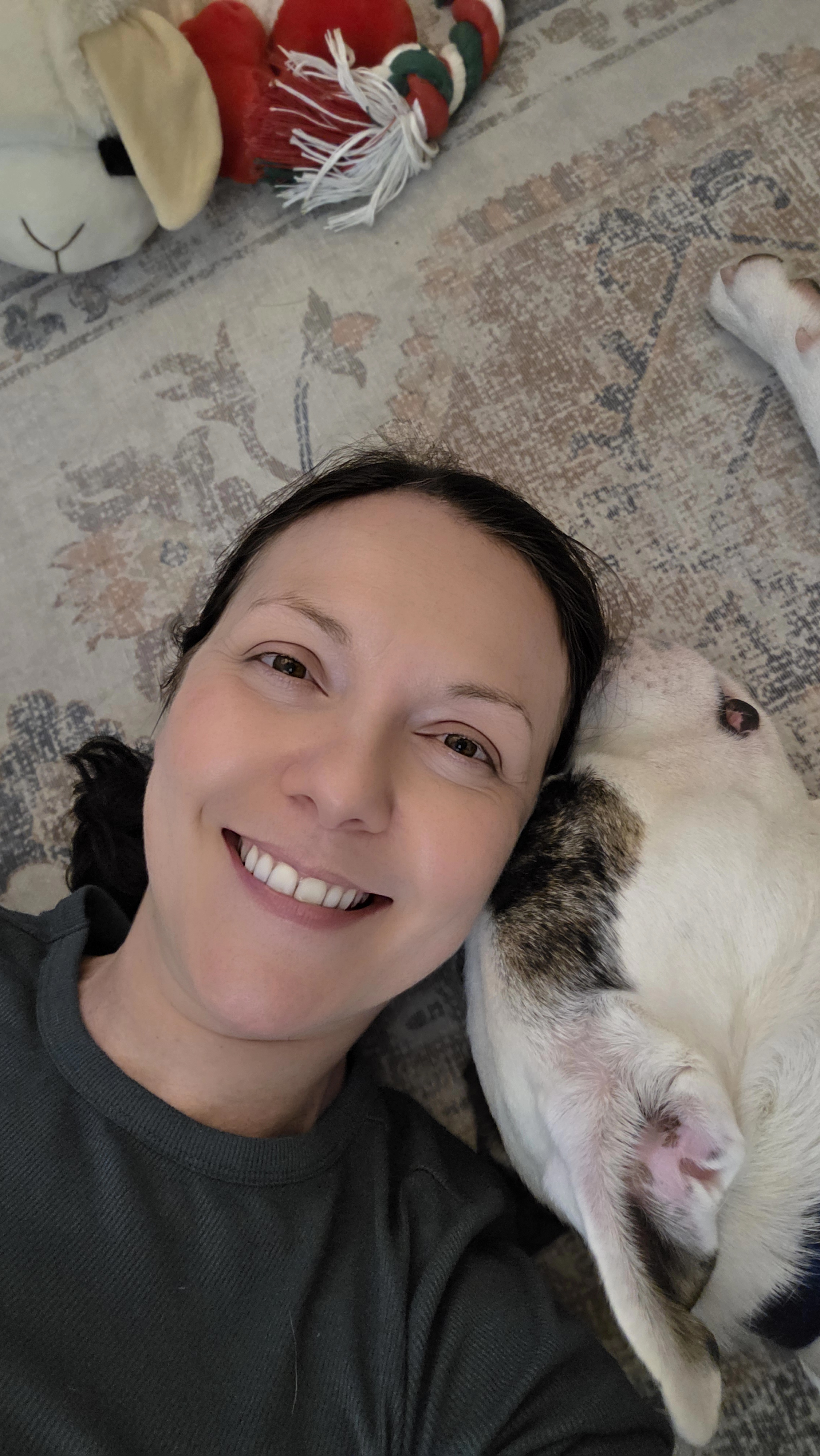
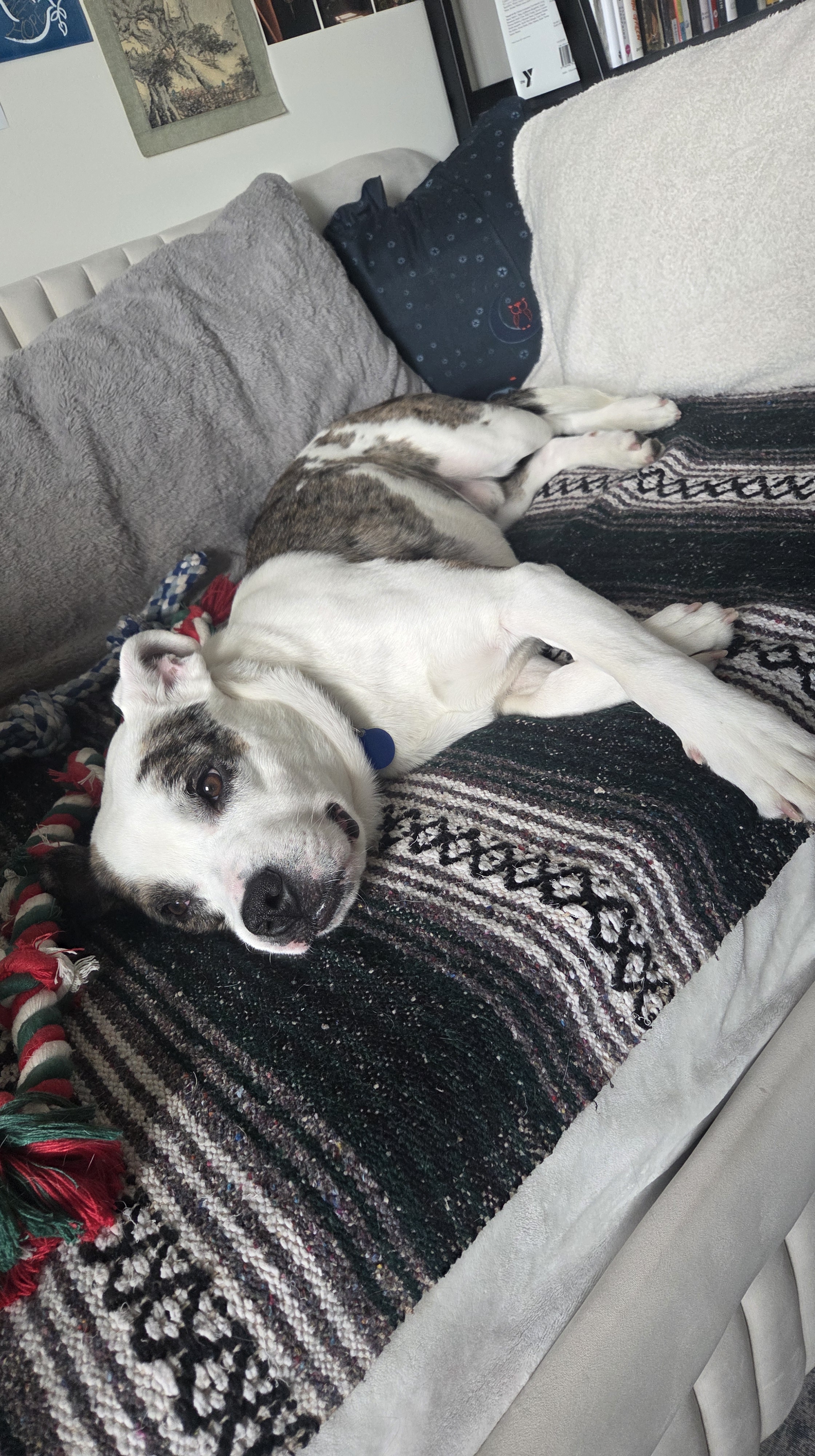
Yesterday, I volunteered at the Muddy Paws Rescue adoption event because they needed some last-minute help. Afterward, I was supposed to pick up two 4-pound puppies who needed a temporary foster overnight. I had my apartment all set up for them; I was so excited. I haven’t had puppies since Dorothy and Sophia, my bloodhound babies, and I’ve never had puppies quite that small. I even caught myself wondering if one of them might be “the one.”
But at the event, plans shifted. A foster arrived and explained they wouldn’t be able to pick up their foster dog if he didn’t get adopted. As excited as I was for those puppies, I knew it would be much harder to find an emergency placement for this 50-pound adult dog who suddenly had nowhere to go.
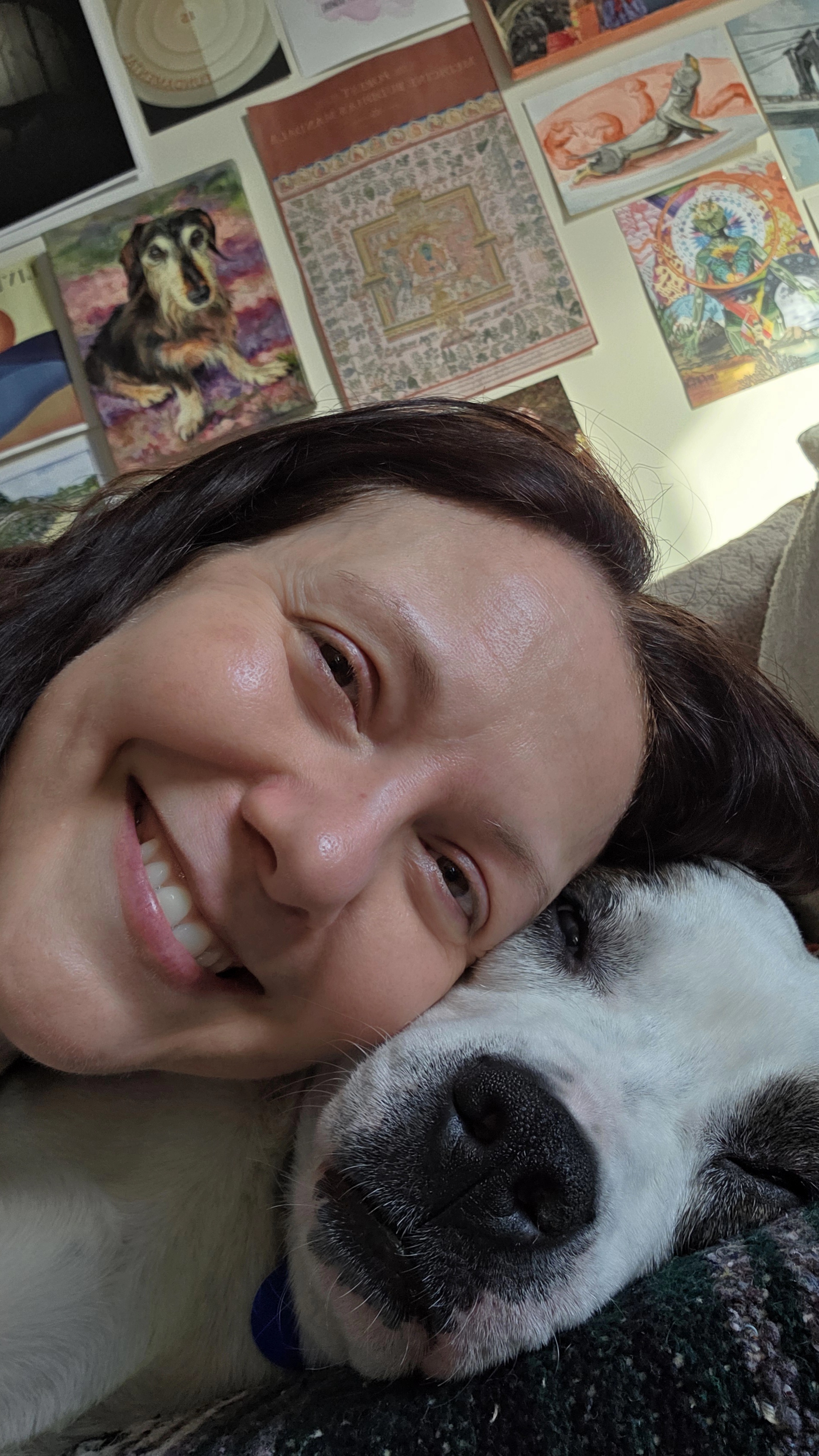
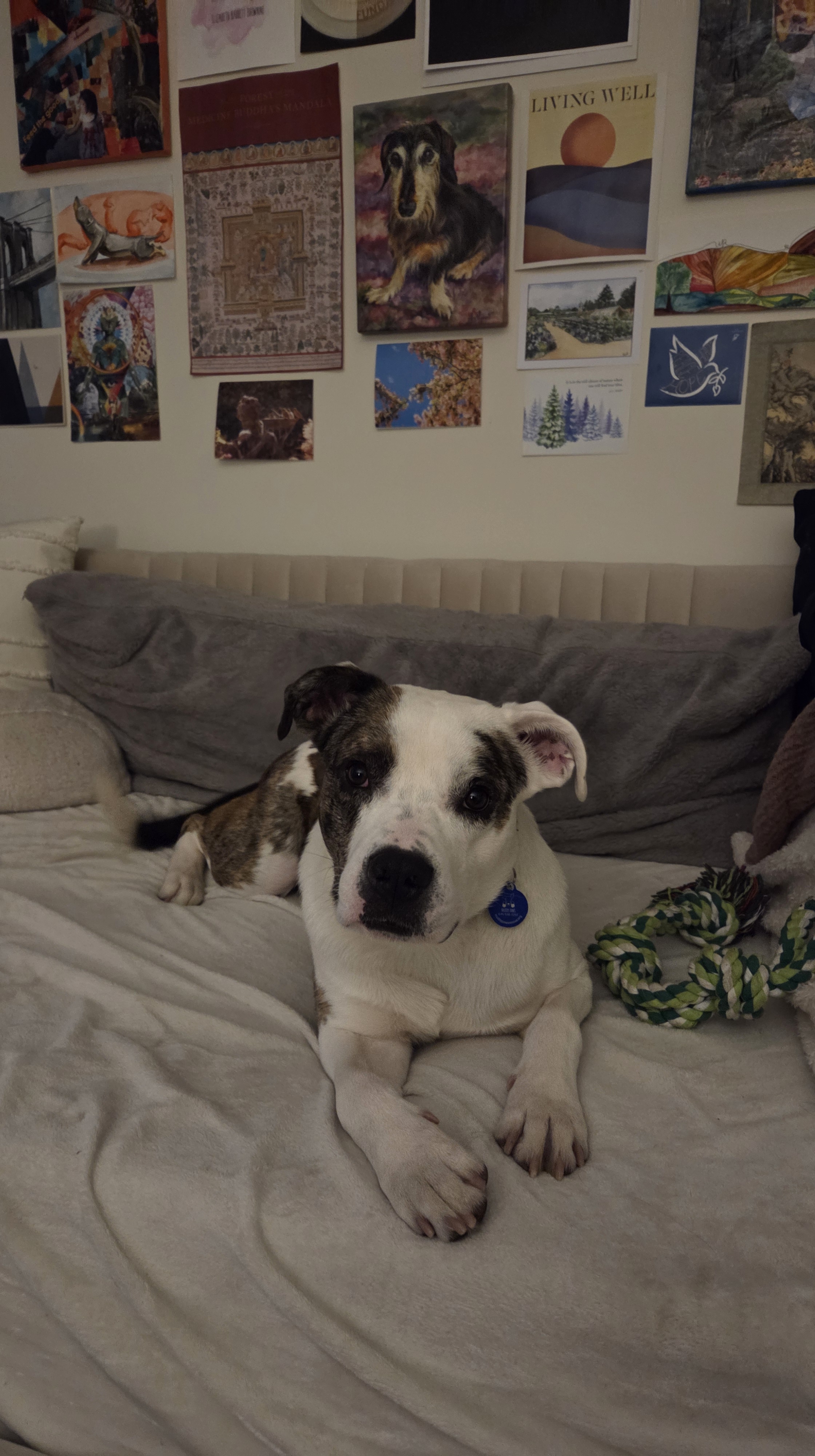
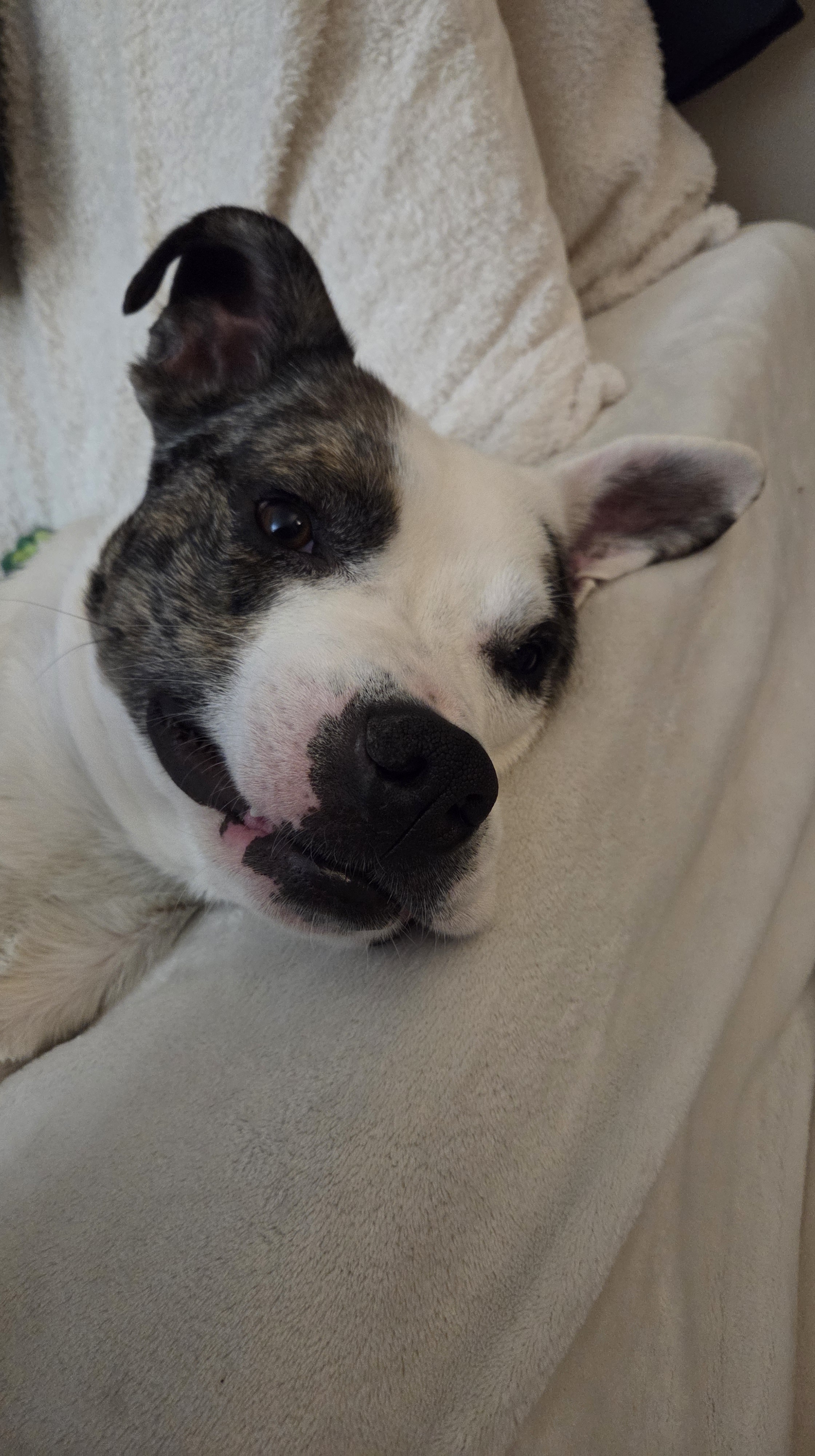
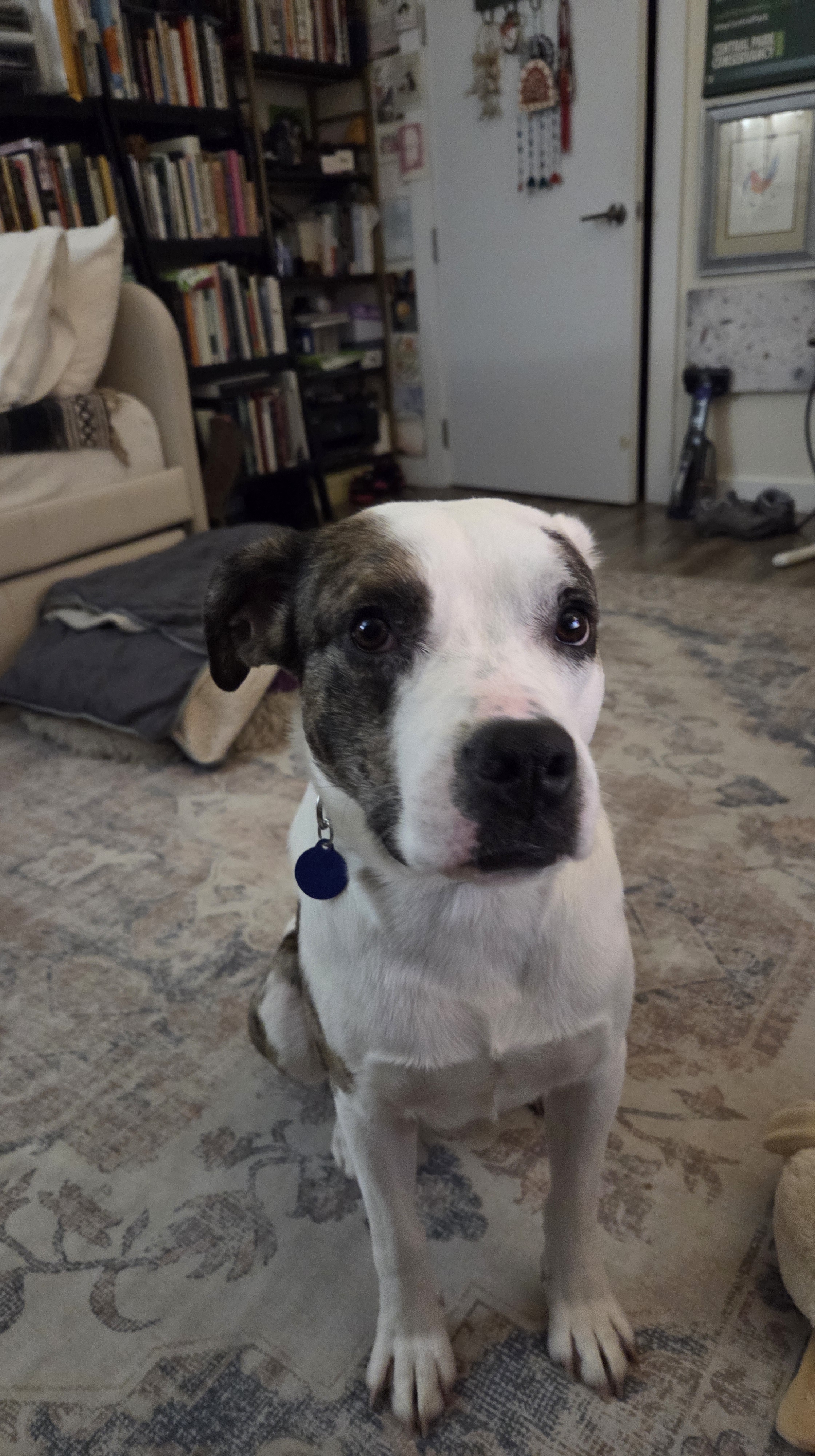
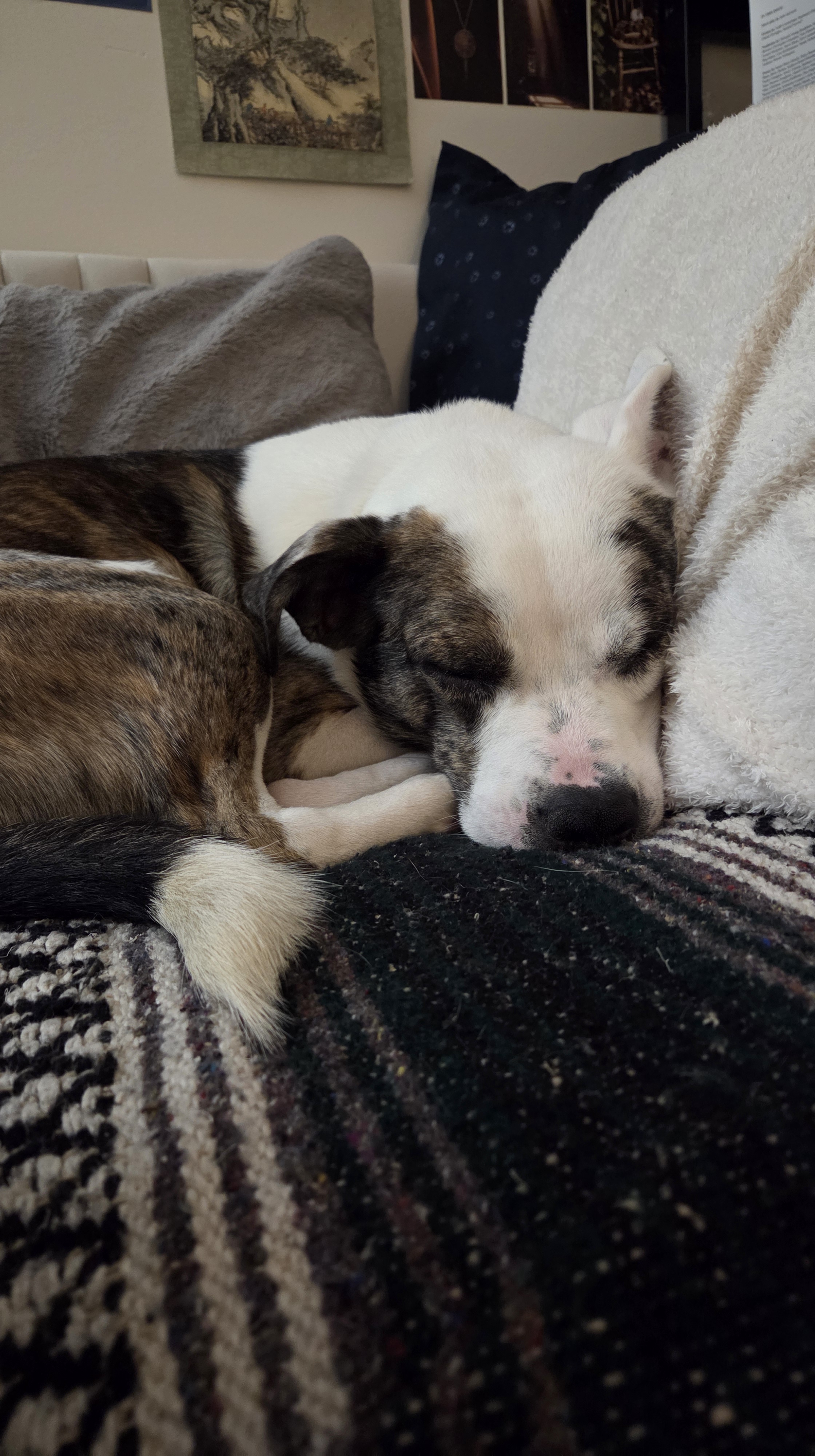
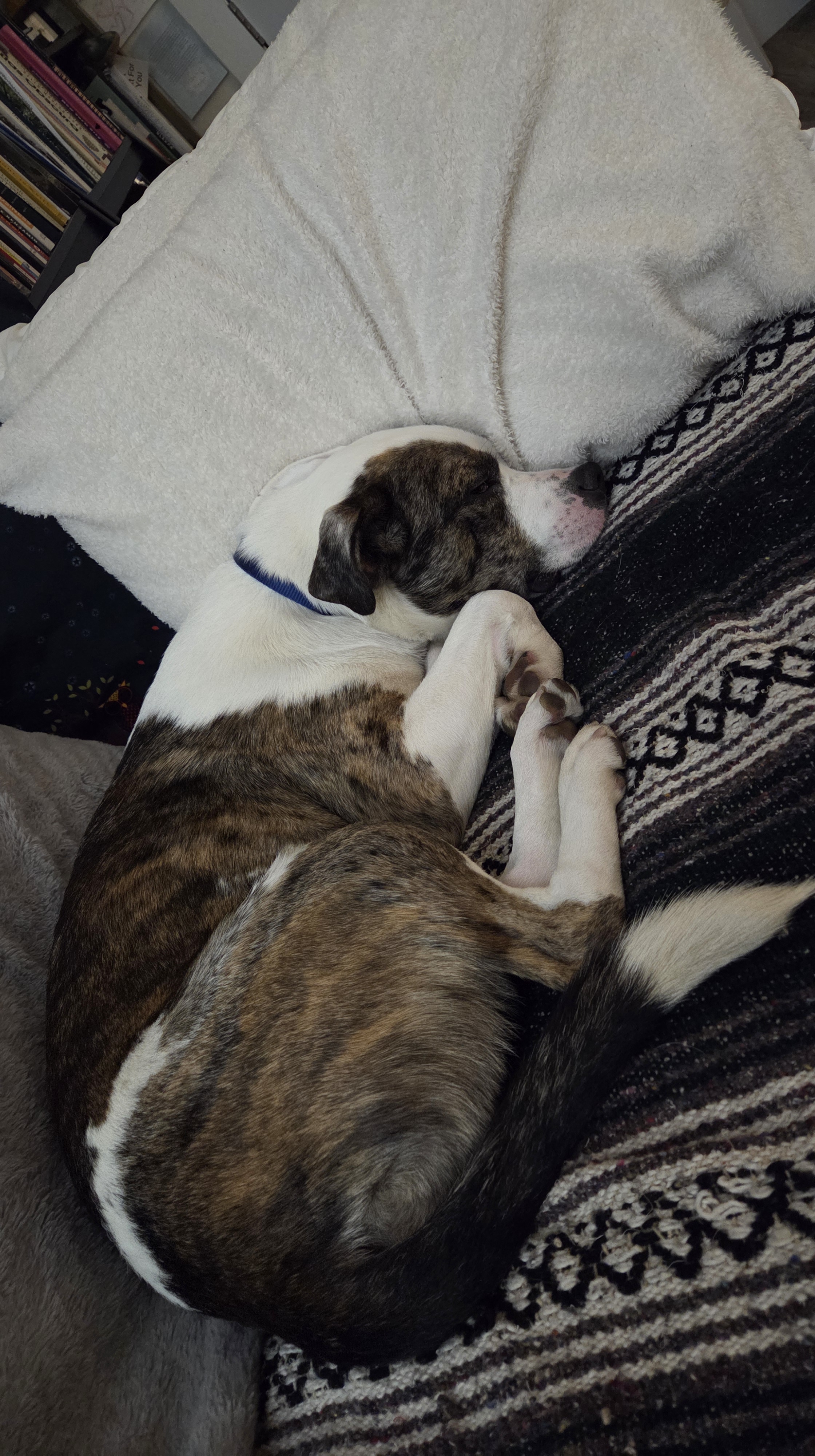
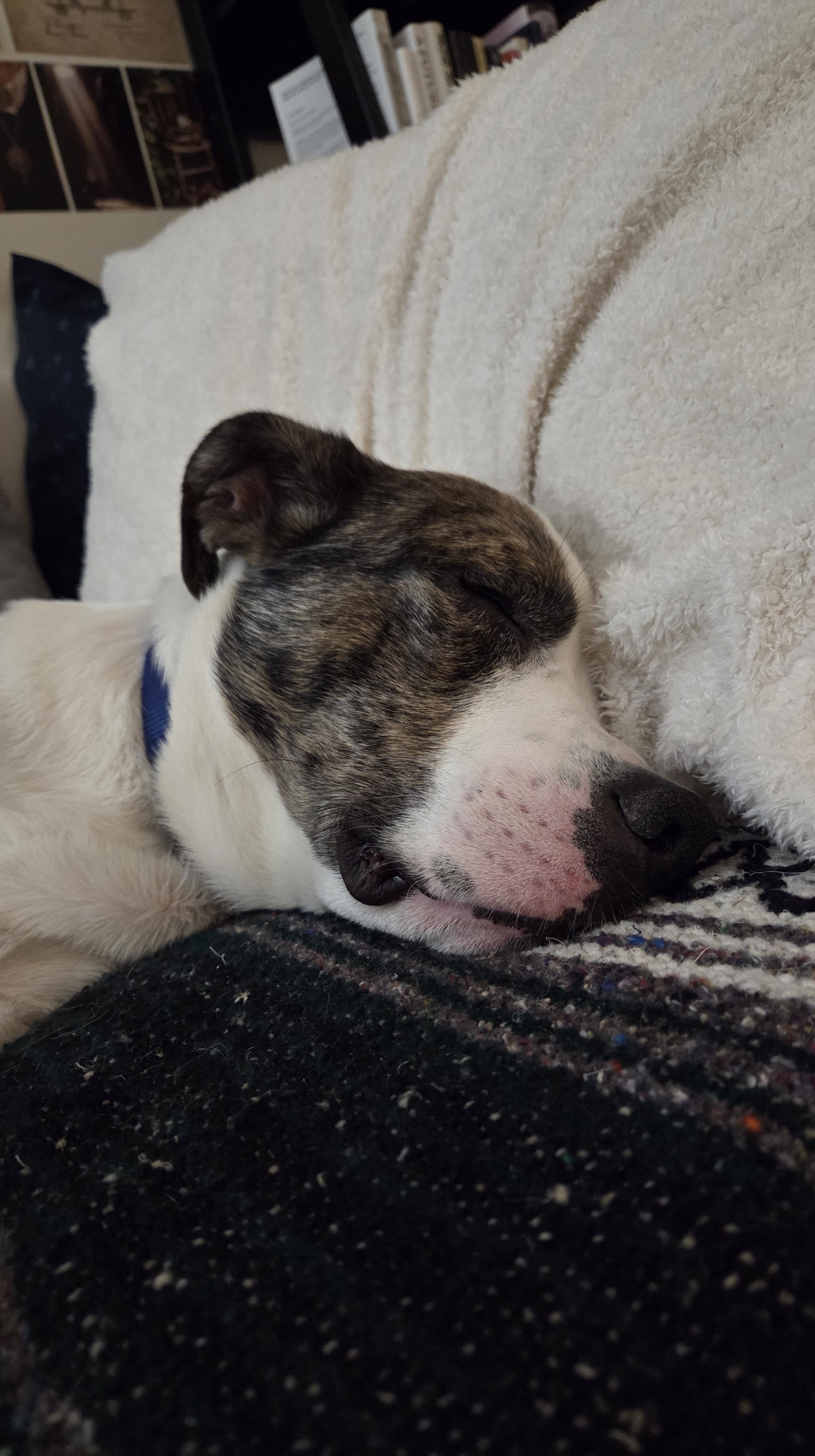
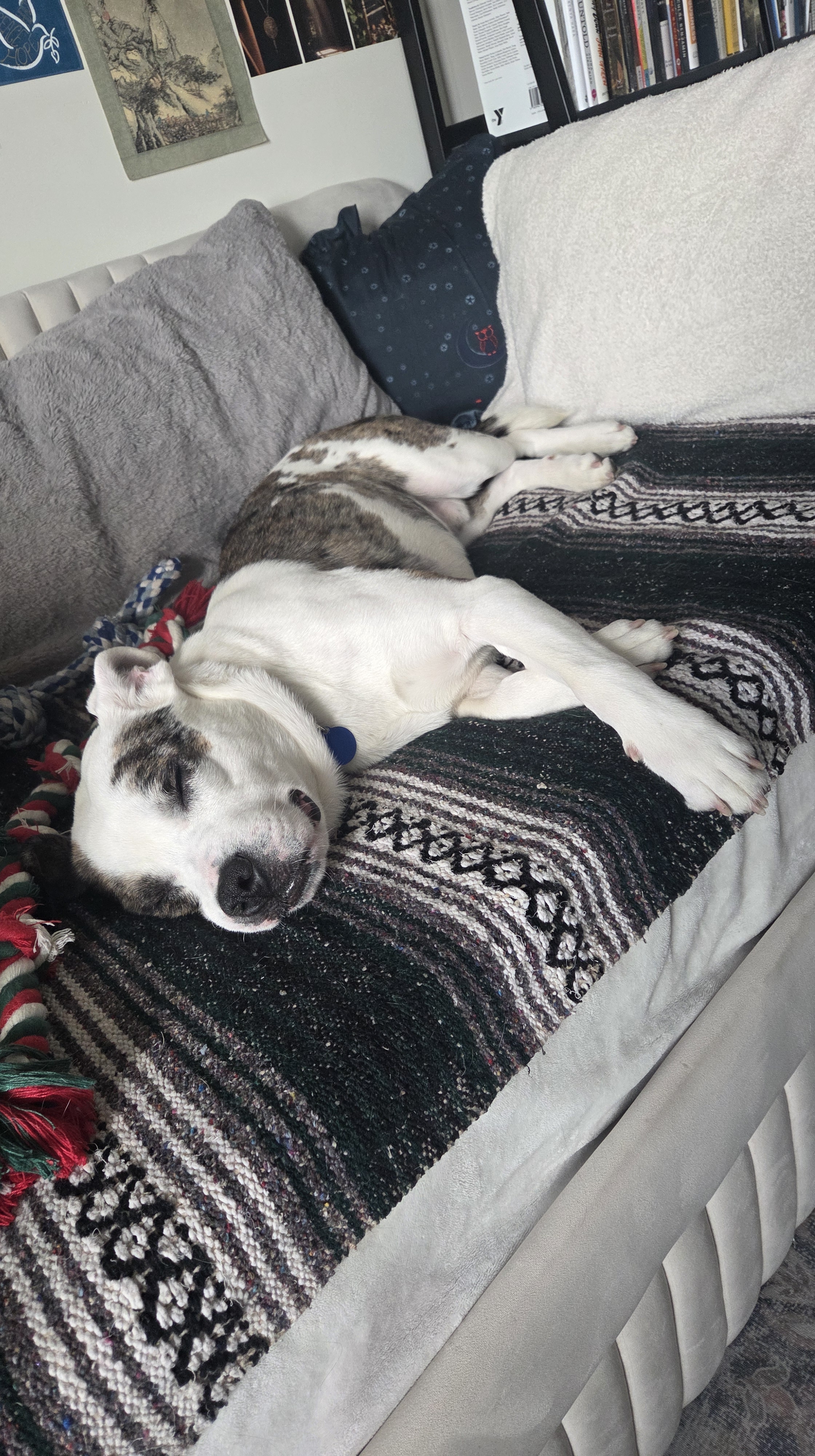
So, meet Tony: my first foster of 2026.
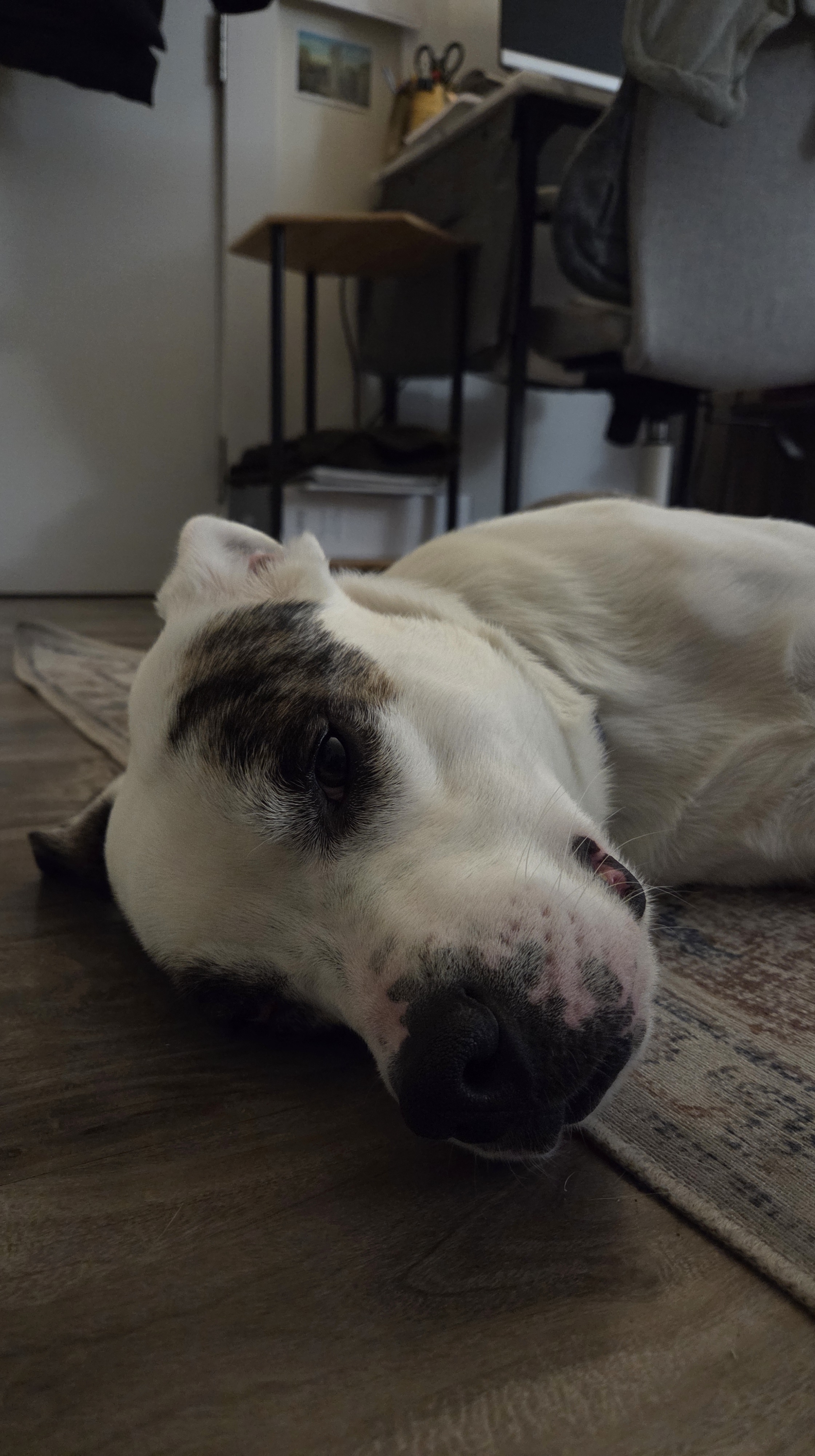
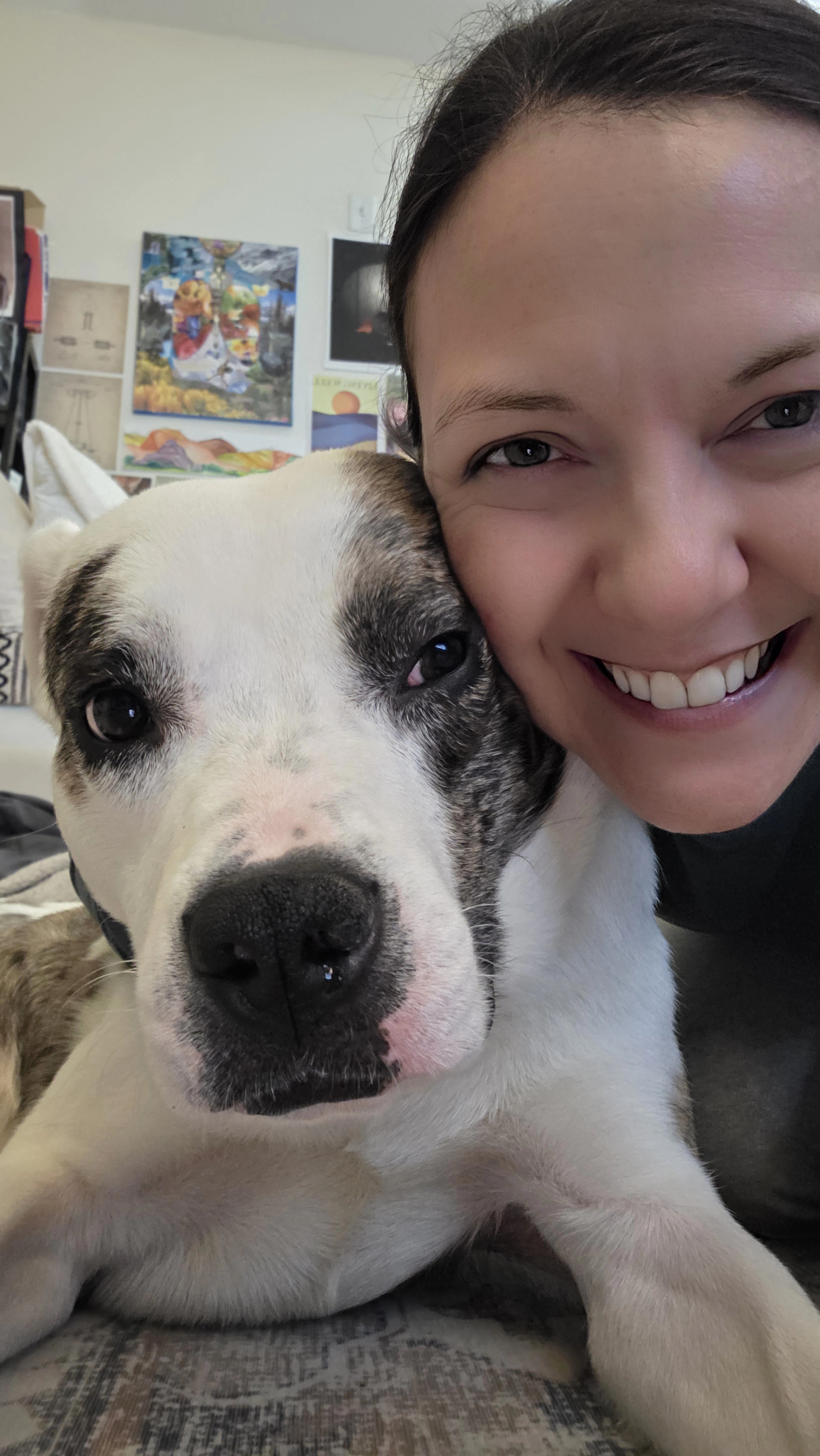
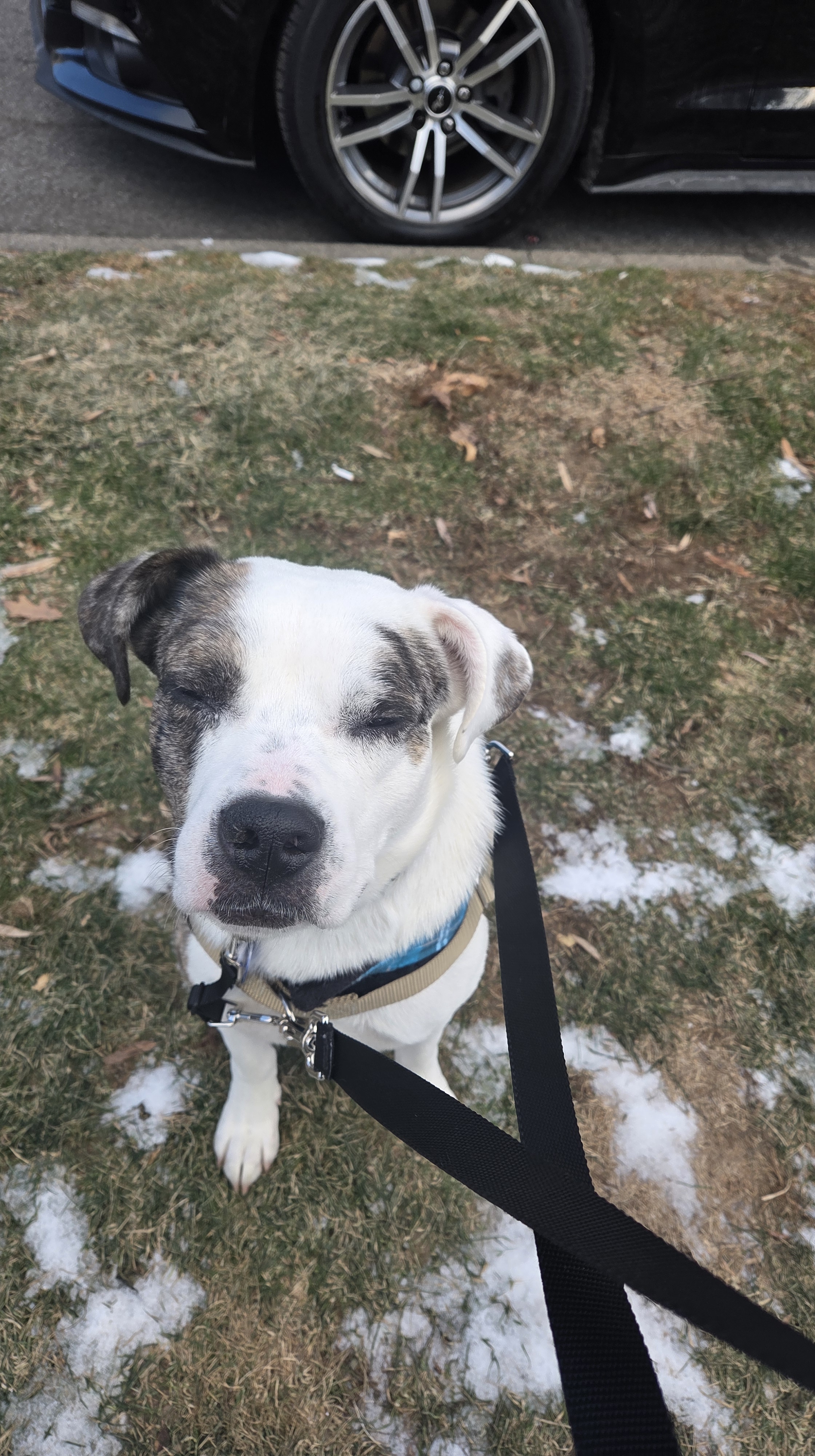
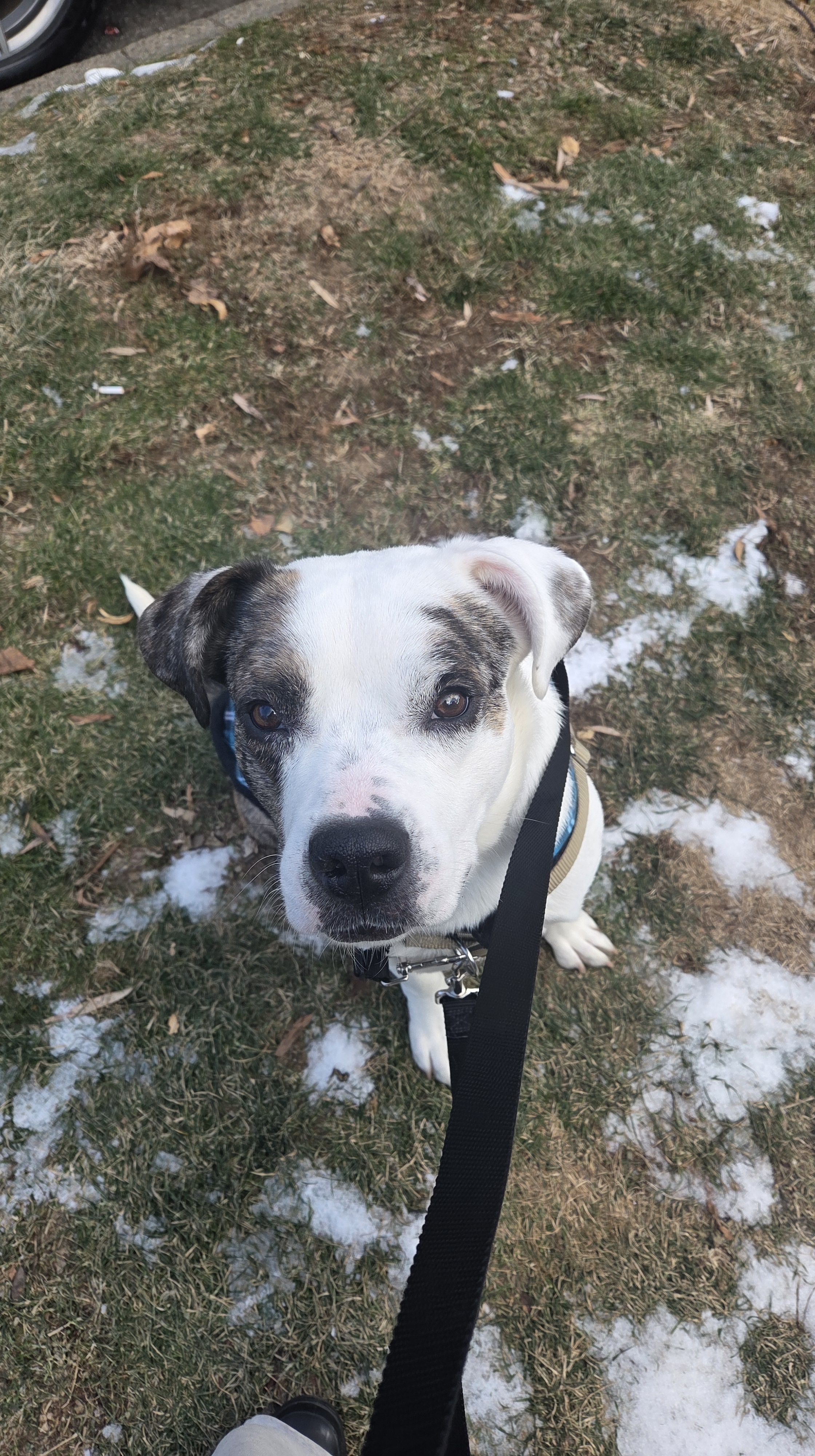
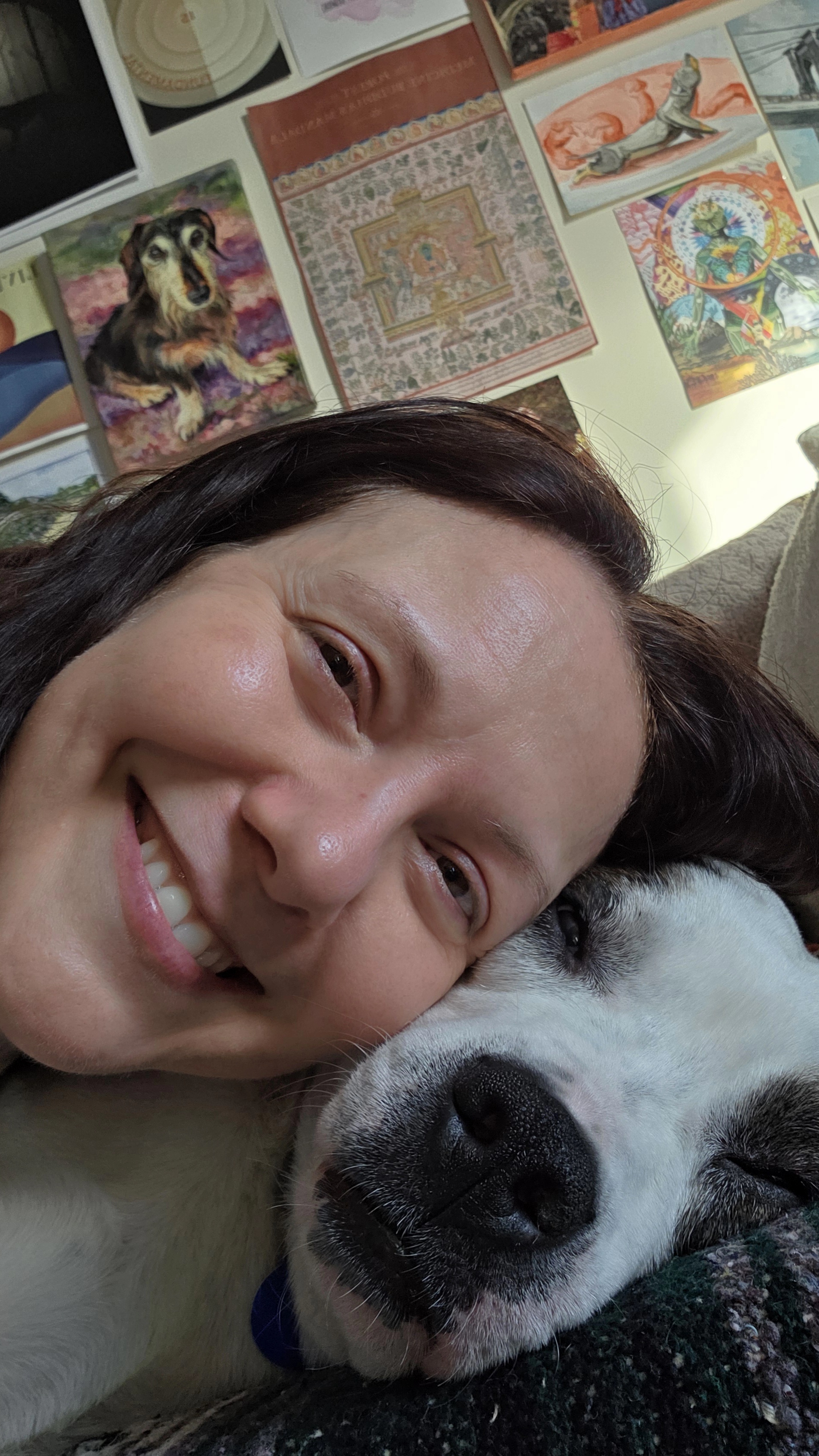
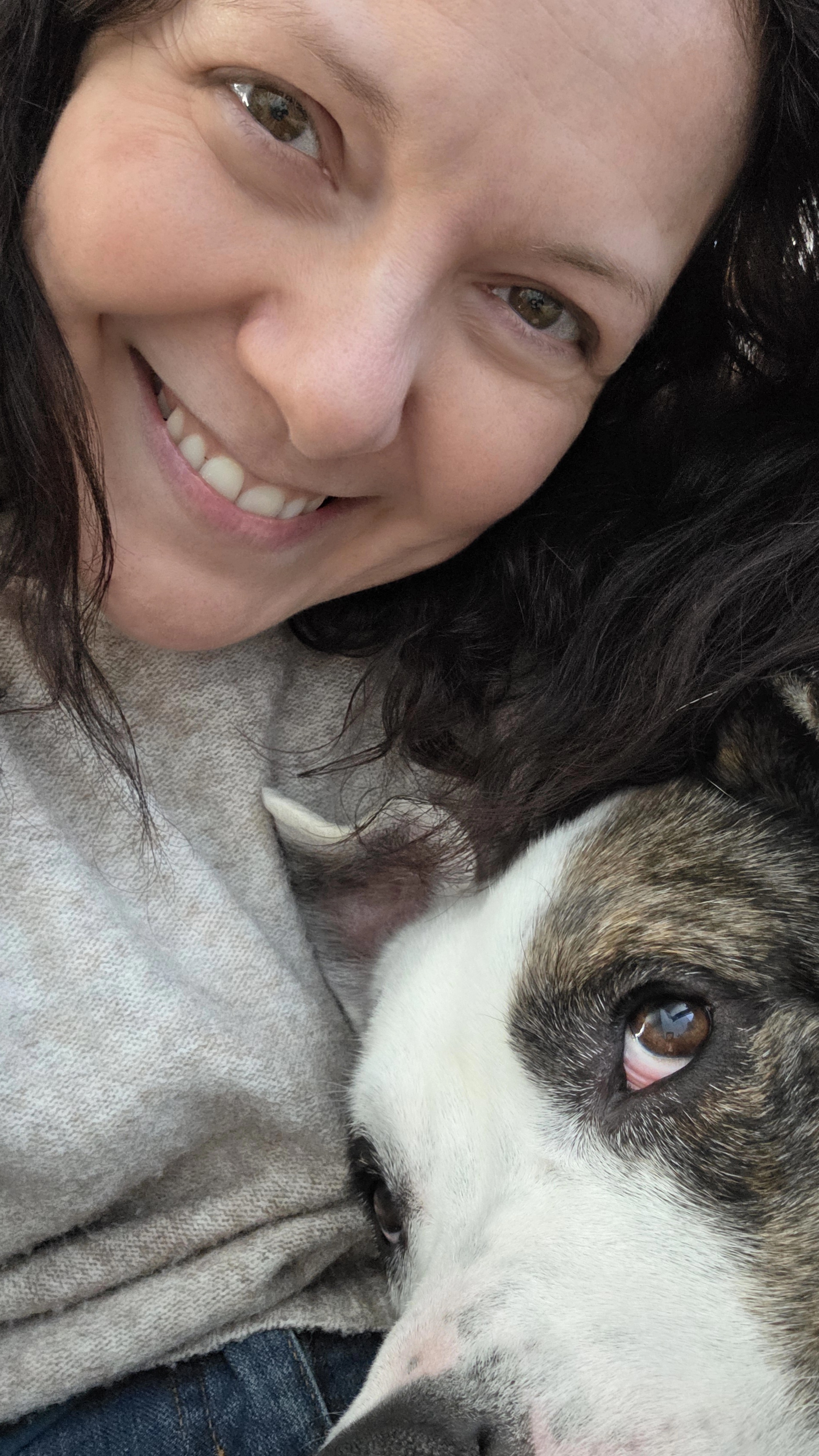
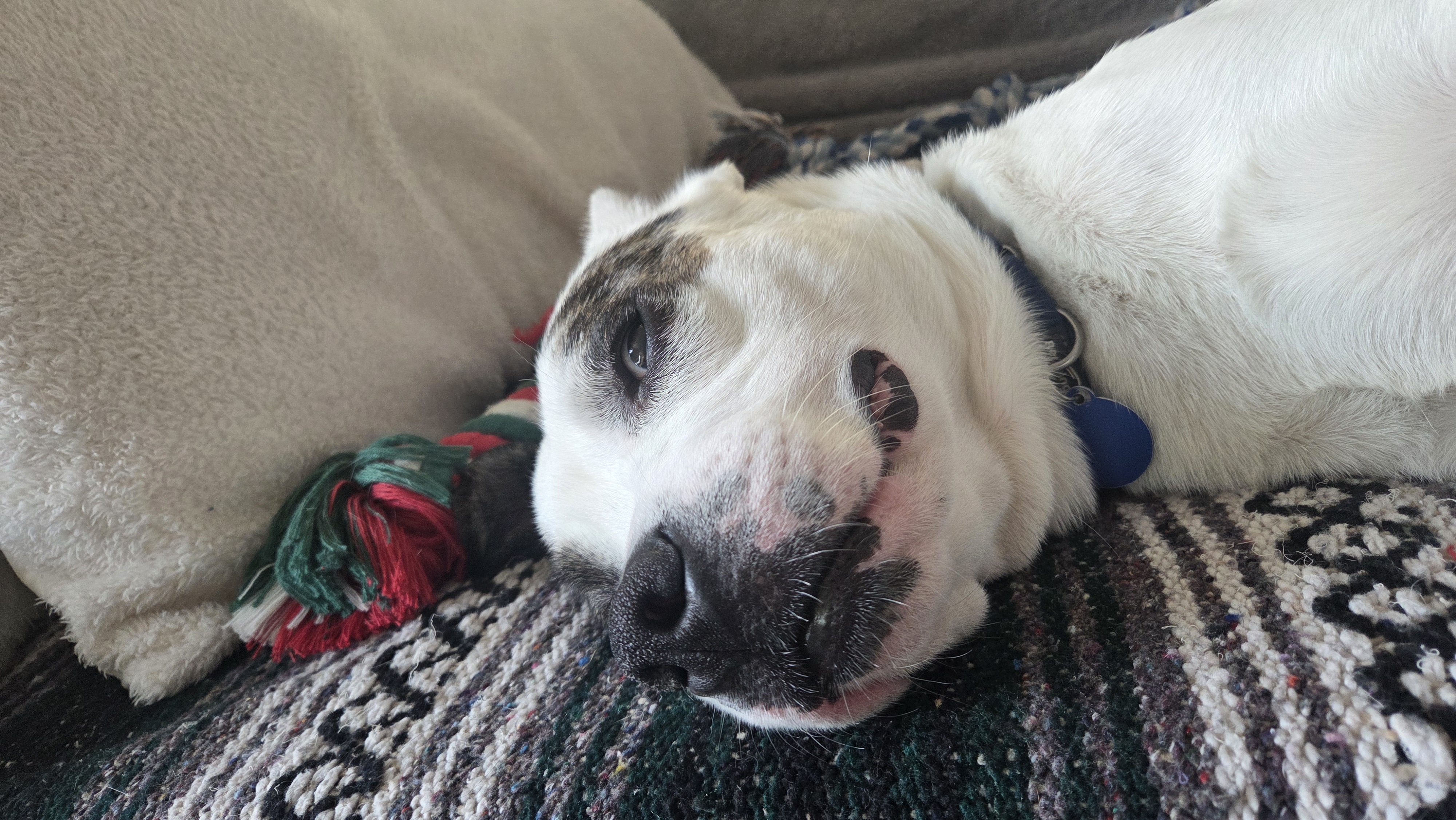
Tony is a total “hidden gem.” He is an expert snuggler, a master of the “lean,” and a dog who clearly just wants to make his person happy. In the short time he’s been with me, I’ve discovered he is housebroken, a fantastic napper, and surprisingly unphased by other dogs or city noises. While he’s a big boy, he has no prey drive—he’s just a curious guy who is very eager to please, especially if you have a pocket full of treats!
Truthfully, I wasn’t ready to take a foster. I am personally looking to adopt, and I have a massive week ahead with work. I definitely wasn’t looking for a foster this big and strong—I actually had to get a mini-lesson on the best ways to walk a dog of his size while protecting my back, since I’m quite petite and still mindful of my back injury recovery and physical limitations.
Because of my own physical recovery, Tony is looking for a “takeover” foster or—even better—his forever home! He would thrive with someone who has experience with bully breeds and the physical stature to handle his curiosity on walks. He’s already making great progress on the leash and loves working on his brain games, Kongs, and lick mats.
Sometimes, when a being really needs us, we do things before we’re ready. If we all step up just a bit when we see a way to help, the whole system gets better. Every foster dog I’ve had has taught me something. None of those lessons were ones I anticipated; they were lessons I didn’t even know I needed. I’m sure Tony is here to teach me something that will make me a better person, and I’m so happy to be the bridge to his forever home.
Jumaane Williams delivering his inauguration speech on January 1, 2026. Photo by Christa Avampato.
Yesterday, I watched the NYC inauguration of Mayor Zohran Mamdani, Comptroller Mark Levine, and Public Advocate Jumaane Williams. Each used a different holy book for their swearing in ceremonies: Quaran, Hebrew Bible, and Christian Bible, respectively. This was a first in NYC history. Each of them comes from a different ethnic background: Muslim and South Asian, Jewish, and Black and Caribbean heritage. Another first in NYC history. The level of diversity and inclusivity at the ceremony mirrors a truth that runs deep in our city: everyone from everywhere comes to NYC and makes this their home.
I have never watched an inauguration before yesterday. Given this historic moment, I wanted to be part of it in a small way. I wanted to bear witness in the hopes that this really is an inflection point in our city. I’m always hopeful and optimistic about our city because I believe in New Yorkers. It’s inspiring to see so many others also hopeful and optimistic about our city.
I believe strongly that when we start a new journey, we should begin as we wish to go. Though it will be a long road to make our city equitable and affordable for all, yesterday was a very good start. I would like to find a way to do my part (and then some.) I don’t know yet exactly what that means, but I’m excited to find out how I can help.
My favorite part of the ceremony came from Jumaane Williams. He gave a poetic and poignant speech, a message to us and his younger self. “If we are all connected, we can’t lose anyone,” he said. That idea keeps ringing in my ears. So many New Yorkers slip through the cracks for a million different reasons. But it doesn’t have to be that way. If we can help everyone, every single one, plug into a community where they can connect, no one gets lost. No one has to be alone. In a city this big and varied and resourced, there is space for everyone to have someone they can depend on. There’s something in there. Something powerful that’s worthy of exploration and action. Let’s see what we can do together.


 parade on Thursday, June 18th! The AKC Museum Of The Dog and NYC’s Secrets & Lies are teaming up to do something special for Knicks fans because the Knicks love dogs – we’ve all seen the viral posts about Jalen Brunson, Josh Hart, and Kona & Stevie (Jalen’s pups!)

 The Museum of the Dog is offering free admission all day on Thursday June 18th from 11am – 6pm for everyone who wears any Knicks gear

 Then at 6:30pm NYC’s Secrets & Lies is doing a special storytelling show all about NYC dogs! The show requires a ticket and along with the show you get:
 Salty and sweet snacks
 Exclusive after-hours access to the museum
 A rare chance to meet a real working transit dog and their handler who work the MTA subway every day
 You’ll be entered into a drawing for 2 tickets to the American Kennel Club event Meet the Breeds