At the Milan Olympics, ice skater and gold medal winner, Alysa Liu, proved we don’t have to carry the heavy expectations others try to place on us. We can choose joy on our own terms instead.
Jaybeeinbigd22, CC0, via Wikimedia Commons. Link to image.
The typical Olympic broadcast follows a strict script. The music swells with drama. Commentators emphasize the crushing weight of the moment, the years of agonizing sacrifice, and the unbearable pressure on the athletes. We watch the screen and expect to see stress etched into every competitor’s face. We treat suffering as the ultimate proof of dedication.
Then Alysa Liu stepped onto the ice in Milan.
The media desperately wanted the classic, grueling redemption arc. They wanted the tears and the drama of a comeback. Alysa simply declined to participate. She refused to let the sport, the commentators, or anyone else tell her how to feel.
When interviewers tried to hand her a narrative of crushing pressure, she set a firm boundary. She clarified that their anxiety belonged to them, not to her. She left them with their own heavy baggage and skated with pure joy, freedom, and love for the sport.
She performed her way.
The Performative Stress Trap
That level of boundary-setting offers a profound lesson for all of us, especially in our professional lives.
Every day, people try to hand us their stress. A chaotic workplace demands our panic. A frantic project timeline insists we sacrifice our well-being. We absorb this urgency as if it is mandatory. People tell us this is the job and there is no other way; it is a job after all, right? We learn to perform stress to prove we care about our jobs, our communities, and our goals. If you aren’t exhausted and worn out, you don’t care enough about anything.
Alysa proves this burden is optional. You can care deeply and perform at the highest level without letting anxiety consume you.
Bring the Olympic Ice to the Office
Figure skating is Alysa Liu’s actual job. She treats it with immense respect and masters her craft, but she refuses to let the job dictate her emotional state. We can apply this exact framework to our own careers to protect our energy and reclaim our joy.
Reject the manufactured panic: Colleagues and clients often treat minor delays as catastrophes. You do not have to participate in their panic. You can calmly solve the problem without absorbing the frantic energy.
Decouple exhaustion from value: Corporate culture often rewards burnout as a badge of honor. Challenge that standard. You can deliver exceptional results on a project while maintaining firm boundaries around your evenings and weekends.
Treat joy as a performance enhancer: Alysa performs better because she skates free of anxiety. We execute our best ideas, strategies, and creative work when we feel relaxed and engaged, not when we feel terrified of failure.
We often believe that caring about our work requires us to suffer for it. We confuse anxiety with dedication.
This week, look closely at the emotional loads you carry at work. Are they yours, or did someone else hand them to you? You have the power to reject the default setting of suffering. You can choose to execute your work, live your life, and navigate your challenges with relaxation and fun.
You get to decide how you experience your own career. We are all a work in progress, and there is a freedom in knowing, living, and working with that truth. Your freedom and joy can and will inspire others. Alysa proved that to all of us. Let your own light shine, and go out there and be a light for others.
We think spring begins when the first flower blooms. But biologically, it starts right now—in the freezing cold.
If you’ve spent this winter in New York City like me, you’ve likely been dreaming of the arrival of spring during the freezing, snowy, and gray days. You also probably shook your fists at the sky when the groundhogs saw their shadow on February 2nd.
“When will this end?” you thought.
But if you ask a sugar maple or a wildflower seed, they will tell you that spring started while the snow was falling.
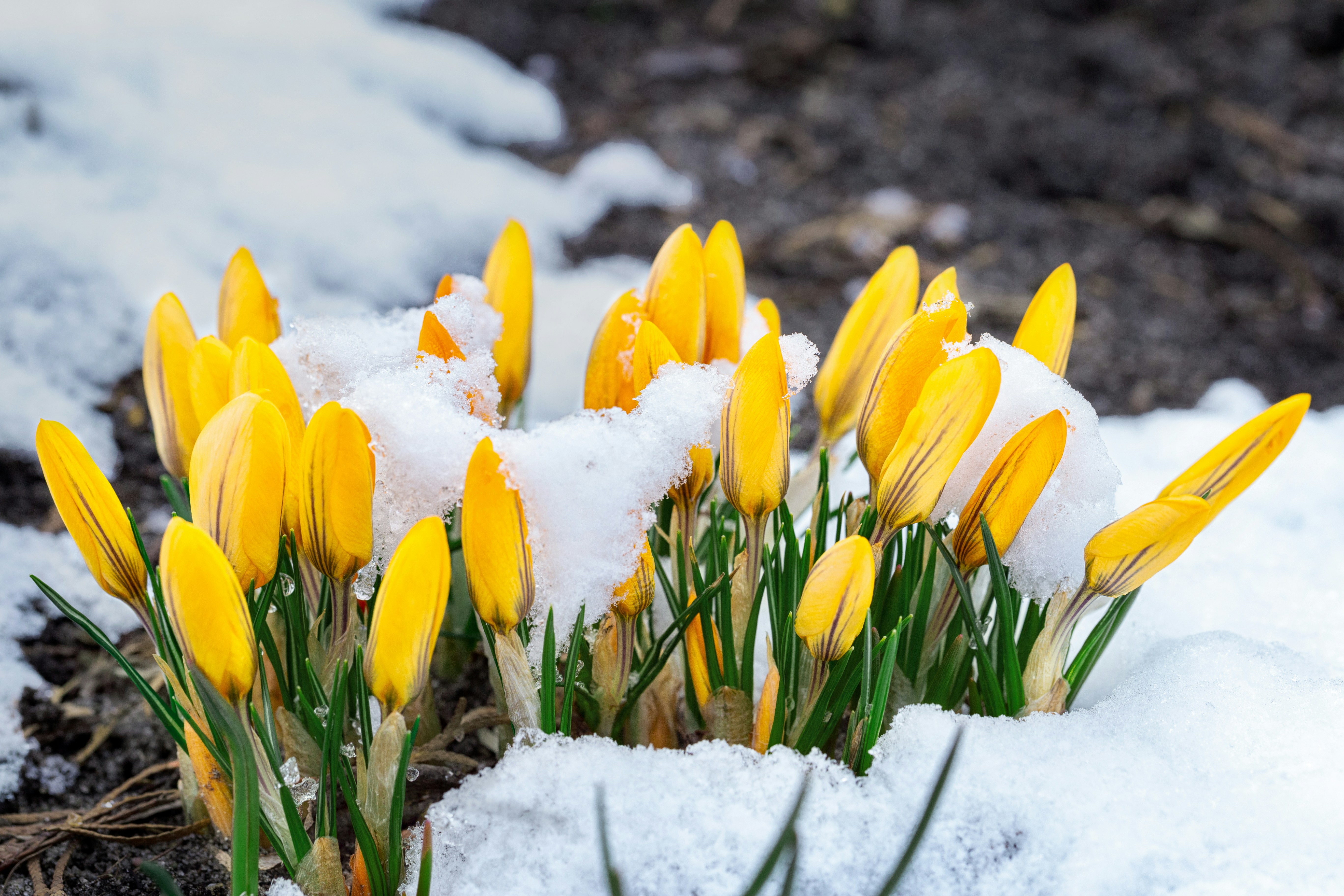
We tend to measure the season by what we can see—the green bud, the crocus, the robin. But nature does her most important preparation underground, long before the visuals arrive. In fact, she uses the harshness of late winter to fuel the growth of spring. Without the present cold, there is no future warmth—literally and figuratively, for nature and for us.
Here is how nature is prepping for spring right now in this last month of winter, and what we can learn from her and translate into our own lives.
1. The Cold Is the Key (Stratification)
We often complain about the bitter cold, gray skies, and damp days of February, wishing them away. But for many native plants, this weather in this season is non-negotiable. It’s the foundation of their flourishing future.
This process is called stratification. Seeds like milkweed, coneflower, and lavender have tough outer shells that keep them dormant. They literally cannot grow until they have gone through a period of intense cold and moisture. The freeze acts as a signal, softening the shell and telling the embryo inside that it is safe to wake up.
Without the hard winter, there is no spring bloom. The obstacle is also the key that turns the lock.
2. Use the Pressure and Change (Sap Flow)
Right now, maple syrup farmers are busy. Why? Because the sap is running.
But sap doesn’t run just because it gets warm. It runs because of the fluctuation. While the shifts in transitions may drive us crazy, it’s the alternation between freezing nights and thawing days that creates pressure changes inside the sugar maple trees, acting as a natural pump to move sugar from the roots up to the branches.
The tree uses the instability of the season to fuel its growth. Being off-balance all the time helps the tree find their secure center.
The Togetherhood Takeaway
We often want to jump straight from winter rest to full-bloom success. We want the project to launch, the book to sell, or the answer to appear.
But right now, today, nature is in the stratification phase. We are, too.
If you feel like nothing is happening right now, that you’re stuck and that the world is off-kilter, or if things feel cold and hard and impossible right now in your local community and our global community, remember the seed. You aren’t stuck. You’re just softening your shell so you can break through in the days ahead as the light and warmth return.
Use this time, today, tomorrow, and the rest of this month before spring, to prepare your roots. Organizing, planning, and laying the groundwork for our future—collectively and individually—is active growth, even if no one else can see it yet.
A gnarled, ancient bristlecone pine on White Mountain Road in Bishop, California. Photo by Donna Elliot on Unsplash
Have you ever wondered what it takes to survive for thousands of years in some of the most unforgiving environments on Earth? Look no further than the remarkable bristlecone pine (Pinus longaeva.) They are living legends, silent witnesses to millennia of history, and powerful teachers for us all.
Found clinging to rocky, high-altitude slopes in the White Mountains of California, the Great Basin, and other western ranges, bristlecone pines endure brutal winds, extreme temperature swings, nutrient-poor soil, and minimal moisture. Yet, they don’t just survive; they thrive with an astonishing longevity. One of the oldest known living organisms on Earth is a Bristlecone Pine named Methuselah, estimated to be over 4,800 years old! Imagine, it was a seedling when the pyramids of Egypt were being built!
What’s their secret to such incredible resilience?
Slow and Steady Wins the Race: Unlike many faster-growing trees, bristlecones grow incredibly slowly. They conserve energy and resources, focusing on long-term survival over rapid expansion. (In our world obsessed with growth, what a business lesson that is!)
Always Run Defense: Their dense wood contains a high amount of resin — a sticky substance produced by trees as a defense mechanism. It hardens when exposed to air and that forms a protective barrier, making them highly resistant to insects, fungi, and rot.
Adaptability is Key: Their root systems are shallow but extensive, allowing them to capture what little moisture and nutrients are available from a wide swath of land. Their needles, which they can retain for decades, are adapted to retain water in dry conditions.
Embrace Adversity and Go Where Others Won’t: The very conditions that would kill other trees seem to strengthen bristlecones. The harsh winds sculpt their trunks into gnarled, twisted masterpieces, giving them a unique and beautiful character that inspires every artist who sees them. The lack of competition at high altitudes allows them to dominate their niche. (As we know, unsexy business niches can be wildly successful for this reason, too!)
The Power of Perseverance: Even when parts of the tree die, the bristlecone continues to live and grow from the remaining sections, often forming dramatic “flagged” branches that appear to be dead or dying. These branches are like scars worn as badges of honor — testaments to the tree’s enduring struggles.
What can these ancient sages teach us about navigating our own lives?
The bristlecone pine offers profound lessons in resilience, adaptability, and perseverance — qualities that are invaluable in our fast-paced and often challenging world, especially in business.
Embrace “Slow Growth”: In a society that often glorifies rapid success, the bristlecone reminds us of the power of steady, sustainable progress. Don’t be discouraged by seemingly slow advancements; true strength and longevity often come from a deliberate, methodical approach. I recently read a quote by Sharon Olds that really hit home: “I was a late bloomer. But anyone who blooms at all, ever, is very lucky.”
Find Your Niche and Adapt: Like the bristlecone thriving where others falter, identify your unique strengths and adapt to your environment. Instead of fighting against challenges, look for ways to work with them, turning obstacles into opportunities.
Resilience Through Adversity: Life will inevitably throw harsh conditions our way. The bristlecone teaches us that these very struggles can sculpt us, making us stronger and more unique. Don’t fear the difficult times; learn from them and let them shape your character.
Persevere, Even When Parts Feel Worn: There will be moments when we feel depleted or broken. The bristlecone shows us that even when parts of us feel exhausted, we can continue to grow and thrive from the remaining, healthy parts. Focus on what still functions and keep moving forward.
Find Beauty in Your Scars: The gnarled, twisted forms of the bristlecone pines are considered incredibly beautiful. Our own struggles and challenges leave marks on us, but these scars can be a testament to our strength and resilience, making us uniquely beautiful with stories to tell.
The next time you face a challenge, take a moment to reflect on the bristlecone pine. Let its ancient wisdom inspire you to stand tall, adapt to the winds of change, and embrace the slow, steady process of becoming stronger, wiser, and more resilient.
Have you ever thought about bees as your life or career coaches? As an aspiring beekeeper, I’m fascinated by how these incredible creatures live and work. Their hives are a model combination of structure and flexibility.
Experts versus generalists
Some bees are genetically predisposed to have certain talents making them suitable for specific jobs. Others prefer to learn new skills and have new experiences, so they may hold a whole host of different jobs. Some have multiple jobs at the same time. Most bees are generalists; they cycle through different jobs at different stages of their lives and depending upon what the hive needs at any one time.
By nature, I’m curious and have an interest in a lot of different areas. None of us is just one thing. We contain multitudes. We can live our lives spherically, in many different directions, and be better for it.
Unified by a common purpose
While each bee has their talents and preferences, all of them work in service of their hive. They have one guiding mission – to perpetuate the health and longevity of their hive long after any one individual has passed away. For example, middle aged bees usually begin foraging. However, if the population of the hive needs to increase to maintain its health, a middle-aged bee will delay the foraging portion of their lives in favor of tending to the brood of baby bees (known as larvae.) Similarly, if the population of the hive is booming and more foragers are needed to collect nectar, pollen, and water to keep the hive healthy, she will begin to forage sooner than middle age.
This reminds of looking at our career choices through three lenses: what are we good at, what does the world need, and what do we enjoy doing? What is our higher purpose, and how do our lives and careers serve that purpose?
Managing career transitions
Though a worker honeybee only lives for a month or two, she often holds many jobs in that time and sometimes has more than one job at once. As soon as she emerges from her cell, a young bee gets to work around the hive, cleaning brood cells (including the one from which she just emerged) so that the queen bee can lay new eggs. Younger bees work inside the hive (like a child learning to do chores around the house) and older, more experienced bees work outside the hive, foraging for nectar, pollen, and water. Bees are never afraid to try something new, to be beginners. They are secure in their abilities, and they believe in one another’s abilities.
Whenever I’m trying something new, I think of bees and try to have the courage and confidence they have. Being part of a team means we’re never alone in our work. We’re all in it together.
Caring for the next generation
Taking care of their community is the north star for bees. Caring for future generations is the whole reason they do what they do. A nurse bee feeds and cares for thousands of developing bees, as well as the adult bees in the hive. Nurse bees also build new comb while caring for their bee family and build it with surprising speed. It’s a collaborative effort, with each bee playing their part in service to all the other bees and their collective future.
No one is an island. Taking care of each other in our community is also a way to take care of ourselves.
Minding their home
In addition to building comb, some bees are especially skilled at helping to maintain the temperature and humidity of the hive as weather conditions change. A hive is a dynamic place. When the temperature rises or plummets, or when drought sets in, environmentally inclined bees get to work using their bodies to heat and cool the hive so that their home and the bees who live there remain in tip top shape.
It’s easy for us to be heads-down on our work and consumed with our own lives. It’s worth taking a look around and seeing how we might be able to help the whole system in which we operate. We’ll be better off, and so will our neighbors, if the whole system works better for everyone.
Adventure awaits
As stated before, middle-aged bees begin the foraging chapter of their lives. They start by taking some test flights close to the hive to get their bearings. Within a matter of hours, they get the lay of the land and begin foraging for nectar, pollen, and water. What they collect, how much they collect, how many foraging trips they take per day, how far they travel, and if they attempt to multi-task by collecting more than one kind of material in a single trip depends upon the needs of the hive and the depth of the bee’s experience. Once she arrives back at her hive with the goods, she passes them off to receivers at the entrance of the hive before she either takes a rest or heads back out to forage again.
We spend a lot of time in our comfort zone. Getting out into the world gives us new perspective and benefits our community when we return with new knowledge and new experience.
Communication
The exchange of goods between foragers and receivers is thought to be a time for the bees to communicate. It’s possible that the receiver is letting the forager know what’s happening around the hive so that the forager is able to head out into the world to collect what the hive needs. The forager is letting the collector know what’s happening outside the hive.
If a forager is waiting a long time for a collector to take what she’s brought back, she will also begin to recruit more bees inside the hive to act as collectors, maximizing the efficiency of all of the foragers. She has agency to create a change. Foragers only travel from sunrise to sunset, and sleep through the night, so time is of the essence during daylight hours. Communication keeps the hive humming, literally and figuratively.
Our communities are healthier and happier when communication flows freely between members. Tell your stories and listen to the stories of others. We’re all better off when we share.
Rest
While we’ve given the proverbial title of worker bee to someone who’s always busy, bees prioritize rest for a very good reason – a tired bee doesn’t communicate nor navigate as well as a rested bee. The world is a treacherous place. To survive and thrive, and help her hive do the same, a bee must be well-rested and well-fed.
How many times do we tell ourselves, “Just push through,” when what we really need is to rest and recharge? Make like a bee and take a break. Nourish yourself. You’ll feel and work better when you take better care of yourself.
Looking to the future
No one home will suit a hive forever. While many bees spend their lives tending to the present needs of the hive, someone has to be on the lookout for what’s next. Scouts, who know the neighborhood well from their foraging, are consistently searching for the next home, and the next food and water sources. They will sometimes overnight in a new place to check it out as a potential future home for her hive. Once a home is chosen by the hive, a scout leads the entire swarm to that home, as she is one of the only bees in the hive to have ever been there.
While it’s important to be present, there’s also value to looking ahead every so often, too. Where might we want to go? What might be a future area of learning and experience for us? How might we refill the well?
So often the way we live and work is out of sync with how nature operates. How might our lives and careers be transformed if we took a page out of the bees’ book, establishing a flexible structure in our lives, careers, and communities that takes care of every member and allows every member to contribute?
The Waiting Place – From Oh, the Places You’ll Go! by Dr. Seuss
Does this sound familiar? It’s all you can do right now to just get from day-to-day in these weird, wild times. You’re unsure about what to do or where to go next. Your plans have fallen down in mid-flight. You worked so hard on something, harder than you’ve ever worked on anything your life, and still, it didn’t turn out as you hoped. Now, you’re just waiting.
If that strikes a chord, I want you to know you’re not alone. I feel like that most days at this particularly strange period in our history. I’m grateful for a lot of things in my life – my health, my friends, my home to name just a few. And I also find myself at a crossroads. Nothing seems clear. No matter which path I look down, I can barely see one pace in front of me. What I’d planned to do next and where I’d planned to go hasn’t panned out and maybe won’t for the next four years. I just don’t know what to do. I feel adrift. So, I’m just waiting.
This isn’t the first time I’ve been here. I’m sure it won’t be the last. Thinking about this conundrum, I was reminded of that sage of rhyme and reason, Dr. Seuss* and his setting of The Waiting Place. In his classic book Oh, the Places You’ll Go!, often given to people beginning a new chapter, the main character gets stuck.
“…Wherever you fly, you’ll be best of the best. Wherever you go, you will top all the rest. Except when you don’t. Because, sometimes, you won’t… You’ll be left in a Lurch… You’ll be in a Slump. You will come to a place where the streets are not marked. Some windows are lighted. But mostly they’re darked… You can get so confused that you’ll start in to race down long wiggled roads at a break-necking pace… headed, I fear, toward a most useless place. The Waiting Place…for people just waiting…”
To be honest, I get a little choked up when I read this book out loud. I understand the cycle of bang-ups and hang-ups that life brings. “Some windows are lighted. But mostly they’re darked.” That one really hits home for me right now when it feels like a lot of doors are being closed for so many people.
Luckily, Oh, the Places You’ll Go! doesn’t end in The Waiting Place and the path of the story has something to offer us in these times. Eventually our hero finds his way out of The Waiting Place and he’s moving along, riding high once again. Until…he takes another tumble, feeling very much alone and afraid. He nearly gives up. He keeps going because he doesn’t know what else to do. It isn’t fun to trudge through fear and despair, but it’s necessary. Eventually he finds his way, and learns life is “a Great Balancing Act.”
Re-reading this book helped me realize even though I may not be able to make progress according to the plan I created six months ago, there are other areas of my life where I can focus. I keep thinking about the best piece of advice I heard in 2024: “When you don’t know what to do, do what you know.”
Here’s what I know: I can pour my energy and time into my writing. I can test some entrepreneurial ideas. I can help nonprofits doing important, impactful work. I can spend more time with my friends and helping make New York City a better city for all. I can learn as much as possible right where I am and do as much good as possible with and for those around me. I can work on becoming the best me I can be so when the light returns, I’ll be able to take it all in.
On January 1st, I decided my word for 2025 would be “Rebuild”. I didn’t expect that word to be so on the nose so soon into the new year but here we are. Like an arrow being pulled back, in the tension, in the waiting, I can prepare myself to fly forward – eventually. This isn’t the path I intended to take, but I can still make the most of the journey.
*I acknowledge that Theodor Geisel made some horrible, racist choices with some of his art. The books that showcase that were rightly taken out of print by his estate, and I think he would have agreed that was the right thing to do. During his lifetime, he apologized for them and made amends for the harm he caused.
A friend asked me to edit a book chapter they wrote about the intersection of their personal and career paths. As I read through their beautiful story, I was surprised at how much my friend discounted their own experience, questioning whether they were good enough or had a right to do the wonderful work they do.
This friend is one of the most talented, intelligent, kind, compassionate, hardworking, generous people I know. I’ve learned so much from them over the many years we’ve known each other and it hurt my heart to see how much they questioned themselves. Being modest, recognizing and acknowledging those who’ve helped them along the way, and feeling fortunate are all wonderful virtues that my friend has in abundance. However, there’s a line between those virtues and the massive self-doubt that often holds people back from pursuing their dreams.
“Imposter syndrome” is a term I hear all the time, and I want to be very clear about something: Imposter syndrome is the tool of the patriarchy. (And by patriarchy, I mean anyone who attempts to puff themselves up by pushing down other people.) It’s projected onto people as a form of control. If you question your own abilities, it’s much easier for someone who only cares about their own well-being to zip by you. I want you to take the term “imposter syndrome” out of your vocabulary and out of your mind. I don’t want you to spend one more second of your life giving yourself that condition. Don’t take that on. It’s not yours to carry.
You are capable, creative, and curious. What you don’t know, you can learn. What you learn, you can apply. The world has so many challenges right now. To get through and make this world better for all beings, we’re all going to have to be at our best, contributing what we have to the collective. And we all have something valuable to offer.
Don’t discount yourself, and don’t allow anyone to discount you or your experience. Keep rising, and as you rise, extend your hand to lift others. We’re all in this together.
Years before I listened to this Ologies podcast episode, my boss, Bob G., had introduced me to Janine Benyus and her work in biomimicry — the sustainable application of adaptations in the natural world to the human-designed world. Working with Bob was my first product development job.
Growing up, I was a science and math kid. I abandoned my dream of being a scientist because a college professor my freshman year told me I, “had no mind for physics.” (More on that experience and how I DO have a mind for physics in a future article!) Instead, I majored in economics and history, continuing to love science as a personal passion. This Ologies episode promoted me to look into biomimicry as a bridge between my love for science and my business career in product development.
When I got to work, I Googled to see if there might be a biomimicry class I could take. What I found was that Arizona State University and Janine Benyus had just established a biomimicry graduate program. It was virtual, relatively affordable, and the application window was open. I applied, got accepted, and graduated. After that experience, I went on to get a master’s degree in Sustainability Leadership at University of Cambridge, and I’m working on bringing together all the aspects of my career — writing, storytelling, business, product development, and biomimicry — to build a better world for all beings. Biomimicry changed my life and career, and continues to help me evolve, grow, and thrive.
Looking back, I see now how all those threads made their way into my life through different avenues because I’ve always followed my curiosity, wonder, and joy. We don’t always know how the pieces of our lives and career will fit together. It sometimes takes longer than we’d like because the circumstances of our world need to evolve to catch up with us. Trust the timing of your life. Keep learning. Do the best you can with what you have where you are right now. What you seek is also seeking you. Eventually, you’ll find what’s meant for you and it will be worth all the effort.
This was my first year as a pen pal for Letters to a Pre-Scientist (LPS), a nonprofit that pairs fifth to tenth grade students in low-income communities with a worldwide network of STEM professionals for a yearlong pen pal program to inspire all students to explore a future in STEM. I was matched with a student in Arizona. We exchanged eight letters during the school year and discussed higher education pathways, STEM (Science, Technology, Engineering, and Math) career journeys, and overcoming obstacles in life, school, and career.
I think that piece about overcoming obstacles and getting through difficulty in life is incredibly important. We all face challenges at some point. It’s important for young people to know the challenges can be overcome and provide examples of how we’ve faced challenges as a way to inspire them.
My pen pal was always very interested to know about my dog, Phineas. She has a dog, too, and this was something we bonded over from our first letters. I decided I had to be honest with her about Phin’s passing in January, how it made me feel, and how I was coping with grief. Something extraordinary happened in our last letter exchange; something I didn’t expect.
My pen pal showed such an incredible amount of empathy for my loss. To cheer me up, she made me these little reminders that show wisdom far beyond her years. The front sides of the notes say “It’s okay…” and “I’m not gone”. Inside, they say “A dog wags his tail with his heart. Don’t forget the love they shared” and “Dogs leave paw prints on our hearts.” Truer words were never written. I’ve placed them by my desk because they make me smile while I’m working. All the while I was hoping to inspire her; turns out she inspired me even more!
In her letter, she goes on to talk about how much her dog means to her, and to also express some challenges she’s having in school. She said even though school was very difficult for her right now, she believed in herself, loved learning new things, and knows she will get through these challenges. This student did not express this level of confidence in herself at the start of the school year, not by a long shot. Growth and evolution are beautiful gifts to witness.
My gifts to my pen pal
To further encourage her, I decided to put together a special package. I made her a book mark with charms I thought she’d like–a book, a paw print, a moon and star, and the planet Saturn. I also sent her one of my Emerson Page charms that I hide around the world for readers to find. It says, “She believed she could so she did” and has a tag with “Always believe in yourself.” My pen pal’s confidence reminds me of Emerson so I thought this was a fitting gift.
I wrote my reply letter to her on fancy paper. I told her how much her kindness meant to me and how I admired her belief in herself to overcome her challenges in school. I told her my dream for her is find something that brings her joy every day. I made sure to mention to love every day she has with her dog so she has a lot of wonderful memories with him, and that giving him his food and water, playing with him, taking walks together, and brushing his hair will make him so happy. I closed the letter with one of my favorite quotes by the great naturalist Mary Oliver who asks in one of her poems, “What will you do with your one wild and precious life?” I told her I can’t wait to see what she decides to do with her life.
We never know how our words and actions may impact someone. The important thing is that we keep putting our hearts out there, that we keep showing concern, empathy, compassion, and kindness at every turn, even when our world and the world at-large is heavy. Perhaps especially when it’s heavy. This might be the only way we’re going to save ourselves and each other–keep showing up and giving our best, honest, authentic selves.
What would you do if the work you do right now ended tomorrow? I’ve been thinking about this question since I was at University of Cambridge / Cambridge Institute for Sustainability Leadership (CISL) in December for my Masters in Sustainability Leadership program. My wonderful friend, Karen, in my cohort found me one morning to show me a Stanford TEDx talk titled 5 Steps to Designing the Life You Want by Bill Burnett that she felt I needed to see. She was right.
The whole talk is worth watching and the part that affected me most is a future visioning exercise called 3 lives. You imagine the next 5 years of your career in these scenarios:
1. Keep doing exactly what you’re doing now and it’s going to turn out great. What does great look like? In your career and life?
2. What would you do if what you’re doing right now ends tomorrow? How would your career and life change? What would that look and feel like?
3. Now for your wildcard plan. You have enough money to pursue any career you want, and no one would laugh at you for it. What would you do? What would your life and career look like then?
Which of these lives feels like the best path? Put aside the inner critic. Which one makes you happier and more fulfilled? For various reasons, that one may not be the one you choose to pursue but having a sense of these different paths helps us get unstuck.
Futures visioning is a part of my Cambridge dissertation so doing this exercise was a part of practicing what I preach. I sat down and sketched out these 3 lives for myself. It helped me uncover hidden ideas, interests, and desires I didn’t even know I had. It also helped me realize a few things that Bill speaks to in his talk:
1. The really interesting opportunities present themselves in our periphery. They are the things we didn’t see coming and didn’t plan for. Realizing this encourages me to be open to new people, information, learnings, ideas, and opportunities.
2. Bill encourages us to look at these three lives with our head and our heart. Decisions made from your emotions are just as valid, if not more so, than those made from our logic and reasoning. Emotions have much more wisdom than we give them credit for.
3. There isn’t one way to build a life or career. We can and will grow into different lives, and that can happen at any and every age. There is no timeline that we must follow. We can trust the timing of our lives and career. Things unfold in ways we don’t always understand. That’s okay. Be open, and be prepared to be lucky.
Let me know how it goes for you if you try this exercise. I’d love to hear about what you discover and I’d also love to support your journey.
After returning from a week at University of Cambridge / Cambridge Institute for Sustainability Leadership (CISL), I’m thinking a lot of about what’s next for my career after I finish my dissertation in July 2024. I envy people who have a single passion that drives them. I’m interested in so many areas and I’m not sure which path to choose.
At Cambridge, one of my favorite session was run by Louise Drake whose scholarship I deeply admire. She asked us to reflect on CISL’s new Leadership for a Sustainable Future Framework principles: connected, collaborative, creative, and courageous. Our task was to consider how we might move forward our careers in one of these areas. I chose courageous, and it was an emotional reflection for me. Questions that flooded my mind included: How might I be more courageous in my career choices and actions?; What is the most impactful way to use my time and talents?; Am I taking enough chances, risks, and big bets?; How do I ensure I don’t regret how I spend my time?
After this reflection, some of my friends helped me see that my many interests and desire to connect and rally people through storytelling, joy, and hope is my superpower. I believe in breaking down walls and repurposing those walls to build a longer table for people to connect, collaborate, and create together. These friends and Lou helped me reframe what I thought was a distraction into a focus, and I’m immensely grateful for their wisdom.
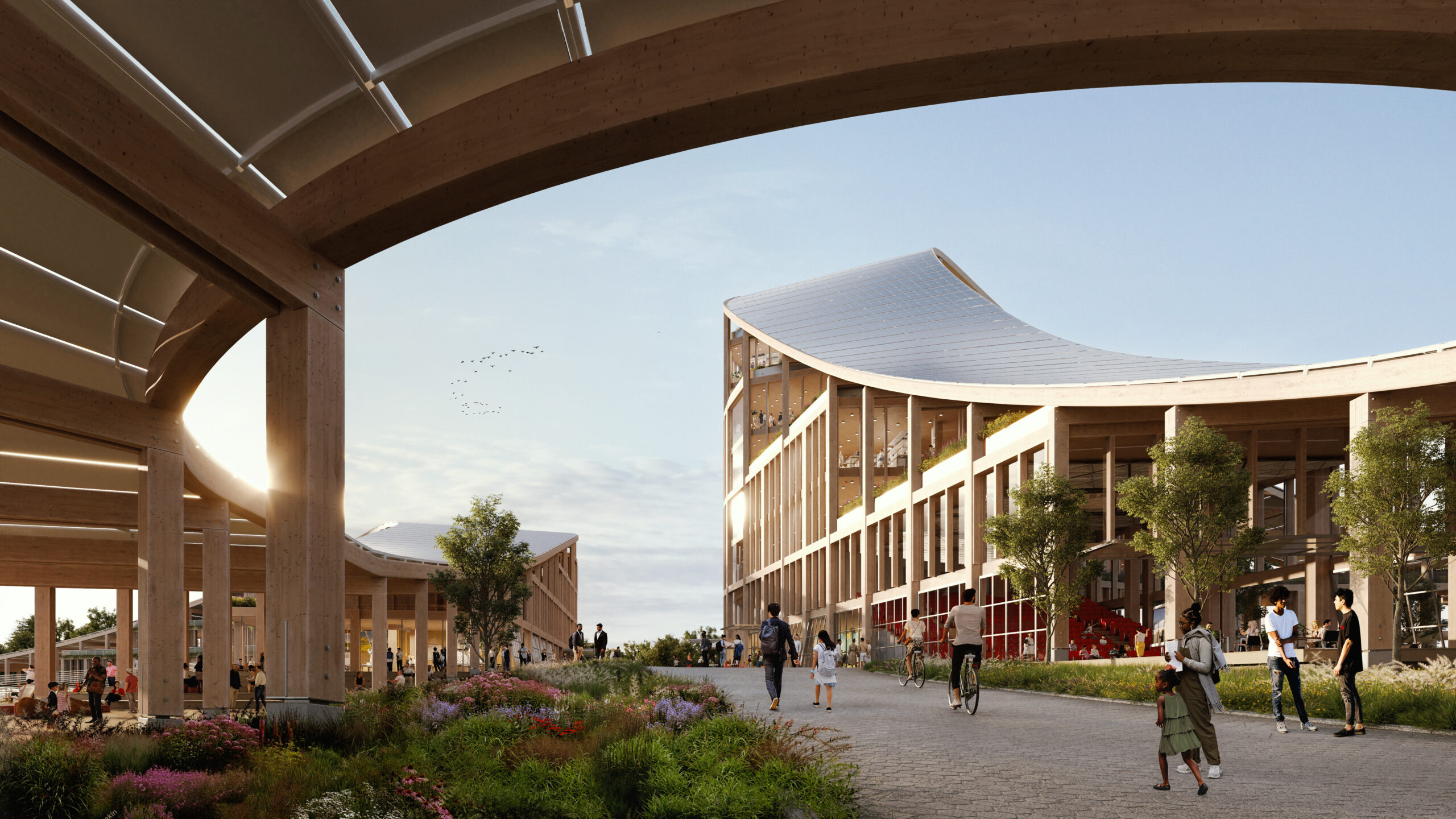
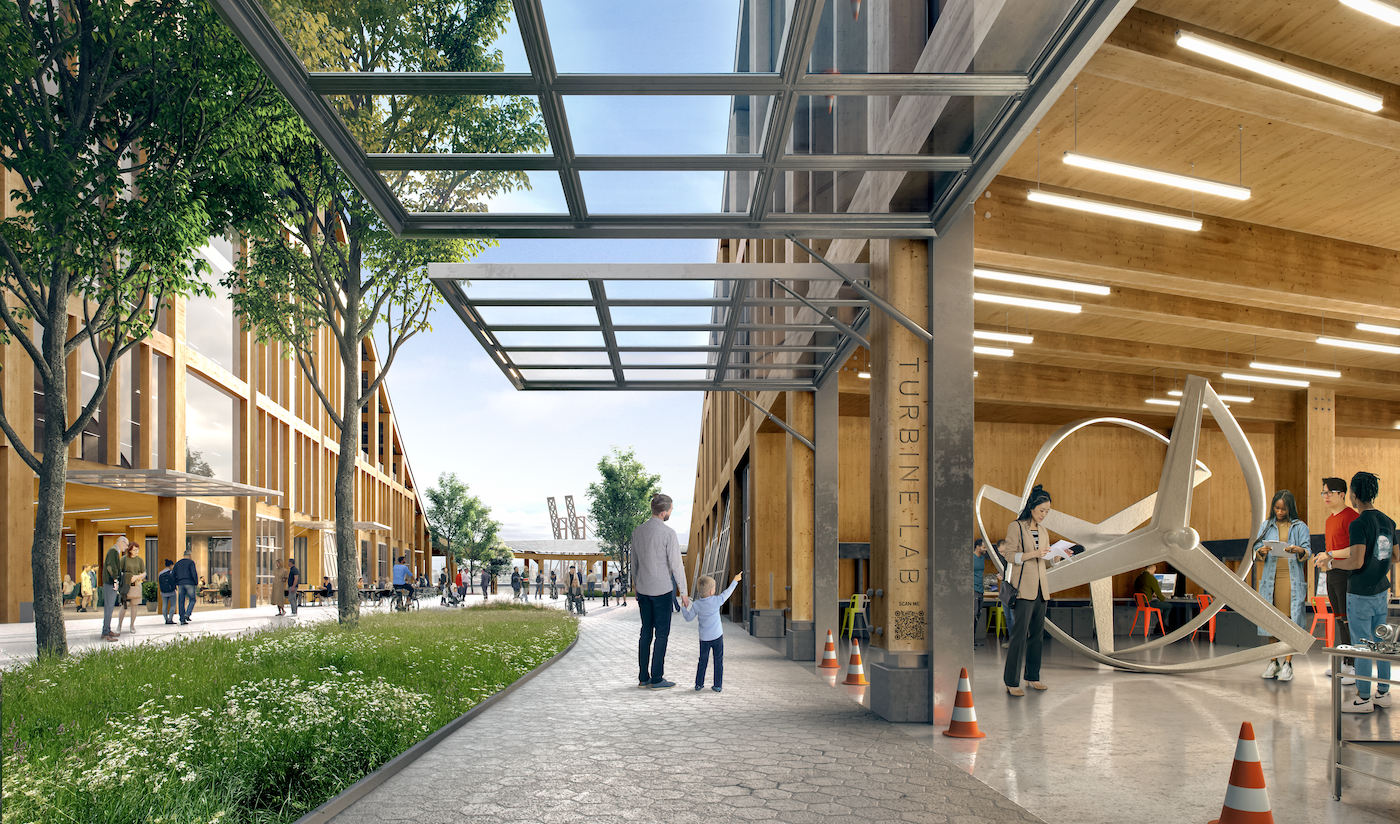
Reflecting on this, I do have a dream job and it’s right in my backyard of New York City where my ancestors entered this country 120 years ago. The New York Climate Exchange (“The Exchange”) is a first-of-its-kind non-profit organization and partnership network based at Governor’s Island in New York Harbor (near the Statue of Liberty and Ellis Island) comprised of leading universities, businesses, and community groups collaborating to accelerate climate change solutions for NYC and beyond. Its mission is to confront urgent climate impacts and issues of environmental injustice, breaking down silos through an innovative, scalable, and sustainable model that will rapidly develop new urban climate solutions. In 2024, I’d love to join the team at The Exchange that’s embarking on this grand adventure.
Already, Domus has named the design of The Exchange’s 400,000 square-foot-campus by Skidmore, Owings, & Merrill (SOM) as one of the best urban regeneration projects of 2023. With a combined ~$700 million investment, construction is anticipated to begin in 2025. Collaborative projects, including research initiatives, programs with community groups, workforce training programs, and K-12 outreach will begin earlier.
This is a place that can be the massive lever for change we need to mitigate, adapt to, and become more resilient to climate change impacts. I hope I can give my talents to such an incredible cause and place. https://nyclimateexchange.org/
All images above are renderings from the New York Climate Exchange website.








 Christa Avampato