creativity

Found: The Most Meaningful Dinner Reservation You Can Make in NYC Right Now

Community Kitchen. Lower Eastside – Manhattan.

Do you want to pay $15 or $125 for the same dinner in NYC? There’s a restaurant that lets you choose, no questions asked. And it showcases how nature and human communities work in sync to improve all lives.

Itโ€™s called Community Kitchen, located on the Lower East Side inside The Lower Eastside Girls Club. Most of us talk about “fixing the food system” in the abstract. But Community Kitchen is actually doing it. Founded by Mark Bittman, itโ€™s running a radical experiment: A sliding-scale restaurant where you pay pay what you wish for the same meal.

And it just keeps getting better:

– It heals the planet: The dinner menu served Wednesday – Saturday, created by James Beard award-winning chef Mavis-Jay Sanders, is plant-forward and prioritizes ingredients from farmers using agroecological (sustainable farming) practices. This minimizes chemicals running into our waterways and soil, and supports biodiversity, treating the farm as an ecosystem rather than a factory.

– It heals the community: They utilize a “sliding scale” payment model. You pay what you canโ€”$15, $45 (the cost of the meal), or $125 (to help others who can’t afford the meal.) If you have the means to pay the higher tier, you are directly helping a neighbor enjoy a nutritious, dignifying meal.

– It respects the worker: Unlike the industry standard, they pay a living wage with full benefits to their team members, correcting the inequities often found in restaurant labor.

– It’s delicious: They prepare top-quality food from scratch that appeals to all members of our communities, using primarily local and seasonal ingredients. Each meal has multiple courses.

It is a rare example of a “closed loop” of kindnessโ€”where caring for the soil and caring for the neighbor are part of the same meal.

If you are looking for a way to give back this season (or just want an incredible dinner), Community Kitchen is a wonderful place to dine with purpose. Itโ€™s a powerful reminder that “nature” isn’t just “out there”โ€”it’s on our forks, and in how we care for one another.

Learn more at https://www.communitykitchen.us/

๐Ÿฆƒ๐ŸŒฟHappy eating, and happy giving.


Key details about Community Kitchen:

  • Location: Lower Eastside Girls Club (East Village).
  • Chef: Mavis-Jay Sanders
  • Pricing: Sliding scale for the same meal – you choose the price you pay ($15/$45/$125)
  • Sustainability: Menu prioritizes plant-forward dishes and agroecological (sustainable farming) practices
  • Note: If you canโ€™t find the reservation youโ€™re looking for on the site, please check back! They release seats at all price levels gradually. Walk-ins are also welcome.
creativity

๐ŸŽ40,000 Pounds of Produce in 1 Morning. This is How We Fight Food Waste AND Food Insecurity in NYC

Our team of volunteers at last week’s City Harvest repack event

The Repack: What Happens When a Community Shows Up

Last week, I was deeply moved by the incredible generosity and hard work of the volunteers at City Harvest. We were there because of the enormous, urgent need created by current economic pressures and the fallout of the government shutdown, which is impacting vital food assistance programs for New Yorkers.

Together, we accomplished something phenomenal:

  • We helped repack 40,000 pounds of bulk fresh produce into 7,710 household-sized bagsโ€”the second-highest number of bags ever packed at the City Harvest Food Rescue Center since 2022!
  • This food is critical right now as City Harvest ramps up to serve neighborhoods with the highest populations of SNAP recipients. They expect to distribute over 1 million more pounds of food this November than they did last November.

We showed up and showed out, and it was a joy to be part of this community effort, even though I wish it wasn’t necessary.


The NYC Food Insecurity Crisis is Real

The need for this emergency support is stark, especially as the government shutdown has delayed or complicated critical aid. Our fellow workers, friends, and neighbors are struggling to put food on the table.

  • In New York City, approximately 1.73 million residents receive SNAP benefits. That’s 1 in 5 New Yorkers.
  • In Brooklyn alone (where I live and where City Harvest has its headquarters), that number is over 700,000. That’s 1 in 4 Brooklyn residents.

This work with City Harvest is personal to me because I grew up food insecure and my family received government-backed public assistance including WIC funding and at my school I was part of the free lunch program. As an adult who climbed out of that situation though education, hard work, and the generosity of these supportive government programs, giving back means a lot to me.


Why City Harvest is a Game-Changer (A Two-Part Solution)

City Harvest doesn’t just feed people; it’s a massive champion for the environment, tackling the staggering problem of food waste head-on.

From City Harvest

How You Can Be Part of the Solution

The work we did last week is ongoing. Join the City Harvest family!

This work isn’t just about charity; it’s about Togetherhood. Let’s continue to show up for our community and ensure that healthy, quality food goes to tables, not landfills.

Click to volunteer, donate, and advocate. I hope to see you at a future City Harvest event!

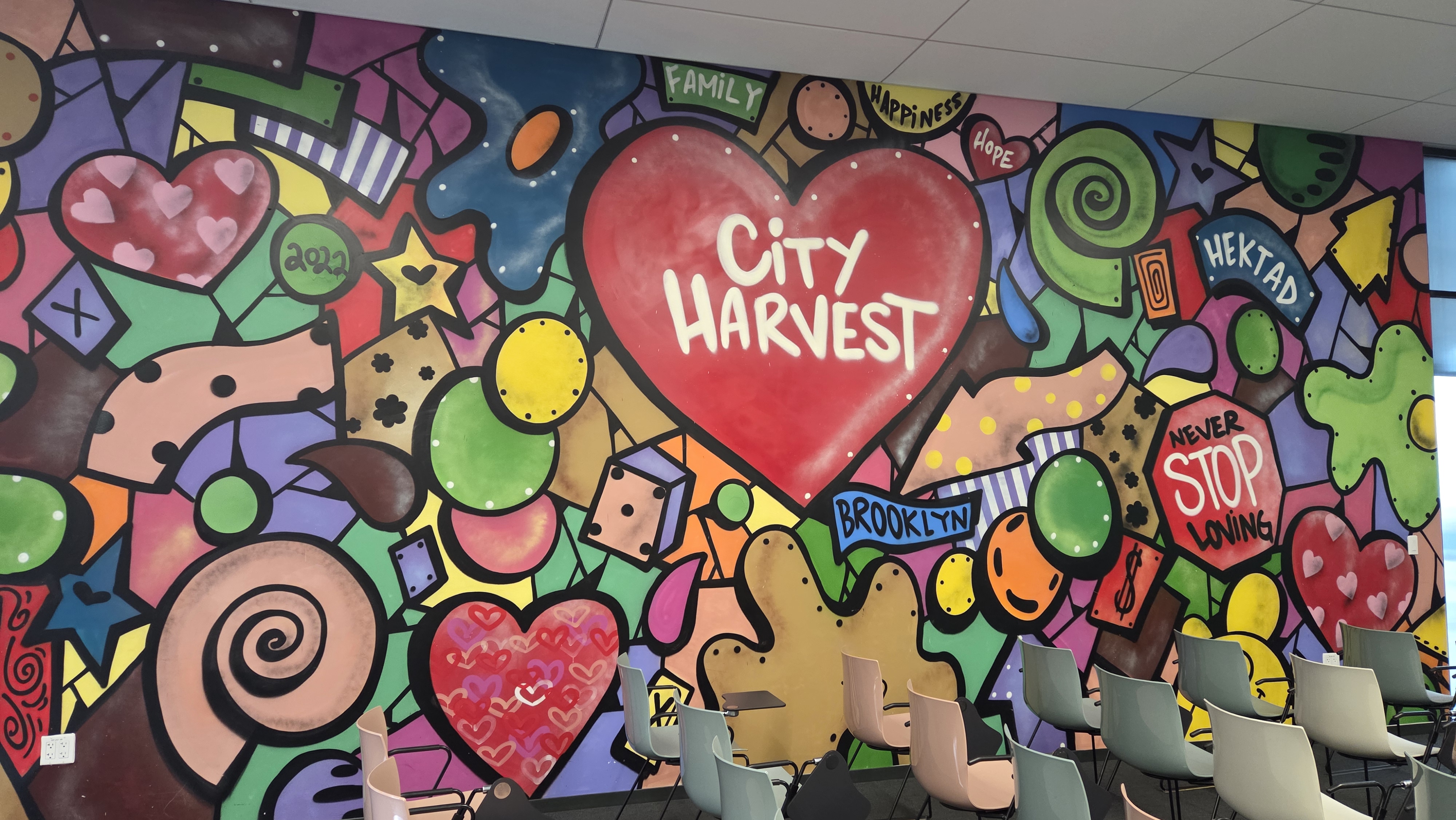
Mural at the City Harvest HQ in Brooklyn, NYC
creativity

The 4.5-Mile Walk: What Cancer Taught Me About Resilience and Love

Me at Macy’s in NYC 5 years ago, right after my second surgery

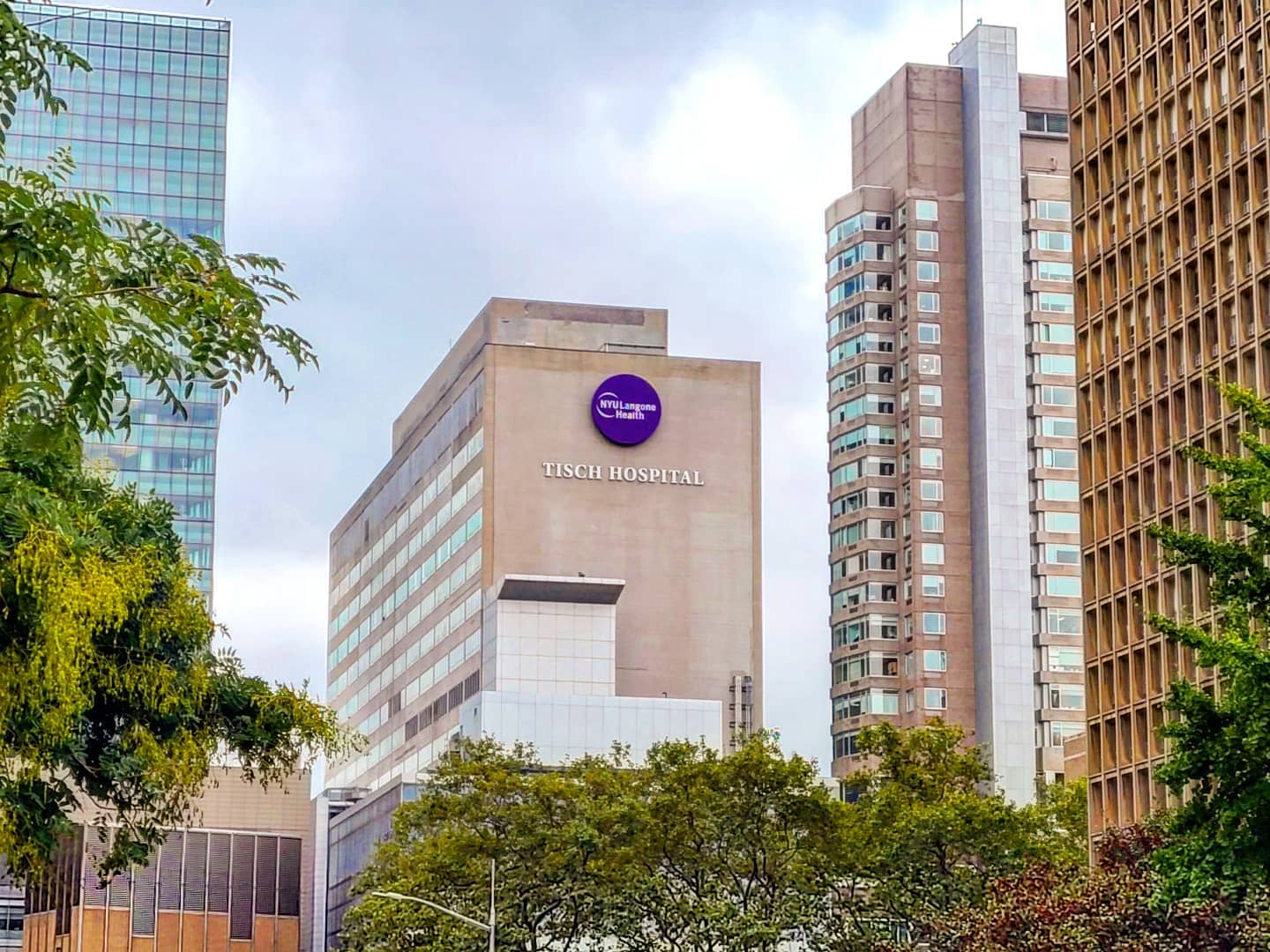
Five years ago, I was marching from the subway to NYU hospital for yet another surgeryโ€”two weeks after a bilateral mastectomyโ€”with the high-stakes knowledge that if cancer cells were hiding in my body, my surgeon was going in to find them. This photo memory, which Google popped up yesterday, was taken right after I left the hospital and showcases the hope I felt that day.

I had this second surgery because the lymph nodes that biopsied negative for cancer came back positive in the pathology. Out of an abundance of caution, my surgeon said she wanted to remove all the lymph nodes under my left arm to see if any of those axillary nodes were positive. (She removed all the lymph nodes under my right arm during my mastectomy, and they were all negative, thankfully.) If any nodes under my left arm were positive, that would mean the cancer could have spread. This also meant that I would be at risk of lymphedema (swelling) not only in my right arm but now in my left arm as well.ย 

My surgeon was devastated that this happened to me. She said, “I hate that every time you come into my office it’s a horror show. I keep pulling the rug out from under you. But I promise you this – if there’s cancer in you, I’m going in there to get it.”

While I was disappointed to have another surgery so soon and with such high stakes in the outcome, I wasn’t nervous. My surgeon’s confidence in her abilities gave me confidence in mine. I marched from the subway to NYU hospital that morning, ready for battle. I felt powerful and strong, like a warrior. I remember thinking, “Cancer, if you’re hiding in me, we’re coming for you. You can’t hide from us.”

I woke up quickly in the recovery room after surgery, completely alert and sobbing. Crying is a common reaction from anesthesia. The nurse was concerned I was crying with worry. I explained I was crying with relief and gratitude. A wave of peace washed over me: whatever the final pathology report said, we had done everything we could.

My sister came to pick me up, and she said, “What do you want to do?” I said, “I want to go for a walk.”ย 

We walked to Macy’s to see the Christmas decorations – that’s where she took this picture of me. Then we walked home to get my dog at doggy daycare and back home to my Upper West Side apartment. It was a total of 4 1/2 miles. Those twinkling lights, the love from my sister, and that long walk made me believe that against all odds, I’d be okay.ย 

We waited for a week for the results. I should have been panicked waiting for the results of the surgery. Again, I wasn’t nervous. We’d done everything we could. The results would be the results. 

While we waited, my sister and I watched every episode of The Great British Baking Show. I took naps. We walked my dog. Friends called, brought food, and sent care packages. I knew my sister was scared. She was making plans to stay with me longer, preparing for the worst.

My surgeon’s nurse practitioner called me a week later. There was a delay in the results because the lab was backed up. She was so upset I was waiting this long, and I told her, “Don’t worry. I’m not worried.”

She called me back 10 minutes later. I could hear her crying. The results were in. All the lymph nodes were negative. No sign of cancer. 

I did have some evidence of cancer cells in my breast tissue trying to escape to the rest of my body (this is called “vascular invasion”). With the mastectomy, we’d stopped them in their tracks. Still, with vascular invasion, chemo was recommended for me by a panel of oncologists that my team had consulted, not only at NYU, but at top cancer institutes across the country. So, chemo would start in a month, just before Christmas.ย 

Though I didn’t know at the time that the coming chemo treatments would nearly kill me twice, in that moment, standing at the precipice of a new fight, I was simply and profoundly grateful for my surgeon, the dream that drove me to get tested in the first place, my sister and friends, my dog, and every breath I took.

Last week on another long walk, I went by Macy’s on my way to meet friends for dinner. How far I’ve come since that long walk five years ago. Their theme this year of “Give Love” is spread across the outside of the building in bright lights. I smiled at those words because 5 years ago cancer showed me that giving love is the secret of life. To love and be loved in return, in all the ways love shows up in this world and in our lives, is a gift beyond measure. It’s a gift I give and receive in greater amounts every day, everywhere I go. It’s the gift that keeps on giving.

creativity

Beyond Extraction: How Janine Benyus Reveals Natureโ€™s Universal Patterns for a Thriving Future


In a recent episode of The Common Good from the Garrison Institute, science writer and Biomimicry Institute co-founder Janine Benyus joined host Jonathan F.P. Rose for an illuminating conversation. The topic was profound yet elegantly simple: uncovering โ€œnatureโ€™s universalsโ€โ€Šโ€”โ€Šthe deep, time-tested design patterns that silently guide all living systems, and how we can apply them to the human world.

Benyus, the pioneer behind the biomimicry movement, anchors her work on a single, powerful biological truth: Life creates conditions conducive to life.

This isnโ€™t a romantic notion; itโ€™s a design principle. Over billions of years, successful natural systemsโ€Šโ€”โ€Šfrom the vastness of a forest canopy to the complexity of a coral reefโ€Šโ€”โ€Šhave learned to thrive not through competition and extraction, but through cooperation, self-organization, and elegant networked intelligence. These are the strategies that generate abundance without consuming the system that supports them. When we look at nature, we are looking at a master class in sustainability, efficiency, and resilience.

The Blueprint for Human Innovation

The conversation moved beyond mere observation to practical application, identifying core natural principles that can and must guide human industry and ethics. Two standout concepts for redesigning our civilization are:

  1. Right-Sizing: In nature, nothing is over-engineered. Organisms do what is necessary, but no more, often using modularity and local resources to solve problems. Benyus challenges us to abandon the modern human impulse for massive, centralized, and often brittle systems. Instead, we should mimic natureโ€™s local, tailored, and efficient solutions.
  2. Distributed Abundance: Natureโ€™s design is fundamentally anti-monopoly. Resources and solutions are distributedโ€Šโ€”โ€Šsunlight, nutrients, and water flow through a network, ensuring that the health of the whole system supports the success of individual parts. Applying this principle to economic and social systems means designing for local self-sufficiency and ensuring resources are abundant and regenerative for all, rather than concentrated at the top.

A Call for Biological Literacy

Ultimately, the episode serves as a powerful call to re-embrace our own biological literacy. For too long, Benyus contends, Western culture has viewed the worldโ€Šโ€”โ€Šand our place in itโ€Šโ€”โ€Šas a collection of separate parts to be managed and exploited. This mindset has dictated our industrial processes, our economic models, and even our spiritual disconnection from the living planet.

The discussion highlights that re-embracing these universal patterns is not just about engineering better products; itโ€™s about reshaping our culture and spirituality. By learning from lifeโ€™s inherent genius, we move toward a worldview where we recognize the world as a single, living, interdependent whole. The greatest innovation of the next century will be applying natureโ€™s wisdom to create human systems that are as beautiful, cooperative, and conducive to life as a thriving ecosystem.


Iโ€™d love to hear your thoughts on how we can all embrace natureโ€™s principles to live our best lives and also care for the planet. What do you think?

creativity

Waste Heat Isn’t a Liability; It’s a Resource: How Finland’s Data Centers Heat Its Homes

Microsoft’s new data centers in Finland are designed to operate with 100 percent emission-free energy and will supply heat for the cities of Espoo and Kauniainen. Photo by Trellis.

This summer I went to Finland and this lesson has stuck with me: Finnish citizens don’t see themselves as apart from nature but as a part of nature. This is evident in how they eat, how they build their infrastructure, and now also how they heat their homes during their long winters.

We often talk about the enormous energy cost of digitalizationโ€”the vast server farms that consume electricity and generate a tremendous amount of waste heat. This is a core challenge of the AI era.

But what if that heat wasn’t a liability? What if it was a valuable, free community resource?

I went to Finland this summerIn Finland, cities like Espoo, Helsinki, and Hamina are pioneering the answer. Tech giants like Microsoft and Google (in partnership with energy companies like Fortum and Helen) are not dumping their server heat into the atmosphere. Instead, they are routing it into large-scale district heating networks to warm nearby homes, schools, and businesses.

The Impact is Circular:

The Lesson for NYC and Beyond:

This Nordic success is primarily a story of systems thinking and policy. Finland has a highly developed district heating infrastructure and smart government incentives (like reduced electricity tax on waste heat recovery). It shows that success is less about a single new technology and more about ecosystem collaboration.

The most important takeaway for sustainability leaders? The challenge isn’t technical; it’s often business and policy-relatedโ€”finding the right collaboration models and regulatory frameworks to view waste as a resource.

Iโ€™d love to hear your thoughts on this system:

Could this kind of large-scale circularity be implemented in a complex, dense city like New York? What are the biggest policy or infrastructure barriers we need to overcome first?

creativity

My golden hour wish for NYC

Golden hour sky tonight in my neighborhood

To be alive and healthy in a world with golden skies is no small thing. I went for a walk tonight in my beautiful Brooklyn neighborhood to clear my head, open my heart, and lift my spirits.

On that walk, I let myself hope for a brighter, better future. I let myself imagine my city transforming into a place where generosity and justice become an engine for progress.

I want New York City to become healthier, greener, safer, and more equitable for all beings who call this home. A place where dreams come true are not 1 in a million, but within reach for everyone who works hard and lifts others as they rise.

And I believe we can make all of that a reality, together, one day at a time.

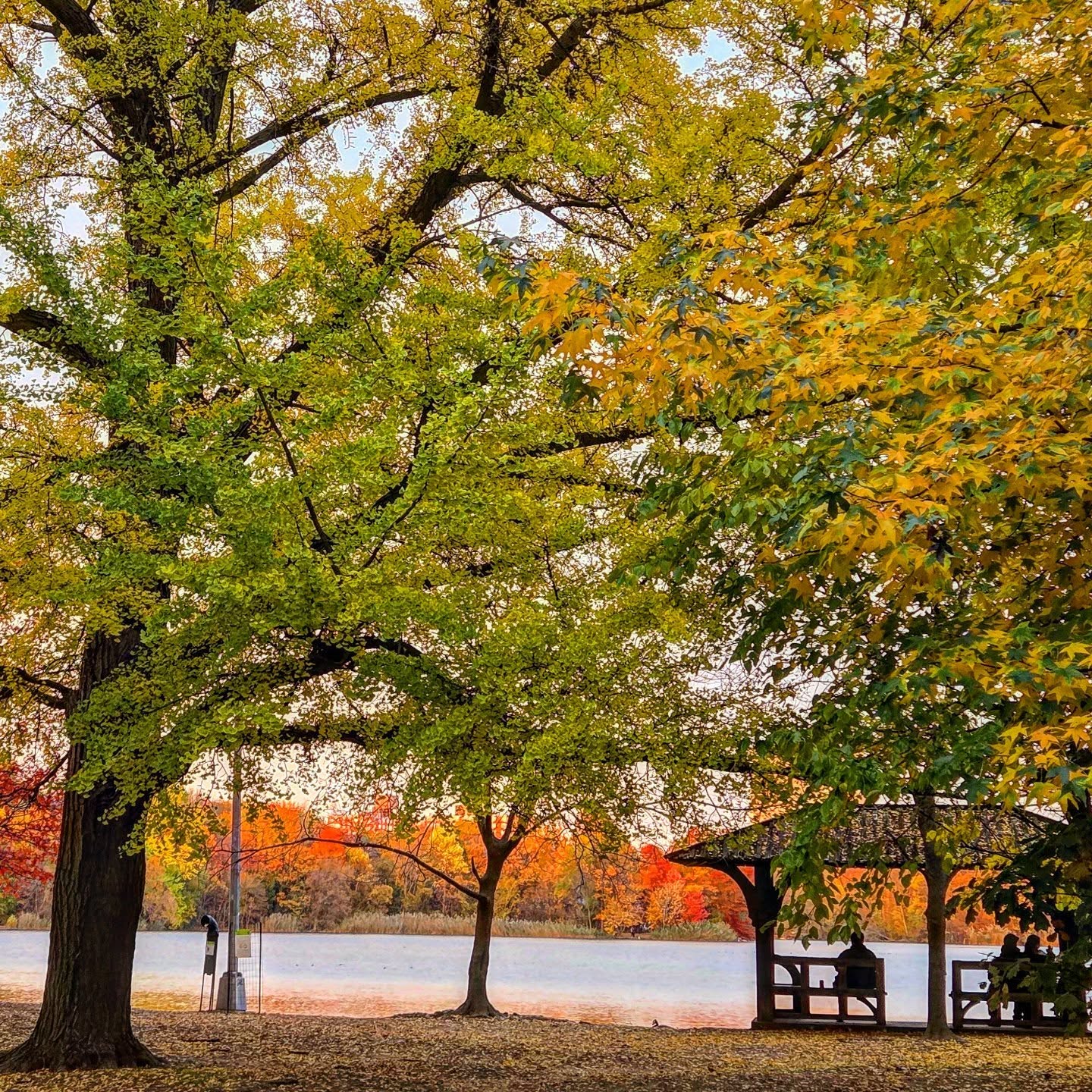
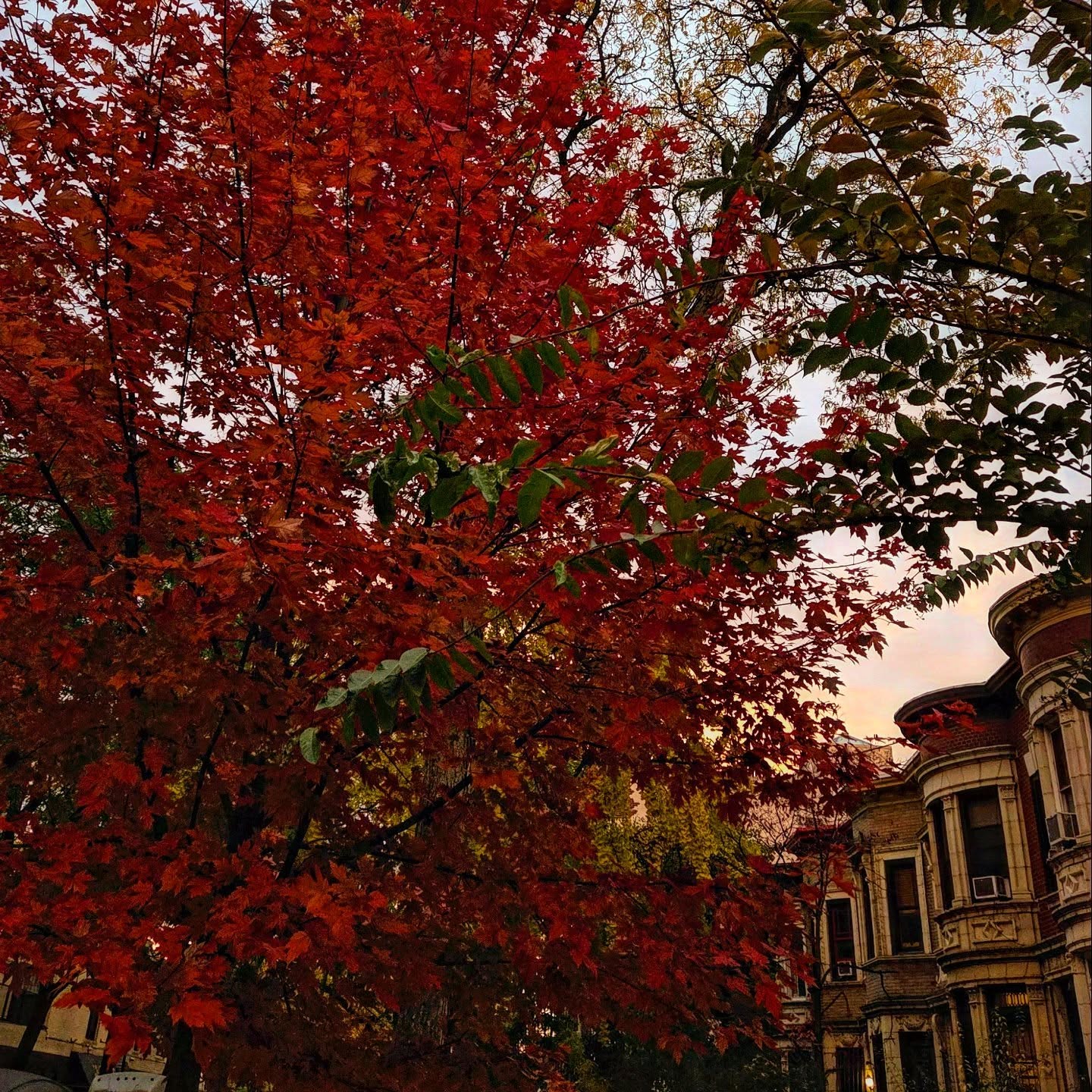
Below are more photo from my walk tonight through Prospect Park.

creativity

Living in gratitude on my 5-year cancer journey

Me outside the Perlmutter Cancer Center in NYC on October 29th after seeing my surgeon on the 5-year anniversary of my discharge from surgery

Last week I celebrated 5 years since the bilateral mastectomy that saved my life and removed any sign of cancer from my body. My friend, Wayne, describes journeys like this as a log flume. When we begin, we’re at the top of a terrifying drop. We’re scared, nervous, unsure, hopeful, confused, anxious. All the emotions of the human condition are raw and tumbled in our minds and hearts. We’re trying to keep our head up and our eyes ahead. we don’t want to take that plunge into the unknown. But we have to. We can’t turn around. The only way out is through.

And so, we take a deep breath, and we let ourselves fall. We face all the things we were afraid of, and then some. In every health challenge journey, circumstances arise that we never expected. In my case, I had to have another surgery 3 weeks later because lymph nodes that biopsied negative came back positive in the pathology. All the nodes from that second surgery were, thankfully, negative. Then I nearly died, twice, from a life-threatening allergy to Taxol, a common chemo drug, that shut down my lungs in the middle of COVID. My oncologist at the time thought I was being overly dramatic about my side effects when in fact I was suffocating. (I fired her from my care team, and she no longer sees patients.) My pulmonology team thought my lungs might be permanently scarred and I may need to have an oxygen tank for the rest of my life. Thanks to science and diligence, I fully recovered and now I’m healthier and stronger than ever.

I spent the evening of my 5-year surgery anniversary producing and hosting NYC’s Secrets & Lies – Ghost Stories. The irony isn’t lost on meโ€”that I nearly became a ghost myself with so much life I still wanted to live and that storytelling and creativity have been two of my greatest teachers and healers.

In the wee hours of the morning after my surgery, I woke up in recovery. High as a kite on a massive amount of drugs, my nurse ran around the hospital to find me a turkey sandwich and to this day it’s the best thing I’ve ever eaten. I happily gobbled it down, watched a Harry Potter film on my tablet, and cried enormous tears of gratitude. There was less of my body in the world, but I was still alive, still breathing, and cancer-free. My greatest wish that morning was to see the sunrise so my nurse got me out of bed and wheeled me to one of the lounge spaces in the recovery wing so I could see the sun come up over the East River and the FDR Drive. I will never forget that view.

My surgery team members came to see me before I was discharged. My plastic surgeon who had placed the first installment of my reconstruction – the tissue expanders that would go on to cause 14 months of constant pain – told me that I woke up from anesthesia very quickly, before I’d even left the operating room. I began gushing how grateful and thankful I was to the whole surgery team. She said the entire team was laughing and crying right along with me. I have zero memory of this, and I wish I’d been fully conscious to remember it. Leave it to me to bring the funny in the darkest of times!

Then my breast surgeon came to check me before discharge. Through our masks, I thanked her for saving me and she said, “Sweetie, I’m just part of the team. And every person in this hospital shows up every day with the only goal being to help you heal. And you will heal. And how you feel now – the pain and the fear – it won’t always feel this way. We’re going to get through this together.” My dear friend, Marita, picked me up from the hospital and drove me home to where my sister and my dog were waiting for me. In the following months, so many beautiful friends sent me care packages, messages, cards, and food, and came to visit me from a distance – outside and masked. The trying times we made it through! I’m so thankful for everyone who cheered me on and helped me in a million different ways. I wouldn’t be here without you.

It’s fitting that exactly 5 years at that exact time she came to see me in recovery that I had my 5-year check-up with my breast surgeon. She gave me a clean bill of health, and we talked about the next 5 years of meds. She eased my mind and soothed my heart, as she always does, with science and compassion. We have a plan to keep me cancer-free, and I feel ready to start this next chapter.

I left her office with tears in my eyes and my head, heart, and spirit filled with gratitude for every second of these past 5 years. I’m even grateful for the worst days on this journey because I got to live them. Every morning, my first thought is, “Whew, I got another one!” Long may that tradition continue.

Below are photos of me on the day of my surgery and the morning after when I woke up and saw the sunrise

creativity

Join me in NYC for free wine and secret holiday maritime stories

It’s official! The tickets for my December NYC’s Secrets & Lies storytelling show at the South Street Seaport Museum are now on sale and they’re only $10

I am so excited for this oneโ€”itโ€™s going to be a gorgeous night of holiday secret stories, exclusive access to the museum’s exhibit on NYC maritime history,ย freeย wine, and free holiday treats with a cast that includes Carla Katz, Erin Hunkemoeller, and Ashley Semrick. ๐Ÿท

We’re expecting a great crowd so don’t wait on this one! Grab your $10 ticket now at https://southstreetseaportmuseum.org/holiday-secrets-lies/

creativity

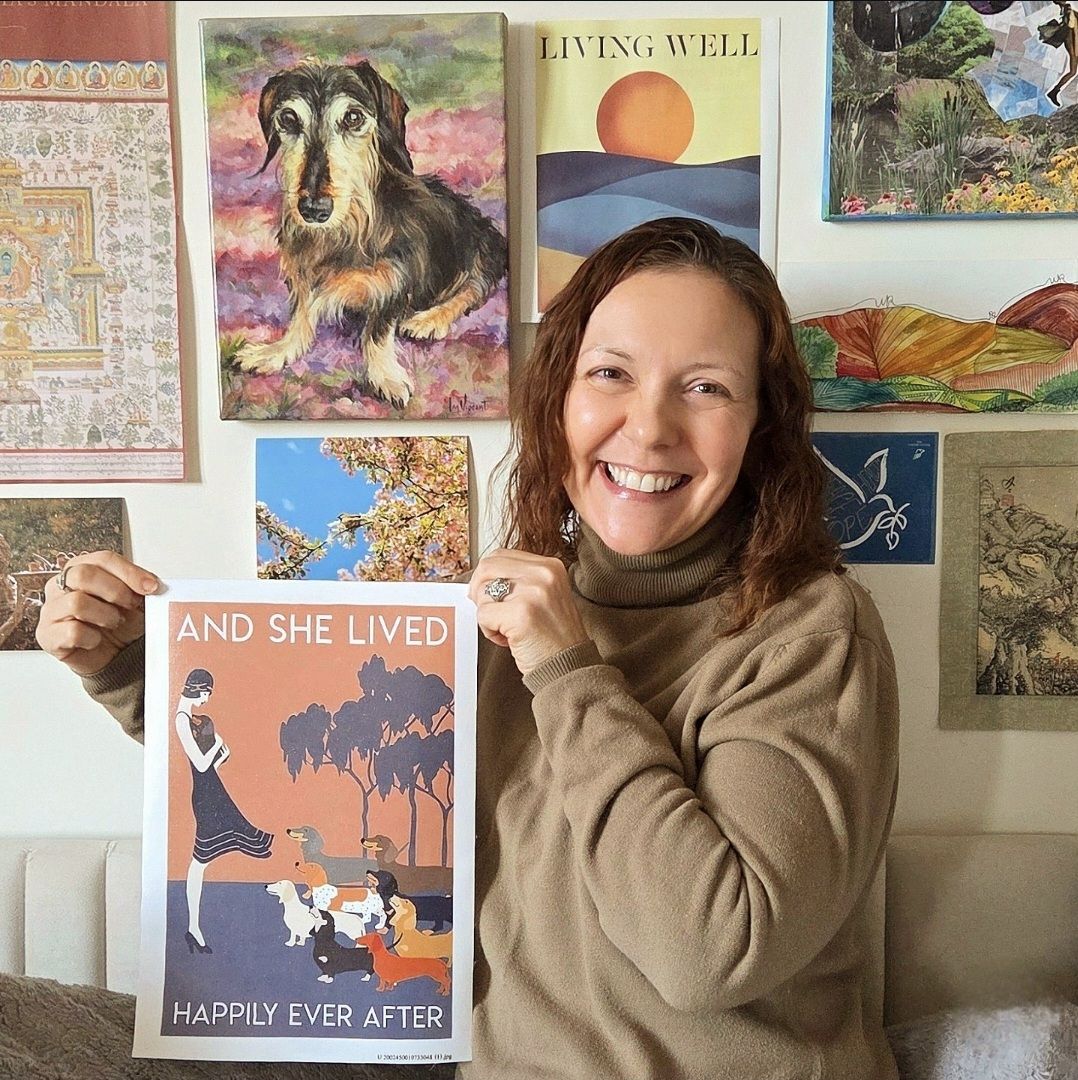
Ready for my next chapter of ‘Happily Ever After’

Ready for Happily Ever After!

The search for my Heart Dog is officially on! ๐Ÿพ This week, I filled out adoption registration forms with several amazing local rescue groups. NYC has so many wonderful rescue organizations! I know one of them is going to have the perfect pup for me to adopt.

Muddy Paws Rescue NYC is of course high on the list because I’ve fostered 10 dogs with them over the last year. Every Last One Rescue, Animal Care Centers of NYC (ACC), and North Shore Animal League America are a few of the others I’m monitoring every day for new additions!

This week I also spent time getting clear on the criteria for my Heart Dog. I’m looking for a doggo who is friendly with people and dogs, enjoys long walks, and loves going on adventures around the city. I’d love to adopt a pup who is a New Yorker already.

I’m very interested in having a dog who would be suitable for therapy dog trainingโ€”a confident and joyful spirit who’s ready to give and receive love.

Phineas, my Soul Dog, was a dachshund so I’m partial to that breed though that’s not a requirement. Ideally, a dog that fits comfortably in a carrier for easy city travel would be great, but I’m ready to fall in love with a larger dog, too. I hope Phinny will guide me to the dog who’s meant for me.

Send me all your good adoption vibes. I’m ready for the search and I’m excited to share the journey with you!