creativity

A divestment case study: How the University of Cambridge divested from fossil fuels

University of Cambridge. Photo by Tim Alex on Unsplash

Driven by the university student protests across the country, divestment is a top topic in U.S. media today. I’m currently getting my Masters in Sustainability Leadership at the University of Cambridge. At our December 2023 workshop, I learned about the complexities of the university’s divestment from fossil fuel companies. 

I was fortunate to have a small seminar class with the lead researcher on this effort, Dr. Ellen Quigley, who is a brilliant, passionate, and seasoned researcher. We dove deep into the research, which is hundreds of pages long and took years of concentrated, concerted effort to conduct and use to drive change. There were years of negotiation throughout the university that ultimately led to a university vote in accordance with governance parameters.

I was particularly interested in this topic at my December workshop at Cambridge because in late 2022 at the start of my group project for my program, I tried to completely divest my personal retirement funds from fossil fuels. I had a clear goal of divestment from fossil fuels, and only a few funds at two financial institutions (one from my current job and another for my roll-over accounts from retirement funding I earned at previous jobs). I planned to talk to someone at the financial institutions, make a few changes to my investments, and have my portfolio free from fossil fuels. 

Divesting my own small retirement fund from fossil fuels was anything but simple. 18 months, many phone calls, emails, and hours of research later, and I still have some investments in fossil fuel companies despite all my efforts and time. It’s fewer than I had when I started this process, which is progress, but it’s not the perfect change I hoped for. My personal work to divest from fossil fuels in ongoing.

While the divestment process is complex, I wanted to use this post to provide a few insights from the efforts at Cambridge along with links to those who want to dive deeper into this topic and case study. This case study helped me learn more about the divestment process and informs me about how it could be utilized by university administrators, faculty, students, and alumni who want to be actively engaged in the management of a university’s endowment, overall financials, and operations. Of course, this is just one case study at one university and other divestment processes at other universities may differ in their journey and the results.  

A clear goal
A clear goal focuses efforts and time. In the case of my retirement funds, I wanted to divest from fossil fuels. For the University of Cambridge, their goal was more nuanced than mine because of the size, complexity, signaling, varied stakeholder community, and potential consequences (intentional and unintentional) of their divestment. To make a decision, Cambridge needed to consider whether it could divest from fossil fuels without incurring significant costs and/or if it must do so in order to retain supporters and beneficiaries.

Activism takes many forms
A single goal can have many different tactics, and different players can share the same goal and adopt different tactics. Cambridge’s constituencies were united around the science that proves fossil fuels are driving climate change. The decision process for the university as a whole was about which specific actions to take — divesting, government action, and many other stakeholder engagement options

The form(s) of activism best suited for any individual or organization has many considerations. Examples include organized protests, public letters and other media outreach, contact with elected and appointed officials and policy makers, local actions in a specific community (caring for a natural area through rewilding, replanting, regenerating, clean-ups, etc.), buying goods and services from companies that align with our values, running for elected or appointed office, having conversations with people in our community about our personal experiences, and starting, working, and volunteering for companies, organizations, and partners that align with our values. This is only a small list of possible actions. 

One thing I’ve learned in this process is one form of activism is not better, nor more valid, than another. How, when, and why people engage in activism is impacted by many circumstances — our resources of time and money, where we feel we can best contribute and make an impact, personal and professional commitments, and our mental and physical health to name just a few. 

Trade-offs, negotiations, and incremental progress
Another consideration in all divestment conversations is the topic of trade-offs and negotiations because it is rare (though perhaps not impossible) to find a perfect solution or action to a challenge we want to solve. As an individual, I only have to consider my own trade-offs. A university like Cambridge has many stakeholders to consider so their trade-offs and negotiations are much more complicated than mine as an individual.

A transition process is part of Cambridge’s plan to divest from fossil fuels. The University has committed to divestment from fossil fuels by 2030 and to achieving net zero by 2038. That net zero commitment is nearly 19 years after the discussions about fossil fuel divestment began in 2019. 

Divestment with a clear goal, an agreement on specific tactics and actions, an understanding of trade-offs, negotiations, and incremental progress is a journey. It takes continuous efforts by many people over a long period of time. Lasting change is a collective, collaborative process of coalitions. 

Here are the links I refer to in this post for easy access. I hope they’re helpful for anyone interested in learning more about divestment:

1.) Grace on Fossil Fuel Industry Ties: A report into the impacts of implementing the Grace on fossil fuel industry ties on Cambridge University’s mission (July 2023)
https://www.cam.ac.uk/notices/grace-on-fossil-fuel-industry-ties

2.) To Divest or to Engage? A Case Study of Investor Responses to Climate Activism (2020) 
https://www.pm-research.com/content/iijinvest/29/2/10

3.) Divestment: Advantages and Disadvantages for the University of Cambridge (2020)
https://www.cam.ac.uk/sites/www.cam.ac.uk/files/sm6_divestment_report.pdf

4.) Cambridge to Divest from Fossil Fuels with net zero plan(2020)
https://www.cam.ac.uk/news/cambridge-to-divest-from-fossil-fuels-with-net-zero-plan

creativity

When milestones converge

Me on April 14, 2024

Yesterday was a big day for me, marked by many milestones:

I’ll be sharing more about all of this throughout the week. For now, I’m feel so much gratitude for all of this, and for the people who made all of this possible. Thank you, thank you, thank you.

creativity

Could the northeast earthquake on April 5th be a result of climate change?

USGS Shake Map for April 5, 2024 New Jersey earthquake https://earthquake.usgs.gov/earthquakes/eventpage/us7000ma74/shakemap/intensity

Yesterday while the northeast coast of the U.S. was reeling from a 4.8-magnitude earthquake and aftershocks, I was wondering if climate change could be playing any role in it. In a word, yes it can. Because of climate change, we may be at the beginning of a wave of increased seismic activity. Here’s the short of it from the World Economic Forum and The Conversation:

  • Climate change could cause more earthquakes and volcanic eruptions by increasing the weight of water on the Earth’s crust from increased precipitation and glacial melt.
  • When glaciers melt, the water can seep into cracks in the Earth’s crust, causing them to widen and weaken.
  • This can lead to earthquakes, especially in areas that are already seismically active.
  • Climate change can also cause more volcanic eruptions by increasing the amount of magma in the Earth’s mantle.

The tristate area has been caught in a seemingly endless cycle of storms and torrential rain so far in 2024. In March, New York City had double the amount of rain it usually has and April’s pattern is predicted to be similar. Geologists have previously explored the relationship between heavy rainfall and tremors in the Earth’s crust. Heavy downpours have triggered a pattern of seismic activity in some parts of the world such as the Himalayas but exactly how much rain is needed and what the full causal impact is still requires more research. Some climate models show more precipitation related to climate change is likely to trigger earthquakes and volcanoes in areas prone to them. 

The impact on seismic activity isn’t limited to precipitation. Remember, the determining factor is the change in the weight of water in the Earth’s crust. We must also account for the impact of climate change on the melting of glaciers as well. As the glaciers melt not only does that water seep into the Earth’s crust, but the melting glaciers also reduce the weight and pressure on the land that was under the glaciers. This release causes the land to rise, similar to a spring that was compressed and then releases once that compression is removed. When the last ice age ended ~10,000 years ago, the receding of the glaciers caused some of the land in Scotland to rise 45 meters above sea level! This kind of release can cause a spike in earthquakes, and historically some of these spikes have been severe in areas such as Scandinavia

In short, climate change may deliver a triple threat for earthquake activity: increasing the weight of water in the Earth’s crust from both an increased amount of rainfall and rapidly melting glaciers, and the added risk to the rising of land once the weight of those glaciers lightens or disappears altogether. The interconnections between all of the Earth’s systems and features is a delicate balance. Life on Earth has benefitted from a long stretch of stability and harmony. Our exploitation of nature, particularly our addiction to the drilling for and burning of fossil fuels, has put that stability and balance in jeopardy on numerous levels, many of which we’re only just beginning to understand. 

Nature is talking to us. Nature is warning us. Her voice and warnings will grow louder if we don’t listen and take action. Our artificial systems and incentives that we’ve invented in our economy and society will be no match for the wrath of nature. No amount of money nor ingenuity nor technology will protect us nor immunize us from the impacts of destroying the balance of natural systems on which we all depend. 

Every action we take now to reduce warming matters. The impacts of climate change are not for some distant generation. They are happening to us right now, and they will continue to happen and increase in intensity until we realize harmony with nature is the surest path to prosperity, health, wealth, and wellbeing for all beings. 

creativity

My dream job at the New York Climate Exchange

After returning from a week at University of Cambridge / Cambridge Institute for Sustainability Leadership (CISL), I’m thinking a lot of about what’s next for my career after I finish my dissertation in July 2024. I envy people who have a single passion that drives them. I’m interested in so many areas and I’m not sure which path to choose.

At Cambridge, one of my favorite session was run by Louise Drake whose scholarship I deeply admire. She asked us to reflect on CISL’s new Leadership for a Sustainable Future Framework principles: connected, collaborative, creative, and courageous. Our task was to consider how we might move forward our careers in one of these areas. I chose courageous, and it was an emotional reflection for me. Questions that flooded my mind included: How might I be more courageous in my career choices and actions?; What is the most impactful way to use my time and talents?; Am I taking enough chances, risks, and big bets?; How do I ensure I don’t regret how I spend my time?

After this reflection, some of my friends helped me see that my many interests and desire to connect and rally people through storytelling, joy, and hope is my superpower. I believe in breaking down walls and repurposing those walls to build a longer table for people to connect, collaborate, and create together. These friends and Lou helped me reframe what I thought was a distraction into a focus, and I’m immensely grateful for their wisdom.

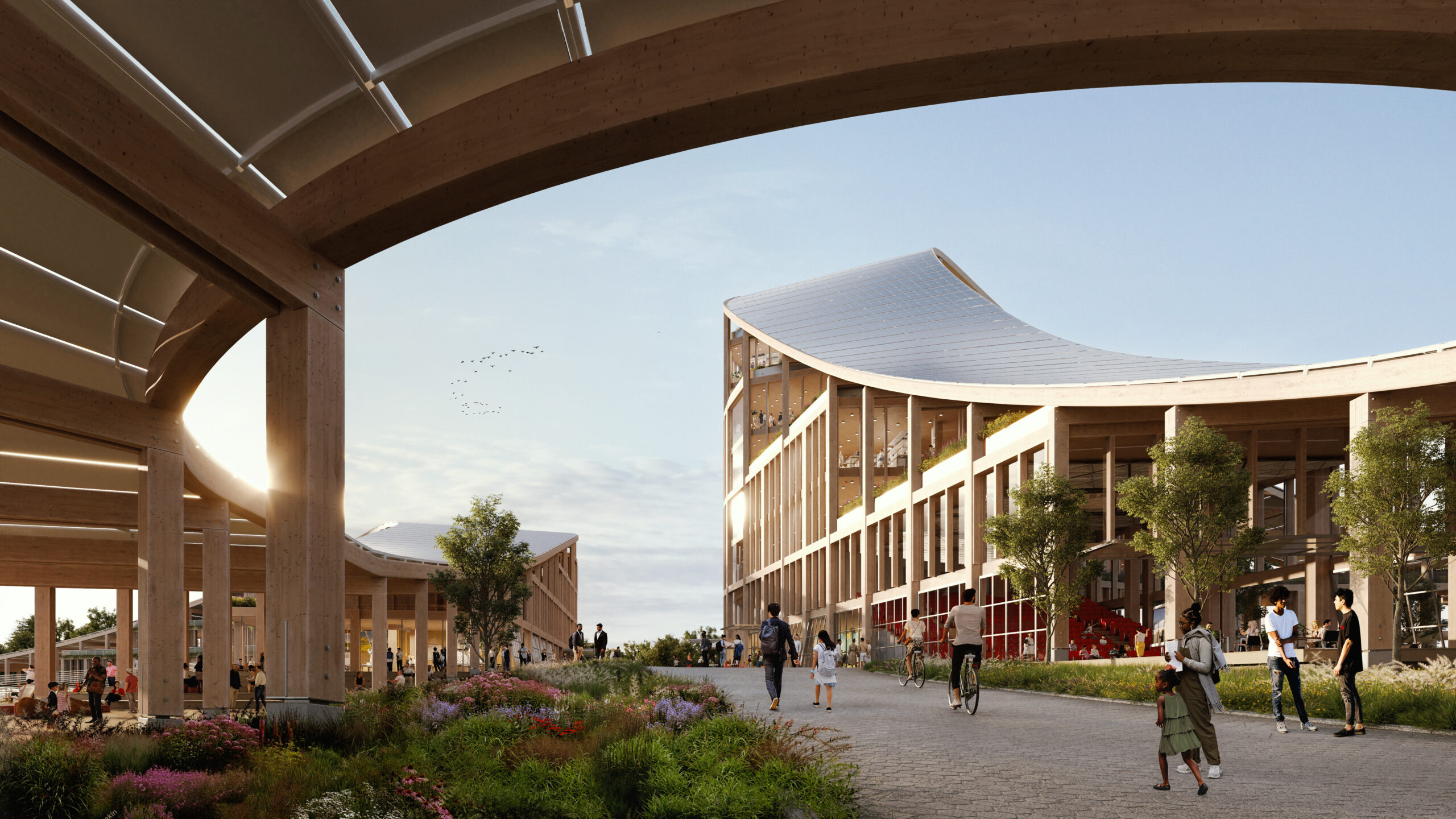
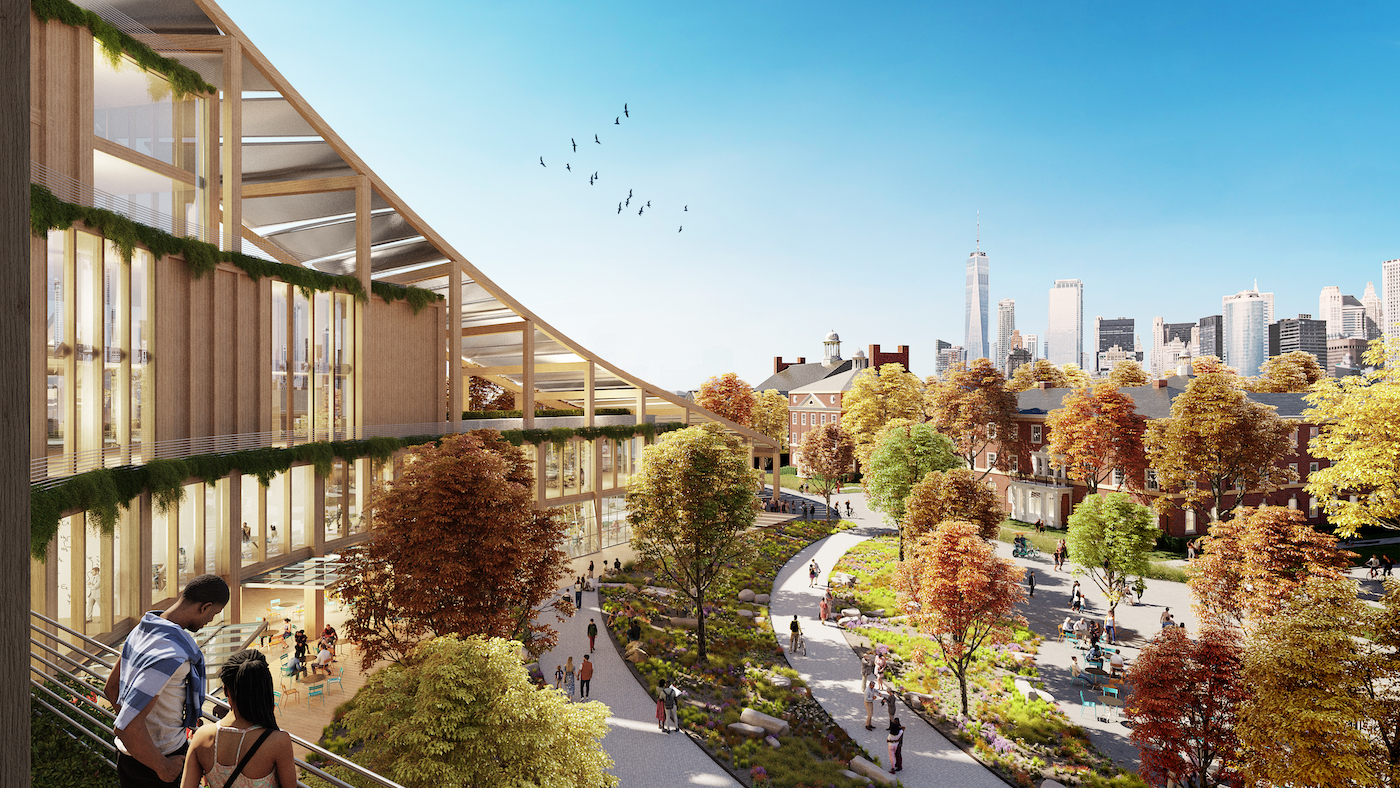
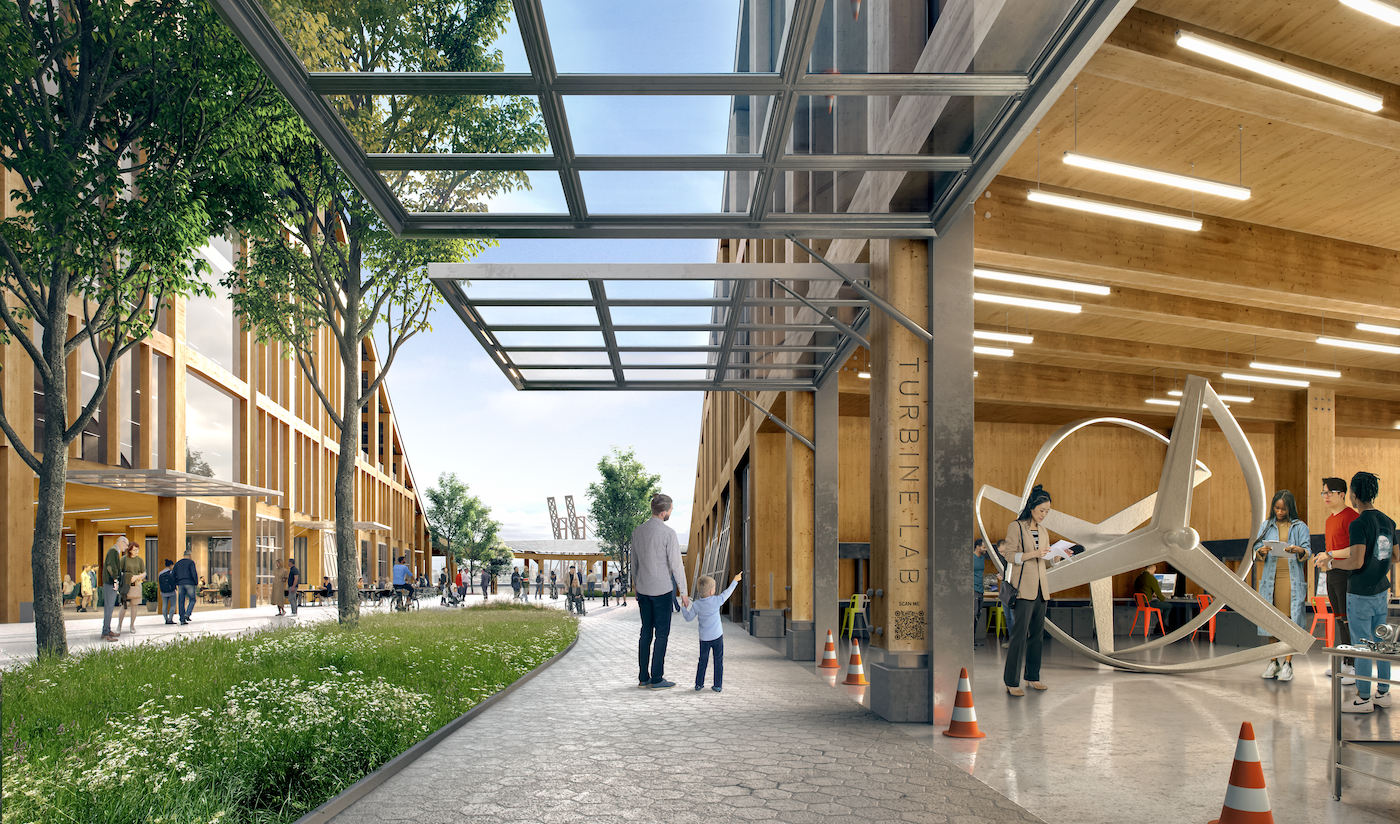
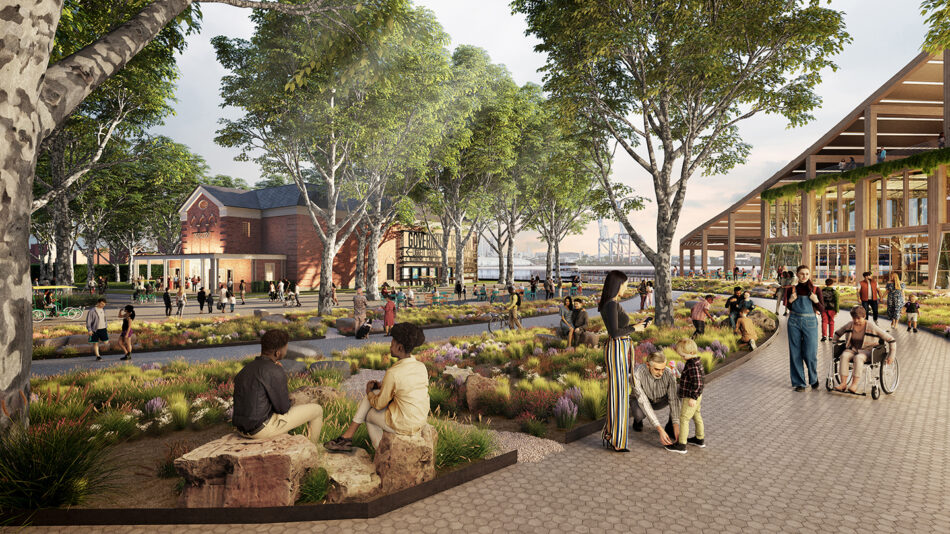
Reflecting on this, I do have a dream job and it’s right in my backyard of New York City where my ancestors entered this country 120 years ago. The New York Climate Exchange (“The Exchange”) is a first-of-its-kind non-profit organization and partnership network based at Governor’s Island in New York Harbor (near the Statue of Liberty and Ellis Island) comprised of leading universities, businesses, and community groups collaborating to accelerate climate change solutions for NYC and beyond. Its mission is to confront urgent climate impacts and issues of environmental injustice, breaking down silos through an innovative, scalable, and sustainable model that will rapidly develop new urban climate solutions. In 2024, I’d love to join the team at The Exchange that’s embarking on this grand adventure.

Already, Domus has named the design of The Exchange’s 400,000 square-foot-campus by Skidmore, Owings, & Merrill (SOM) as one of the best urban regeneration projects of 2023. With a combined ~$700 million investment, construction is anticipated to begin in 2025. Collaborative projects, including research initiatives, programs with community groups, workforce training programs, and K-12 outreach will begin earlier.

This is a place that can be the massive lever for change we need to mitigate, adapt to, and become more resilient to climate change impacts. I hope I can give my talents to such an incredible cause and place. https://nyclimateexchange.org/

All images above are renderings from the New York Climate Exchange website.

creativity

How Rilke and the forest became part of my graduate school dissertation

Me surrounded by ginko gold in Prospect Park

I’m deep into the work of my University of Cambridge dissertation. The more I learn, the more questions I have. I’m sitting at my laptop, looking at the research and also monitoring the news. Where do I begin with all of the problems, pain, and promise in the world? How can I make a difference?

I close my laptop and go to the forest, where I always go when I don’t know what to do. My forest is Prospect Park in Brooklyn. The ginko trees are putting on a show—my favorite kind of gold. Walking there among the crunchy colorful leaves on the forest floor, the autumn sun on my face, breathing in the cool dry air, I think of Rilke and his beautiful quote about living the questions in the book Letters to a Young Poet

“Be patient toward all that is unsolved in your heart and try to love the questions themselves, like locked rooms and like books that are now written in a very foreign tongue. Do not now seek the answers, which cannot be given you because you would not be able to live them. And the point is, to live everything. Live the questions now. Perhaps you will then gradually, without noticing it, live along some distant day into the answer.” ~Rainer Maria Rilke

Maybe the point of my dissertation is not to find an answer, but instead to find a way to ask powerful questions that help readers live into answers of their own making and choosing. Maybe I’ve been trying to make my dissertation a solution when what’s really needed is a mirror, using stories to reflect individual truths back to people who haven’t yet seen them on their own, to help them stand in the power they don’t know they have to shape the world in a way where everyone brings their gifts and resources to the table and uses them to collaboratively to win together. 

This is how a forest operates, the flora and fauna sharing with and caring for one another, each taking what they need and giving what they have. Diversity is celebrated, and necessary for health. Abundance is created through deep cooperation. Imagine a human society like that. Maybe I’ve found an answer after all. 

creativity

The National Climate Assessment shows us we can save the world

Photo by Shane Rounce on Unsplash

Look at your hands. Coupled with your mind and heart, your hands, joined with mine and with people across the globe, have the power to save the world. We can choose to be the artificers of our own bright and bountiful future.

Today we have a once-in-human-existence opportunity — the chance to create a healthy, vibrant, sustainable world for all beings. And not just for our children and grandchildren, but for ourselves and all beings alive right now.

The 2023 National Climate Assessment released Tuesday in the U.S. lays out the dire possibilities from global warming. It also shows that collectively we have all the knowledge, money, and creativity we need to halt emissions that cause global warming. There is proof the solutions work. Climate solutions are being deployed nationwide in every region and annual emissions dropped 12% from 2013–2019. We need them to drop much more but this is progress.

The one remaining hold out is us. Do we have the will to save ourselves and life on Earth?

“How much more the world warms depends on the choices societies make today,” states the report. “The future is in human hands.”

The report is hefty and so is the opportunity before us. Let’s not waste it.

creativity

Your story is not about you

Photo by Brett Jordan on Unsplash

Had the most fascinating conversation with an expert in audience segmentation who is an oceanographer and thinks deeply about climate change communications. For our climate message to reach someone in a way that impacts their behavior, he said we need to be entrenched in the minds of the audience member we want to reach and be willing to change our story and language so it is created in that audience member’s mind in the way we want and need it to be. In this way, our story is not our story in the traditional sense. Our story is the imprint we want the audience member to experience and visualize when they hear our story.

He gave me this analogy: if someone wants to send a microwave signal across the city of Los Angeles, that signal will be distorted and filtered between the start and end points. Therefore, the person sending the signal needs to re-engineer the signal they send so the signal at the end point is what they want it to be.

Our stories are no different. They are filtered through an audience member’s language, prior life experience, biases, hopes, wants, needs, and fears. This is information that isn’t and can’t be aligned with an audience member’s base demographics that are easy to collect. Understanding an audience member on this level requires deep, intense, curious, and radically empathetic listening, a skill that is sadly in short supply in today’s world.

We also need to let go of the idea that there is one story to communicate one goal or one experience to a general audience. This understanding of the audience requires us as storytellers in any form to develop a library of stories that will reach audiences that are more thoroughly and thoughtfully segmented.

How to do this is the crux of my dissertation for University of Cambridge. I don’t know the answers yet, but I’m excited to find out as this dissertation unfolds. My hope is that my research will move the ball forward for the climate community in a way that benefits all beings.

creativity

Bringing storytelling through video games into the climate change movement 

During my Masters program at University of Cambridge, I’ve been researching how video games can inspire and foster climate action. Today I had the chance to play the vertical slice (the beginning prototype) for the game that I’ve been working on. It’s beautiful, emotional, and challenging — all characteristics of a game that connect with players, and connect those players to something far beyond their screens.

3 billion people across the globe play video games. However, storytelling through video games has largely been absent from the climate change conversations that involve policy makers, governments, businesses, climate scientists, academics, and climate communicators. As someone who belongs to all of those communities and has worked in all of those sectors, I hope that I can be a bridge that not only brings them together but also helps them to collaborate and work together toward their common goal for a healthy, sustainable planet for all.

This game could be a game changer, and I can’t wait to see where this goes. More details soon as the prototype grows toward the market launch in Fall 2024.

creativity

It’s time for a public-private funded climate WPA and PWA in NYC

Screenshot of Brooklyn floods on September 29, 2023 captured by ABC 7 NY

“If I don’t work, I don’t eat so I have to be out here, even when there’s a flood.” This was a quote from a NYC delivery worker on the news during the September 29th, 2023 flash floods. His electric bike failed in the knee-deep water. He was pushing it against the current to deliver food. 

NYC now has the largest income gap of any large city in the country — the top 20% make 53 times more than the bottom 20%. We’re failing our people with no social safety net, no protection from climate hardship, and few pathways out of their circumstances. City workers often live in temporary shelter and public housing because they don’t earn enough to make rent but residency is often required for their jobs. 

This city is run by service workers. They are the lifeblood that keeps the city moving. Failing them will cause the city to crumble. 

We also have the migrant crisis. Right now at the U.S.-Mexico border, the city is distributing these fliers:

Flyer being handed out at the U.S.-Mexico border

I cried reading it. This has been the city of dreams for decades. Now it is the city of dreams only for those who are already of means. That cannot continue. 

New York is a city of immigrants. It always has been. They enrich and enliven the social and economic fabric on which this city’s creativity thrives. Without them, we lose who we are and what we stand for. 

The economics and business side of my brain spends the bulk of my waking hours thinking about how to support New Yorkers, present and future. How do we boost the economy and provide opportunity to everyone who wants to be a New Yorker? How do we rebuild this city, not just for the privileged few but for all the huddled masses yearning to be free so that everyone wins together?

The historian and storyteller side of my brain always sifts the sands of the past to see what I can find and use. As the late great John Lewis, who was at one time a New Yorker and is one of my greatest inspirations, often said, “We must make a way out of no way.” 

We have an immense amount of capital—NYC is the wealthiest city in the world with 340,000 millionaires. We also have staggering gaps in our economy that need attention: 24,000 city jobs vacancies, 20% office space vacancies, and city infrastructure that desperately needs repairs, particularly to prepare for climate impacts. We have people who want to work and make a difference but are being left behind—5.3% unemployment, 11.5% underemployment, 17% youth unemployment, 90,000 migrants and asylum-seekers over the last 18 months, and over 100,000 people without housing.

Now imagine this: New Yorkers of means collaborate hand-in-hand with policy makers and city agencies to put all of this wasted human capital to good use to rebuild this city through a Works Progress Administration / Public Works Administration that focuses on nature-based solutions. Good jobs. Good work. A way out of no way. They fortify our 520 miles of coastline with reefs, mangroves, and natural defenses, clean up, restore, and regenerate the 10,000 vacant lots for productive use like bioswales that reduce floods and the pressure placed on the water, sewer, and transporation systems, install green roofs and rooftop gardens, and build and connect wildlife corridors and habitats. 

That’s just a start of how NYC can work with nature so that everyone is cared for. There are dozens of other solutions that are relatively low-cost, efficient, and proven to clean the air, water, and land—benefits that benefit every resident, visitor, and commuter. 

This doesn’t have to be a concrete jungle. It can be a green, verdant, healthy, thriving place for all beings who want to be New Yorkers. It’s going to take a massive mobilization, and the relentless pursuit to match needs with resources to transform our challenges into opportunities. We have to do this work, and we have to do it now while we still have time. I’m tired of a dirty, flooded, and unequal New York. Aren’t you? I love this city. I love New Yorkers. And I want us to do better. We have to do better, and we can—together.

creativity

A river flows in Brooklyn

South Brooklyn during Friday’s floods. Photo by Christa Avampato.

A river flowed from Prospect Park through my neighborhood in South Slope, Brooklyn on Friday when we were pummeled with 7+ inches of rain in ~12 hours. I didn’t realize NYC’s floods were international news until I started getting messages from friends outside the country. With over 13 inches of rain in September, this is the 2nd wettest September since NYC began keeping weather records in 1920.

I took this photo of the flooding from my apartment at 8am. As I watched the water gushing through the streets, I thought about a conversation I had with my friend, Alex MacLennan, almost a decade ago. He told me the climate models then predicted the western half of the US would grow increasingly drier and hotter while the eastern half would be regularly flooded. How right they were.

NYC is an archipelago that sits mostly at sea-level surrounded by brackish water with the busiest shipping port in the US. Though it looms large on the national and international stages as a financial, cultural, political, and media capital, area-wise it’s small and easily overwhelmed by water.

It is, in many ways, a climate disaster waiting to happen. It’s the mostly densely populated city in the U.S. with nearly 28,000 people per square mile and has the largest population with almost 9 million people, more than double the size of the next largest city. The population doubles during the workday with as many commuters as residents. It’s also a city of hard surfaces (though we have 7 million trees and the tree canopy covers 21% of the city). Aged infrastructure and a subterranean subway that is 100+ years old further compound threats from flash flooding, coastal storms, and sea level rise. Flooding here is a crisis that must be urgently and unrelentingly addressed.

The country and world can’t afford to lose New York. While some strides have been made to protect the city from climate change, it’s not nearly enough. But all that may be changing, and fast.

There are plans underway to transform Governor’s Island in New York Harbor into the largest climate research and entrepreneurial center in the world. We desperately need this. The scale and impact of this project on our city, the country, and the world will be significant. It has to be significant because the climate crisis deepens every day.

These floods will become more frequent and intense in the coming years. We have to mitigate and adapt at the same time with nature-based solutions like biophilic architecture, mangroves, reefs, rooftop farms, and the transformation of vacant lots into bioswales. They are proven, efficient, and relatively inexpensive solutions. I hope the work at Governor’s Island can make these ideas realities.

Like all investments, nature-based solutions take time to create and scale. We have no more time to waste. We have to get started now, and it’s my hope that I can do my part to push this work forward.