creativity

New York wakes up to climate change

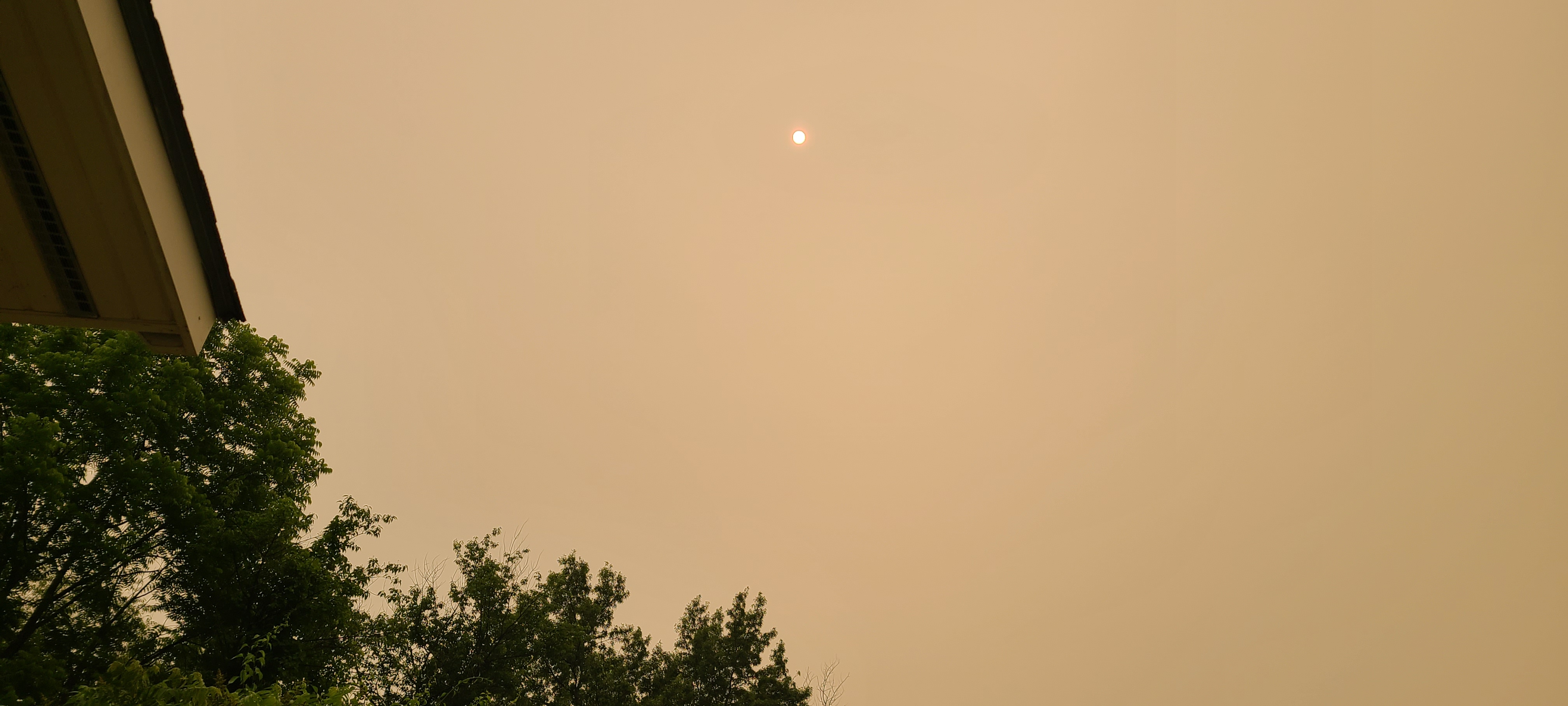
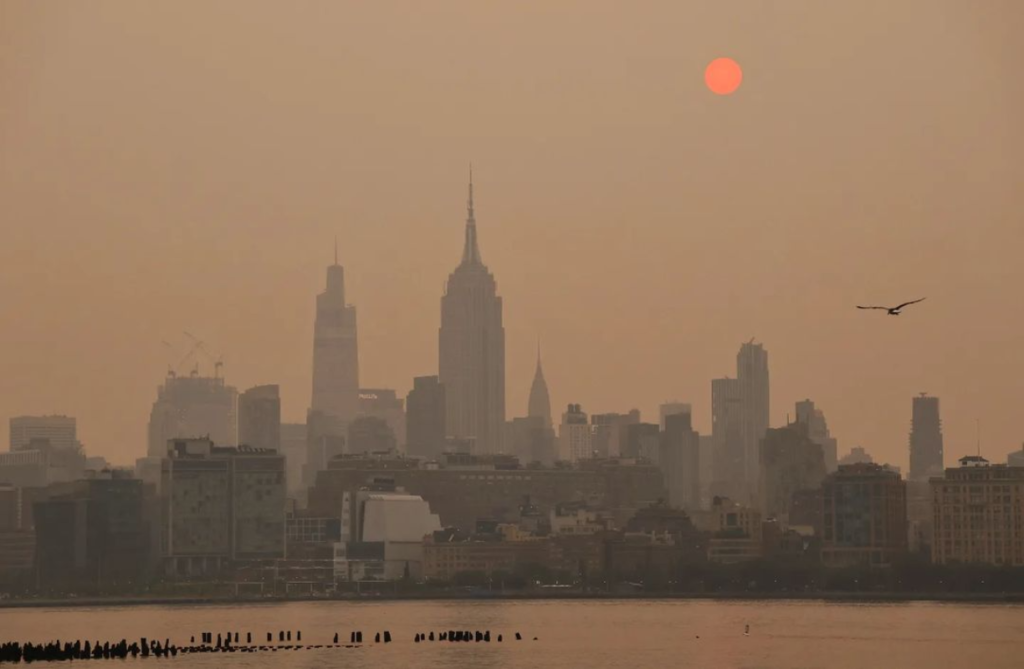
Picture I took this morning of the thick skies in upstate New York

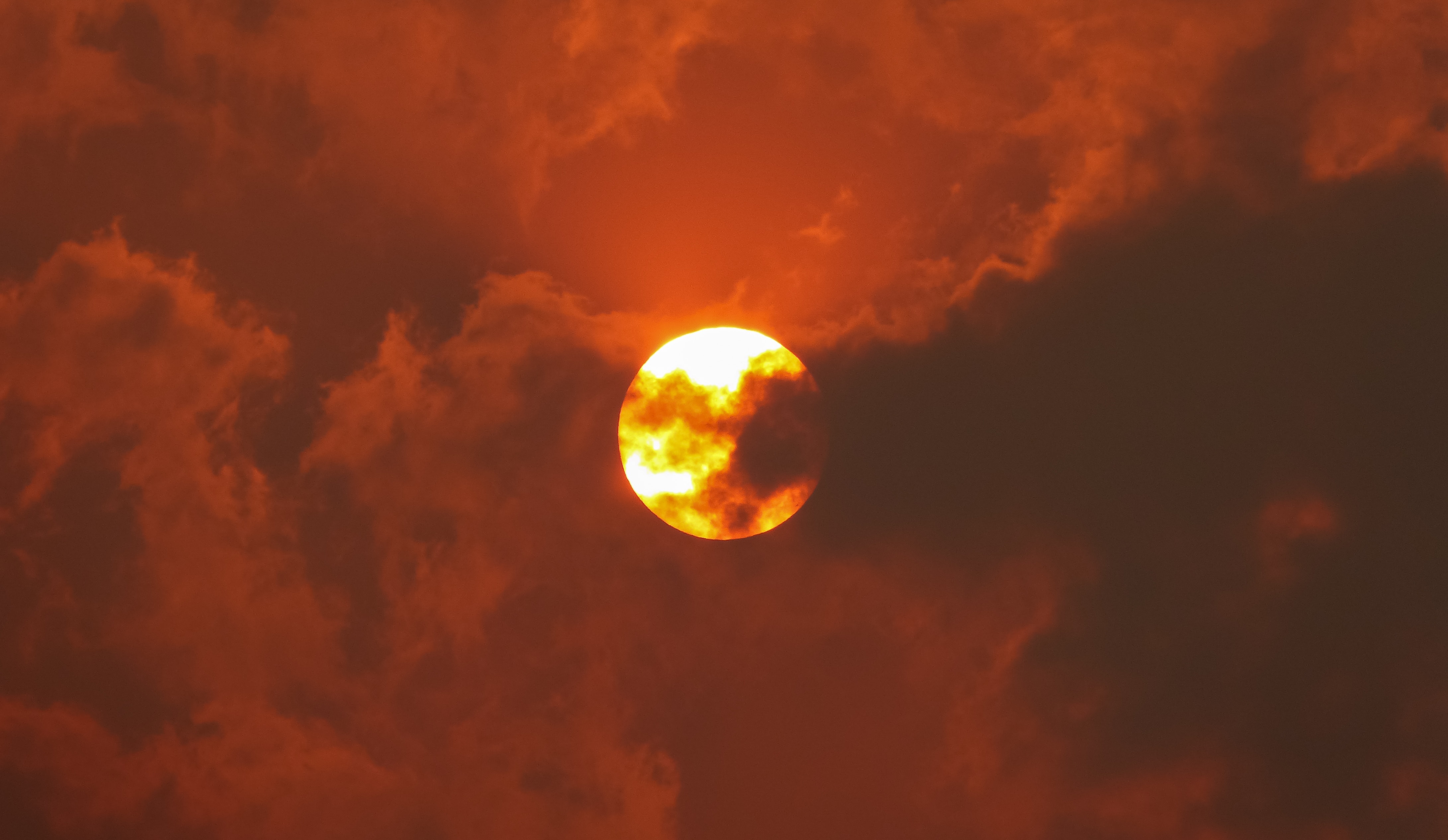
Yesterday, Mayor Adams walked out of Gracie Mansion, smelled the air, looked at the sky, and asked, “What the hell is this?” This, Mr. Mayor, is climate change.

A truly stunning series of events is unfolding in New York. For the first time in recorded history, the AQI (air quality index) was over 200. 218 to be exact—a purple warning, the highest level of the AQI. Right now, it is the second worst air quality in the world. Canadian wildfires are mixing with ground level ozone to create a thick smoky gravy in the skies. 

It’s forcing New Yorkers indoors to protect their health. The city has asked that if they must go outdoors, they should dig out and wear those KN95 masks they thought were in their COVID-19 rearview mirrors. They are being encouraged to work from home is possible, and many events are being cancelled across the city, including after-school activities. 

To my knowledge, the 33-minute press conference that Mayor Adams and his collaborators and staff held this morning on the situation is the first time a New York Mayor has held such an event specifically because of climate change, with that being the dominant message at the event. It won’t be the last. The climate emergency is here, it’s impacting daily life, and it will get worse. 

During the War of 1812, Master Commandant Oliver Perry wrote to Major General William Henry Harrison, “We have met the enemy, and they are ours.” He could easily write the same line today with respect to climate change. We are the problem, and we are also the solution.

Synchronistically, I am in upstate New York taking a break as I wait for my new Brooklyn apartment to be ready and I am working my way through the climate segment of my Masters degree in Sustainability Leadership at University of Cambridge. For the record, I don’t like to be away from my city when there’s a crisis. As a proud and committed New Yorker, I feel responsible for my home, my neighbors, and our collective future, particularly when it comes to environmental sustainability. 

Some environmental facts about New York City may surprise you. New York has more trees than any other U.S. city has people, with 39.2% tree cover, the highest of any city in the world. New York City’s greenhouse gas emissions are 7.1 metric tons per person compared with the national average of 24.5. New Yorkers are collectively responsible for just 1% of the nation’s total greenhouse gas emissions though we comprise 2.7% of the nation’s population. We are the only city in the U.S. where well over half of households do not own a car, and most people regularly take public transit — the highest percentage to do so in the nation. 78% of New Yorkers are personally convinced climate change is happening, slightly higher than the 71% national average

Still, inequality in environmental impacts and health outcomes, often linked to environmental causes, is rampant in New York. It has the third highest cancer instance in the country, the old housing stock and lead paint are ongoing concerns, and pests are so rampant that we have a rat czar (her actual title), Kathleen Corradi, on the city payroll. Though the average New Yorker creates less trash than the national average, we are the largest city by population and collectively generate 14 million tons of trash every year, which is all shipped out of the city for processing.

The inequality in New York is also causing a disparity in impact with this latest air quality warning. I feel for the elderly, those with health challenges intensely impacted by this situation, those in neighborhoods who are already disproportionately impacted by climate change and health challenges, and essential workers such as sanitation workers who again are being asked to show up in our city for our sake. 

I also feel for the animals and natural landscapes who did nothing to precipitate this situation, and now have no protection from the fallout. New York is home to over 7,000 species of plants and animals, and we are in one of the 36 global biodiversity hotspots. We need this biodiversity in flora and fauna, and they need us to change our ways, now more than ever. 

My biggest goal in my life is to make New York the healthiest and most sustainable city on the planet. We have much to do, and a long way to go. This latest air quality warning proves we must go together. 

creativity

Canadian wildfires impacting New York City air quality

Imagine on Secret NYC by Gary Hershorn

Canadian wildfires are having a massive impact on NYC air quality today. Limit time outdoors and limit energy use when possible. The air quality is so poor that people will begin to feel health impacts from it. It is in place at least until midnight tonight.

This will be common throughout the summer as global warming and climate change have triggered an earlier and more intense start to wildfire season. More details, links, and information about this alert here: https://secretnyc.co/air-quality-health-advisory-nyc/

Stay up-to-date on this warning and other environmental notifications by following the New York State Department of Environmental Conservation twitter account at https://twitter.com/NYSDEC

creativity

Public Voices Fellowship on the Climate Crisis at Yale University

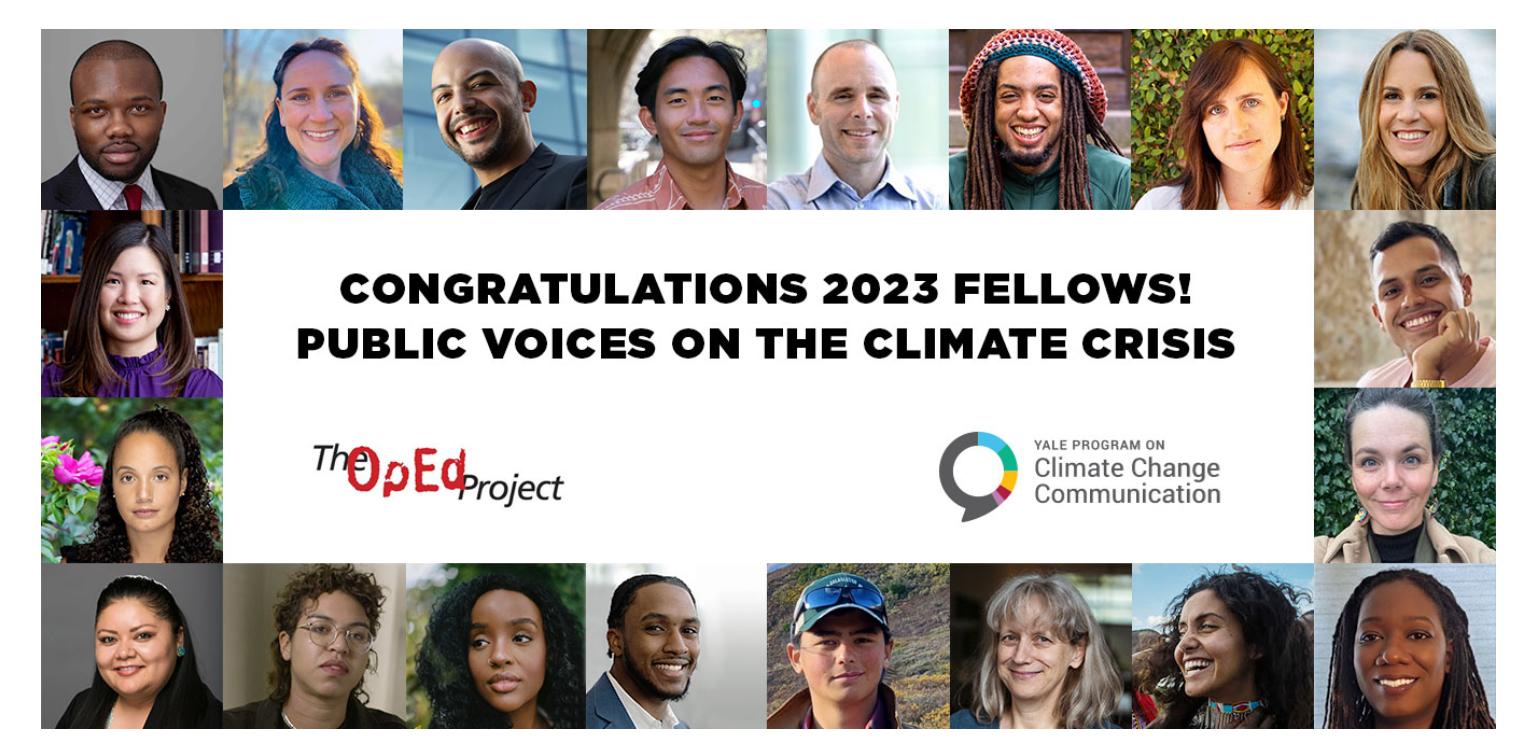
Really proud to be a finalist for the Public Voices Fellowship on the Climate Crisis with The OpEd Project at the Yale Program on Climate Change Communication. They had 445 applications this year and though I didn’t get one of the 20 fellowship slots, as a finalist I will have some incredible opportunities this coming year to sharpen and hone my climate change storytelling. Please join me in congratulating this year’s fellows. 

creativity

Climate change will impact everything everywhere all at once 

The new NASA global data set combines historical measurements with data from climate simulations using the best available computer models to provide forecasts of how global temperature (shown here) and precipitation might change up to the year 2100 under different greenhouse gas emissions scenarios. Credits: NASA

Over the weekend, I read a disturbing article that quoted a potential presidential candidate who wrote, “We will keep fighting until we put a stop to ESG once and for all!” 

ESG stands for Environmental, Social, and Governance and is a set of investment standards for a company’s behaviors. In other words, it’s a set of standards that takes more than profit into account. It was coined by the United Nations in 2005. Originially, the acronym was GES because they believed Governance was the most important of the three. They weren’t wrong then. They aren’t wrong now. They just didn’t know at the time the dire state of our environment in 2023. 

The quote above is so incredibly dangerous because if the United States completely gives up on the environment now, catastrophe is certain. Even if we went to net zero today, there’s still no way to keep global warming below 2 degrees Celsius. Above 2 degrees, we will see more intensified storms, extreme heatwaves, dangerous flooding, drought, and fire conditions, crop failures, sea level rise, deathly disease increases, and massive loss of biodiversity in flora and fauna. 

To be fair, many parts of the world are already seeing impacts. Whole towns such as Newtok, Alaska moved to avoid climate impacts. Tuvalu, the Pacific island country of 12,000 people halfway between Hawaii and Australia, announced at COP27 its plans to become the world’s first digital country in hopes to preserve its history and heritage. 40% of its capital district is underwater during high tide. Eventually, it will be completely lost to rising seas. The Colorado River, Lake Mead, the Great Salt Lake, and the Mississippi River are rapidly shrinking. 

But, climate has always changed. It’s changed many times before in the history of the planet. So why does this chapter of climate change matter? The last time CO2 was as high as it is now was 3 million years ago. Modern humans didn’t exist then. The rapid rate change of CO2 we’ve seen in the last 100 years because of human activity, particularly the burning of fossil fuels, has never happened before in the history of the planet. And it’s that rate that is the key point. 

Yes, the planet can adjust to changes. But it can’t adjust this much this quickly. If you lost $1 a month in income, you could adjust and manage for a certain amount of time. If you lost $100 a month, that would require a much bigger adjustment in your budget. If you lost $1000 a month, that would require an enormous adjustment and you may find yourself in serious trouble with basic needs because of that rate of change. The planet is under this same type of pressure. 

So why bother doing anything? If we’re on the deck of the climate Titanic, should we just play on? No. Not by a long shot. For every fraction of a degree we can curtail warming, we will see impacts lessened, human lives saved, and species protected from extinction. It’s going to be a difficult ride toward a fully sustainable world, and if we commit to protecting each other, we will eventually get there. It will be painful, expensive, and massively inconvenient to say the least, but not impossible for humans to survive. But life will look different, very different, for centuries. 

None of us will be here to see a fully sustainable world, but we all have a responsibility to future generations. Consider how much better off we’d be today if 100 years ago strong governance cared about the environment as much as they cared about money during the Industrial Revolution. Our world would be healthier, cleaner, happier, and more peaceful. It could be that way for future generations if we, and our governments, do the difficult work now of restoring and regenerating the health of our planet. That could be our legacy. We could be known as the generation who saved human life, and the lives of the species with whom we share this planet. Imagine that. That’s our collective goal. 

No matter on which side of the aisle you sit, can we all agree that health and happiness are what we all want? Don’t we want clean air, water, and soil? Plentiful healthy food and fresh water? Can we start to talk about ESG not as this divisive, political policy as framed in the quote above but as a means of kindness, care, and concern for all? If that’s woke, then please let’s not allow ourselves to turn a blind eye and go back to sleep. Our survival depends upon our eyes and hearts being wide open. 

creativity

Video games can create billions of new climate activists

1/3 of the global population plays video games. With engaging climate change storylines and content, video games have the potential to create billions of new climate advocates to protect the health of the natural world, and by extension the health of all beings including us. This is the topic of my first two academic papers at University of Cambridge. I got my mark and feedback on my first paper and my graders were very complimentary saying the paper was of professional quality and has a strong literature review and purposeful recommendations for the company to use going forward. They also liked the persuasive case I made for the value of hope and joy in climate activism.

This is the first time I’ve ever written a paper in this style of academic writing. My topic was unusual for them. I brought my heart and personality into the style and structure of the paper. They said that’s also an unusual choice for academic writing but it works. I wrote the paper I was passionate about creating, and I’m proud of it. I learned a lot in this process that I will use throughout the rest of my graduate degree program and in my career going forward.

A huge thank you to my friend, Jennifer Estaris, and the entire team at ustwo games for inviting me to be a part of this gorgeous video game project that brings me so much joy and hope, and has taught me so much. Thanks also to everyone who cheered me on as I spent more hours on this paper than I’ve ever spent on any one academic assignment.

Now I’m drafting the action plan for my next assignment and preparing for my next workshop in Cambridge in March. I can’t wait to be back together with my cohort in that magical place. On to the next tranche of this adventure with a grateful and open heart and mind…

creativity

It’s time to stop building on the Florida coast

Photo of a hurricane by NASA on Unsplash

Climate change impacts are hitting Florida hard right now in the midst of an out of season hurricane. Most of my immediate family lives in Central Florida. My sister messaged me this morning. The coast is a mess—houses washed away and no beach to speak of. Even Orlando, smack in the middle of the state, is in shambles. 

Working on climate change issues is necessary and vital to so many all over the world. That fact is motivates me every single day.

A sobering truth: even if we went to net zero across the globe today, there will still be dire impacts over the next few decades because so much damage has already been done. We have to change how we live now and build mitigation plans at the same time. It’s expensive but it’s the only way to secure any kind of healthy future.

Another sobering truth: we need to start relocating people in the United States. It’s tragic and heartbreaking to say that. No one wants to leave their home. The Florida coast is a gorgeous, precious place. Sadly, because we’ve stuck our heads in the sand on climate change and allowed the profits of big oil to persist and grow exponentially, we have no other choice now. 

It will only get worse from here over the next few decades. Building on the Florida coast is no longer viable. Living on the coast of Florida is no longer viable either. The longer we wait to relocate people, the worse it will get. It’s a brutal policy and will be wildly unpopular but the time for retreat has arrived. 

creativity

Spend time with trees to fight cancer

Blue Atlas Cedar tree in Central Park – photo by Christa Avampato

Last week I went to a talk by Dr. Diana Beresford-Kroeger, a botanist and medical biochemist. She’s also the author of one of my favorite books, To Speak for the Trees: My Life’s Journey from Ancient Celtic Wisdom to a Healing Vision of the Forest. She was speaking at the New York Times event titled How Can Art and Technology Help Us Tackle the Climate Crisis? You can watch it on YouTube and Dr. Beresford-Kroeger’s talk is from 1:55:35 — 2:30:38.

How forest bathing reduces cancer risk
In her talk and her book she advocates for 15 minutes of month forest bathing, particularly near evergreen trees, as a way to reduce cancer risk. As a cancer survivor, I do everything I can to prevent recurrence. Sadly, there’s a lot of nonsense out there and plenty of products that claim to prevent cancer. Most of it is just slick marketing taking advantage of people through scare tactics. But does this recommendation from Dr. Beresford-Kroeger have scientific research to back up the claim? Can 15 minutes a month with trees really help us reduce the risk of cancer? It does and it can. 

Numerous scientific studies (here, here, and here to call out just a few) have found that the biochemicals in our immune systems (collectively referred to as Natural Killer (NK) cells such as lymphocytes) are strengthened with even brief 15- to 20-minute visits to wooded areas and the effects can last more than 30 days. These research findings support Dr. Beresford-Kroeger’s recommendation and the ancient wisdom she’s studied and accumulated her entire life.

Combining indigenous knowledge with modern medicine for optimal health
Now, does this mean we can substitute forest visits for regular checkups and exams with our doctors or forgo medical treatments if we are diagnosed with cancer? No, I would not recommend that course of action. Modern medicine found and treated my cancer, and I’m forever grateful for the care I received at NYU. But did I also benefit from good nutrition, exercise, my time in nature, and my determination to find joy every day to keep up my spirits during the darkest days of my life? Yes, I did. 

Preventing and fighting cancer requires a multi-pronged approach. We can benefit from ancient wisdom and modern technology. I used both to keep myself healthy before, during, and after treatment. I’ll use both for the rest of my life that I’m so fortunate to have. 

Why I still got cancer even though I live a healthy lifestyle
Now, you might be thinking, “Well, Christa, you go to Central Park every day and you still got cancer. So how do you explain that?”

Yes, that’s true. I did get cancer even though I have no genetic predisposition to any kind of cancer, I eat a healthy plant-based diet, I exercise regularly, I’m a healthy weight, I control my stress levels, I spend a lot of time outside in nature, and I see my doctors regularly. Cancer is a sneaky set of diseases. It wears a lot of costumes and disguises in its attempts to thwart our immune system. Even in the best of circumstances, a cell can get past our immune system, not because we’re weak but because cancer is such a deft and relentless shape-shifter. All it takes is one microscopic cell. 

The Hudson Valley is a cancer hotspot
We also live in an increasingly toxic world, which can wear us down without our awareness. I grew up on an apple orchard in the Hudson Valley of New York State in the 1980s and 1990s. Sounds bucolic, right? In many ways it was. 

But what you may not know is during that time the rampant use of chemical pesticides was practiced all over that area. I have vivid memories of bright red tankers full of pesticides being sprayed in the air on neighboring orchards for months on end to keep the apples pest-free. Those farmers didn’t realize their sprays were poisoning our food, air, soil, and water. 

At the same time, General Electric (GE) dumped 1.3 million pounds of polychlorinated biphenyls (PCBs) into the Hudson River from its capacitor manufacturing plants in Hudson Falls and Fort Edward, New York. Though they ended that practice in the last 1970s, the PCBs remain in the river sediment to this day. PCBs are known carcinogens (meaning they cause cancer). 

These practices of farmers and GE have partially caused the Hudson Valley to become a cancer hotspot. My family had well water. The toxic chemicals from the pesticides and GE’s practices seeped into the water table, not to mention were directly linked to our food and air. The truth is we can do everything right as individuals but collectively, the practices of others can harm us and we are powerless to avoid the impacts once they’ve happened. 

Though it’s difficult to prove, my cancer was likely caused, at least in part, by environmental pollution I was exposed to as a child. As the New York Department of Health explains, “Cancers develop slowly in people. They usually appear five to 40 years after exposure to a cancer causing agent. This is called the latency period. This is one of the reasons it is difficult to determine what causes cancer in humans. Also, many people move during this period of time, making it hard to link exposure to a cancer causing agent to where a person lives.” 

So, yes, I live a healthy lifestyle and yes, I still got cancer. But as my doctors always point out, because I was so healthy when I was diagnosed, I was able to withstand intense surgeries and treatments, and emerge on the other side healthier than ever. The combination of my good health, modern medicine, and indigenous knowledge saved me.

Fighting climate change is another way to fight cancer
Preserving and expanding natural areas and mitigating the impacts of climate change is another important piece of the puzzle to maintain our health. Said another way, our best defense is a good offense. We need to have nature on our side to maintain our environments, and that means we must care for natural and wild areas. 

This is why I advocate for the planting, maintenance, enhanced access, and expansion of forested areas, particularly in cities like New York where I now live and where trees are necessary for our health and wellbeing. Trees save and enhance our lives in so many ways by cleaning our air and water, lowering our stress levels, and enhancing our immune systems.

My forest bathing practice in Central Park
I’m fortunate to live near one of New York’s City’s green gems, Central Park. Forest bathing doesn’t mean you need to retreat to the far corners of the wilderness (though if you can, I recommend that kind of trip as well). Urban forest bathing once a month (or more) is highly effective, easy to do, and accessible. 

On a sunny Saturday, I went to Central Park with my dog, Phineas. For 15 minutes, we sat near a majestic Blue Atlas Cedar (Cedrus atlantica glauca) that stands near the Reservoir. The effects for both of us were palpable. Phin closed his eyes and went to sleep as I soaked up the sun and clean air, all the time quietly expressing my gratitude to this tree. 

When we got up to go home, I bowed to the tree in reverence for what this beautiful being had freely given me. “I’ll see you again soon,” I whispered.

I left with my heart and lungs full with all good things, thankful for what nature offers us if only we will take the time to accept her gifts and wisdom. When we take care of nature, nature can then take care of us. Go sit near a tree for 15 minutes once a month. You’ll be better for it. 

(Below are a few photos of me and my dog, Phineas, on our most recent forest bathing trip to Central Park).

creativity

What will the world be like if we take no climate action now?

We hear a lot about climate change and how devastating the impacts will be if we do nothing. To save the planet is the reason I decided to go back to graduate school at University of Cambridge in Sustainability Leadership and pivot my career to focus on this cause. But what does a lack of climate action mean specifically, decade by decade? What happens to the planet, and to us, if we stay on our current trajectory? And just as importantly, where do we go if we have an idea for climate action?

The World Economic Forum (WEF) has a 2-minute video outlining some of the specific impacts of continued climate change on our current path starting in the year 2030 and going through 2100. The impacts are sobering, backed up by scientific research referenced in the video, and outlined in the list below.

But all isn’t lost. We do have a short period of time right now to make massive changes to save the planet, the species with whom we share it, and create 395 million jobs with the transition to a nature-positive economy. Said another way, biomimicry and creating our built environment, products, and services based on nature’s design principles is the answer—we must transition to a nature-positive economy and society.

And if have an idea for climate action, WEF wants you to share that idea and get involved through their free online community portal called UpLink where you’ll find hope, information, data, and updates on climate action projects that are underway right now.

What does the world look like in the coming decades if we don’t take climate action. Here’s a sampling of that future:

The 2030s:

  • Ice caps and crucial ice sheets continue to melt, swelling sea levels by 20 centimeters [7.87 inches]
  • 90% of coral reefs threatened by human activity, while 60% are highly endangered
  • Dwindling crop yields push more than 100 million more people into extreme poverty
  • Climate change-related illnesses kill an additional 250,000 people each year

The 2040s:

  • The world has shot past its 1.5-degree Celsius [2.7-degree Fahrenheit] Paris Agreement temperature rise limit
  • Bangladesh, Vietnam, and Thailand are threatened by annual floods, sparking mass migration
  • 8% of the global population has seen a severe reduction in water availability
  • The Arctic is now ice-free in summer
  • Sea levels have risen 20 centimeters [2 feet] in the Gulf of Mexico, where hurricanes deliver devastating storm surges

The 2050s:

  • 2 billion people face 60-degree Celsius [140 degrees Fahrenheight] temperatures for more than a month every year
  • In much of the world, masks are needed daily–not for disease prevention, but to protect our lungs from smog
  • The Northeast United States now sees 25 major floods a year, up from 1 in 2020
  • 140 million people are displaced by food and water insecurity or extreme weather events

2100 and beyond:

  • The average global temperature has soared more than 4 degrees Celsius [7.2 degrees Fahrenheit]–and even more in northern latitudes
  • Rising sea levels have rendered coastlines unrecognizable, and Florida has largely disappeared
  • Coral reefs have largely vanished, taking with them 25% of the world’s fish habitats
  • Insects have been consigned to history, causing massive crop failures due to the lack of pollinators
  • Severe drought now affects more than 40% of the planet
  • An area the size of Massachusetts burns in the US every year
  • Southern Spain and Portugal have become a desert, tipping millions into food and water insecurity

This is a terrifying, painful future and it’s only a few years away right now. But again, we know what we need to do—create our built environments, products, and services to mimic those of the natural world. Biomimicry can save us and the natural world. This means we must:

  • exit fossil fuels in favor of renewable energy sources
  • restore, protect, and expand natural habitats and wild areas
  • end the use of single-use plastic and harmful chemical pesticides

None of this will be easy but the choice is truly one of life—ours and all the other species who are counting on us to change our ways and clean up how we live on this planet—or death. Either we choose to make these difficult choices now in our companies and governments, or we are forced to make them later when it may be too late. To learn more and get involved, please visit UpLink: https://uplink.weforum.org/uplink/s/. We have no time to waste and the planet needs all of us to take action.

creativity

I’m on my way to the U.K.

Photo by John Cameron on Unsplash. Taken at the Marble Arch in Park Lane, London.

I’m on my way to the U.K. to begin my dream of starting a graduate program in sustainability leadership at University of Cambridge and the Cambridge Institute of Sustainability Leadership. Such a mix of emotions at this pivotal moment in history— gratitude, elation, responsibility, nervousness, excitement, fear, anticipation. All of that is in my heart now as I start this path of purpose to hone all my business, science, and storytelling skills and experience to play a role in saving our planet, our stunning natural world, and all species, including our own.

When I booked this flight months ago, I had no idea how consequential this time would be for the U.K. and the world. The passing of Queen Elizabeth II and the beginning of the reign of King Charles III has brought a new sense of meaning to this trip. For decades, The Royal Family and especially King Charles III have been advocating for economic and social transformations to address climate change. King Charles is a graduate of Cambridge with a close association with the graduate program I’m about to begin, and I feel fortunate to be on this path in this place at this time. I will witness this moment in history, and will share what I experience by posting regularly here on this blog.

I feel a huge sense of responsibility and duty to use my time to protect our only home. This work is personal and professional for me. Everything I’ve been through in the past 2+ years, from the pandemic to my own successful battle against cancer caused by environmental toxins, has been fuel for me to take this journey. With the help of my doctors, modern medicine, innovative science, and my community of friends and family, I healed myself. Now I want to heal the planet.

I am willing to do whatever it takes. The changes we make (or don’t make) now will dictate how the history of our world unfolds for the next several thousand years. The consequences are that profound. We will absolutely turn the corner over the next few years. The question is what awaits us when we do, and that answer is up to all of us, individually and collectively.

I want to thank everyone who helped me to get to this place and cheered me on. There are so many of you who moved mountains and I promise to pay forward all of it. Now, it’s time to go have an adventure and personally witness this momentous time for Britain and the world. I’m excited to bring you with me.

creativity

How writers using multi-sensory storytelling will save the planet

Photo by Marc Wieland on Unsplash

“If you want to build a ship, don’t drum up people to collect wood and don’t assign them tasks and work, but rather teach them to long for the endless immensity of the sea.” ~ Antoine de Saint Exupéry, author of The Little Prince (among many others)

Today I want to talk to you about how storytelling has a vital role to play in saving the planet. Over the past few weeks, I’ve been consumed with getting ready to start my new graduate program in Sustainability Leadership at University of Cambridge. I’ve completed my first set of assignments and the first (very long!) reading list. I’ve read well over a thousand pages of documents, reports, data collections, and science journal articles. I have 10 new books on my to-be-read list, many relating to the connections between the economy, nature, and societal structure. It will come as no surprise that much of it is bleak, and there is some hope sprinkled in here and there.

Here’s what I didn’t find on a single page I read: what will our world look, feel, sound, smell, and taste like when humans learn how to live on this planet in a sustainable way?

The science matters. We have to have the reporting and data to show what’s happening in real-time right now, and explain what can happen if we don’t turn things around and fast. We need the urgency provided by the dire warnings. The doomsday scenarios are true possibilities and we’re on a collision course with them.

We also have to give people hope by explaining all we stand to gain if we change our ways, systems, governments, businesses, cities, economies, and — here’s the kicker — our values.

For decades we’ve been obsessed with efficiency and convenience, and in the process have caused a massive number of extinctions and destroyed priceless ecosystems that we’ll never see again. We stand to lose much more if we don’t realize we must value nature because nature underpins every aspect of our lives and livelihoods.

We have no future without nature and we need to wake up to that reality.

I’ve been thinking a lot about what it would take to give people an experience of what a truly sustainable world will be like. How can we make it an experience that sticks with people long after the experience is over, motivates them to make changes in their lives, and causes them to demand change from the businesses they patronize and the governments of which they’re citizens?

How can we, in the words of Antoine de Saint Exupéry, make them long for the healthy, thriving, clean sea, literally and figuratively?

I’ve been immensely inspired by the immersive exhibits that are all the rage right now — Van Gogh: The Immersive Experience and Imagine Picasso are two examples of the tech-centric, projection-based exhibits that are everywhere. In February, The New Yorker wrote a long, exceptional piece on this trend. For many years, I’ve been a fan of immersive theater like the wildly popular Sleep No More that’s a bit like Clue meets haunted house meets Eyes Wide Shut, complete with masks for all guests so you feel like you’re at a costume party. Since I was a child, I’ve loved choose-your-own-adventure stories. And let’s be honest; I still love choose-your-own-adventure stories.

So here’s my proposal — what if we take the:

  • technology of immersive art exhibits
  • participatory storytelling of immersive theater
  • user-guided choice of choose-your-own-adventure stories
  • science of climate change

to not tell, not show, but allow people to experience how climate change will look, sound, smell, taste, and feel if we continue on our current trajectory and if we make the needed, massive changes to save the planet, save ourselves, and save all the species who call Earth home? There would then we an online component that would connect people to one another and provide support for making the changes we need and charting collective and individual progress because as we know, what gets measured gets done.

Would that be a way to use multi-sensory storytelling as a tool to motivate people, open their hearts and minds, and give us a fighting chance at building a sustainable society together? If executed flawlessly and meaningfully with heart, I think this might be part of the solution we need that doesn’t yet exist. What do you think?