Too often our society is quick to label people, to put us in a box as creative or not creative, and that term is not always used as a compliment. Regardless of our profession or where we work, we are all creatives. Our imagination is the most powerful tool we have to build a brighter future.
UN Global Pulse, The United Nations Secretary-General’s Innovation Lab, just published “The Most Creative Look to the Future” that offers learnings and recommendations about how creative practices can help the UN embrace uncertainty and complexity through peace, unity, and collaboration. The creation of the UN itself was a bold creative act borne out of darkness and difficulty, and continues to be a work in progress in a complex and complicated world. This publication is valuable for organizations of any size and type. My favorite take-aways from it:
– Our imaginations give us a way to connect with one another, even those of us who have been previously disconnected.
– Creativity helps us to give voice to emotions and values, and offers us a new way to see others and to be seen by others.
– Storytelling is one of the oldest forms of technology, allowing us to describe and grapple with complex systems to model change and play out a wide variety of scenarios.
– A more peaceful, sustainable, healthier, and happier future begins in the imagination, and we can imagine ourselves and our world into a better state.
– Imagination is a team sport, and becomes richer and more meaningful when we collectively pool our creativity.
The publication concludes with further resources and frameworks that organizations can start using today to embed creative practices into their work and teams. In the new year, I’m excited to share these with my teams as we begin to shape our future work together.
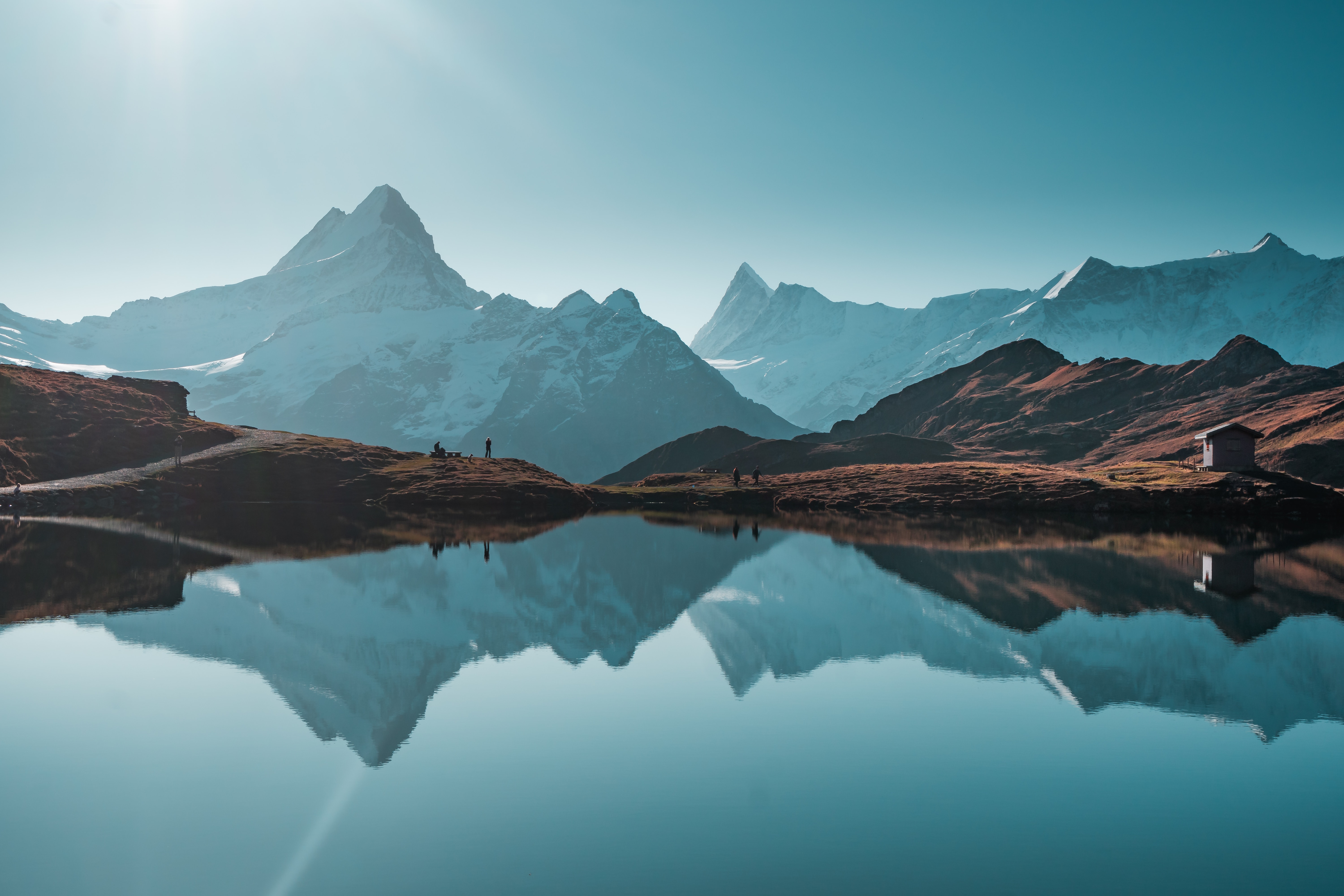
Prospect Park, Brooklyn. Photo by Christa Avampato.
Real talk: every day I navigate the waters between disappointment and joy. Today I found out I didn’t get a fellowship I applied to, and that I may have some additional writing work coming my way that’s completely aligned to dream work I’d like to do.
This is the yin and yang of being a creative of any kind — we win some, and we lose a lot so we have to constantly put ourselves and our work out there. We never know what will resonate with others, and the only way to know is it to give it a try and see what lands.
This time of year always puts me in a reflective mood. I take some time to take a breath. I take stock of how I’m doing, how I’m feeling, and where I want to go from here in the year ahead. Most importantly I reflect on what I’ve learned and how I’m going to carry those learnings forward.
Today I’m starting that journey to reflect on this past year, and I’m excited to share what I find as a sift the sands of 2023 over the next month. I do know that 2024 is shaping up to be a pivotal year in my life, and I’m grateful to be here for all of it. Happy holidays to all celebrating this week.
For weeks I’ve thought about what my framework might be. Finally, I’ve found a perfect fit: the layers of a forest — soil, understory, vinelayer, midstory, understory, and atmosphere. As a biomimicry scientist and storyteller, this model fits my passions for building my life inspired by nature’s wisdom and the power of story to shift hearts, minds, and actions. It’s fitting that the word “story” is present in the layers of this incredible ecosystem that fosters life.
Soil — home of the earthly nutrients that give rise to the forest This is what I read, see, hear, feel, and experience that feeds into my imagination and creativity. This houses my personal history, my core memories from the time I was a child to the present day. In that way the soil and what feeds me is always changing and evolving.
Understory — seedlings and saplings that will be the forest’s future This is where I constantly cultivate new ideas, interests, and connections. Not all of them will mature but they all teach me something. I’m always learning, growing, evolving, and living my life spherically, in many different directions. Here my imagination and creativity have no limits.
Vinelayer — connects the forest from soil to canopy These are the throughlines of my life and work: nature, stories, and business. These are my vines that run through my work and feed my creativity, and the use of resources that make my creative work possible to share with the world.
Midstory — made up of diverse shrubs and young trees This is yesterday’s understory, the ideas and relationships that began there that have emerged as those that I’ll cultivate and nurture to their fullest potential.
Overstory — the top layer of mature tree crowns that connect to form the canopy This is where the ideas I’ve nurtured have come to fruition and reached their full potential. The books I write. The products I create. The relationships that are core to my community. This is also where I fully connect to the wider world, and where the exchange of ideas and perspectives happens.
Atmosphere — with the nutrients from the soil, the atmosphere’s sunlight, air, and rain allow a forest to be sustainable and create an ecosystem where other beings can also thrive For me, this is the love, care, concern, and support I receive from my community and the wider world. Just as the sunlight, air, and rain pour down through the forest and back into the soil to create a full loop, love nurtures my spirit, refills my cup, and allows me to continue my work. Just like a forest, my work also involves nurturing the lives and work of others.
1)Higher-density urban development to free up land for agriculture and nature — $665 billion; 3 million jobs
2)Architecture with nature, not just humans, at the core of the design to benefit us and other species — $935 billion; 38 million jobs
3)Utilities that effectively manage air, water, and solid waste pollution in cities — $670 billion; 42 million jobs
4)Nature-based solutions for infrastructure like wetlands, forests, and floodplains to manage the impacts of rain, wind, and storms — $160 billion; 4 million jobs
5)Incorporating nature such as wildlife corridors into infrastructure — $585 billion; 29 million jobs
Total: $3.105 trillion; 117 million jobs
Tell me another set of policies that produces that much revenue and that many jobs. There isn’t one. Line up the investors for this unicorn deal. Which politicians are turning down this set of policies with these societal benefits? Those who won’t be elected. This is the power of effective climate storytelling about solutions and their benefits. These are stories that change the world. Tell them. Make them.
As climate communicators, we can’t drop audiences off at the abyss and leave them there. We can’t just be storytellers; we must be storymakers and solutioneers if we want to be part of the web of humanity that weaves a healthier, more joyful, peaceful, and sustainable world into existence. This is a lot to ask of my inspiring and beloved climate communications colleagues who are already doing so much. But I’m asking us to do more because the world needs us now more than ever.
You wanted to be a writer, journalist, filmmaker, or video game creator. You hadn’t planned on becoming a product developer, systems designer, policy maker, and community organizer. That wasn’t the deal. I know. The deal changed. The world changed. We have to change.
There’s a Hopi proverb that says, “Those who tell the stories rule the world.” As the CEO of Pixar Animation Studios, Steve Jobs said “The most powerful person in the world is the storyteller. They set the vision, values, and agenda of an entire generation.”
This is the mantle we have to take up. We have to tell stories about solutions that clearly communicate their benefits. Then we lead our audiences into the trenches to collectively roll up our sleeves and get the work done using the empathy and compassion in our hands, hearts, minds, and spirits to build a better world for all beings.
“If I don’t work, I don’t eat so I have to be out here, even when there’s a flood.” This was a quote from a NYC delivery worker on the news during the September 29th, 2023 flash floods. His electric bike failed in the knee-deep water. He was pushing it against the current to deliver food.
NYC now has the largest income gap of any large city in the country — the top 20% make 53 times more than the bottom 20%. We’re failing our people with no social safety net, no protection from climate hardship, and few pathways out of their circumstances. City workers often live in temporary shelter and public housing because they don’t earn enough to make rent but residency is often required for their jobs.
This city is run by service workers. They are the lifeblood that keeps the city moving. Failing them will cause the city to crumble.
We also have the migrant crisis. Right now at the U.S.-Mexico border, the city is distributing these fliers:
I cried reading it. This has been the city of dreams for decades. Now it is the city of dreams only for those who are already of means. That cannot continue.
New York is a city of immigrants. It always has been. They enrich and enliven the social and economic fabric on which this city’s creativity thrives. Without them, we lose who we are and what we stand for.
The economics and business side of my brain spends the bulk of my waking hours thinking about how to support New Yorkers, present and future. How do we boost the economy and provide opportunity to everyone who wants to be a New Yorker? How do we rebuild this city, not just for the privileged few but for all the huddled masses yearning to be free so that everyone wins together?
The historian and storyteller side of my brain always sifts the sands of the past to see what I can find and use. As the late great John Lewis, who was at one time a New Yorker and is one of my greatest inspirations, often said, “We must make a way out of no way.”
That’s just a start of how NYC can work with nature so that everyone is cared for. There are dozens of other solutions that are relatively low-cost, efficient, and proven to clean the air, water, and land—benefits that benefit every resident, visitor, and commuter.
This doesn’t have to be a concrete jungle. It can be a green, verdant, healthy, thriving place for all beings who want to be New Yorkers. It’s going to take a massive mobilization, and the relentless pursuit to match needs with resources to transform our challenges into opportunities. We have to do this work, and we have to do it now while we still have time. I’m tired of a dirty, flooded, and unequal New York. Aren’t you? I love this city. I love New Yorkers. And I want us to do better. We have to do better, and we can—together.
In the last 13 years, the U.S. has used 1.5 trillion gallons of water for fracking. That’s the amount of water used annually by the state of Texas with a population of nearly 30 million people. It’s a triple whammy against the planet by America — the emissions created by these fossil fuels, the extensive use of water to complete fracking exercises to get those fossil fuels out of the ground, and the immense damage done to ecosystems by fracking, a process that creates vast amounts of wastewater, emits greenhouse gases such as methane, releases toxic air pollutants and generates noise, destroys animal and plant habitats, causes species decline, disrupts animal migrations, and degrades land.
I used to be grateful that he was in the climate conversation. Now, I’m disappointed by yet another prominent scientist who has gone off-the-rails and is ignoring science. Maybe it’s fear. Maybe it’s wishful thinking. Maybe it’s desperation at the dire state of the planet.
This is what I know to be true — the wisdom of nature far exceeds any wisdom of any human who has ever lived. To claim otherwise, is the height of ignorance and arrogance. It’s dangerous to listen to someone who puts himself above nature, especially when he has one of the highest personal carbon footprints in the world and the health of the natural world underpins half of global GDP (~$40 trillion).
Nature knows how to create conditions conducive to life. The human track record on supporting life, including our own, is abysmal. I’m banking on nature’s wisdom every single day. She’s an ally, not an adversary, and we must listen and respect her before it’s too late. Nature made our existence possible.
Human ingenuity, while offering many gifts, has given us climate change, fracking, and perhaps the recipe for our own extinction. The most ingenious actions humans could take now are to listen to and learn from nature, and work with her, not against her. She’s ready to play ball. She always has been. The question now is, are we?
I spent last week inspired by storytelling, a mechanism of empathy as Neil Gaiman calls it, during Climate Week NYC. I met dozens of family office leaders and their advisors. My dissertation for University of Cambridge focuses on this intersection — how storytelling can galvanize family office investment in nature-based solutions.
A few take-aways:
Language matters I went to a New York Public Library event with Eliza Reid and Dr. Jenni Haukio, the First Ladies of Iceland and Finland. The discussion was moderated by Neil Gaiman, my favorite author. All three of them emphasized the importance of language and how the words we choose are intimately tied to our culture, geography, and ecology.
When talking about climate change, we can feel overwhelmed by inertia. One way to break that inertia is to go out into nature and listen to the stories she tells. The beauty and wonder of nature, and the inspiration she provides, is worth protecting, saving, and sacrificing for. Stories, in any medium and format, can center nature in powerful ways that emotionally connect us to one another and the natural world.
Art is vital to the climate conversation Science, governance, and finance matter enormously in climate. Art matters just as much. It is the way in for many people. The expression of climate change’s impact on a personal level sticks with people more than facts and figures. We save things we love, that hold meaning for us, and art is a way to convey love and meaning. I want to create more climate talks and actions that are cross-sector, cross-generational, cross-geography. Let’s tear down the walls that divide us in favor of the bridges that connect us. I didn’t see a single talk at Climate Week that includes scientists, artists, policy makers, and financiers together on one stage. I’d like to make that the norm.
Where there are helpers, there is hope I went to E2’s session on how New York (City and State) can make the most of the Inflation Reduction Act, the largest climate investment ever made by the U.S. government. I met three entrepreneurs who are doing innovative product development in the energy space. All are career switchers. They sincerely want to help, and that gives me hope.
Passion drives progress I spoke to some financiers trying to serve family offices. I asked them what they love about what they do. They looked at me wide-eyed and silent. They have no idea what they love about what they do. They’ve never thought about it. They’re working on climate because as they said, “it’s what’s next”.
I emphatically encouraged them to consider the why as much as the what. If they are just in this for their piece of the pie, that distracts from and hinders the movement. This work is too important, too vital to the well-being of every being to be in this just for the money they think they can make. Passion is the driving force for progress. Money is fuel for the journey. Let’s not get it twisted.
“Go further than you think you can, or should. Push that boundary of what you could do into the uncomfortable zone because that’s where you know change is happening.” ~ Mathias Gredal Nørvig, CEO of SYBO
Because 1/3 of the world population plays games, games need to be a tool for every organization working in sustainability. If you’re interested in learning more about that, please get in touch! I’d love to share ideas of how you can get started! I also encourage anyone and everyone to look into Playing 4 The Planet, the UN’s inspiring games initiative with resources and data for every size of organization.
The summit was filled with incredible presentations about what’s already been done with games, projects that are underway, and the mountain of work ahead. There is one idea that I can’t shake, one perspective that completely changed my point-of-view about my work and my place in the world. It was from Mathias Gredal Nørvig, CEO of gaming company Sybo. He talked about how his company is pushing the boundaries in their communications and storytelling so far that there was a bit of backlash from their community. Rather than seeing this as a mistake or misstep, he saw this as a victory to be celebrated, a milestone that showcases progress. On this border, he saw evolution, change, and a provocative call-to-action. He closed his talk by saying he hopes all of us will have the courage to go further than we think we can, and to push our companies to do the same.
Over the next few weeks and months, I’m going to think about what that boundary is for me and how I can push past it to create breakthrough change. How can I extend myself beyond what I think I’m capable of doing? How can I take a bigger risk, step outside of my comfort zone to do something extraordinary that I’m not certain I can accomplish? How can I dare greatly?
I don’t know the answers to any of those questions right now, but I’m excited and eager to find them and share them. I hope you’ll join me in that quest to rise higher, to go further and faster together. The future of our planet, and all species with whom we share it, depends on it.
I spent my first year at University of Cambridge researching and writing about the role of video games to encourage climate action. I was fortunate to collaborate with the incredible team at ustwo Games on this work, especially Jennifer Estaris who is a shining star in the games for good space. They are a group of passionate, talented, and deeply committed people. Through our work, I realized that video games can and will play a part in building a healthier, more joyful, safer, and more sustainable world.
Games are for everyone. They unify people across cultures, continents, and every demographic designation. Their stories are timely and timeless. They allow us to reconcile with our past, make sense of our present, and simulate our future with a high degree of accuracy and an abundance of empathy. They help us not only to imagine a better and brighter future, but also create the roadmap to get there. Games can do what so many other tools can’t: they can transcend politics, cross the chasm of experience, and help establish common ground. They are a map, a compass, and a guidebook to the very highest calling of humanity—to be humane to all beings.
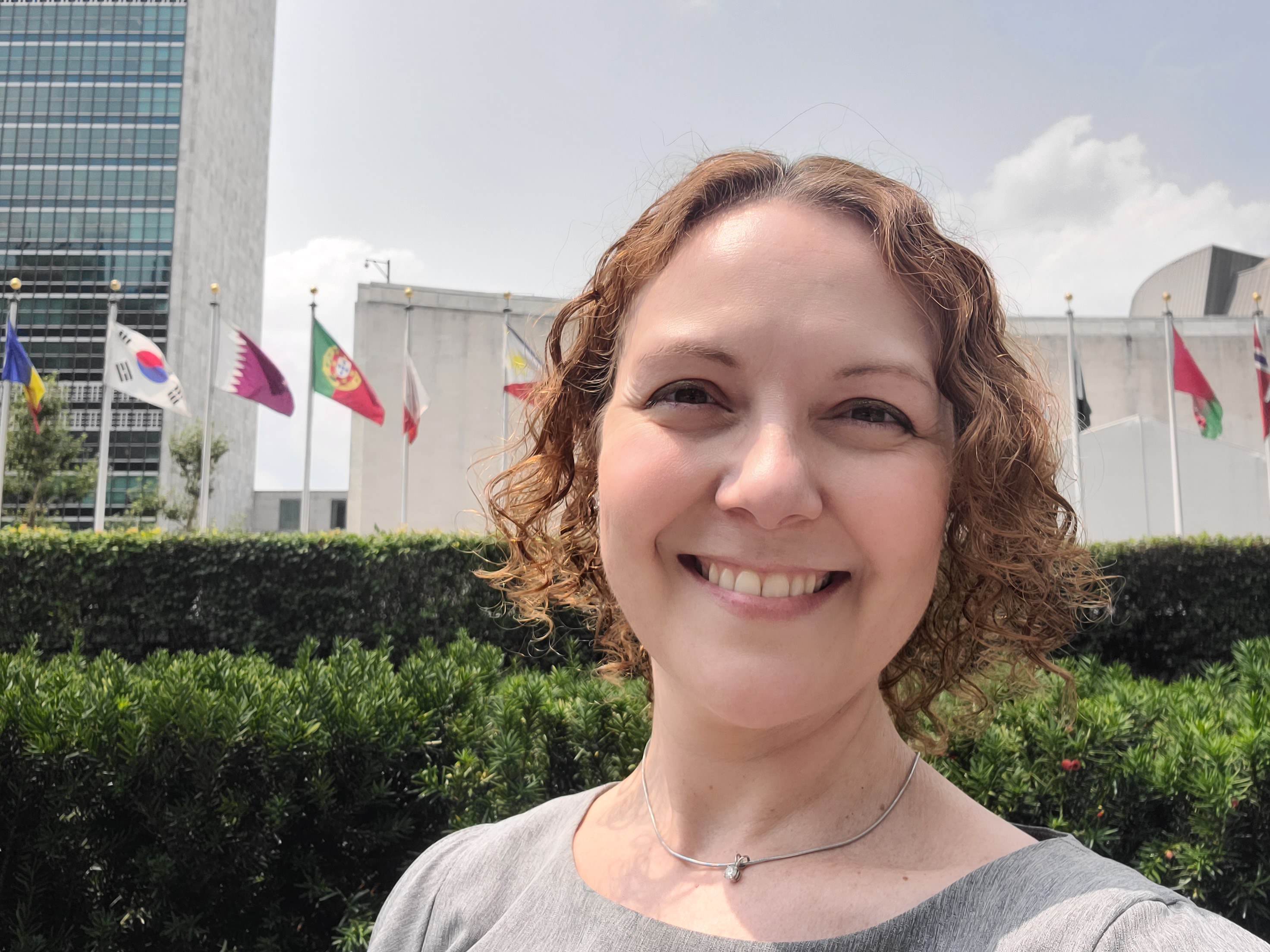
Today I’m at the United Nations for the inaugural Games and SDG (Sustainable Development Goals) Summit at the UN Headquarters, the kick-off to the 20th Games for Change Festival. I’m honored to be invited with industry professionals, government officials, and sustainable development experts, and look forward to all of the incredible conversations, ideas, and ambitions that will flow through each and every person in the room. Together, we’re building the path to higher ground, and I can’t wait to see what we find.
My dissertation proposal has been accepted by University of Cambridge and I have a fantastic supervisor who is based at The London School of Economics and Political Science, Grantham Research Institute on Climate Change and the Environment.
I’ll spend the next year developing a framework for climate change storytelling to connect sustainability advocates with family offices investigating sustainable investments and business decisions. I’m passionate about creating win-win-win opportunities for these families, the planet, and all beings who share this home.
The capital shortfall is a massive challenge for the shift to a sustainable society, and my hope is that my dissertation can help contribute a piece of the solution. Here we go!