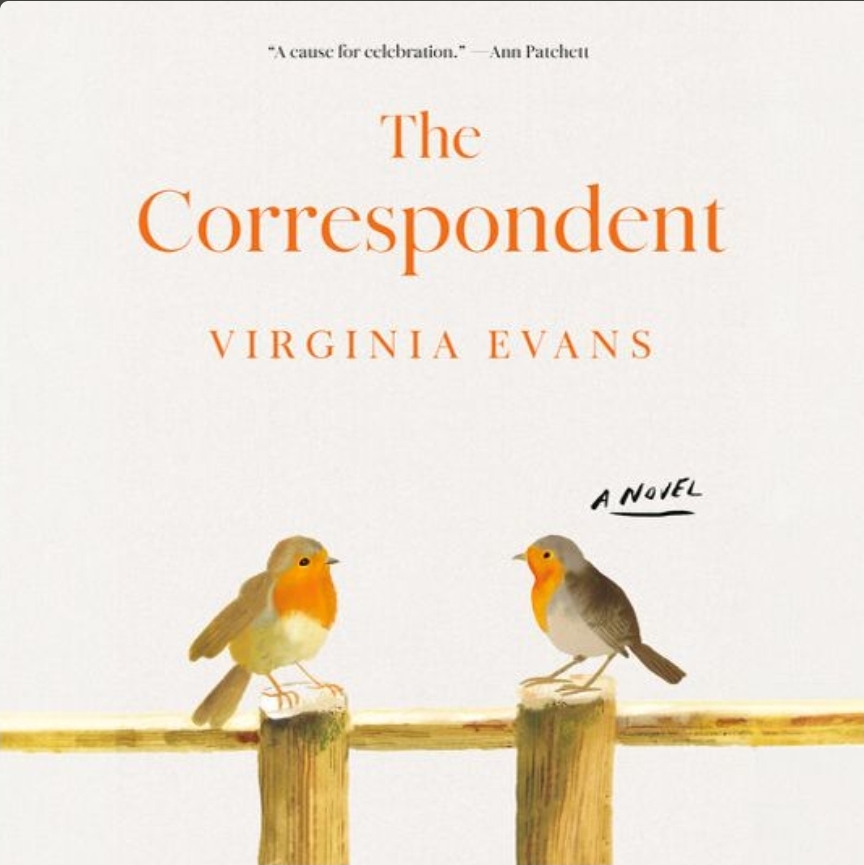
The Correspondent by Virginia Evans is a stunning novel. There is a small handful of books that I have wanted to hold close to my chest when I finished them. When I read (or heard) the final word, I was sad. I felt I had lost a friend. Not wanting them to be over, I had the impulse to read (or listen) to them all over again. These are books that make me want to keep being a writer. They are books that make me hope one day I will write one sentence that reaches someone in a way that these books have reached me. The Correspondent is one of those books.
I got the audiobook from the Brooklyn Public Library because so many people I know said how much they loved it, and in particular how much they loved the audiobook. Rather than being read by one narrator, this book has a different reader for nearly every character and I loved that as much as I loved the letters themselves. It felt more like the reading of a play than a book.
Rather than defining my to-be-read list by formal book reviews, I tend to read books that are recommended to me by people who know me. The fact that The Correspondent has become such a breakout success almost made me skip it because many times books that are this popular have left me wondering what everyone else sees that I don’t. So I got The Correspondent out of curiosity, but not expecting much from it. I was absolutely wrong.
A handful of minutes into the audiobook, I found myself being unable to do much else until I finished it. I found myself imagining the settings and the characters as my neighbors and friends even though the book has very little physical description. It is a series of letters (and emails and postcards) to and from different people in the book, most of them originating from or addressed to the main character, Sybil Van Antwerp, a forthright and articulate retiree in her 70s with steadfast opinions and deep, secret regrets.
By the end of the book we understand the arc of Sybil’s life that led to her talents, flaws, and circumstances. I laughed out loud, cried heavy tears, and learned so much about the human condition. The book made me want to give myself and others more grace, forgiveness, and love. It made me want to write more letters. It made me want to keep journaling. It reminded me that worlds don’t need to be fantastical to be poignant or wonder-filled. Our ordinary every day lives hold a magic of their own.
In the end we all become stories, as Margaret Atwood so beautifully articulated, and The Correspondent has that theme at its heart. It made me think about which stories people will tell about me. By the end of my time, what will I have done that will be worth remembering? Can living with the end in mind make our days more meaningful for us, and also for the people who will live beyond our last day?
I don’t have any answers to those questions. But I am enormously grateful to author Virginia Evans for planting those seeds in my mind and heart, and I will be thinking about them for a very long time. Perhaps I’ll write her a letter to let her know.
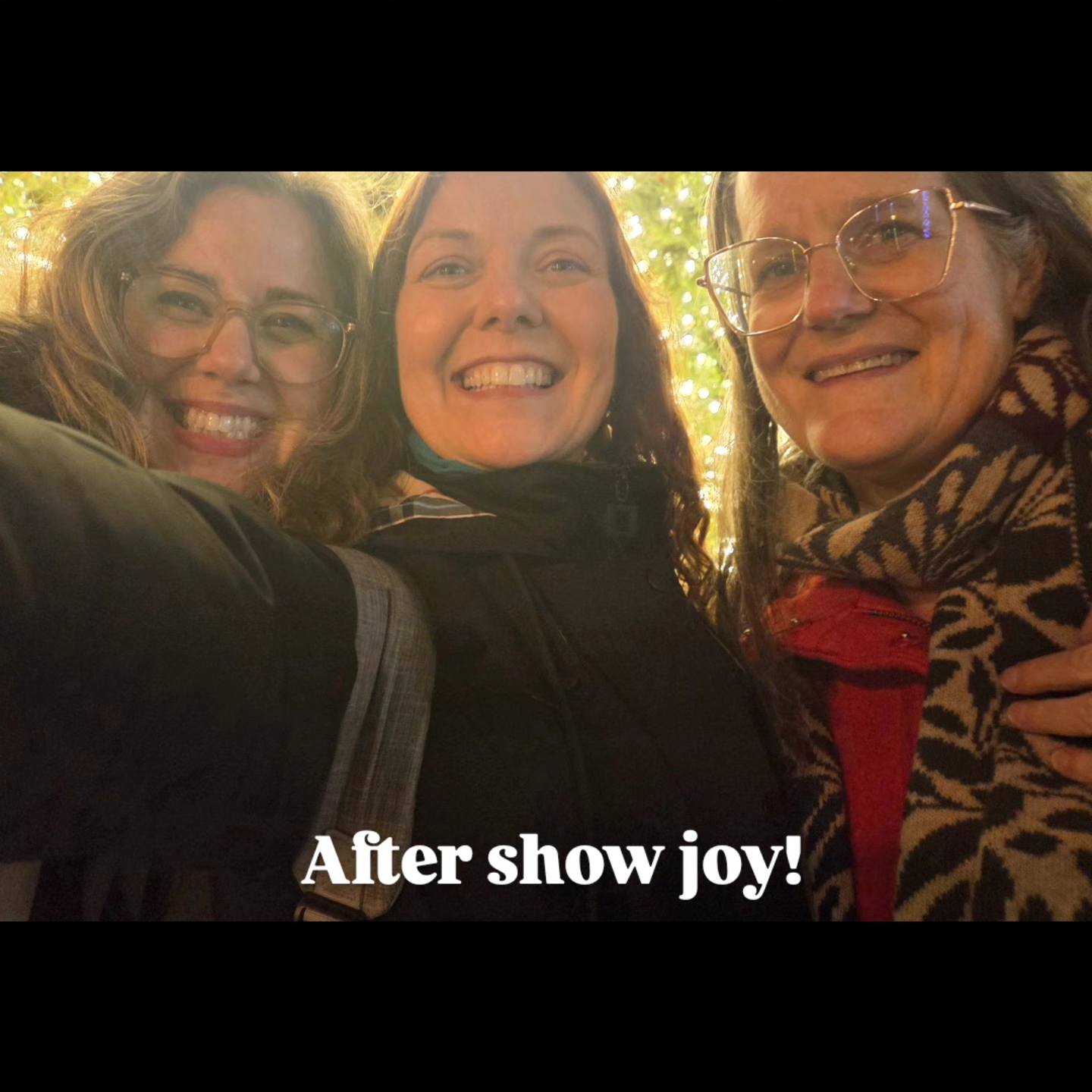
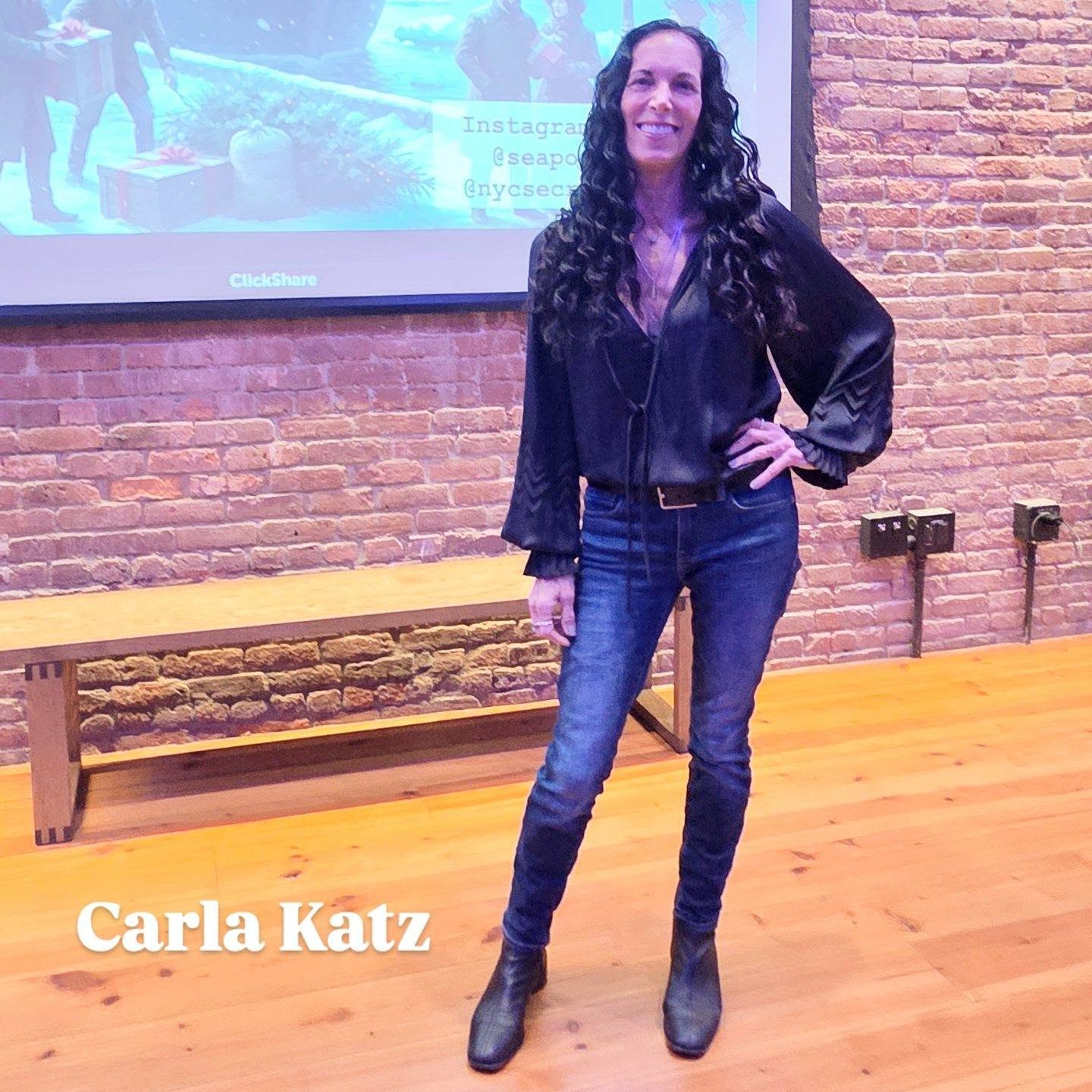
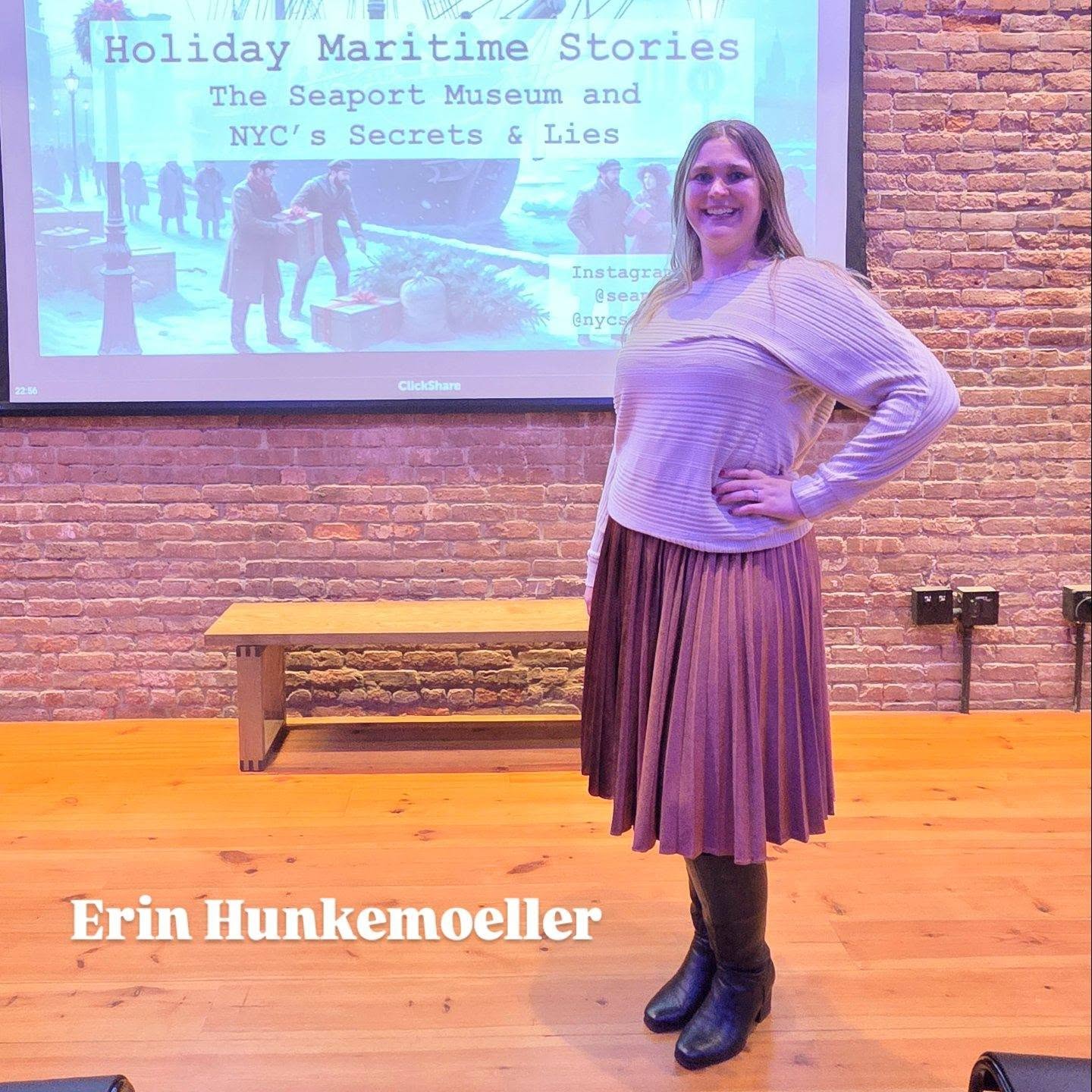
Ashley Semrick, Erin Hunkemoeller, Carla Katz, and Christa Avampato
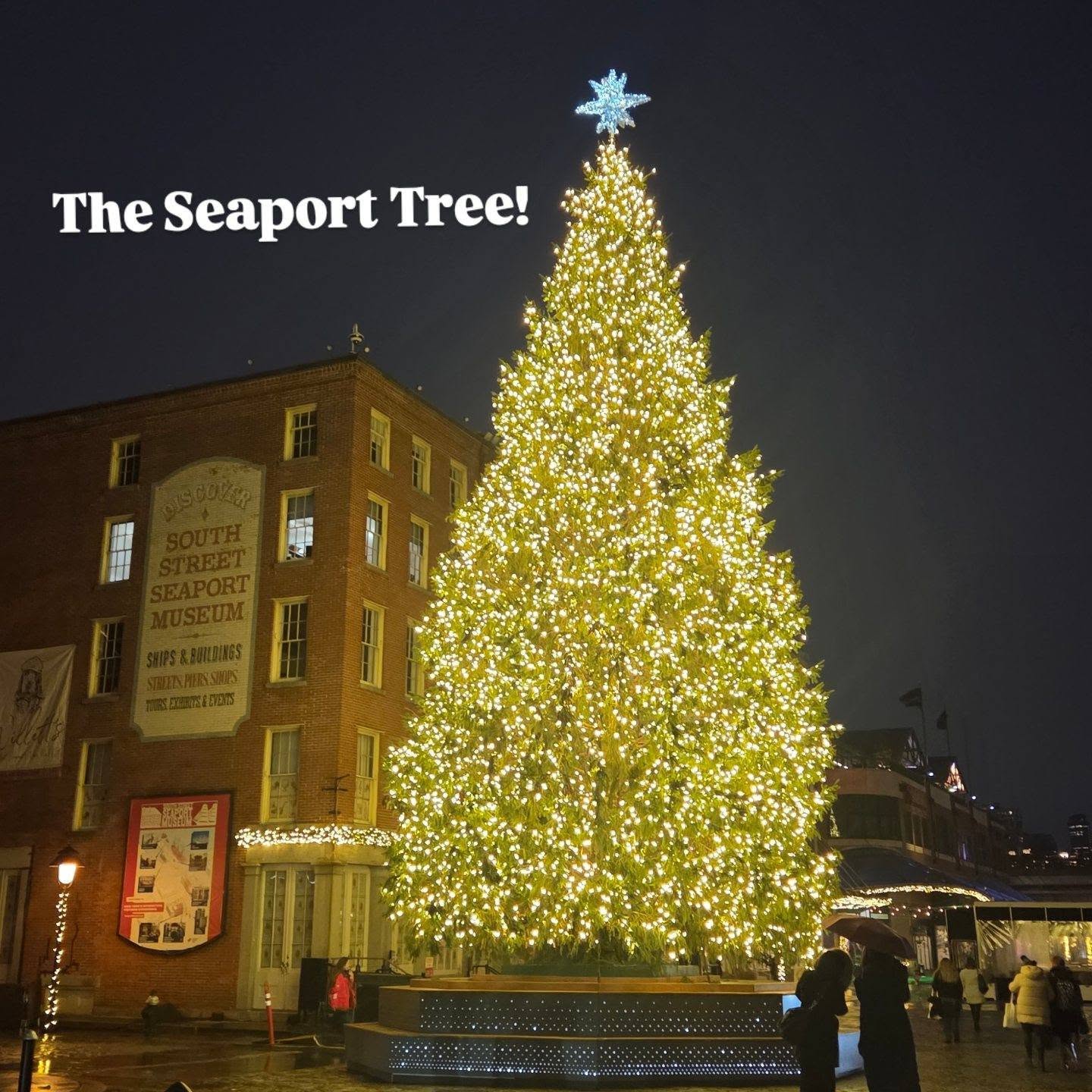
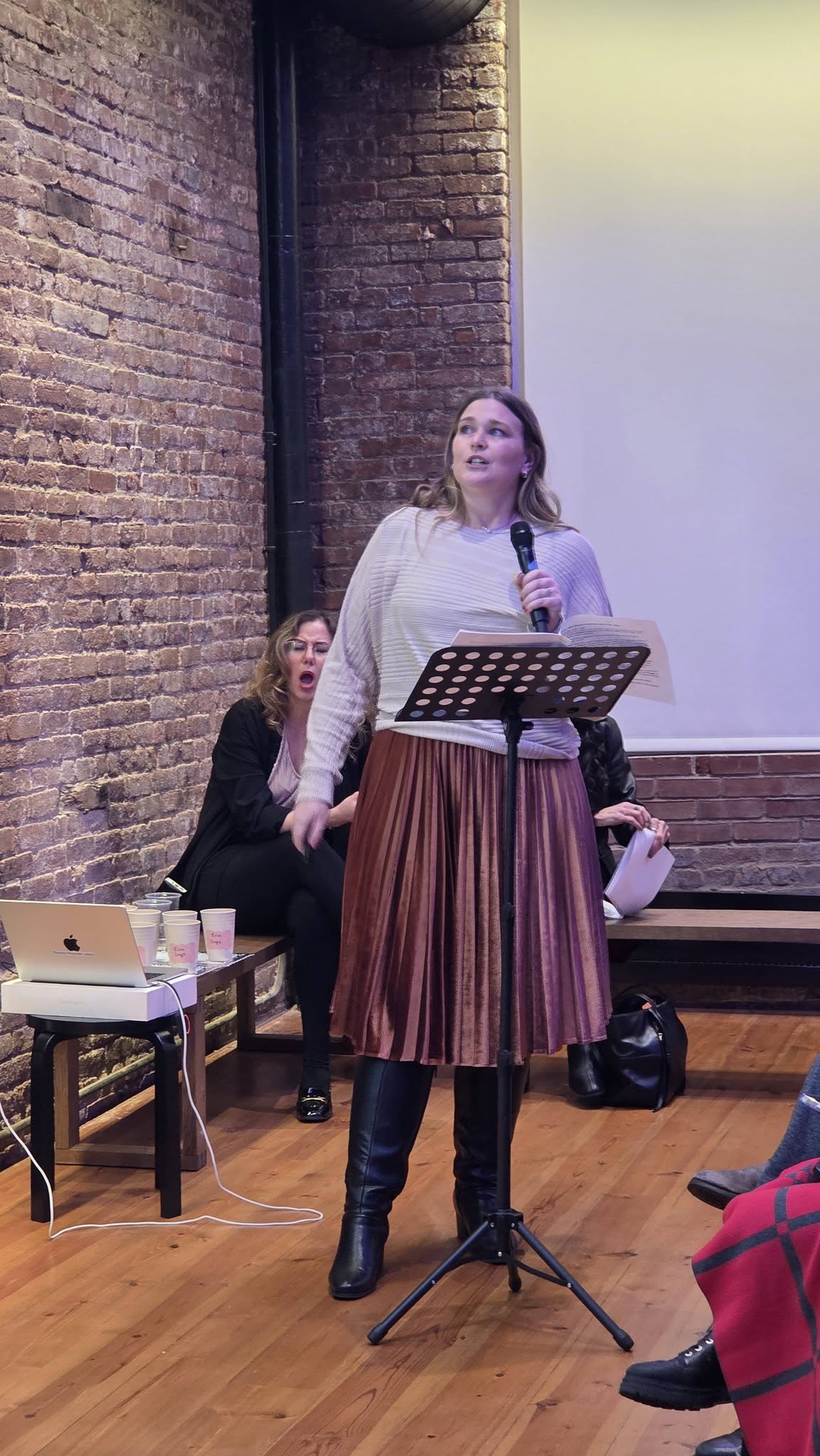
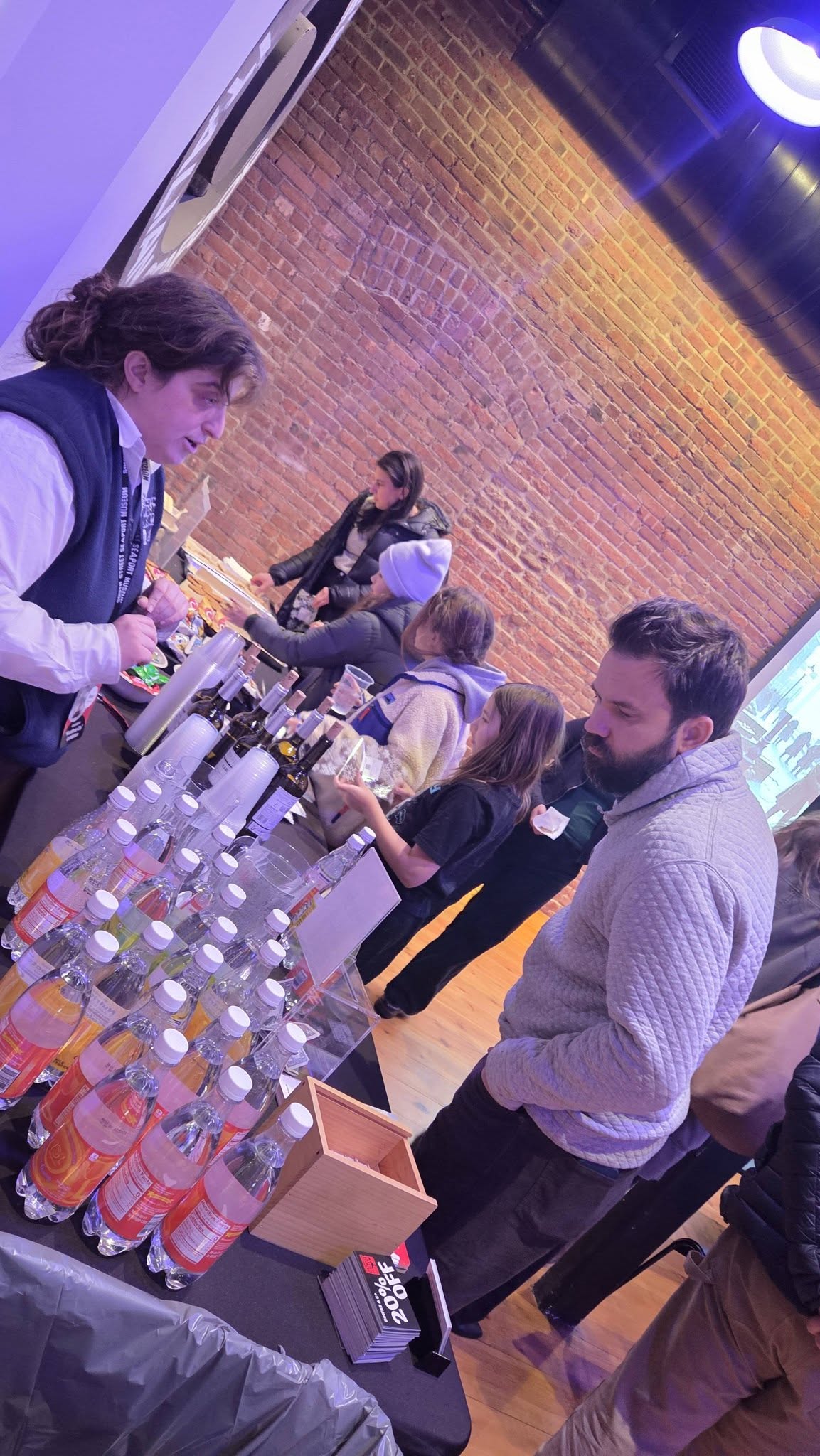
I’m proud to share that the NYC’s Secrets & Lies holiday show this week about secret NYC maritime history at the South Street Seaport Museum was a huge success! I’m still GLOWING from all the good cheer.
This show is a dream passion project for me, and I feel so lucky to do this work. The phenomenal storytellers, the engaged and joyful audience, and the perfect museum partner team and venue made for such a special holiday celebration. I’m beyond grateful to everyone who came out to the show.
We had a packed house that enjoyed a special evening of history and stories, complete with snack table filled with historically accurate treats that all had a backstory! This event was our first location-based event; all the stories were thematically linked to the space where we performed creating an immersive environment where the audience didn’t just hear the stories but could feel them.
It was also a powerful case study in the critical value of collaboration. Working with the Seaport Museum team was seamless, proving that when partners share a clear vision, we can create an immersive meaningful experience for our audience that stays with them long after the show ends.
Live events are a masterclass in crisis management. As the creator and producer, successfully navigating the unexpected is part of the job description. Though it might sound crazy to some, this is what I love about producing: problem-solving, thinking on my feet, and taking care of everyone involved in making the show possible. The ultimate reward is delivering a high-quality experience for the audience and seeing the talented storytellers shine.
A little behind-the-scenes secret – I was more nervous about this show than any show we’ve ever done. Between my back injury, the cookie baking, a brand new venue with a brand new partner, this being our first location-based show, and a last minute emergency I didn’t expect, my natural stage fright was flying high. But through collaboration and partnership and joy, it all worked out. Once I focused solely on the storytellers, our audience, and our museum partner, the nerves finally faded. We are always stronger and better together.
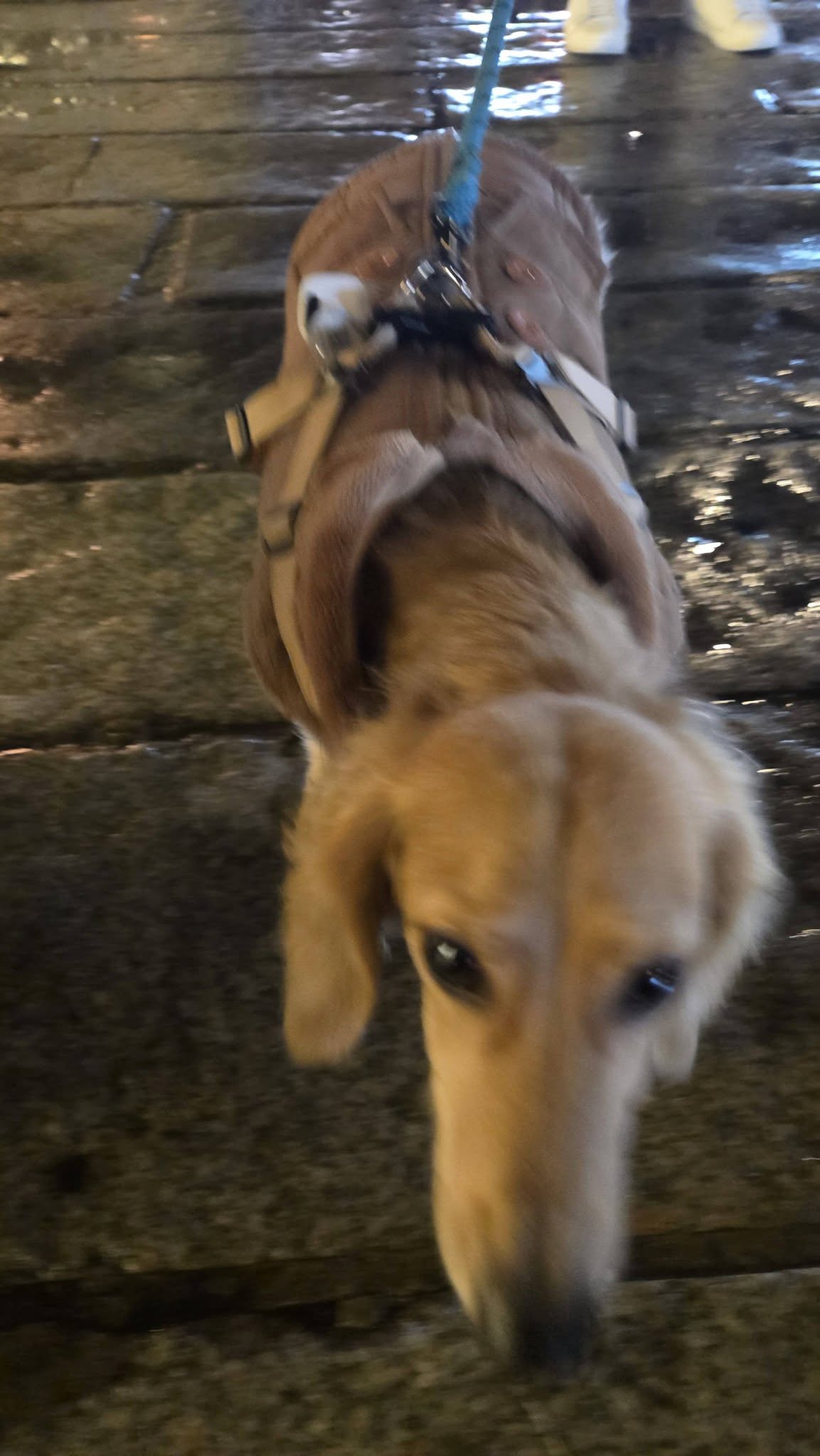
And good news (a la Buddy the Elf!): I saw a dachshund outside the museum as I arrived and another dachshund outside the museum on my way home. My Phinny is always with me!
Thank you again to the phenomenal team, the storytellers, and everyone who came out to support live storytelling and New York history. This is proof that focused passion and strong partnerships can achieve anything!
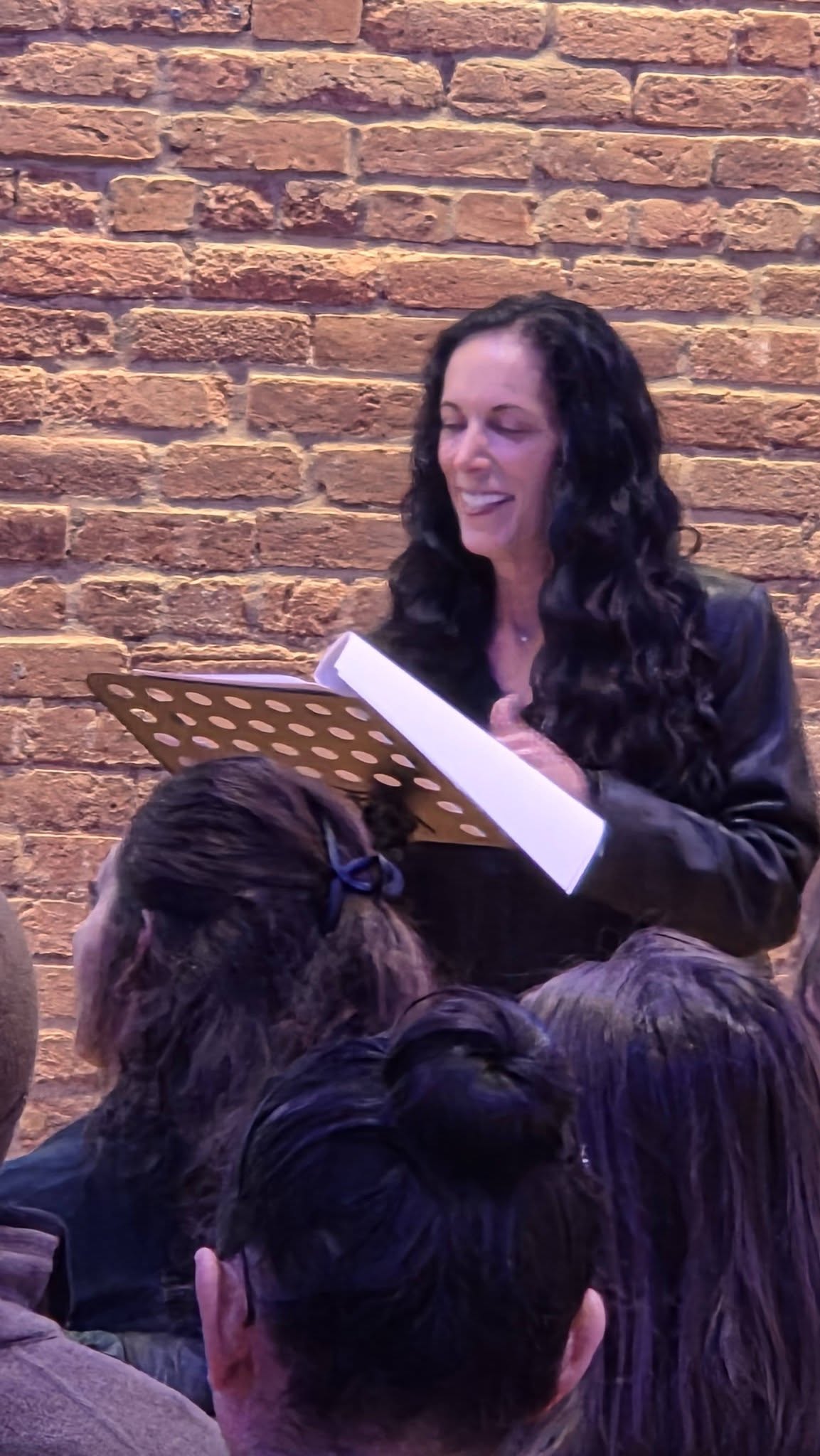
Below are some photos from the show. Happy Holidays!
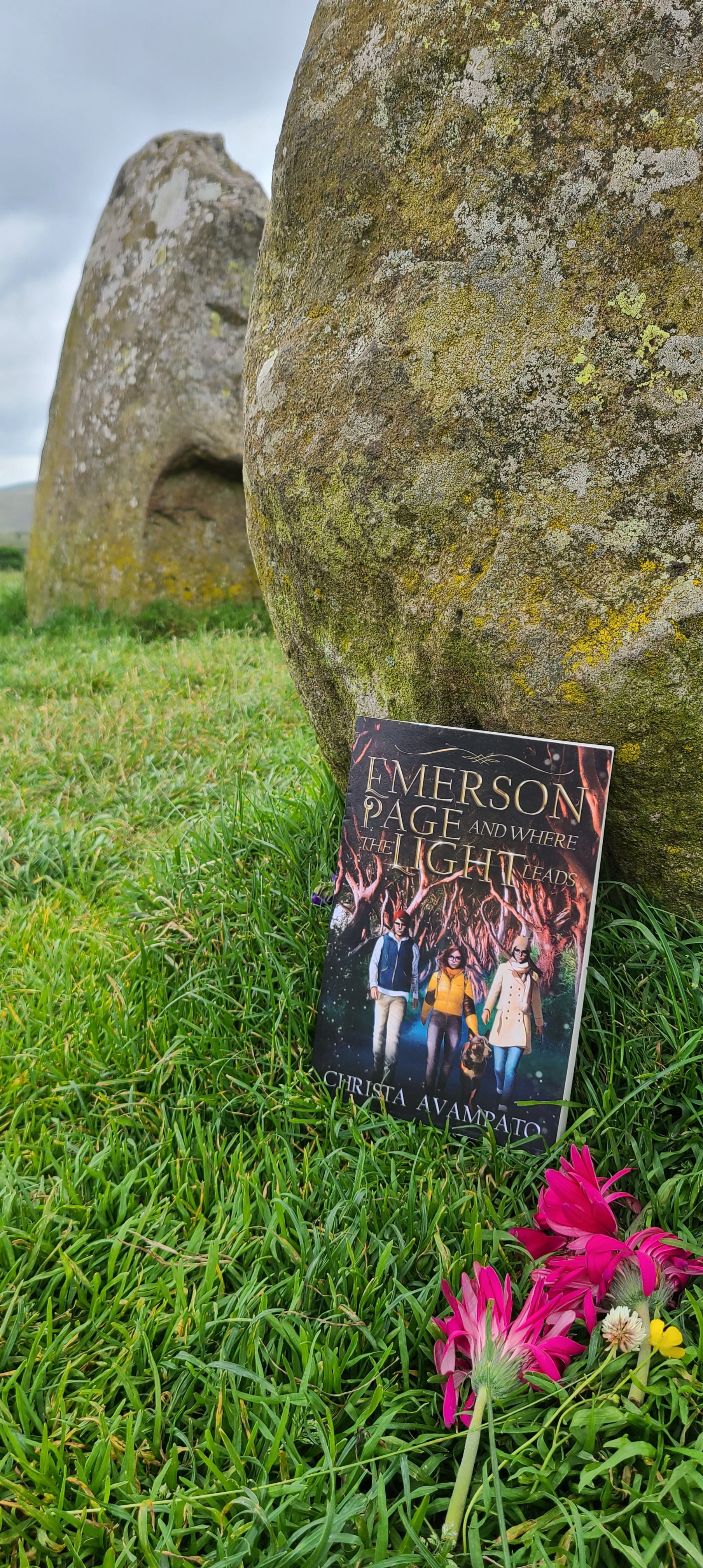
Me holding Emerson Page and Where the Light Leads on top of Arthur’s Seat, an ancient extinct volcano that is the main peak of the group of hills in Holyrood Park in Edinburgh, Scotland. June 2024.
Creativity is a lifeline for me. I’m so grateful to have writing as a spiritual practice that offers me the chance to bring my whole self to the page, and I’m grateful for every kind word, review, and note I’ve received from all of you. You raise me up.
In the author’s note of Emerson Page and Where the Light Leads, I wrote, “Since Emerson emerged in 2017 in my first novel, Emerson Page and Where the Light Enters, our world has been turned upside down. The pandemic, climate change, conflict across the world—all of it is cause for anxiety and distress. It’s okay to not be okay with any of this, to be scared in a world that seems so far out of our control. But what’s also true is that there is so much love, light, wonder, and beauty in this world, and in you. Emerson’s story is a mix of the joys and difficulties that are part of every life. She rises, falls, and rises again. And so do we.”
I believed that when I wrote it on February 29, 2024, and I believe it today. If ever there was a time to create, celebrate, and elevate love, light, wonder, and beauty, it’s now. Right now.
So, on this first birthday of Emerson Page and Where the Light Leads, this is my book birthday wish for all of us: that we will continue to create and love, that we will live out loud, that we will express our joy, without fear and without reservation. As Mary Oliver so beautifully wrote in her poem, Don’t Hesitate: “Life has some possibility left…Joy is not made to be a crumb.” Please, make your joy the whole damn cake. Today and every day.
These two photos are from that same trip as the photos above. On the left, I’m at Castlerigg Stone Circle in Keswick, England, a town in the Lake District. On the right, that’s a photo I took on the Isle of Skye, Scotland. Both June / July 2024.
“Authoritarianism can’t destroy storytelling and imagination.” ~Chimamanda Ngozi Adichie
“Literature provides a respite.” ~Jennifer Egan
“Women are the greatest international power there is.” ~Burhan Sönmez
I consider myself incredibly lucky that I was able to attend “The PEN and the State: The Role of Novelists in Times of Crisis” – the opening night event for the 2025 PEN America World Voices Festival. In its 20th year, the festival celebrates international literature and writers. The event featured three of my favorite authors – Chimamanda Ngozi Adichie (Dream Count) from Nigeria who now resides most of the time in the U.S., Jennifer Egan (The Candy House) from the U.S. who is also a professor at University of Pennsylvania (my alma mater), and Burhan Sönmez (Lovers of Franz K.), a Kurdish author from Turkey who is also the President of PEN International and a Fellow at University of Cambridge (also my alma mater). The event was expertly moderated by Clarisse Rosaz Shariyf, PEN America interim Co-CEO and Chief Program Officer of Literary Programming.
While the event immediately acknowledged the difficult times we’re living in with words and language under attack, these authors refused to let that distract them from their critical work as novelists. They are moving forward. “As writers, we carry the responsibility for humanity,” said Burhan. “Every novelist creates a [new] language in their book.” Chimamanda agrees. “I will never give in to despair and self-censorship, and I will bear the consequences. The job of literature is not to be safe.” In response to an audience question, Jennifer reflected on what we, as writers and neighbors, can do now. “Keep literary culture strong. We need to stop scrolling and start reading, deeply. [As writers,] our voices are our livelihood. We have to be willing to listen to others and to speak out.”
In line with the title of the event, the authors reflected on the specific role of writers in these times as history is unfolding before our eyes. Burhan mentioned when horrific acts have occurred in earlier times, the news was delayed and could be obscured. With today’s technology, we bear witness to events happening across the world in real-time. He told a story about the relationship between Turkey and the U.S. “In the Mid 20th century, Turkey’s right wing had a slogan, “Make Turkey little America.” Now America is becoming a bigger Turkey.” He’s not wrong.
His perspective of time and living through societal difficulties was fascinating. He is a Kurdish writer raised in Turkey who then lived in exile after sustaining severe physical injuries was fascinating and also heartbreaking. In his childhood home in Turkey, they spoke Kurdish, but Turkey had outlawed that language for 100 years.
Chimamanda’s perspective of as a woman raised under two dictatorships in Nigeria also provided a nuanced view of U.S. politics. She is somewhat of an outsider as a legal U.S. resident with Nigerian heritage who grew up immersed in both countries’ cultures. She is attracted the personal stories shaped by politics. “I’m interested in politics as a human thing. Fiction is not a history book or instruction manual. It reminds us we’re all human. As writers, we want to write something beautiful. Our only responsibility as writers is to write what we want to write and make it beautiful.” She acknowledged that she wants the reader to have fun while reading her books and they often hold humor even while exploring dark subjects. “I’m drawn to novels where I learn while having fun,” she said. As a speaker, I found her to be incredibly funny!
Jennifer shares this view of literature with Chimamanda. She recounted her surprise when her literature students at Penn didn’t want to talk about politics at because reading and writing fiction gave them a break, an escape, from their lived experience. This resonated with her as a writer as well. “I want the reader to have fun reading my books. When that’s my focus as a writer, and if I keep that focus then the things I care about find their way into the story.”
She shared some background of what brought her to writing. “For me, it is a vocation though not the one I always wanted to pursue. Growing up, I wanted to be a surgeon and then an archaeologist. I wanted to look inside. Inside people and inside the Earth.” Then in college, she took off on a backpacking trip across the globe, and that’s how writing found her. “Writing made every experience I had complete. It gave it meaning. It became and is a spiritual practice for me.” Being a fiction writer has the same end goal as the goal of a surgeon and an archaeologist. “Fiction is the only art form that lets you be inside the minds of others. When you look at a picture, you are naturally on the outside looking in. As a reader, you are inside the minds of the characters.”
Burhan didn’t read a book in Kurdish until he was 35 years old and living in exile. He made the decision to write his most recent novel in Kurdish in honor of his ancestors, especially his mother. However, Kurdish was a language he only knew spoken so he had to study Kurdish grammar to write the book. “When I got injured, my health was very poor for a long time. I went through treatment for 8 years. I couldn’t read for 2 years. All I could do was watch TV and makes notes with pen and paper. That’s how I came to be a writer, through my injuries.”
Chimamanda echoed Burhan’s pull to writing from her own history. “My ancestors gave me the blessing of writing, telling stories, being curious, and not minding my business. I did not come to writing through reading as many people do. Writing came first for me. My love for beauty, for meaning, and the human connection brought me to writing fiction.”
These authors also framed the specific value of fiction in crisis as opposed to journalism and nonfiction (which they have also written.) “In nonfiction writing, there is a certain level of self-preservation,” said Chimamanda. “In fiction, you are free. There is an openness that doesn’t exist in nonfiction. A radical honesty that nonfiction doesn’t have. With fiction, you can say what has not been said because it’s not you [saying it]. It’s the character.”
Burhan quoted author Gabriel García Márquez and the Turkish concept of “Panjeta” meaning the 5th way. (My apologies if I misspelled that word – I couldn’t find it anywhere online!)“With a novel, we open a new window, a new way of seeing,” he said. “Gabriel García Márquez said, ‘Literature never enters the house of truth through the front door.’ As novelists, we use the backdoor to illuminate the truth.”
The evening concluded with one final question from the audience: How do we take risks right now and not self-destruct? The audience collectively held its breath.
These author did not flinch, nor hesitate. “Being afraid is human,” said Chimananda. “I’m afraid but I will still speak…If you are afraid, learn civics. Even if you think you know civics, study it. I have lots of friends who think they know civics and they are still asking, ‘Can he do that? Is that legal?’ Study and stay informed.” Jennifer nodded in agreement. “This is a moment to support every cause you care about in any way you can…Insist upon the importance of literature and those who embrace it in the face of everything that’s happening.”
It was a happy Easter Sunday with friends, food, books, Central Park, and supporting local NYC businesses. I spent it with my friends, Amy and Charlotte, and then took a winding walk through Manhattan in the glorious warm sunshine. It was a day we’d been planning for almost 2 months!
Easter was my favorite holiday as a kid and with Phinny. We’d always go to the Easter Parade on Fifth Avenue, the oldest in the world, started in the 1870s. We loved to see everyone dressed up and happy, and everyone always fawned over Phinny (obviously), and he loved it (obviously.) To keep him close to me while I was out and about, I wore the forget-me-not locket I have with a lock of his fur inside and in my purse, I had the stuffy replica of Phineas that my friend, Liz, had made for me when Phinny passed away.
At long last, I made it to Golden Diner – renowned for its worth-the-wait, best-in-NYC, honey maple butter pancakes finished with lemon zest. We got there at about 9:15am. The line was already around the corner. They opened at 10am and by then the line was all the way down the block. It’s situated in the Two Bridges neighborhood of Manhattan, under the Manhattan Bridge. While that doesn’t sound appealing, and yes, it is loud when a train roars by, the grittiness somehow adds something to their already spectacular food.
Just after 10am, the wait was already an hour to get in, but they put our names down and said they’d send us a text when our table was ready. They did and the food was every bit as good as I’d heard. A little tip from Charlotte and Amy that really works – just get an order of pancakes for the table – and then get one of their other great items. We also got a Caesar salad for the table – it’s vegan and the best I’ve ever had. Amy and I got breakfast burritos. Charlotte got the Chinatown Egg and Cheese. All of it delicious, and reasonably priced. Plus, we got to sit outside in the sunshine.
While waiting for our table, we went around the corner to Dreamers Coffee Shop, a cozy, dog-friendly spot with a pinboard where customers can leave a message on a card for others to see. It was no surprise that Phinny’s spirit showed up at Dreamers – the first card I saw on the pin board while waiting in line for my coffee said “If you have a dachshund, please send me a pic” – with a cell phone number. (I’ve sent over a photo of Phinny, so I’ll let you know when I hear back.) Later that day, we also strolled by a gift shop loaded with dachshund items. He is a very loud ghost.
We wound our way through the Lower East Side to P&T Knitwear, a family-owned and operated indie bookstore with an incredible history worthy of its own post which I’ll write later this week. As Amy wisely says, they’re known for showcasing books that are good, not just what’s hot, which is a rare and wonderful thing in publishing.
We also stopped into Sweet Pickle Books, another indie bookshop which I’d never heard of. And yes, one day a week you really can trade in your used books for a jar of their homemade pickles. The store was bustling with merch, new and used books, and lots of shoppers.
Heading west, we stopped into Goods for the Study, a stationary and writing store owned by McNally Jackson, one of my favorite bookstores. (And Charlotte happened to be wearing their sweatshirt – an unplanned coincidence!) Amy and Charlotte bought me a tiny ceramic kitty that now sits on my desk. We all have one now. So, every time I look at it, I think “Amy’s writing”, “Charlotte’s editing film”, and “okay, I’m writing and editing, too.” Writing and editing are lovely jobs, and they can be lonely so it helps to know that so many others are in their own spaces doing this work, too.
After a walk through the garden district, which really does feel cooler and with cleaner air – thank you, plants! – Amy and Charlotte headed home and I continued on to the American Museum of Natural History and Central Park. Every spring, Phinny, and our friends Ashley and Cricket, would have a bagel and coffee picnic under the blooming cherry blossoms along the Reservoir in Central Park that is near our old upper west side apartment. I was worried we’d missed them with how busy the world is.
I went past the museum, thinking of how many times Phinny and I had wandered around those grounds over the year. The tulips and trees were putting on a show. The Rose Center for Earth and Space has the full name “The Frederick Phineas and Sandra Priest Rose Center for Earth and Space”. This always makes me laugh because it has his name, my mom’s name, Sandra, and my middle name Rose.
As I entered the park, I was flooded with memories of Phinny and friends. All the walks, talks, and afternoons spent together there over many years. I have a hilarious photo of Phinny seated in front of a live jazz trio that was playing there a number of years ago. He seemed to think all the spectators were applauding for him. Of course, yesterday that same exact trio was playing in the park. I can’t help but think he had a hand in that, too.
Then it was on to the cherry blossoms he loved best, the ones along the west side of the reservoir, the ones that are the backdrop of Phinny’s portrait that my friends, Jane, Vince, Ken, Tom, Bobby, Joanne, and Joe had made for me, the ones that my friend, Ashley, used as the setting for the watercolor she made for me of my boy and his happy life over the rainbow bridge, the ones where I always imagine him now in the Great Hereafter.
Walking toward them, I kept saying to Phinny, “I’m so sorry if I missed them, Buddy, and if I broke our tradition.” He kept telling me not to worry. I thought he just didn’t want me to feel sad or that I’d disappointed him.
I teared up when I went around the bend and realized what happened. While a tiny fraction of the flowers on the lower branches had opened, almost all of them were still in the bud stage and hadn’t yet bloomed into that glorious archway. I messaged Ashley immediately and we’re hoping to go next weekend if the weather is okay. We haven’t missed them! Our tradition continues.
Walking back to the subway to go home, I looked across the lawn and down the hill at 86th Street. The scene reminded me of a modern version of the Georges Seurat painting, “A Sunday Afternoon on the Island of La Grande Jatte.” There were Easter egg hunts, dogs, picnics, music, and laughter. It felt like collectively New York was taking a deep breath, finally.
I have so many memories of that hill, the daffodils nearby where Phineas loved to put his formidable snoot every spring. His little trot along that path hundreds of times over the years. Meeting all our friends in all kinds of weather. And every day, it’s the setting for the dreams and memories of so many people from all walks of life.
I thought about how life in New York often feels like a dreamy movie with twists and turns and moments of poignancy and memory in-between. The Muppet Movie finale began to play through my mind, “Life’s like a movie, write your own ending, keep believing, keep pretending, we’ve done just what we’ve set out to do, thanks to the lovers, the dreamers, and you.” I don’t know yet in this next chapter of my life what ending I’m writing. I do know that I still believe in goodness and light and love. That I’m setting out to do something beautiful and joyful and helpful for my New York neighbors. I know I’m in the right place, and for now, that is enough to know.
On Sunday afternoon, I wrote “The End” on the first draft of my new novel. While my first two novels are young adult fantasy adventure, this one is historical fiction.
In December 1941 four friends graduate from an all-women’s college and seize new career opportunities in a world forever changed by war. I was so happy to sink back into the world of these four friends. The struggles they face are, unfortunately, highly relevant to the times we’re living in today. With themes of empowerment, being on the right side of history, speaking out against injustice, and the love story of female friendship, they’re determination made me more determined, too.
I’m hoping that it will be the first book in a series. The subsequent books will share the very different journeys that each of these women take in a new world order emerging before their eyes and how their friendship will pull them through.
This story began as a screenplay in 2020. It was a quarterfinalist in 3 international screenwriting competitions and received great feedback. Since then, most of my writing has focused on getting my second Emerson Page novel published and writing my master’s dissertation for University of Cambridge. With those projects complete, I returned to my historical fiction screenplay in January of this year.
It turns out that writing a screenplay is akin to having a very detailed outline for a novel:
All the dialogue is there.
The scenes and their sequence are set.
The characters and their relationships are developed.
The plot is charted.
I wouldn’t say going from a screenplay to a novel is a slam dunk, no-effort-needed project. As someone who dreads a blank page, the screenplay was my map, a guide that helped steer my writing sessions and make them productive.
I’ll take a short break from this story (to finish the first draft of another novel that’s also nearly done!) and let the first draft build up some dust so I can return to it in a few weeks with fresh eyes. Then I’ll dive back in to begin the work of editing and rewriting.
I much prefer to edit and rewrite rather than write a first draft. I no longer have any blank pages. Every time I sit down to write, it will be to refine and improve what I already have. I’ll immerse myself in extra research (something else I absolutely love to do!) and I’ll add much more detail, polishing the story one word at a time. Editing and rewriting is gratifying work because it’s all about making the story shine.
I’m hopeful that this new novel will do well in the query process and that I’ll be able to find a literary agent — a goal I’ve had for many years. For now, I’m celebrating this huge milestone of completing the first draft. It only gets better from here!
The Waiting Place – From Oh, the Places You’ll Go! by Dr. Seuss
Does this sound familiar? It’s all you can do right now to just get from day-to-day in these weird, wild times. You’re unsure about what to do or where to go next. Your plans have fallen down in mid-flight. You worked so hard on something, harder than you’ve ever worked on anything your life, and still, it didn’t turn out as you hoped. Now, you’re just waiting.
If that strikes a chord, I want you to know you’re not alone. I feel like that most days at this particularly strange period in our history. I’m grateful for a lot of things in my life – my health, my friends, my home to name just a few. And I also find myself at a crossroads. Nothing seems clear. No matter which path I look down, I can barely see one pace in front of me. What I’d planned to do next and where I’d planned to go hasn’t panned out and maybe won’t for the next four years. I just don’t know what to do. I feel adrift. So, I’m just waiting.
This isn’t the first time I’ve been here. I’m sure it won’t be the last. Thinking about this conundrum, I was reminded of that sage of rhyme and reason, Dr. Seuss* and his setting of The Waiting Place. In his classic book Oh, the Places You’ll Go!, often given to people beginning a new chapter, the main character gets stuck.
“…Wherever you fly, you’ll be best of the best. Wherever you go, you will top all the rest. Except when you don’t. Because, sometimes, you won’t… You’ll be left in a Lurch… You’ll be in a Slump. You will come to a place where the streets are not marked. Some windows are lighted. But mostly they’re darked… You can get so confused that you’ll start in to race down long wiggled roads at a break-necking pace… headed, I fear, toward a most useless place. The Waiting Place…for people just waiting…”
To be honest, I get a little choked up when I read this book out loud. I understand the cycle of bang-ups and hang-ups that life brings. “Some windows are lighted. But mostly they’re darked.” That one really hits home for me right now when it feels like a lot of doors are being closed for so many people.
Luckily, Oh, the Places You’ll Go! doesn’t end in The Waiting Place and the path of the story has something to offer us in these times. Eventually our hero finds his way out of The Waiting Place and he’s moving along, riding high once again. Until…he takes another tumble, feeling very much alone and afraid. He nearly gives up. He keeps going because he doesn’t know what else to do. It isn’t fun to trudge through fear and despair, but it’s necessary. Eventually he finds his way, and learns life is “a Great Balancing Act.”
Re-reading this book helped me realize even though I may not be able to make progress according to the plan I created six months ago, there are other areas of my life where I can focus. I keep thinking about the best piece of advice I heard in 2024: “When you don’t know what to do, do what you know.”
Here’s what I know: I can pour my energy and time into my writing. I can test some entrepreneurial ideas. I can help nonprofits doing important, impactful work. I can spend more time with my friends and helping make New York City a better city for all. I can learn as much as possible right where I am and do as much good as possible with and for those around me. I can work on becoming the best me I can be so when the light returns, I’ll be able to take it all in.
On January 1st, I decided my word for 2025 would be “Rebuild”. I didn’t expect that word to be so on the nose so soon into the new year but here we are. Like an arrow being pulled back, in the tension, in the waiting, I can prepare myself to fly forward – eventually. This isn’t the path I intended to take, but I can still make the most of the journey.
*I acknowledge that Theodor Geisel made some horrible, racist choices with some of his art. The books that showcase that were rightly taken out of print by his estate, and I think he would have agreed that was the right thing to do. During his lifetime, he apologized for them and made amends for the harm he caused.
The eBook of my first novel, Emerson Page and Where the Light Enters, is free today through Saturday, January 25th, and my second novel, Emerson Page and Where the Light Leads, is on sale. Emerson is a young girl who faces challenges and rises above incredible odds through love, friendship, and community. The times in which we find ourselves now need stories that are empowering, courageous, and rooted in history. Emerson’s story is all those things, and I hope by reading these books you feel inspired and less alone. We’re all in this together. Get the books at https://www.amazon.com/stores/Christa-Avampato/author/B073XX439K.
The words “ecology” and “economy” originate from the same Greek word “oikos”, meaning “home”. Ecology and economy both involve studying and managing the environment in which we live — ecology being a nature-made home and economy being a human-made home.
With that shared history between “ecology” and “economy”, Dr. Kimmerer asks how we might model nature’s generosity to transform our human-made capitalist economy that works best for the wealthy into one that is healthy, high-functioning, and inclusive so that everyone thrives.
How might we move from a paradigm of haves and have-nots to everyone-has-enough? Can our capitalist economy transform into one rooted in generosity? What would that look like? How would it function?
Nature shows us that the key to generosity is trust. A serviceberry plant freely offers its delicious berries to animals knowing those animals will disperse its seeds. It’s part of their ecological agreement — an equal give and take that benefits everyone. This same type of equitable reciprocity exists throughout natural ecosystems, each member giving its resources and taking what it needs in return. Nature doesn’t hoard abundance, nature shares.
In this new year, already fraught with difficulties and loss on a massive scale, we can emulate the generosity of the serviceberry plant. We all have an abundance of something — talents, abilities, training and education, time, resources, kindness, love. We also all have needs. Somebody somewhere needs what we have, and somebody somewhere has what we need.
That matchmaking, that trust that if a call goes out it will be answered, is what’s helped nature flourish for millennia. We’re a part of nature, and it’s no different for us. Offer what you have to someone who needs it. Trust that when you ask for help in some form, someone who has an abundance of what you need will step forward. Nature shows us that navigating through difficulty is easier when we travel together.
If we can begin to bake nature’s example of trust and generosity into our own lives and extend it into our workplaces, schools, communities, and governments, we can start that shift that Dr. Kimmerer and ecological economists envision for us. Like the serviceberry plant, we’ll find generosity is a gift that returns to us season after season, creating the virtuous loop that is nature’s foundation and can be the bedrock of our future economy and society if we choose for it.
In my free weekly LinkedIn newsletter called Togetherhood, I share stories about nature’s wonders. Many of the posts are about my area of expertise— biomimicry. As a product developer, I apply nature’s designs to the human-built world to create a sustainable planet.
A little more about the newsletter – in case you need more convincing to subscribe 😉
1. Why this, why now
Right now we have a window of opportunity to halt and reverse the impacts of climate change. That window won’t be open forever, and if we are to protect and advance progress we need to act, together, now. I hope my stories about the wonders, wisdom, and beauty of nature will inspire all of us to take action to love, safeguard, and regenerate nature.
2. The kind of community you’ll find in the Togetherhood
This community is rooted in love, joy, respect, and curiosity for all species. We are here to learn together and support each other.
3. When I’ll share new stories
I’ll post once a week on Saturdays. I don’t have any plans to make this a paid newsletter. The content is free. It’s my gift to the world to share my expertise, support nature, and inspire wonder.
4. Join me in the Togetherhood
An old growth forest is one of my favorite environments and metaphors for life. It has wonders above and below ground. Every being in a forest is connected to every other being. It’s a web of life, literally and figuratively. I want the Togetherhood to be an old growth forest of stories. Let’s go have an adventure, together.












 Christa Avampato