creativity

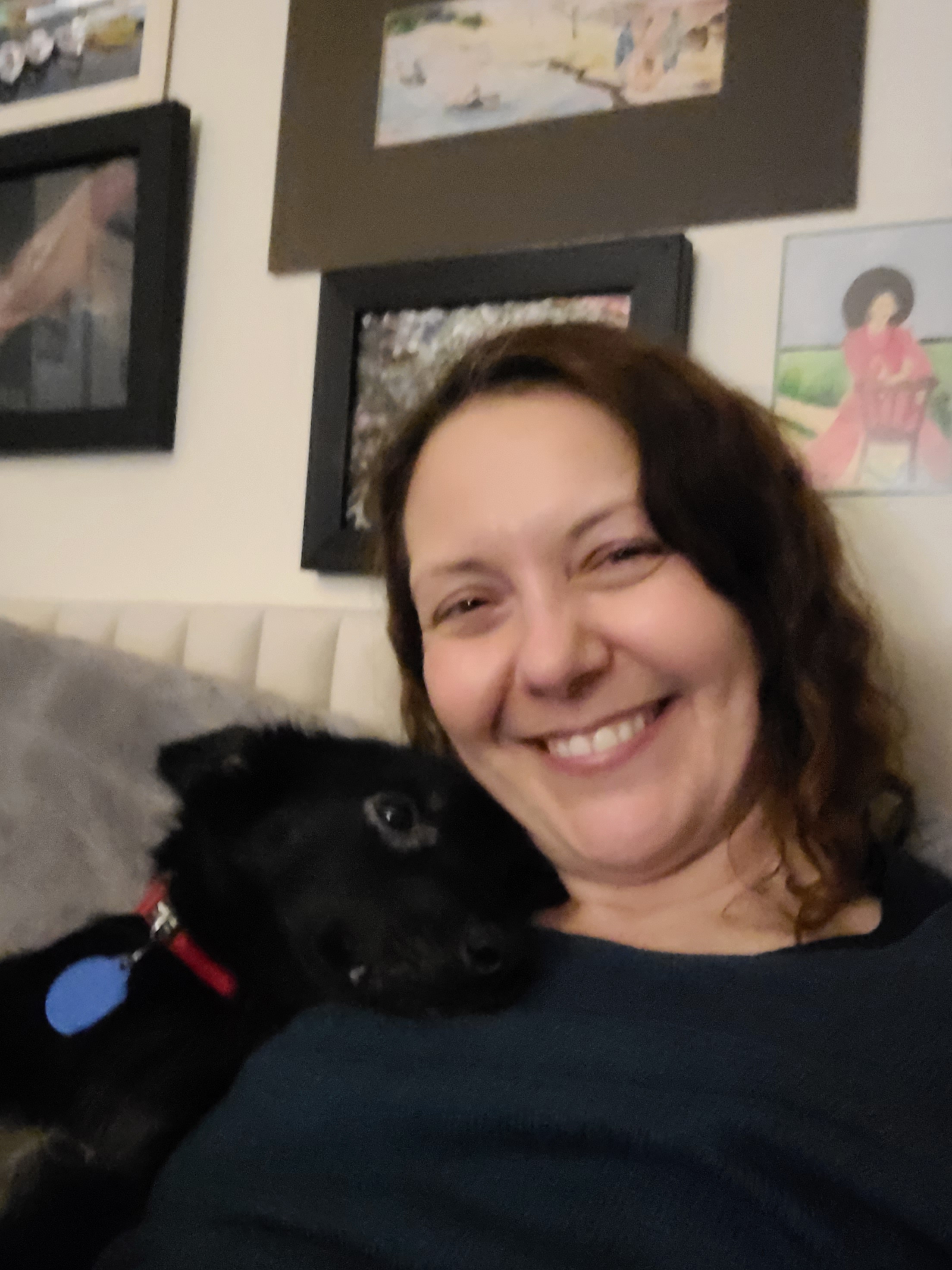
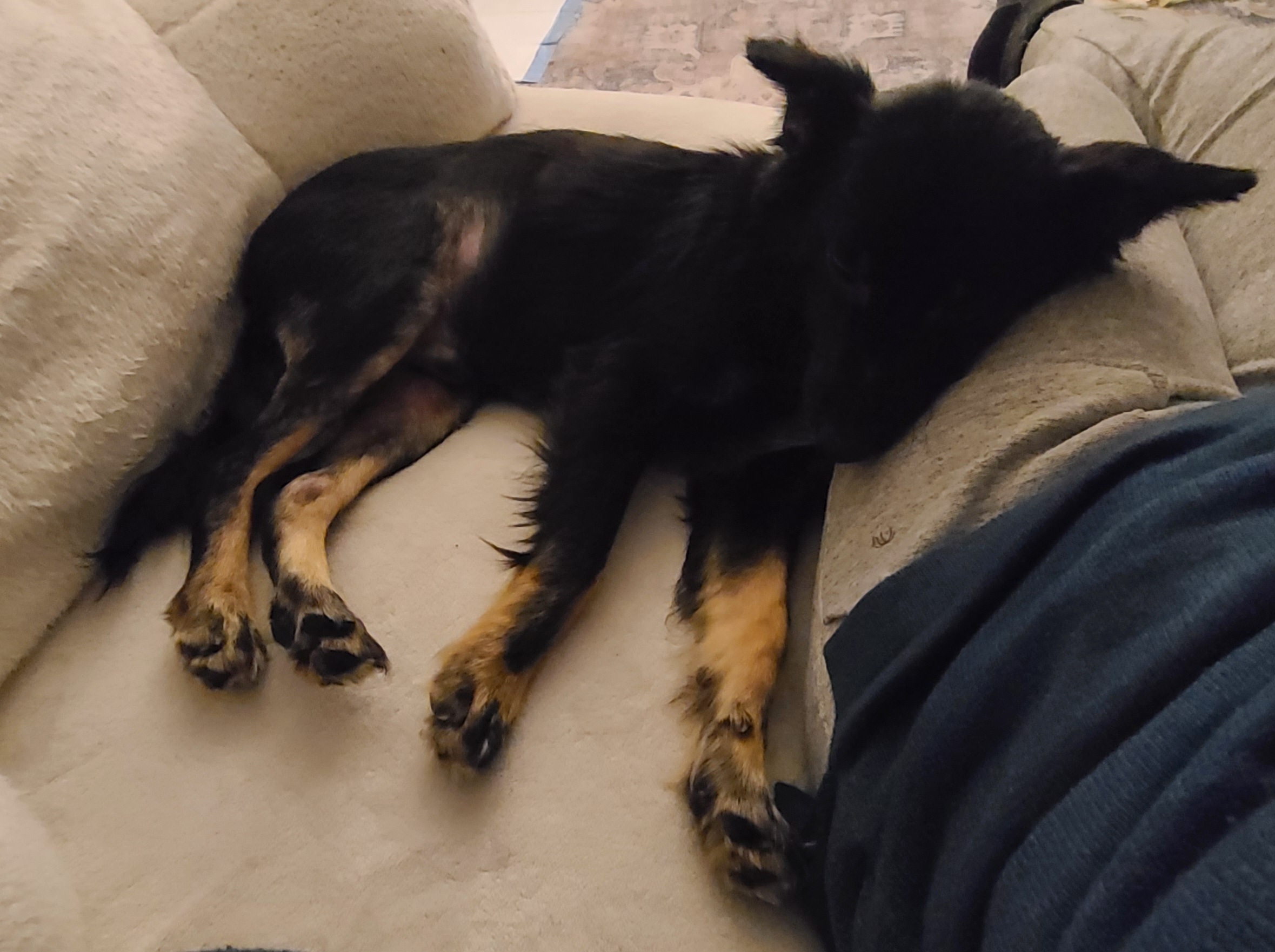
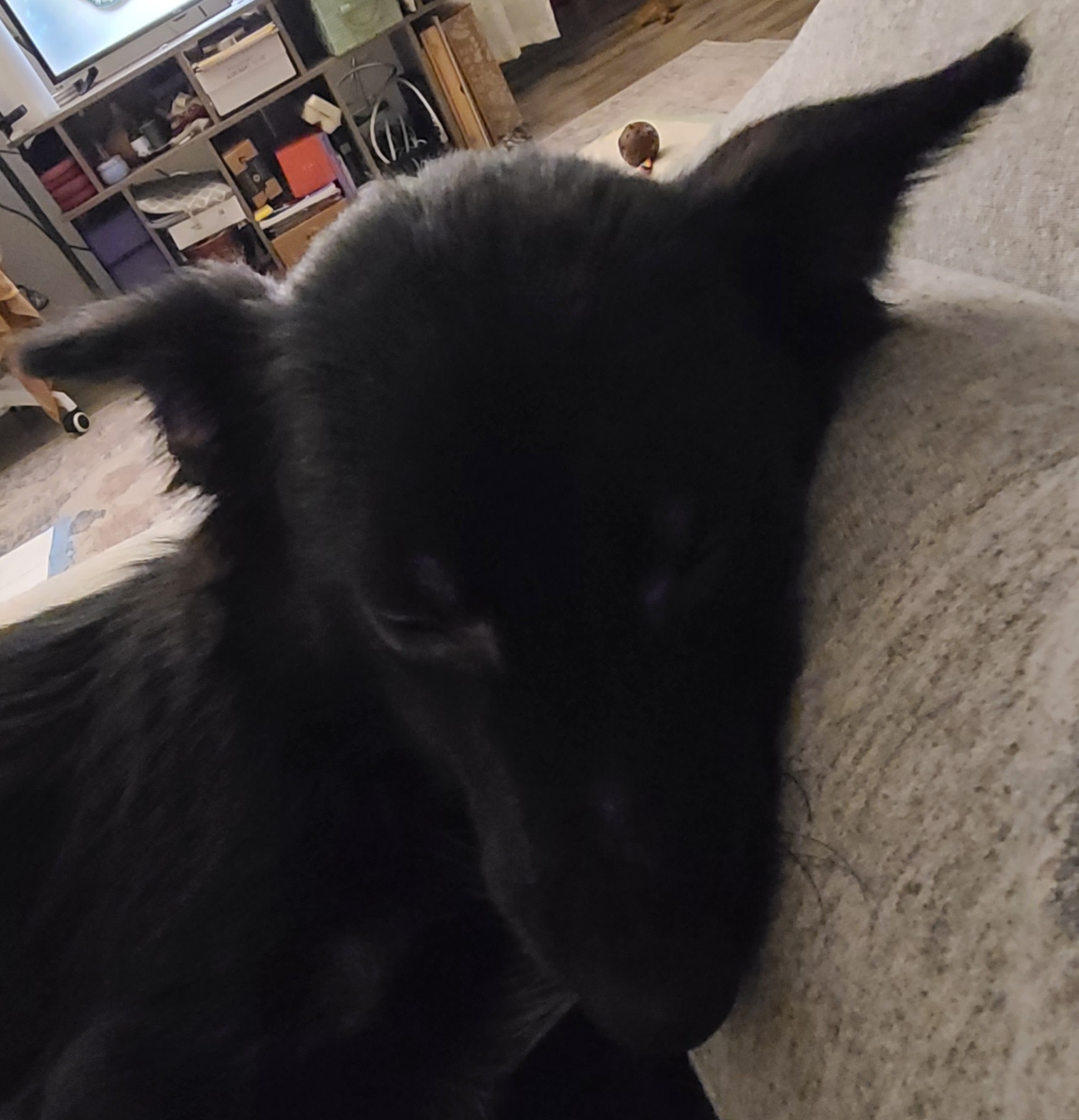
My foster dog, Serena

Me and Serena in Brooklyn. Our first photo together!

My sixth Muddy Paws Rescue foster dog, Serena, arrived in New York City on Saturday morning. She traveled all night from a shelter in Kentucky. I was giddy to pick her up.

As soon as I saw her, I knew she was terrified of everything and everyone. Her tail was tucked under her and her body was incredibly tense. It took us an hour to walk three blocks in midtown – she would walk a few steps and then completely freeze. I ended up carrying her (and she’s 30 pounds!)

I wasn’t sure how the subway would go but we gave it a shot and she did fantastic. She crawled under the seats and fell asleep. Everyone on the train loved her. A couple and their little boy sitting next to us wanted to know all about her. I said her life was about to get so much better and she doesn’t even know it yet. When they said goodbye before getting off the train, the boy turned to me and said, “She’s going to have a much better life now!” I smiled and nodded. “Yes, she is,” I said.

Once we got back to my neighborhood, she was more comfortable walking. It’s clear she likes other dogs and people as she was friendly to everyone we saw. There were some landscapers and workmen in my neighborhood who stopped us on our walks to ask if they could say hi to her. She was happy to sit down next to them and get some pets. Lots of my neighbors were out enjoying the warm weather. They were excited to hear about my new foster. One nicknamed her Serene Serena, and that name suits her well.

Whenever Serena catches a glimpse of herself in a window, mirror, of the reflection on a car, she thinks it’s another dog and she gets very excited. As far as I can tell, she doesn’t have any prey drive but loves to sniff around. She has a real penchant for crawling underneath things (like parked cars, my tables, my desk, my bed, and my electric keyboard), likely to feel safe and protected. She put herself in her crate without any prompting, and fell asleep there all on her own. She also took a nap in my dog, Phineas’s, orthopedic bed. I’m quite sure his scent is still there, as is his spirit.

I don’t know anything about her history except that she ended up in a shelter in Kentucky. She very skinny and it doesn’t seem that she knows what a collar or a leash are. She was very skittish in my apartment at first, unsure if she is allowed to do or have anything unless it’s expressly given to her multiple times with lots of praise. She drank a lot of water and nibbled at some food, but only when I hand fed her. She has no interest in treats though she was happy to carry around toys in her mouth when I gave them to her. When she wags her tail, she wags her whole body. Her ears feel like velvet.

Throughout the afternoon, we took a few more walks outside. I couldn’t get her to do her business on any of the walks. (I wonder if that’s a safety issue as well.) She did eventually have an accident in my apartment (on the laminate flooring in the kitchen and not on the carpet, which I very much appreciate!) It was evident that she was terrified she was in a lot of trouble, tensing her body and sinking low to the floor with her head down. Of course, I just cleaned it up with no reaction, and she seemed both surprised and confused.

I’m watching her snooze now, finally letting herself relax. Though I have both a large crate and a medium crate, she’s squeezed herself into the medium one. She’s snoring and moving her feet. I hope whatever dream she’s having, she’s secure in the fact that she’s never going to spend a night in a shelter ever again. It’s only the good life from here on out. It’s incredible to me how brave she’s being, despite being so scared. She lets me give her pets, hugs, and snuggles. She’s clearly been through so much in her short life. I’m honored I can help her start this new chapter – safe and loved.

On my way to get Serena and after I picked her up, I saw so many dachshunds. My little guy, Phin, saying hi and telling me that he’s with us. Serena still has floppy dewclaws on her back legs with a nail growing from them. Phinny had dewclaws like this on his back legs, too. I would call them his special toes. I’ve never seen them on any other dog before. I guess Serena really was meant to be my foster.

creativity

Bees Can Teach Us How to Live and Work

Bees working in their hive. Photo by Shelby Cohron on Unsplash.

Have you ever thought about bees as your life or career coaches? As an aspiring beekeeper, I’m fascinated by how these incredible creatures live and work. Their hives are a model combination of structure and flexibility.

Experts versus generalists

Some bees are genetically predisposed to have certain talents making them suitable for specific jobs. Others prefer to learn new skills and have new experiences, so they may hold a whole host of different jobs. Some have multiple jobs at the same time. Most bees are generalists; they cycle through different jobs at different stages of their lives and depending upon what the hive needs at any one time.

By nature, I’m curious and have an interest in a lot of different areas. None of us is just one thing. We contain multitudes. We can live our lives spherically, in many different directions, and be better for it.

Unified by a common purpose

While each bee has their talents and preferences, all of them work in service of their hive. They have one guiding mission – to perpetuate the health and longevity of their hive long after any one individual has passed away. For example, middle aged bees usually begin foraging. However, if the population of the hive needs to increase to maintain its health, a middle-aged bee will delay the foraging portion of their lives in favor of tending to the brood of baby bees (known as larvae.) Similarly, if the population of the hive is booming and more foragers are needed to collect nectar, pollen, and water to keep the hive healthy, she will begin to forage sooner than middle age.

This reminds of looking at our career choices through three lenses: what are we good at, what does the world need, and what do we enjoy doing? What is our higher purpose, and how do our lives and careers serve that purpose?

Managing career transitions

Though a worker honeybee only lives for a month or two, she often holds many jobs in that time and sometimes has more than one job at once. As soon as she emerges from her cell, a young bee gets to work around the hive, cleaning brood cells (including the one from which she just emerged) so that the queen bee can lay new eggs. Younger bees work inside the hive (like a child learning to do chores around the house) and older, more experienced bees work outside the hive, foraging for nectar, pollen, and water. Bees are never afraid to try something new, to be beginners. They are secure in their abilities, and they believe in one another’s abilities.

Whenever I’m trying something new, I think of bees and try to have the courage and confidence they have. Being part of a team means we’re never alone in our work. We’re all in it together.

Caring for the next generation

Taking care of their community is the north star for bees. Caring for future generations is the whole reason they do what they do. A nurse bee feeds and cares for thousands of developing bees, as well as the adult bees in the hive. Nurse bees also build new comb while caring for their bee family and build it with surprising speed. It’s a collaborative effort, with each bee playing their part in service to all the other bees and their collective future.

No one is an island. Taking care of each other in our community is also a way to take care of ourselves.

Minding their home

In addition to building comb, some bees are especially skilled at helping to maintain the temperature and humidity of the hive as weather conditions change. A hive is a dynamic place. When the temperature rises or plummets, or when drought sets in, environmentally inclined bees get to work using their bodies to heat and cool the hive so that their home and the bees who live there remain in tip top shape.

It’s easy for us to be heads-down on our work and consumed with our own lives. It’s worth taking a look around and seeing how we might be able to help the whole system in which we operate. We’ll be better off, and so will our neighbors, if the whole system works better for everyone.

Adventure awaits

As stated before, middle-aged bees begin the foraging chapter of their lives. They start by taking some test flights close to the hive to get their bearings. Within a matter of hours, they get the lay of the land and begin foraging for nectar, pollen, and water. What they collect, how much they collect, how many foraging trips they take per day, how far they travel, and if they attempt to multi-task by collecting more than one kind of material in a single trip depends upon the needs of the hive and the depth of the bee’s experience. Once she arrives back at her hive with the goods, she passes them off to receivers at the entrance of the hive before she either takes a rest or heads back out to forage again.

We spend a lot of time in our comfort zone. Getting out into the world gives us new perspective and benefits our community when we return with new knowledge and new experience.

Communication

The exchange of goods between foragers and receivers is thought to be a time for the bees to communicate. It’s possible that the receiver is letting the forager know what’s happening around the hive so that the forager is able to head out into the world to collect what the hive needs. The forager is letting the collector know what’s happening outside the hive.

If a forager is waiting a long time for a collector to take what she’s brought back, she will also begin to recruit more bees inside the hive to act as collectors, maximizing the efficiency of all of the foragers. She has agency to create a change. Foragers only travel from sunrise to sunset, and sleep through the night, so time is of the essence during daylight hours. Communication keeps the hive humming, literally and figuratively.

Our communities are healthier and happier when communication flows freely between members. Tell your stories and listen to the stories of others. We’re all better off when we share.

Rest

While we’ve given the proverbial title of worker bee to someone who’s always busy, bees prioritize rest for a very good reason – a tired bee doesn’t communicate nor navigate as well as a rested bee. The world is a treacherous place. To survive and thrive, and help her hive do the same, a bee must be well-rested and well-fed.

How many times do we tell ourselves, “Just push through,” when what we really need is to rest and recharge? Make like a bee and take a break. Nourish yourself. You’ll feel and work better when you take better care of yourself.

Looking to the future

No one home will suit a hive forever. While many bees spend their lives tending to the present needs of the hive, someone has to be on the lookout for what’s next. Scouts, who know the neighborhood well from their foraging, are consistently searching for the next home, and the next food and water sources. They will sometimes overnight in a new place to check it out as a potential future home for her hive. Once a home is chosen by the hive, a scout leads the entire swarm to that home, as she is one of the only bees in the hive to have ever been there.

While it’s important to be present, there’s also value to looking ahead every so often, too. Where might we want to go? What might be a future area of learning and experience for us? How might we refill the well?

So often the way we live and work is out of sync with how nature operates. How might our lives and careers be transformed if we took a page out of the bees’ book, establishing a flexible structure in our lives, careers, and communities that takes care of every member and allows every member to contribute?

creativity

Destruction can be a new beginning

Redwood trees sprout from burned trees in Yosemite. Photo by Chris Daines. Creative Commons license. https://www.flickr.com/photos/staticantics/4966177427/

For most species, including humans, wildfires represent a dire threat. But against all odds, fire’s fast-moving flames, smoke-filled skies, and relentless heat don’t always signal death in nature. Some species have evolved extraordinary adaptations to turn destruction into an opportunity — a gateway to survival and even proliferation. Their stories reveal how nature’s resilience and ingenuity can flourish in the face of destruction, and how following their lead can help us do the same.

1. Pyrophilous (“fire-loving”) beetles

Commonly known as fire beetles, these species have infrared sensors that detect heat, and antennae receptors that detect smoke. Together, these sensors and receptors guide them to the fires from up to 80 miles away. But why would a beetle want to fly into the fire?

Scorched forests provide them with everything they need to help create the next generation — the intense heat lifts the bark from the tree trunks where the beetles lay their eggs; without competition from other insects and free from the threat of predators, the larvae have the decaying wood as an abundant food source.

These beetles also jump start the rewilding process after a fire to help rebuild the ecosystem. As they break down the decaying wood, they speed up the recycling of nutrients into the soil and accelerate the growth of new plants and trees.

How can we put the beetle’s adaptations to work for us? Studying the structure of their sensors and receptors could help engineers and designers develop tools to help us identify fires from long-range distances, allowing us to deploy fire fighters and resources earlier and more quickly to extinguish them sooner and more effectively. These beetles also teach us that within the ashes of destruction lie opportunities for something new to grow and begin the process of rebuilding.

2. Woodpeckers

Black-backed, red-cockaded, and white-headed woodpeckers see post-fire landscapes as tasty buffets. They feast on the beetle larvae abundant in these areas. The woodpeckers keep the beetle populations under control to balance the newly forming ecosystems recovering from wildfires. The open, grassland conditions that are present in the early stages of forest recovery are perfect places for woodpeckers to nest and forage for food.

Woodpeckers show us that places that don’t look perfect can often be perfect for our needs.

3. Redwood trees

After a fire, redwood trees sprout new seedlings. This process is known as epicormic sprouting. They store energy in dormant buds under their bark. Even after centuries, these buds can sprout. They also sprout new growth from the roots of burned trees. This ability to resprout from dormant buds and from their roots, even after the tree dies, gives redwoods an advantage over tree species that reproduce through seeds alone.

Redwoods developed this adaptation to prepare for difficult times, giving them the best chance of propagating the next generation, even if the trees themselves wouldn’t live to see that future themselves.

These three species are exemplars of how to survive and thrive through difficulties and disturbances. Right now, we’re facing multiple, painful challenges in our world. Feelings of hopelessness and helplessness are understandable. Life on Earth has existed for nearly 4 billion years, and nature has faced a constant barrage of challenges throughout and adapted. Beetles, woodpeckers, and redwoods are three examples of how to rise to and overcome challenges: always seek opportunity everywhere, even and especially in the places that don’t sparkle and shine; contribute and be part of the rebuilding community; in times of plenty, prepare for times of scarcity.

When the student is ready, the teacher will appear. Nature has the lessons we need to learn. We can benefit from nature’s nearly 4 billion years of accumulated wisdom if we are willing to put aside our own egos. Are we ready and willing to be nature’s students?

creativity

A monster created Ozempic

Gila monster. 2023. Photo by David Clode on Unsplash

If you’ve benefitted from the medications Ozempic, Wegovy, and others like them to treat diabetes and support weight management, thank the Gila monster. They have a hormone (exendin-4) that controls their blood sugar and delays the stomach from emptying, prolonging feelings of fullness. It’s similar in chemical composition to our GLP-1 hormone that performs the same functions in our bodies. However, the Gila monster’s exendin-4 allows them to stay healthy while eating only 5 to 10 times per year.

This ability to fast for long periods of time without impacting their health piqued the interest of endocrinologist Dr. John Eng and his team of researchers in the 1980s and 1990s. They set out to discover if a medication that mimics exendin-4 would help humans manage their blood sugar and weight.

A component of their venom, the Gila monster’s exendin-4 while similar to our GLP-1 was found by Eng and his team to be effective for much longer. In clinical trials, one injection of a medication inspired by exendin-4 helped diabetics keep their blood sugar under control for an entire week and decreased their appetite, helping them to lose weight, too.

Though it took decades of testing and evaluation, exenatide, a synthetic version of exendin-4 was approved by the FDA in 2005 to treat Type-2 diabetes. Research continued to evaluate it as a treatment for obesity and weight management. That research led the creation of semaglutide, the active ingredient in the drugs Ozempic and Wegovy.

Gila monsters are our elders. They trace their ancestry back to the Cretaceous period when dinosaurs ruled the planet, 145 – 66 million years ago, nearly 60 million years before our earliest ancestors made an appearance. Gila monsters are in essence “living fossils”. In that time, they evolved astounding abilities that we’re just beginning to fully understand.

Unfortunately, this creature who survived the catastrophic asteroid that wiped out the dinosaurs is steadily being wiped out by us. Their population is declining due to the pet trade and the destruction of habitat from agriculture and urbanization despite the fact that without them, the multi-billion-dollar drugs Ozempic, Wegovy, and others wouldn’t exist.

Nature, and the species with whom we share this one planet, are intricately tied to our health and well-being. Stories like that of the Gila monster and Ozempic remind us that nature is a research lab, pharmacy, archive, library, concert hall, and constant source of inspiration. When we threaten the lives of other species, we compromise our own opportunities to live well. There’s no getting around it: We are a part of nature, not apart from nature. How bright our future will be depends on how much we respect and safeguard the natural world, and the health of the ecosystems within which we all live.

creativity

What an albatross, a whale, and a tortoise taught me about aging

The Laysan albatross known as Wisdom in December 2016 at Midway Atoll National Wildlife Refuge, Kristina McOmber/Kupu Conservation Leadership Development Program and USFWS, Public Domain, https://www.fws.gov/media/laysan-albatross-known-wisdom-december-2016-midway-atoll-national-wildlife-refuge

Wisdom the albatross, bowhead whales, and Jonathan the tortoise taught me to age well. We equate aging with loss, and often forget that aging has bonuses, too. Age contains stories and experience, wisdom and strength. As more time passes, the more I understand that every moment counts. Aging has shown me what matters, and just important, what doesn’t. My capacity for love, gratitude, generosity, vulnerability, and openness increases every day. The older I get, the more I value my relationships and community.

In Indigenous cultures, as in nature, aging is the ultimate prize. Artists of all mediums also understand the power of aging. I know my writing now is better than it was 10 years ago, and 10 years from now it will be better still. I think it’s one reason I was drawn to becoming a writer – it’s a skill that gets better with age.

Aging is a privilege denied to many. Having nearly lost my battle with cancer several times, I know how lucky I am to be here, how fortunate I am every day to get another day. Nature understands this, too. Nature is filled with examples of individuals and species that get better with age and defy stereotypes. Below are three of my favorite nature stories about the gifts of aging.

The many loves of Wisdom the albatross
Wisdom, a senior female Laysan albatross, is a prime example of how to thrive in old age. She was banded in 1956 by legendary ornithologist, Chandler Robbins. He died in 2017, so Wisdom has outlived the man who most closely studied her – something no one would have believed nearly 70 years ago when they first met.

This species is monogamous and mates for life. Wisdom has outlived at least three mates. Scientists estimate she’s had 50 – 60 offspring in her lifetime. Not too shabby for a bird who was rearing young during the Eisenhower administration.

At the ripe old age of 74, Wisdom is preparing to welcome another chick early this year with her current, much-younger mate. 74 is ancient for this species. The average age in the wild is 30 and after Wisdom, the next oldest known Laysan albatross is 45.

Losing someone we love, especially someone we’ve built a life with, is a painful and difficult loss. I admire Wisdom for embracing every new chapter, for leaving herself open to the possibility to love in every season of her very long life.

Whales sing to survive
Bowhead whales are the longest-living mammal species. In 2007, a harpoon tip was found in the blubber of a bowhead whale; the harpoon was from the late 1800s. Recent research has found they can live to be over 200 years.

Bowheads live in the Arctic Seas, some of the harshest environments in the world. They’re able to thrive there because of their strong communications skills; studies have shown they have as many as 184 distinct songs composed of a vast array of sounds. They use these songs to find food and navigate in a world dominated by icy darkness. Their strong sense of community and their ability to freely and generously share information with one another helps them thrive despite the challenges in this difficult ecosystem.

Slow and steady, Jonathan the tortoise wins the race
Jonathan the Seychelles giant tortoise is an animal who helped save my life. He lives on the island of Saint Helena off the southwestern coast of Africa. The oldest known living land animal, he’s estimated to be a minimum of 192 years old, born decades before the U.S. Civil War.

When I was going through cancer treatment, I’d often find myself staring at the ceiling at 3am, wracked with anxiety and worry. I’d switch on Wonder, a Calm app sleep story by Matthew McConaughey, and he’d talk about how somewhere in the world Jonathan was turning his face up to the stars, pondering the passing of another day. Though the world had radically transformed during his lifetime, Jonathan lived moment-to-moment, taking life as it comes. Thinking about Jonathan, I’d feel my breathing slow, and my mind would stop racing. He lived life day-by-day, savoring each one. I could do that, too. We all can.   

Nature provides all the insight and inspiration I need aging. All these animals have much to teach us about living long and well into our golden years: Embrace love, nurture community, share openly, sing, and live each moment. I have no need for the anti-aging products that glut the market and my social media feeds. I’ll stick with the 3.8 billion years of experience amassed by nature and offered to us by our elders such as Wisdom, bowhead whales, and Jonathan. As they say in the movie When Harry Met Sally, “I’ll have what they’re having.”

creativity

Marking the one year anniversary since my soul dog, Phineas, passed away

The last photo I took of Phinny before I rushed him to the ER 4 hours later.

Dear Phinny,
Today marks one year since I held you. One year since I felt the weight of your perfect body in my arms. One year since I kissed your forehead between your sweet honey eyes. And yet, you have never left me. Not really. Your spirit has been with me every day. Your ashes sit on your ofrenda, next to your portrait and photograph, toys, food bowl, sweater, harness, collar, and leash. The last bed you slept in and the last blanket you rested your head on are exactly where they were the last time I saw you peacefully resting in them.

I still talk to you every day. I ask you for help and guidance. I tell you I love you before I go to sleep and when I wake up. You have visited me in my dreams and showed me around your home across the rainbow bridge. The forest, the beach, the mountains. We’ve gone hiking together there. You are happy and healthy and youthful. You are living now, forever, as you did during your best days with me.

And still, what I wouldn’t give for one more day, one more hour. Something I will never get and always want. I know I did the best I could for you, and it never feels like it was enough. I know you don’t feel that way, that you have always continued to love me, even at my most imperfect moments. I’m still trying to forgive myself for making that terrible that decision a year ago.

Though I didn’t think it would be possible, I love you and miss you more today than I did a year ago when we said goodbye. The grief of losing you is even heavier now; you have helped me get stronger so that I am better able to carry it. The joy I have for all the years we spent together is also greater; you have helped me become even more grateful for our bond. You are and always will be my soul dog. I was meant for you, and you were meant for me.

In your honor, I’m fostering dogs who need help and love to heal. I know you’re working your magic behind-the-scenes, and we’re doing this together. I know you will always be looking out for me, just as you always did when you were here in your physical form. And as crazy as it sounds, I know when you’re ready you will find a way to infuse a ray of your bright, shiny spirit into another dog who will find their way to me. I will take one look at that dog and know. I trust the process. I trust you. That will never change. Our love story continues now, and always.

Love forever,
Your Mom

creativity

My favorite organizations for Giving Tuesday

Photo by Sticker Mule on Unsplash

Today is Giving Tuesday, a day during the holiday season that raises awareness for giving to nonprofit organizations. I’ve worked professionally in the nonprofit space for many years in different capacities including fundraising, product development and product management, program direction, strategy, operations, and communications. These have been some of my most gratifying career experiences. I’ve also been fortunate to be an active volunteer and donor.

If you want to make donations this holiday season, and / or get more involved with nonprofit organizations, here is a list of the ones I support as a donor and volunteer:

Animals and Pets
Muddy Paws Rescue
I’m a foster parent for dogs through Muddy Paws Rescue. The support, guidance, advice, and services they provide to dogs, fosters, and adopters is unparalleled. Through a partnership with Tito’s Vodka, donations today will be matched.

Animal Care Centers of NYC (NYCACC)
This is our city shelter system for animals who are homeless. They don’t turn away any animals and work closely with groups such as Muddy Paws to help these animals find forever homes. With the help of the Mayor’s Office of Animal Welfare, they also provide support for people who are struggling financially to take care of their pets with food assistance and medical care so that people can keep their beloved pets. With the help of the pet food company, Ollie, I’ve arranged to have an entire pallet of Ollie treats shipped to NYCACC to support the shelter pups.

White Whiskers Senior Dog Sanctuary
I learned about this organization when I wanted to make a gift to a senior dog organization in honor of my soul dog, Phineas, who passed away in January. I love their mission to find loving homes for sweet senior pups.

15/10 Foundation
This organization is doing the tough work of providing funds for medical care for pets to help them find forever homes. This is the same group that runs We Rate Dogs, famous for their joyful posts on social media that make everyone’s day. I adore them. I became a monthly donor as a way to thank all the people who have supported my Emerson Page novels which feature Friday, Emerson’s service dog who is also a rescue!

Climate and Environment
Prospect Park Alliance
I moved to Brooklyn in June 2023, a short 15-minute walk to Prospect Park. I love having that nature sanctuary as my backyard and I’m happy to support them. Today, your donations will be doubled.

National Parks Association
The U.S. is so fortunate to have so much protected public land in our national parks. In 2025, they will need our help more than ever as we navigate a new federal administration. Today, all donations will be tripled!

Arbor Day Foundation
Trees provide us with so many gifts – clean air, water filtration, food, and storm protection to name just a few! A gift to the Arbor Day Foundation makes sure our trees receive the protection and care they deserve.

The Climate Reality Project
Since 2006, Vice President Al Gore has trained over 45,000 climate leaders and change makers in all 50 states and 190 countries, me included. (I was trained in NYC in April 2024.) Today, all gifts will be matched.

Humanitarian and Health
World Central Kitchen
Hands-down, World Central Kitchen founded by Chef Jose Andres is the premiere organization for humanitarian relief. With a small staff, mostly employing local people on the ground in areas they serve, they feed anyone and everyone in need. I’m a proud monthly donor.

Coalition for the Homeless
This year I provided a donation to support their back-to-school program that provides new backpacks filled with new school supplies for New York City children who are homeless. They do so much to help our most vulnerable neighbors.

Fisher House Foundation
Most of the members of my small family have served in the U.S. military. As a Christmas gift every year for my uncle who served in Vietnam, I donate to Fisher House. With 98 locations, they have housed 500,000 military families for free when a loved one is in the hospital.

Education
Brooklyn Public Library
I use my local library all the time and our city is made better for all of the services our library systems provide to everyone. All donations to Brooklyn Public Library will be matched today!

Letters to a Pre-Scientist (LPS)
I’m now in my second year of being a STEM pen pal for students in grades 5 through 10 in low-income communities. LPS pairs students with a worldwide network of STEM professionals for a yearlong pen pal program during science class. We help broaden students’ awareness of what STEM professionals look like and do at work and inspire all students to explore a future in STEM.

creativity

What’s it like to foster a dog? Meet my first foster, Ace

My foster dog, Ace, from Muddy Paws Rescue NYC

Welcome to Brooklyn, Ace! I picked up my cutie foster dog from Muddy Paws Rescue NYC, and he lives up to his name. By all accounts, he is absolutely aces! Below are some photos from our first day together.

We don’t know much about his history. He’s 6 months old and 19 pounds with a cute trot that makes him look like a little fox. He was found with his siblings in Kentucky and ended up in a shelter. They all had terrible mange (a skin infection) and are healing up well now. Ace has a few bare spots where his fur is growing back. His siblings were also transported by Muddy Paws and are being fostered, too!

Despite all of the new sights, sounds, and scents in NYC, Ace is adjusting incredibly well. We’re working on crate training and he’s taking to it so quickly. He walks well on a leash though it’s clear he’s never had a leash or collar before. He does shake is head when wearing the collar trying to figure out what the heck this is! He listens well and is very smart. We’re working on some basic commands and structured walks. Though he had two accidents in my apartment when we got home for the first time yesterday, I realize now I didn’t know his cues. By this morning, I completely understood when he was telling me he needed to go. He caught on to house training at lightning speed!

Ace is definitely a velcro dog. He loves to cuddle and he’s a sweet, loving pup. Belly rubs, kisses, and pets are his favorite. Never enough love for this guy. Working out at home today with him out of his crate was hilarious to say the least. Try doing burpees and sit-ups when a dog just wants to sit in your lap!

He’s motivated by treats and affection. He doesn’t know what a toy is so hasn’t shown any interest in them (also very common for street dogs who are new to a home.)

He’s unsure about other dogs at the moment, either ignoring them, giving a bark or 2, or freezing in place when he sees a dog. This is very normal for strays as they have been taught to be wary of other dogs just to survive on the streets.

Ace shows absolutely no aggression nor any prey drive. I can touch all his food and treats without him doing a thing. I left him alone in his crate for about 30 minutes today and within 15 minutes he settled down. He slept in his crate as well and slept through the night (except when he had a dry throat and needed some water, which I got for him.) We’re going to try a walk in Prospect Park this afternoon.

Ace will be available for adoption applications on the Muddy Paws website starting on Tuesday, November 26th. Since he is small, sweet, smart, and a puppy, I think there will be a lot of interest in him. Happy to answer any questions about Ace, fostering dogs, or Muddy Paws Rescue.

creativity

NYC’s Harbor is cleaner and more resilient. Thank the oysters.

Billion Oyster Party. Photo by Christa Avampato.

On Thursday night I wound my way through Brooklyn’s Navy Yard. Past industrial buildings, natural gas smoke stacks, and heavy machinery, I found myself at building 269 to celebrate a sustainability milestone in our city. 

For 10 years, Billion Oyster Project has used the nature-based solution of oyster restoration to clean the water of the Hudson River to a level unprecedented in the last century. Restored oyster reefs will also protect the coastline from storm surges, a threat the city faces from climate change. To commemorate all their work, and look toward the future, 2,000 guests gathered together this week to sample trays of freshly harvested oysters, enjoy small bites and drinks from over 20 of New York’s best restaurants, and celebrate the efforts of oyster over 50 oyster farmers from all over the country at the organization’s 10th Anniversary Billion Oyster Party — Back to Nature, Back to Health. 

New York City used to be the oyster capital of the world, home to half of the world’s oysters. When the Dutch arrived in the 1600s, New York Harbor’s oysters measured up to 10 inches long, the city was known for them, and the oyster industry helped lay the foundation for the city. Liberty and Ellis Islands where the Statue of Liberty now stands and where millions of immigrants landed to begin new lives here were originally known as Oester (Oyster) Islands. New York’s oyster industry ended due to overharvesting, water pollution, and shoreline build-outs from the city’s rapid expansion. The pollution of the river prompted a typhoid scare, and the city shut down oyster farming in 1927. 

The book The Big Oyster: History on the Half Shell by Mark Kurlansky tells the fascinating history of New York’s oysters. The Billion Oyster Project is creating its future. The city’s 220,000 acres of oyster reefs were once homes to whales, dolphins, seals, seahorses, herring, striped bass, and hundreds of other species. Thanks to Billion Oyster Project, they’re on their way to being this home again. Today, the organization has 18 active oyster restoration sites across 16 acres of New York Harbor. Their efforts have restored 100 million juvenile oysters to the harbor. Oysters are starting to reproduce in the Harbor — a clear sign that this once booming industry can be revived and be self-sustaining. Billion Oyster Project’s goal for the next 10 years is to restore one billion oysters to New York Harbor by 2035.  

To grow the oyster population 10-fold in the next 10 years, they need our help. Volunteer, become a member or donate, share their mission through education efforts, dine at their restaurant partners, or attend an event

All photos taken at Billion Oyster Party by Christa Avampato.

creativity

I became a monthly donor to 15/10 Foundation

Honoring Phinny through 15/10 Foundation. Painting of Phin under the cherry blossoms by Ashley Semrick.

My rescue dog, Phineas, was my writing buddy and he inspired the character of Friday in my Emerson Page novels. To honor him as part of my book launch, I pledged to make a donation to 15/10 Foundation for every person who attended the launch party. Because you packed the room, I became a monthly donor to help shelter dogs who have medical challenges get the care they need to restore their health and be adopted into their forever homes. I know Phinny would be so happy to help other rescue dogs like him. Every time that monthly donation happens, his spirit will shine a little brighter. Learn more about 15/10 Foundation and the incredible dogs they help at https://15outof10.org