creativity

The inspiring resilience of water bears

Tardigrades in space (and everywhere on Earth!) https://youtu.be/TV7qAsp6x3w

Water bears look like works of science fiction. The microscopic, 8-legged 1,300 species of water bears (tardigrades) are alive and well. Their remarkable abilities to survive and thrive in harsh conditions make them seem even more improbable. They’re one of the most resilient lifeforms that’s ever lived.

When I had 6 weeks of daily radiation to treat cancer, I thought a lot about the perseverance of water bears. The technicians would position me on the table, then close the heavy door behind them as they left the room to protect themselves from the radiation. Click. Through a small window, they’d watched me, alone, unmoving, exposed on a table with no protection from the radiation blasting my body. I imagined myself as a tardigrade, opening to the light and radiation, absorbing it to kill any microscopic cancer cells floating around my body. I would think of Rumi’s quote, “The wound is the place where the light enters you.

By the end of week six, I had a painful burn the size of a baseball in the middle of my chest. “What would a tardigrade do with a burn like this?”, I wondered. They’d tend to what needed tending. So, that’s what I did. I changed dressings and applied the medication twice a day. I meditated on my wound, imagining it closing and healing. It was painful and frightening to have a wound like that, but like so much along my cancer journey, it passed. To my amazement and my doctors’, it healed in 2 weeks. Today it’s only a few freckles and the tattoo that marks the focus of the radiation beam, the place where the light entered me and healed me.

My healing is nothing compared to tardigrades. I bow in deep humility to them. Devastating drought? A sprinkle of water revives them from completely dried out to fully functioning. Deep freeze of outer space? They thaw and don’t know they’ve been away from Earth. Crushing pressure? They flatten and bounce back. Blast of radiation 1,400 times stronger than what would kill humans? They repair their shattered DNA and go about their day.

Tardigrades instill awe, wonder, and confusion in scientists. How do they survive everywhere under such extremes? Why have they evolved to do this?

They’re ubiquitous, found from the top of the Himalayas to Antarctic depths, at temperatures from -328°F (-200°C) to 304°F (151°C). We know they repair damaged DNA rapidly and completely. It’s not that they aren’t impacted by their environment. They take the destruction around them, then they pick up the pieces, build back, and carry on.

As we consider how to create a world resilient to climate change impacts, again I’m thinking of tardigrades. How can we withstand hardship, quickly and completely fixing what breaks? How can we endure? Nature-based solutions to our most dire challenges are found all around us if only we look, listen, and seek to understand. In a world where we constantly navigate change and manage difficulty, I want to be a tardigrade — repairing myself, my ecosystem, and all beings with whom I share it.

creativity

An orangutan practices medicine

The wonders of nature amaze me every day, and today a piece of natural news left me in awe. A paper was just published in the journal Nature about an orangutan who was observed self-medicating with remarkable effects that even trained medical doctors would have trouble reproducing.

In Sumatra, a 35-year-old orangutan known to researchers as Rakus had a large, deep, open wound on his face close to his eye. To look at it even made me wince, and I’m not at all squeamish about medical issues! With his teeth, he ground yellow root, an herb he rarely ate that has anti-inflammatory and anti-bacterial properties. He then applied the yellow root paste to his facial wound. In several days, it scabbed over. A little over a month later, it was barely noticeable with no sign of infection. (The images of Rakus above are from the paper in Nature.)

How could Rakus possibly act as his own doctor and healer? Where did he learn this yellow root technique? Scientists don’t know yet. While other animals have been observed in the wild tending to their injuries and the injuries of others, some even administering self-care and preventative-care, this was the first time an animal was observed medicinally treating a wound and with remarkable success.

There is so much we don’t know nor understand about the natural world. This is one of the many reasons why conservation is so vital for the health of people and our planet. Nature-based solutions to what ails us are everywhere, and to allow us to learn from them we must conserve the ecosystems where they occur. Perhaps Rakus has shown us a new medication that we could use to treat human wounds. He and his species are sentient, thoughtful beings who hurt and heal just as we do, deserve respect and concern, and have a right to survive and thrive.

creativity

JoyProject Podcast: The Joy of Fostering Animals with Mary Talalay

The Joy of Fostering Animals with Mary Talalay

What could instantly elicit more joy than a puppy or kitten? This week we talk to Mary Talalay, an expert in fostering animals to get them ready to find their forever homes. She also mentors new fosters, especially first-timers. Mary offers advice to those new to fostering and potential fosters who are curious about what’s involved in the process. She shares stories of fosters that hold a special place in her heart and how she and her daughter initially got involved in their foster community in Maryland.

At the end of the episode I share two resources created by Best Friends Animal Society. They put together a foster program training playbook with an e-learning module, care manuals for dogs, cats, and kittens, and other helpful links. They also have free online recordings of webinars, town halls, online courses, and helpful tips on fostering.

This is a heart-warming episode for all the animal lovers out there and those who want to play a part in animals rescue and adoption.

Topics discussed in this episode:

  • What it’s like to be a foster as well as the commitment needed (it can be as a big or as small a commitment as you have time for!)
  • The community of fosters that Mary and her teenage daughter discovered and are now a part of
  • Memorable fosters that found shelter and safety in Mary’s home
  • Ways to get involved in the foster community even if you can’t take an animal into your home

Links to resources:


About Mary:
Mary Talalay has a BS in Journalism from Temple University, an MS in Organizational Dynamics from University of Pennsylvania, and an MPH from Johns Hopkins School of Public Health. She played goalie for Temple University’s Division 1 Final Four Women’s Lacrosse team and was a member of Phi Sigma Sigma.

She also studied Epidemiology in Krakow, Poland with the London School of Hygiene and Tropical Medicine. She has certifications from Quality Matters, Sloane Consortium, (Online Learning Consortium) and is a Blackboard Exemplary Course reviewer.

Prior to joining Johns Hopkins, Mary worked as a technical and medical writer for companies such as Baxter BioScience, AstraZeneca, Pfizer, and many local biotechnology companies.

She worked as a project manager for the Johns Hopkins School of Medicine’s MD-PhD program, creating a comprehensive database of the program alumni and assisting with grants and admissions.

She was a Peace Corps Volunteer in the Slovak Republic, working as a project manager for the Slovak Ministry of Health, helping the government achieve compliance in the area of Public Health for accession into the EU. She continues to assist her Slovak colleagues with manuscript preparation pro bono.

She enjoys photography (her work has appeared in the Baltimore Sun, Maryland Zoo Annual Report, and KIWI Magazine), writing children’s books, travel, and kayaking.

One of her favorite overseas trips was spending Halloween in Transylvania.  Her family fosters animals for the Maryland SPCA and they lost count after the 100th kitten.

creativity

Write every day: Foster a dog and save a life in these crazy times

Screen Shot 2020-03-14 at 8.54.32 AM
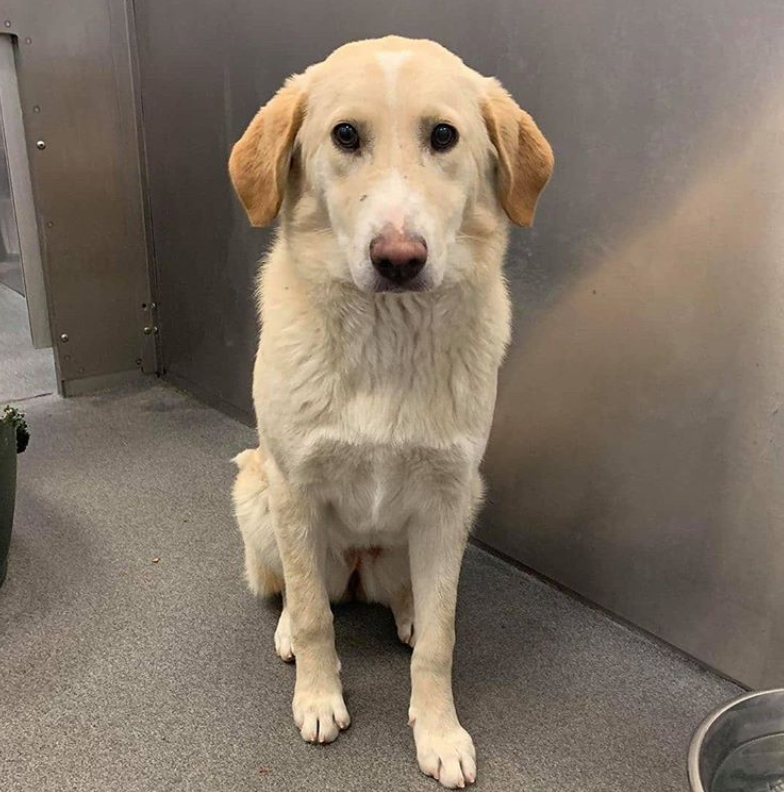
Angelina Ballerina, a dog in need of a foster home through Hearts&Bones Rescue

Are you home a lot more now in New York City or Dallas because of coronavirus? You can do so much good—you can save a life by fostering a dog with @heartsandbonesrescue. A dog reduces stress & increases joy! And I can personally vouch for this wonderful organization & their amazing all-volunteer staff.

Sometimes the fosters are just for a night or two. Sometimes they are for a few weeks. Sometimes they’re a foster fail & find their forever home w/ their foster. Have questions? Get in touch and learn more below!❤🐶

From @heartsandbonesrescue: FOSTERS NEEDED! Are you working from home the next few weeks? Looking for something to take your mind off all this craziness? Well it’s the perfect time to foster! With so many dogs in need, including new rescue Angelina Ballerina, we’re continuing to save as many lives as we can. Our next group of pups will arrive in NYC on Saturday 3/21! We’ve cancelled our adoption events for the month and will be sending all dogs straight to foster homes – so we need more amazing foster parents on board to help than usual. And don’t worry, we’ll still be arranging private adoption meetings for approved adopters over the next couple of weeks and expect many of our pups to find forever homes 🥰

Approved fosters and adopters can email foster@heartsandbonesrescue.com to sign up and newbies can fill out our easy application at the link in our bio. And if you’re looking to find your forever dog, head to our website to check out all the new cuties!
Stay healthy everyone and let’s keep saving dogs in need together 🖤

creativity

A Year of Yes: Stay curious

200-600 octillion microbes live a mile underground and thrive in 250°F water. Some breathe rocks, specifically uranium. Others eat leftover plants that are hundreds of millions of years old. And they can wait to reproduce for thousands of years when conditions are favorable. Add up all these wild subterranean microbes and they weigh as much as 200 million blue whales, much more than all 7.5 billion humans. And you know what? They’re related to us far less immutable surface dwellers. Bats hear shapes. Songbirds see UV light. Most animals are bioluminescent (including us!) but our eyes are too weak to see it without visual aids. Wonder is everywhere, a gift for all of us. Stay curious, friends. We have so many discoveries to look forward to.

creativity

A Year of Yes: Finally getting to the Galápagos Islands

jeremy-bishop-136677
Photo by Jeremy Bishop on Unsplash

My Year of Yes in 2018 is translating into lifelong travel dreams come true. Looks like I’m destined to visit the Galápagos Islands in the Fall. Ideas, suggestions, recommendations for my itinerary? Don’t be shy! Come at me!

creativity

In the pause: Maybe a stressful situation is leading you to where you need to go

I’m managing through Phineas’s adjustment to our new apartment. While it’s stressful at the moment thanks to the worst neighbor we’ve ever had, last night as I drifted off to sleep I started to wonder what could be the very positive flip side to this story.

Maybe Phin and I are meant to rescue a second pup who needs a home and will be Phin’s BFF for the rest of his life. Maybe this situation is prompting me to step up my job search even more so that I can *finally* stop renting and buy my very first home. Maybe this journey to help Phin through his anxiety is leading me to someone I’m supposed to meet who will have a positive impact on my life. Or maybe it’s just meant to give me more compassion, empathy, and concern for those who are also going through stressful times.

I’m not sure if any of those narratives are true, but their possibility is helping me rest a little easier and encouraging me to keep moving forward.

creativity

In the pause: For the love of animals

I met a man in the park this weekend who was riding his skateboard while his collie mix dog was trotting along beside him. They stopped at the water fountain where Phin was grabbing a drink and he wanted to say hello to them. The man bent down and stroked Phin’s ears.

“I had a dog exactly like him when I was a child. They are such precious little things…” and then he stopped as he got choked up. His eyes got teary, said thank you, and went on his way. Phin watched him for a minute or so until the man and his dog were out of sight.

It was so clear that despite the many years since this man’s dachshund had passed away, he still loved and missed him. It’s something everyone who’s ever loved an animal can relate to—these furry, cuddly pals wiggle their way into our hearts, take up residence, and never leave. We remember them long after they’re gone, grateful that they spent the short amount of time they had on this plane with us. We’re lucky to have known and loved them.

creativity

In the pause: My Facebook feed was filled with these inspiring stories

On Saturday morning, my friends filled my Facebook feed with these inspiring, empowering, beautiful stories. If you need a boost, here are a set of links to lift your spirit. It reminded me that sharing good news is needed now more than ever:
 
Detroit health director set to make bid for governor
 
Sammy Irssak’s video “I’m Muslim and people call me a terrorist. Do you trust me? If yes, hug me.”

 
A sleeping hedgehog wakes up when he smells food

 
Artist Jason deCaires Taylor creates underwater sculptures as makeshift coral reefs to replaces the ones we’ve lost to climate change

 
The Dodo’s post about a bird who got sick, lost all her feathers and her home, and then got adopted by a kind human

 
San Francisco is the first city in the US to make college free for all residents who have lived there for a year or longer

 
A wheelchair that helps people who can’t walk stand upright increasing mobility, independence, and health

 
And an idea to make a donation to the International Rescue Committee this Valentine’s Day in honor of your love
 
And I love Ruah Bhay Yoga – Healthy Mind, Body & Spirit‘s sweet video of arm balances with her daughter riding piggyback

creativity

In the pause: Prayers of healing for Phineas

Phineas had surgery to remove a small mass on his gum and several teeth along with it. It turned out to be a bigger mass than the veterinarian thought it was during the exam. Whether it grew in size between the exam and the surgery or if they underestimated it, I don’t know. I had a hard time holding it together at work. On my way to pick him up I had myself a good, long cry on the metro. He’s in a lot of pain and on heavy medication during this two-week healing process. The lab will biopsy the mass and let me know if it is benign or malignant, and then we will go from there. Obviously, I hope it’s benign. If it is malignant, then he will get the very best care that money can buy so long as he can have a high quality of life. Again, I’m immensely grateful that I got him pet insurance when I adopted him.

I get choked up when I think about it; I know someday I will have to let go of Phineas. I made that deal with the devil, and I accept it. I’m just not ready yet. Not now while it seems that the country (and maybe the world) is falling apart and my future feels so much in flux. I understand that there is no good time to lose an animal you love, and especially not one as dear as Phineas is to me and so many others who know him. But Universe, really, now is not a good time. And it won’t be a good time for a good long while. So if by chance you could help this little guy maintain his unsinkable nature for a while longer (maybe 20 years or so, just until I get my general sense of anxiety under control) then I would really appreciate it. Thanks for your consideration.