creativity

How I found the main setting for my third Emerson Page novel

The Fitzwilliam Museum entrance

For me, the setting of a novel is a character. It sets the stage for the action and houses the many revelations of a story. Right now I’m outlining and crafting the story of my third Emerson Page novel. I’ve had some ideas of what will happen but I was struggling with where to place this action. I wanted a spectacular, magical setting. Frustrated that I couldn’t find it, I put it away and focused on something else.

I opened up Google Maps and decided to look at the street view of my walk from Fitzwilliam College, my college at Cambridge University, to the building where I’ll be taking my classes. It’s a winding 30-minute route dotted with shops and eateries tucked into centuries-old architecture through what looks like Diagon Alley. It goes past Fitzwilliam Museum, Cambridge’s main museum. I looked up some images of the museum and the second I saw the entrance, I knew I’d found the main setting for the novel.

The museum is free for all, houses a spectacular collection of antiquities and rare books and manuscripts, and has a stunning library. It’s exactly what the books needs. Get ready for more museum adventures!

creativity

JoyProject Podcast: The Joy of Water Skiing with Kate McGormley

Let Kate McGormley describe the rush and unbridled joy she experiences every time she goes water skiing, a sport she’s done every year since she was 6 years old. An advocate for mental health and the power of kindness, she takes us through how she got into the sport, the mechanics of getting up on skis, and how being outside on the water helps her appreciate her body, her health, and the goodness that always exists in the world. Her infectious laugh is something that will brighten your day and may just convince you to give water skiing a try!

At the end of the podcast, I share something that brought me joy this week related to the episode. Given Kate’s focus on the joy of the outdoors, please check out the latest Fix Solutions Lab publication—The Joy Issue. Fix is a storytelling team at Grist, a nonprofit, independent media organization dedicated to telling stories of climate solutions and a just future. Fix was founded on a simple premise: promising solutions to the climate crisis exist — they just haven’t yet gained sufficient momentum to tip the scales.

The Joy Issue has stories about using joy as a tool for climate change activism. It’s the perfect blend of so many things I love that create the foundation for my life and career—top-notching writing and storytelling, joy, curiosity, and protecting our beautiful planet.

Topics discussed in this episode:
– When Kate started water skiing
– How she got started water skiing
– The mechanics of water skiing
– How water skiing make her grateful for so many things

Links to resources:
– Kate on Instagram – @kathryn.mcgormley
– Kate on Facebook – @Kate McGormley
– Kate’s blog – KindnessMatters365
– The Joy Issue by Fix at Grist – The Joy Issue
– Christa on Twitter – @christanyc
– Christa on Instagram – @christarosenyc
– Christa on Facebook – @AuthorChrista 
– Christa on Medium – @christaavampato
– Christa on TikTok – @christanyc
– Christa’s website – ChristaAvampato.com

About Kate:
Kate McGormley is a higher education professional living in Indianapolis with her husband and two sons.  Kate is a champion for mental health advocacy and kindness. She spent 2013 doing a kindness act each day with her young sons and blogging about it at KindnessMatters365. She spends most of her time with family and friends, but also loves serving on the board of her local Habitat for Humanity and occasionally pounding some nails.  Her greatest obsession in life is her English Bulldog, Mack!

creativity

How writing my Emerson Page novel trilogy saved my life—my conversation with Dr. Ed Freeman on The Stakeholder Podcast

In June 2022, I had the great good fortune to speak to my professor, mentor, and dear friend, Dr. Ed Freeman from the Darden School, on The Stakeholder Podcast.  

Link to the podcast episode: https://stakeholdermedia.libsyn.com/christa-avampato

Ed and I chat about:

  • how writing my Emerson Page novel trilogy saved my life
  • my live storytelling shows, screenwriting, and passion projects
  • my love for history, being a NYC tour guide, and how I got a tattoo live on stage
  • how product development helps me as a writer, and how being a writer helped me as a product developer 
  • living through difficult times and mental health challenges through creative work
  • my multi-faceted and varied career
  • making a living through a creative life
  • business and product development
  • building a better, more sustainable world

Ed is a treasure. He’s been one of the greatest influences on my work and life. He recently won University of Virginia’s highest honor: The Thomas Jefferson Award. Ed’s pioneering work on stakeholder theory changed the way we think about business and how businesses all over the world make decisions to create value. 

If you’ve ever used the word “stakeholder,” you can tip your cap to Ed. His writing about sustainability and stakeholder theory is what put UVA’s Darden School on the map for me, why I applied, and why I was honored to attend and graduate from the school with my MBA. He changed my life in incredible ways and I’m forever grateful for him. Thanks to Ed and producer, Ben Freeman, for having me on the podcast as a guest. 

creativity

How being a writer will help me get my dream job working with fossil fuel companies

In September, I’m starting a Master’s program at University of Cambridge in Sustainability Leadership. It’s my intention to use that degree as a springboard to work with fossil fuel companies — and convince them that it’s in their best and most profitable interest to stop producing fossil fuel and invest everything they’ve got in clean renewable energy. 

I’ve talked to a few people about this dream. Most laugh at me. Some think I’m wasting my time and talents on this dream. Some think I’ll never be able to do it. 

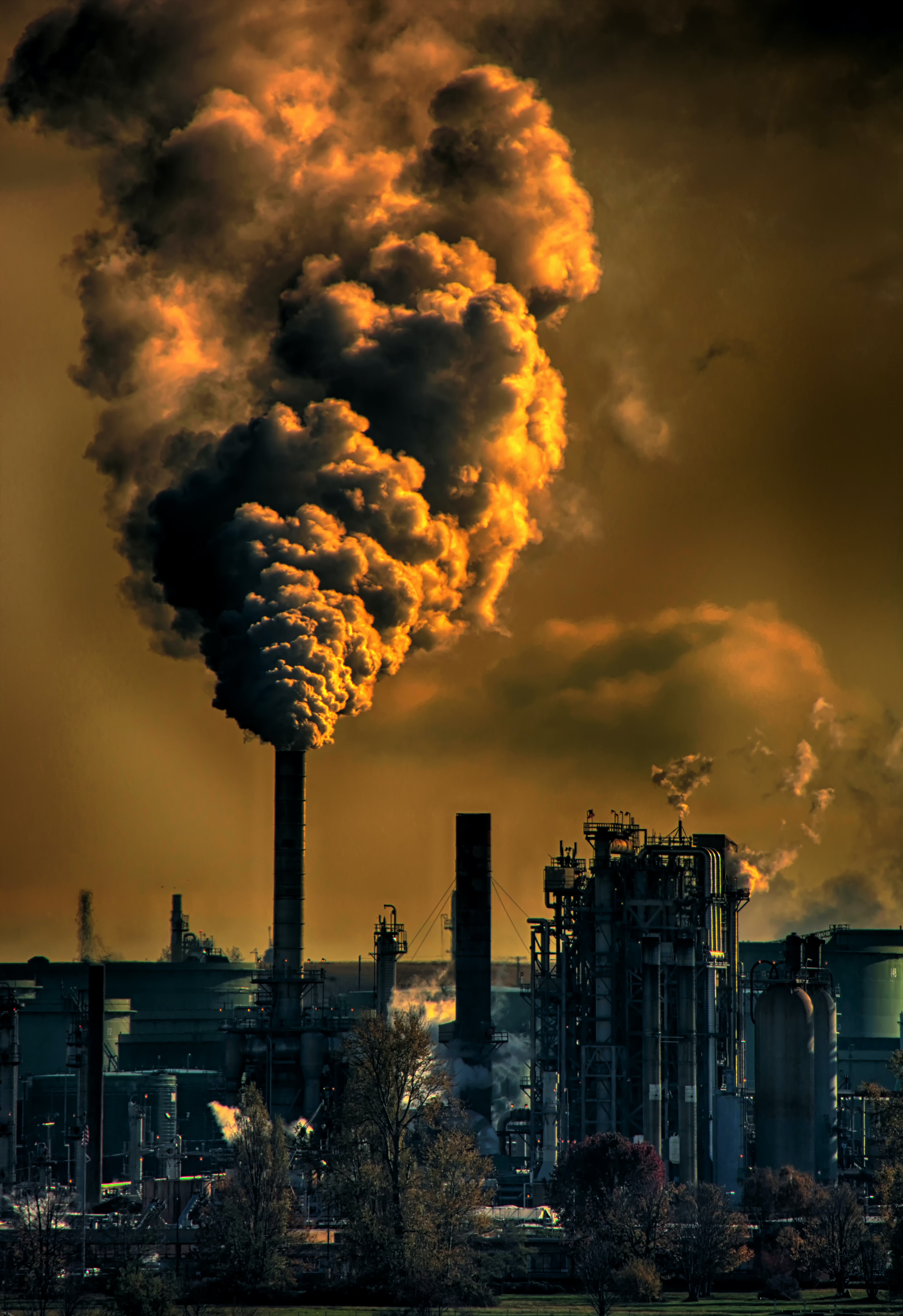
Here’s why it’s worth trying: 89% of CO2 emissions come from fossil fuels and industry

We could do everything else right when it comes to slowing down or, dare we imagine, to reversing climate change and it won’t matter if we don’t quickly and massively reduce and eventually eliminate fossil fuel production.

What Chief Justice John G. Roberts Jr. got wrong about the SCOTUS majority opinion on the EPA
The SCOTUS majority ruling in West Virginia v. EPA removed the ability of the EPA to limit emissions by power plants. The majority opinion is a travesty for many reasons. It also happens to be false, or at least incomplete. “There is little reason to think Congress assigned such decisions to the Agency,” Roberts wrote. “A decision of such magnitude and consequence rests with Congress itself.”

That last bit about Congress isn’t entirely true. The energy industry could make the choice to limit, or eliminate, its emissions.

I know some of you are laughing at that idea. You know what’s even more laughable? Imagining that Congress will get its act together to make it happen.

I understand why people hate on and rail against capitalism. However, it’s the economic paradigm that powers the world. We barely have time to get for-profit businesses to change their behaviors before the planet faces irreversible damage that will compromise life on this planet. We absolutely don’t have time to reinvent and adopt a new world economy before that happens.

Yes, capitalism is deeply flawed and yes, I wish humans were neurologically wired to act in the best interests of the greater community rather than themselves. I can’t change either of those facts and neither can you, not in time to protect the planet.

We have to work with what we have right now. We don’t have time to lament over human selfishness. We have to use it to our advantage; that’s exactly how nature would solve climate change and it’s exactly what we need to do. Now. It’s what I plan to do by working with fossil fuel companies. 

What fossil fuel companies care about
Fossil fuel companies don’t produce fossil fuel because they love it. There is precious little to love about dirty fuel that’s poisoning the planet and poisoning us. Fossil fuel companies love two things: money and power. Their long-term profits and power aren’t in fossil fuel. It’s in renewables for one simple reason — they’re cheaper to produce and are, as the name implies, limitless. Imagine the economics of a business built on inexpensive, infinite raw materials that produces a final product that protects the health of every living being? You don’t have to imagine it. It’s here. It’s renewable energy. 

What West Virginia cares about
Why did West Virginia bring this case against the EPA? Jobs. Plain and simple. Money and income. West Virginia and other fossil fuel producing states have no particular attachment to fossil fuel except history and a large number of jobs. 

If they could preserve jobs, or better yet increase the number of them and the income those jobs generate, they’d do it. With renewables, they can retrain people, preserve their beautiful land, water, and wildlife, protect workers, increase tax revenue, and promote the health of all beings. But they can’t do it alone. We have to work with them. We have to support them. 

The power of legacy
Legacy is a powerful motivator. As Hamilton says, “Who lives? Who dies? Who tells your story?” In addition to money and power, fossil fuel companies and those who head them care about legacy and how they will be remembered. In 2019, BP spent millions on an advertising campaign about its low-carbon energy and cleaner natural gas when 96% of its annual expenditure is on oil and gas. This was greenwashing to the extreme, and BP isn’t alone. Greenwashing is a fossil fuel industry problem

Saudi Aramco, Chevron, Drax, Equinor, ExxonMobil, INEOS, RWE, and Shell have all done it. The advertising campaign they all need, rooted in truth, that will send their stock prices soaring, generate priceless innovative partnerships, and cause the best and brightest talent around the world to work for and with them is this: “We will reduce the production of fossil fuel by at least 50% by 2030 and completely replace it with renewable energy by the year 2050.”

I’ve been to Saudi Arabia, met with some of the highest officials in Saudi government, and traveled to the Empty Quarter. Saudi Arabia and its neighbors have the geographic space and wealth to be the largest renewable suppliers in the world. Forget greening the desert there. Create the solar fuel farms we need on land that has very little life to disturb. 

Fossil fuel companies are fiercely competitive. Once one company does this, the rest of them will scramble to do the same. There’s a first mover advantage here. With this kind of decision, they will rewrite the history of this planet and forever be remembered as the company that protected and saved life on Earth in its darkest hour. Now that is a legacy.

Why I’m built for this work
I’ve worked inside a number of large multinational matrix for-profit companies. Many are populated with enormous egos and deep pockets. 

Bureaucracy doesn’t grind me down; it sharpens my resolve. 

I love finding out what makes people tick and what they care about most. Then I show them how my projects help them in their pursuits of what matters to them. I learned this skill as a fundraiser and as a product developer who had to internally lobby for project funding. My mentors were the best of the best at this. They showed me how it’s done, and done well.

Being a writer will help
While building a successful business career working with a variety of startups, nonprofits, and Fortune 500 companies, I also honed my communications and storytelling skills by building a strong portfolio as a writer, author, journalist, editor, interviewer, public speaker, and podcaster. 

This shift from fossil fuels to clean renewables is as much about storytelling as it is about science and business. 

Being a writer means I’m constantly inventing characters with motives. I build worlds with words. Now I will use my words to paint the picture of what a clean, sustainable, and healthy world looks, feels, sounds, smells, and tastes like. 

While the climate change movement has done an excellent job of describing the grim future we’ll face if we don’t shift away from fossil fuels, they haven’t shown us the alternative of a happy, joyful future on this planet. We need to long for that alternative so much that we’re willing to change and endure the transition, which may be painful, expensive, and inconvenient.

My cancer was environmentally-driven
During the COVID-19 pandemic prior to vaccines, I was diagnosed with and treated for early stage breast cancer. My doctors believe my cancer was driven, at least in part, by environmental factors. We can’t prove this definitively, but when we triangulate all the data we know about my case it becomes clear that the environment was at least a major contributor. 

Nothing motivates and activates like nearly dying. My health, your health, and the health of the planet are inextricably linked. And they’re worth fighting for. I’m fighting for all of us, and that means I have to work with fossil fuel companies. 

In the words of the late great Babe Ruth, it’s tough to beat someone who never gives up, and I won’t give up until we get this done. 

Change is an inside job
While change can be driven by outside pressure, I’ve seen change happen quicker and more extensively when pursued on the inside of an organization. Sometimes to get things done, we’ve got to go into the belly of the beast. We have to walk right into the lion’s den armed with the undaunted courage and willful determination to sit with the lion, understand their perspective, and then show them how you can all move forward together for everyone’s benefit. 

I know it’s going to be a steep climb. I know there is a chance it may not work. There is a chance I’ll come home empty-handed with nothing to show for my effort and time. 

There’s also a chance that it could work. There’s a chance that this could be the most meaningful, valuable thing I ever do with my life that will make the world a better place for all beings. And so with that hope and that goal, I’m going to give it my best shot.

Allowing climate change to progress unabated is akin to burning down our own house and wondering why we have no place to live. Nothing survives — not a company, a government, nor a living being — if the planet perishes. With that in mind, there is no work more important than getting fossil fuel companies to stop producing fossil fuel. This work is what matters most.


creativity

The time I almost put my dog down

I almost said goodbye to my beloved dog, Phineas, on June 30th. He wasn’t able to eat or drink that morning. I got scared and called my local vet. They said to bring him in to assess. The vet was so kind. She said this decision is never easy, and there is no wrong decision. I’m still processing the series of events that followed.

I signed all the papers with the vet and crematorium. Then we inserted the catheter in Phin’s front right leg. After the light disappearing from his eyes this morning, he rose up and screamed out loud “NO!” He was so loud even the nurses were alarmed. I looked in his eyes, and they were wide and wild and full of light again. He began to shake.

The nurses gave me some time with him. I held him and looked into his beautiful marble eyes. Something in my gut said I would regret doing this. It wasn’t a fear. It was an emphatic “ABSOLUTELY NOT! He has more time.” I felt him say, “Not yet. Not like this. Mom, please don’t do this.”

This reminded me of the time I was in the hospital for my severe allergy to a chemo drug that nearly killed me. All the doctors wanted to send me to the ICU and have me intubated because my oxygen levels were falling. I was terrified because the ICU was filled with COVID patients and vaccines had not yet rolled out widely. 

An ICU nurse was called to take me down, and she fought to not send me. She wanted to try one more machine to see if my body would take up oxygen. 

“You have 10 minutes,” said the attending physician. 

“Then let’s give her 10 minutes,” said the nurse. 

Against all odds, within 10 minutes my oxygen levels surged on the new machine. 

“Holy shit,” said the attending doctor as she stood at the foot of my bed watching my monitors.

That ICU nurse saved my life. I’m certain that if I had gone to the ICU and been intubated, I would have gotten COVID and died. Now, I was that nurse for Phin. He needed me to protect him just as that nurse protected me.

As the doctor was about to come in and administer the final medication to put Phin to sleep, I ran to the lobby of the vet’s office and said, “I’m sorry. I can’t do this. I’m not ready and neither is Phin.” Instead, we gave him some injectable medication in an attempt to stabilize him and get him eating and drinking again. 

I walked out of the office with Phin in his carrier. We both breathed a sigh of relief. We got home. He drank some water, ate a very small meal, and rested. There are so many other details to this story that I will write about eventually. The signs to not do this presented themselves and I didn’t see them. Phin did, and he spoke up. I can only see them now in retrospect.

I don’t know what tomorrow, or even today, will bring for my boy. But I do know that June 30th was not Phin’s time to leave this plane. I would have regretted not trying to give him more time to come out of the sedation he got late last night at the ER. He’s still here, still with me, not in pain, and I am at peace, glad and grateful to my gut for getting him extra meds, extra care, and extra time.

A few pictures of me and Phin over the last few days:

creativity

JoyProject podcast: The Joy of Old Time Radio Shows with Zachary Lennon-Simon

The Joy of Old Time Radio Show with Zachary Lennon-Simon

Travel back in time with JoyProject as we delve into the world of Old Time Radio Shows, a form of entertainment from the 1920s to the 1960s that had families and friends gathered around the radio to tune into their favorite mysteries, drama, and comedies. Zachary Lennon-Simon, a comedian and storyteller in Brooklyn, New York, is our guide through this delightful and light-hearted audio-forward history for the latest episode of the JoyProject podcast—The Joy of Old Time Radio Shows.

At the end of the podcast, I share something that brought me joy this week related to the episode. I found a bunch of free online resources where you can tune into all kinds of old time radio shows with just a few taps on your computer or phone. I also share my two favorite apps where you can access thousands of free audiobooks through your local public library.

Topics discussed in this episode:
– How Zach discovered old time radio shows as a kid and rediscovered them after college
– Zach’s favorite shows and where to find them today
– The differences between old time radio shows, audiobooks, and narrative podcasts, and some good ones to check out
– The importance of sound design in old time radio
– Stars who made old time radio popular

Links to resources:
– Zach on Instagram – @lennonhyphensimon
– Zach on Twitter – @zachlennonsimon
– Zach’s short film, frantic delicate summer – https://vimeo.com/63383000
– Christa on Twitter – @christanyc
– Christa on Instagram – @christarosenyc
– Christa’s website – ChristaAvampato.com
– Old Time Radio Archive – https://www.youtube.com/c/OldTimeRadioArchive
– Old Time Radio Shows – https://www.youtube.com/c/OldTimeRadioShowsOnline
– MakeUsOf article – https://www.makeuseof.com/listen-old-time-radio-shows-online/
– Internet Archive – https://archive.org
– Relic Radio – https://www.relicradio.com/otr/
– RockIt Radio – https://rokitradio.com/
– Internet Radio – https://www.internet-radio.com/search/?radio=old+time+radio
– Pumpkin FM – https://pumpkinfm.com/
– RUSC – https://www.rusc.com/
– Libby App for free audiobooks – https://libbyapp.com/
– Cloud Library for free audiobooks – https://www.yourcloudlibrary.com/

A little bit about Zach:
Zach Lennon-Simon is a filmmaker and storyteller who was born & raised in Brooklyn, NY. He has told stories for many different shows such as Kvetching & Kvelling, Everything is Bad, Beaver Helmet, and The Teacher’s Lounge. In his spare time, he tries his best to sing both parts of Judy & Babs’ “Get Happy/Happy Days Are Here Again” medley. 

creativity

The Rising—Scenes from the Roe vs. Wade Protest in NYC

My friend, Ashley, in NYC. Photo by Christa Avampato.

Yesterday we witnessed a horrific historic moment in the U.S. A majority of the SCOTUS decided guns and zygotes have more rights than women.

We lose 68,000 women every year to abortions that have been forced underground for those who have no access to safe clinics and hospitals.

My friend, Ashley, dressed as a handmaid for the protests at Washington Square Park and Union Square here in New York City. People were amused. They shouldn’t be. This is not a joke. This is not a drill.

Thousands of people flooded New York City’s streets to demand justice for women. My friend Kelly and I were both proud and devastated to stand shoulder-to-shoulder with our neighbors.

We are now at the point of revolution. We must be. This attack on women cannot stand. Not now. Not ever. We will be as relentless as those who mean to send us back into the shadows.

This is not the end. This is The Rising.

Scenes from the New York City protests on June 24, 2022. All photos taken by Christa Avampato.

creativity

The start of summer has me thinking about travel and writing

This week was the official start of summer, and that has me thinking about travel and writing. It also has me thinking about all of the wisdom around joy and travel that writer Felicia Sabartinelli packed into The Joy of Airports episode on the JoyProject podcast. Here are some of my favorite quotes. Listen to our conversation at https://christaavampato.com/the-joy-of-airports-with-felicia-sabartinelli-june-14-2022/ and wherever you get your podcasts.

creativity

I can’t stop thinking about Yellowstone

Photo by Markus Spiske on Unsplash

On Sunday night, I sat down to work on my novel-in-progress. All I could think about was the devastation in Yellowstone that could take years to restore and cost billions of dollars. You’ve got to write what’s in your heart and on your mind. This is what poured out of me:

Many of us are watching the recent flooding in Yellowstone National Park with horror, and rightly so. To see whole structures carried away as if they were weightless is terrifying. What struck me is how quickly the devastation came and went from the top headlines. Did any of us change anything about the way we live after seeing the footage? Very few, if any. The reason, unfortunately, is science. 

Though scientists across the globe have largely rallied around data that supports the impacts of climate change on our planet and the rapidly closing window of time left to truly stave off the worst consequences, scientists have also been reluctant to draw direct connections between catastrophic events like Yellowstone’s flooding and climate change. Their reluctance is so common that media articles and reports often reference it in environmental coverage. 

For example, in a recent New York Times article, the reporters say this in the opening: “It is difficult to directly connect the damage in Yellowstone to a rapidly warming climate — rivers have flooded for millenniums …”

With sweeping statements like that, the well-intentioned reporters have given climate deniers all the fuel they need to shrug their shoulders and go about their day exactly as they have every other day. Or worse—this is a simple explanation they use to convince others that scientists have no idea what they’re talking about and that everything is just fine. This behavior is destroying the planet and will ultimately destroy us.

Our hand-wringing about “direct connections” is going to cost us our lives and livelihoods. It’s time for us to get off the sidelines and stop taking the role of being our own worst enemies. Climate scientists can look to other areas of science to see how to inspire action, namely medicine. 

Very little in the field of medicine is certain. A lot of medicine is educated guessing. Standards of care often read something akin to “given your situation and what we have observed with those who we believe are similar to you, we believe this course of treatment may help.” I know this first-hand because I’m currently taking a medication after beating early-stage breast cancer that is still experimental with some studies showing that it has a possible chance of reducing the risk of recurrence for someone like me. 

There are caveats all over that statement, but you know what? If it can’t hurt, might help, and my insurance covers it, I’m taking it. I want to live a long, healthy life. Most of us do. For that singular reason we exercise, eat healthy food, try to manage our stress level, don’t smoke, limit (or eliminate) alcohol, go to the doctor for check-ups and exams, and take medications that could help us. Is any of that advice perfect? No. Are we guaranteed a specific outcome if we do all those things? No. But why not give ourselves every possible advantage we can, right?

Climate scientists could model their approach on medicine. Even if they can’t make a perfect case for cause and effect between climate change and a single catastrophe like Yellowstone flooding, does it seem likely that the two are related? Yes. Could an increase in wildfires, droughts, and more severe storms be related to a warming planet? Yes. Could an acceleration of species extinction be driven by deforestation and the pollution of our air, oceans, and water ways? Yes. Could the continuous and increasing supply of greenhouse gases being pumped into the air be destabilizing our atmosphere? Yes. Then why not do everything possible to mitigate the impacts that could have such dire consequences on the life of every living being on the planet?

We want to live long, healthy lives so we do everything we can to try to make that possible. Why not do the same for the planet that we all need? Even if you and I do everything right when it comes to the health of our bodies and minds, if the health of the planet as a whole suffers, what we do for our own individual health will be for naught. 

The planet needs a standard of care—limit or eliminate pollution in all its forms; reduce, reuse, and recycle; replace fossil fuel consumption with clean, renewable sources of energy; stop food waste; stop deforestation and replenish the forests we’ve lost. 

None of these changes will be simple nor pain-free. We have to reinvent how we live and the systems that make our lives and economies function. The transition will be difficult, expensive, and, for a while, inconvenient. But you know what’s more difficult, expensive, and inconvenient? Having a planet that’s in such poor health that it can no longer sustain life—ours or anyone else’s. Why take that risk when there is another way? Why not give ourselves and all those who (hopefully) come after us the best chance to live and live well?

We don’t need certainty and one-to-one causations for climate action. If a high probability and correlation is good enough for the science we use to sustain our bodies, then it’s good enough for the science to sustain our planet. By the time we have inarguable certainty, it will be too late for all of us. That’s a risk none of us should willingly take. 

creativity

JoyProject podcast: Joyful News 6.14.22—the dinosaur edition

Joyful News 6.14.22 – the dinosaur edition

Joyful News is a set of stories I’ve gathered from around the world that spark joy. This week’s stories are all about dinosaurs:

Available everywhere you get your podcasts and at this link where you can also read a transcript.