I’ll be sharing more about all of this throughout the week. For now, I’m feel so much gratitude for all of this, and for the people who made all of this possible. Thank you, thank you, thank you.
Climate change could cause more earthquakes and volcanic eruptions by increasing the weight of water on the Earth’s crust from increased precipitation and glacial melt.
When glaciers melt, the water can seep into cracks in the Earth’s crust, causing them to widen and weaken.
This can lead to earthquakes, especially in areas that are already seismically active.
Climate change can also cause more volcanic eruptions by increasing the amount of magma in the Earth’s mantle.
The impact on seismic activity isn’t limited to precipitation. Remember, the determining factor is the change in the weight of water in the Earth’s crust. We must also account for the impact of climate change on the melting of glaciers as well. As the glaciers melt not only does that water seep into the Earth’s crust, but the melting glaciers also reduce the weight and pressure on the land that was under the glaciers. This release causes the land to rise, similar to a spring that was compressed and then releases once that compression is removed. When the last ice age ended ~10,000 years ago, the receding of the glaciers caused some of the land in Scotland to rise 45 meters above sea level! This kind of release can cause a spike in earthquakes, and historically some of these spikes have been severe in areas such as Scandinavia.
In short, climate change may deliver a triple threat for earthquake activity: increasing the weight of water in the Earth’s crust from both an increased amount of rainfall and rapidly melting glaciers, and the added risk to the rising of land once the weight of those glaciers lightens or disappears altogether. The interconnections between all of the Earth’s systems and features is a delicate balance. Life on Earth has benefitted from a long stretch of stability and harmony. Our exploitation of nature, particularly our addiction to the drilling for and burning of fossil fuels, has put that stability and balance in jeopardy on numerous levels, many of which we’re only just beginning to understand.
Nature is talking to us. Nature is warning us. Her voice and warnings will grow louder if we don’t listen and take action. Our artificial systems and incentives that we’ve invented in our economy and society will be no match for the wrath of nature. No amount of money nor ingenuity nor technology will protect us nor immunize us from the impacts of destroying the balance of natural systems on which we all depend.
Every action we take now to reduce warming matters. The impacts of climate change are not for some distant generation. They are happening to us right now, and they will continue to happen and increase in intensity until we realize harmony with nature is the surest path to prosperity, health, wealth, and wellbeing for all beings.
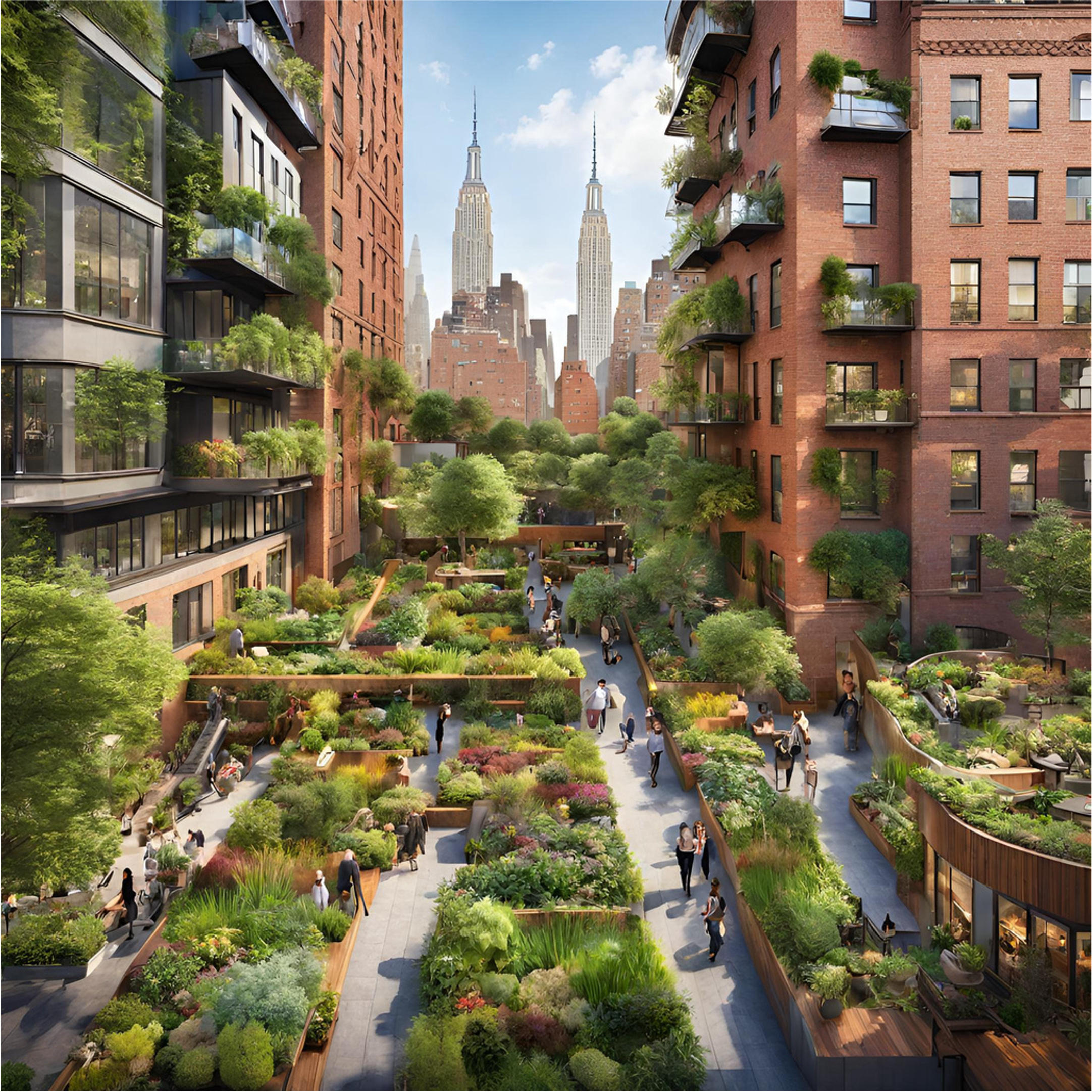
What does a sustainable New York City look like to you? I imagine lush micro gardens, biophilic architecture (a building methods that connects people with nature), rooftop farms, and clean transit, air, and water as pathways that give people, plants, and wildlife the opportunity to live side-by-side-by-side in ways that benefit all.
In biomimicry, we begin our design process by asking how nature would solve a specific problem we have with a question framed as “How would nature (the problem we want to solve)?”. My question above would be framed as “How would nature build a sustainable New York City?” This is a question that has occupied by headspace for years as I traverse through different projects and future visioning sessions.
In the spirit of an image being worth 1,000 words, I created these images with Canva Magic Studio AI to show how nature might build a sustainable New York. Is this a city you’d like to visit? Is this a city where you’d be happy to live? What are the first steps we can take now to make this our New York?
“People partner with nature”. I created this image with the help of Canva’s Magic Media AI tool
As a storyteller and sustainability advocate I focus on people who aren’t committed (yet) to protecting nature because that’s where the greatest change happens. This means I’m often faced with people who deny climate change, feel hopeless, or think technology and / or someone else will restore the planet’s health.
The entire episode is enlightening, and one point in particular helped me. No species in history, humans included, has ever been hardwired to protect the planet. They (we) are hardwired to promote the successful perpetuation of our genetics. Said another way, at their base all living things first focus on their future generations surviving and thriving. This means people aren’t naturally focused on environmental conservation. It must be intentional. It’s a skill that takes practice. Therefore, the work I’m doing with naysayers, the hopeless, and technocrats is training and re-skilling them. I’m a teacher, a guide, and learning takes times. That reframe is helping me think about my work with more compassion and patience.
Our long-term planning capabilities make us unique and distinct from other species. This doesn’t mean we’re smarter, wiser, or superior. It means we have a responsibility to be conscientious global citizens who care for each other and future generations, other species with whom we share this planet, and ecosystems that make our existence possible.
I’m astounded by the generosity of people I’m interviewing for my University of Cambridge dissertation in Sustainability Leadership. I’ve had or scheduled interviews with over 40 family office leaders, experienced climate communicators, and seasoned storytellers who have provided me with an incredible number and array of insights. I’m so grateful to all of them. My research question is how to use storytelling to connect family offices with climate entrepreneurs for mutual benefit and to safeguard the health of the planet as nature underpins half of our global GDP. If you or someone you know may be interested in talking to me, I’d love to chat. Let’s build a healthy world for all beings, together.
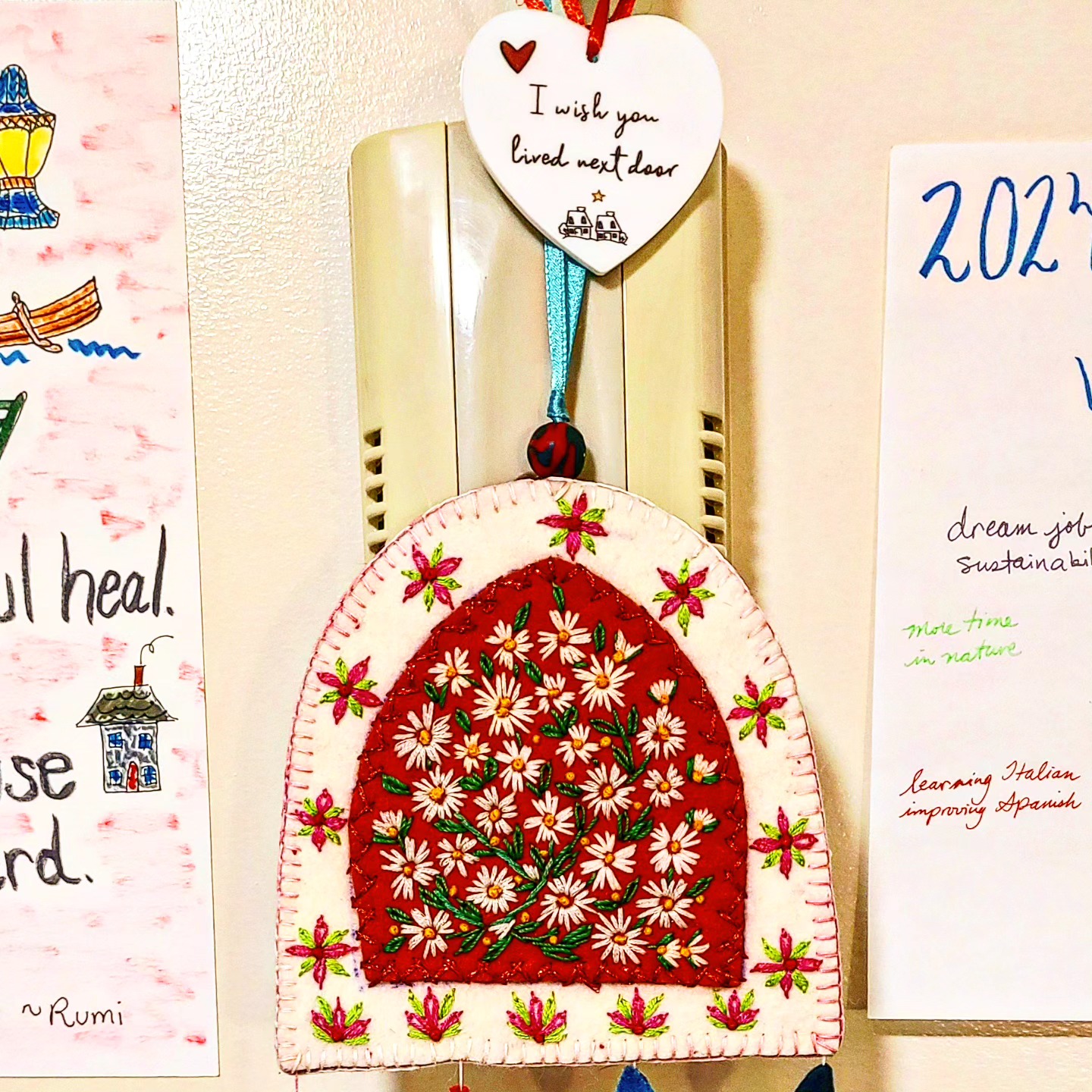
My front door for 2024. Photo by Christa Avampato.
I decorated my front door for the new year with my 2024 word for the year, a Rumi quote I want to carry with me every day, and a handmade house blessing for my new apartment from my dear friend, Kelly Greenaur.
My word for 2024 — vulnerability Instead of resolutions, I adopt a word for the year to guide my thoughts and actions, and I write out some of my wishes I hope the word helps me take. In 2023, my word was clarity and I did find more clarity in every area of my life. In 2024, my word is vulnerability. By embracing my own vulnerability and supporting others doing the same, I hope I can bridge the divides in our society, and between people and nature. By recognizing and naming my fears and concerns, I can alleviate them. I can only solve problems and challenges I’m willing to have. By recognizing and naming my hopes and dreams, I can realize them. I can only climb the mountains I’m willing to attempt.
My word for 2024. Photo by Christa Avampato.
Letting myself be vulnerable opens me up to experiences I need and want, and otherwise wouldn’t have. I don’t want to leave anything unsaid. I want to take more chances and risks, asking for what I want, explaining how I feel, and sharing what I believe. I’m excited to see who and what I’ll find on this adventure. I want to be open to the world, and whatever it has to show and teach me, even if that breaks me and cracks me open. With those cracks, more light will find its way in, as Rumi wrote and the late great Leonard Cohen sang.
Rumi The Rumi quote, “Be a lamp, or a lifeboat, or a ladder. Help someone’s soul heal. Walk out of your house like a shepherd.”, is one I want to use this year to help heal others and the world. We have so much capacity to help each other through this life, and I want to make sure I use mine to the fullest. I’m hopeful the light I find by being more vulnerable will be light I can share with others.
Rumi quote. Art and photo by Christa Avampato.
A handmade house blessing Kelly sent me this house blessing talisman for Christmas, along with a stitched bracelet and an ornament that says, “I wish you lived next door.” (Me, too, Kel!) They were made by two women — Dau Nan from Myanmar and Bina Biswa from Bhutan — who now live in Buffalo, New York and are part of Stitch Buffalo, a textile art center committed to empowering refugee and immigrant women through the sale of their handcrafted goods, inspiring creativity, inclusion, community education, and stewarding the environment through the re-use of textile supplies. These passions of helping people and the environment are ones Kelly and I share, and I’m so grateful for her friendship, love, and support.
Stitch Buffalo crafts. Photos by Christa Avampato.
I hope 2024 is everything you want and need it to be. This year will be turbulent, and holds opportunities for progress, joy, and love. Onward we go, together.
If you’re interested in rewilding—the practice of restoring and protecting wild places and the many species who call those wild places home — the podcast Rewilding the World with Ben Goldsmith is incredible. Ben speaks to some of the most influential people behind the most exciting and dramatic rewilding projects across the globe including Turkey, the Balkans, Chile, Argentina, Africa’s Sahel, India, England, Scotland, the UK, Spain, Portugal, Western North America, Kazakhstan, Saudi Arabia, the Sinai peninsula, Transylvania, Carpathia, Romania, and the Great Plains of the U.S. (What a list!)
Not only has this podcast further ignited my passion for rewilding and the promise it holds to make this a healthier, more sustainable world for all beings, but it’s also grown my list of places to travel to, my reading list, and my desire to care for wild places in any and every way I can. In a world that’s often dark and difficult, rewilding is a bright light of hope and joy that shows us what’s possible when we realize we are a part of nature, not apart from nature.
Right now there are 20 episodes to enjoy, and Ben will be back again with a fresh set of episodes in early 2024. I’m so grateful for his efforts and the work being done by all of his inspiring guests.
Too often our society is quick to label people, to put us in a box as creative or not creative, and that term is not always used as a compliment. Regardless of our profession or where we work, we are all creatives. Our imagination is the most powerful tool we have to build a brighter future.
UN Global Pulse, The United Nations Secretary-General’s Innovation Lab, just published “The Most Creative Look to the Future” that offers learnings and recommendations about how creative practices can help the UN embrace uncertainty and complexity through peace, unity, and collaboration. The creation of the UN itself was a bold creative act borne out of darkness and difficulty, and continues to be a work in progress in a complex and complicated world. This publication is valuable for organizations of any size and type. My favorite take-aways from it:
– Our imaginations give us a way to connect with one another, even those of us who have been previously disconnected.
– Creativity helps us to give voice to emotions and values, and offers us a new way to see others and to be seen by others.
– Storytelling is one of the oldest forms of technology, allowing us to describe and grapple with complex systems to model change and play out a wide variety of scenarios.
– A more peaceful, sustainable, healthier, and happier future begins in the imagination, and we can imagine ourselves and our world into a better state.
– Imagination is a team sport, and becomes richer and more meaningful when we collectively pool our creativity.
The publication concludes with further resources and frameworks that organizations can start using today to embed creative practices into their work and teams. In the new year, I’m excited to share these with my teams as we begin to shape our future work together.
After returning from a week at University of Cambridge / Cambridge Institute for Sustainability Leadership (CISL), I’m thinking a lot of about what’s next for my career after I finish my dissertation in July 2024. I envy people who have a single passion that drives them. I’m interested in so many areas and I’m not sure which path to choose.
At Cambridge, one of my favorite session was run by Louise Drake whose scholarship I deeply admire. She asked us to reflect on CISL’s new Leadership for a Sustainable Future Framework principles: connected, collaborative, creative, and courageous. Our task was to consider how we might move forward our careers in one of these areas. I chose courageous, and it was an emotional reflection for me. Questions that flooded my mind included: How might I be more courageous in my career choices and actions?; What is the most impactful way to use my time and talents?; Am I taking enough chances, risks, and big bets?; How do I ensure I don’t regret how I spend my time?
After this reflection, some of my friends helped me see that my many interests and desire to connect and rally people through storytelling, joy, and hope is my superpower. I believe in breaking down walls and repurposing those walls to build a longer table for people to connect, collaborate, and create together. These friends and Lou helped me reframe what I thought was a distraction into a focus, and I’m immensely grateful for their wisdom.
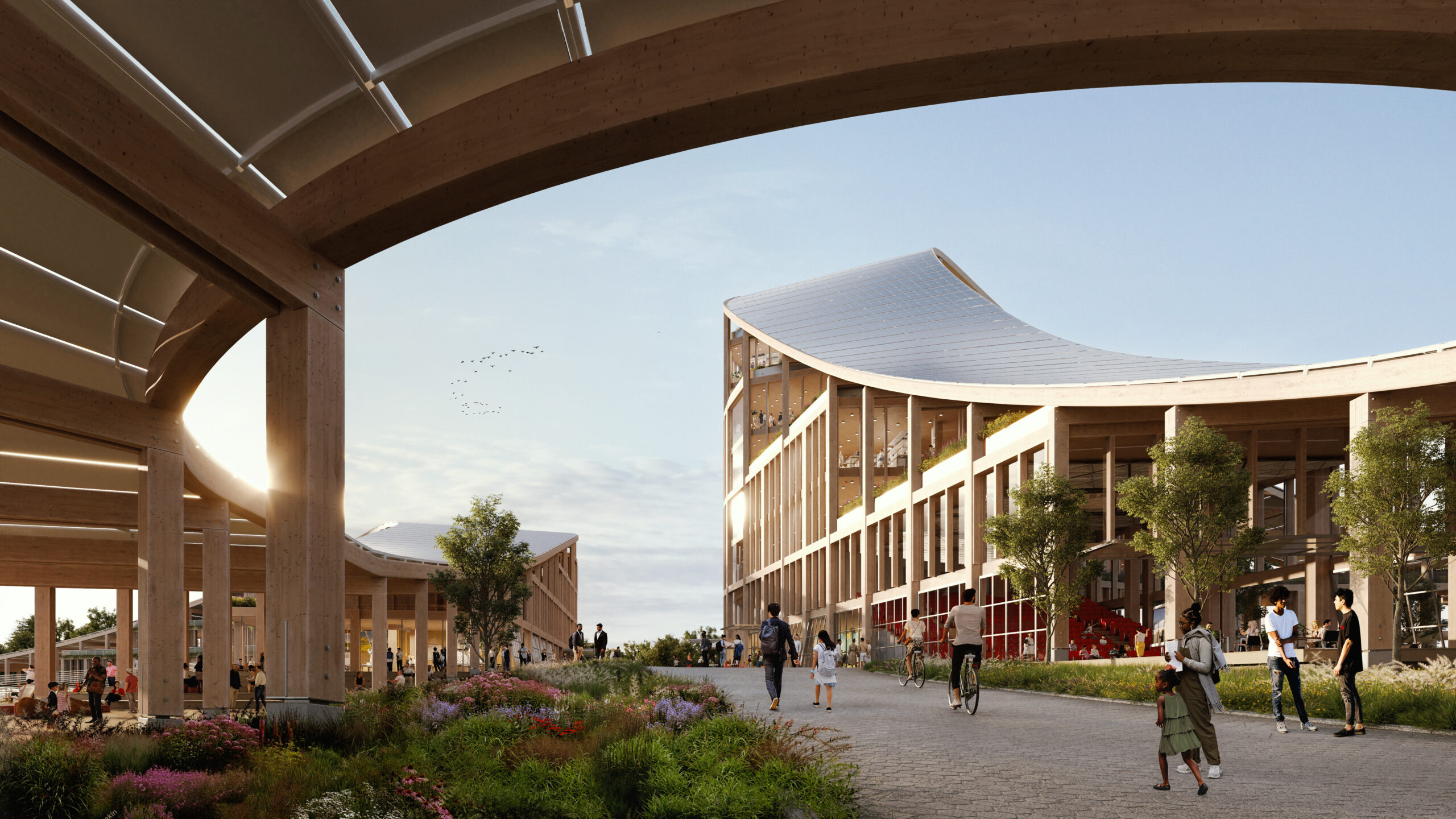
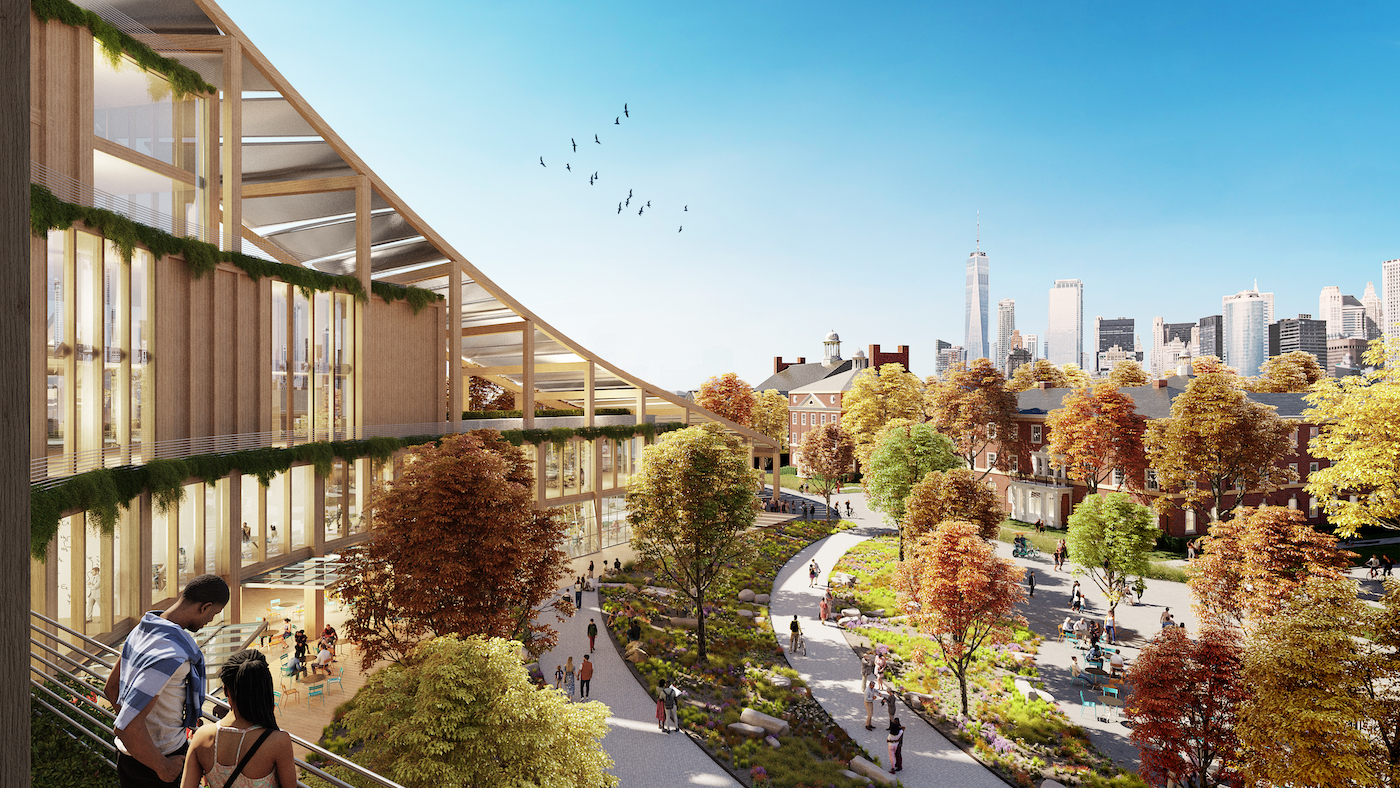
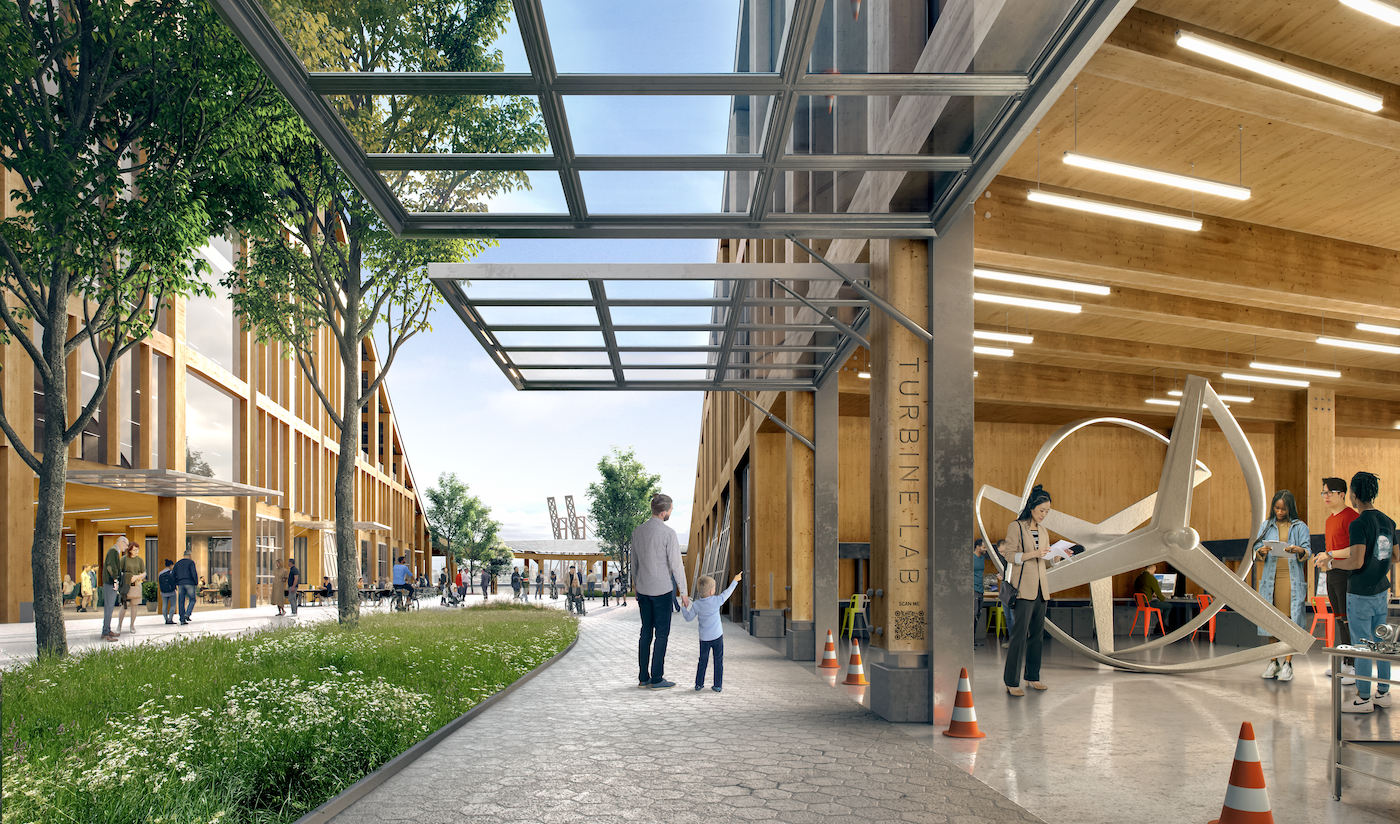
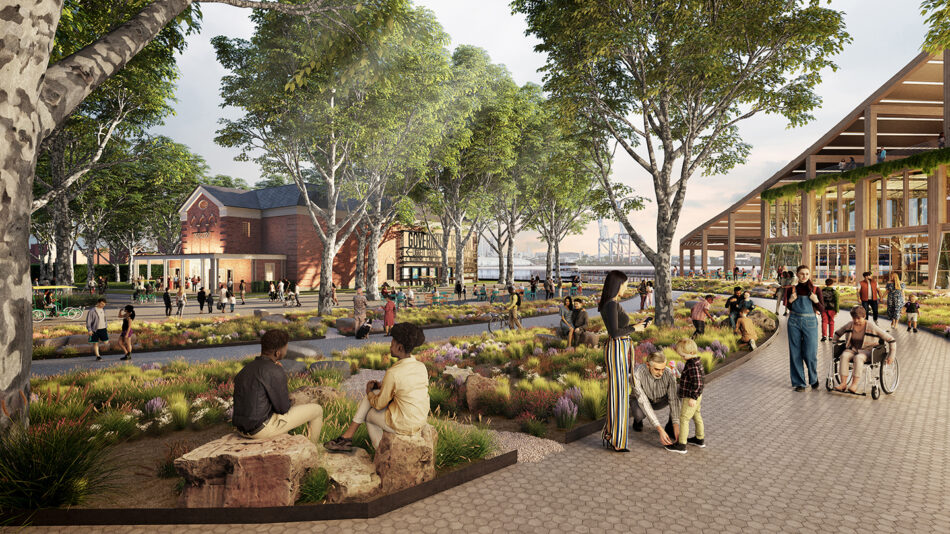
Reflecting on this, I do have a dream job and it’s right in my backyard of New York City where my ancestors entered this country 120 years ago. The New York Climate Exchange (“The Exchange”) is a first-of-its-kind non-profit organization and partnership network based at Governor’s Island in New York Harbor (near the Statue of Liberty and Ellis Island) comprised of leading universities, businesses, and community groups collaborating to accelerate climate change solutions for NYC and beyond. Its mission is to confront urgent climate impacts and issues of environmental injustice, breaking down silos through an innovative, scalable, and sustainable model that will rapidly develop new urban climate solutions. In 2024, I’d love to join the team at The Exchange that’s embarking on this grand adventure.
Already, Domus has named the design of The Exchange’s 400,000 square-foot-campus by Skidmore, Owings, & Merrill (SOM) as one of the best urban regeneration projects of 2023. With a combined ~$700 million investment, construction is anticipated to begin in 2025. Collaborative projects, including research initiatives, programs with community groups, workforce training programs, and K-12 outreach will begin earlier.
This is a place that can be the massive lever for change we need to mitigate, adapt to, and become more resilient to climate change impacts. I hope I can give my talents to such an incredible cause and place. https://nyclimateexchange.org/
All images above are renderings from the New York Climate Exchange website.
I’m flying back to the U.S. now after a week at University of Cambridge / Cambridge Institute for Sustainability Leadership (CISL) with passionate, intelligent, and inspiring classmates, presenters, professors, and the CISL team. This time I grew as much personally as professionally. I was able to ask questions, have discussions, and voice ideas I’ve previously struggled to articulate. I couldn’t have done that without my classmates and friends who listened, provided kind and constructive feedback, and offered their ideas, perspectives, and experiences. This is a gift I carry with me now. I’m so grateful for all of it.
Humour, play, creativity, and imagination played a role in many of our classes and social activities, and they helped bring joy, light, hope, and optimism into this challenging field. The work we do, on this course and in our lives as we attempt to tackle climate change issues from many different angles, is intense. It can also be intensely fun.
On a personal note, I began the week thinking of my stepfather who was my Dad-by-choice. My family lost him a year ago exactly on the day this workshop at Cambridge began. I honoured him in my pecha kucha presentation by sharing the last words he ever said to me in-person. I went to see my family right before our first workshop in September 2022. He said to me, “Hey, I know you’ll work hard at Cambridge, but please try to have some fun over there, too.”
My Dad knew me well, and it’s been difficult to lose someone who was always in my corner and read every piece of writing I’ve ever published. I could feel his spirit with me all week, encouraging me to embrace laughter and love whenever possible, especially during challenging times. Love and laughter serve as resources to help us stay with the trouble. They make us resilient. When we lead with love, we can open people up so that we deeply connect, collaborate, and create to tackle the most serious challenges together.
These photos show our formal dinner together at Selwyn College, my view from the train leaving Cambridge, and my Pops. As I go back to my New York life, I will do my best to put into action everything I learned in this beautiful, inspiring sanctuary with these beautiful, inspiring people. I’m already looking forward to July when we’ll be together again in Cambridge. I’m the luckiest person to be a part of this.
My view from the train – Cambridge to London. Photo by Christa Avampato.











 Christa Avampato