creativity

The West Coast Has Underwater Forests. NYC Could Have Underwater Farms.

Sugar kelp can grow in the waters around NYC, and thrives during the cold winter months

I recently read a fascinating piece in Smithsonian Magazine about the “underwater forests” returning to life off the coast of California. It details the restoration of Giant Kelpโ€”towering, 100-foot strands that form cathedrals of biodiversity, sequester carbon, and shelter marine life.

Itโ€™s an inspiring success story of ecological recovery. But as I read about the Chumash people and marine biologists working together in the Pacific, I couldn’t help but ask a question closer to home: Could we apply this to the waters of New York City?

The answer is a resounding yesโ€”but it looks a little different here. And itโ€™s already beginning.

Different Coast, Different Kelp

In California, the focus is on restoration: bringing back wild Giant Kelp forests that have been decimated by urchins and climate change.

In New York and the broader Northeast, our opportunity lies in regenerative ocean farming. We don’t have the deep-water Giant Kelp; we have Sugar Kelp (Saccharina latissima). This golden-brown algae is shorter, but it is a powerhouse. It thrives in our cold winter watersโ€”growing rapidly when most marine life is dormantโ€”and acts as a “scrubbing brush” for our harbors.

Sugar Kelp absorbs carbon dioxide (fighting ocean acidification) and, crucially for NYC, it soaks up excess nitrogen from urban runoff, which is the main driver of harmful algae blooms.

We aren’t just “restoring” nature here; we are building a blue economy. Here are the local pioneers turning this idea into reality right now.

1. The Indigenous Lead: Shinnecock Kelp Farmers

Just as the Chumash people are leading efforts in California, the Shinnecock Indian Nation is leading the way on Long Island. The Shinnecock Kelp Farmers are a multi-generational collective of Indigenous women leveraging thousands of years of traditional ecological knowledge to heal the water.

They have established the first Indigenous-owned kelp farm on the East Coast in Shinnecock Bay. Their work proves that kelp isn’t just a crop; it’s a tool for sovereignty and survival, actively filtering the waters that sustain their community.

2. The Science: It Works in the East River

You might think kelp needs pristine, open ocean to survive. Think again.

Researchers Dr. Christopher Gobler and Mike Doall from Stony Brook University have been running pilot studies to see if kelp could survive the urban waters of the East River. The results were surprising: the kelp didn’t just survive; in some cases, it grew better in the nutrient-rich waters of the harbor than in cleaner, deeper waters. This suggests that NYCโ€™s “working waterfront” could double as a biological filtration system.

3. The Pioneers: Breaking the Regulatory Barrier

The technology exists, but the permits have been the hard part. The industry is so new that New York State didn’t have a regulatory framework for it until very recently.

In 2023, Violet Cove Oyster Co., led by former WNBA star Susan Wicks, secured the first-ever commercial permit to grow kelp in New York state waters (Moriches Bay). It took years of advocacy to get there. Her success paves the way for oyster farmers across the region to become “multitrophic” farmersโ€”growing shellfish and seaweed together to maximize the environmental benefit.

The Vision for a “Blue” NYC

Organizations like GreenWave are already training the next generation of ocean farmers, with a goal of creating thousands of jobs. Imagine a future where the New York harbor isn’t just a transit lane for ferries and cargo, but a grid of regenerative farms.

These farms would provide local food, sustainable fertilizer, and bioplastics, all while cleaning the water and capturing carbon.

Californiaโ€™s underwater forests are a reminder of natureโ€™s resilience. NYCโ€™s underwater farms could be a testament to our innovation. The seeds (or rather, the spores) have been planted. Now, we just need to support the regulations and organizations that will let them grow.

creativity

๐ŸŽ40,000 Pounds of Produce in 1 Morning. This is How We Fight Food Waste AND Food Insecurity in NYC

Our team of volunteers at last week’s City Harvest repack event

The Repack: What Happens When a Community Shows Up

Last week, I was deeply moved by the incredible generosity and hard work of the volunteers at City Harvest. We were there because of the enormous, urgent need created by current economic pressures and the fallout of the government shutdown, which is impacting vital food assistance programs for New Yorkers.

Together, we accomplished something phenomenal:

  • We helped repack 40,000 pounds of bulk fresh produce into 7,710 household-sized bagsโ€”the second-highest number of bags ever packed at the City Harvest Food Rescue Center since 2022!
  • This food is critical right now as City Harvest ramps up to serve neighborhoods with the highest populations of SNAP recipients. They expect to distribute over 1 million more pounds of food this November than they did last November.

We showed up and showed out, and it was a joy to be part of this community effort, even though I wish it wasn’t necessary.


The NYC Food Insecurity Crisis is Real

The need for this emergency support is stark, especially as the government shutdown has delayed or complicated critical aid. Our fellow workers, friends, and neighbors are struggling to put food on the table.

  • In New York City, approximately 1.73 million residents receive SNAP benefits. That’s 1 in 5 New Yorkers.
  • In Brooklyn alone (where I live and where City Harvest has its headquarters), that number is over 700,000. That’s 1 in 4 Brooklyn residents.

This work with City Harvest is personal to me because I grew up food insecure and my family received government-backed public assistance including WIC funding and at my school I was part of the free lunch program. As an adult who climbed out of that situation though education, hard work, and the generosity of these supportive government programs, giving back means a lot to me.


Why City Harvest is a Game-Changer (A Two-Part Solution)

City Harvest doesn’t just feed people; it’s a massive champion for the environment, tackling the staggering problem of food waste head-on.

From City Harvest

How You Can Be Part of the Solution

The work we did last week is ongoing. Join the City Harvest family!

This work isn’t just about charity; it’s about Togetherhood. Let’s continue to show up for our community and ensure that healthy, quality food goes to tables, not landfills.

Click to volunteer, donate, and advocate. I hope to see you at a future City Harvest event!

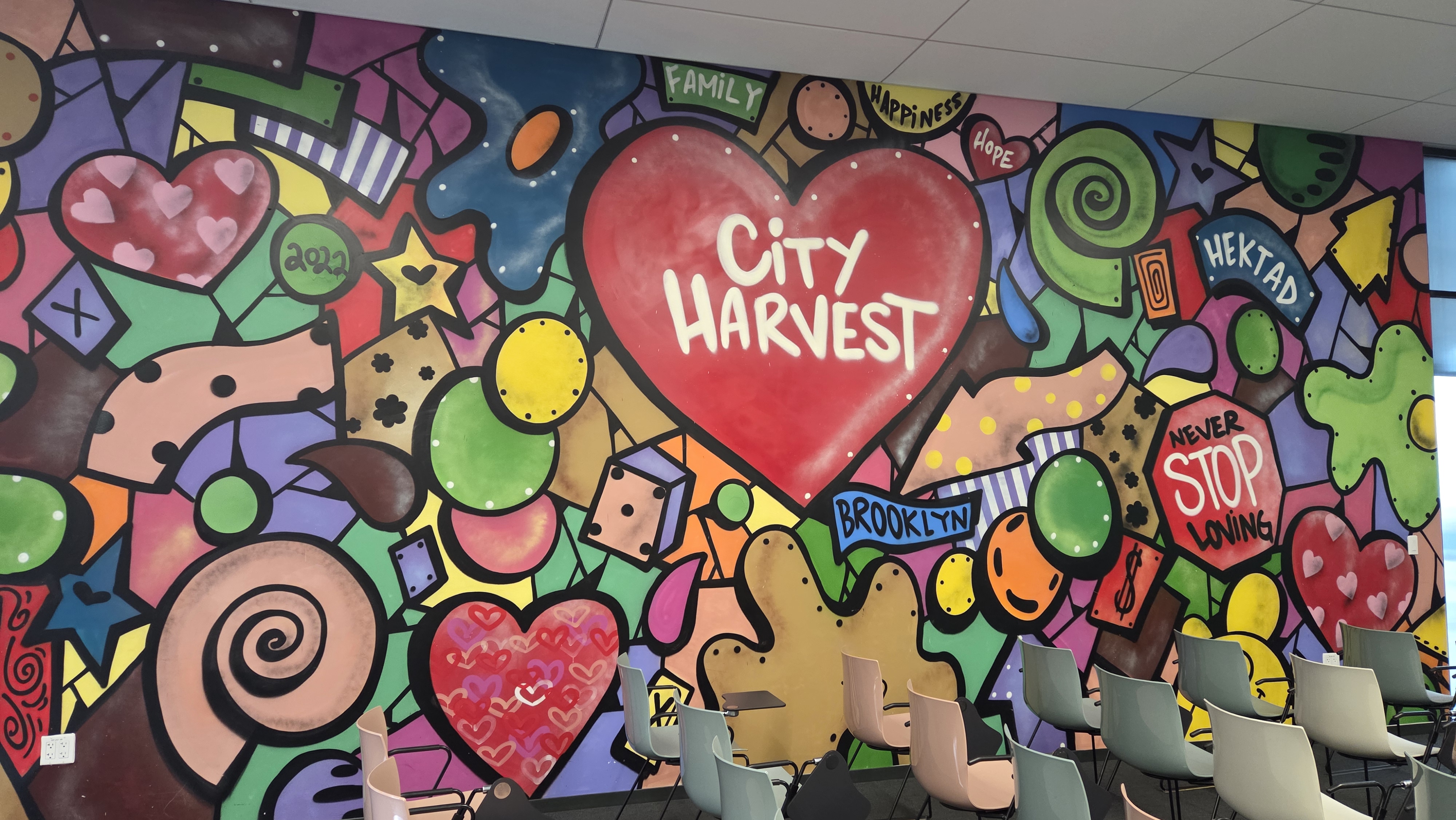
Mural at the City Harvest HQ in Brooklyn, NYC
creativity

Beyond Extraction: How Janine Benyus Reveals Natureโ€™s Universal Patterns for a Thriving Future


In a recent episode of The Common Good from the Garrison Institute, science writer and Biomimicry Institute co-founder Janine Benyus joined host Jonathan F.P. Rose for an illuminating conversation. The topic was profound yet elegantly simple: uncovering โ€œnatureโ€™s universalsโ€โ€Šโ€”โ€Šthe deep, time-tested design patterns that silently guide all living systems, and how we can apply them to the human world.

Benyus, the pioneer behind the biomimicry movement, anchors her work on a single, powerful biological truth: Life creates conditions conducive to life.

This isnโ€™t a romantic notion; itโ€™s a design principle. Over billions of years, successful natural systemsโ€Šโ€”โ€Šfrom the vastness of a forest canopy to the complexity of a coral reefโ€Šโ€”โ€Šhave learned to thrive not through competition and extraction, but through cooperation, self-organization, and elegant networked intelligence. These are the strategies that generate abundance without consuming the system that supports them. When we look at nature, we are looking at a master class in sustainability, efficiency, and resilience.

The Blueprint for Human Innovation

The conversation moved beyond mere observation to practical application, identifying core natural principles that can and must guide human industry and ethics. Two standout concepts for redesigning our civilization are:

  1. Right-Sizing: In nature, nothing is over-engineered. Organisms do what is necessary, but no more, often using modularity and local resources to solve problems. Benyus challenges us to abandon the modern human impulse for massive, centralized, and often brittle systems. Instead, we should mimic natureโ€™s local, tailored, and efficient solutions.
  2. Distributed Abundance: Natureโ€™s design is fundamentally anti-monopoly. Resources and solutions are distributedโ€Šโ€”โ€Šsunlight, nutrients, and water flow through a network, ensuring that the health of the whole system supports the success of individual parts. Applying this principle to economic and social systems means designing for local self-sufficiency and ensuring resources are abundant and regenerative for all, rather than concentrated at the top.

A Call for Biological Literacy

Ultimately, the episode serves as a powerful call to re-embrace our own biological literacy. For too long, Benyus contends, Western culture has viewed the worldโ€Šโ€”โ€Šand our place in itโ€Šโ€”โ€Šas a collection of separate parts to be managed and exploited. This mindset has dictated our industrial processes, our economic models, and even our spiritual disconnection from the living planet.

The discussion highlights that re-embracing these universal patterns is not just about engineering better products; itโ€™s about reshaping our culture and spirituality. By learning from lifeโ€™s inherent genius, we move toward a worldview where we recognize the world as a single, living, interdependent whole. The greatest innovation of the next century will be applying natureโ€™s wisdom to create human systems that are as beautiful, cooperative, and conducive to life as a thriving ecosystem.


Iโ€™d love to hear your thoughts on how we can all embrace natureโ€™s principles to live our best lives and also care for the planet. What do you think?

creativity

Head, Heart, and Hands: The Great Triumvirate of Change

Image created by Christa Avampato.

I just attended Dr. Katharine Hayhoe’s Climate Week NYC talk at the American Museum of Natural History, and it was the most empowering climate message I’ve ever heard. It reframes the entire discussion around three simple ideas: Head, Heart, and Hands.

A research-backed truth: Dr. Hayhoe shared that most people in this country and in the world (~60% on both counts) are worried about climate change. We, the worried, donโ€™t need more doom and damning data to get us concerned because weโ€™re already there.

The challenge: Even though weโ€™re worried, we arenโ€™t taking enough action to alleviate our worry because we don’t know what to do about it.

The solution: Sync up our head, heart, and hands โ€“ what Iโ€™m calling the great triumvirate of change โ€“ and sync with others.

Well, thatโ€™s all well and good, but how do we do that? Dr. Hayhoeโ€™s advice: Get clear about what we care about, how climate change will impact what we care about, find others who care about what we care about, and start talking!

Hereโ€™s our action plan:

Head: Define Your Why. Clearly identify exactly why youโ€™re worried. Finish this sentence: “I care about climate because I care about…” How is your personal well-being, favorite place, or dearest value already being affected by climate change? Keep it simple, personal, and jargon-free.

Heart: Connect to Community. Now that you know what you care about, find communities, groups, and individuals who share that passion and are also affected by climate change.

Hands: Turn Conversation into Action. Get in touch with those communities and start talking about your shared worries and values. That act of conversation and connection will lead to meaningful, collaborative action or project to protect what you care about.

Climate change will affect everything everywhere all at once. It is a global issue, and no one will escape it so no matter what you care about, it will be impacted and there are communities of people who care about it, too. Letโ€™s dive into an example from my personal life to see this action plan come to life.

An example:

Head: Iโ€™m worried about climate change because I love New York City. Since most of our city is at or near sea level, we will be subject to serious impacts from sea level rise, and we have a lot of issues now with rain flooding the streets and subways โ€“ our main modes of transportation. We also have a lot of people living in a small amount of space so there is a lot of pollution that impacts our health and well-being, and often crowds out green space, which is causing more heat, dirtier air, and health issues.

Heart: I love this city, and I do believe we can make it greener, cleaner, and healthier for all beings who live here โ€“ people, pets, wildlife, and plants. I want to find other people who also care about nature in NYC.

Hands: I run a live storytelling game show called NYCโ€™s Secrets & Lies all about the secret history of NYC. This month, I decided to make the show all about stories related in nature in NYC and applied to have it become an official Climate Week NYC event. They accepted it (hooray!). I found a terrific venue โ€“ a hidden theater inside Port Authority Bus Terminal (a great tie into the transportation issues impacted by climate change here in NYC!) We had a wonderful cast of storytellers who were enthusiastic about the topic and told a wide range of stories. I also invited Josh Otero from the Natural Areas Conservancy to be our special guest to talk about all of the amazing work they do to make NYC greener and healthier. We had a sold-out show with a waitlist of 33 people, and all of the stories talked about interesting aspects of the history of nature in NYC. We had so much fun, and it was a great way to get the message out there! This show gave me a place to put my worries about climate change and turn them into action with others. Iโ€™m planning to do more of these shows โ€“ stay tuned!  

Our climate anxiety is reaching new heights and as Dr. Hayhoe explained, the way to use that anxiety for good is through stories. Storytelling is about conversations. Every great idea, every meaningful action, every ounce of change – it all begins with a conversation. Get out there, start talking, and see what change you can create with others.

creativity

The Climate Film Festival Storytelling Collective

Iโ€™m really happy to have joined a new collective created by Climate Film Festival thatโ€™s bringing together sustainability professionals with filmmakers to raise the bar on and expand opportunities for climate storytelling. As someone who has one foot in each of these worlds, Iโ€™m so excited to be part of this new professional group and to help craft and fund these stories that drive action.

Yesterday I went to the Essex Market coffee hour for our first in-person event and attended an excellent panel about climate documentary making. As someone who studied how to use storytelling to drive more climate investment from family offices, I felt like I was in just the right place at just the right time because financing was a key part of the conversation. I heard a number of filmmakers talk about the challenge of finding financing for their climate films, especially with the current situation in D.C.

What filmmakers need to consider is that private funders donโ€™t want to just fund a movie. They want to fund systemic change, especially when it comes to protecting and restoring the health of the planet. Filmmakers need to show how their films, and the platforms and supports they are building around their films, will get viewers to engage in creating meaningful change. That change needs to be measured and reported on.

Is that asking more from filmmakers? Yes. Is it asking them to be skilled business people, entrepreneurs, and community leaders on top of their filmmaking expertise and beyond the creation of the film? Yes. Isnโ€™t making a movie already a Herculean task? Yes. Is that a challenge? Yes. Itโ€™s also todayโ€™s funding reality.

You arenโ€™t just making a movie, not anymore. Youโ€™re building a movement, and that movement is whatโ€™s fundable with a movie being one cornerstone of many.

creativity

Remembering Robert Redford, an expert storyteller and nature ally

I was saddened to hear about the passing of Robert Redford this morning. When I was an undergrad at the University of Pennsylvania, he came to campus to explore a film and storytelling partnership between the university, the West Philadelphia community, and his Sundance Institute. I remember seeing him from a distance and immediately noticing that there was a light about him, a kind of magical aura that emanated from his smile and ease of being. 

In addition to championing filmmaking and storytelling, he was also incredibly passionate about the environment. He was a lifelong advocate for nature, beginning his activism in the 1970s by using his celebrity to promote causes like protecting air and water, and later founding the Redford Center to use storytelling to expand environmentalism. He spoke at the United Nations about climate change, was recognized by TIME magazine as a โ€œHero of the Environmentโ€ in 2007, and served for decades on the board of the Natural Resources Defense Council (NRDC). The NRDCโ€™s Southern California headquarters in Santa Monica is named The Robert Redford Building to honor his long-standing support for the organization as a board member and environmental activist.

While we remember his outstanding career as an actor, director, writer, and producer, Iโ€™ll continue to hold him up as an example of someone who knew early on that storytelling was the key to protecting our planet and used his talents to further that mission. May we all carry forward his remarkable and beautiful legacy. 

creativity

A Call to Action: Building Resilience in the Face of Flooding

The Mississippi River regularly floods in Davenport, Iowa. Photo byย Kelly Sikkemaย onย Unsplash

The recent, heartbreaking floods in Texas have served as a stark reminder of nature’s raw power and the ravaging impact it can have on our communities. Along the Guadalupe River, the water rose 26 feet in less than an hour. I’m devastated seeing all of those who are affected by the loss of life, homes, and livelihoods.

Texas, particularly regions like “flash flood alley,” is inherently susceptible to rapid and severe flooding due to its unique topography and intense rainfall events. When large volumes of rain fall quickly on dry, compacted soil, the water has nowhere to go but to rush across the surface, swelling rivers and overwhelming infrastructure.

While we cannot control the weather, we can learn from these events and take proactive steps to mitigate future flooding risks, working with nature, not against it. So, what can we do, as individuals and communities, to better coexist with the forces of nature and reduce the impact of these catastrophic events?

Embracing Nature-Based Solutions

Many effective flood mitigation strategies involve working in harmony with our natural environment. These “green infrastructure” approaches often offer multiple benefits beyond just flood control:

  • Protecting and Restoring Wetlands and Floodplains: These natural sponges are crucial for absorbing excess water, slowing its flow, and filtering pollutants. Preserving and restoring these vital ecosystems can significantly reduce downstream flooding.
  • Creating Rain Gardens and Bioswales: In urban and suburban areas, these beautifully designed landscape features use plants and specially engineered soils to capture and slowly release stormwater runoff, preventing it from overwhelming drainage systems.
  • Promoting Permeable Surfaces: Swapping out concrete and asphalt for permeable pavers or gravel allows rainwater to infiltrate the ground naturally, reducing surface runoff and recharging groundwater supplies.
  • Planting Trees and Vegetation: Trees and other plants help absorb rainfall, reduce soil erosion, and stabilize banks along rivers and streams. Their root systems create pathways for water to penetrate the soil, further reducing runoff.
  • Implementing Riparian Buffers: Establishing vegetated zones along waterways helps to slow floodwaters, trap sediment, and improve water quality, creating healthier aquatic ecosystems.

Community-Wide Efforts and Individual Actions

Beyond nature-based solutions, broader efforts and individual preparedness are essential:

  • Improved Flood Warning Systems: Timely and effective communication is paramount. Communities need robust warning systems that reach everyone in flood-prone areas, especially during the critical overnight hours.
  • Responsible Land Use Planning: Developing in harmony with natural floodplains, rather than building in high-risk areas, is crucial. This includes updating zoning laws and building codes to promote resilient construction.
  • Investing in Infrastructure: While nature offers powerful solutions, traditional “gray infrastructure” like detention basins, levees, and improved drainage systems also play a vital role, especially in existing developed areas.
  • Individual Preparedness: “Turn Around, Don’t Drown” remains a critical message. Knowing your flood risk, having an emergency plan, securing important documents, and considering flood insurance are vital steps for everyone.

The recent events in Texas are a solemn reminder that we must prioritize flood resilience. By understanding the natural processes that lead to flooding and implementing strategies that work with, rather than against, nature, we can build stronger, safer communities for generations to come.

Let’s all commit to being better stewards of our environment and more prepared neighbors in the face of nature’s challenges. Additionally, we must hold every single one of our elected officials responsible for doing the same by voting and calling their offices regularly to voice our concerns.

creativity

Fighting hunger in NYC with City Harvest

Me outside the Javits Center on Tuesday to volunteer with City Harvest

Iโ€™m smiling because this week I completed my first volunteer shift with City Harvest. With a group of 200 volunteers and staff, we rescued over 75,500 pounds of food after the close of the Fancy Food Show on Tuesday evening at the Javits Center. This food will be distributed to food pantries, soup kitchens, and community organizations all over the city to people who need our support. This work is deeply personal to me. I grew up with food insecurity (meaning we worried about where our next meal would come from) and I was a free lunch kid. 

The hunger issue in NYC is dire. 50% of working-age households in NYC are struggling to make ends meet. 1.4 million New Yorkers are food insecure. Thatโ€™s nearly 1:6 New Yorkers, including 1:4 children.ย 

This work is also personal to me because of my passion to protect our natural world. On Tuesday, we also saved all of this food and packaging from ending up in the trash. 30%โ€Šโ€”โ€Š40% of the food in the U.S. (108 billion pounds!) is wasted every year, to say nothing of all the resources it took to create that food and packaging. This costs Americans $473 billion every year. Nearly 1/4 of all landfill waste in the U.S. is food, and it is one of the largest producers of methane gas, which is causing climate change, weather-related disasters, and hunger.

Given the scale of this challenge, Iโ€™m excited about doing more work with City Harvest and helping more New Yorkers. I hope youโ€™ll join meโ€Šโ€”โ€Šthere are so many ways to be a volunteer! Visit https://www.cityharvest.org/volunteer/ to learn more.

Below are some pictures from the Tuesday event! All photos by City Harvest.

creativity

Embracing stakeholder theory inย Finland this summer

Photo from https://events.tuni.fi/stakeholdertheory/sustainability/

Finland, I canโ€™t wait to meet you! I was accepted into the 2025 Summer Seminar in Stakeholder Theory at Tampere University with University of Virginia Darden School of Business (my alma mater), Darden-The Institute for Business in Society (IBIS), and RESPMAN Research Group. Iโ€™ll join an incredible global group of faculty, researchers, and PhD students to learn and share how to best integrate stakeholder theory into my work in sustainability and climate change mitigation. As part of the program, Iโ€™m revising and refining the work I started in my University of Cambridge / Cambridge Institute for Sustainability Leadership (CISL) dissertation on the role of storytelling to engage family offices in climate investments. Iโ€™ve spent the last 2 months editing (cutting it in half!) and am excited to get feedback on it. In addition to that paper, Iโ€™ll also work on 3 more research projects:

  • The Stories We Eat: Narratives to Shape Stakeholder Behavior and Policy for Sustainable Food Futures
  • Narrative Power: Using Digital Media to Convey the Voice of Future Generations and Nature in Sustainability Storytelling
  • From Self-Interest to Shared Benefit: How to Adapt Finlandโ€™s Exemplar of Public Trust Amidst Power Asymmetries in U.S. Businesses

Iโ€™m so grateful for this opportunity to learn and engage with these incredible people in one of the most sustainable communities in the world. Iโ€™m most looking forward to spending time with my professor, mentor, and dear friend R. Edward Freeman, who is one of my heroes and the founder of the seminar. As the originator of stakeholder theory that transformed business ethics, his work has fundamentally changed how businesses and business leaders around the world operate. Heโ€™s the reason I went to Darden and he changed how I see the world and my role in it. Iโ€™m honored to have had his support and encouragement for all these years.

Itโ€™s going to be an incredible summer of learning. Iโ€™m excited to experience all of it and to see where it leads! Nรคhdรครคn pian, Finland!

creativity

Feeling the Heat? How Cities Worldwide Are Cooling Down!

A worker who is part of the Cool LA initiative applying a pavement cooling coating. https://streetsla.lacity.org/marquerite-street-cool-pavement

Ever stepped out of an air-conditioned building into a city street and felt like you’d walked into an oven? That’s exactly how I felt last week in New York City. This is known as the urban heat island (UHI) effect. It makes cities significantly warmer than their surrounding rural landscapes, particularly at night. Why does this happen, and what are cities doing about it?

The Science Behind the Sizzle:

The UHI effect is largely a byproduct of how we build our cities. Here’s a quick breakdown of the culprits:

  • Dark Surfaces & Materials: Concrete, asphalt, and dark rooftops absorb and store vast amounts of solar radiation during the day. Unlike natural landscapes (think forests or water bodies) that reflect more sunlight and release moisture, these urban materials slowly re-emit that stored heat into the surrounding air, keeping temperatures elevated long after sunset.
  • Lack of Vegetation: Trees and plants provide natural cooling through shade and a process called evapotranspiration (where they release water vapor, like sweating). Cities, with their limited green spaces, miss out on these vital cooling benefits. The apartment building where I live straddles a city block. On one side, it’s a tree-lined street that’s almost completely shaded. On the other side of the building, there aren’t any trees at all. The temperature difference between the two entrances is often 10 degrees or more.
  • Urban Geometry: Tall buildings and narrow streets can create “urban canyons” that trap heat and block wind flow, preventing cooler air from circulating and dissipating trapped warmth.
  • Waste Heat: All the human activity in a city โ€“ cars, factories, air conditioning units โ€“ generates a significant amount of waste heat, further contributing to the overall temperature rise.

The consequences of the UHI effect are serious: increased energy consumption (more AC means more power plants working overtime), elevated air pollution and greenhouse gas emissions, and significant health risks, especially for vulnerable populations, including heat-related illnesses and even fatalities. In the United States, heat is indeed the deadliest weather-related hazard, claiming more lives annually than other extreme weather events like hurricanes, floods, or tornadoes

Cities Taking Innovative Action:

The good news is that cities around the world are recognizing this challenge and implementing clever, innovative solutions to cool down from cool pavement surfaces to using plants as part of walls, roofs, corridors, and increased green spaces. Here are a few inspiring examples:

  • Singapore: The “Garden City” Goes Further Singapore is a leader in green infrastructure. Beyond its lush parks, the city-state is integrating vegetation into buildings with impressive “green walls” and “sky gardens.” They’re also exploring district-level cooling systems, which are more energy-efficient than individual air conditioning units, and prioritizing science-based policies to reduce urban heat risks. Their commitment to planting millions of trees and creating numerous parks is paying off in tangible temperature reductions.
  • Los Angeles, USA: Paving the Way with Cool Pavements Known for its expansive roadways, Los Angeles has been actively experimenting with “cool pavements.” These lighter-colored surfaces reflect more sunlight and absorb less heat than traditional asphalt, significantly reducing surface temperatures. The city has already coated over a million square feet of pavement with these innovative materials. It is also experimenting with applying this coating to rooftops as well.
  • Rotterdam, Netherlands: Embracing Green Rooftops Rotterdam is literally building a cooler future from the top down. The city is actively promoting and implementing green rooftops on a massive scale, aiming to green over 900,000 square meters of rooftops. These vegetated roofs not only reduce ambient temperatures by acting as insulation and through evapotranspiration but also help with stormwater management.
  • Medellรญn, Colombia: Cultivating Green Corridors Medellรญn has transformed its urban landscape by creating a network of 30 “green corridors.” These shaded routes, lined with thousands of native trees, palms, and other plants, offer cooler pathways for people to travel and gather, directly combating heatwaves and improving air quality.
  • Paris, France: Creating “Cool Islands” Paris is tackling its urban heat with a strategic approach to “cool island” spaces. The city has identified and is creating 800 such spaces, including parks, water fountains, and public buildings like swimming pools and museums, which are significantly cooler than surrounding streets. They also have ambitious plans to plant 170,000 trees by 2026.
  • Seville, Spain: A “Policy of Shade” In a city accustomed to scorching summers, Seville has adopted a “policy of shade.” This includes installing more awnings, planting 5,000 trees annually, switching to heat-reflective construction materials, and installing more public fountains โ€“ all aimed at providing respite from the intense heat.

These examples demonstrate that while the urban heat island effect is a significant challenge, it’s not insurmountable. By embracing a combination of green infrastructure, cool materials, and thoughtful urban design, cities worldwide are proving that a cooler, more livable urban future is within reach.

What can you do?

Even as individuals, we can contribute to mitigating the UHI effect. Consider:

  • Support local initiatives for tree planting and green spaces.
  • Call your reps and offer these examples as something your city could try.
  • Choose lighter-colored materials for your own property if applicable.
  • Advocate for sustainable urban planning in your community.

Let’s work together to make our cities cooler, healthier, and more sustainable for everyone!