creativity

When writing feels like play

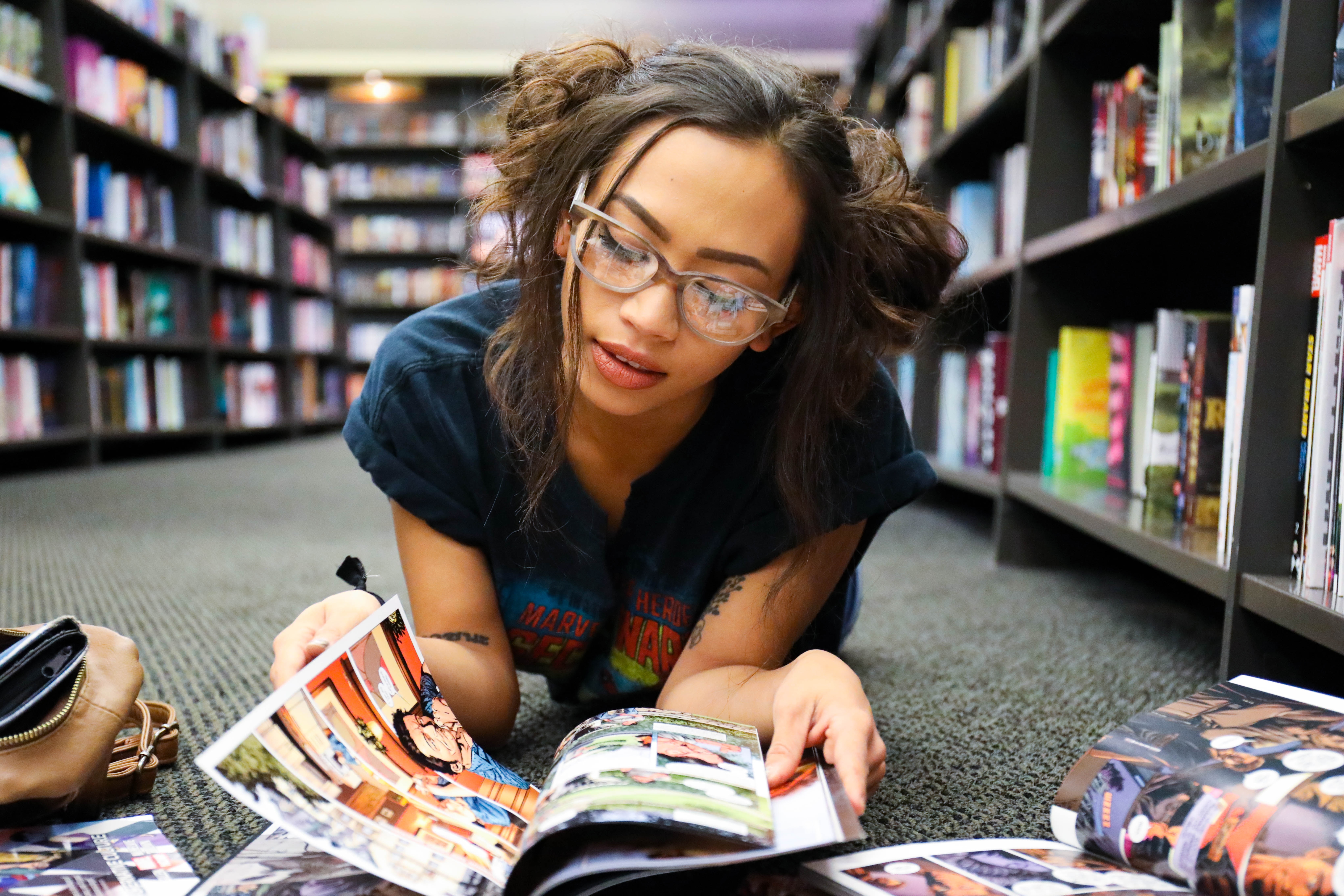
Photo by Nick Morrison on Unsplash

Even though it’s Labor Day weekend, I’m laboring away at the outline for my University of Cambridge dissertation with the goal of having a single page of my literature review written and edited by the end of the day.

The weird and wonderful part of the work at this point is that it doesn’t feel like work at all, but play. Like a set of LEGO blocks, I’m linking the information and data to support the story, synthesizing everything I’ve learned after all this reading and note taking into a cohesive, communicable form that helps people and the planet.

I’m sure there will be rough spots along the way where I get jammed up on the journey. I’ve a long way to go over the next year. But for now, I’m excited to begin writing and using prose for purpose. Happy days.

creativity

The danger of Texas school libraries becoming “discipline centers”

Photo by Joe Ciciarelli on Unsplash

“Libraries are about freedom. Freedom to read, freedom of ideas, freedom of communication. They are about education, about entertainment, about making safe spaces, and about access to information. We need libraries. We need books. We need literate citizens. I hope we can give our children a world in which they will read, and be read to, and imagine, and understand.” ~Neil Gaiman

When I was a kid, the school library was my refuge. I’d go there when I felt bullied, sad, and lost, and I wanted to escape. I would go to books to go into new worlds that weren’t my physical world. Through them I could travel, find adventure, and be anywhere except where I was when my world was not where I wanted to be. I returned stronger, wiser, and braver because of libraries. 

As I got older, I realized I was not alone in finding my haven in books and libraries. So many kids all over the country, and all over the world, did the same thing if they were fortunate enough to have a library. I also learned millions of children didn’t have libraries to escape to, and that broke my heart and opened my wallet to support libraries, books, authors, reading, writing, and creating in every way I could. When I became a journalist, then an essayist, and then a novelist, my dedication to libraries, books, readers, and writers grew even bigger.

So it’s with devastation that I learned last week about the dire state of school libraries in Houston, Texas that are part of the Houston independent school district (HISD). Superintendent Mike Miles will turn the city’s school libraries into “discipline centers”, and librarian and media-specialist positions will be eliminated. Teachers will be able to send “misbehaving students” to these centers to learn remotely. This is a state decision, not a city decision, and Miles was given this post by the Texas Education Agency. He thinks this will improve student performance in Texas’s largest school district and the 8th largest district in the country.

HISD has 276 schools and 196,943 students. 90% of students identify as ethnic minorities, and 59.4% are economically disadvantaged. They are students who need libraries, extra educational support, and places of refuge. I know this because I was an economically disadvantaged student. Libraries, librarians, and books saved me. They helped me dream of a better life than I had as a kid, and it’s largely because of libraries, librarians, and books that I have the life I have now, a life I love where I make a living through my creativity every day. 

I don’t live in Houston, but I care deeply about these students and what happens to them because they will eventually grow into adults who will go out into our shared world on their own. Without libraries and books, and with goodness knows what goes on in a “discipline center”, imagine how angry and deprived they will be. Imagine how deprived every student in these schools will be without libraries and librarians. What message are we sending all students by denying them free access to books, and the ideas and freedom they afford those who face an unjust uphill climb in our current society? 

Here’s my great hope for the HISD and the city of Houston: that the students, administrators, teachers, voters, politicians, and residents will rise up against Mike Miles. I hope they won’t allow students to be deprived of books, reading, and librarians, and I hope all of us outside of Houston will support them in every way they need. The students of HISD deserve better than this policy, and better than Mike Miles. We can’t allow one man to take their books and their futures from them.

creativity

Thoughts from the inaugural Games and SDG Summit at the UN

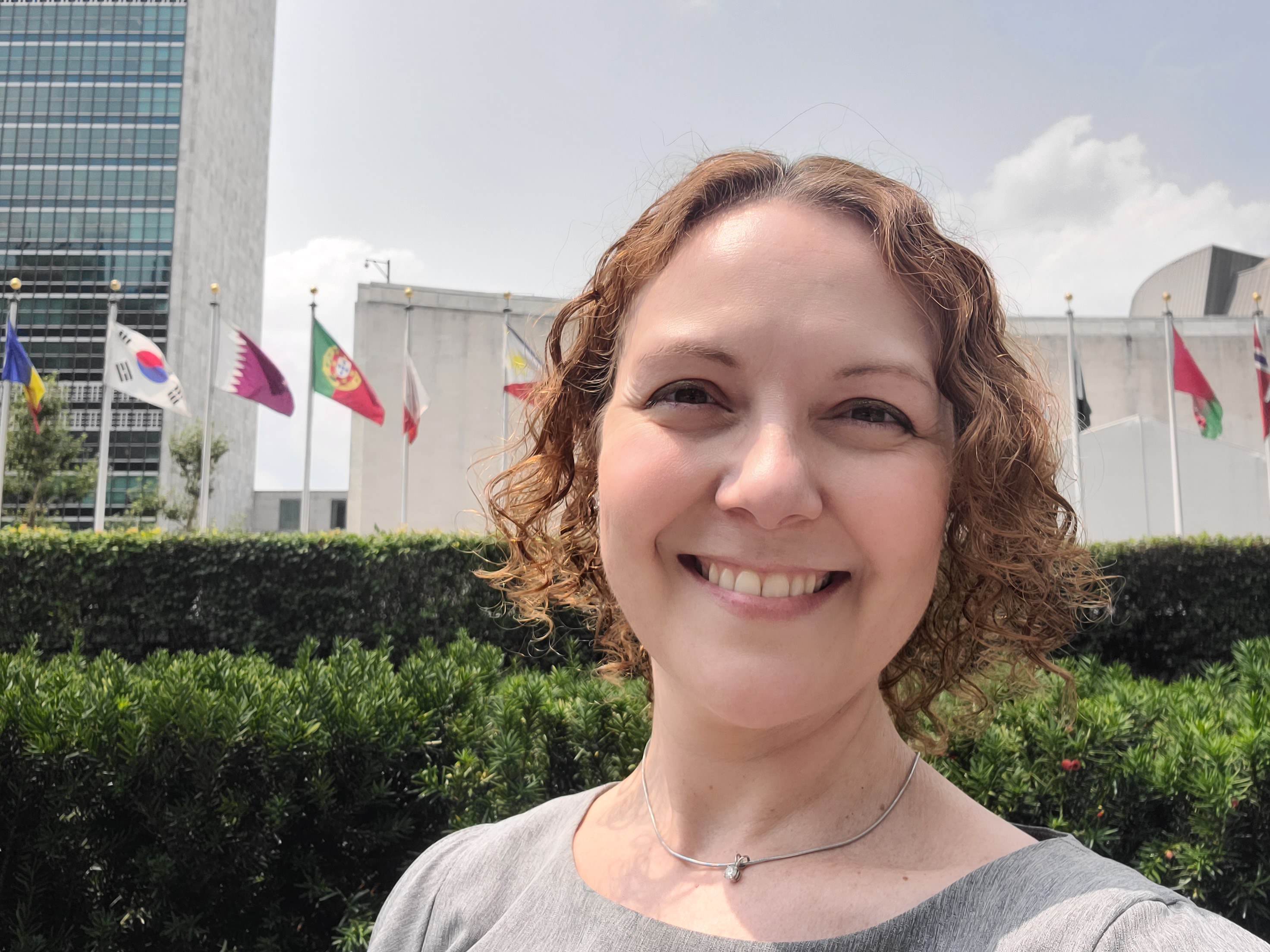
Me at the United Nations

“Go further than you think you can, or should. Push that boundary of what you could do into the uncomfortable zone because that’s where you know change is happening.” ~ Mathias Gredal Nørvig, CEO of SYBO

Being at the United Nations Games for Change Games and SDG (Strategic Development Goals) Summit to talk with attendees across government, academia, industry, and nonprofits about my sustainability in games research at University of Cambridge with ustwo Games, and learn more about the role of games in promoting sustainability, was nothing short of an honor. I know I was privileged to be in the room.

Because 1/3 of the world population plays games, games need to be a tool for every organization working in sustainability. If you’re interested in learning more about that, please get in touch! I’d love to share ideas of how you can get started! I also encourage anyone and everyone to look into Playing 4 The Planet, the UN’s inspiring games initiative with resources and data for every size of organization.

The summit was filled with incredible presentations about what’s already been done with games, projects that are underway, and the mountain of work ahead. There is one idea that I can’t shake, one perspective that completely changed my point-of-view about my work and my place in the world. It was from Mathias Gredal Nørvig, CEO of gaming company Sybo. He talked about how his company is pushing the boundaries in their communications and storytelling so far that there was a bit of backlash from their community. Rather than seeing this as a mistake or misstep, he saw this as a victory to be celebrated, a milestone that showcases progress. On this border, he saw evolution, change, and a provocative call-to-action. He closed his talk by saying he hopes all of us will have the courage to go further than we think we can, and to push our companies to do the same.

Over the next few weeks and months, I’m going to think about what that boundary is for me and how I can push past it to create breakthrough change. How can I extend myself beyond what I think I’m capable of doing? How can I take a bigger risk, step outside of my comfort zone to do something extraordinary that I’m not certain I can accomplish? How can I dare greatly?

I don’t know the answers to any of those questions right now, but I’m excited and eager to find them and share them. I hope you’ll join me in that quest to rise higher, to go further and faster together. The future of our planet, and all species with whom we share it, depends on it.

creativity

I’m starting my sustainability dissertation at University of Cambridge

My dissertation proposal has been accepted by University of Cambridge and I have a fantastic supervisor who is based at The London School of Economics and Political Science, Grantham Research Institute on Climate Change and the Environment.

I’ll spend the next year developing a framework for climate change storytelling to connect sustainability advocates with family offices investigating sustainable investments and business decisions. I’m passionate about creating win-win-win opportunities for these families, the planet, and all beings who share this home.

The capital shortfall is a massive challenge for the shift to a sustainable society, and my hope is that my dissertation can help contribute a piece of the solution. Here we go!

creativity

This is the secret of life

If you get to the end of this story, I’ve got a secret to share with you. The upper left picture is me exactly two years ago right before I had a bilateral mastectomy and reconstructive surgery for early-stage breast cancer. My “Good Trouble” photo. The lower left is me the next morning at sunrise. My “I Survived” photo. The right is my official matriculation photo from the University of Cambridge taken last month as I began my graduate studies there in sustainability leadership. My “A Dream Deferred, but Not Denied” photo.

I have so much empathy for the woman on the left. It was the first time in my life I’d ever been admitted to a hospital and the first time I’d ever had surgery. I was terrified and also determined to be brave and evict cancer from my body.

With surgery I placed my life in someone else’s hands. I told Brian, my therapist, a few days before that I was terrified of surgery because there was no way for me to product manage the operation. He listened patiently, as always, and said, “Honey, you’re talented but even you can’t give yourself surgery. You have to trust someone else. The only way to conquer fear is to run right at it.”

It was a 5-hour tag-teamed procedure to remove all my breast tissue and 37 lymph nodes, and place chest expanders under my chest muscle. 14 months of constant pain later, they were swapped for much comfier implants. I smiled through the prep, thanking the nurses who helped me, determined not to crack.

Before entering the surgical suite that looked like a NASA space station, Dr. Schnabel, my breast surgeon, and Dr. Cohen, my plastic surgeon, visited with me. Dr. Schnabel looked me in the eye and said, “Sweetie, you’ve been stoic through this. It’s okay to have a moment. Then we go into battle.” Good trouble. I wanted to be as brave as John Lewis whom Audrey, my friend Stephanie’s daughter, painted onto my mask. That photo is the last day I had any cancer in my body.

I decided to walk into the surgical suite on my own two feet, even if my only armor was my surgical gown. I was scared and I ran right at it. This was going to be the last day that I had any cancer in my body. My last thought before closing my eyes was I hoped I lived to see the sunrise the next morning.

I have no memory of the surgery. I closed my eyes at NASA and woke up in the cloud of the recovery room. I was told they’d given me just a touch too much fentanyl and my blood pressure took a nosedive. I thought this was hilarious and laughed hysterically. Then I asked for some apple juice. Ah, narcotics.

I was in recovery for a long time and wasn’t admitted to a regular room until the wee hours of the morning. My dear recovery nurse, Esther, ran all over the hospital trying to find me a fresh turkey sandwich. I hadn’t eaten solid food in 24 hours and that plain turkey sandwich was one of the best things I’d ever eaten.

I told her my wish to see the sunrise and she was determined to make it a reality. I watched Harry Potter and munched on my turkey sandwich until daybreak. Maybe it was the drugs but I did feel like a witch with magical powers, as bandaged and bruised as I was.

Esther came back as soon as the sun started to come up. She helped me walk to a corner room where I could see the east river and the first rays of light illuminate my beautiful city. She left me alone to have my moment. I survived.

Back in my room, Dr. Schnabel and Dr. Cohen visited me. When I saw Dr. Schnabel, I cried for the first time. Again she looked me in the eye, two warriors on the other side of this one battle in a series of many more to come in this war. “Sweetie, it won’t always feel like this. You’re going to get to the other side. There’s a whole team of people focused on getting you there.”

I thanked her for saving my life, and she said, “I’m just part of the team. Team Christa.”

A few hours later my friend, Marita, picked me up at the hospital to take me home to where my sister who was graciously waiting for me with my dog, Phin. I had a giant bag of meds and surgical drains hanging out of my body. “How do you feel?” Marita asked once we got into her car. “I lived,” I said. “You did,” she said. “And you will.”

Fast-forward two years after climbing mountain after difficult mountain. That war on cancer was more epic than I ever imagined it would be. I nearly died, twice, from a severe and rare chemo allergy that shut down my lungs. I lost my long wavy hair to chemo and regrew 1940s ringlets. I was badly burned by radiation and completely healed. Now I’ve got new hard-earned boobs the same size as my OG boobs. That day in surgery was the last day there was ever any sign of cancer in my body—two years clear. Dr. Schnabel was right. I did get to the other side and I don’t feel the way I did before my surgery. This journey made me fearless.

When I was first diagnosed, I was just about to hit submit on my graduate school applications for Cambridge and Oxford. Then cancer struck and I had to put those applications away, afraid I may never get to submit them. I would sit in the chemo suite and dream about those far off places, dream that someday I would swap my surgical gown for an academic robe.

In September 2022, that dream happened. I took the train from platform 9 at King’s Cross to Cambridge, my own version of the Hogwarts Express just ¾ of a platform off. I thought about how I had watched Harry Potter’s train chug along on my TV screen in my hospital room two years before.

When I arrived at Cambridge, I dragged by very large bag that felt like a trunk onto the platform. I had myself a good cry in that train station. Here it was—my dream deferred, but not denied.

At my recent appoint to get the all-clear and graduate to annual checkups rather than 6 month checkups, Dr. Schnabel called my healing and this new academic chapter of my life a triumph. The dream became a reality, and I’m beyond grateful to everyone who helped me get here.  

I’ll never get back the life I had before the photos on the left, before cancer and COVID. I mourn the loss of that life. I miss it. But in exchange, I got something better. Environmental pollution was one of the main contributors to my cancer. Now I’m healed and dedicated to healing the planet.

Now for that secret I promised you at the start of this story. Along the way on this painful and difficult journey, I learned the secret of life. It’s love.

To love fiercely and be loved that way in return. To love whom we spend time with, the place we live, and the work we do. To love the planet that gives us everything and asks in return only to persist and continue giving to all of us. To love this life so much that our heart swells with gratitude for every day we’re given, the good and the bad, the ugly and the beautiful. To love and honor your time, and the time of others.  That’s it. That’s the secret, and it will transform us and our planet for the better.

Get into good trouble; the planet is counting on us. Survive, and then share your story because your story’s going to save someone else. Even if you have to put some dreams on hold right now, you can still make them happen bit by bit and they’ll be sweeter when you do get there.

Love, this and every moment. That’s the only secret there is, and the only work we really have to do.

creativity

I’m on my way to the U.K.

Photo by John Cameron on Unsplash. Taken at the Marble Arch in Park Lane, London.

I’m on my way to the U.K. to begin my dream of starting a graduate program in sustainability leadership at University of Cambridge and the Cambridge Institute of Sustainability Leadership. Such a mix of emotions at this pivotal moment in history— gratitude, elation, responsibility, nervousness, excitement, fear, anticipation. All of that is in my heart now as I start this path of purpose to hone all my business, science, and storytelling skills and experience to play a role in saving our planet, our stunning natural world, and all species, including our own.

When I booked this flight months ago, I had no idea how consequential this time would be for the U.K. and the world. The passing of Queen Elizabeth II and the beginning of the reign of King Charles III has brought a new sense of meaning to this trip. For decades, The Royal Family and especially King Charles III have been advocating for economic and social transformations to address climate change. King Charles is a graduate of Cambridge with a close association with the graduate program I’m about to begin, and I feel fortunate to be on this path in this place at this time. I will witness this moment in history, and will share what I experience by posting regularly here on this blog.

I feel a huge sense of responsibility and duty to use my time to protect our only home. This work is personal and professional for me. Everything I’ve been through in the past 2+ years, from the pandemic to my own successful battle against cancer caused by environmental toxins, has been fuel for me to take this journey. With the help of my doctors, modern medicine, innovative science, and my community of friends and family, I healed myself. Now I want to heal the planet.

I am willing to do whatever it takes. The changes we make (or don’t make) now will dictate how the history of our world unfolds for the next several thousand years. The consequences are that profound. We will absolutely turn the corner over the next few years. The question is what awaits us when we do, and that answer is up to all of us, individually and collectively.

I want to thank everyone who helped me to get to this place and cheered me on. There are so many of you who moved mountains and I promise to pay forward all of it. Now, it’s time to go have an adventure and personally witness this momentous time for Britain and the world. I’m excited to bring you with me.

creativity

JoyProject Podcast: The Joy of Winnie-the-Pooh with Christine Caccipuoti

The Joy of Winnie-the-Pooh with Christine Caccipuoti

A new episode of the JoyProject podcast dropped today—The Joy of Winnie-the-Pooh with Christine Caccipuoti. It’s available at this link and everywhere you get your podcasts. You can also hear it by clicking the YouTube link above.

Childhood joys never leave us. This week, we delve into all things Winnie-the-Pooh and the Hundred Acre Wood with podcaster and historian Christine Caccipuoti as our guide. Christine’s loved all things Pooh for her entire life. With a mother and grandmother who loved Winnie-the-Pooh, these stories and characters were her destiny.

As the Co-producer and Co-Host of the incredible Footnoting History podcast, Christine not only delves into why she loves Pooh but also the history of the Milne family, the importance of maintaining the magic we find in childhood wonder as we age, and what may be ahead for Pooh as he and his friends begin to enter the public domain.

At the end of the podcast, I share the final passage of The House at Pooh Corner and how you can see the original Pooh stuff animals on display at the New York Public Library (and online) as part of a fantastic free exhibition going on right now.

Topics discussed in this episode:
– Christine’s podcast, Footnoting History
– Christine’s Winnie-the-Pooh episode on Footnoting History
– How Christine got interested in Winnie-the-Pooh
– How her views on the different characters in the Hundred Acre Wood have changed over the years
– The importance of maintaining childhood wonder as an adult and why having things that bring you joy in your life are so important
– The differences and similarities between the A.A. Milne stories and the Disney Pooh stories
– How and why we gravitate to certain stories and certain characters within stories
– Why so many people relate to Eeyore and how compassion is a major theme in the Hundred Acre Wood
– The history of the Milne family and how Winnie-the-Pooh and his friends came to be
– How the Pooh stories are similar to other childhood favorites such as Sesame Street, the Muppet Show, and Charlie Brown
– The messages that Milne communicated to all of us about life and friendship through Winnie-the-Pooh
– What it means for Pooh to now (sort of) be in the public domain
– What might be next for Pooh and Friends in the years ahead
– How to see the original Pooh stuffed animals in New York City

Links to resources:
– Christine’s personal website / blog – http://www.ChristineCaccipuoti.com
– Christine on Twitter – @mynameispurpose
– Christine on Instagram – @mynameispurpose
– Footnoting History (FH) Website ­ http://www.FootnotingHistory.com
– Christine’s FH episode about Pooh – https://www.footnotinghistory.com/home/winnie-the-pooh
– FH YouTube Channel –­ http://www.YouTube.com/FootnotingHistory
– FH Twitter – @historyfootnote­
– Christa on Twitter – @christanyc
– Christa on Instagram – @christarosenyc
– Christa on Facebook – @AuthorChrista 
– Christa on Medium – @christaavampato
– Christa on TikTok – @christanyc
– Christa’s website – ChristaAvampato.com
– Polonsky Exhibition of the New York Public Library’s Treasures – https://www.nypl.org/events/exhibitions/treasures
– Winnie-the-Pooh and Friends stuffed animals at the New York Public Library – https://www.nypl.org/events/exhibitions/galleries/childhood/item/4108
– The last passage of The House at Pooh Corner by A.A. Milne – https://www.goodreads.com/quotes/808360-then-suddenly-again-christopher-robin-who-was-still-looking-at
– The Winnie-the-Pooh Show Christine saw in New York is on tour throughout the U.S. – https://winniethepoohshow.com/

About Christine:
Christine Caccipuoti is a historian, writer, and co-producer of the long-running podcast Footnoting History, where she regularly shares her love of biography.

Christine proudly co-edited Independent Scholars Meet the World: Expanding Academia beyond the Academy (University Press of Kansas, 2020) and has published / is soon publishing pieces about Blanche Barrow, Jane Manning James, and Elton John.

In addition to dealing with all things historical, Christine likes to spend her time rewatching her favorite television shows and films, learning about elephants, tweeting about musical theater, and planning vacations she may or may not eventually take.

creativity

How being a writer will help me get my dream job working with fossil fuel companies

In September, I’m starting a Master’s program at University of Cambridge in Sustainability Leadership. It’s my intention to use that degree as a springboard to work with fossil fuel companies — and convince them that it’s in their best and most profitable interest to stop producing fossil fuel and invest everything they’ve got in clean renewable energy. 

I’ve talked to a few people about this dream. Most laugh at me. Some think I’m wasting my time and talents on this dream. Some think I’ll never be able to do it. 

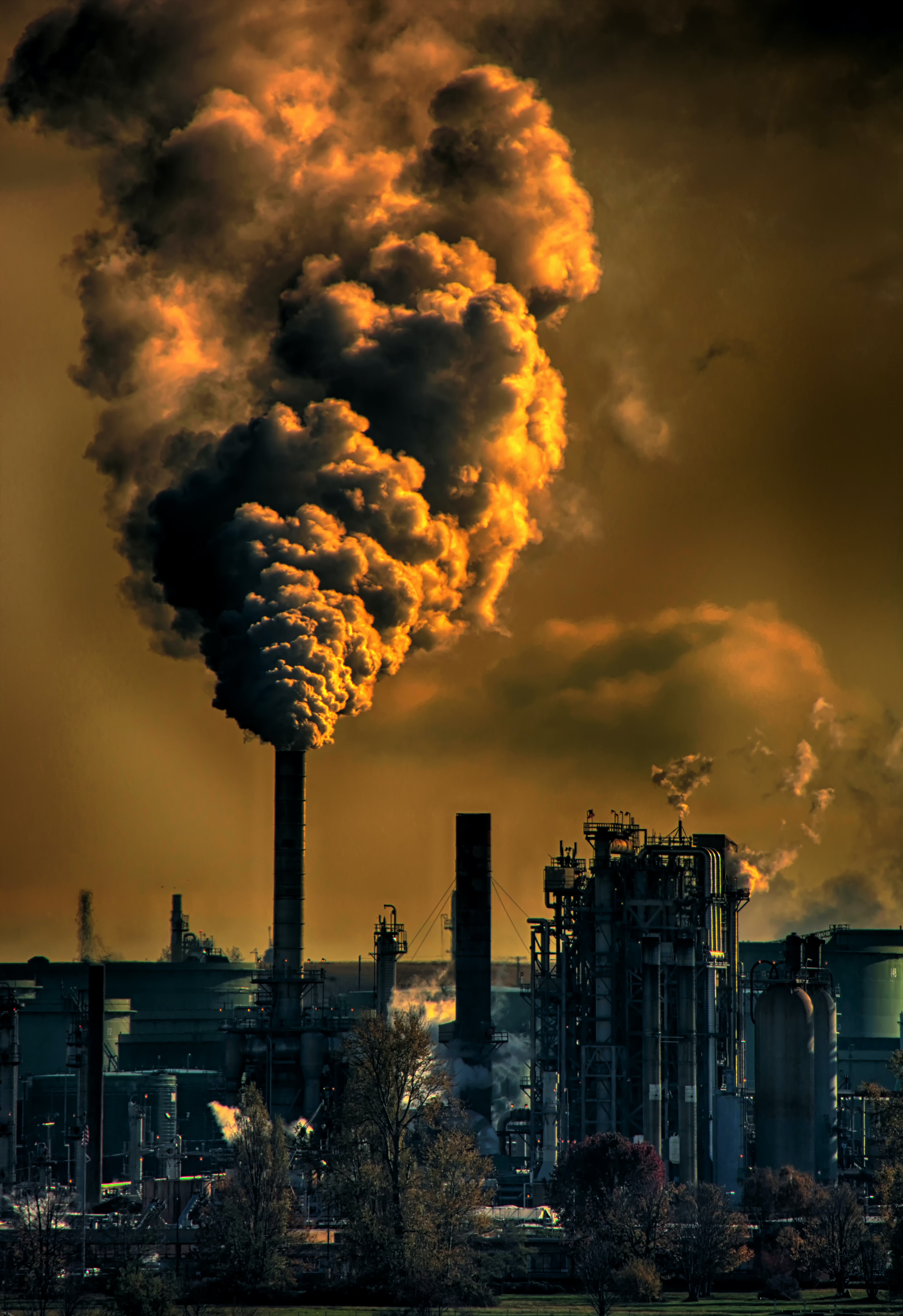
Here’s why it’s worth trying: 89% of CO2 emissions come from fossil fuels and industry

We could do everything else right when it comes to slowing down or, dare we imagine, to reversing climate change and it won’t matter if we don’t quickly and massively reduce and eventually eliminate fossil fuel production.

What Chief Justice John G. Roberts Jr. got wrong about the SCOTUS majority opinion on the EPA
The SCOTUS majority ruling in West Virginia v. EPA removed the ability of the EPA to limit emissions by power plants. The majority opinion is a travesty for many reasons. It also happens to be false, or at least incomplete. “There is little reason to think Congress assigned such decisions to the Agency,” Roberts wrote. “A decision of such magnitude and consequence rests with Congress itself.”

That last bit about Congress isn’t entirely true. The energy industry could make the choice to limit, or eliminate, its emissions.

I know some of you are laughing at that idea. You know what’s even more laughable? Imagining that Congress will get its act together to make it happen.

I understand why people hate on and rail against capitalism. However, it’s the economic paradigm that powers the world. We barely have time to get for-profit businesses to change their behaviors before the planet faces irreversible damage that will compromise life on this planet. We absolutely don’t have time to reinvent and adopt a new world economy before that happens.

Yes, capitalism is deeply flawed and yes, I wish humans were neurologically wired to act in the best interests of the greater community rather than themselves. I can’t change either of those facts and neither can you, not in time to protect the planet.

We have to work with what we have right now. We don’t have time to lament over human selfishness. We have to use it to our advantage; that’s exactly how nature would solve climate change and it’s exactly what we need to do. Now. It’s what I plan to do by working with fossil fuel companies. 

What fossil fuel companies care about
Fossil fuel companies don’t produce fossil fuel because they love it. There is precious little to love about dirty fuel that’s poisoning the planet and poisoning us. Fossil fuel companies love two things: money and power. Their long-term profits and power aren’t in fossil fuel. It’s in renewables for one simple reason — they’re cheaper to produce and are, as the name implies, limitless. Imagine the economics of a business built on inexpensive, infinite raw materials that produces a final product that protects the health of every living being? You don’t have to imagine it. It’s here. It’s renewable energy. 

What West Virginia cares about
Why did West Virginia bring this case against the EPA? Jobs. Plain and simple. Money and income. West Virginia and other fossil fuel producing states have no particular attachment to fossil fuel except history and a large number of jobs. 

If they could preserve jobs, or better yet increase the number of them and the income those jobs generate, they’d do it. With renewables, they can retrain people, preserve their beautiful land, water, and wildlife, protect workers, increase tax revenue, and promote the health of all beings. But they can’t do it alone. We have to work with them. We have to support them. 

The power of legacy
Legacy is a powerful motivator. As Hamilton says, “Who lives? Who dies? Who tells your story?” In addition to money and power, fossil fuel companies and those who head them care about legacy and how they will be remembered. In 2019, BP spent millions on an advertising campaign about its low-carbon energy and cleaner natural gas when 96% of its annual expenditure is on oil and gas. This was greenwashing to the extreme, and BP isn’t alone. Greenwashing is a fossil fuel industry problem

Saudi Aramco, Chevron, Drax, Equinor, ExxonMobil, INEOS, RWE, and Shell have all done it. The advertising campaign they all need, rooted in truth, that will send their stock prices soaring, generate priceless innovative partnerships, and cause the best and brightest talent around the world to work for and with them is this: “We will reduce the production of fossil fuel by at least 50% by 2030 and completely replace it with renewable energy by the year 2050.”

I’ve been to Saudi Arabia, met with some of the highest officials in Saudi government, and traveled to the Empty Quarter. Saudi Arabia and its neighbors have the geographic space and wealth to be the largest renewable suppliers in the world. Forget greening the desert there. Create the solar fuel farms we need on land that has very little life to disturb. 

Fossil fuel companies are fiercely competitive. Once one company does this, the rest of them will scramble to do the same. There’s a first mover advantage here. With this kind of decision, they will rewrite the history of this planet and forever be remembered as the company that protected and saved life on Earth in its darkest hour. Now that is a legacy.

Why I’m built for this work
I’ve worked inside a number of large multinational matrix for-profit companies. Many are populated with enormous egos and deep pockets. 

Bureaucracy doesn’t grind me down; it sharpens my resolve. 

I love finding out what makes people tick and what they care about most. Then I show them how my projects help them in their pursuits of what matters to them. I learned this skill as a fundraiser and as a product developer who had to internally lobby for project funding. My mentors were the best of the best at this. They showed me how it’s done, and done well.

Being a writer will help
While building a successful business career working with a variety of startups, nonprofits, and Fortune 500 companies, I also honed my communications and storytelling skills by building a strong portfolio as a writer, author, journalist, editor, interviewer, public speaker, and podcaster. 

This shift from fossil fuels to clean renewables is as much about storytelling as it is about science and business. 

Being a writer means I’m constantly inventing characters with motives. I build worlds with words. Now I will use my words to paint the picture of what a clean, sustainable, and healthy world looks, feels, sounds, smells, and tastes like. 

While the climate change movement has done an excellent job of describing the grim future we’ll face if we don’t shift away from fossil fuels, they haven’t shown us the alternative of a happy, joyful future on this planet. We need to long for that alternative so much that we’re willing to change and endure the transition, which may be painful, expensive, and inconvenient.

My cancer was environmentally-driven
During the COVID-19 pandemic prior to vaccines, I was diagnosed with and treated for early stage breast cancer. My doctors believe my cancer was driven, at least in part, by environmental factors. We can’t prove this definitively, but when we triangulate all the data we know about my case it becomes clear that the environment was at least a major contributor. 

Nothing motivates and activates like nearly dying. My health, your health, and the health of the planet are inextricably linked. And they’re worth fighting for. I’m fighting for all of us, and that means I have to work with fossil fuel companies. 

In the words of the late great Babe Ruth, it’s tough to beat someone who never gives up, and I won’t give up until we get this done. 

Change is an inside job
While change can be driven by outside pressure, I’ve seen change happen quicker and more extensively when pursued on the inside of an organization. Sometimes to get things done, we’ve got to go into the belly of the beast. We have to walk right into the lion’s den armed with the undaunted courage and willful determination to sit with the lion, understand their perspective, and then show them how you can all move forward together for everyone’s benefit. 

I know it’s going to be a steep climb. I know there is a chance it may not work. There is a chance I’ll come home empty-handed with nothing to show for my effort and time. 

There’s also a chance that it could work. There’s a chance that this could be the most meaningful, valuable thing I ever do with my life that will make the world a better place for all beings. And so with that hope and that goal, I’m going to give it my best shot.

Allowing climate change to progress unabated is akin to burning down our own house and wondering why we have no place to live. Nothing survives — not a company, a government, nor a living being — if the planet perishes. With that in mind, there is no work more important than getting fossil fuel companies to stop producing fossil fuel. This work is what matters most.

creativity

My JoyProject podcast launches TODAY: The Joy of Old Things with Ashley Semrick and a joyful news segment

My podcast, JoyProject, launches its first interview and joyful news episodes TODAY. Historian and teacher, Ashley Semrick, talks to me about The Joy of Old Things. Listen at the link below or anywhere you listen to podcasts. This link also has a transcript of the episode, photos, and links to extra resources.

In this episode, Ashley and I talk about our love for history and its relevance in society today. We explore the history and stories held in objects, and how anyone can get started doing historical research about any topic that interests them. We especially focus on teaching history to young people and getting them excited about digging into the past as a way to understand the world around us.

Topics discussed in this episode:

– The complexity and necessity of joy in difficult times, and how to find it and create it

– How and why to teach history to young people

– How to conduct historical research about any topic of interest

– The important role of museums, media, and cemeteries in historical research

– Ashley shares how her parents sparked her love of history at a young age

– How Ashley found and returned a 100+ year old diary to the family of the man who wrote it thanks to Ancestry

– The joy of found objects and discovering the history behind them

– NYC’s Sanitation Museum—a collection of found objects curated by a NYC Department of Sanitation worker who collected items that New Yorkers threw out for 30+ years

creativity

Joy today: Community colleges deserve more credit

For the past few weeks, I’ve been looking around for an affordable way to take some science pre-requisites. While I’ve learned so much in my biomimicry studies, I really need a much stronger foundation in science and research to do the work I want to do—using nature’s designs to build products, systems, and services.

This led me to reach out to a Principal Investigator (PI) who runs a nanotechnology lab here in New York City, where I live. We’ve had some wonderful conversations and are planning to do a short research project together this spring which will be my last requirement for my biomimicry certificate. I’m considering doing my PhD with him, and to make that a possibility I need to take science requisites: two semesters each of biology, chemistry, and organic chemistry. The challenge—science classes are expensive!

I investigated online options thinking that would be the most economical way to go. Not by a long shot! They didn’t have any with labs, which is what I need, and I was astounded at the cost – $700 per credit for 22 credits left me looking at a tuition bill of over $15,000. And that wasn’t even the total cost since I’d have to get the lab experience elsewhere. I was crestfallen.

Then on a whim, I decided to look into the local community college – Borough of Manhattan Community College. And what to my wondering eyes did appear? Classes conveniently timed and in mixed formats of online, in-person, and hybrid at $263 per credit for in-state residents like me. I’m elated! I can get all my requirements in done right on time to (hopefully) start my PhD in the Fall of 2021.

Community colleges are unsung heroes in our communities, and I’m going to be shouting about their value for a long time. If you have dreams that require some additional education, I highly encourage giving your local community college a look. I hope you’re as surprised and delighted as I am by the opportunities they offer.