creativity

Copenhagen: From Concrete Jungle to Sponge City 🌊

Photo by Nick Karvounis on Unsplash

Copenhagen, the vibrant capital of Denmark, is renowned for its design, cycling culture, and high quality of life. But beneath the charming canals and green spaces, a pressing challenge looms: managing increasingly intense rainfall due to climate change. Rather than relying solely on traditional infrastructure like pipes and sewers, Copenhagen is embracing nature-based solutions, transforming itself into a “sponge city.”

The sponge city concept, originating in China, focuses on absorbing and retaining rainwater where it falls, mimicking how nature manages water. This involves integrating nature-based solutions into the urban landscape to capture, filter, and slowly release stormwater to mitigate flooding.

“If you want to survive, you have to be spongy,” says Yu Kongjian, dean of Peking University’s College of Architecture and Landscape Architecture, and founder of Turenscape, one of China’s largest landscape architecture firms. “Trying to protect cities with hard, gray infrastructure made of concrete is doomed to fail.”

Copenhagen is a frontrunner in the spongey revolution, and its journey offers valuable lessons for cities worldwide grappling with similar climate-related challenges. My dear archipelago home city of New York, I’m looking at you!

One of the key elements of Copenhagen’s sponge city transformation is the creation of what’s known as green infrastructure. Parks and green spaces are being redesigned to function as rainwater retention basins during heavy downpours. These areas, often featuring sunken lawns and permeable surfaces, can temporarily store significant volumes of water, reducing the strain on the city’s human-made drainage system and reducing the risk of flooding. For example, Enghaveparken has been renovated to include a large underground reservoir capable of holding approximately 22,700 cubic meters of water. This dual-purpose space serves as a recreational area for residents while providing crucial stormwater management capacity.

Beyond parks, Copenhagen is incorporating blue infrastructure into its urban fabric, giving water a place to flow. The city’s numerous canals and harbors are being leveraged to manage excess water. Innovative solutions like floating wetlands and constructed ponds not only enhance biodiversity but also help to filter and retain stormwater. Furthermore, permeable pavements are being increasingly adopted in streets and public squares, allowing rainwater to seep into the ground rather than running off into drains. This reduces surface runoff and helps to replenish groundwater levels.

The driving force behind Copenhagen’s commitment to becoming a sponge city is its ambitious Cloudburst Management Plan, developed after a severe storm in 2011 caused widespread flooding. This comprehensive plan outlines a series of long-term projects aimed at making the city more resilient to extreme weather events. It emphasizes a collaborative approach involving the municipality, utility companies, businesses, and citizens in implementing nature-based solutions across the urban landscape.

The benefits of Copenhagen’s sponge city approach are manifold. Beyond reducing flood risk and alleviating pressure on drainage systems, these green and blue infrastructure initiatives enhance the city’s livability. They create more green spaces for recreation, improve air quality, support biodiversity, and even help to cool urban heat islands during hot summer months.

Copenhagen’s journey to becoming a sponge city is not without its challenges. Retrofitting existing urban areas with green and blue infrastructure requires careful planning, investment, and community engagement. However, the city’s proactive and integrated approach serves as an inspiring model for how other cities can adapt to the increasing impacts of climate change by working with nature, rather than against it. As extreme weather events become more frequent, the lessons learned in Copenhagen offer valuable insights for building more resilient and sustainable cities for the future.

You can read more about Copenhagen’s plans to manage climate change at https://urbandevelopmentcph.kk.dk/climate.

creativity

How Fungi Are Illuminating a Sustainable Future

Photo by Igor Omilaev on Unsplash

Imagine a future where the gentle, natural glow of wood guides you along a park path or illuminates your home, all without a single watt of electricity. This isn’t a scene from a fantasy movie; it’s a groundbreaking reality being forged by scientists who are harnessing the power of nature itself to create a sustainable alternative to traditional lighting. At the forefront of this innovation is Francis Schwarze, a fungal researcher at the Swiss Federal Laboratories for Materials Science and Technology (Empa), and his team, whose work on bioluminescent wood is nothing short of revolutionary..

In their research, Schwarze’s team demonstrated a remarkable example of biomimicry, the practice of drawing inspiration from nature to solve human design challenges. They looked to the forest floor and the eerie phenomenon of “foxfire,” the natural glow emitted by certain fungi in decaying wood. By isolating and studying the ringless honey fungus (Desarmillaria tabescens), they were able to understand and then replicate this process in a controlled laboratory setting. The team discovered that this particular fungus could be introduced into wood in a way that maintains the wood’s structural integrity while it is imbued with the fungus’s natural ability to glow.

The magic of the glow comes from a natural chemical reaction involving an enzyme called luciferase, the very same enzyme that makes fireflies light up the night. When the fungus-treated wood is exposed to air, the enzyme triggers a reaction that produces a soft, green light. The result is a completely self-sustaining, non-toxic, and non-electric light source that could one day transform our approach to lighting.

While the current glow is comparable to the light of a candle and lasts for about 10 days, the research represents a crucial proof of concept. The team, including researcher Giorgia Giovannini, is actively working on optimizing the process to increase the brightness and longevity of the luminescence.

The practical applications of this innovative material are as numerous as they are inspiring. Imagine urban spaces where bus shelters and street signs are naturally illuminated, reducing light pollution and energy consumption. Think of a park where benches and pathways glow gently, eliminating the need for harsh electric lamps. In homes, this biohybrid material could be used for designer furniture, artistic wall panels, or even subtle safety markers, all glowing without a power source. This innovation could also inspire a new class of biomimicry products, moving beyond wood and into other materials that could be made to self-illuminate or possess other natural properties.

Ultimately, this research highlights the immense potential of looking to nature for solutions. By collaborating with living organisms, scientists are not just creating a new product; they are pioneering a new field of sustainable materials science. The work of Schwarze and his team is a shining example of how understanding and working in harmony with the natural world can lead to a brighter, more sustainable future for us all. It reminds us that some of the most profound innovations aren’t about building something entirely new, but about learning from and enhancing what already exists.

creativity

Feeling the Heat? How Cities Worldwide Are Cooling Down!

A worker who is part of the Cool LA initiative applying a pavement cooling coating. https://streetsla.lacity.org/marquerite-street-cool-pavement

Ever stepped out of an air-conditioned building into a city street and felt like you’d walked into an oven? That’s exactly how I felt last week in New York City. This is known as the urban heat island (UHI) effect. It makes cities significantly warmer than their surrounding rural landscapes, particularly at night. Why does this happen, and what are cities doing about it?

The Science Behind the Sizzle:

The UHI effect is largely a byproduct of how we build our cities. Here’s a quick breakdown of the culprits:

  • Dark Surfaces & Materials: Concrete, asphalt, and dark rooftops absorb and store vast amounts of solar radiation during the day. Unlike natural landscapes (think forests or water bodies) that reflect more sunlight and release moisture, these urban materials slowly re-emit that stored heat into the surrounding air, keeping temperatures elevated long after sunset.
  • Lack of Vegetation: Trees and plants provide natural cooling through shade and a process called evapotranspiration (where they release water vapor, like sweating). Cities, with their limited green spaces, miss out on these vital cooling benefits. The apartment building where I live straddles a city block. On one side, it’s a tree-lined street that’s almost completely shaded. On the other side of the building, there aren’t any trees at all. The temperature difference between the two entrances is often 10 degrees or more.
  • Urban Geometry: Tall buildings and narrow streets can create “urban canyons” that trap heat and block wind flow, preventing cooler air from circulating and dissipating trapped warmth.
  • Waste Heat: All the human activity in a city – cars, factories, air conditioning units – generates a significant amount of waste heat, further contributing to the overall temperature rise.

The consequences of the UHI effect are serious: increased energy consumption (more AC means more power plants working overtime), elevated air pollution and greenhouse gas emissions, and significant health risks, especially for vulnerable populations, including heat-related illnesses and even fatalities. In the United States, heat is indeed the deadliest weather-related hazard, claiming more lives annually than other extreme weather events like hurricanes, floods, or tornadoes

Cities Taking Innovative Action:

The good news is that cities around the world are recognizing this challenge and implementing clever, innovative solutions to cool down from cool pavement surfaces to using plants as part of walls, roofs, corridors, and increased green spaces. Here are a few inspiring examples:

  • Singapore: The “Garden City” Goes Further Singapore is a leader in green infrastructure. Beyond its lush parks, the city-state is integrating vegetation into buildings with impressive “green walls” and “sky gardens.” They’re also exploring district-level cooling systems, which are more energy-efficient than individual air conditioning units, and prioritizing science-based policies to reduce urban heat risks. Their commitment to planting millions of trees and creating numerous parks is paying off in tangible temperature reductions.
  • Los Angeles, USA: Paving the Way with Cool Pavements Known for its expansive roadways, Los Angeles has been actively experimenting with “cool pavements.” These lighter-colored surfaces reflect more sunlight and absorb less heat than traditional asphalt, significantly reducing surface temperatures. The city has already coated over a million square feet of pavement with these innovative materials. It is also experimenting with applying this coating to rooftops as well.
  • Rotterdam, Netherlands: Embracing Green Rooftops Rotterdam is literally building a cooler future from the top down. The city is actively promoting and implementing green rooftops on a massive scale, aiming to green over 900,000 square meters of rooftops. These vegetated roofs not only reduce ambient temperatures by acting as insulation and through evapotranspiration but also help with stormwater management.
  • Medellín, Colombia: Cultivating Green Corridors Medellín has transformed its urban landscape by creating a network of 30 “green corridors.” These shaded routes, lined with thousands of native trees, palms, and other plants, offer cooler pathways for people to travel and gather, directly combating heatwaves and improving air quality.
  • Paris, France: Creating “Cool Islands” Paris is tackling its urban heat with a strategic approach to “cool island” spaces. The city has identified and is creating 800 such spaces, including parks, water fountains, and public buildings like swimming pools and museums, which are significantly cooler than surrounding streets. They also have ambitious plans to plant 170,000 trees by 2026.
  • Seville, Spain: A “Policy of Shade” In a city accustomed to scorching summers, Seville has adopted a “policy of shade.” This includes installing more awnings, planting 5,000 trees annually, switching to heat-reflective construction materials, and installing more public fountains – all aimed at providing respite from the intense heat.

These examples demonstrate that while the urban heat island effect is a significant challenge, it’s not insurmountable. By embracing a combination of green infrastructure, cool materials, and thoughtful urban design, cities worldwide are proving that a cooler, more livable urban future is within reach.

What can you do?

Even as individuals, we can contribute to mitigating the UHI effect. Consider:

  • Support local initiatives for tree planting and green spaces.
  • Call your reps and offer these examples as something your city could try.
  • Choose lighter-colored materials for your own property if applicable.
  • Advocate for sustainable urban planning in your community.

Let’s work together to make our cities cooler, healthier, and more sustainable for everyone!

animals, creativity

Building Nature’s Highways: Why Wildlife Corridors Matter, Especially in a City Like New York

Photo by Maurice Gort on Unsplash

In the urban symphony of honking taxis and bustling sidewalks, it’s easy to forget that New York City is also home to a surprising array of wildlife. From the familiar pigeons and squirrels to more elusive species like coyotes, egrets, and even occasional seals in the harbor, nature finds a way to persist amidst the concrete jungle. However, these urban dwellers face significant challenges, primarily the fragmentation of their habitats. Parks, green spaces, and natural areas exist as isolated islands in a sea of development, making it difficult for animals to move, find food and mates, and maintain healthy populations.

This is where wildlife corridors, also known as green corridors or ecological corridors, become vital. More than just 2 patches of green, these linear stretches of habitat act as nature’s highways, providing safe passage for animals to travel across urban landscapes and limit interactions with humans (which keeps wildlife and humans safe.)

Why are wildlife corridors so important?

The benefits of establishing and maintaining wildlife corridors extend far beyond simply allowing animals to move:

  • Combating Habitat Fragmentation: Urban sprawl carves up natural landscapes, isolating animal populations. Corridors reconnect these fragmented habitats, allowing for greater movement and reducing the risks of inbreeding and localized extinctions.
  • Promoting Biodiversity: By facilitating the flow of individuals between different areas, corridors help maintain genetic diversity within species and support a wider variety of plant and animal life.
  • Supporting Migration and Dispersal: Many species need to move seasonally or disperse to new areas to find resources or establish new territories. Corridors make these crucial movements possible.
  • Enhancing Ecosystem Health: The movement of wildlife aids in essential ecological processes like pollination and seed dispersal, contributing to the overall health and resilience of urban ecosystems.
  • Increasing Climate Resilience: Green corridors can provide areas that may offer refuge as the climate changes, allowing species to shift their ranges. They also contribute to urban cooling and stormwater management by providing more green space – a win for all species, including humans.
  • Providing Educational and Recreational Opportunities: Urban green spaces, including corridors, offer residents opportunities to connect with nature, observe wildlife, and engage in outdoor activities. (However, please don’t touch wildlife or attempt to corner them to get a photo – give them space and let them be.)

Building Nature into the Urban Fabric of New York City

Integrating wildlife corridors into a dense, established metropolis like New York City presents unique challenges, but it is possible. It requires creative thinking, strategic planning, and a commitment to green infrastructure. Here are some ways we can build nature’s highways into our city:

  • Leveraging Existing Green Spaces: Connecting existing parks, community gardens, cemeteries, and natural areas through planted streetscapes, greenways along industrial areas or waterways, and even strategically placed planter boxes can create a network of connected habitats.
  • Creating Green Roofs and Walls: These vertical and horizontal green spaces on buildings can act as steppingstones or even continuous pathways for birds, insects, and small mammals, particularly in areas with limited ground-level space.
  • Utilizing Waterfronts: New York City’s extensive coastline and rivers offer significant opportunities to establish riparian corridors with native vegetation, providing crucial habitat and movement pathways for a variety of species. The Manhattan Waterfront Greenway, while primarily for human use, also offers ecological benefits and could be further enhanced for wildlife.
  • Designing Wildlife Crossings: While more challenging in a dense urban environment, innovative solutions like vegetated overpasses or underpasses could be explored in areas where major roads or highways sever existing or potential green spaces.
  • Prioritizing Native Plants: Filling these corridors with native trees, shrubs, and flowering plants is crucial as they provide the specific food and shelter that local wildlife need. This also reduces the need for intensive maintenance and pesticides.
  • Rethinking Urban Planning and Development: Integrating ecological connectivity into the very fabric of urban planning is key. This includes implementing regulations that encourage green infrastructure in new developments and protecting existing natural areas.
  • Engaging the Community: Educating residents about the importance of urban wildlife and corridors, and involving them in planting and stewardship efforts, can foster a sense of ownership and ensure the long-term success of these initiatives. Programs reducing pesticide use in private gardens and encouraging bird-friendly glass windows to prevent collisions (we lose an astonishing 90,000 to 230,000 birds to window collisions in New York City every year) also contribute to a healthier urban ecosystem.

New York City has already taken steps in this direction with its extensive park system and efforts to restore natural areas. By intentionally building and enhancing wildlife corridors, the city can become a more resilient, biodiverse, and ultimately, more livable place for both its human and animal inhabitants. It’s an investment in the ecological health of the city and a recognition that even in the heart of the urban jungle, nature deserves a connected path forward.

creativity

Nature is a packaging professor for product companies

Photo by Eiliv Aceron on Unsplash

“What are the characteristics of perfect product packaging?”

A business school professor teaching a product development class on packaging looked around at her students eagerly raising their hands.

“Inexpensive.”

“Perfectly fits the product without wasting space.”

“Lightweight.”

The professor opened her bag and took out a banana. She peeled it and began to eat it as students continued calling out answers.

“Biodegradable and non-toxic.”

“Eye-catching color.”

“Protects the product it holds.”

The professor nodded. These were all solid, practical answers. She finished the banana and held onto the peel.

“What about this?” she asked, holding up the banana peel. She could see the proverbial lightbulbs popping into her students’ minds. Inexpensive, perfectly fits product, lightweight, biodegradable, non-toxic, eye-catching color, and protects the product.

“Nature is a packaging genius,” she said with a smile.

From that classroom to major CPG companies, innovations in packaging are emulating nature’s packaging prowess while also tackling the massive waste conundrum that packaging has handsomely contributed to for decades.

Agricultural waste transformed into plastic alternatives

A packaging dream scenario is emerging: using agricultural waste to create alternative materials that replace fossil fuel-based packaging at similar costs and outperform them, all while being biodegradable and non-toxic. In 2024, Dr. Nasim Amiralian developed a process to turn sugarcane waste into packaging that also keeps food fresher longer. Sold by Australian company C4C Packaging, it’s used by Australian wineries and beverage companies. EverGrain, a subsidiary of AB InBev, upcycles grain waste from their beer production into packaging films. This is where circular economy principles meet economics meets business needs to protect the health of the planet. What a party!

Using clay to extend the life of fruits and vegetables

Like the business school professor above, I love bananas, but I don’t live anywhere near a climate grows them, so they are shipped, often in cardboard boxes. However, once picked, bananas (and many fruits and vegetables) ripen quickly due to the ethylene gas they emit. Prof. Kirtiraj K. Gaikwad and PhD Scholar Mr. Pradeep Kumar at the India Institute of Technology saw this challenge and developed a type of nontoxic, biodegradable clay that can be incorporated into the cardboard to capture and dissipate the ethylene gas, extending the life of fruits and vegetable by up to a week. In addition to being a sustainable packaging practice it also reduces food waste.

Changing the product to suit the packaging

While most companies think of packaging as subservient to the product, British cosmetics and personal care company Lush turned around that idea. Long a pioneer of “naked packaging”, meaning it reduces the packaging to as little possible to protect the environment, Lush’s shampoos, conditioners, body wash, and other products are made as solid bars, often wrapped in simple, post-consumer, recyclable paper. Its bold packaging and product form statement causes its loyal fans and customers to rethink sustainable practices in other areas of their life. I love to see a product company living and creating by their values and purpose.

What I love about all these examples is that they are working with nature to solve problems at a systems level, C4C Packaging, EverGrain, India Institute of Technology, and Lush all recognize that we all share this one planet not only with each other but all species. We can only get to the future together so the needs of others must be as important to us as our own needs. Empathy and ingenuity are a powerful combination, and nature is a brilliant guide and teacher.

creativity

The energy U.S. wind needs to make headway

While offshore wind scales around the world, U.S. wind can’t seem to find its sea legs. China has 129 operating offshore wind farms, followed by 39 in the UK, 30 in Germany, and 26 in Vietnam. The U.S. has just 2. Why is U.S. wind lagging behind other countries?

In the past few years, the U.S. has sought to push forward on wind. However, that’s coincided with cost surges, supply chain challenges, high interest rates, permit delays, and opposition from wildlife organizations, local residents, and fishing groups who feel there hasn’t been enough project vetting to ensure safety. Wind’s worries intensified this summer when a 300-foot-long wind turbine blade made by GE Verona collapsed on a wind farm off the coast of Massachusetts. Given the state of our planet and the extensive need for energy transition to clean, affordable electricity, our planet can’t afford to wait.

To get U.S. wind on track, we need to employ what I call the 4 considerations of problem-solving in today’s warming world: creativity, collaboration, connection, and climate

Creativity
With surging costs, scare resources in the supply chain, and safety issues of today’s wind turbines, we need to redesign them with materials that are abundant, affordable, and durable. Sounds like a job for recycled plastics to me. Vestas, a manufacturer of wind turbines, agrees. There are many factors to consider in turbine design and what they’re working on right now might not be the right solution. However, it’s this kind of redesign thinking that’s needed given the numerous challenges. 

Collaboration
Launching a large-scale offshore wind farm is an all-hands-on-deck project. Government (local, state, and federal), finance, design, engineering, marine science, wildlife advocates, and local communities have to rally around it and pool their talents and efforts. Right now, many of these parties are fighting one another and it’s sinking the projects. If we lose the momentum of this moment to the tired us-versus-them paradigm, we may lose the opportunity to make this energy transition before the worst outcomes of climate change find their way to us. 

Connection
While China has many operating wind farms, ~16% of its wind power has historically gone unused, costing ~$1.2 billion. This is mostly due to a lack of connections to the grid. The energy doesn’t do anyone any good if it can’t reach them when and where they need it. Like the design of the turbines, we may also need to rethink how we connect new wind projects to the grid.

Climate
This is the bit that I find most disturbing about offshore wind because it’s the one we cannot directly control. Wind is generated by the difference between land and sea temperatures. Research is beginning to show that difference decreasing due to rapidly rising ocean temperatures from climate change, generating less wind. While we’re making this transition toward clean energy, we also need to enhance the efficiency of turbines to do as much as we can with the wind we have in an ever-hotter world.  

With all these challenges for offshore wind, I wondered if it was worth it. Should we abandon the wind effort and focus solely on other forms of clean energy such as solar? As I listened to energy experts at Climate Week NYC, it became clear that the U.S. needs offshore wind as part of the energy supply mix. Wind is one of the least expensive and most efficient sources of power. Without offshore wind, the winds themselves may disappear altogether. That’s a scenario none of us can afford. 

creativity

What does a sustainable New York City look like?

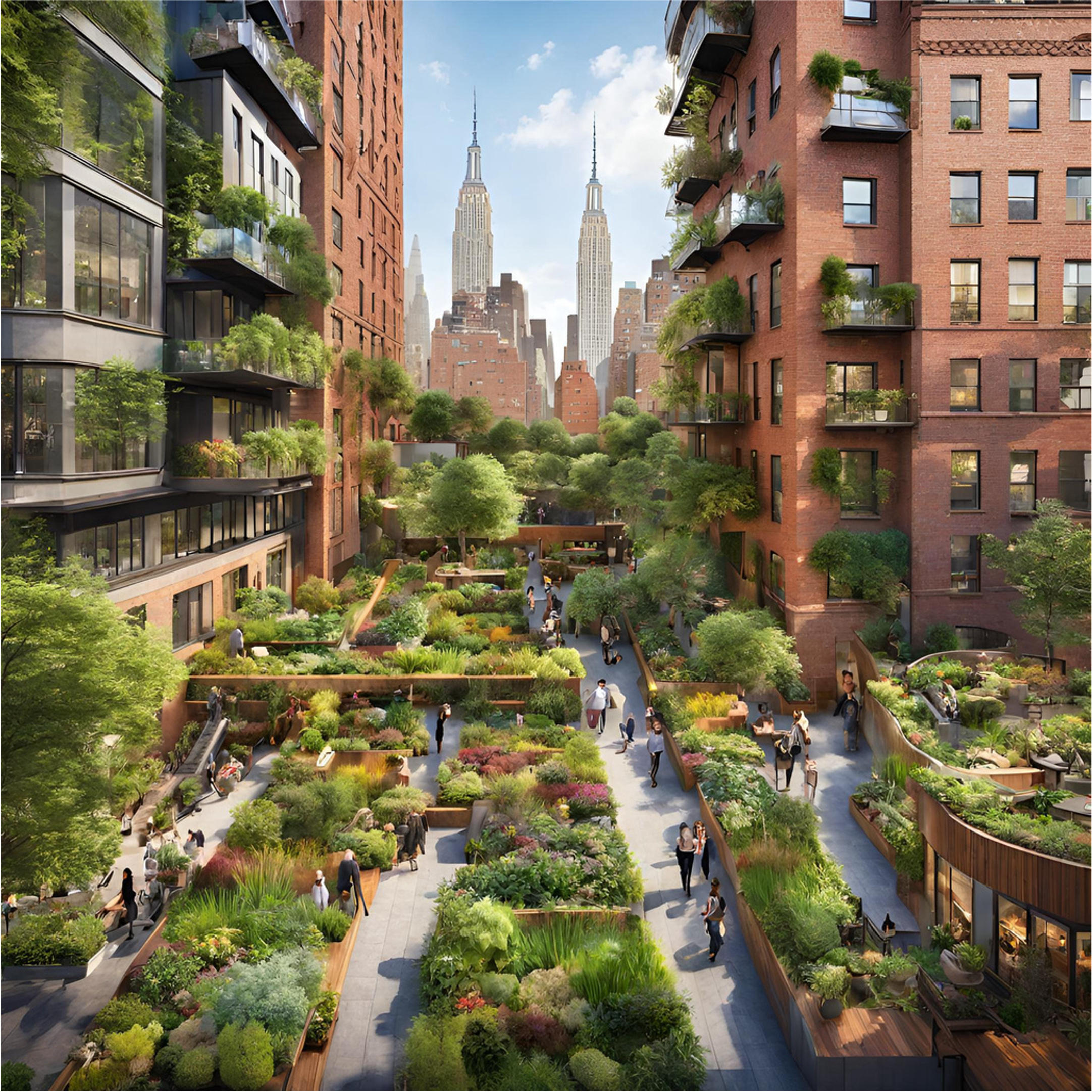
What does a sustainable New York City look like to you? I imagine lush micro gardens, biophilic architecture (a building methods that connects people with nature), rooftop farms, and clean transit, air, and water as pathways that give people, plants, and wildlife the opportunity to live side-by-side-by-side in ways that benefit all.

In biomimicry, we begin our design process by asking how nature would solve a specific problem we have with a question framed as “How would nature (the problem we want to solve)?”. My question above would be framed as “How would nature build a sustainable New York City?” This is a question that has occupied by headspace for years as I traverse through different projects and future visioning sessions.

In the spirit of an image being worth 1,000 words, I created these images with Canva Magic Studio AI to show how nature might build a sustainable New York. Is this a city you’d like to visit? Is this a city where you’d be happy to live? What are the first steps we can take now to make this our New York?

creativity

To create a joyful life, imagine these 3 versions of your career

Photo by Denys Nevozhai on Unsplash

What would you do if the work you do right now ended tomorrow? I’ve been thinking about this question since I was at University of Cambridge / Cambridge Institute for Sustainability Leadership (CISL) in December for my Masters in Sustainability Leadership program. My wonderful friend, Karen, in my cohort found me one morning to show me a Stanford TEDx talk titled 5 Steps to Designing the Life You Want by Bill Burnett that she felt I needed to see. She was right.

The whole talk is worth watching and the part that affected me most is a future visioning exercise called 3 lives. You imagine the next 5 years of your career in these scenarios:

1. Keep doing exactly what you’re doing now and it’s going to turn out great. What does great look like? In your career and life?

2. What would you do if what you’re doing right now ends tomorrow? How would your career and life change? What would that look and feel like?

3. Now for your wildcard plan. You have enough money to pursue any career you want, and no one would laugh at you for it. What would you do? What would your life and career look like then?

Which of these lives feels like the best path? Put aside the inner critic. Which one makes you happier and more fulfilled? For various reasons, that one may not be the one you choose to pursue but having a sense of these different paths helps us get unstuck.

Futures visioning is a part of my Cambridge dissertation so doing this exercise was a part of practicing what I preach. I sat down and sketched out these 3 lives for myself. It helped me uncover hidden ideas, interests, and desires I didn’t even know I had. It also helped me realize a few things that Bill speaks to in his talk:

1. The really interesting opportunities present themselves in our periphery. They are the things we didn’t see coming and didn’t plan for. Realizing this encourages me to be open to new people, information, learnings, ideas, and opportunities.

2. Bill encourages us to look at these three lives with our head and our heart. Decisions made from your emotions are just as valid, if not more so, than those made from our logic and reasoning. Emotions have much more wisdom than we give them credit for.

3. There isn’t one way to build a life or career. We can and will grow into different lives, and that can happen at any and every age. There is no timeline that we must follow. We can trust the timing of our lives and career. Things unfold in ways we don’t always understand. That’s okay. Be open, and be prepared to be lucky.

Let me know how it goes for you if you try this exercise. I’d love to hear about what you discover and I’d also love to support your journey.

Bill’s TEDx talk in here: https://www.youtube.com/watch?v=SemHh0n19LA

He also has several books with Bill Evans on the topic of designing a joyful life and career: https://www.amazon.com/stores/Bill-Burnett/author/B01KVOW2RS?ref=ap_rdr&isDramIntegrated=true&shoppingPortalEnabled=true

creativity

Using design thinking to solve any challenge

Photo by UX Indonesia on Unsplash

Design thinking is an incredible mindset and tool kit whether you’re trying to solve world peace, save the planet, construct a curriculum or framework, create a product, service, or system, or build and iterate on something to solve a common everyday problem. I’d love to do a session with you to show you how it works if you’ve never used it before.

Yesterday it was a joy to start to introduce design thinking to a colleague of mine. Seeing his eyes light up and the wheels of his mind turn made me a little jealous of him. I remember that exact feeling of being overwhelmed by entering a whole new world when Bob Giampietro, my boss at the time at Toys R Us, got me hooked on IDEO’s then-nascent design thinking philosophy.

Since then, I’ve used IDEO’s work constantly in my product development and design work. No matter what the challenge is, no matter the industry, and no matter the form factor of the outcome, I’ve found design thinking works. It’s especially good for complex collaborative projects when so many other methods fall short.

If you’re interested in learning more, please drop me a note at christa.avampato@gmail.com. I’d love to help you solve problems and make the world a better place for all beings.

creativity

Thoughts from the inaugural Games and SDG Summit at the UN

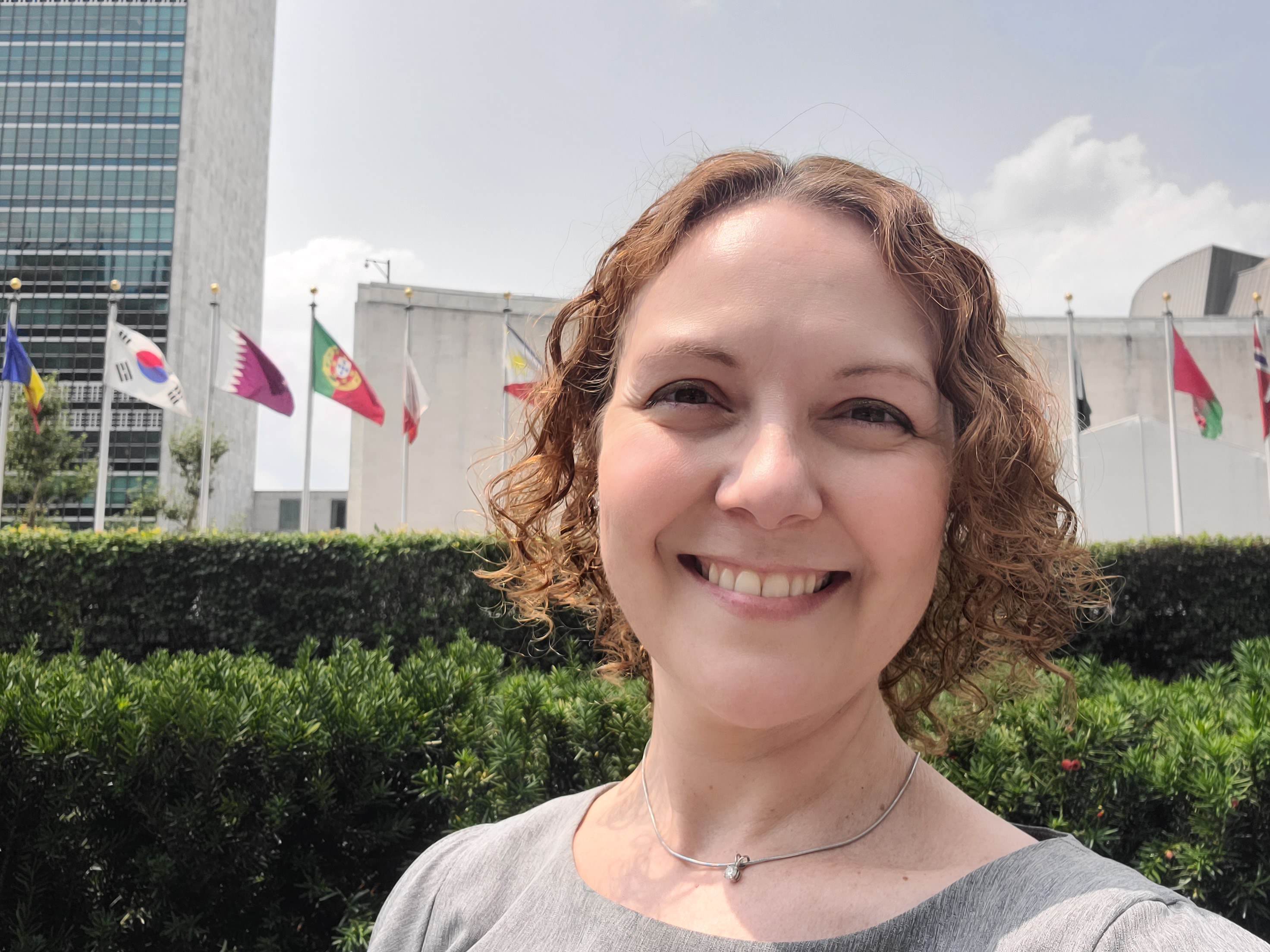
Me at the United Nations

“Go further than you think you can, or should. Push that boundary of what you could do into the uncomfortable zone because that’s where you know change is happening.” ~ Mathias Gredal Nørvig, CEO of SYBO

Being at the United Nations Games for Change Games and SDG (Strategic Development Goals) Summit to talk with attendees across government, academia, industry, and nonprofits about my sustainability in games research at University of Cambridge with ustwo Games, and learn more about the role of games in promoting sustainability, was nothing short of an honor. I know I was privileged to be in the room.

Because 1/3 of the world population plays games, games need to be a tool for every organization working in sustainability. If you’re interested in learning more about that, please get in touch! I’d love to share ideas of how you can get started! I also encourage anyone and everyone to look into Playing 4 The Planet, the UN’s inspiring games initiative with resources and data for every size of organization.

The summit was filled with incredible presentations about what’s already been done with games, projects that are underway, and the mountain of work ahead. There is one idea that I can’t shake, one perspective that completely changed my point-of-view about my work and my place in the world. It was from Mathias Gredal Nørvig, CEO of gaming company Sybo. He talked about how his company is pushing the boundaries in their communications and storytelling so far that there was a bit of backlash from their community. Rather than seeing this as a mistake or misstep, he saw this as a victory to be celebrated, a milestone that showcases progress. On this border, he saw evolution, change, and a provocative call-to-action. He closed his talk by saying he hopes all of us will have the courage to go further than we think we can, and to push our companies to do the same.

Over the next few weeks and months, I’m going to think about what that boundary is for me and how I can push past it to create breakthrough change. How can I extend myself beyond what I think I’m capable of doing? How can I take a bigger risk, step outside of my comfort zone to do something extraordinary that I’m not certain I can accomplish? How can I dare greatly?

I don’t know the answers to any of those questions right now, but I’m excited and eager to find them and share them. I hope you’ll join me in that quest to rise higher, to go further and faster together. The future of our planet, and all species with whom we share it, depends on it.