A friend asked me to edit a book chapter they wrote about the intersection of their personal and career paths. As I read through their beautiful story, I was surprised at how much my friend discounted their own experience, questioning whether they were good enough or had a right to do the wonderful work they do.
This friend is one of the most talented, intelligent, kind, compassionate, hardworking, generous people I know. I’ve learned so much from them over the many years we’ve known each other and it hurt my heart to see how much they questioned themselves. Being modest, recognizing and acknowledging those who’ve helped them along the way, and feeling fortunate are all wonderful virtues that my friend has in abundance. However, there’s a line between those virtues and the massive self-doubt that often holds people back from pursuing their dreams.
“Imposter syndrome” is a term I hear all the time, and I want to be very clear about something: Imposter syndrome is the tool of the patriarchy. (And by patriarchy, I mean anyone who attempts to puff themselves up by pushing down other people.) It’s projected onto people as a form of control. If you question your own abilities, it’s much easier for someone who only cares about their own well-being to zip by you. I want you to take the term “imposter syndrome” out of your vocabulary and out of your mind. I don’t want you to spend one more second of your life giving yourself that condition. Don’t take that on. It’s not yours to carry.
You are capable, creative, and curious. What you don’t know, you can learn. What you learn, you can apply. The world has so many challenges right now. To get through and make this world better for all beings, we’re all going to have to be at our best, contributing what we have to the collective. And we all have something valuable to offer.
Don’t discount yourself, and don’t allow anyone to discount you or your experience. Keep rising, and as you rise, extend your hand to lift others. We’re all in this together.
The words “ecology” and “economy” originate from the same Greek word “oikos”, meaning “home”. Ecology and economy both involve studying and managing the environment in which we live — ecology being a nature-made home and economy being a human-made home.
With that shared history between “ecology” and “economy”, Dr. Kimmerer asks how we might model nature’s generosity to transform our human-made capitalist economy that works best for the wealthy into one that is healthy, high-functioning, and inclusive so that everyone thrives.
How might we move from a paradigm of haves and have-nots to everyone-has-enough? Can our capitalist economy transform into one rooted in generosity? What would that look like? How would it function?
Nature shows us that the key to generosity is trust. A serviceberry plant freely offers its delicious berries to animals knowing those animals will disperse its seeds. It’s part of their ecological agreement — an equal give and take that benefits everyone. This same type of equitable reciprocity exists throughout natural ecosystems, each member giving its resources and taking what it needs in return. Nature doesn’t hoard abundance, nature shares.
In this new year, already fraught with difficulties and loss on a massive scale, we can emulate the generosity of the serviceberry plant. We all have an abundance of something — talents, abilities, training and education, time, resources, kindness, love. We also all have needs. Somebody somewhere needs what we have, and somebody somewhere has what we need.
That matchmaking, that trust that if a call goes out it will be answered, is what’s helped nature flourish for millennia. We’re a part of nature, and it’s no different for us. Offer what you have to someone who needs it. Trust that when you ask for help in some form, someone who has an abundance of what you need will step forward. Nature shows us that navigating through difficulty is easier when we travel together.
If we can begin to bake nature’s example of trust and generosity into our own lives and extend it into our workplaces, schools, communities, and governments, we can start that shift that Dr. Kimmerer and ecological economists envision for us. Like the serviceberry plant, we’ll find generosity is a gift that returns to us season after season, creating the virtuous loop that is nature’s foundation and can be the bedrock of our future economy and society if we choose for it.
Utilizing the methodology from my University of Cambridge / Cambridge Institute for Sustainability Leadership (CISL) dissertation, I’m conducting interviews with food retailers, rescue organizations, distribution organizations, institutional food providers, and policy makers to find an unmet need in the market that would help prevent food waste. Today I had my first interview with the largest food rescue organization in NYC. It went very well. I’m excited to continue these conversations and work on this idea.
Solving this dual challenge of food waste and food insecurity is important to me personally as well as from an environmental and business perspective. I grew up in a home that was food insecure and we often didn’t have enough food to eat. We were lucky to have the free lunch program at school. So many are not fortunate enough to have that kind of safety net. My goal with this business is to serve them and protect the planet. If you know someone or an organization I can talk to, I’d love any referrals.
When we consider hiring (or electing) leaders, we often jump to their experience and policies. General McMaster is asking us to consider who they are. We live in a highly dynamic world. From one day to the next, we’re experiencing dramatic and sweeping changes. New information is widely and broadly disseminated at lightning speed. We need leaders who can operate in this paradigm and help others navigate it, too.
Rather than looking at a leader’s past experience, what if we think about how they approach the future? Can a leader adapt and adjust? Are they flexible? Do they have a learning-mindset? A grow-mindset? Are they thoughtful? Are they collaborative? Do they care about the people they serve and support? Are they surrounded by bright, eager, caring people? Do they exhibit empathy and compassion? Is love a core value, and how have they demonstrated the use of love in their leadership?
How might hiring (and elections) shift if we embraced General McMaster’s advice? What kind of world might we be able to build together if the strength of someone’s character was consider at least as much as their experience and policies?
This switch undoubtedly makes hiring and elections more nuanced, complex, and time-consuming. However, given the state of the world and rate of change we’re experiencing, leadership has never been more important to the stability of our planet and society. We deserve to have leaders who are up to the challenges of today and tomorrow. To find and hire these leaders, we need to invest the necessary time and effort to find out who they are, what we care about, and how they can help us move forward together.
In the past few years, the U.S. has sought to push forward on wind. However, that’s coincided with cost surges, supply chain challenges, high interest rates, permit delays, and opposition from wildlife organizations, local residents, and fishing groups who feel there hasn’t been enough project vetting to ensure safety. Wind’s worries intensified this summer when a 300-foot-long wind turbine blade made by GE Verona collapsed on a wind farm off the coast of Massachusetts. Given the state of our planet and the extensive need for energy transition to clean, affordable electricity, our planet can’t afford to wait.
To get U.S. wind on track, we need to employ what I call the 4 considerations of problem-solving in today’s warming world: creativity, collaboration, connection, and climate.
Creativity With surging costs, scare resources in the supply chain, and safety issues of today’s wind turbines, we need to redesign them with materials that are abundant, affordable, and durable. Sounds like a job for recycled plastics to me. Vestas, a manufacturer of wind turbines, agrees. There are many factors to consider in turbine design and what they’re working on right now might not be the right solution. However, it’s this kind of redesign thinking that’s needed given the numerous challenges.
Collaboration Launching a large-scale offshore wind farm is an all-hands-on-deck project. Government (local, state, and federal), finance, design, engineering, marine science, wildlife advocates, and local communities have to rally around it and pool their talents and efforts. Right now, many of these parties are fighting one another and it’s sinking the projects. If we lose the momentum of this moment to the tired us-versus-them paradigm, we may lose the opportunity to make this energy transition before the worst outcomes of climate change find their way to us.
Connection While China has many operating wind farms, ~16% of its wind power has historically gone unused, costing ~$1.2 billion. This is mostly due to a lack of connections to the grid. The energy doesn’t do anyone any good if it can’t reach them when and where they need it. Like the design of the turbines, we may also need to rethink how we connect new wind projects to the grid.
With all these challenges for offshore wind, I wondered if it was worth it. Should we abandon the wind effort and focus solely on other forms of clean energy such as solar? As I listened to energy experts at Climate Week NYC, it became clear that the U.S. needs offshore wind as part of the energy supply mix. Wind is one of the least expensive and most efficient sources of power. Without offshore wind, the winds themselves may disappear altogether. That’s a scenario none of us can afford.
At the summit, I had the good fortune of sitting next to Neal McCarthy, Associate Director of Digital Programs at Oxfam America. I asked him what work he’s most excited about. He told me about the Digital Doughnut model, an excellent example of researchers and practitioners collaborating and building upon one another’s work to create a better world. The irony isn’t lost on me that my most valuable insight from a summit about digital technology came from sitting next to and talking to someone in-person.
Digital Doughnut Model Kate Raeworth developed the theory of Doughnut Economics. The outer ring of the doughnut consists of the ecological ceiling (maintain balance in the natural world that supports life). The inner ring of the doughnut consists of the social foundation (the minimum standards that we need to live a healthy life). The sweet spot, the doughnut itself, exists in the space between the rings where our societal needs are met, and nature’s boundaries are respected.
In their 2022 pilot workshops, Hannah and Alistair worked with digital technology professionals to:
explore a broad definition of sustainability;
look deeper into the root causes of what is going wrong and how the digital technology industry has been culpable in eroding sustainability;
imagine a better future for the industry and actions that the digital technology industry can take to create that better future for all.
The Doughnut Flower The workshop discussions and insights led to the creation of The Digital Tech Industry Doughnut Flower. It shows which social foundations and ecological ceilings were most related to the digital tech industry.
Discussion themes Three main themes were brought up in the workshops. These theme were woven throughout all of the discussions.
Issues around gender/ethnicity, especially pay inequality and exclusion. differentials of pay, but also exclusion were major concerns of participants. These issues were clearly seen by many attendees as essential — and central — to any meaningful discussion on sustainability.
Work culture was a theme, with “toxic” tech culture referred to repeatedly, as well as exploitation and overlong work hours.
Quality of life issues, and in particular our unhealthy relationship to technology that drive addiction to tech and disinformation.
Solutions The workshops then moved to discuss possible solutions. These solutions showcase four solutions of how the digital tech industry can mitigate its challenges and contribute to a more sustainable world.
Stop the relentless consumption/depletion of resources — attention-based revenue is driving the wrong behaviors.
Pointless — and endless — growth is getting us nowhere — the exponential growth bubble needs to burst.
Build things that last and can be reused — the strategy of planned obsolescence only serves shareholders and not society.
Detoxify tech culture — replace with fairness, inclusion and better ways of working.
What’s next Reading through their website, I’m considering how the Doughnut Economics model could be applied to the strategy and operations of any organization in any industry that seeks to make sustainability its foundation. In my own work at Double or Nothing Media, I’m developing a proof of concept for a new company focused on rewilding and in the research phase of developing a food waste mitigation tech platform. How might you use the Doughnut in your work? I’d love to hear your thoughts in the comments.
A special treat for eBook fans! To celebrate the launch of my second novel, Emerson Page and Where the Light Leads, and as a big thank you for helping the book hit #1 on Amazon on its first day, my publisher is running a special price promotion for the eBook on Amazon. It’s $0.99 now through May 20th — an 80% discount.
While there is a lot of fanfare on International Women’s Day and much to celebrate if we look at the (very) long arc of history, gender inequities all over the world are vast and sadly, growing. In recent years, women’s gains have been reversed with actions like the repeal of Roe v. Wade in the U.S. and the outsized negative impacts of the pandemic on women such as loss of healthcare, education, and employment opportunities, increased hunger, and skyrocketing gender-based violence.
Equal pay for equal work is still a distant dream: On average, U.S. women earn 16% less than men who do the same job, making 84 cents for every dollar earned by a man. Women of color in rural areas are paid 44% less than rural white, non-Hispanic men doing the same job, making just 56 cents for every dollar. And let’s not forget women are expected, and sometimes required and forced, to do the lion’s share or totality of work to care for children and a home at great sacrifice to their own personal wellbeing and aspirations.
To truly realize equity and equality of women, we must uplift them in real, tangible, actionable ways. So today, on this International Women’s Day, do this: listen to, encourage, and offer assistance by every means you have to help a woman in your life fulfill a dream they have, whether it’s a personal or professional endeavor. And then tomorrow and tomorrow and tomorrow do the same. A world of more and better opportunity for women is a better world for all people and all beings.
Commit to not only celebrating International Women’s Day but making every day a day we move women closer to equity and equality in every way in business, government, and society. Women have more than earned seats at every table everywhere. Build a longer table. Add more chairs. Listen. Respond. Activate. Repeat. Again and again and again. For as long as it takes. Women are worthy.
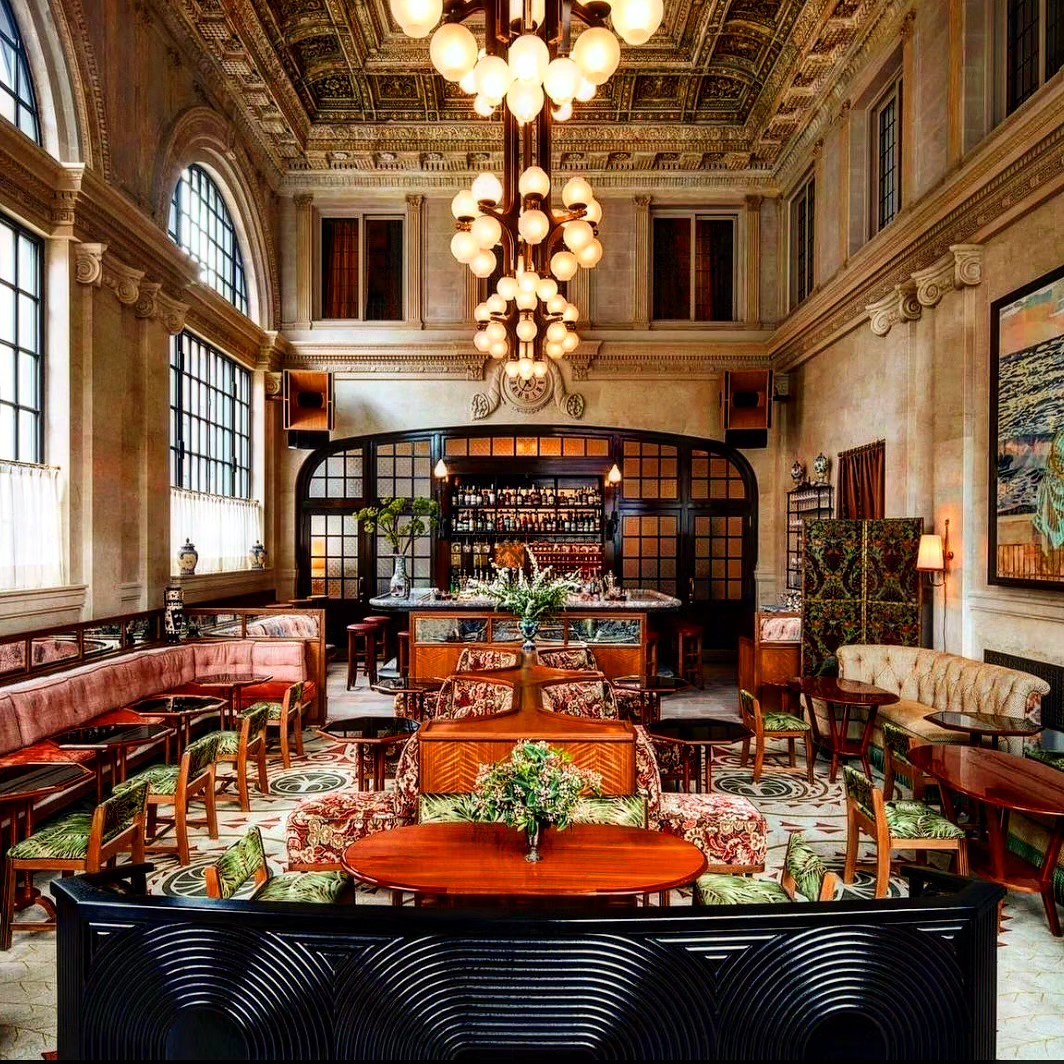
The Swan Room at Nine Orchard. Photo by Nine Orchard.
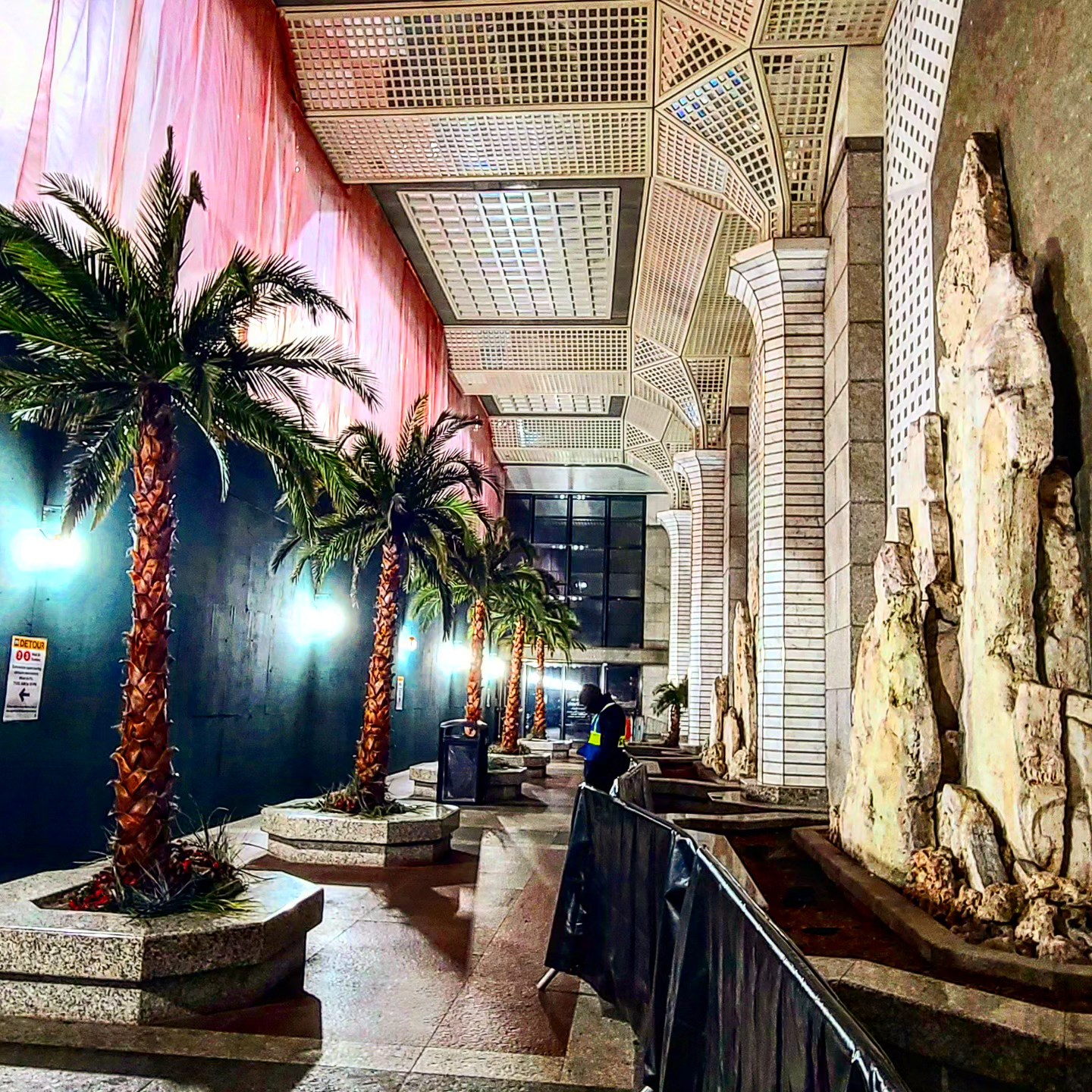
One thing I love about New York are the incredible locations to gather that are hidden in plain sight. This week, I got to spend time in three of these incredible gems: the Swan Room and East Room at Nine Orchard and the retro interior public space at 60 Wall Street before its complete demolition.
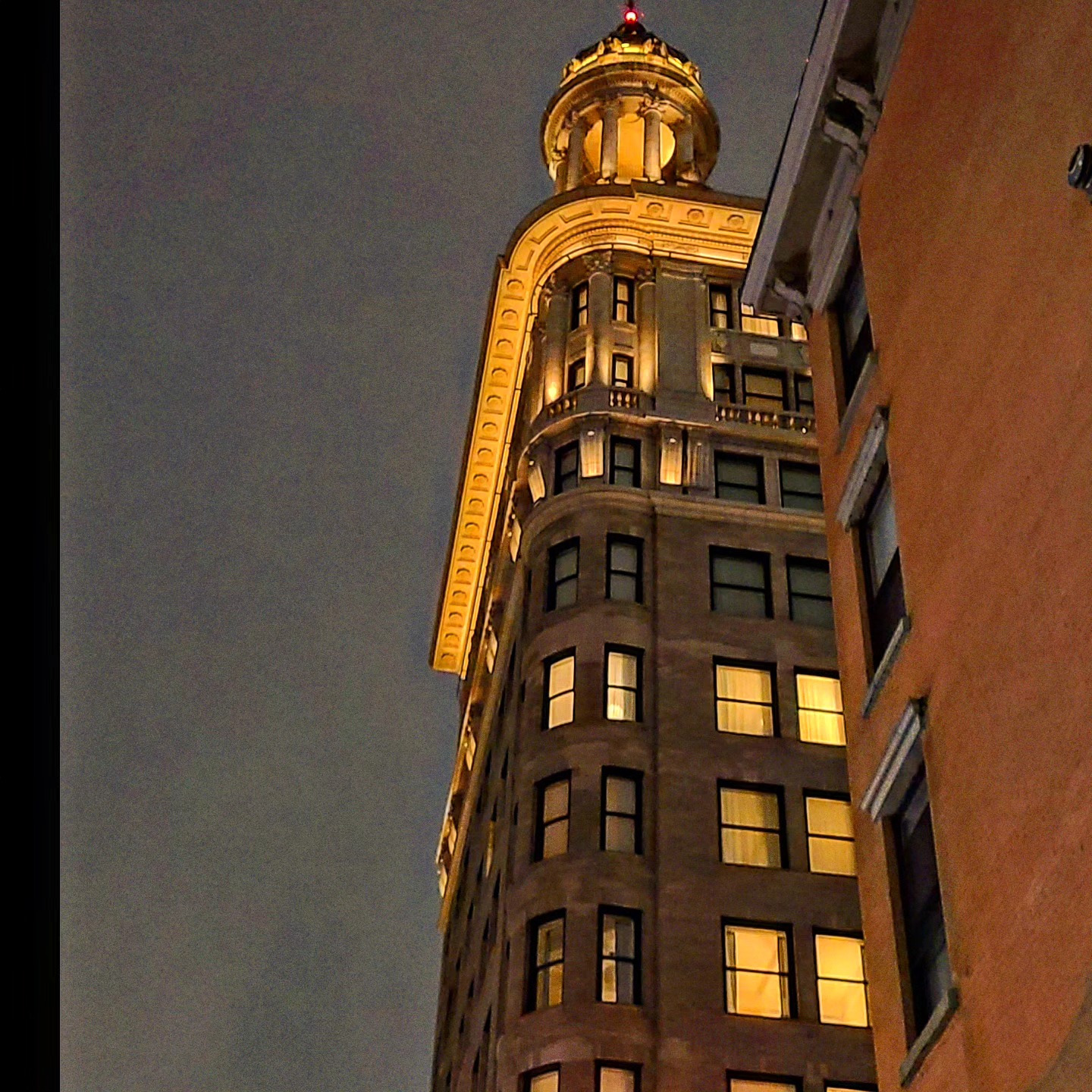
Nine Orchard is now a hotel that was the Jarmulowsky Bank over 100 years ago. The Swan Room is their main bar downstairs. Pictures are not allowed once it’s operational because they don’t want their patrons photographed (it’s quite a scene with more than a few celebrities enjoying being like the rest of us regular New Yorkers.) The East Room is a private event space upstairs that used to be the office of Sender Jarmulowsky, the founder of the bank. It’s cozy, dark, and moody. It looks down over the Swan Room where Sender was rumored to have been able to keep an eye on his bank employees and customers. (I’m thinking about the East Room as a possible space for my book launch party!) There’s a roof deck as well which is undergoing some renovations before spring arrives and I can’t wait to check it out when the weather gets warm.
The East Room and exterior of Nine Orchard. Photos by Christa Avampato.
60 Wall Street’s interior is currently being demolished. Thanks to The Municipal Art Society of New York, I was able to be one of the last people to see this weird retro space before the demolition is complete. We bid a fond farewell to the ticky tacky decor before it’s likely to become very minimalist. This is a public space where Wall Streeters have enjoyed their brown bag lunches for decades, and I think it will return as such once the lobby renovation is complete.
The East Room and exterior of Nine Orchard. Photos by Christa Avampato.
New York’s architecture, like the city, is ever-changing. What stays the same are all the delightful surprises around every corner in this magical place I’m so lucky to call home. If you ever find yourself here and you’re up for some urban exploring, I’d love to take you around and put my official New York City tour guide license to good use!
I’m astounded by the generosity of people I’m interviewing for my University of Cambridge dissertation in Sustainability Leadership. I’ve had or scheduled interviews with over 40 family office leaders, experienced climate communicators, and seasoned storytellers who have provided me with an incredible number and array of insights. I’m so grateful to all of them. My research question is how to use storytelling to connect family offices with climate entrepreneurs for mutual benefit and to safeguard the health of the planet as nature underpins half of our global GDP. If you or someone you know may be interested in talking to me, I’d love to chat. Let’s build a healthy world for all beings, together.







 Christa Avampato