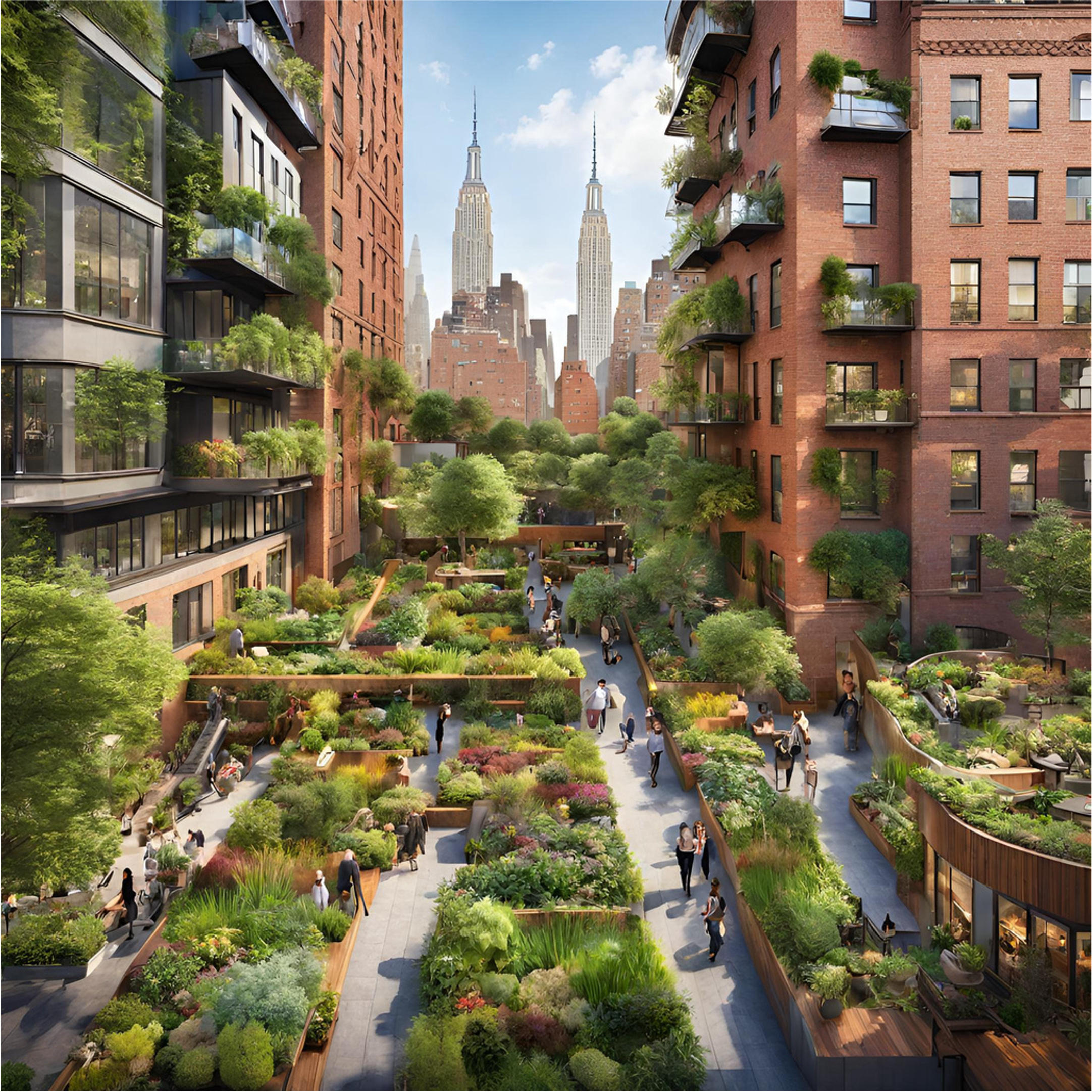
What does a sustainable New York City look like to you? I imagine lush micro gardens, biophilic architecture (a building methods that connects people with nature), rooftop farms, and clean transit, air, and water as pathways that give people, plants, and wildlife the opportunity to live side-by-side-by-side in ways that benefit all.
In biomimicry, we begin our design process by asking how nature would solve a specific problem we have with a question framed as “How would nature (the problem we want to solve)?”. My question above would be framed as “How would nature build a sustainable New York City?” This is a question that has occupied by headspace for years as I traverse through different projects and future visioning sessions.
In the spirit of an image being worth 1,000 words, I created these images with Canva Magic Studio AI to show how nature might build a sustainable New York. Is this a city you’d like to visit? Is this a city where you’d be happy to live? What are the first steps we can take now to make this our New York?
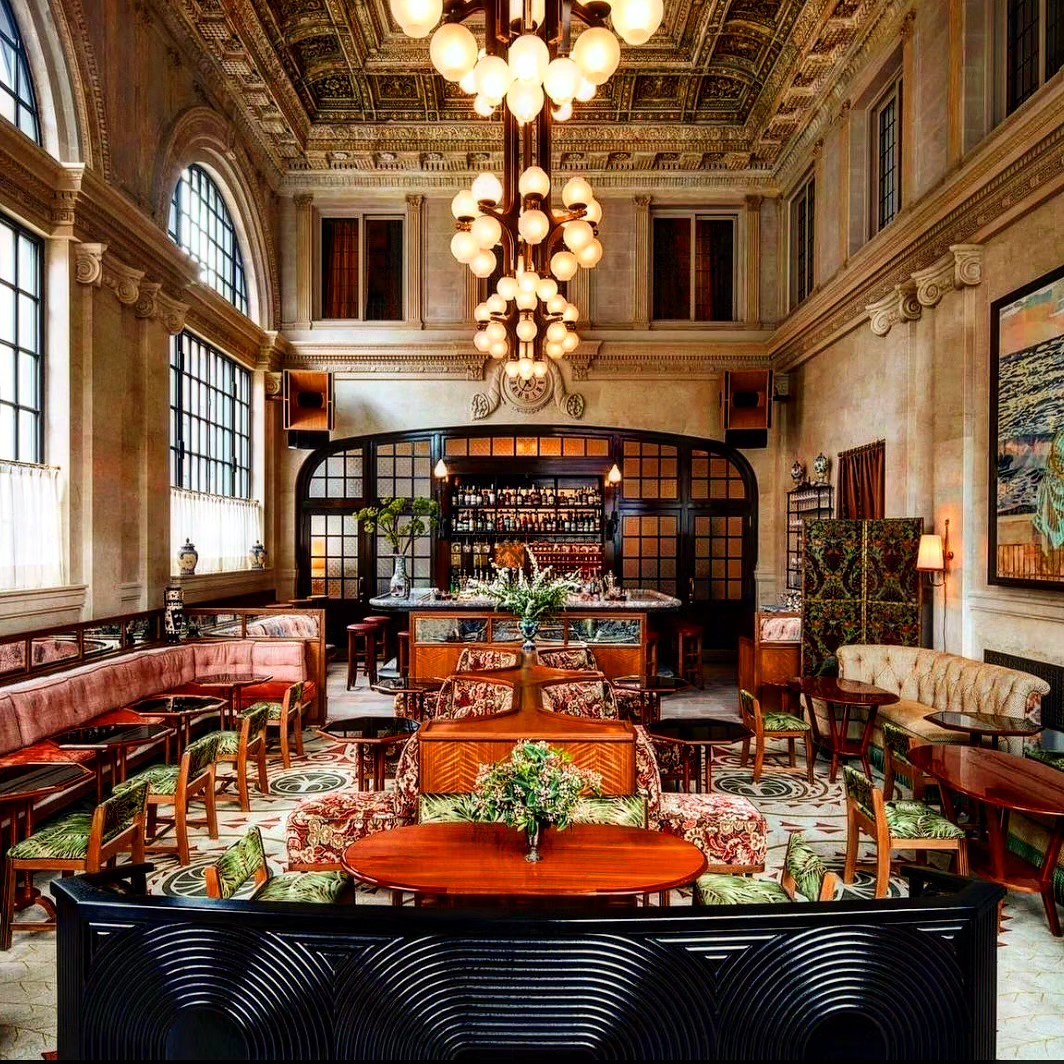
The Swan Room at Nine Orchard. Photo by Nine Orchard.
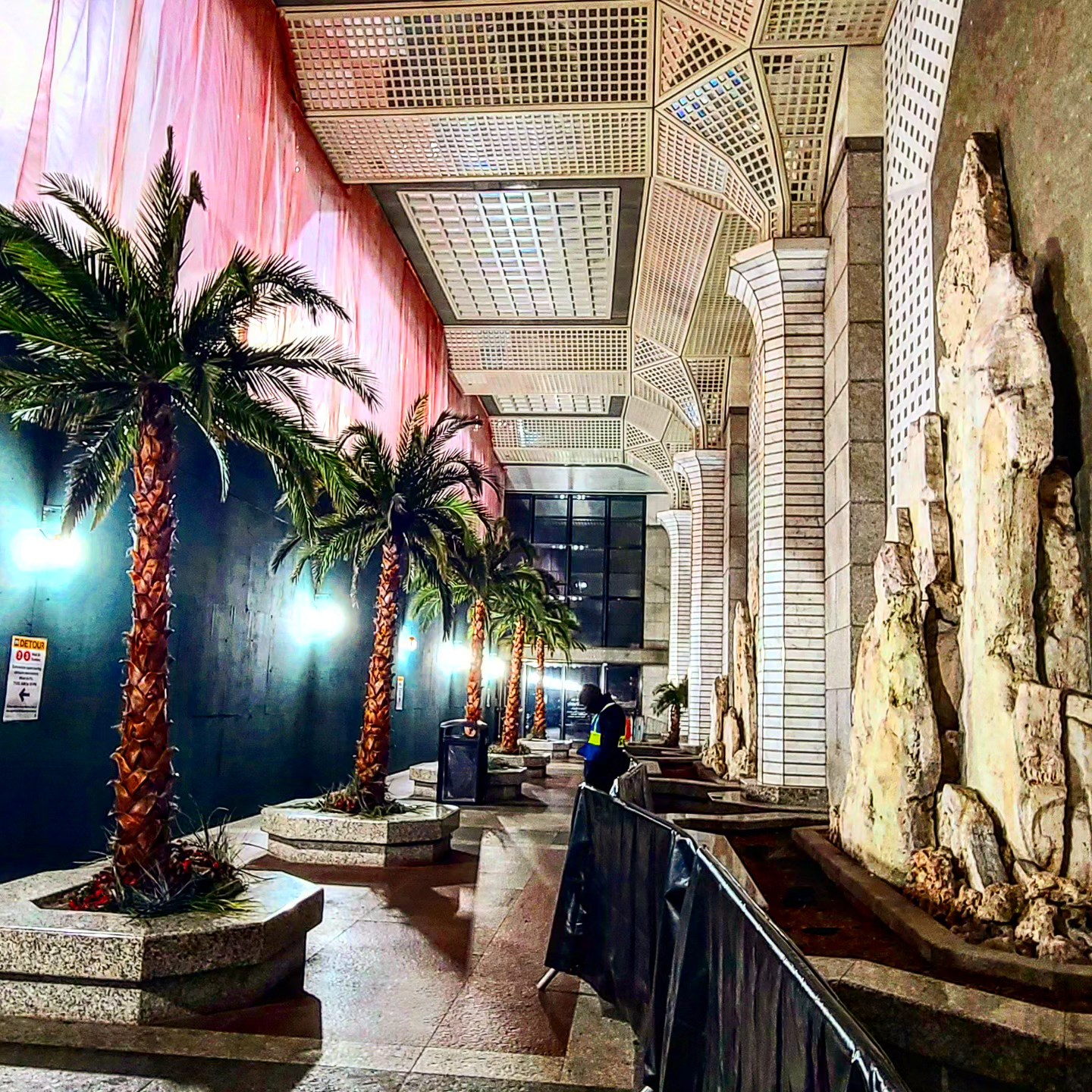
One thing I love about New York are the incredible locations to gather that are hidden in plain sight. This week, I got to spend time in three of these incredible gems: the Swan Room and East Room at Nine Orchard and the retro interior public space at 60 Wall Street before its complete demolition.
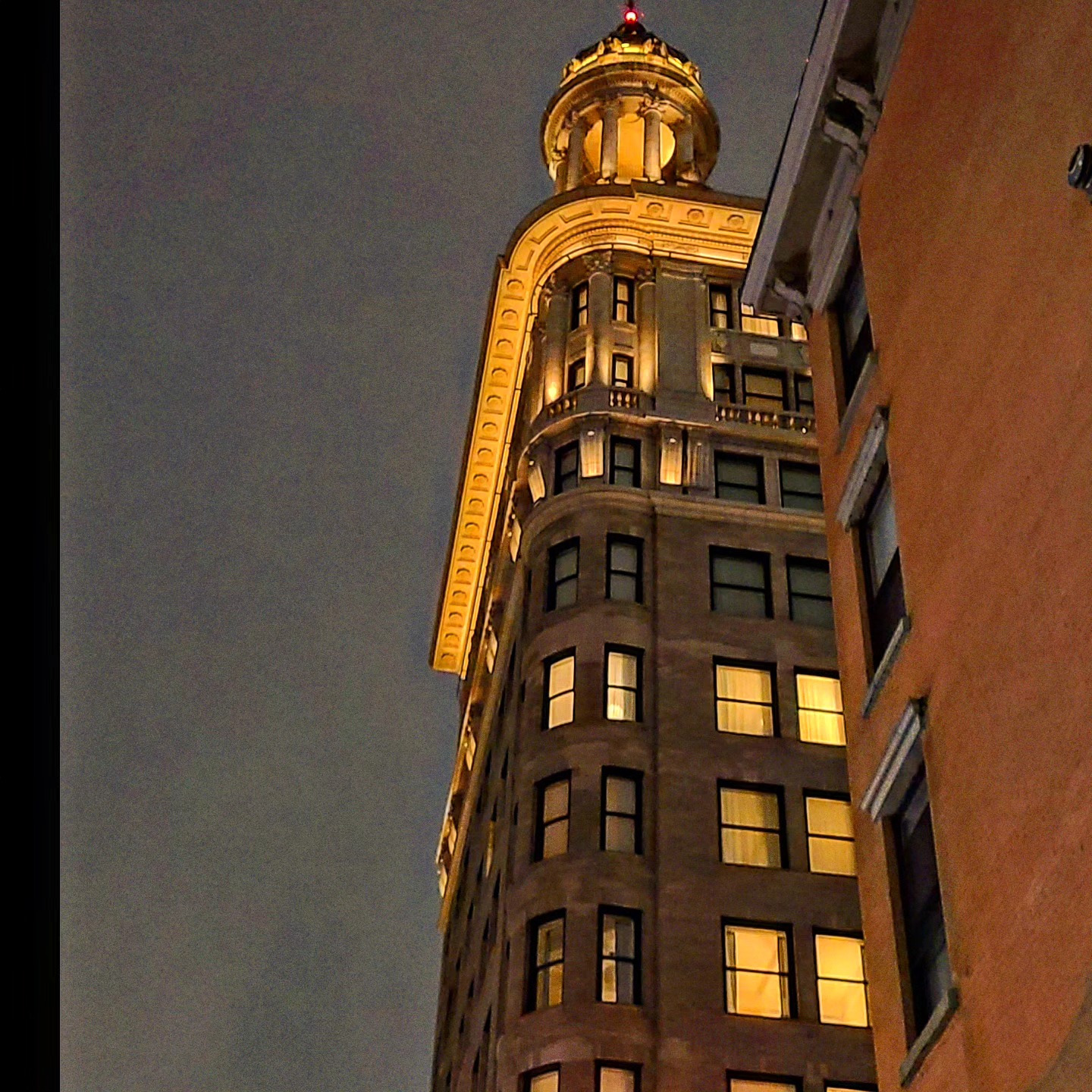
Nine Orchard is now a hotel that was the Jarmulowsky Bank over 100 years ago. The Swan Room is their main bar downstairs. Pictures are not allowed once it’s operational because they don’t want their patrons photographed (it’s quite a scene with more than a few celebrities enjoying being like the rest of us regular New Yorkers.) The East Room is a private event space upstairs that used to be the office of Sender Jarmulowsky, the founder of the bank. It’s cozy, dark, and moody. It looks down over the Swan Room where Sender was rumored to have been able to keep an eye on his bank employees and customers. (I’m thinking about the East Room as a possible space for my book launch party!) There’s a roof deck as well which is undergoing some renovations before spring arrives and I can’t wait to check it out when the weather gets warm.
The East Room and exterior of Nine Orchard. Photos by Christa Avampato.
60 Wall Street’s interior is currently being demolished. Thanks to The Municipal Art Society of New York, I was able to be one of the last people to see this weird retro space before the demolition is complete. We bid a fond farewell to the ticky tacky decor before it’s likely to become very minimalist. This is a public space where Wall Streeters have enjoyed their brown bag lunches for decades, and I think it will return as such once the lobby renovation is complete.
The East Room and exterior of Nine Orchard. Photos by Christa Avampato.
New York’s architecture, like the city, is ever-changing. What stays the same are all the delightful surprises around every corner in this magical place I’m so lucky to call home. If you ever find yourself here and you’re up for some urban exploring, I’d love to take you around and put my official New York City tour guide license to good use!
Me and Ashley at the Merchant’s House Museum and the Tredwell family photos and bios
Last night I had a blast taking a ghost tour of the Merchant’s House Museum on the Lower East Side of Manhattan led by one of best and dearest friends, Ashley Semrick. She was, as always, incredible. A fellow tour guide who is responsible for me taking the NYC tour guide exam (which is a grueling 4 hours long!), we always nerd out about the incredible history of our city. Her dedication to the museum, a vital piece of NYC history, is a gift to all of us.
Built in 1832, the house in the only building in NYC that is landmarked on the federal, state, and city level, inside and out. When you enter, you are literally stepping back in time into the 19th century. The house is perfectly preserved with the original furniture and furnishings, personal belongings, books, artwork, dishes, kitchenware, piano, and even their clothes!
The house was occupied by the Tredwells, a wealthy merchant family, and their four Irish servants from1835-1865, when the mercantile seaport of New York City emerged as a growing metropolis and the commercial emporium of America. In 1865, just as the Civil War was drawing to a close, the patriarch of the family passed away in the house. Gertrude, the youngest of the 8 children, passed away in the house, in the same bed where she was born, in 1909 at the age 93. And that’s when things really got interesting from a paranormal perspective.
There have been 100s, perhaps 1000s, of reports of supernatural activity in the house. It is the only museum in the country with a full-time all-volunteer paranormal team that employs impressive technology to capture activity. Though I didn’t see any ghosts on the tour, the house does have an energy to it that has to be experienced. Whether you believe in ghosts or not, a visit is a-must do activity in NYC.
And the museum needs our help. For 10 years, they’ve been fighting an intense legal battle with a developer who wants to build an 8-story hotel right next to the museum. Engineering experts have said that if that happens, the museum will be rendered unsafe for anyone to enter. To lose this museum and this piece of NYC history would be tragic. With an all-volunteer staff, every dollar you donate and spend on tickets to tours and events goes directly to preserve this stunning space.
Self-guided and guided tours operate on Thursday, Friday, Saturday, and Sunday. The staff is entirely volunteers and they offer numerous events year-round, both in-person and online. Though most aren’t ghost-related and focus on the history of the home, the family, and our city, they all give you an opportunity to walk in the literal footsteps of the Tredwells.
The holiday season is particularly special as the house is decked out in 19-century Victorian style, just as the Tredwells did for their famous celebrations and parties. There are musical events, readings, and performances. Go to https://merchantshouse.org/visit/ to learn more.
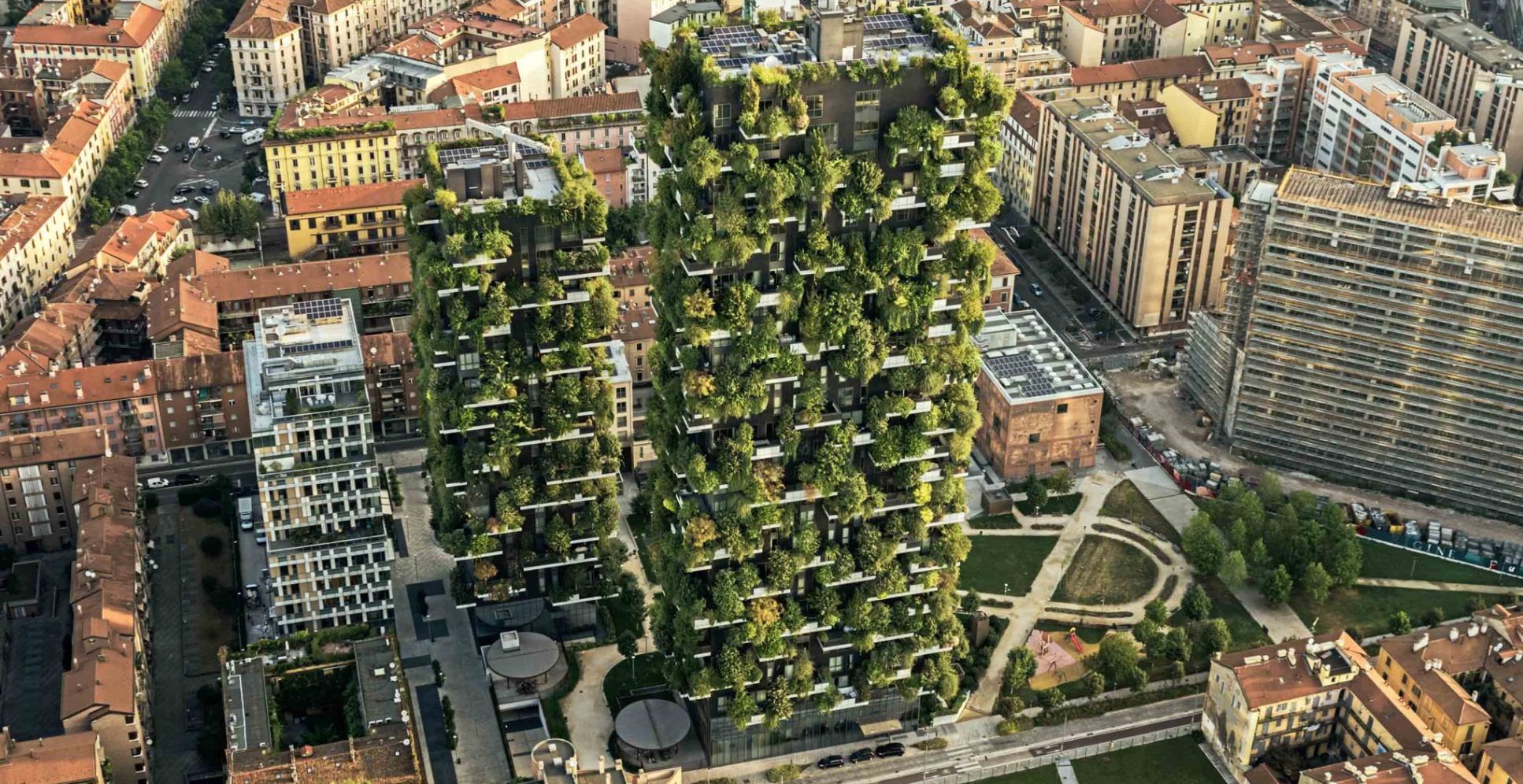
The Vertical Forest in the Porta Nuova area of Milan is an understated marvel and an innovative prototype for how modern cities with deep historical roots can help humans, animals, and plants cohabitate for everyone’s benefit.
The two residential buildings create space for 800 trees, 15,000 plants, and 5,000 shrubs. This is the same number of plants you’d find on ~90,000 square feet of woodland on just ~9,000 square meters of urban space. The Vertical Forest reduces heat when it’s warm, regulates humidity, provides insulation when it’s cold, and cleans the air. And by the way, plants help humans by lowering our stress and anxiety. This greenery has provided a home for 1,600 species of butterflies and birds. An added bonus—if we building our cities vertically, we prevent them from sprawling horizontally which saves more land and the species that call that land home.
This kind of living architecture is a financial and health win for people and nature, and one we cannot afford to ignore. Cities across the world can adopt the ethos of the Vertical Forest and we will all benefit.
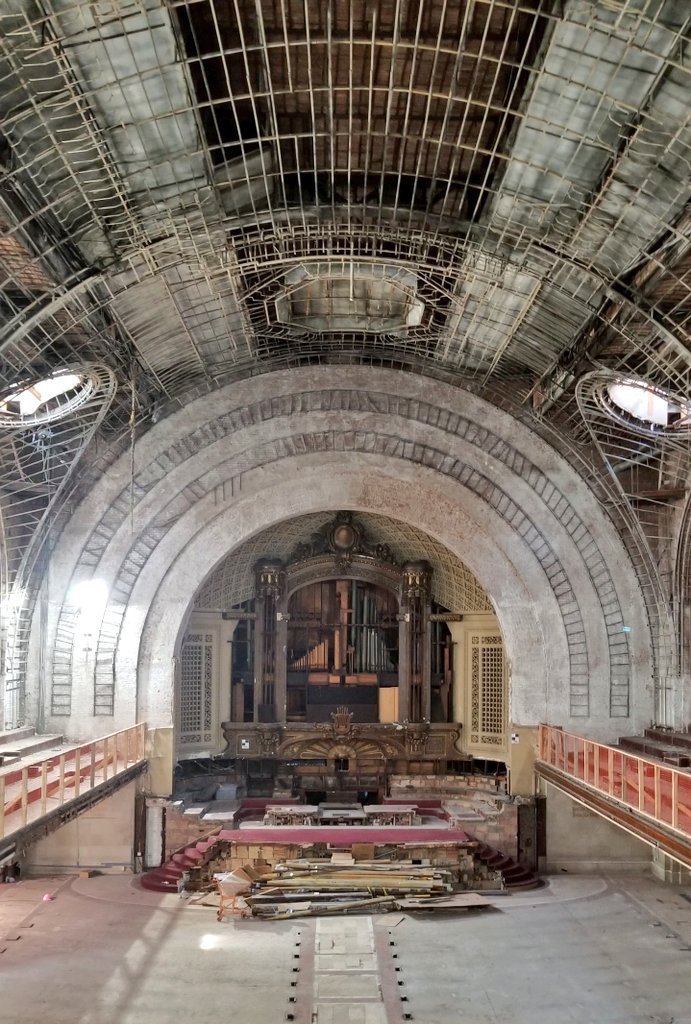
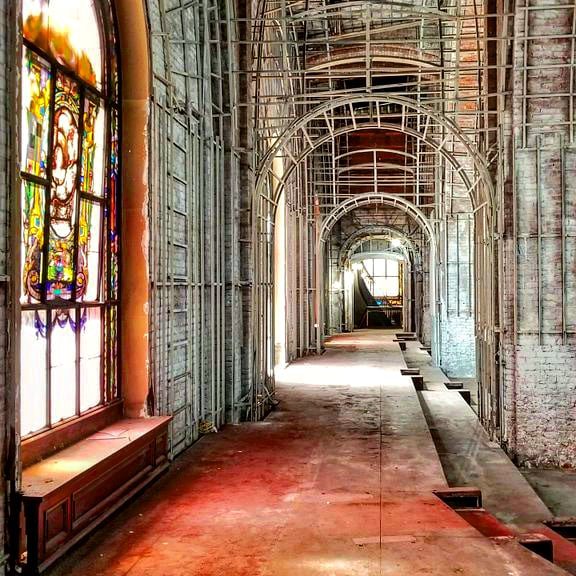
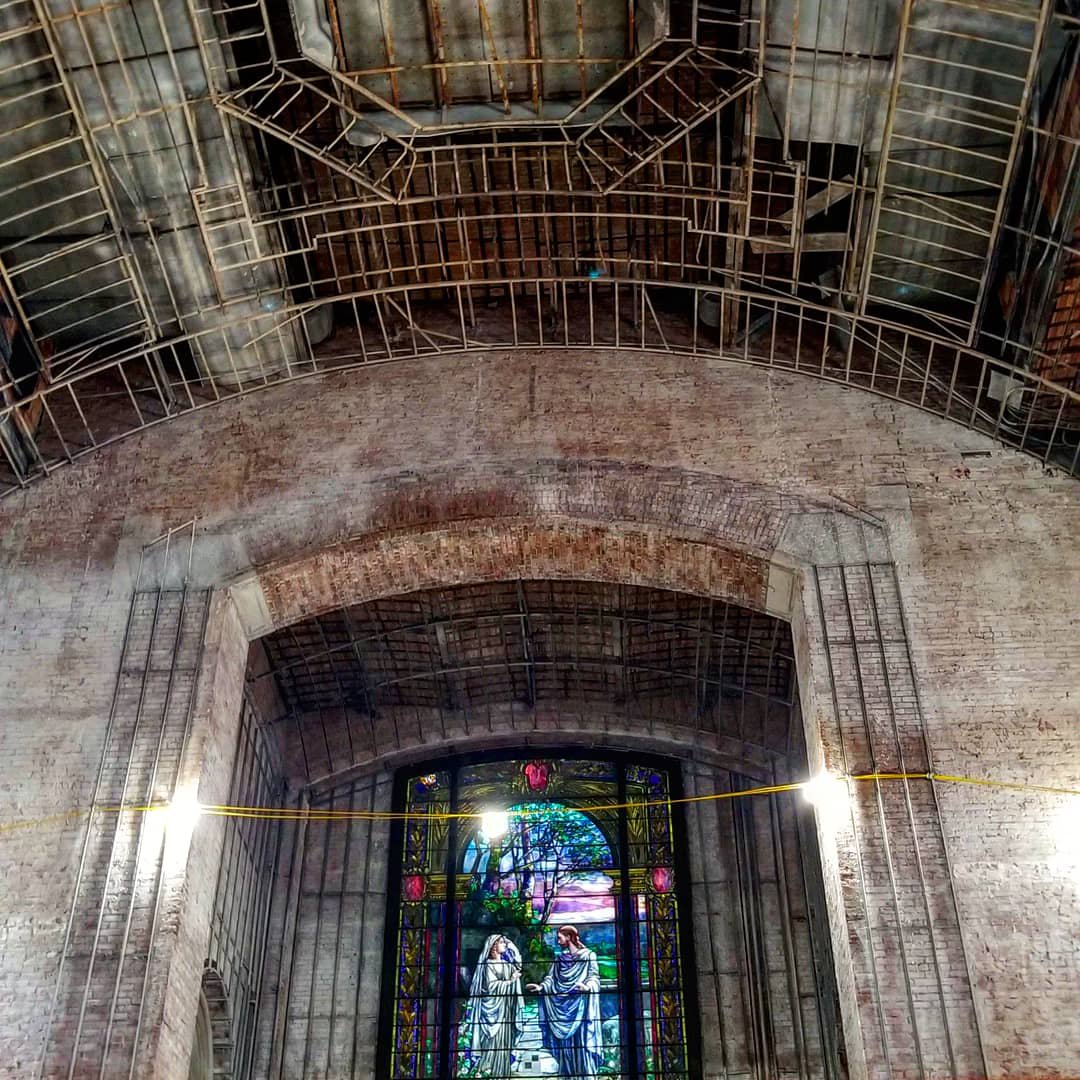
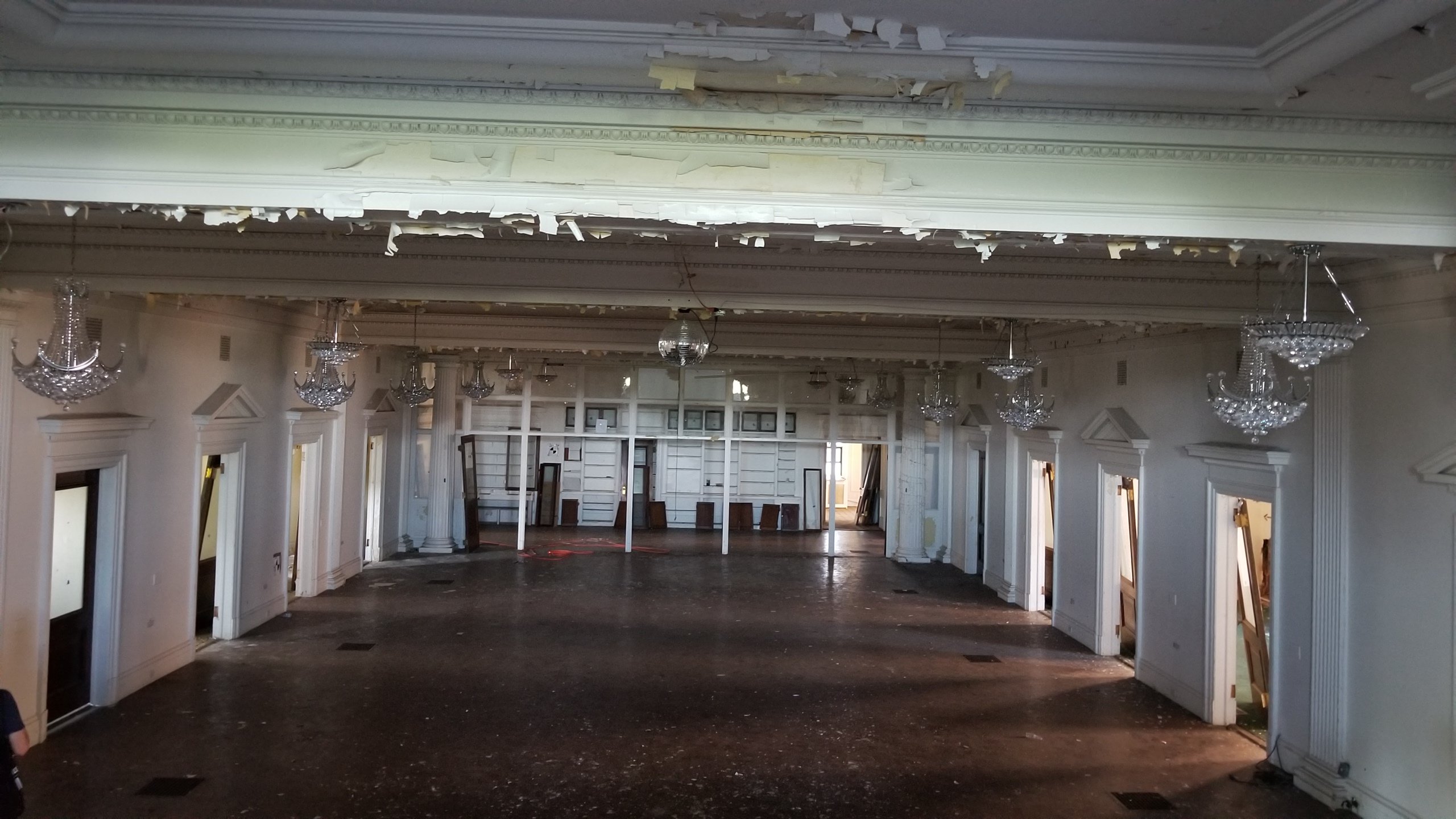
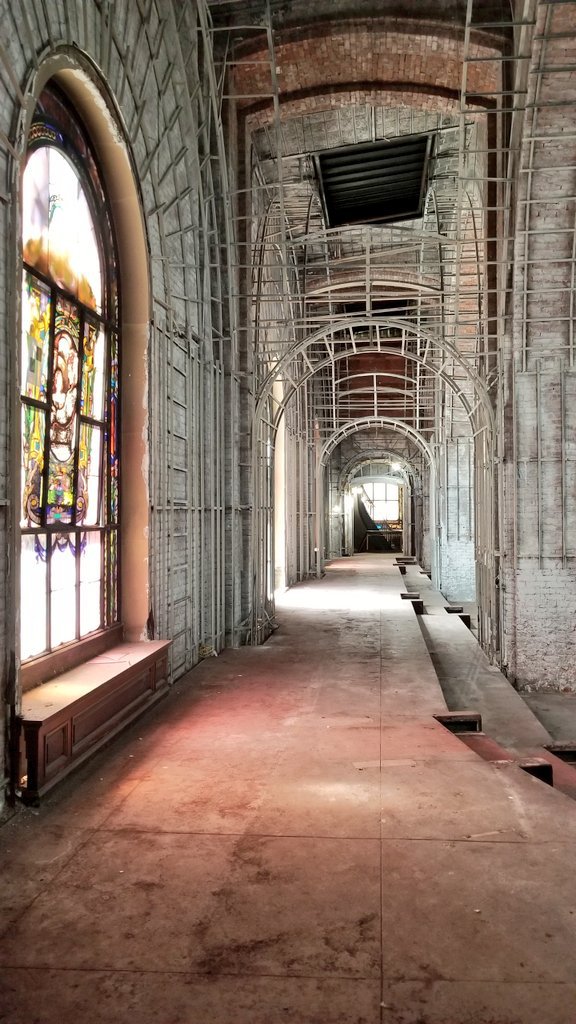
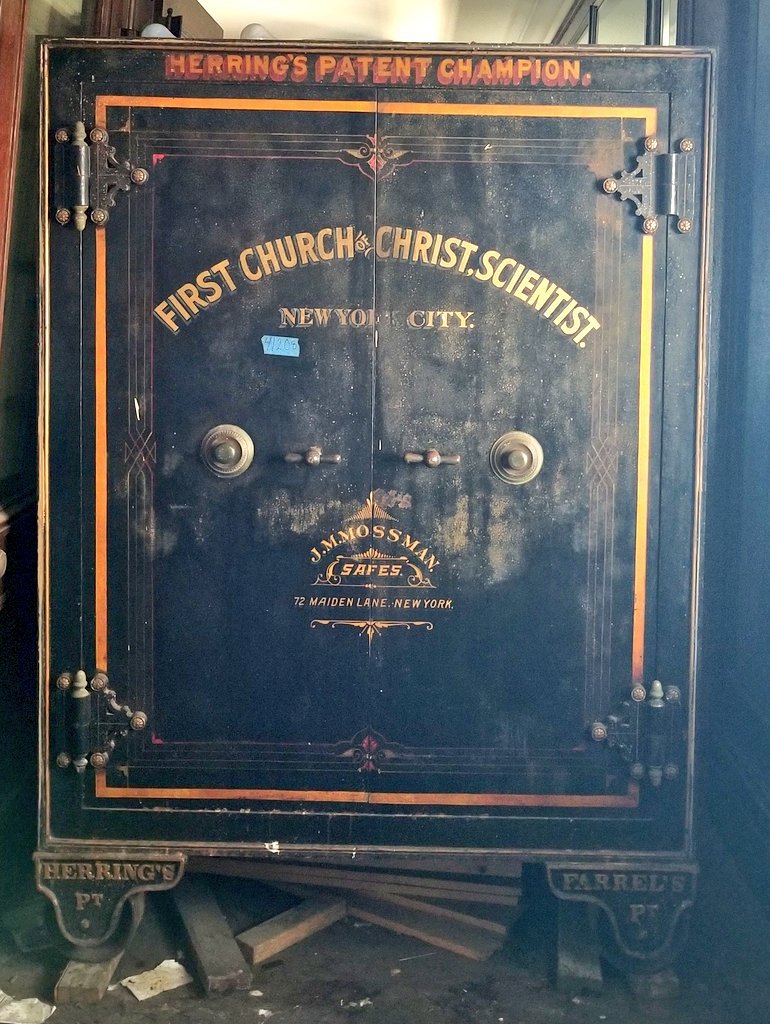
Thank you to Children’s Museum of Manhattan for the tour of this church that’s been abandoned for 15 yrs & will soon be the new home for the museum. My museum-loving friends & I had a blast! This church is across the street from the apartment building where I used to live and I’ve admired it from the exterior for years. It was fascinating to actually be able to go inside and explore it. From an abandoned ballroom to vaulted ceilings, a sealed safe, and the stunning stain glass, I was completely inspired by this space! Pretty sure Emerson Page is going to find her way in here…
In my early 20s while I was working in theater management, I had the great privilege to travel all over the U.S. and Canada with different tours. I was always amazed by the beauty, history, and culture of the restored spaces where we played, and those experiences began my interest in historic preservation. Now whenever I travel to a new city (or even around cities I know well), you can find me looking up and building facades and examining the internal architecture that makes buildings so unique. It’s one of the things I love so much about New York City; the variation in architecture there is endless!
I decided to get a little bit more serious about this interest and enrolled in an online class called The Architectural Imagination. It’s being offered on the edX platform by four professors of architecture at Harvard and it’s free. If architecture and historic preservation is something you’re interested in, too, sign up and we can go through it together!
“What I build can influence the way people behave in these spaces. For me, architecture is a social act.” ~David Adjaye, architect
In every career, we have the ability to build a better world. We can follow our deepest personal passions and serve others at the same time. For so long, I thought I had to choose between making myself happy and helping others. To now know that I don’t have to choose has given me a lot of freedom.
I’ve been watching a lot of videos and reading a lot of books this past week about David Adjaye, the architect who designed, among many other buildings, the National Museum of African American History and Culture. He sees architecture as a form of justice, as a way to influence the behavior and mindset of a community. These may not be the end goals of architecture on the surface of the work, but they are the root of David’s work. It is a wonderful reminder to us that in every career there are ways to do well and do good.







 Christa Avampato