I tell wonder-filled stories about hope and healing
Author: Christa Avampato
The short of it:
Writer. Health, education, and art advocate. Theater and film producer. Visual artist. Product geek. Proud alumnae of the University of Pennsylvania (BA) and the Darden School of Business at the University of Virginia (MBA). Inspired by ancient wisdom & modern tech. Proliferator of goodness. Opener of doors. Friend to animals. Fan of creative work in all its wondrous forms. I use my business skills to create passion projects that build a better world. I’ve been called the happiest New Yorker, and I try hard to live up to that title every day.
The long of it:
My career has stretched across Capitol Hill, Broadway theatre, education, nonprofit fundraising, health and wellness, and Fortune 500 companies in retail, media, entertainment, technology, and financial services. I’ve been a product developer and product manager, theater manager, strategic consultant, marketer, voice over artist, , teacher, and fundraiser. I use my business and storytelling to support and sustain passion projects that build a better world. In every experience, I’ve used my sense of and respect for elegant design to develop meaningful products, services, programs, and events.
While building a business career, I also built a strong portfolio as a journalist, novelist, freelance writer, interviewer, presenter, and public speaker. My writing has appeared in The Washington Post, The Huffington Post, PBS.org, Boston.com, Royal Media Partners publications, and The Motley Fool on a wide range of topics including business, technology, science, health, education, culture, and lifestyle. I have also been an invited speaker at SXSW, Teach for America, Avon headquarters, Games for Change, NYU, Columbia University, Hunter College, and the Alzheimer’s Foundation of America. The first book in my young adult book series, Emerson Page and Where the Light Enters, was acquired by a publisher and launched in November 2017. I’m currently working on the second book in the series.
A recovering multi-tasker, I’m equally at home in front of my Mac, on my yoga mat, walking my rescue dog, Phineas, traveling with a purpose, or practicing the high-art of people watching. I also cut up small bits of paper and put them back together as a collage artist.
My company:
I’m bringing together all of my business and creative career paths as the Founder of Double or Nothing Media:
• I craft products, programs, and projects that make a difference;
• I build the business plans that make what I craft financially sustainable;
• I tell the stories that matter about the people, places, and products that inspire me.
Follow my adventures on Twitter at https://twitter.com/christanyc and Instagram at https://instagram.com/christarosenyc.
The search for my Heart Dog is officially on! This week, I filled out adoption registration forms with several amazing local rescue groups. NYC has so many wonderful rescue organizations! I know one of them is going to have the perfect pup for me to adopt.
Muddy Paws Rescue NYC is of course high on the list because I’ve fostered 10 dogs with them over the last year. Every Last One Rescue, Animal Care Centers of NYC (ACC), and North Shore Animal League America are a few of the others I’m monitoring every day for new additions!
This week I also spent time getting clear on the criteria for my Heart Dog. I’m looking for a doggo who is friendly with people and dogs, enjoys long walks, and loves going on adventures around the city. I’d love to adopt a pup who is a New Yorker already.
I’m very interested in having a dog who would be suitable for therapy dog training—a confident and joyful spirit who’s ready to give and receive love.
Phineas, my Soul Dog, was a dachshund so I’m partial to that breed though that’s not a requirement. Ideally, a dog that fits comfortably in a carrier for easy city travel would be great, but I’m ready to fall in love with a larger dog, too. I hope Phinny will guide me to the dog who’s meant for me.
Send me all your good adoption vibes. I’m ready for the search and I’m excited to share the journey with you!
Today, October 27th, is a special day—it’s the day to honor the spirits of deceased pets as part of the Día de los Muertos tradition. And of course I’m thinking of Phineas, my soul dog, the dog who made me who I am. My constant companion. My forever teacher.
Phinny and I had thirteen and a half beautiful years together and he was there for me through some of the most trying times of my life. He taught me about unconditional love, patience, loyalty, and how to embrace joy, even in the midst of sorrow. His spirit has never left me, not for a second. And he never will. I keep a year-round ofrenda for him in our home where I say good morning and good night to him every day. Today it feels especially important to remember his life and the incredible bond we share that we will have always.
If you’re going through the pain of loss, please know that our beloveds never leave us. Happy Día de los Muertos, Phinny. I’m happy you’re still with me, still guiding me, still loving me, still teaching me. I am the luckiest to be your mama. ❤️
Every day, the global citrus industry produces mountains of waste: billions of tons of leftover peels and pulp from juice extraction. Most of my immediate family lives in Florida now, and I’ve seen his waste first-hand. In nature, waste doesn’t exist; everything is a resource. So, what if we applied that wisdom—the principle of biomimicry—to the industrial challenge of food waste?
Enter Orange Fiber, an Italian company (from Sicily – where my ancestors are from!) that has cracked the code on circular fashion.
The Problem of Waste, Solved by Nature
Orange Fiber developed an innovative, patented process to extract the cellulose fiber that still exists within citrus juice by-products. They take the material left over from juicing and, through bio-based chemistry, transform it into a refined, high-quality fabric. The result is a refined, ethereal, and sensorial fabric that feels like a beautiful silk.
This is biomimicry in action: Nature’s design principle is to create closed-loop systems, and Orange Fiber has designed a zero-waste textile solution right inside a juice factory.
Why This is More Than Just a Fabric
This is a story of value creation and a new definition of luxury in the modern world.
Sustainable Innovation: It dramatically reduces agricultural waste and reliance on non-renewable resources (like petroleum-based synthetic fabrics).
Professional Validation: Since its launch, Orange Fiber has quickly scaled, partnering with brands like Salvatore Ferragamo, H&M Conscious Exclusive, and E. Marinella. If they trust the quality, the model is scalable.
The Secret is Simple: The success of Orange Fiber is a perfect example of a deep, simple secret often overlooked in product design: the solution is often hiding in plain sight, waiting to be repurposed.
The work of Orange Fiber reminds us that every challenge we face—from environmental pollution to resource depletion—can be solved by looking to the design wisdom of the natural world. It proves that the most beautiful, sustainable solutions are often discovered when we choose curiosity and embrace the design mindset of, “How can we make something beautiful while also protecting the natural world we all depend upon for survival?”
This week was filled with more than its fair share of disappointments: a few people I trusted let me down; the heavy emotional challenge of having a foster pup who not only isn’t happy to see me when I get home but who actively runs away from me because of the tough life he’s had is a painful circumstance for both of us; opportunities that I hoped would work out and didn’t despite my best efforts.
Of course there were bright spots this week, too: NYC’s Secrets & Lies, my storytelling show on the 28th, sold out and I’ve hit upon a great ghost story to tell; I had a great conversation about the show with a podcast host I admire; I was finally able to get supportive meds for my foster pup so both of us could get a full night’s sleep; I read, researched, and wrote about topics that matter to me.
Also, this month is my 5-year cancer-free anniversary so really that far outweighs any disappointment life will ever throw at me. I looked death in the eye and didn’t flinch, multiple times. A few disappointments? I’ll take ’em!
After a long work meeting this afternoon for a new project I’m about to begin, I walked home through Green-Wood Cemetery. The sun on my face and the scent of autumn leaves felt like a gift. It occurred to me that the challenges I’ve had this week are pointing me in the direction I’m meant to go. The universe is closing some doors so that the path for me to take going forward is clear.
Over the past year I’ve felt a bit stuck and unsure of which way to go, and so I’ve waited – hoping some insights would emerge. While I prefer insights with positive outcomes, learning where not to spend my time and effort is also valuable. It just doesn’t feel as good when the revelation arrives. I put a lot of effort into making plans and when those plans don’t work, it can feel discouraging.
Looking back on my life, the best things that happened to me aren’t things I planned. They were opportunities that found me and that I grabbed with both hands because they were even better than what I had planned. Maybe this week has again taught me to be open to possibility, to change, to growth. Maybe there’s some even more wonderful than I could ever imagine just up ahead, around the bend, and what I need to do to find it is to keep going.
In the meantime, I made myself a sunny bake – something I often do when I don’t know what to do. This week my lovely friend, Stephanie, posted a recipe for zucchini lemon cake and I gave it a whirl. Fuel for the sweet journey ahead.
I’m so excited to share this update: NYC’s Secrets & Lies, my storytelling show about secret NYC history, is officially looking for new storytellers for our 2026 season!
This show is a dream come true for me and incorporates everything I love – NYC, history, research, game shows, storytelling, and collaboration. We’re thrilled to be back on stage and growing.
Read the full Playbill listing, including the link to submit at http://bit.ly/46UcuAz.
Please feel free to share this with anyone whom you think would be interested.
Here is the full text of the listing:
NYC’s SECRETS & LIES: Storytellers Wanted
PRODUCTION DESCRIPTION: NYC’s Secrets & Lies is a critically acclaimed, dynamic live storytelling show that blends deep historical research with high-energy theatrical performance. We bring little-known NYC stories to life, pairing each storyteller’s script with synchronized, original visual presentations (slides/images). Each performer acts as a historian, researcher, and entertainer.
SEEKING DIVERSE STORYTELLERS (18+)
We seek diverse, charismatic performers who are passionate about historical research and engaging presentation.
Storytellers: Individuals comfortable conducting independent historical research, writing a compelling script (typically 8–12 minutes in length), and delivering it with theatrical flair.
Key Skills:
Ability to translate complex historical facts into an accessible, entertaining narrative.
Familiarity with creating simple visual aids (slides/Keynote) is helpful, but not required.
Experience: Prior experience in educational performing, tour guiding, or narrative podcasting is a plus, but not a requirement. The only true requirement is a passion for NYC history and a desire to share it with an audience in a fun way.
SUBMISSION INSTRUCTIONS: VIDEO FIRST OPEN CALL
We are accepting self-tape video submissions for the first round. (A phone video is perfectly fine; please minimize the file size.)
Required Materials:
Headshot and Resume/CV: Highlight any experience in research, writing, public speaking, performance, or tour guiding.
Short Video (Self-Tape): A 2-minute excerpt of a historical story or topic you are passionate about. Focus on captivating delivery and clarity—imagine you are telling a fantastic secret tidbit to a good friend.No visuals needed.
Cover Letter: Please include the following:
Relevant experience (research, performance, etc.)
Your interest in the show and NYC history.
If you’ve seen NYC’s Secrets & Lies (or plan to attend in October or December.)
Social media handles (if applicable.)
Please submit all materials via email at nycsecretsandlies@gmail.com. Email us if you have any questions.
HIGHLY RECOMMENDED: LEARN ABOUT OUR SHOW
To understand the unique blend of entertainment, historical research, and performance, we highly encourage you to attend one of our upcoming live shows:
October Show: “Ghost Stories”
Date: Tuesday, October 28th, 2025
Location: The Hidden Jewel Box Theater – a secret theater hidden inside Port Authority Bus Terminal!
Five years ago today, I was diagnosed with breast cancer and I didn’t know what my future held. My friend, Meg, sat in my surgeon’s office with me and held my hand. A plan came together with my surgeon to not only help me survive, but thrive. I didn’t know what that looked like then, but I know now.
Today, I stand here, stronger and more committed than ever to sharing the stories that matter—the secrets we keep because sometimes they are too frightening to say out loud and the lies we tell ourselves to fake it until we make it so we can survive.
I’m channeling that strength into a story I’ll tell on stage, and I hope you’ll join me for the next chapter on October 28th for NYC’s Secrets & Lies – Ghost Stories!
That October 28th show date is also a very momentous personal anniversary for me: that will mark five years since my bilateral mastectomy—the day I faced my worst fear head-on and the last day there was any sign of cancer in my body. We’re going to celebrate!
The urgent global challenge is feeding a rapidly growing population while fighting the uncertainty of climate change. As a storyteller and a biomimicry scientist, I often ask: How does nature solve a massive, existential crisis? The answer, it turns out, lies not in some distant super-technology, but in the subtle genius of a single plant cell.
New research from the Cold Spring Harbor Laboratory has illuminated a fundamental biological “master switch” in the DNA of food crops like corn, giving us an actual blueprint for creating a resilient, thriving future. This isn’t just botany; it’s a profound lesson in survival written right into the plant kingdom.
The Inner Wisdom of the Plant
Plant growth, from the deepest root to the ripest ear of corn, is governed by its stem cells—unspecialized cells that hold the potential to become any part of the plant. The challenge facing plant scientists has always been figuring out how to balance these cells: when should they grow and when should they specialize into, say, a fruit or a thick stalk?
In a breakthrough study, scientists mapped the gene expression in these cells, revealing the network of regulators that act as the plant’s precise internal control panel. This network balances growth and stress response, allowing the plant to strategically allocate its resources for survival.
This knowledge is a gift to us all because it shows how nature manages risk. A plant facing drought doesn’t just despair; it shifts resources to deepen its roots. A plant under pest attack doesn’t just succumb; it redirects energy to fortify its cell walls. It’s a marvelous, elegant system of risk mitigation through metabolic flexibility.
A Blueprint for Humanity’s Resilience
As my work focuses on biomimicry—integrating nature’s genius into the human world—I see in this discovery a direct path to solving our human challenge of food security. We are not meant to struggle endlessly against the elements; we are meant to learn from the masters of endurance.
This plant study provides us with three clear takeaways for building a better world:
Precision over Force: Instead of overwhelming fields with more fertilizer and water, we can use this genetic knowledge to engineer plants to be more efficient—to use nitrogen more effectively and direct energy precisely where it’s needed most for resilience.
Unlocking Latent Potential: We are now able to see and manipulate the plant’s own evolutionary solutions. We can develop crops with deep-seated, natural defenses against drought and disease, built on the plant’s own wisdom, not on chemical dependency.
The Power of the Foundational System: The corn stalk teaches us that true resilience comes from perfecting the foundation. By understanding and replicating the simplest, deepest biological controls, we can build human systems that are robust and adaptable, just like an ecosystem.
A Brighter Future Ahead
This breakthrough is more than just a scientific finding; it is a fundamental shift in our relationship with nature. By finally decoding the genetic “master switch” that plants use to govern their own destiny, we are handed a powerful blueprint for survival. The challenge of global food security has never been greater, but this research proves that the solution is not an endless technological sprint, but a deeper engagement with the patient, profound wisdom of the living world. The era of resilient agriculture is not just on the horizon—it has already begun, written in the complex, hopeful language of a plant’s own DNA.
The storytellers of NYC’s Secrets & Lies and I have spent the last month celebrating the secrets hidden beneath New York City—from the quiet wilderness of Central Park to the forgotten history in the street streets. As October deepens, we’re switching our focus from nature’s secrets to something far more chilling: NYC’s infamous ghosts and the secrets they left behind.
The audience feedback from our last event, NYC’s Secrets & Lies – Nature, was absolutely overwhelming. Before we dive into the chilling tales planned for October 28th, we want to prove that this is more than just a show—it’s a truly unforgettable New York experience. If you’ve been on the fence, let our past audience convince you to secure your spot for a night of fright, tricks, and treats!
Why the Show Works
We set out to create compelling, high-caliber storytelling, and the response confirmed it. This show isn’t just reciting history; it’s about crafting a narrative that sticks with you long after you leave The Hidden Jewel Box Theater, a secret theater hidden inside Port Authority Bus Terminal.
Here is a glimpse of what audience members said about the last installment:
🗣️ Testimonial 1: “From the moment I stepped in through the secret door to the moment I left through ANOTHER secret door, this was the best storytelling I’ve ever seen in NYC!”
🗣️ Testimonial 2: “I haven’t been this entertained and educated at the same time in a long time. The perfect New York night out—NYC’s Secrets & Lies is a true hidden gem of the city’s indie arts scene.”
🗣️ Testimonial 3: “A masterclass in stage presence. The performers brought every secret to life and I had no idea which stories were true and which was the lie! I bought tickets for the next show before I left the theater.”
From Nature to Ghosts
Image created by Christa Avampato
The same dedication to research, quality performance, and compelling narrative that wowed the audience last month is now being turned towards the city’s darker corners.
For NYC’s Secrets & Lies – Ghost Stories on Tuesday, October 28th at 8pm, we’re diving deep into the true hauntings and the unsettling history that makes New York one of the spookiest places on earth. Expect to hear real, unsettling stories about:
The notorious ghosts of Greenwich Village’s oldest theaters.
The dark family secrets buried beneath modern skyscrapers.
The lingering spirits tied to a famous Manhattan landmark.
And one big lie! This is an intimate, spine-tingling historical journey just three days before Halloween. Our show is your perfect way to connect with the ghosts of New York’s past. Come early when the doors open at 7:30pm to enjoy some treats, meet the storytellers, and explore The Hidden Jewel Box Theater before it closes and disappears forever!
Space at The Hidden Jewel Box Theater is extremely limited for this one-night-only event. With the clock ticking down to October 28th, tickets are selling fast thanks to the buzz from our last show. Don’t wait to secure your spot!
PS – Keep following our social channels for behind-the-scenes looks at the chilling research for the Ghost Stories show! You can follow me on Instagram and Threads at @christarosenyc and you can follow the show on Instagram at @nycsecretsandlies.
I just attended Dr. Katharine Hayhoe’s Climate Week NYC talk at the American Museum of Natural History, and it was the most empowering climate message I’ve ever heard. It reframes the entire discussion around three simple ideas: Head, Heart, and Hands.
A research-backed truth: Dr. Hayhoe shared that most people in this country and in the world (~60% on both counts) are worried about climate change. We, the worried, don’t need more doom and damning data to get us concerned because we’re already there.
The challenge: Even though we’re worried, we aren’t taking enough action to alleviate our worry because we don’t know what to do about it.
The solution: Sync up our head, heart, and hands – what I’m calling the great triumvirate of change – and sync with others.
Well, that’s all well and good, but how do we do that? Dr. Hayhoe’s advice: Get clear about what we care about, how climate change will impact what we care about, find others who care about what we care about, and start talking!
Here’s our action plan:
Head: Define Your Why. Clearly identify exactly why you’re worried. Finish this sentence: “I care about climate because I care about…” How is your personal well-being, favorite place, or dearest value already being affected by climate change? Keep it simple, personal, and jargon-free.
Heart: Connect to Community. Now that you know what you care about, find communities, groups, and individuals who share that passion and are also affected by climate change.
Hands: Turn Conversation into Action. Get in touch with those communities and start talking about your shared worries and values. That act of conversation and connection will lead to meaningful, collaborative action or project to protect what you care about.
Climate change will affect everything everywhere all at once. It is a global issue, and no one will escape it so no matter what you care about, it will be impacted and there are communities of people who care about it, too. Let’s dive into an example from my personal life to see this action plan come to life.
An example:
Head: I’m worried about climate change because I love New York City. Since most of our city is at or near sea level, we will be subject to serious impacts from sea level rise, and we have a lot of issues now with rain flooding the streets and subways – our main modes of transportation. We also have a lot of people living in a small amount of space so there is a lot of pollution that impacts our health and well-being, and often crowds out green space, which is causing more heat, dirtier air, and health issues.
Heart: I love this city, and I do believe we can make it greener, cleaner, and healthier for all beings who live here – people, pets, wildlife, and plants. I want to find other people who also care about nature in NYC.
Hands: I run a live storytelling game show called NYC’s Secrets & Lies all about the secret history of NYC. This month, I decided to make the show all about stories related in nature in NYC and applied to have it become an official Climate Week NYC event. They accepted it (hooray!). I found a terrific venue – a hidden theater inside Port Authority Bus Terminal (a great tie into the transportation issues impacted by climate change here in NYC!) We had a wonderful cast of storytellers who were enthusiastic about the topic and told a wide range of stories. I also invited Josh Otero from the Natural Areas Conservancy to be our special guest to talk about all of the amazing work they do to make NYC greener and healthier. We had a sold-out show with a waitlist of 33 people, and all of the stories talked about interesting aspects of the history of nature in NYC. We had so much fun, and it was a great way to get the message out there! This show gave me a place to put my worries about climate change and turn them into action with others. I’m planning to do more of these shows – stay tuned!
Our climate anxiety is reaching new heights and as Dr. Hayhoe explained, the way to use that anxiety for good is through stories. Storytelling is about conversations. Every great idea, every meaningful action, every ounce of change – it all begins with a conversation. Get out there, start talking, and see what change you can create with others.
I’m really happy to have joined a new collective created by Climate Film Festival that’s bringing together sustainability professionals with filmmakers to raise the bar on and expand opportunities for climate storytelling. As someone who has one foot in each of these worlds, I’m so excited to be part of this new professional group and to help craft and fund these stories that drive action.
Yesterday I went to the Essex Market coffee hour for our first in-person event and attended an excellent panel about climate documentary making. As someone who studied how to use storytelling to drive more climate investment from family offices, I felt like I was in just the right place at just the right time because financing was a key part of the conversation. I heard a number of filmmakers talk about the challenge of finding financing for their climate films, especially with the current situation in D.C.
What filmmakers need to consider is that private funders don’t want to just fund a movie. They want to fund systemic change, especially when it comes to protecting and restoring the health of the planet. Filmmakers need to show how their films, and the platforms and supports they are building around their films, will get viewers to engage in creating meaningful change. That change needs to be measured and reported on.
Is that asking more from filmmakers? Yes. Is it asking them to be skilled business people, entrepreneurs, and community leaders on top of their filmmaking expertise and beyond the creation of the film? Yes. Isn’t making a movie already a Herculean task? Yes. Is that a challenge? Yes. It’s also today’s funding reality.
You aren’t just making a movie, not anymore. You’re building a movement, and that movement is what’s fundable with a movie being one cornerstone of many.

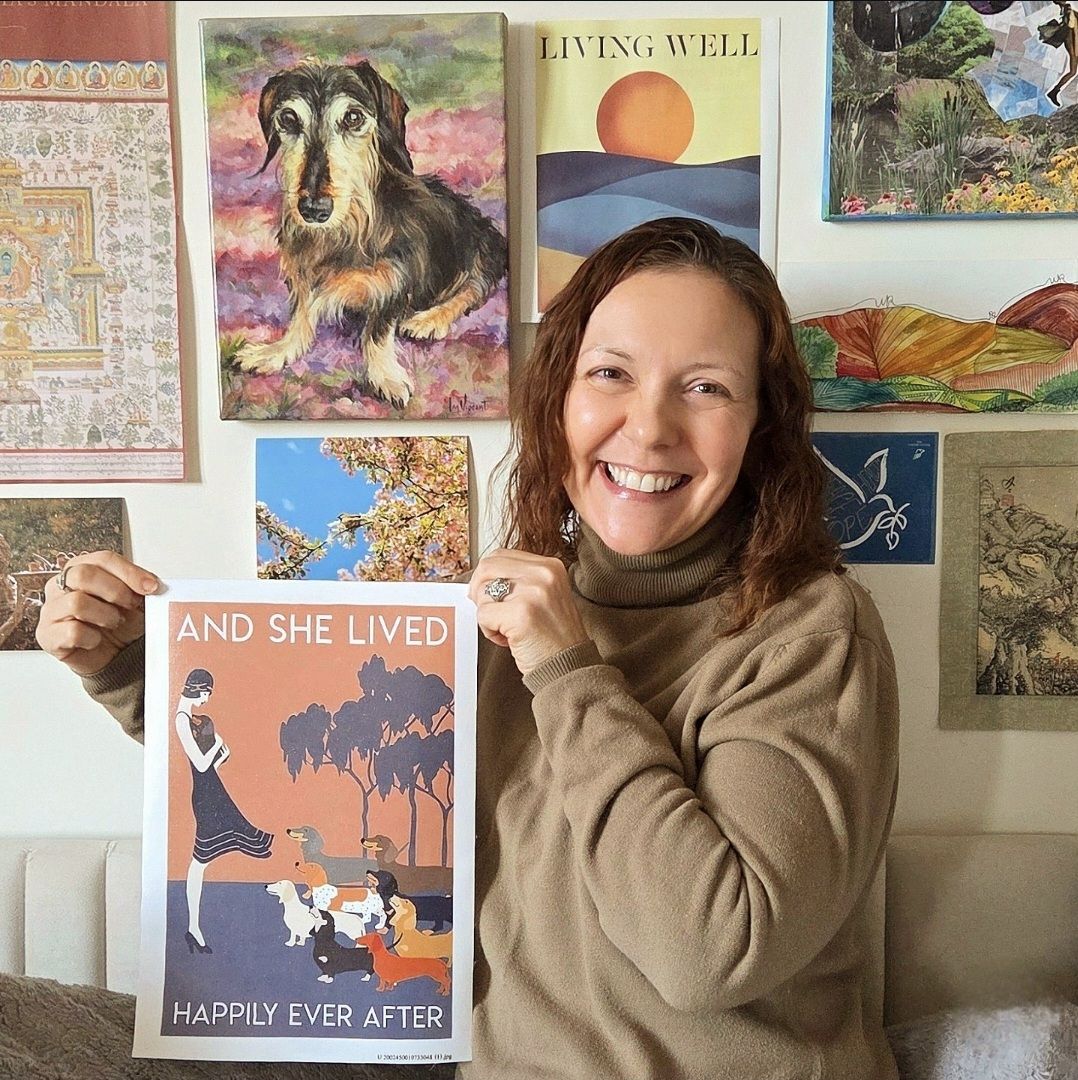
 This week, I filled out adoption registration forms with several amazing local rescue groups. NYC has so many wonderful rescue organizations! I know one of them is going to have the perfect pup for me to adopt.


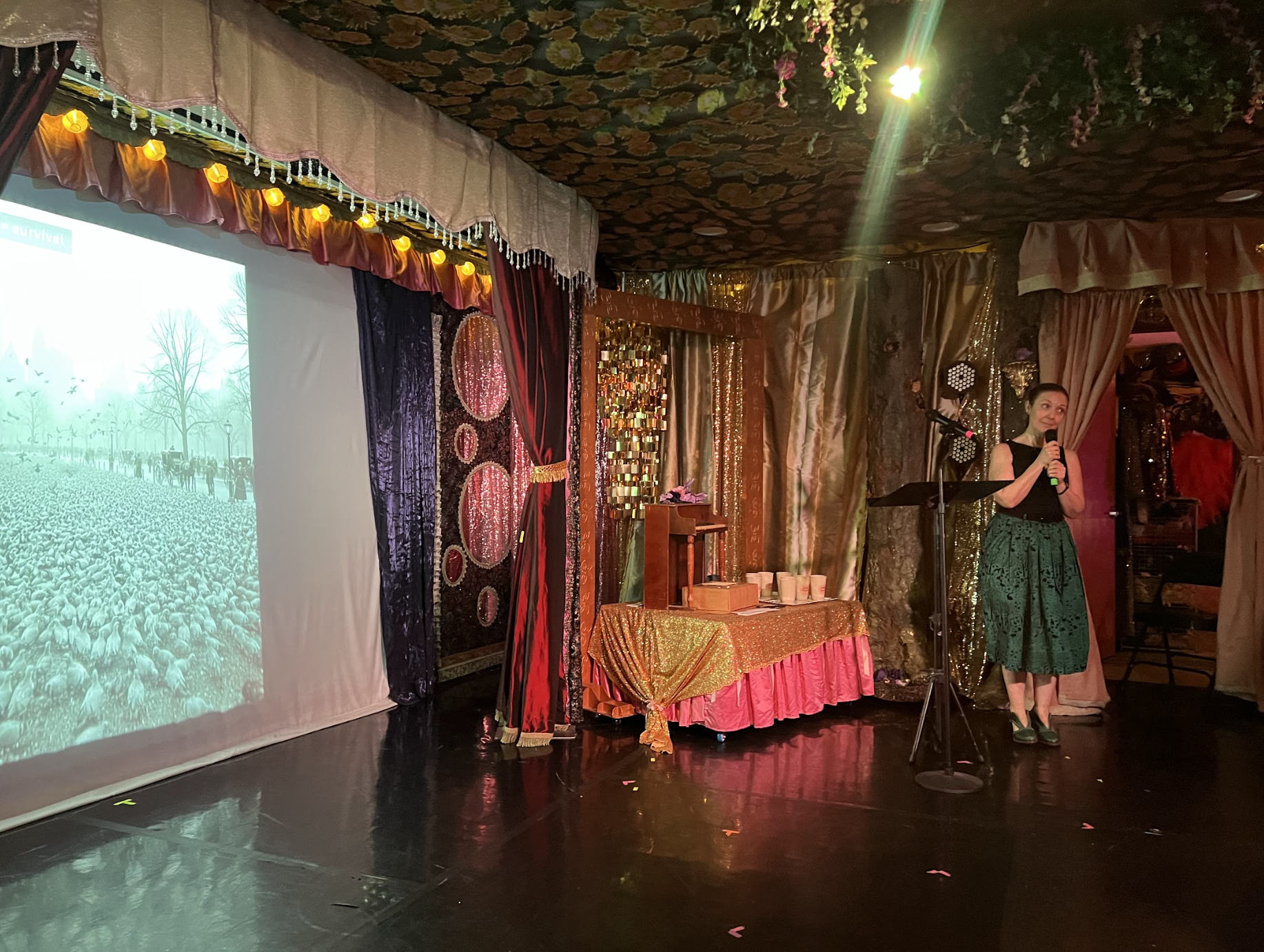


 Christa Avampato