creativity

The 2026 Winter Olympic Mascots Have a High-Tech Biomimicry Secret

Meet the stoat: A master of soft robotics and adaptive camouflage who has been refining their technology for 5 million years.

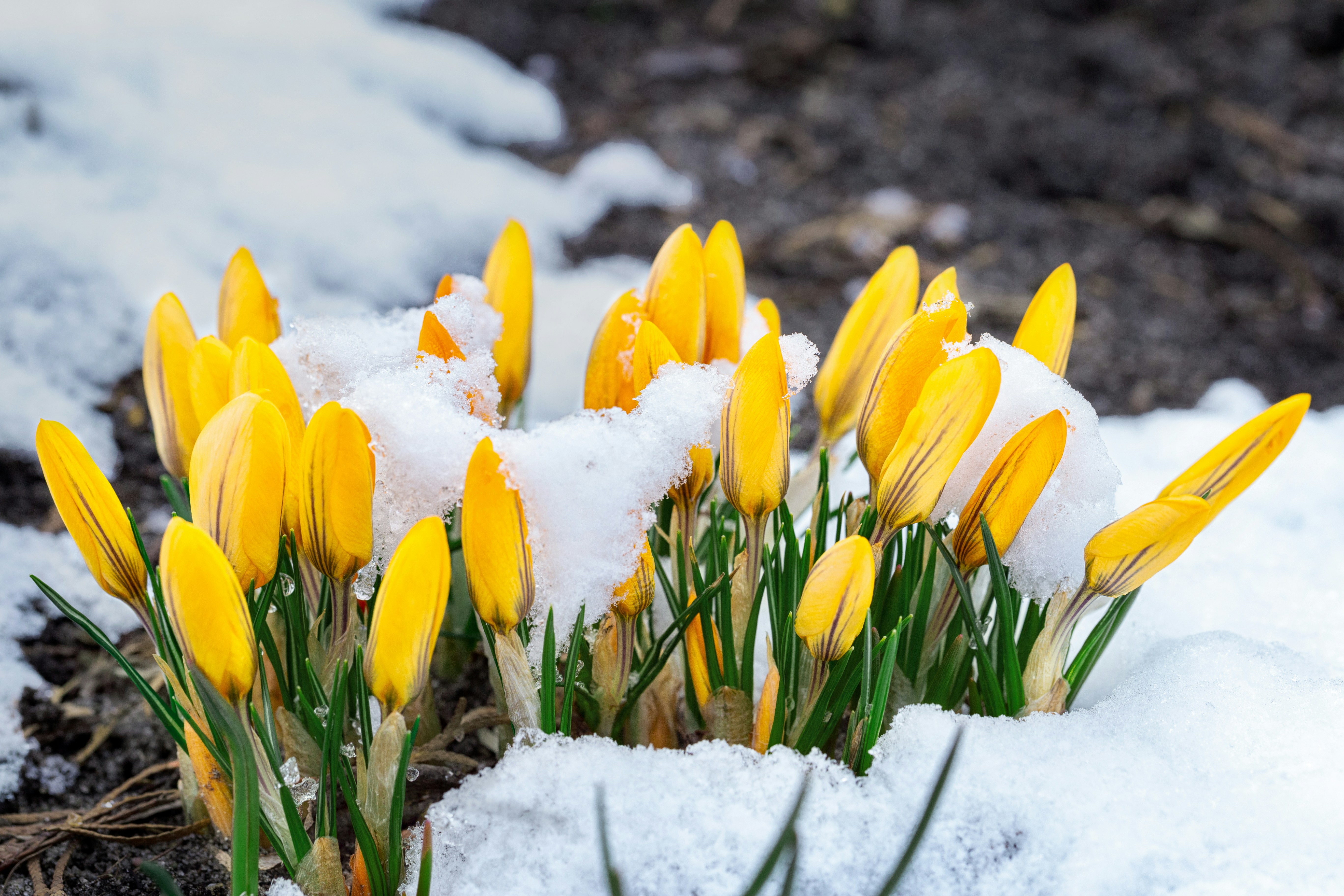
An ermine with a white winter fur coat peaking out from the snow.
Ermine in winter. Photo by National Park Service.

If you’ve been watching the Winter Olympics in Milan-Cortina this week, you’ve likely seen the mascots: two adorable, ferret-like creatures named Tina and Milo.

They are stoats (also known as ermines when they have their winter white coats!), and they were chosen to represent the games because of their liveliness and resilience. But biologically speaking, the stoat isn’t just cute. They are engineering marvels that have been refining their technology for over 5 million years.

While athletes are pushing the limits of human performance on the slopes, the stoat offers a masterclass in biomimicry—inspiring everything from search-and-rescue robots to “smart” clothing.

Here are three ways this little creature is shaping the future of technology:

1. The Soft Robotics Revolution

The stoat’s superpower is their shape. They’re elongated, highly flexible body allow them to navigate complex, burrow-like environments that other predators can’t touch.

Engineers are now studying this slender agility to design soft, maneuverable robots. Unlike rigid machines, these stoat-inspired bots can twist and flex to navigate narrow, restricted spaces—making them perfect for search-and-rescue operations in collapsed buildings or inspecting intricate pipeline infrastructure.

2. Adaptive Camouflage (Smart Materials)

We know the stoat changes their coat from rusty brown to snowy white in the winter. But biomimicry looks deeper than just the color change.

Researchers are studying the ermine transformation to develop adaptive materials that can change their properties based on environmental cues. Imagine stealth technologies or outdoor gear that doesn’t just insulate, but actively responds to temperature shifts and visual surroundings, mimicking the stoat’s ability to blend seamlessly into a snowy landscape.

3. Algorithms of Efficiency

Stoats are specialized hunters. Their movement is fast, fluid, and incredibly efficient.

Computer scientists are now analyzing their hunting dynamics and even their playful behavior to write better code. The way a stoat moves—making split-second decisions to navigate obstacles while maintaining speed—is informing movement algorithms for autonomous vehicles and drones.

The Togetherhood Takeaway

It is easy to look at nature as sweet and poetic. Nature’s that, and so much more. When we look at a stoat, we are looking at 5–7 million years of R&D and adaptation through experimentation.

As we cheer on the athletes this week, let’s give a little applause to Tina and Milo, too. They aren’t just mascots; they are blueprints for the next generation of adaptive, resilient technology.

Nature doesn’t just survive the winter. She engineers her way through it.

creativity

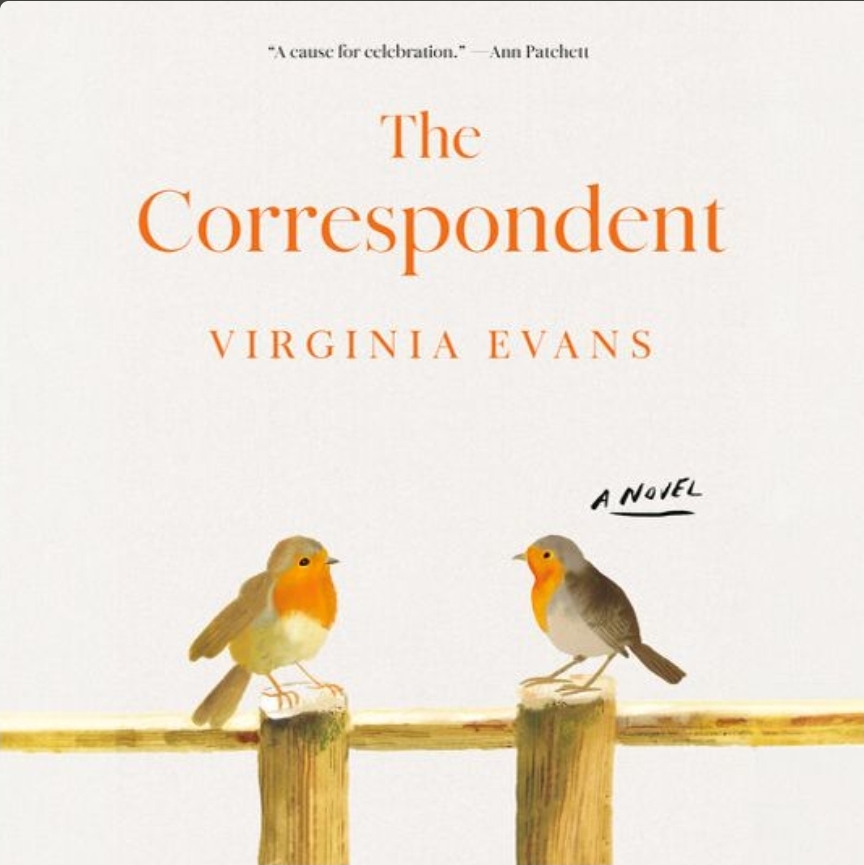
The Correspondent by Virginia Evans

The Correspondent by Virginia Evans

The Correspondent by Virginia Evans is a stunning novel. There is a small handful of books that I have wanted to hold close to my chest when I finished them. When I read (or heard) the final word, I was sad. I felt I had lost a friend. Not wanting them to be over, I had the impulse to read (or listen) to them all over again. These are books that make me want to keep being a writer. They are books that make me hope one day I will write one sentence that reaches someone in a way that these books have reached me. The Correspondent is one of those books.

I got the audiobook from the Brooklyn Public Library because so many people I know said how much they loved it, and in particular how much they loved the audiobook. Rather than being read by one narrator, this book has a different reader for nearly every character and I loved that as much as I loved the letters themselves. It felt more like the reading of a play than a book.

Rather than defining my to-be-read list by formal book reviews, I tend to read books that are recommended to me by people who know me. The fact that The Correspondent has become such a breakout success almost made me skip it because many times books that are this popular have left me wondering what everyone else sees that I don’t. So I got The Correspondent out of curiosity, but not expecting much from it. I was absolutely wrong.

A handful of minutes into the audiobook, I found myself being unable to do much else until I finished it. I found myself imagining the settings and the characters as my neighbors and friends even though the book has very little physical description. It is a series of letters (and emails and postcards) to and from different people in the book, most of them originating from or addressed to the main character, Sybil Van Antwerp, a forthright and articulate retiree in her 70s with steadfast opinions and deep, secret regrets.

By the end of the book we understand the arc of Sybil’s life that led to her talents, flaws, and circumstances. I laughed out loud, cried heavy tears, and learned so much about the human condition. The book made me want to give myself and others more grace, forgiveness, and love. It made me want to write more letters. It made me want to keep journaling. It reminded me that worlds don’t need to be fantastical to be poignant or wonder-filled. Our ordinary every day lives hold a magic of their own.

In the end we all become stories, as Margaret Atwood so beautifully articulated, and The Correspondent has that theme at its heart. It made me think about which stories people will tell about me. By the end of my time, what will I have done that will be worth remembering? Can living with the end in mind make our days more meaningful for us, and also for the people who will live beyond our last day?

I don’t have any answers to those questions. But I am enormously grateful to author Virginia Evans for planting those seeds in my mind and heart, and I will be thinking about them for a very long time. Perhaps I’ll write her a letter to let her know.

creativity

Breathe Like a Bird (Without Growing Wings)

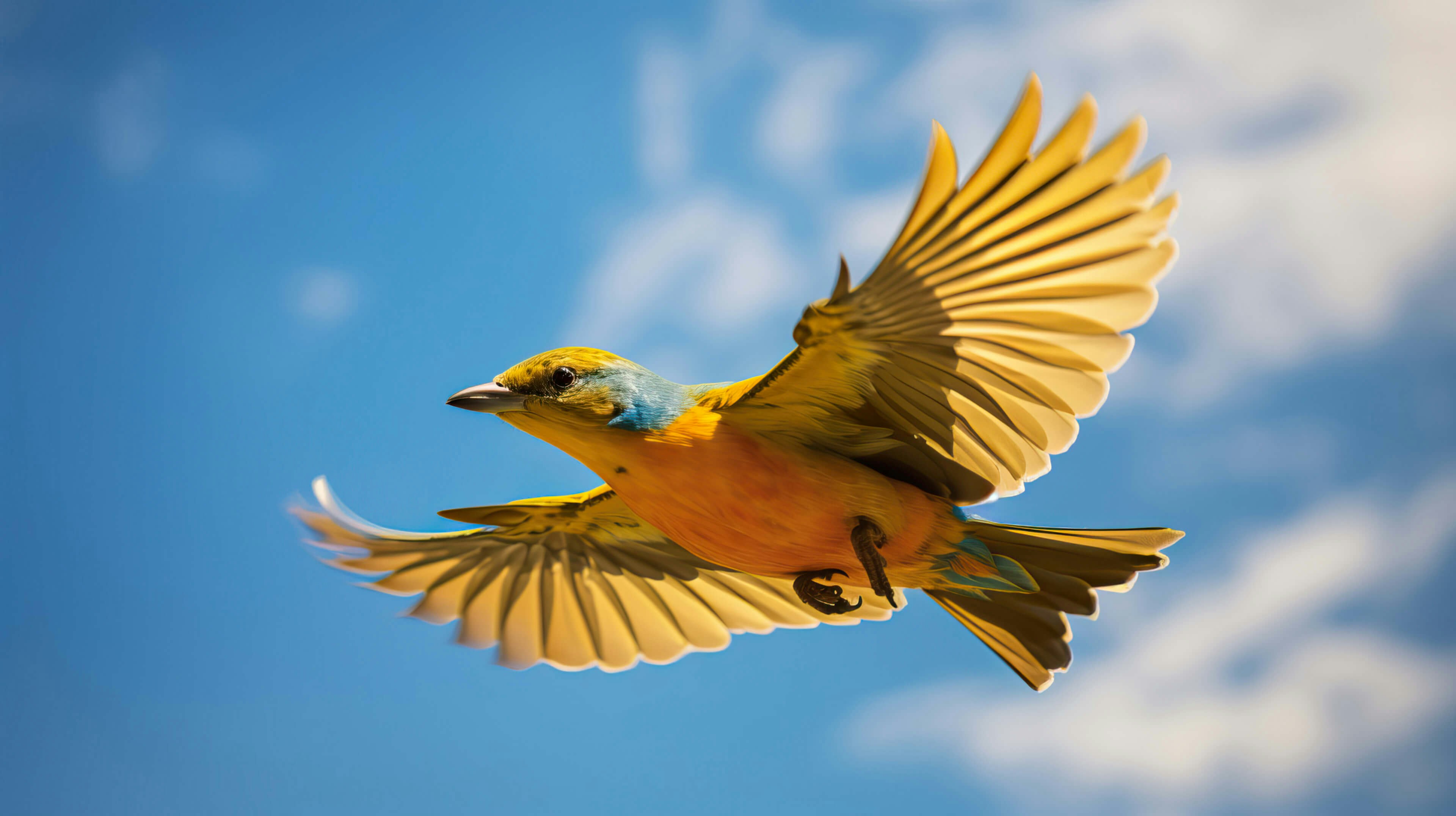
The Golden Tanager, a yellow bird flying in a bright blue sky with wings outstretched.
The Golden Tanager, a high-flying bird native to the Andes Mountains in South America. Photo by Bird Bird on Unsplash.

Last week we looked at why our dogs are sensitive to toxins. This week, we look up. Why birds are the most efficient breathers on Earth—and what they can teach us about stress, stamina, and clearing the air.

Last week, I wrote about how our dogs act as “biological sentinels” in our homes. Because they live on the floor and groom their fur, they are often the first to show the effects of the invisible toxins in our home environment.

But there is another biological sentinel we have relied on for centuries: The canary in the coal mine.

We often use that phrase to describe a warning sign. But have you ever stopped to ask why the canary dies first?

It isn’t just because they are small. It’s because they are superior breathers.

As I was digging into the research on environmental health last week, I learned that birds extract significantly more oxygen from the air than mammals do. While that makes them more vulnerable to pollution, it also makes them athletes of the sky.

The bar-headed goose (Anser indicus) is renowned for its ability to fly directly over the Himalayas during its biannual migration between Central Asia and India, with sightings recorded at altitudes exceeding 28,000 feet, nearly reaching the peak of Mount Everest. The air is so thin at that altitude that it would kill a human. Birds can not only survive but can exert themselves that high in the air because of the unique way they process breath.

Since February is often a month where we feel stifled by the cold of winter (especially this year!), I wondered: Can we learn to breathe like a bird?

The Science: The Circle vs. The Tide

The difference comes down to flow.

Humans breathe like the tide. We have a tidal breath system. We breathe air into an enclosed sac (our lungs), and then we have to push it back out the same way it came in. The problem? We are terrible at emptying the tank. We often leave “stale” air trapped in the bottom of our lungs, mixing fresh oxygen with old carbon dioxide. It’s inefficient.

Birds breathe in a circle. Birds have a system of air sacs that act like bellows. They push air through their lungs in one continuous direction.

  • When a bird inhales, it gets fresh oxygen.
  • The Mind-Blowing Part: When a bird exhales, it moves stored air from a rear sac into the lungs, meaning it gets fresh oxygen again.

They get oxygen on the inhale and the exhale. They never stop fueling the engine.

(If you want to see this in action, watch this 2-minute animation. It completely changed how I visualize breath: https://youtu.be/_NnBgM41jp0)

How Can We Adapt the Breath of a Bird: Focus on the Exhale

We cannot physically grow air sacs (unfortunately). But we can mimic the bird’s efficiency by changing one simple habit.

Most of us are shallow breathers. When we are stressed, we take tiny sips of air, leaving that stale air stagnant in our lungs.

To breathe like a bird, we don’t only need to inhale more; we need to exhale more.

Try this Biomimicry-inspired Bird Breath:

  1. Empty the Tank: Instead of just letting your breath go, actively push the air out until your lungs feel completely empty. Squeeze the abs. Get rid of the “tidal” leftovers.
  2. The Recoil: Once you are truly empty, your body will naturally reflexively gasp for a deep, full breath of fresh air.
  3. Repeat: By focusing on the out, the in takes care of itself.

Nature designed birds to never waste a breath. We might not be able to fly over the Himalayas, but by clearing out the stale air, we can definitely navigate our day with a little more altitude.

creativity

Math, Not Myth: A Clear-Eyed Guide to NYC’s $12 Billion Crisis

We’re seeing a lot of headlines and finger pointing about NYC’s budget crisis. Here’s a clear-eyed breakdown I wrote of what’s actually happening and why, and what we can do about it.

A picture of the NYC skyline as seen from the water looking at Lower Manhattan
Photo by Jermaine Ee on Unsplash

New York City is currently staring down a projected budget gap of $12.6 billion over the next two fiscal years ($2.2 billion for 2026 and $10.4 billion for 2027). While headlines often focus on political blame, the math behind this crisis is driven by three specific, documented factors:

1. The “Funding Cliff”

During the pandemic, the city received billions in one-time federal aid. This money was used to launch or expand recurring programs, such as 3-K, mental health services, and summer youth employment. Now that the federal funds have dried up, the city must either find its own tax revenue to pay for them or shut the programs down. This “cliff” accounts for roughly $700 million to $1 billion in new annual costs.

2. Chronic Underbudgeting

Non-partisan watchdogs like the IBO have flagged a trend of “underbudgeting” known expenses. This occurs when the city’s budget lists a cost (like police overtime or housing vouchers) far below what history suggests will actually be spent.

  • The Reality: In FY 2026 alone, unbudgeted costs for rental assistance (CityFHEPS), uniformed overtime (NYPD/FDNY), and special education legal cases are projected to create a $3.8 billion hole that wasn’t fully accounted for in initial plans.

3. State Mandates

New York State laws often require the city to spend more without providing the full funding to cover it. The most significant example is the Class Size Mandate, which requires smaller classes in NYC schools. The IBO estimates this will cost the city an additional $700 million to $1.6 billion annually by 2027.


What Can Be Done? (Mamdani & Levine’s Path Forward)

Mayor Zohran Mamdani and Comptroller Mark Levine are now tasked with closing this gap. Here is what they are proposing (or could do) to mitigate the crisis in both the short and long term:

Short-Term Fixes (Closing the 2026 Gap)

  • Targeted Efficiency (PEGs): The Mayor can implement a Program to Eliminate the Gap (PEG). Rather than across-the-board cuts, this targets “administrative efficiencies”—like consolidating back-office functions or reducing the $1 billion spent annually on vacant positions that haven’t been filled in years.
  • Re-evaluating the “Rainy Day Fund”: The city currently has billions in reserves. While monitors warn against using these for recurring costs, a one-time draw could prevent immediate, “destabilizing” service cuts while more permanent solutions are negotiated.
  • Revenue Generation: Mayor Mamdani has proposed taxing the city’s highest earners and most profitable corporations. This would require state approval and is a central part of his strategy to avoid “austerity” cuts to services.

Long-Term Solutions (Stabilizing the 2027+ Gaps)

Healthcare Savings: The Citizens Budget Commission (CBC) has suggested that rebidding the city’s massive health insurance contracts for employees could save upwards of $1 billion annually without reducing benefits, by leveraging the city’s massive size to get better rates.

Budgetary Transparency: Comptroller Levine has pushed for a “Truth in Budgeting” approach. This means accurately budgeting for overtime and housing vouchers from day one, rather than pretending the costs will be lower. This prevents mid-year “surprises” and allows for more honest long-term planning.

State Level Negotiation: The city is currently pushing Albany to foot more of the bill for the Class Size Mandate and to increase the city’s share of state tax revenue. (Currently, NYC provides over 50% of state revenue but receives back much less in aid).


For further reading and raw data, visit these non-partisan resources: