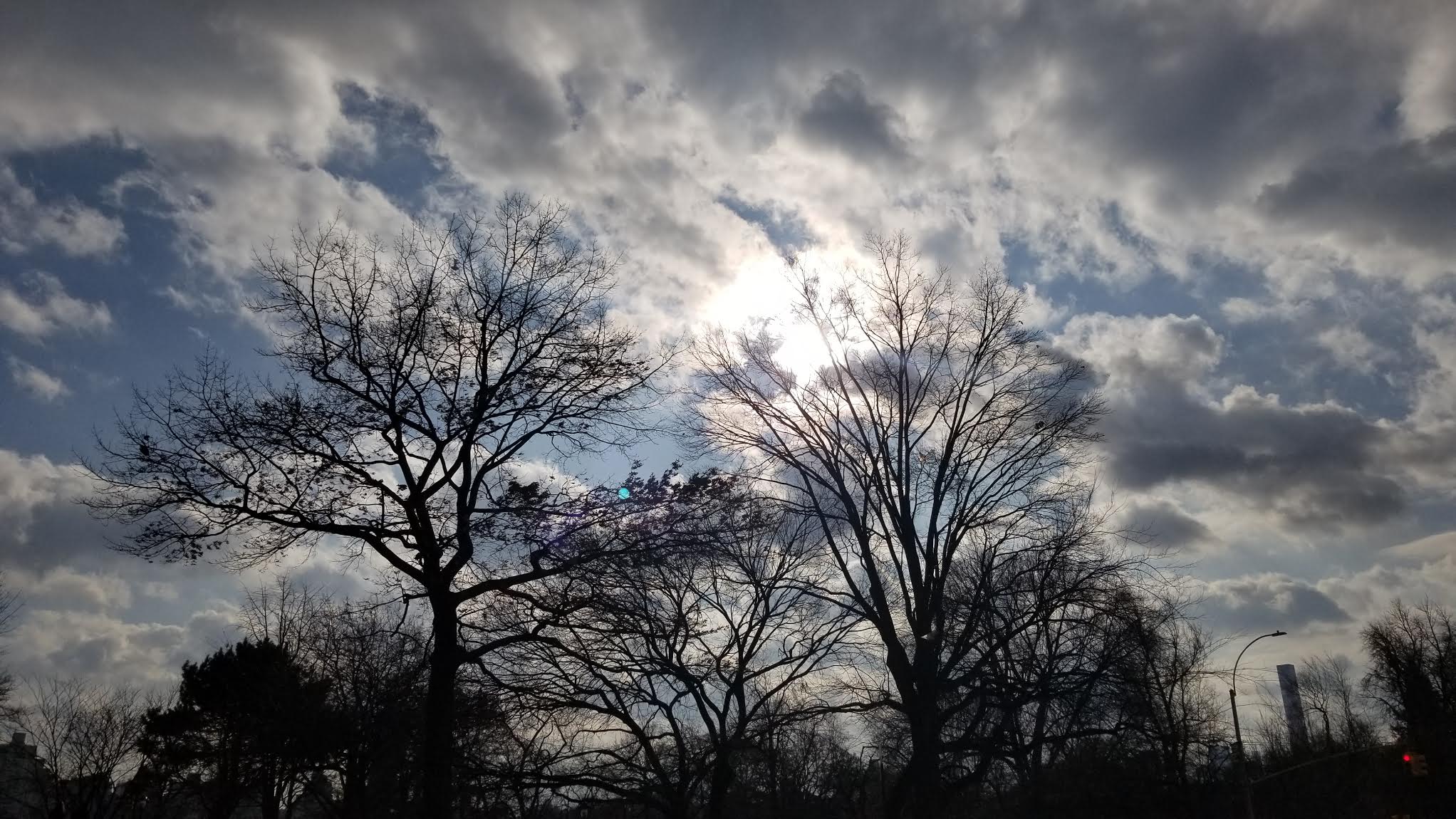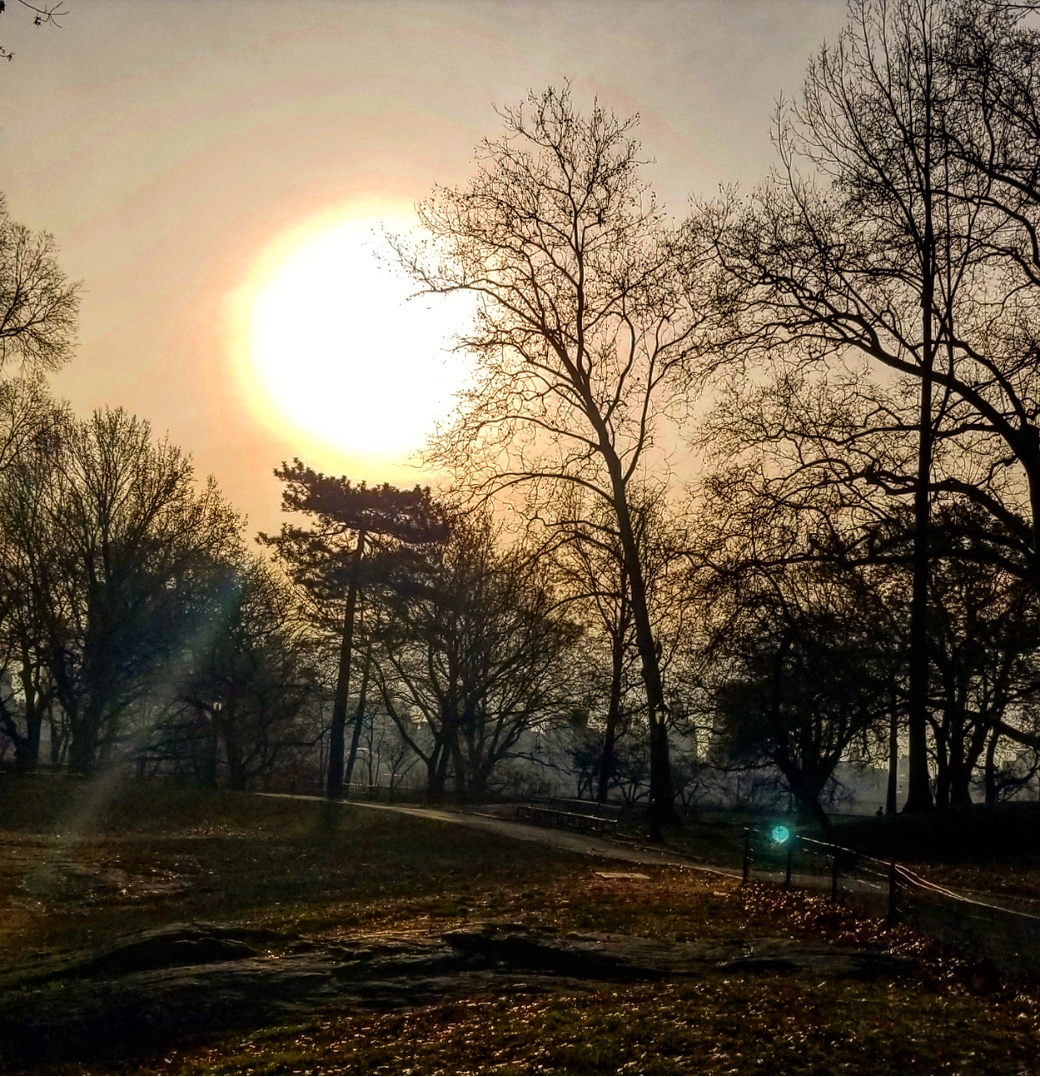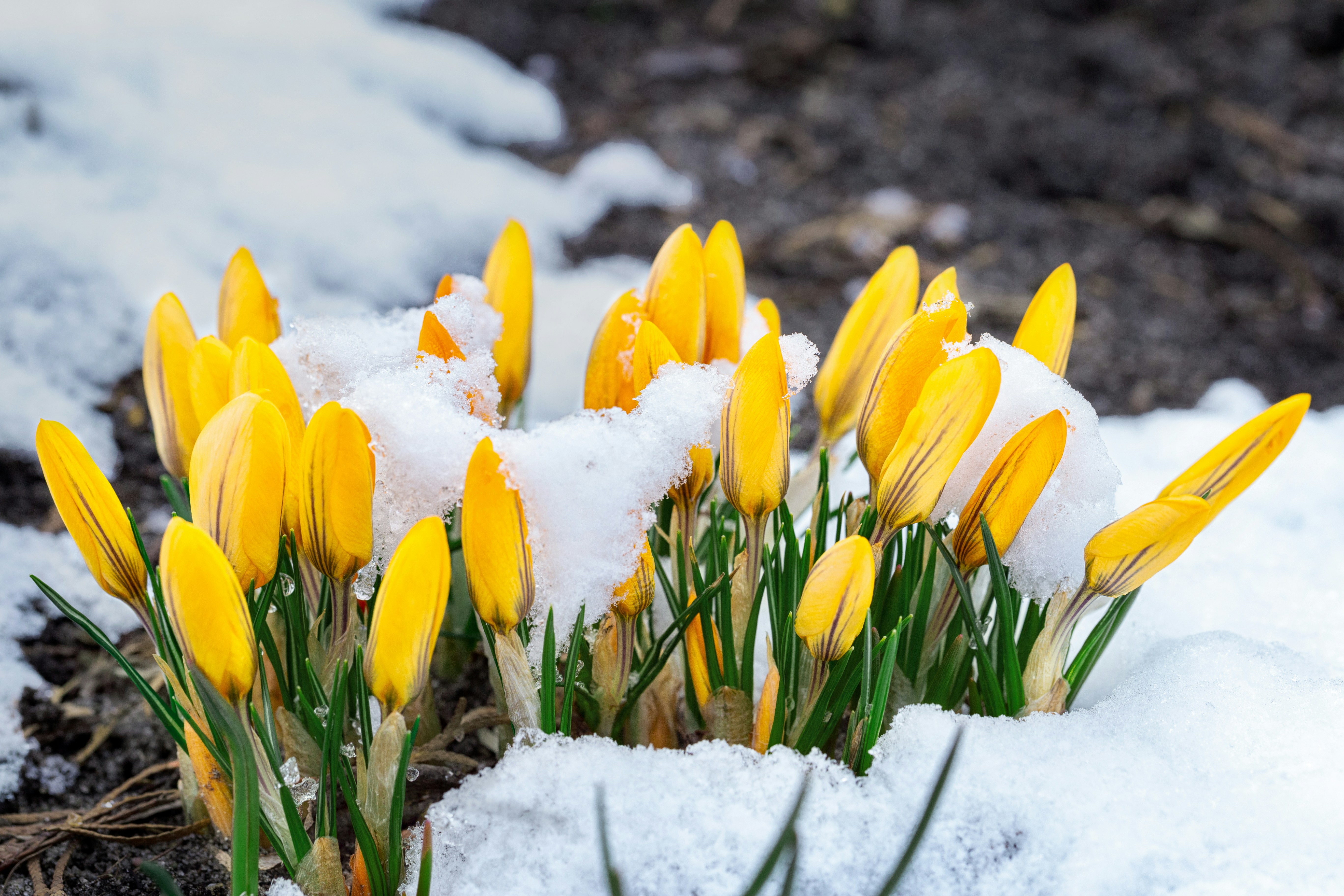
The moon and the stars through the trees. Image by Christa Avampato.
Tonight, as we usher in the longest night of 2025, may we give ourselves the permission and grace to rest. Yes, the light begins to return slowly and surely as we move forward. But before us tonight lies the gift of darkness.
It is a time for dreaming, for reflecting, for remembering. It allows the light to shine brightest—from stars, from the moon, and from the people around us. Just as stars require the dark to be seen, we often find the best in others and ourselves during the darkest times. When confronted with difficulty, we rise to help each other.
We cannot get through this life alone. Relationships are the center of everything. Love is the center of everything.
This winter, I wish you peace. As the daylight grows, I hope the light within you and the light within me grows, too.
Last week, it snowed in New Orleans, Pensacola, and Houston. In New York City, where I live, we had windchills in the single digits. Late one evening, I was hustling home from the subway, bundled from head to toe. My mind swirled with the news from this week; I was struggling to figure out how to make a difference. How might I flood my corner of the world with love and light? How might I take care of living beings who need my help?
I turned onto my block. The street lamps made the snow on my beautiful London Plane trees glow. They’re original to the neighborhood – over 100 years old and 100 feet tall. I stopped and looked up at them, even though the cold stung my face. I smiled, admiring their beauty and strength. They’ve lived through so much change and continued to flourish. What could I learn from them, and nature as a whole, that would help me survive and thrive in the harsh conditions we’re facing?
How animals winter Nature bears winter’s difficulties through many adaptations. Some animals conserve energy by entering a deep sleep that lowers their metabolic rate and body temperature. Some grow thicker fur to insulate themselves. Others bulk up, eating their fill when food is plentiful in the fall and storing fat that will sustain them during the meager winter months. And others migrate – seeking out better conditions elsewhere until they can return home.
How plants winter Plants, including my London Plane trees, have a powerful set of winter adaptations. Some trees grow thicker bark, just as animals grow thicker fur, to insulate themselves. Many plants and trees have seeds adorned with a scaly shell on the outside and soft hairs on the inside that act like a down coat, protecting the seed to survive the cold so they can root and bloom when spring arrives, and conditions improve. Like some animals, plants can also go into a deep sleep, shedding their leaves and sending their sugars into their roots for storage. They focus on developing those root systems below ground, where it’s warm and safe. This work on their roots, nourished by the sugars, allows them to regenerate their leaves each spring.
What nature teaches us about wintering While some of us might like to hibernate or migrate until our difficulties pass, that isn’t feasible for most of us. Let’s look deeper at the adaptations of animals and plants during the winter and ask, “How does nature endure difficult times?” These are the underlying design principles that we could adapt from nature’s wintering and adopt in our own lives:
Conserve and bolster energy When times are difficult and resources are scarce, rest and recharge. Like some of our animal kin, that might mean sleep though most of us don’t have the luxury of a hibernation season. Instead, we may find rest by reading a book, creating art, writing, listening or playing music, or any other hobby, pastime, or passion project. It could be volunteering, cooking and baking, seeing friends, learning something new, playing a sport and exercising. Whatever allows you to release stress, relax, and reenergize fits the bill.
Create some distance Though we can’t always migrate and move away from the difficulty, we can find ways to temporarily escape and take a break from our troubles. Again, this could be through our hobbies. It could be a vacation or staycation. It could be self-care and time alone, or time with others who make us happy. Even a good meal, yoga class, movie, or a few moments of meditation can give us some distance. Microjoys – small moments of joy that we seek out and create every day – can be tremendous asset when daily life is challenging. Microjoys got me through cancer and other traumatic events in life. Joy is an act of love and resistance.
Protect and defend Just as animals grow thicker fur and trees thicker bark, we also go through chapters in life when we need to insulate ourselves. There are many methods to do this – trimming our expenses, increasing our savings, and taking on some contract work can insulate us economically; exercising, eating healthfully, getting therapy or counseling, and making sure we’re up-to-date on all of our medical appointments helps us take care of our physical and mental health; being in community with people helps us feel less alone and better supported as we reciprocate and provide support for others.
Equip our young people and those who are vulnerable Similar to the way a plant gives seeds a scaly coat and downy insulation to protect the seeds until spring, our young people and those who are vulnerable need protection and safety. In communities, organizations, and schools, we can collectively provide these safe spaces for those who need shelter from the storm and set them on a path for a better future.
Make progress where it’s possible to build a better future Plants send sugars to their roots because the roots are protected underground from the harsh reality of winter. Below ground, they cultivate strength and resilience to utilize when the light and warmth of spring finds them. What can we learn now that can help us in the future? What parts of our inner lives can we work on now when exterior circumstances make outward progress difficult? How can we make ourselves better so we can do better in the days ahead?
Everyone faces challenges – seasons of scarcity and seasons of plenty. Many times, these are driven by external circumstances beyond our control. Nature offers us a blueprint to help us adapt in times of difficulty and prosper in times of abundance. We would do well to follow nature’s lead.
My view on the train to Bristol, UK. Photo by Christa Avampato.
It is the season of soft things. Warm tea. Thick blankets. Crackling fires. Cozy sweaters. Candle light. Woollen socks. Hugs. Laughter. Kindness. Whispers. Dreams. The world seems especially hard right now, with sharp edges that cut and harm. I find myself craving comfort, ease, and quiet. Seeking out people who exude warmth, welcome, and joy.
Our world, especially our working world, often demands structure and immutable processes. Too often telling us what is and has been must continue to be. This relentless beat can make me tired and worn. It’s in these moments that I remind myself the value of flexibility, the ability to bend so we don’t break.
We so often prize efficiency and abhor redundancy, until we recognize that nature in all her glorious wisdom has survived and thrived for nearly 4 billion years because of her integrated systems that are stronger than the sum of the parts, with pieces that back up one another so that as a united whole they can weather the storms, accommodate change, and retain balance, even and especially in crisis. And there are always storms, and change, and crises.
Nature built herself to flex, to make room, to expect the unexpected, to support. What if that became our goal, for ourselves, our organizations, our government, our world? How then might be change, grow, evolve, and be? I suspect that in this season of soft things, I may find answers to those questions by the time the light of spring returns.
On the first full day of winter, I always read the short essay Winter by Nina Zolotow. It’s my ritual to ring in this season as one of rest, creativity, and inspiration. I love winter, and this essay perfectly explains why. Nina wrote it in Ithaca, New York, where the fullness of all the seasons is present, each in its turn, in its time.
I hope you find as much comfort, peace, and joy in these words as I do.
Winter by Nina Zolotow
“In their garden there was always a wild profusion of tomatoes ripening on the vine, and leafy basil, arugula, and lettuce, and glossy purple eggplants, and red and yellow peppers, and zucchini with its long, bright blossoms, and there was always lunch at the wooden table on hot summer afternoons, with plates of pasta and bread and olives and salads with herbs, and many bottles of red wine that made you feel warm and drowsy, while bees hummed and the sprawling marjoram, thyme, and rosemary gave off their pungent fragrances, and at the end of the meal, always, inexplicably, there were fresh black figs that they picked themselves from the tree at the garden’s center, an eighteen-foot fig tree, for how was it possible – this was not Tuscany but Ithaca – Ithaca, New York, a rough-hewn landscape of deep rocky gorges and bitter icy winters, and I finally had to ask him – my neighbor – how did that beautiful tree live through the year, how did it endure the harshness of a New York winter and not only survive until spring but continue producing the miraculous fruit, year after year, and he told me that it was quite simple, really, that every fall, after the tree lost all its leaves, he would sever the tree’s roots on one side only and, on the tree’s other side, he would dig a trench, and then he would just lay down that flexible trunk and limbs, lay them down in the earth and gently cover them with soil, and there the fig tree would rest, warm and protected, until spring came, when he could remove its protective covering and stand the tree up once again to greet the sun; and now in this long gray season of darkness and cold and grief (do I have to tell you over what? for isn’t it always the same – the loss of a lover, the death of a child, or the incomprehensible cruelty of one human being to another?), as I gaze out of my window at the empty space where the fig tree will stand again next spring, I think, yes, lay me down like that, lay me down like the fig tree that sleeps in the earth, and let my body rest easily on the ground – my roots connecting me to some warm immutable center – luxuriating in the heart of winter.”
Photo taken by Christa Avampato of Honschar’s street art on the Upper West Side of Manhattan. Please include this attribution when using.
Dear ones, on freeeeezing days like today (windchill in NYC was 4 degrees this morning!) I make some hot beverages, hunker down at home, and engage in creative work as I dream of spring. How do you endure? (H/t Honschar for his inspiring street art.)
See the little blue light in this photo? That’s hope. That’s the magic of the light returning to us today, the Winter Solstice. I didn’t see it when I first took the photo, only once I reflected on it.
The essay “Winter” by Nina Zolotow always reminds me what a gift winter is – a time we have to pause, reflect, and dream. I’ve re-read it dozens of times and it’s so powerful that I tear up every single time. I hope it gives you the same peace and relaxation it gives me in this long, cold, dark, and restful season of winter. Rest, my beautiful friends, and treasure the break from busy-ness that winter provides.
“In their garden there was always a wild profusion of tomatoes ripening on the vine, and leafy basil, arugula, and lettuce, and glossy purple eggplants, and red and yellow peppers, and zucchini with its long, bright blossoms, and there was always lunch at the wooden table on hot summer afternoons, with plates of pasta and bread and olives and salads with herbs, and many bottles of red wine that made you feel warm and drowsy, while bees hummed and the sprawling marjoram, thyme, and rosemary gave off their pungent fragrances, and at the end of the meal, always, inexplicably, there were fresh black figs that they picked themselves from the tree at the garden’s center, an eighteen-foot fig tree, for how was it possible – this was not Tuscany but Ithaca – Ithaca, New York, a rough-hewn landscape of deep rocky gorges and bitter icy winters, and I finally had to ask him – my neighbor – how did that beautiful tree live through the year, how did it endure the harshness of a New York winter and not only survive until spring but continue producing the miraculous fruit, year after year, and he told me that it was quite simple, really, that every fall, after the tree lost all its leaves, he would sever the tree’s roots on one side only and, on the tree’s other side, he would dig a trench, and then he would just lay down that flexible trunk and limbs, lay them down in the earth and gently cover them with soil, and there the fig tree would rest, warm and protected, until spring came, when he could remove its protective covering and stand the tree up once again to greet the sun; and now in this long gray season of darkness and cold and grief (do I have to tell you over what? for isn’t it always the same – the loss of a lover, the death of a child, or the incomprehensible cruelty of one human being to another?), as I gaze out of my window at the empty space where the fig tree will stand again next spring, I think, yes, lay me down like that, lay me down like the fig tree that sleeps in the earth, and let my body rest easily on the ground – my roots connecting me to some warm immutable center – luxuriating in the heart of winter.” ~Nina Zolotow, “Winter”
I’m very excited to be chatting about the ancient history of Winter Solstice celebrations this Saturday at Caveat with several other fantastic storytellers. If you’re in town in NYC and looking for a good nerdy holiday time, come on down and hang out with us. Doors at 6:30, show at 7. Grab your tickets on Eventbrite by clicking here.
I got a gift from the frigid cold in New York City. It gave me the chance to physically walk in Emerson Page’s footsteps.
Walking down Fifth Avenue, the air was so cold that my lungs hurt. I couldn’t wait to get to the warmth of the Met a few blocks away. I tried to distract myself by looking at Central Park. Around 75th Street, I stopped short. People were walking on ice, but there wasn’t a rink there. I couldn’t believe it. It had been so cold for so long in New York that the boat pond was frozen. Not ones to be deterred by signs of danger and warning of any kind, New Yorkers were walking on the pond. I smiled and kept walking.
A few blocks away, I stopped. I turned around. In my novel, Emerson Page and Where the Light Enters, Emerson goes out into the middle of the boat pond when she’s most fragile, turns to face the Alice in Wonderland statue, and descends how into the Lake of Possibility where her life changes forever. This was my chance to see that view in real life the way I imagined it in my mind.
Was I really going to stand out in the freezing cold just to look at the view of the world from Emerson’s perspective? Yes. Hell yes. I ran back to the Children’s Gate entrance of the park and down to the boat pond. Like Emerson, I was a little timid in those first steps on the pond, and then glided my way to the middle of it. I took in that view of Alice and couldn’t stop smiling. My eyes got a little bit teary. It was just like I imagined it would be.
I said a silent thank you to the setting sun and to beautiful Central Park and to this amazing city that never stops inspiring me and my work. The cold gave me this magical moment to step into Emerson’s world, to be right in the center of it, and I was so grateful. Right now, I’m exactly where I need to be. Yes, this is home. Like Emerson, this is exactly where my life changed forever, too.
New Yorkers buck danger
Alice from Emerson’s perspective
Setting sun from the middle of the boat pond
Down there, Emerson’s life changed forever
From 5th Avenue
Looking toward 5th Avenue from the middle of the boat pond
“Let us love winter, for it is the spring of genius.” ~Pietro Aretino
All light is born from the darkness. What if we could think of the start of winter as the beginning of everything? A time of planting and incubation that leads to future growth. While the cold and wind may drive us inside, let’s see it as a time of rest and recuperation. The starkness of nature now has its own kind of beauty. We can see the bones of the trees and the shape of the land. Everything will be dressed up in green again before we know it. Let’s make the most of this time we have now to build a strong base that the rest of the year will make use of.