
creativity

In the pause: Write and live like you’re running out of time—another lesson from Hamilton

“Why do you write like you’re running out of time?” ~Aaron Burr, “Non-Stop” from the musical Hamilton

Sometimes the best thing you can do with your neuroses is accept them and work within them. I think that might be the secret to life.

Hamilton has a way of teaching us so many lessons, about history, economics, and life. There are many ways to describe Alexander Hamilton and I think there is one that stands above all others—non-stop. Something in him knew his life would be short; he had seen so much loss at such a young age. He understood how fleeting life can be. He wrote and worked and loved and lived like he was running out of time because he was. We all are.

I’m not suggesting that this is the only way to live. I’m not even suggesting that it’s a good idea to focus so maniacally on what we’ve lost as Hamilton did. I just know that this is how my mind works. I see time ticking by and do what I can to make the most of it because I can’t make it slow down. This is what keeps me moving forward, especially in times of difficulty.

I’ve never been good at waiting and biding my time. No one I know would ever call me patient. I sit for 18 minutes a day meditating, and that’s about what I can handle. I don’t dwell on things I try that don’t work out—and that goes for baking a pie to landing a job and everything in between. I learn from my experiences and try something else. “Netflix and chill” is never going to be a phrase I embrace (and by that I mean the clean version, friends). I wish I could; I just can’t do it and be happy. And I like to be happy so I embrace my work, my friends, and my curiosity. Those are the things that matter to me.

We’ve just got this one life, and no one is ever going to find a way to manufacture more time. Time is the most equitable resource on Earth. We all get the same 24 hours. Let’s use them in ways that mean something to us. Hamilton certainly did.
creativity

In the pause: Don’t stumble over something behind you

“Don’t stumble over something behind you.” ~Seneca

Whenever I’m faced with something disappointing, I feel is deeply and and immediately. I strip out that phase of denial and move right into grief. While grief is a painful, my willingness to feel every ounce of it jumpstarts the healing process. Grief is a lens I use to refocus my energy and get clear about what I need and want. It’s not fun, but it’s necessary. The great benefit of this brutal process is that once it’s done, it’s done. I don’t look back; I let it go and move forward. I have many times in my life that I’m glad I’ll never repeat, and I’m also grateful for all of the learnings that those times held. They have given me empathy, strength, and courage, three of the things I value most.


creativity

In the pause: Pursuing an interest in historic preservation

In my early 20s while I was working in theater management, I had the great privilege to travel all over the U.S. and Canada with different tours. I was always amazed by the beauty, history, and culture of the restored spaces where we played, and those experiences began my interest in historic preservation. Now whenever I travel to a new city (or even around cities I know well), you can find me looking up and building facades and examining the internal architecture that makes buildings so unique. It’s one of the things I love so much about New York City; the variation in architecture there is endless!

I decided to get a little bit more serious about this interest and enrolled in an online class called The Architectural Imagination. It’s being offered on the edX platform by four professors of architecture at Harvard and it’s free. If architecture and historic preservation is something you’re interested in, too, sign up and we can go through it together!

More info on the class here: https://www.edx.org/course/architectural-imagination-harvardx-gsd1x#!

creativity

In the pause: Reflecting on Hidden Figures

I went to see Hidden Figures on Thursday night. I felt uplifted right after seeing it and then all weekend felt sad and frustrated by it. Don’t get me wrong; I love seeing stellar performances from three female women of color portraying real women who are intelligent, courageous, and determined. And let’s face it – the BS that the women portrayed in the film faced still runs rampant in the American workplace and society at-large, especially for women of color.

This is absolutely true in technology, science, and business. I have lost track of the number of times in my career that I was and am expected to keep my head down, my mouth shut, and my smile wide so that I don’t seem threatening to others by questioning assumptions and points-of-view, no matter how respectful and professional my comments are. And here’s the worst part: if I were to tally the worst bullying I’ve received in the workplace, it’s come from an equal number of women and men. It’s unfortunate, and it’s my truth. Women still fight for equal pay, respect, and promotions, and far too often we’re fighting one another.

So this is what I’m going to do about it: I’m going to work on making the workplace, wherever I work, a kinder, more collaborative, diverse, accepting place. There are too many hidden figures in the world today, and I intend to spend my time bringing them into the light and celebrating them.


creativity

Wonder: How the war in Syria began

I’ve been trying to understand what’s happening in Syria and why it began. If you’re curious about this, too, here is the story in a very brief nutshell; it’s a sad, twisted, and cautionary tale of graffiti by children, an ego-maniacal President, and the danger of silently normalizing hideous behavior.

5 years ago Syrian civilians decided to peacefully protest after 15 schoolchildren were arrested – and reportedly tortured – for writing anti-government graffiti on a wall. Government forces opened fired on the protesters killing 4 people. Then they open fired on the mourners at the funerals of those 4 people the following day killing 1 more person.

The people then rose up to meet violence with violence. About 3 years later an organization calling itself IS for Islamic State got involved. Taking advantage of the chaos and desperation, IS escalated the matter even further by retaliating against anyone who didn’t hold IS’s extreme religious views. Then Russia uses its muscle to support the Syrian government, the US and UK make some attempts to support the rebels, some countries slowly crack open the door to welcome Syrian refugees, and the vast majority of the rest of the world sits on its hands, waits, and watches as hundreds of thousands of innocent people are murdered without cause or reason.

Here we are 5 years later and some estimates state that roughly 500,000 people have been killed. All because Syria’s government felt threatened by the graffiti of children and the calls of its people for greater freedom of expression and democracy. It defies reason and any semblance of sanity. This is the damage that one man can cause. This is what the ego, when left unchecked, can do to an entire nation of people. Let that sink in.

creativity

Wonder: Why I decided to become a charter member of the National Museum of African American History and Culture

“Why would you do that? You’re not black.” This is what someone said to me when I told them I made a donation to the National Museum of African American History and Culture. Thanks to Lonnie Bunch, the founding director of the museum, I had an answer. I made a donation because the history that it commemorates and celebrates is America’s story.In history, we are all united, and that’s how I’d like us to be in the world, too. If you make a donation of any size today, Hyundai will match your donation dollar for dollar up to $500,000 as part of the museum’s campaign called Giving Day.

The museum’s stories can teach something to everyone who takes the time to listen to them. Some of the lessons are horrible and painful, and some of them are joyful and inspiring. That’s life—it’s beautiful and terrible in equal amounts. I am humbled by what the staff members of the museum, and so many others who came before them, have done to assemble this treasure of a museum in the city that I now proudly call home. I can’t wait to see it and I’m so glad to be able to support its message of hope. It’s a message we all need. #GiveNMAAHC

creativity

Wonder: Language creates community – a lesson from Ann Richards

“Language should bind us, not divide us.” ~Ann Richards

I know Ann Richards for her ballsy and hilarious quote, “I’ve been tested by fire and the fire lost.” I want that on a t-shirt. My friend, Sara, posted something that reminded me it’s high time I read Ann’s autobiography. I loved the play based on her life, ANN, written by and starring Holland Taylor. Ann was one of those lights in history that make it possible for so many of us to carve our own paths today, traditional or otherwise.

As a writer, her quote about language is one from her autobiography that is especially powerful for me. In a world of acronyms and exclusivity, I much prefer Ann’s way of thinking. Too often language is used to divide us—by gender, by race, by religion, by education level, by industry, by socioeconomic status. In her book, Ann said that she prided herself on being a straight shooter, someone who didn’t mince words, sugarcoat, or tip toe around sensitive issues. Keep it simple. Keep it honest. Keep it authentic.

Now working in an industry that is full of acronyms and complicated language, I’m going to keep this quote about language close at hand. In my writing, I want to illuminate not complicate, to clearly communicate rather than separate. And I know from Ann Richards that this is possible.

creativity

Wonder: Smithsonian Magazine goes deep into race in America

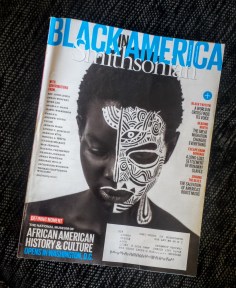
20160902_085331If you want to get deep into the discussion around race in America and approach it from a number of different perspectives, I can’t recommend the latest issue of Smithsonian Magazine enough. I’m completely engrossed in every story. It’s an incredible example of journalism that combines a long lens historical perspective, evocative personal stories of struggle and triumph (in equal amounts), and a future vision of hope that we can fully accept and explore our past and not be solely defined by it. Just amazing.

creativity

Wonder: Project Rubeus and the beauty of small solutions

small_better_small“The problem with history is that it usually doesn’t go back far enough.” ~Reverend James Forbes

We have a lot of great big problems in this world. Sometimes I think they’re getting bigger, more numerous, and more complex because we think that all big problems need big solutions. Lately, I’ve been challenging myself to find the smallest solutions possible, solutions that are simple, easy, elegant, and inexpensive.

Project Rubeus is a perfect example of this. I’m trying to solve the problem students face having to sift so much history to make sense of the world around them. And because time waits for no one and history is being made every day, this problem will only get more complex with each passing day.

I could develop an enormous, expensive solution that boils the ocean in search of the most distal shreds that build a cohesive story with multiple perspectives. I want to focus on finding the smallest slice of a solution that works, and then go from there. Step by step, piece by piece, word by word. That’s how all great travels start, how all great works of art get made, and how all great books get written.

Just focus on the next and smallest step, see what you find there, and proceed with love. That is enough.

creativity

Wonder: You can build the door to your own future

door-to-heavenSometimes, you happen upon a door that leads you down a path you never knew existed. And sometimes you have to build a door for yourself and then pave the path you intend to walk. Yesterday, the latter happened to me. I built a door to my future and then walked through it. On the other side of the door was Notion Theory.

I’ve been kicking around my idea for Project Rubeus, a history-based ed tech product, for about two weeks and I met with Notion Theory, a development team who could actually build a small working prototype for me. The guys at Notion Theory are kind, whip-smart, and passionate about their work. They get the purpose of the project and its many applications. In under an hour, we all walked away over-the-moon excited about its potential. It involves heavy lifting in algorithm development, computational math, and machine learning, and it can be done in about 3 months for approximately $50,000. Those are very rough estimates, and now I’m working to find a way to piece together that money.

Sometimes we’re lucky enough to have our future find us. And if that’s not happening, then we have to go out there and build our future the way we want it to be. I’m rolling up my sleeves. This is going to get interesting.