I’m really happy to have joined a new collective created by Climate Film Festival that’s bringing together sustainability professionals with filmmakers to raise the bar on and expand opportunities for climate storytelling. As someone who has one foot in each of these worlds, I’m so excited to be part of this new professional group and to help craft and fund these stories that drive action.
Yesterday I went to the Essex Market coffee hour for our first in-person event and attended an excellent panel about climate documentary making. As someone who studied how to use storytelling to drive more climate investment from family offices, I felt like I was in just the right place at just the right time because financing was a key part of the conversation. I heard a number of filmmakers talk about the challenge of finding financing for their climate films, especially with the current situation in D.C.
What filmmakers need to consider is that private funders don’t want to just fund a movie. They want to fund systemic change, especially when it comes to protecting and restoring the health of the planet. Filmmakers need to show how their films, and the platforms and supports they are building around their films, will get viewers to engage in creating meaningful change. That change needs to be measured and reported on.
Is that asking more from filmmakers? Yes. Is it asking them to be skilled business people, entrepreneurs, and community leaders on top of their filmmaking expertise and beyond the creation of the film? Yes. Isn’t making a movie already a Herculean task? Yes. Is that a challenge? Yes. It’s also today’s funding reality.
You aren’t just making a movie, not anymore. You’re building a movement, and that movement is what’s fundable with a movie being one cornerstone of many.
This week I did my annual review with my financial advisor, Zachary Clark, at Fidelity Investments. I want to shout out how thoughtfully and thoroughly he went through all of my accounts and assets. Even more importantly, he took the time to really listen to my goals to make specific recommendations and adjustments to my finances. These times are uncertain and the economy is challenging. It helps to know that this company has my back and is looking out for me. I don’t think it’s true for a lot of financial institutions; it’s definitely true for Fidelity. I highly recommend them.
Below are a few brief bullets about the advice and counsel my financial advisor had. Please keep in mind these are specific to me. That’s the beauty of Fidelity’s goal-based management. It’s designed for me, my financial situation, my goals, and my risk-tolerance. Your plan, because it’s designed for you, could be different.
I acknowledge I’m extremely fortunate to have been able to work hard to get to this point in my financial life. I grew up very poor and struggled financially for many years. To now be in a position to make these choices is a privilege I never take for granted. I’m very grateful.
My plan: 1.) I opened a managed brokerage account I’m maxing out my 403(b) (my retirement account from my nonprofit employer) and Roth IRA contributions. I have an emergency fund saved in a high-yield savings account. I have no debt. I wanted to know what else I could do.
He suggested a managed brokerage account to help my mid-term (5-10 years) money do more for me. I don’t know what I want to do with that money yet so this option gives me flexibility while also earning more than it would in a savings account. This account is a different goal from my retirement account as I will likely use it for a purpose other than retirement. For example, I may decide to use it to buy a home, start a business, or invest in a business. You may use this kind of account for any goal you want – saving for college, a trip, wedding, baby, etc. No penalties for withdrawal and the potential to earn more interest than I would get by just having it in a CD or high-yield savings account.
2.) I decided not to buy an apartment right now Interest rates are high. NYC prices and maintenance fees are high. The housing market is uncertain. I have an incredible rental deal. Taking all this into consideration, we decided it makes sense for me to continue renting for now and re-evaluate if and when markets shift. Fidelity has a rent vs buy calculator to help with this decision.
3.) My Roth IRA is now managed by Fidelity, matches my risk profile, and is funded by auto-debit My Roth IRA has had a 35 / 65 split between stocks and bonds / cash. I’m quite a few years from retirement so it makes sense for it to have the 85 / 15 split my rollover IRA has. (My rollover IRA is the money from 401K and 403b accounts I had with former employers.) I also set up monthly auto-debit from my savings account to my Roth IRA so I make sure to max it out every year. Doing this over the course of the year helps me even out the volatility of the market. Fidelity managing it, with my personalized goals in mind, means I don’t worry about managing it myself.
I hope this info about Fidelity’s tools and advice are helpful. If you’ve got other questions, feel free to ask in the comments or DM me.
This is the face of someone who just paid off her student loans! I started 2025 completely debt free for the first time in my adult life. I put myself through undergrad and three grad programs. I’m grateful for everything I learned, and more importantly, for all the people I met who’ve become friends and mentors.
Sure, I wish the Biden student debt relief that applied to me hadn’t been stopped by the courts and politicians who lack empathy. I wish I’d gotten some scholarship, bursary, or employer funding. Still, my education is the best investment I’ve ever made. I’m proud of myself for working hard, saving, and reaching this milestone. I’m very lucky, and I’ll pay it all forward now that I’m done paying back all these loans.
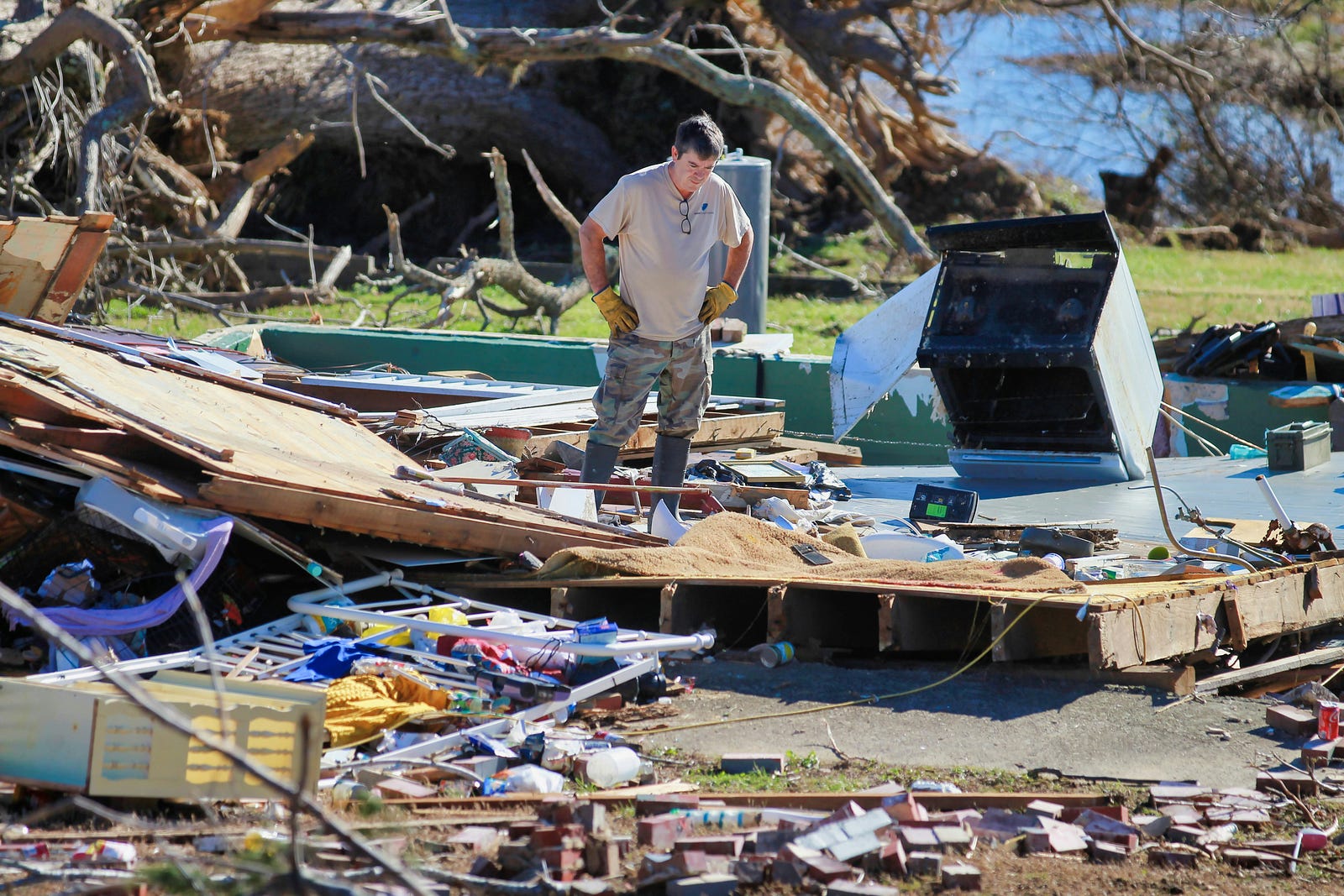
Man looking at loss of home to a tornado in Cambridge Shores, Kentucky in 2021. Photo by Chandler Cruttenden on Unsplash
If you’re a prospective homebuyer and concerned about climate risk, Zillow is about to make your search much easier. By the end of 2024, for-sale listings on Zillow’s website will include climate risk information for flood, wildfire, wind, heat, and air quality by partnering with First Street, the gold standard for climate risk financial modeling. First Street’s models are developed by leading scientists and vetted through a peer-review process to transparently calculate the past, present, and future climate risk for properties and make it available for all. This ensures the climate insights given on Zillow are both credible and actionable.
Zillow will also include insurance recommendations, climate risk scores, interactive maps, and show if and when a property has experienced past climate events. It will be the first and only real estate listing site to provide this detailed data, giving the company a significant point of differentiation.
Consumer demand Zillow decided to provide this data based on overwhelming consumer demand. Zillow research in September 2023 showed 83% of prospective U.S. home buyers consider climate risk. That percentage varies by geography—90% in the West, 85% in the Northeast, 79% in the South, and 77% in the Midwest. The average age of a U.S. homebuyer today is 39. Millennials and Gen Z are entering the home buying market and care deeply about climate. Zillow is centering their current and future users.
A potential shift in the real estate market This data could significantly shift the real estate market and the migration of home buyers within the U.S. because climate risk is growing more pervasive. Across all new listings in August 2024, 55.5% have a major risk of extreme heat, 1/3 for extreme wind exposure, 16.7% for wildfire, 13% for air quality, and 12.8% for flooding.
The risks vary widely by geography. Over 70% of new listings in the Riverside, California metro area have a major wildfire risk. Wildfire risks impact 47% of new listings in Sacramento, and roughly 1/3 of listings in Jacksonville, Phoenix, San Diego, and Denver. 76.8% of new listings in the New Orleans metro area have a major flood risk, while roughly 1/3 in Houston, Miami, and Tampa and over 1/4 in Virginia Beach are at risk of flooding. In general, Midwest markets hold the lowest climate risk with less than 10% of new listings having any major climate risk in Cleveland, Columbus, Milwaukee, Indianapolis, Minneapolis, Detroit, and Kansas City.
Accuracy of First Street climate risk data Some cities and the federal government through FEMA provide some climate risk information. This includes designated flood zones that help consumers partially assess risk. However, this is not comprehensive enough to help consumers holistically gauge insurance needs and potential future risks. This is where First Street’s modeling really shows its financial value.
Consider Hurricane Debby, the storm that wreaked havoc along the U.S. east coast in August 2024. First Street’s analysis found 78% of properties flooded by Debby were outside FEMA flood zones, meaning flood insurance isn’t mandatory. 85% of these properties would have received an insurance recommendation on Zillow, highlighting how First Street’s climate risk data can inform buyers during their home search.
Climate data can change where and how we build Not only does First Street’s data on Zillow inform prospective home buyers and real estate agents; it can also serve home builders, municipalities, and the federal government. Home builders can use it to assess the value of their potential construction sites. Municipalities can use it to assess where they need to focus their infrastructure dollars for climate resiliency and adaptation builds. The federal government can use the data to re-evaluate and assess FEMA designations for climate events and more effectively consider plans to support the expansion of the available housing market. It may also help us as a society plan for migration within the U.S. as we face climate change impacts.
What I find most refreshing about Zillow’s approach is that it’s not about politics or marketing. It’s about science and data. Zillow isn’t telling consumers which property to buy, or which risks they should consider. It’s providing the data in a clear, consistent manner so consumers can make the most clear-eyed choices possible. With this data in-hand, consumers can understand the risk they’re taking and how to prepare for it. In this risky world of ours, that’s data we all desperately need.
Driven by the university student protests across the country, divestment is a top topic in U.S. media today. I’m currently getting my Masters in Sustainability Leadership at the University of Cambridge. At our December 2023 workshop, I learned about the complexities of the university’s divestment from fossil fuel companies.
I was particularly interested in this topic at my December workshop at Cambridge because in late 2022 at the start of my group project for my program, I tried to completely divest my personal retirement funds from fossil fuels. I had a clear goal of divestment from fossil fuels, and only a few funds at two financial institutions (one from my current job and another for my roll-over accounts from retirement funding I earned at previous jobs). I planned to talk to someone at the financial institutions, make a few changes to my investments, and have my portfolio free from fossil fuels.
Divesting my own small retirement fund from fossil fuels was anything but simple. 18 months, many phone calls, emails, and hours of research later, and I still have some investments in fossil fuel companies despite all my efforts and time. It’s fewer than I had when I started this process, which is progress, but it’s not the perfect change I hoped for. My personal work to divest from fossil fuels in ongoing.
While the divestment process is complex, I wanted to use this post to provide a few insights from the efforts at Cambridge along with links to those who want to dive deeper into this topic and case study. This case study helped me learn more about the divestment process and informs me about how it could be utilized by university administrators, faculty, students, and alumni who want to be actively engaged in the management of a university’s endowment, overall financials, and operations. Of course, this is just one case study at one university and other divestment processes at other universities may differ in their journey and the results.
The form(s) of activism best suited for any individual or organization has many considerations. Examples include organized protests, public letters and other media outreach, contact with elected and appointed officials and policy makers, local actions in a specific community (caring for a natural area through rewilding, replanting, regenerating, clean-ups, etc.), buying goods and services from companies that align with our values, running for elected or appointed office, having conversations with people in our community about our personal experiences, and starting, working, and volunteering for companies, organizations, and partners that align with our values. This is only a small list of possible actions.
One thing I’ve learned in this process is one form of activism is not better, nor more valid, than another. How, when, and why people engage in activism is impacted by many circumstances — our resources of time and money, where we feel we can best contribute and make an impact, personal and professional commitments, and our mental and physical health to name just a few.
Trade-offs, negotiations, and incremental progress Another consideration in all divestment conversations is the topic of trade-offs and negotiations because it is rare (though perhaps not impossible) to find a perfect solution or action to a challenge we want to solve. As an individual, I only have to consider my own trade-offs. A university like Cambridge has many stakeholders to consider so their trade-offs and negotiations are much more complicated than mine as an individual.
Divestment with a clear goal, an agreement on specific tactics and actions, an understanding of trade-offs, negotiations, and incremental progress is a journey. It takes continuous efforts by many people over a long period of time. Lasting change is a collective, collaborative process of coalitions.
Here are the links I refer to in this post for easy access. I hope they’re helpful for anyone interested in learning more about divestment:
I’m astounded by the generosity of people I’m interviewing for my University of Cambridge dissertation in Sustainability Leadership. I’ve had or scheduled interviews with over 40 family office leaders, experienced climate communicators, and seasoned storytellers who have provided me with an incredible number and array of insights. I’m so grateful to all of them. My research question is how to use storytelling to connect family offices with climate entrepreneurs for mutual benefit and to safeguard the health of the planet as nature underpins half of our global GDP. If you or someone you know may be interested in talking to me, I’d love to chat. Let’s build a healthy world for all beings, together.
My dissertation proposal has been accepted by University of Cambridge and I have a fantastic supervisor who is based at The London School of Economics and Political Science, Grantham Research Institute on Climate Change and the Environment.
I’ll spend the next year developing a framework for climate change storytelling to connect sustainability advocates with family offices investigating sustainable investments and business decisions. I’m passionate about creating win-win-win opportunities for these families, the planet, and all beings who share this home.
The capital shortfall is a massive challenge for the shift to a sustainable society, and my hope is that my dissertation can help contribute a piece of the solution. Here we go!
As a follow-up to my post a few days ago (Leading Economic Indicators We All Need to Watch), I had a conversation with one of my former business professors. I wanted to get his perspective on my concerns and about the economy to see if there were other indicators I should be watching. He mentions a few here and details some of his very real concerns as well. He is someone who constantly watches the global and national economy, as well as the stock market, so I trust his advice, guidance, and thoughtfulness. I hope this is helpful to you as well.
“Christa:
Nice to hear from you!
Like you, I’m feeling a bit uneasy about the stock market right now. Very high P/E multiples. To justify those prices will take an extraordinary breakout of growth in the US (and world) economy. The saving grace is that the financial industry still looks fairly stable—bigger capital bases than in 2007, more conservative lending, etc. If there is a downturn in the next year or so, I don’t think it will have the force of 2008. But still, a downturn is a downturn and something to be prepared for.
Your blog post offers some very good advice. I encourage people to keep 12-18 months’ worth of living expenses in fairly safe and secure investments. And I remind them of the old adage that there are two ways to be rich: one is to have a lot of money; and the other is to have simple needs. Avoid running up debt balances (except for education and a home mortgage). And the most important asset one has is between one’s ears: keep learning so as to stay valuable to your employer—that’s the best defense against a layoff.
Buried deep in the Business & Finance sections of media channels, there are some leading economic indicators that we all need to watch. I have to admit that I’m getting very nervous. I’m beginning to feel like it’s 2007 so I’m making plans with my money. You’ll find a mini-action plan at the bottom of this post. I hope it helps. Please feel free to share this post with anyone whom you think would be interested. I don’t have a crystal ball. This is just what I’m seeing, reading, hearing, thinking, and doing. I put links below for you to reference:
Executives at Wall Street’s largest banks are dumping stock, and I mean dropping shares like they’re hot potatoes. They have sold nearly $100 million worth of stock since the election. And it’s not just some of them. It’s all of them! Bankers dump stock because they think now is the best deal they’re going to get for a good long while. They’re smart as hell when it comes to these kinds of predictions so pay attention to them. Yes, the Dow hitting 20,000 is a big, flashy story. But honestly, that’s all it is. Don’t think that means good times are ahead. The Dow is going to seesaw like it’s on an elementary school playground for years to come. In July 2007 the Dow hit a record 14,000 and then it plummeted to 6,547 in March 2009. Those were dark times filled with panic. There is a high degree of volatility in our economy right now, and by all accounts that volatility is going to continue to a frightening degree.
Emerging markets are selling debt at record numbers. Argentina’s finance minister explains why in an interview with the WSJ: “Nobody knows what’s going to happen to U.S. interest rates with Mr. Trump as President. We have to reduce the level of uncertainty that there is now. The right decision is to minimize financing risks.” Again, finance ministers in foreign countries are seasoned professionals who spend their waking hours watching economies and policies. This is all they do, so when they make statements like this, it’s very significant. We need to listen to them.
Contrary to all of the hoopla from the West Wing this week, American corporations are not investing in their businesses. They are stockpiling cash to the tune of $1.9 trillion, the most cash they have ever held. Ever. This isn’t rainy day savings. This is flat-out hoarding. Why would they do that? The same reason you would stockpile cash—because they are worried about what’s ahead. By having cash on-hand, they will be able to make adjustments and survive. In a difficult economy, cash is life (literally!) Accountants and finance professionals help companies manage and hedge their risk. Again, they know what they’re doing.
Look, I have no desire to relive those frightening years of 2008 – 2012. They were awful. But please understand that in the case of global economics, there is very little that ordinary individuals like you and I can do to impact this outcome. This is an issue that is truly in the hands of fiscal policy makers and elected officials. Trump’s volatility and foreign policy decisions will move markets. I wish that weren’t the case, but it is. So here’s what I’m doing to protect myself:
Increasing my cash savings. I’m still savings for retirement in my 401K and IRA, but I’m not making any significant purchases that will put me behind the 8-ball financially. I have a lot of friends who bought houses, cars, and the like in 2007 just after we graduated from business school. Some paid dearly for those decisions for years. I have an emergency fund if my job evaporates or I have a medical emergency. Liquidity will be the name of the survival game if our economy goes belly up again like it did in 2008.
I’m continuing my side hustles as a freelance writer and I don’t spend any of that money. I save it. The extra income really helps.
I have a plan if lose my job tomorrow. I know it is scary to think of things that way. I know it isn’t optimistic. I know it sounds like Doomsday is on our doorstep. No one wants to think about this. But we must. Please. Just have the plan ready to go, and then get back to work.
Now is the time to up your skills and make yourself more marketable. I’m now thinking of ways to do that through volunteer work and free or low-cost trainings. Now’s the time to break out our jack-of-all-trades game faces.
If you are in a job that looks shaky now, I would strongly encourage you to look for a new job and get out ahead of the storm. If your company is unstable now, it will only get more unstable with a rocky economy. Don’t cross your fingers and hope everything will work out alright. Now is not the time to preciously cling to feeling badly about leaving your company, or your boss, or your coworkers. The only one who’s going to make things alright for you is you, and remember a company will protect its own survival before it protects your job. When their backs are up against the wall, people become line items. I know that’s painful to hear; it’s also truthful. I watched 10s of 1000s get laid off from my company from 2008-2012. It was harrowing. I still feel sick about that time. Companies are survivalists so we must be, too. Take care of you.
I wish this were a sunnier post. I wish like hell that I had great news for you when it comes to the economy. But listen, knowledge is power and protection. I would be delighted to be completely wrong about all of this though I’m of the belief that it’s better to have a plan you never need rather than needing a plan you never have.
And if you need help, please let me know. I am not a finance expert by any means so please don’t take this advice as such. I do read a copious amount of information on a daily basis in dozens of channels. I try to stay as informed as possible on a wide variety of subjects. As I learn and understand more, I will of course share it. Together, watching out for one another, we are stronger and more resilient. If last week is any indication, we’re in for quite a ride for at least the next 18 months until the midterm elections. At least we’re all in the same boat. Now let’s row in the same direction.
Last night, I volunteered at 826DC to help teens with their college essays. It turned out that the essays were the least of their issues. The student I was helping turned to me at one point and said, “I’m so overwhelmed. I know I need to do this and I don’t know what I’m doing and I don’t have anyone to help me.” She’s the first person in her family to go to college, she doesn’t have a guidance counselor who cares, and she feels a lot of pressure from her family to make this happen.
This interaction brought back all those feelings for me. I was incredibly fortunate to have a guidance counselor, Mr. Weary, who did so much to help me. I knew he was in my corner and he was rooting for me every step of the way. (When I didn’t get into Princeton, my first choice school, he called their admissions office and gave them a piece of his mind. That’s how invested he was!) He was a gift and I knew it.
Not everyone has a Mr. Weary so in that moment at 826DC, I decided that I needed to play that role for this student. We each took a deep breath, and we went through the online application step by step. It wasn’t difficult to explain the parts of the application; this student just needed someone, anyone, to be in this with her.
Then we got to the financial section and she got really nervous. She doesn’t want to take loans. To her, debt is a frightening prospect. And I get that, too. I started working at 14 to help my family, and then I put myself through college and grad school thanks to financial aid of every conceivable kind and a lot of part-time jobs in college. I know debt is scary though when it comes to college, it seems to be a part o every solution in which parents aren’t paying outright for college. I don’t know if I convinced her to reconsider this idea, but at least I could offer myself as an example of someone who was in her shoes and worked hard to get into and through school.
As I walked home, I thought about what I could do to help more students and parents, particularly ones who feel overwhelmed by all of it. And then I got myself caught in the train of thought that senior year is too late. Student need to have their eyes on the prize of college in late middle school and early high school. They need to learn about how to get in, how to stay in, how to graduate, and how to pay for all of it while keeping themselves healthy and sane during an insanely stressful time in their lives. Education, writing, yoga and meditation, finance, technology, and healthcare. I have all that professional experience, and I’ve been where those students are. And I know what it’s like to climb the mountain and then enjoy the view you never even dreamed was possible.
If you have ideas of how I could do more for students like the one I helped at 826DC, I’d love to hear them.






 Christa Avampato