creativity

The West Coast Has Underwater Forests. NYC Could Have Underwater Farms.

Sugar kelp can grow in the waters around NYC, and thrives during the cold winter months

I recently read a fascinating piece in Smithsonian Magazine about the “underwater forests” returning to life off the coast of California. It details the restoration of Giant Kelpโ€”towering, 100-foot strands that form cathedrals of biodiversity, sequester carbon, and shelter marine life.

Itโ€™s an inspiring success story of ecological recovery. But as I read about the Chumash people and marine biologists working together in the Pacific, I couldn’t help but ask a question closer to home: Could we apply this to the waters of New York City?

The answer is a resounding yesโ€”but it looks a little different here. And itโ€™s already beginning.

Different Coast, Different Kelp

In California, the focus is on restoration: bringing back wild Giant Kelp forests that have been decimated by urchins and climate change.

In New York and the broader Northeast, our opportunity lies in regenerative ocean farming. We don’t have the deep-water Giant Kelp; we have Sugar Kelp (Saccharina latissima). This golden-brown algae is shorter, but it is a powerhouse. It thrives in our cold winter watersโ€”growing rapidly when most marine life is dormantโ€”and acts as a “scrubbing brush” for our harbors.

Sugar Kelp absorbs carbon dioxide (fighting ocean acidification) and, crucially for NYC, it soaks up excess nitrogen from urban runoff, which is the main driver of harmful algae blooms.

We aren’t just “restoring” nature here; we are building a blue economy. Here are the local pioneers turning this idea into reality right now.

1. The Indigenous Lead: Shinnecock Kelp Farmers

Just as the Chumash people are leading efforts in California, the Shinnecock Indian Nation is leading the way on Long Island. The Shinnecock Kelp Farmers are a multi-generational collective of Indigenous women leveraging thousands of years of traditional ecological knowledge to heal the water.

They have established the first Indigenous-owned kelp farm on the East Coast in Shinnecock Bay. Their work proves that kelp isn’t just a crop; it’s a tool for sovereignty and survival, actively filtering the waters that sustain their community.

2. The Science: It Works in the East River

You might think kelp needs pristine, open ocean to survive. Think again.

Researchers Dr. Christopher Gobler and Mike Doall from Stony Brook University have been running pilot studies to see if kelp could survive the urban waters of the East River. The results were surprising: the kelp didn’t just survive; in some cases, it grew better in the nutrient-rich waters of the harbor than in cleaner, deeper waters. This suggests that NYCโ€™s “working waterfront” could double as a biological filtration system.

3. The Pioneers: Breaking the Regulatory Barrier

The technology exists, but the permits have been the hard part. The industry is so new that New York State didn’t have a regulatory framework for it until very recently.

In 2023, Violet Cove Oyster Co., led by former WNBA star Susan Wicks, secured the first-ever commercial permit to grow kelp in New York state waters (Moriches Bay). It took years of advocacy to get there. Her success paves the way for oyster farmers across the region to become “multitrophic” farmersโ€”growing shellfish and seaweed together to maximize the environmental benefit.

The Vision for a “Blue” NYC

Organizations like GreenWave are already training the next generation of ocean farmers, with a goal of creating thousands of jobs. Imagine a future where the New York harbor isn’t just a transit lane for ferries and cargo, but a grid of regenerative farms.

These farms would provide local food, sustainable fertilizer, and bioplastics, all while cleaning the water and capturing carbon.

Californiaโ€™s underwater forests are a reminder of natureโ€™s resilience. NYCโ€™s underwater farms could be a testament to our innovation. The seeds (or rather, the spores) have been planted. Now, we just need to support the regulations and organizations that will let them grow.

creativity

What a Corn Stalkโ€™s DNA Taught Me About Solving the Climate Crisis

The urgent global challenge is feeding a rapidly growing population while fighting the uncertainty of climate change. As a storyteller and a biomimicry scientist, I often ask: How does nature solve a massive, existential crisis? The answer, it turns out, lies not in some distant super-technology, but in the subtle genius of a single plant cell.

New research from the Cold Spring Harbor Laboratory has illuminated a fundamental biological “master switch” in the DNA of food crops like corn, giving us an actual blueprint for creating a resilient, thriving future. This isn’t just botany; it’s a profound lesson in survival written right into the plant kingdom.

The Inner Wisdom of the Plant

Plant growth, from the deepest root to the ripest ear of corn, is governed by its stem cellsโ€”unspecialized cells that hold the potential to become any part of the plant. The challenge facing plant scientists has always been figuring out how to balance these cells: when should they grow and when should they specialize into, say, a fruit or a thick stalk?

In a breakthrough study, scientists mapped the gene expression in these cells, revealing the network of regulators that act as the plantโ€™s precise internal control panel. This network balances growth and stress response, allowing the plant to strategically allocate its resources for survival.

This knowledge is a gift to us all because it shows how nature manages risk. A plant facing drought doesn’t just despair; it shifts resources to deepen its roots. A plant under pest attack doesn’t just succumb; it redirects energy to fortify its cell walls. It’s a marvelous, elegant system of risk mitigation through metabolic flexibility.

A Blueprint for Humanityโ€™s Resilience

As my work focuses on biomimicryโ€”integrating nature’s genius into the human worldโ€”I see in this discovery a direct path to solving our human challenge of food security. We are not meant to struggle endlessly against the elements; we are meant to learn from the masters of endurance.

This plant study provides us with three clear takeaways for building a better world:

  1. Precision over Force: Instead of overwhelming fields with more fertilizer and water, we can use this genetic knowledge to engineer plants to be more efficientโ€”to use nitrogen more effectively and direct energy precisely where it’s needed most for resilience.
  2. Unlocking Latent Potential: We are now able to see and manipulate the plantโ€™s own evolutionary solutions. We can develop crops with deep-seated, natural defenses against drought and disease, built on the plant’s own wisdom, not on chemical dependency.
  3. The Power of the Foundational System: The corn stalk teaches us that true resilience comes from perfecting the foundation. By understanding and replicating the simplest, deepest biological controls, we can build human systems that are robust and adaptable, just like an ecosystem.

A Brighter Future Ahead

This breakthrough is more than just a scientific finding; it is a fundamental shift in our relationship with nature. By finally decoding the genetic “master switch” that plants use to govern their own destiny, we are handed a powerful blueprint for survival. The challenge of global food security has never been greater, but this research proves that the solution is not an endless technological sprint, but a deeper engagement with the patient, profound wisdom of the living world. The era of resilient agriculture is not just on the horizonโ€”it has already begun, written in the complex, hopeful language of a plant’s own DNA.


If you’re interested in learning more about how I apply nature’s genius to human challenges, check out my work on biomimicry here: Christa Avampato: Biomimicry Stories Can Help Us Build a More Sustainable World


Now, I want to hear from you: How can we apply the corn plant’s principle of ‘metabolic flexibility’ to urban planning in our own cities?

creativity

Head, Heart, and Hands: The Great Triumvirate of Change

Image created by Christa Avampato.

I just attended Dr. Katharine Hayhoe’s Climate Week NYC talk at the American Museum of Natural History, and it was the most empowering climate message I’ve ever heard. It reframes the entire discussion around three simple ideas: Head, Heart, and Hands.

A research-backed truth: Dr. Hayhoe shared that most people in this country and in the world (~60% on both counts) are worried about climate change. We, the worried, donโ€™t need more doom and damning data to get us concerned because weโ€™re already there.

The challenge: Even though weโ€™re worried, we arenโ€™t taking enough action to alleviate our worry because we don’t know what to do about it.

The solution: Sync up our head, heart, and hands โ€“ what Iโ€™m calling the great triumvirate of change โ€“ and sync with others.

Well, thatโ€™s all well and good, but how do we do that? Dr. Hayhoeโ€™s advice: Get clear about what we care about, how climate change will impact what we care about, find others who care about what we care about, and start talking!

Hereโ€™s our action plan:

Head: Define Your Why. Clearly identify exactly why youโ€™re worried. Finish this sentence: “I care about climate because I care about…” How is your personal well-being, favorite place, or dearest value already being affected by climate change? Keep it simple, personal, and jargon-free.

Heart: Connect to Community. Now that you know what you care about, find communities, groups, and individuals who share that passion and are also affected by climate change.

Hands: Turn Conversation into Action. Get in touch with those communities and start talking about your shared worries and values. That act of conversation and connection will lead to meaningful, collaborative action or project to protect what you care about.

Climate change will affect everything everywhere all at once. It is a global issue, and no one will escape it so no matter what you care about, it will be impacted and there are communities of people who care about it, too. Letโ€™s dive into an example from my personal life to see this action plan come to life.

An example:

Head: Iโ€™m worried about climate change because I love New York City. Since most of our city is at or near sea level, we will be subject to serious impacts from sea level rise, and we have a lot of issues now with rain flooding the streets and subways โ€“ our main modes of transportation. We also have a lot of people living in a small amount of space so there is a lot of pollution that impacts our health and well-being, and often crowds out green space, which is causing more heat, dirtier air, and health issues.

Heart: I love this city, and I do believe we can make it greener, cleaner, and healthier for all beings who live here โ€“ people, pets, wildlife, and plants. I want to find other people who also care about nature in NYC.

Hands: I run a live storytelling game show called NYCโ€™s Secrets & Lies all about the secret history of NYC. This month, I decided to make the show all about stories related in nature in NYC and applied to have it become an official Climate Week NYC event. They accepted it (hooray!). I found a terrific venue โ€“ a hidden theater inside Port Authority Bus Terminal (a great tie into the transportation issues impacted by climate change here in NYC!) We had a wonderful cast of storytellers who were enthusiastic about the topic and told a wide range of stories. I also invited Josh Otero from the Natural Areas Conservancy to be our special guest to talk about all of the amazing work they do to make NYC greener and healthier. We had a sold-out show with a waitlist of 33 people, and all of the stories talked about interesting aspects of the history of nature in NYC. We had so much fun, and it was a great way to get the message out there! This show gave me a place to put my worries about climate change and turn them into action with others. Iโ€™m planning to do more of these shows โ€“ stay tuned!  

Our climate anxiety is reaching new heights and as Dr. Hayhoe explained, the way to use that anxiety for good is through stories. Storytelling is about conversations. Every great idea, every meaningful action, every ounce of change – it all begins with a conversation. Get out there, start talking, and see what change you can create with others.

creativity

The Climate Film Festival Storytelling Collective

Iโ€™m really happy to have joined a new collective created by Climate Film Festival thatโ€™s bringing together sustainability professionals with filmmakers to raise the bar on and expand opportunities for climate storytelling. As someone who has one foot in each of these worlds, Iโ€™m so excited to be part of this new professional group and to help craft and fund these stories that drive action.

Yesterday I went to the Essex Market coffee hour for our first in-person event and attended an excellent panel about climate documentary making. As someone who studied how to use storytelling to drive more climate investment from family offices, I felt like I was in just the right place at just the right time because financing was a key part of the conversation. I heard a number of filmmakers talk about the challenge of finding financing for their climate films, especially with the current situation in D.C.

What filmmakers need to consider is that private funders donโ€™t want to just fund a movie. They want to fund systemic change, especially when it comes to protecting and restoring the health of the planet. Filmmakers need to show how their films, and the platforms and supports they are building around their films, will get viewers to engage in creating meaningful change. That change needs to be measured and reported on.

Is that asking more from filmmakers? Yes. Is it asking them to be skilled business people, entrepreneurs, and community leaders on top of their filmmaking expertise and beyond the creation of the film? Yes. Isnโ€™t making a movie already a Herculean task? Yes. Is that a challenge? Yes. Itโ€™s also todayโ€™s funding reality.

You arenโ€™t just making a movie, not anymore. Youโ€™re building a movement, and that movement is whatโ€™s fundable with a movie being one cornerstone of many.

creativity

Copenhagen: From Concrete Jungle to Sponge City ๐ŸŒŠ

Photo by Nick Karvounis on Unsplash

Copenhagen, the vibrant capital of Denmark, is renowned for its design, cycling culture, and high quality of life. But beneath the charming canals and green spaces, a pressing challenge looms: managing increasingly intense rainfall due to climate change. Rather than relying solely on traditional infrastructure like pipes and sewers, Copenhagen is embracing nature-based solutions, transforming itself into a “sponge city.”

The sponge city concept, originating in China, focuses on absorbing and retaining rainwater where it falls, mimicking how nature manages water. This involves integrating nature-based solutions into the urban landscape to capture, filter, and slowly release stormwater to mitigate flooding.

โ€œIf you want to survive, you have to be spongy,โ€ says Yu Kongjian, dean of Peking Universityโ€™s College of Architecture and Landscape Architecture, and founder of Turenscape, one of Chinaโ€™s largest landscape architecture firms. โ€œTrying to protect cities with hard, gray infrastructure made of concrete is doomed to fail.โ€

Copenhagen is a frontrunner in the spongey revolution, and its journey offers valuable lessons for cities worldwide grappling with similar climate-related challenges. My dear archipelago home city of New York, Iโ€™m looking at you!

One of the key elements of Copenhagen’s sponge city transformation is the creation of whatโ€™s known as green infrastructure. Parks and green spaces are being redesigned to function as rainwater retention basins during heavy downpours. These areas, often featuring sunken lawns and permeable surfaces, can temporarily store significant volumes of water, reducing the strain on the city’s human-made drainage system and reducing the risk of flooding. For example, Enghaveparken has been renovated to include a large underground reservoir capable of holding approximately 22,700 cubic meters of water. This dual-purpose space serves as a recreational area for residents while providing crucial stormwater management capacity.

Beyond parks, Copenhagen is incorporating blue infrastructure into its urban fabric, giving water a place to flow. The city’s numerous canals and harbors are being leveraged to manage excess water. Innovative solutions like floating wetlands and constructed ponds not only enhance biodiversity but also help to filter and retain stormwater. Furthermore, permeable pavements are being increasingly adopted in streets and public squares, allowing rainwater to seep into the ground rather than running off into drains. This reduces surface runoff and helps to replenish groundwater levels.

The driving force behind Copenhagen’s commitment to becoming a sponge city is its ambitious Cloudburst Management Plan, developed after a severe storm in 2011 caused widespread flooding. This comprehensive plan outlines a series of long-term projects aimed at making the city more resilient to extreme weather events. It emphasizes a collaborative approach involving the municipality, utility companies, businesses, and citizens in implementing nature-based solutions across the urban landscape.

The benefits of Copenhagen’s sponge city approach are manifold. Beyond reducing flood risk and alleviating pressure on drainage systems, these green and blue infrastructure initiatives enhance the city’s livability. They create more green spaces for recreation, improve air quality, support biodiversity, and even help to cool urban heat islands during hot summer months.

Copenhagen’s journey to becoming a sponge city is not without its challenges. Retrofitting existing urban areas with green and blue infrastructure requires careful planning, investment, and community engagement. However, the city’s proactive and integrated approach serves as an inspiring model for how other cities can adapt to the increasing impacts of climate change by working with nature, rather than against it. As extreme weather events become more frequent, the lessons learned in Copenhagen offer valuable insights for building more resilient and sustainable cities for the future.

You can read more about Copenhagenโ€™s plans to manage climate change at https://urbandevelopmentcph.kk.dk/climate.

creativity

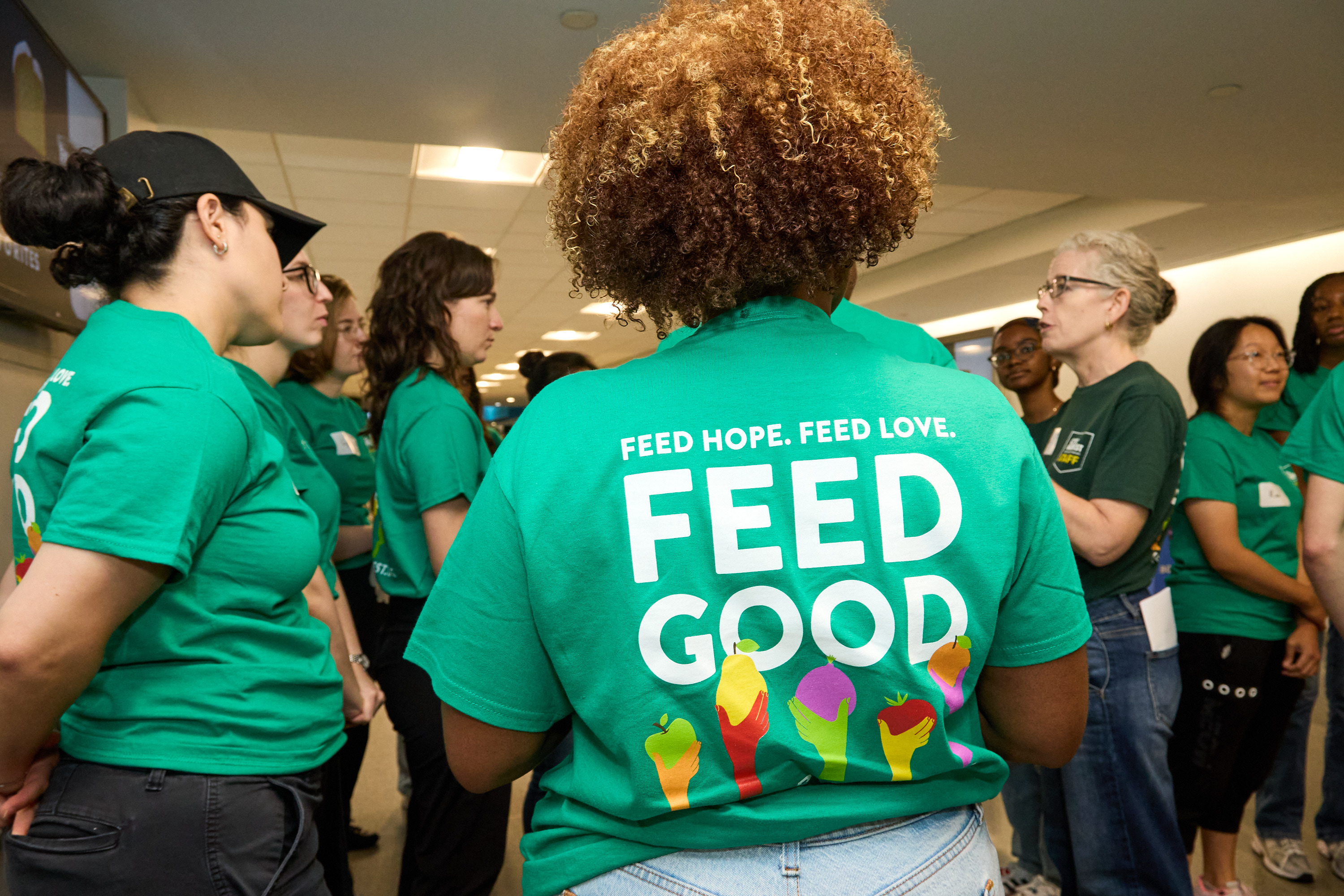
Fighting hunger in NYC with City Harvest

Me outside the Javits Center on Tuesday to volunteer with City Harvest

Iโ€™m smiling because this week I completed my first volunteer shift with City Harvest. With a group of 200 volunteers and staff, we rescued over 75,500 pounds of food after the close of the Fancy Food Show on Tuesday evening at the Javits Center. This food will be distributed to food pantries, soup kitchens, and community organizations all over the city to people who need our support. This work is deeply personal to me. I grew up with food insecurity (meaning we worried about where our next meal would come from) and I was a free lunch kid. 

The hunger issue in NYC is dire. 50% of working-age households in NYC are struggling to make ends meet. 1.4 million New Yorkers are food insecure. Thatโ€™s nearly 1:6 New Yorkers, including 1:4 children.ย 

This work is also personal to me because of my passion to protect our natural world. On Tuesday, we also saved all of this food and packaging from ending up in the trash. 30%โ€Šโ€”โ€Š40% of the food in the U.S. (108 billion pounds!) is wasted every year, to say nothing of all the resources it took to create that food and packaging. This costs Americans $473 billion every year. Nearly 1/4 of all landfill waste in the U.S. is food, and it is one of the largest producers of methane gas, which is causing climate change, weather-related disasters, and hunger.

Given the scale of this challenge, Iโ€™m excited about doing more work with City Harvest and helping more New Yorkers. I hope youโ€™ll join meโ€Šโ€”โ€Šthere are so many ways to be a volunteer! Visit https://www.cityharvest.org/volunteer/ to learn more.

Below are some pictures from the Tuesday event! All photos by City Harvest.

creativity

Embracing stakeholder theory inย Finland this summer

Photo from https://events.tuni.fi/stakeholdertheory/sustainability/

Finland, I canโ€™t wait to meet you! I was accepted into the 2025 Summer Seminar in Stakeholder Theory at Tampere University with University of Virginia Darden School of Business (my alma mater), Darden-The Institute for Business in Society (IBIS), and RESPMAN Research Group. Iโ€™ll join an incredible global group of faculty, researchers, and PhD students to learn and share how to best integrate stakeholder theory into my work in sustainability and climate change mitigation. As part of the program, Iโ€™m revising and refining the work I started in my University of Cambridge / Cambridge Institute for Sustainability Leadership (CISL) dissertation on the role of storytelling to engage family offices in climate investments. Iโ€™ve spent the last 2 months editing (cutting it in half!) and am excited to get feedback on it. In addition to that paper, Iโ€™ll also work on 3 more research projects:

  • The Stories We Eat: Narratives to Shape Stakeholder Behavior and Policy for Sustainable Food Futures
  • Narrative Power: Using Digital Media to Convey the Voice of Future Generations and Nature in Sustainability Storytelling
  • From Self-Interest to Shared Benefit: How to Adapt Finlandโ€™s Exemplar of Public Trust Amidst Power Asymmetries in U.S. Businesses

Iโ€™m so grateful for this opportunity to learn and engage with these incredible people in one of the most sustainable communities in the world. Iโ€™m most looking forward to spending time with my professor, mentor, and dear friend R. Edward Freeman, who is one of my heroes and the founder of the seminar. As the originator of stakeholder theory that transformed business ethics, his work has fundamentally changed how businesses and business leaders around the world operate. Heโ€™s the reason I went to Darden and he changed how I see the world and my role in it. Iโ€™m honored to have had his support and encouragement for all these years.

Itโ€™s going to be an incredible summer of learning. Iโ€™m excited to experience all of it and to see where it leads! Nรคhdรครคn pian, Finland!

creativity

Unraveling Ocean Mysteries: The Deep-Sea Spiders Powered by Methane

Sericosura sea spiders in this study and maps where they’re found.
From https://www.pnas.org/doi/full/10.1073/pnas.2501422122

The ocean’s depths have always held secrets, a vast, unexplored frontier teeming with life that defies our conventional understanding. Just when we think we’ve seen it all, nature delivers another astonishing revelation. Recently, a groundbreaking discovery has captivated the scientific community and nature enthusiasts alike: the first-ever methane-powered sea spiders, thriving in the extreme conditions of the ocean floor.

Imagine a world where sunlight never penetrates, where pressures are crushing, and life seems impossible. Yet, in these seemingly inhospitable environments, vibrant ecosystems flourish, often fueled by chemosynthesisโ€”a process where organisms derive energy from chemical reactions rather than sunlight. While hydrothermal vents and cold seeps are known hubs for such life, the discovery of methane-powered sea spiders introduces a new, fascinating chapter to this narrative.

These remarkable creatures, belonging to the ancient order of Pycnogonida, or “sea spiders,” have long been a source of wonder with their spindly legs and delicate forms. But what makes this new find truly extraordinary is their unique metabolic pathway. Scientists have observed these deep-sea arachnids congregating around methane seeps, areas where hydrocarbon gases leak from the seafloor. Through meticulous research, it was determined that these spiders don’t just live near the methane; they actively utilize it.

The research suggests a symbiotic relationship, perhaps involving specialized bacteria within the spiders’ gut or on their external surfaces, that can metabolize methane. This process converts the potent greenhouse gas into a usable energy source for the spiders, allowing them to thrive in an environment previously thought devoid of complex life forms that could directly tap into methane as fuel. It’s a biological marvel, showcasing evolution’s incredible adaptability.

This discovery has profound implications. It expands our understanding of life’s resilience and the diverse ways organisms can harness energy. It prompts us to reconsider the potential for life in other extreme environments, both on Earth and perhaps beyond. Furthermore, studying these methane-powered spiders could offer insights into novel biochemical processes, potentially leading to advancements in areas like bioremediation or sustainable energy.

The deep sea continues to be an endless source of inspiration and scientific inquiry. The methane-powered sea spider is not just a new species; it’s a testament to the ocean’s boundless capacity for wonder, reminding us that even in the most extreme corners of our planet, life finds a way, often in the most unexpected and awe-inspiring forms. As we continue to explore, who knows what other incredible adaptations await discovery in the mysterious depths below?

creativity

Greener Horizons: NYC’s First-Ever Urban Forest Plan Takes Root!

Forest Park, Queens. Photo by Daniel Avila/NYC Parks. https://www.nycgovparks.org/highlights/nyc-parks-most-photogenic-woodland-areas

For a city known for its concrete jungle, New York City is making a bold and exciting commitment to its natural sideโ€Šโ€”โ€Šthe cityโ€™s first-ever Urban Forest Plan, a monumental undertaking that promises to transform our urban landscape and bring the benefits of nature to every corner of the five boroughs.

What is the Urban Forest Plan?

Mandated by Local Law 148 of 2023, this groundbreaking plan sets an ambitious goal: to increase New York City’s tree canopy cover from its current 22% to a robust 30% by 2035. But it’s more than just planting trees; it’s a comprehensive roadmap for managing, protecting, and equitably expanding the city’s entire “urban forest”โ€”which includes over 7 million trees on public and private land, from street trees and parks to natural forests and even private yards.

Why is this Plan So Important?

The benefits of a thriving urban forest are immense and crucial for a city like ours:

  • Cooler City: Trees are natural air conditioners, mitigating the urban heat island effect that makes our city hotter, especially in neighborhoods with less green space. They can lower street temperatures by several degrees, providing vital relief during scorching summers.
  • Cleaner Air: Our urban trees act as natural filters, removing thousands of tons of air pollutants annually, which can significantly improve public health, particularly for those with respiratory issues.
  • Stormwater Management: Tree roots absorb millions of gallons of stormwater runoff, helping to reduce flooding and protect our waterways from pollution.
  • Enhanced Well-being: Studies consistently show that access to green spaces improves mental health, reduces stress, and promotes physical activity. A greener city means a healthier, happier populace.
  • Biodiversity Boost: Expanding the tree canopy creates vital habitats for birds, insects, and other wildlife, enriching the city’s biodiversity.
  • Environmental Justice: Historically, tree canopy has been unequally distributed across the city, with lower-income neighborhoods often having fewer trees and facing greater environmental burdens. This plan aims to address these disparities by prioritizing equitable tree planting in disadvantaged communities.

Community at the Core

One of the most exciting aspects of the Urban Forest Plan is its emphasis on community involvement. The city recognizes that for this plan to truly succeed, it needs the input, experiences, and recommendations of New Yorkers from all walks of life. Various community engagement eventsโ€”including workshops and “walk-shops” in different boroughsโ€”have been held, and a public survey is open (though note that the deadline for input is June 30, 2025 โ€“ so if you haven’t participated, there’s still a brief window!). This collaborative approach ensures that the plan reflects the diverse needs and desires of our neighborhoods.

Looking Ahead

The Urban Forest Plan is a testament to New York City’s commitment to a more sustainable, resilient, and livable future. It acknowledges that trees are not just a luxury, but essential infrastructure that provides invaluable services to our communities. As this plan takes root, we can look forward to a greener, healthier, and more equitable New York City for generations to come.

To learn more and get involved, visit the city’s Urban Forest Plan website at https://www.urbanforestplan.nyc/

creativity

Digging Deep: How Healthy Soil Can Help Heal Our Planet

Photo by Steven Weeks on Unsplash

We often look to the skies, the oceans, or technological innovations when discussing climate change solutions. But what if a powerful tool lies right beneath our feet? Healthy, living soil is an unsung hero in the fight against climate change and a cornerstone of a truly healthier planet.

To educate myself on soil health, I watched the documentaries Kiss the Ground and Common Ground on Amazon Prime Video. After watching them, I immediately visited their resources website filled with free ebooks and guides that can help all of us advocate for this climate solution and immediately take action in our everyday lives.

For too long, we’ve treated soil like dirt โ€“ an inert medium to hold plants up. In reality, healthy soil is a complex, dynamic ecosystem teeming with billions of microbes, fungi, insects, and worms. This underground world plays a crucial role in regulating our climate and supporting life on Earth.

How Does Soil Fight Climate Change? The Carbon Connection

The key lies in carbon sequestration. Here’s how it works:

  1. Photosynthesis: Plants pull carbon dioxide (CO2โ€‹), a major greenhouse gas, from the atmosphere.
  2. Carbon Transfer: Through photosynthesis, plants convert this carbon into sugars to fuel their growth. Some of this carbon builds their leaves and stems, but a significant amount is channeled down into their roots.
  3. Soil Storage: Plants release carbon compounds through their roots (exudates) to feed soil microbes. When plants and microbes die and decompose, this carbon becomes part of soil organic matter (SOM) โ€“ a complex, dark material rich in carbon.
  4. Locking it Away: In healthy, undisturbed soil with a thriving microbial community, this carbon can remain stable and locked away for decades, centuries, or even millennia, effectively removing it from the atmosphere where it would otherwise trap heat.

The Problem with Degraded Soil

Unfortunately, many modern agricultural and land management practices have degraded our soils worldwide. Practices like intensive tilling, overuse of synthetic fertilizers and pesticides, deforestation, and leaving soil bare disrupt the soil structure, kill beneficial microbes, and lead to erosion.

When soil is degraded:

  • It loses its ability to store carbon. Tilling, for instance, exposes SOM to oxygen, causing microbes to rapidly consume it and release the stored carbon back into the atmosphere as CO2โ€‹.
  • It can release other potent greenhouse gases like nitrous oxide (N2โ€‹O) due to synthetic nitrogen fertilizer overuse.
  • Its capacity to absorb and hold water diminishes, increasing runoff, erosion, and vulnerability to both droughts and floods.

Beyond Carbon: The Ripple Effects of Healthy Soil

Improving soil health isn’t just about carbon. It creates a cascade of benefits for a healthier planet:

  • Improved Water Management: Healthy soil with good structure absorbs more water, reducing runoff, preventing erosion, and recharging groundwater. This makes landscapes more resilient to both floods and droughts.
  • Enhanced Biodiversity: Thriving soil ecosystems support a vast array of life, from microscopic bacteria and fungi to earthworms and insects, forming the base of terrestrial food webs.
  • Reduced Pollution: Healthy soil filters water and can break down certain pollutants. By reducing the need for synthetic fertilizers and pesticides, soil-friendly practices also decrease chemical runoff into waterways.
  • Increased Food Security & Nutrition: Healthy soils produce more resilient and nutrient-dense crops, contributing to a more stable and nutritious food supply.
  • Reduced Need for Inputs: Soils rich in organic matter and microbial life naturally provide more nutrients to plants, lessening the dependence on synthetic fertilizers, the production of which is energy-intensive and contributes to greenhouse gas emissions.
  • Reduced Erosion: Strong soil structure, held together by roots and microbial glues, resists being washed or blown away, preserving our precious topsoil.
  • Cleaner Air: By reducing wind erosion, healthy soils contribute to cleaner air with less dust and particulate matter.

How Can We Improve Soil Health?

The good news is that we know how to regenerate soil health. These key practices, often grouped under the umbrella of regenerative agriculture or soil health management systems, have proven benefits for soil health:

  • Minimize Soil Disturbance: Reducing or eliminating tillage (plowing) keeps the soil structure intact, protects soil organisms, and prevents carbon release.
  • Keep the Soil Covered: Planting cover crops or leaving crop residue on the surface protects the soil from erosion, suppresses weeds, and adds organic matter.
  • Increase Plant Diversity: Rotating diverse crops and integrating cover crops feeds different types of soil microbes and improves soil structure.
  • Keep Living Roots in the Ground: Continuous plant cover ensures the soil microbiome is consistently fed via root exudates.
  • Integrate Livestock (Managed Grazing): Well-managed grazing can stimulate plant growth, add manure (nutrients and organic matter), and improve soil health.
  • Reduce/Eliminate Synthetic Inputs: Minimizing chemical fertilizers and pesticides allows the natural soil ecosystem to thrive.
  • Composting: Adding compost to gardens and farms directly increases soil organic matter.

What Can You Do?

  • Support Regenerative Farmers: Look for food grown using soil-healthy practices. Ask questions at farmers’ markets.
  • Compost: Turn your food scraps and yard waste into valuable soil amendments for your garden or community garden.
  • Garden Smarter: Practice no-dig gardening, use mulch, plant cover crops, and avoid synthetic chemicals.
  • Advocate: Support policies that incentivize farmers to adopt soil-healthy practices.
  • Learn & Share: Learn more and spread the word about the critical importance of soil health. Watching Kiss the Ground and Common Ground on Amazon Prime Video, and visiting their resources website are great ways to start!

Conclusion

Healing our planet requires looking down as much as we look up. By focusing on regenerating the health of our soils, we can actively draw down atmospheric carbon, enhance water cycles, boost biodiversity, improve food security, and build resilience to climate extremes. Healthy soil is a powerful, natural climate solution hiding in plain sight โ€“ it’s time we recognized its potential and started digging deep for a healthier future.