I tell wonder-filled stories about hope and healing
Author: Christa Avampato
The short of it:
Writer. Health, education, and art advocate. Theater and film producer. Visual artist. Product geek. Proud alumnae of the University of Pennsylvania (BA) and the Darden School of Business at the University of Virginia (MBA). Inspired by ancient wisdom & modern tech. Proliferator of goodness. Opener of doors. Friend to animals. Fan of creative work in all its wondrous forms. I use my business skills to create passion projects that build a better world. I’ve been called the happiest New Yorker, and I try hard to live up to that title every day.
The long of it:
My career has stretched across Capitol Hill, Broadway theatre, education, nonprofit fundraising, health and wellness, and Fortune 500 companies in retail, media, entertainment, technology, and financial services. I’ve been a product developer and product manager, theater manager, strategic consultant, marketer, voice over artist, , teacher, and fundraiser. I use my business and storytelling to support and sustain passion projects that build a better world. In every experience, I’ve used my sense of and respect for elegant design to develop meaningful products, services, programs, and events.
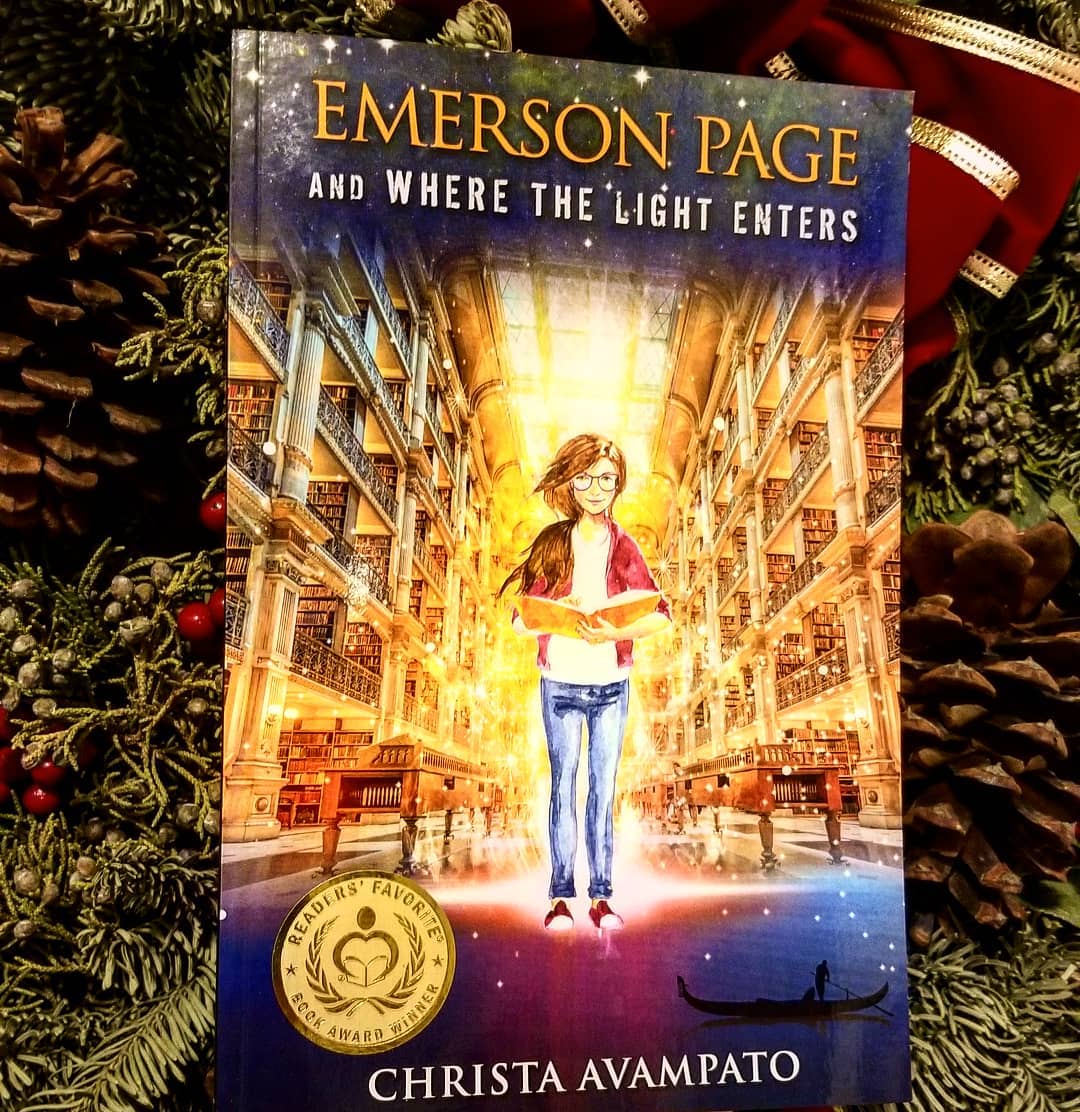
While building a business career, I also built a strong portfolio as a journalist, novelist, freelance writer, interviewer, presenter, and public speaker. My writing has appeared in The Washington Post, The Huffington Post, PBS.org, Boston.com, Royal Media Partners publications, and The Motley Fool on a wide range of topics including business, technology, science, health, education, culture, and lifestyle. I have also been an invited speaker at SXSW, Teach for America, Avon headquarters, Games for Change, NYU, Columbia University, Hunter College, and the Alzheimer’s Foundation of America. The first book in my young adult book series, Emerson Page and Where the Light Enters, was acquired by a publisher and launched in November 2017. I’m currently working on the second book in the series.
A recovering multi-tasker, I’m equally at home in front of my Mac, on my yoga mat, walking my rescue dog, Phineas, traveling with a purpose, or practicing the high-art of people watching. I also cut up small bits of paper and put them back together as a collage artist.
My company:
I’m bringing together all of my business and creative career paths as the Founder of Double or Nothing Media:
• I craft products, programs, and projects that make a difference;
• I build the business plans that make what I craft financially sustainable;
• I tell the stories that matter about the people, places, and products that inspire me.
Follow my adventures on Twitter at https://twitter.com/christanyc and Instagram at https://instagram.com/christarosenyc.
I have no fear of rejection in any area of my life. I’d much rather be rejected than regret not taking my shot. I’ve been rejected so often that when I get a positive response, it’s a genuine surprise and delight! If I admire someone’s work, I reach out to them and come to the table with humility as a partner and collaborator who wants to work toward a win-win solution and a shared vision.
Over the past few weeks I’ve been reaching out to people doing work I’m passionate about that’s related to my dissertation at University of Cambridge. I don’t know any of them, nor do we have any mutual connections. I’m just sending off blind emails explaining who I am, what I care about, and what I love about their work. I’ve yet to get a rejection – they’ve all said they’d be happy to talk to me and to see what we can create together.
So often we take ourselves out of the running because of a fear of rejection. Think of all the wasted potential that causes. The worst that will happen is they’ll say no, or not respond. Muster up the courage and put yourselves out there. Out there is where the magic happens, and right now our world needs more magic makers. Be one of them.
During my Masters program at University of Cambridge, I’ve been researching how video games can inspire and foster climate action. Today I had the chance to play the vertical slice (the beginning prototype) for the game that I’ve been working on. It’s beautiful, emotional, and challenging — all characteristics of a game that connect with players, and connect those players to something far beyond their screens.
3 billion people across the globe play video games. However, storytelling through video games has largely been absent from the climate change conversations that involve policy makers, governments, businesses, climate scientists, academics, and climate communicators. As someone who belongs to all of those communities and has worked in all of those sectors, I hope that I can be a bridge that not only brings them together but also helps them to collaborate and work together toward their common goal for a healthy, sustainable planet for all.
This game could be a game changer, and I can’t wait to see where this goes. More details soon as the prototype grows toward the market launch in Fall 2024.
Riccardo Muti with the Chicago Symphony Orchestra on opening night 10/4/23. Photo by Christa Avampato.
Last night I went to Carnegie Hall’s opening night gala with one of my best friends and my many talented colleagues. It was thrilling to hear the Chicago Symphony Orchestra under the expert baton of Riccardo Muti with the incomparable violin soloist Leonidas Kavakos, and to experience this gorgeous music with a packed house of nearly 3,000 people in this historic venue. The program included Tchaikovsky’s Violin Concerto in D Major, Op. 35 and Mussorgsky’s Pictures from an Exhibition orchestrated by Ravel. As an encore, Muti chose the brief and beautiful aria Amor ti vieta (Love forbids you) that appears in Intermezzo from Fedora by Giordano and Colautti.
Happy to be at Carnegie Hall’s opening night. Photos by Christa Avampato.
A performance at Carnegie Hall is a must-do for New Yorkers and visitors. This year’s season features Yo-Yo Ma and John Williams, Mitsuko Uchida, The Vienna Philharmonic, Jason Moran, The Hot Sardines with Alan Cumming, Lea Michele, Sutton Foster, Kelli O’Hara, Sheku Kanneh-Mason, Norm Lewis, Bryan Terrel Clark and Valisia LaKae with The New York Pops, Meow Meow, Patti Lupone, Emanuel Ax, Yuja Wang, Yannick Nézet-Séguin and The Met Orchestra, Tania León, and many, many more.
At 132 years old, Carnegie Hall is a stunning space in midtown Manhattan and the heart of its mission is to bring the transformative power of music to the widest possible audience. It’s a privilege to work with them and contribute to this organization’s legacy in my extraordinary city.
The Chicago Symphony Orchestra warms up for opening night. Photo by Christa Avampato.
One of my main projects at Carnegie is the subscription streaming channel Carnegie Hall+. We curate concerts, music festivals, dance, opera, and music documentaries from around the globe and deliver them to music lovers in the U.S. and 20 other countries. We have a lot of exciting developments underway for the year ahead. If you’d like to learn more, I’m always happy to chat about it. You can also find more details here: https://www.carnegiehallplus.com/
Happy opening, Carnegie Hall. I look forward to making more music available to more people in more places this season.
“If I don’t work, I don’t eat so I have to be out here, even when there’s a flood.” This was a quote from a NYC delivery worker on the news during the September 29th, 2023 flash floods. His electric bike failed in the knee-deep water. He was pushing it against the current to deliver food.
NYC now has the largest income gap of any large city in the country — the top 20% make 53 times more than the bottom 20%. We’re failing our people with no social safety net, no protection from climate hardship, and few pathways out of their circumstances. City workers often live in temporary shelter and public housing because they don’t earn enough to make rent but residency is often required for their jobs.
This city is run by service workers. They are the lifeblood that keeps the city moving. Failing them will cause the city to crumble.
We also have the migrant crisis. Right now at the U.S.-Mexico border, the city is distributing these fliers:
I cried reading it. This has been the city of dreams for decades. Now it is the city of dreams only for those who are already of means. That cannot continue.
New York is a city of immigrants. It always has been. They enrich and enliven the social and economic fabric on which this city’s creativity thrives. Without them, we lose who we are and what we stand for.
The economics and business side of my brain spends the bulk of my waking hours thinking about how to support New Yorkers, present and future. How do we boost the economy and provide opportunity to everyone who wants to be a New Yorker? How do we rebuild this city, not just for the privileged few but for all the huddled masses yearning to be free so that everyone wins together?
The historian and storyteller side of my brain always sifts the sands of the past to see what I can find and use. As the late great John Lewis, who was at one time a New Yorker and is one of my greatest inspirations, often said, “We must make a way out of no way.”
That’s just a start of how NYC can work with nature so that everyone is cared for. There are dozens of other solutions that are relatively low-cost, efficient, and proven to clean the air, water, and land—benefits that benefit every resident, visitor, and commuter.
This doesn’t have to be a concrete jungle. It can be a green, verdant, healthy, thriving place for all beings who want to be New Yorkers. It’s going to take a massive mobilization, and the relentless pursuit to match needs with resources to transform our challenges into opportunities. We have to do this work, and we have to do it now while we still have time. I’m tired of a dirty, flooded, and unequal New York. Aren’t you? I love this city. I love New Yorkers. And I want us to do better. We have to do better, and we can—together.
South Brooklyn during Friday’s floods. Photo by Christa Avampato.
A river flowed from Prospect Park through my neighborhood in South Slope, Brooklyn on Friday when we were pummeled with 7+ inches of rain in ~12 hours. I didn’t realize NYC’s floods were international news until I started getting messages from friends outside the country. With over 13 inches of rain in September, this is the 2nd wettest September since NYC began keeping weather records in 1920.
I took this photo of the flooding from my apartment at 8am. As I watched the water gushing through the streets, I thought about a conversation I had with my friend, Alex MacLennan, almost a decade ago. He told me the climate models then predicted the western half of the US would grow increasingly drier and hotter while the eastern half would be regularly flooded. How right they were.
NYC is an archipelago that sits mostly at sea-level surrounded by brackish water with the busiest shipping port in the US. Though it looms large on the national and international stages as a financial, cultural, political, and media capital, area-wise it’s small and easily overwhelmed by water.
It is, in many ways, a climate disaster waiting to happen. It’s the mostly densely populated city in the U.S. with nearly 28,000 people per square mile and has the largest population with almost 9 million people, more than double the size of the next largest city. The population doubles during the workday with as many commuters as residents. It’s also a city of hard surfaces (though we have 7 million trees and the tree canopy covers 21% of the city). Aged infrastructure and a subterranean subway that is 100+ years old further compound threats from flash flooding, coastal storms, and sea level rise. Flooding here is a crisis that must be urgently and unrelentingly addressed.
The country and world can’t afford to lose New York. While some strides have been made to protect the city from climate change, it’s not nearly enough. But all that may be changing, and fast.
These floods will become more frequent and intense in the coming years. We have to mitigate and adapt at the same time with nature-based solutions like biophilic architecture, mangroves, reefs, rooftop farms, and the transformation of vacant lots into bioswales. They are proven, efficient, and relatively inexpensive solutions. I hope the work at Governor’s Island can make these ideas realities.
Like all investments, nature-based solutions take time to create and scale. We have no more time to waste. We have to get started now, and it’s my hope that I can do my part to push this work forward.
When I took my book writing research trip to Ireland in 2018, I had two must-see places on my list: the Long Room at Trinity College Library and the Dark Hedges (which is the inspiration for the cover of my second Emerson Page novel). The photos below show me at both locations. They feature prominently in the book.
What I didn’t know before I arrived in Ireland is that so many other places would also find their way into the book. Everywhere I went, from the local pubs to the ancient sites to the natural settings, inspired my imagination and creativity, and filled me with wonder. So much of my trip was completely unplanned. I let the spirits and good people of Ireland direct me and guide me, and not once did I falter (which is a rarity for me, especially while traveling, because I often get myself into trouble that makes for interesting stories later on!) I carried a copy of Emerson’s first book with me everywhere and I often felt her nudge me in certain directions. I was never disappointed to follow her lead.
Other than New York, Ireland is the only place I’ve ever been that immediately felt like home, as if I’d been there before and was fated to be there at that very moment. Certainly a piece of my heart remains there now. For this reason, New York and Ireland are where Emerson spends all her time in this second book in the trilogy. Her New York and Ireland are filled with mythology, magic, and fantastical beings, experiences, and objects, and in the book I’ve done my best to transport readers into her world of adventure.
Some more fun facts about the Long Room and the Dark Hedges:
1.) The Long Room is 65 metres, nearly 300 years old, and filled with 200,000 of the library’s oldest books as well as gorgeous sculptures and an ancient harp that dates to the 15th century. The harp inspired the coat of arms of Ireland as well as the logo for Guinness beer. The scent in the Long Room is unlike anything I’ve ever experienced before or since. Known as Biblichor, from the Greek words, Biblos (meaning book) and Ichor (meaning “fluid that flows in the veins of gods”), it is related to the word Petrichor, a pleasant smell that frequently accompanies the first rain after a long period of warm, dry weather. The Irish are serious about a number of things that are dear to me—stories and books, history, music, beer, and nature, not necessarily in that order. No wonder I feel so at home in this country!
It sits above a chamber that holds the Book of Kells, a 9th century handwritten illuminated manuscript of the four gospels of the New Testament, filled with ornate Latin text and intricate illustrations, many of them quite cheeky and containing secret messages that the Celtic monks who created it wrote to each other. I love the Irish for so many reasons, and their humor is among my favorite of their attributes.
2.) The Dark Hedges (in Irish:Na Fálta Dorcha) is an avenue of beech trees along Bregagh Road between Armoy and Stranocum in County Antrim, Northern Ireland. The majority of them are 250 years old, and form a tunnel that from the start seems never-ending. The fields on either side are abandoned cemeteries, lending to the ghostly feeling I had as soon as I arrived. It’s as if the trees whisper to each other through the wind. The trees are rumored to be haunted by many mythological beings—namely the Grey Lady and the Mórrígan (Mór-Ríoghain in modern Irish) who is the fierce Celtic goddess of battle, destiny, fertility, and death (a heavy workload!) and often appear as or is be accompanied by a crow or wolf. They’re badass women who know what they want and don’t tolerate nonsense. Did I mention I felt very at-home here, too?! 😉
Beech trees are linked with time and knowledge, especially written wisdom as thin slices of beech were used to write the very first books. Whatever words were inscribed on beech took on the power and magic of the gods. This is why the beech tree was held in such awe in those early days of books, and still is today. Beech trees were called ‘Boc’ by the Anglo-Saxons, which later became the word ‘book’. I didn’t know any of this until I arrived at the Dark Hedges, and it felt serendipitous since Emerson’s entire journey in the trilogy revolves around finding the first book ever written.
As a writer, you think you’re leading the story but what I’ve often found is that the story is always leading me to a far better place than I could ever create on my own. The art of writing a novel is a long and winding road, the path meandering but always with purpose. If I just sit as a willing scribe, the story finds me. My job is just to get it down as honestly and vividly as possible. All it takes is time. It’s the great mystery of imagination—I don’t know where the story comes from but I’m honored that it found me and continues to guide me.
I’m excited to share more behind-the-scenes about the book in future posts leading up to its release in Spring 2024. I’m so excited to be back in Emerson’s world, and revisiting my fond memories of Ireland, a country I hope to return to very soon.
Emerson Page and Where the Light Leads by Emerson Page
Drumroll please! Here is the book cover for my second novel, Emerson Page and Where the Light Leads. What do you think?!
Emerson’s joined here by her three best friends: Skylar, Truman, and her service dog, Friday. This scene captures the moment when they arrive at a magical location where they encounter several mythological creatures who never quite reveal themselves as friends or foes. Can you guess the real-life location in Northern Ireland that inspired the cover? Can you guess which mythological creatures they find there and what they reveal to our favorite quartet?
I’ll share the answers tomorrow along with some fun photos and stories. For now, I’d love to hear your reactions to the cover and your guesses to the two questions above.
In the last 13 years, the U.S. has used 1.5 trillion gallons of water for fracking. That’s the amount of water used annually by the state of Texas with a population of nearly 30 million people. It’s a triple whammy against the planet by America — the emissions created by these fossil fuels, the extensive use of water to complete fracking exercises to get those fossil fuels out of the ground, and the immense damage done to ecosystems by fracking, a process that creates vast amounts of wastewater, emits greenhouse gases such as methane, releases toxic air pollutants and generates noise, destroys animal and plant habitats, causes species decline, disrupts animal migrations, and degrades land.
I used to be grateful that he was in the climate conversation. Now, I’m disappointed by yet another prominent scientist who has gone off-the-rails and is ignoring science. Maybe it’s fear. Maybe it’s wishful thinking. Maybe it’s desperation at the dire state of the planet.
This is what I know to be true — the wisdom of nature far exceeds any wisdom of any human who has ever lived. To claim otherwise, is the height of ignorance and arrogance. It’s dangerous to listen to someone who puts himself above nature, especially when he has one of the highest personal carbon footprints in the world and the health of the natural world underpins half of global GDP (~$40 trillion).
Nature knows how to create conditions conducive to life. The human track record on supporting life, including our own, is abysmal. I’m banking on nature’s wisdom every single day. She’s an ally, not an adversary, and we must listen and respect her before it’s too late. Nature made our existence possible.
Human ingenuity, while offering many gifts, has given us climate change, fracking, and perhaps the recipe for our own extinction. The most ingenious actions humans could take now are to listen to and learn from nature, and work with her, not against her. She’s ready to play ball. She always has been. The question now is, are we?
I spent last week inspired by storytelling, a mechanism of empathy as Neil Gaiman calls it, during Climate Week NYC. I met dozens of family office leaders and their advisors. My dissertation for University of Cambridge focuses on this intersection — how storytelling can galvanize family office investment in nature-based solutions.
A few take-aways:
Language matters I went to a New York Public Library event with Eliza Reid and Dr. Jenni Haukio, the First Ladies of Iceland and Finland. The discussion was moderated by Neil Gaiman, my favorite author. All three of them emphasized the importance of language and how the words we choose are intimately tied to our culture, geography, and ecology.
When talking about climate change, we can feel overwhelmed by inertia. One way to break that inertia is to go out into nature and listen to the stories she tells. The beauty and wonder of nature, and the inspiration she provides, is worth protecting, saving, and sacrificing for. Stories, in any medium and format, can center nature in powerful ways that emotionally connect us to one another and the natural world.
Art is vital to the climate conversation Science, governance, and finance matter enormously in climate. Art matters just as much. It is the way in for many people. The expression of climate change’s impact on a personal level sticks with people more than facts and figures. We save things we love, that hold meaning for us, and art is a way to convey love and meaning. I want to create more climate talks and actions that are cross-sector, cross-generational, cross-geography. Let’s tear down the walls that divide us in favor of the bridges that connect us. I didn’t see a single talk at Climate Week that includes scientists, artists, policy makers, and financiers together on one stage. I’d like to make that the norm.
Where there are helpers, there is hope I went to E2’s session on how New York (City and State) can make the most of the Inflation Reduction Act, the largest climate investment ever made by the U.S. government. I met three entrepreneurs who are doing innovative product development in the energy space. All are career switchers. They sincerely want to help, and that gives me hope.
Passion drives progress I spoke to some financiers trying to serve family offices. I asked them what they love about what they do. They looked at me wide-eyed and silent. They have no idea what they love about what they do. They’ve never thought about it. They’re working on climate because as they said, “it’s what’s next”.
I emphatically encouraged them to consider the why as much as the what. If they are just in this for their piece of the pie, that distracts from and hinders the movement. This work is too important, too vital to the well-being of every being to be in this just for the money they think they can make. Passion is the driving force for progress. Money is fuel for the journey. Let’s not get it twisted.
Breaking news: my second novel, Emerson Page and Where the Light Leads, will be released in Spring 2024!
The publisher is working on the final steps and around the holidays we’ll have a better sense of a set release date along with pre-order links. On Wednesday, September 27th, I’ll post a cover reveal sneak peek on here.
Set in a mgaical version of New York City, and Ireland’s Dublin, the Dark Hedges, and Newgrange, I can’t wait to share this next chapter of Emerson’s adventures with you. Thank you to everyone who has cheered me on these many years in a million different ways. Writing novels is a solo art form that takes a village to bring to life. I’m grateful to be in this village with all of you.
Leading up to publication, I’ll be sharing loads of info on the book, the process of book publication, querying, storytelling and writing, and other behind-the-scenes goodies and giveaways. Book publishing can feel like such a mystery from the outside, so come on inside with me and I’ll show you around this wild and always-changing world!




 Christa Avampato