creativity

Joy today: The beauty of telling small stories

Small stories told incredibly well can be every bit as powerful as the sweeping, complicated tales of history. To be honest, I’m naturally drawn to the latter but telling those epic tales as a writer is not a place to begin. It’s a goal.

This spring, I’m attending my first screenwriting pitch event. I had a long conversation with my writing mentor and dear friend, John Bucher. I was considering writing an against-all-odds story rooted in the untold story of New York City’s most notorious and unlikely gangster.

Because it’s a period piece, I was worried that this would cause producers to count me out before I even finished my log line. In this kind of pitch situation, I’ve got to stack the odds in my favor in every way—a great story, strong writing, short shooting period, and a small budget without any complicated production or editing tactics needed. Period films by their nature are expensive and expansive because you have to recreate that world that the characters inhabit. Is a bold period piece for this pitch competition really the risk to take? Though I love the story, I doubted whether this was the time and place to take that shot. To check this hunch, I turned to John.

John said something to me that was an absolute lightbulb moment that I’ll be retelling for years to come: producers often look for a way to say no. Your job as a writer is to make that “no” very difficult for them to deliver. As The Godfather has taught me well, “Make them an offer they can’t refuse.” A killer small story that fits squarely into a genre that sells shows that as a writer you know the market. You understand it in your bones, and that shows that not only can you write but you also know how to make something. And that last bit, the ability to make something beyond words on a page is the secret sauce. If a film can be made on a sliver of a budget, that lets a producer take a risk on a new voice. If it costs them next to nothing to make, it gives them the chance to take a chance. And as a new voice, I’m a chance that I want them to take.

So, it’s back to the drawing board for me on this project but you know what? I feel great about it. I feel lighter. I feel like I’m starting with a blank page that can be anything my imagination can conjure. I don’t know what my genre or subject will be, but I do know the story will be small, relatable, set in the present day, and center around a strong female lead who’s underestimated. She’ll likely be in New York because it’s the city where I live, and the one that I know and love. And the rest? It’s all TBD. Stay tuned…

creativity

Joy today: What I learned during my first #PitMad writing pitch event

On Thursday, I participated in my first #PitMad, a quarterly Twitter event where writers put together up to three tweets about a manuscript they’ve written, add the #PitMad, age category, and genre hashtags, and hope that agents and / or publishers like their tweets. A like means that they’re interested in receiving your query. Think of it as a writer’s foot in the virtual door. With the likes in your notifications, you then research those agents and publishers, review their query requirements, and send in your materials. And then you wait, and likely wait and wait and wait.

I didn’t expect to receive any likes on my 3 manuscripts. I figured low expectations were warranted with so much competition. I was shocked and thrilled when all 3 manuscripts got some interest. I’m working on my queries this weekend, and am excited to see what comes of it. Of course, I’ll keep you all in the loop!

Here’s what I learned during my first run at #PitMad:

1.) Take your shot
Yes, there will be thousands of tweets in competition with yours. Yes, the odds are long. And yes, it’s worth it. Your manuscript deserves every shot at being published, even the long shots. In publishing, it’s all a long shot. Take as many as you can.

2.) Relatively minimal effort on your part
It’s three well-composed tweets. You can write them ahead of time and schedule to publish on the day of #PitMad. Yes, they take time to write but think about how much time querying takes, and most of those queries fall into the void. Write the tweets, post them, and see what happens.

3.) Love shines bright in the writing community
The best part of #PitMad for me was seeing all of the love fly around the Twittersphere that day. People retweeting and commenting on posts that piqued their interest made my day. Twitter can be a bullying garbage pile sometimes with so much disrespectful criticism, and it was nice to see it as a force for good for writers during #PitMad.

I will absolutely participate again, and if you have a finished manuscript, I encourage you to participate, too. For more details and the 2020 dates for #PitMad, check out https://pitchwars.org/pitmad/.


creativity

Joy today: As an author, I’m part painter, part scientist, part baker

I write a book the way a painter covers a canvas, the way a scientist arrives at the lab, the way a baker arrives in the kitchen. I have an idea in my mind of what I want to create, what I want to discover. It’s a bit fuzzy at first with soft edges, a hypothesis, a dream.

I start to sketch some lines, some ideas, a recipe via my outline. It’s broad at first and then gets more and more refined as the story becomes clear in my mind. I experiment by writing some passages, bits of dialogue, setting descriptions, and character sketches. I watch and listen and read. Then I add some more lines and then maybe some color and shading with scenes that are more fleshed out with more detail and more purpose. Every draft is adding more detail, more information, more frosting.

My point in this metaphor is that I don’t see editing as onerous. An artist doesn’t paint a canvas in one sitting. A scientist doesn’t prove a theory in one trial of one experiment. A baker doesn’t perfect a recipe in one swift action. It takes multiple efforts over a very long time. It’s trial, error, and trial again.

First, I have to zoom way out. I take in the whole world surrounding my characters, the context in which they live their lives. Then I move closer step-by-step, taking note of the details, the times they live in, the circumstances swirling around them. Eventually, I’m standing beside them, eavesdropping on their interactions. And finally, they’re telling me their deepest darkest secrets.

We don’t get to know someone all at once. Their story unfolds for us over time. The same is true for my books. I wish there was a short route, an easier, faster path. To date, I haven’t found one and honestly I think that’s for the best. What builds slowly, lasts. I have no doubt that eventually every story will come into focus. Much of that is out of my control. What I can do is show up every day and get down what’s clear in the moment.

I say this to myself as much as I say it to you: give yourself a break. Just keep showing up and getting it down as best you can. Just keep moving forward a step at a time. You can’t do it all, all at once. Just do today’s part today. Refinement takes time.

creativity

Joy today: Preparing for my first literary agent meetings

This week I have my first literary agent pitch meetings. I directly worked with a publisher for my first book so this is the first time I’m meeting agents and pitching myself and my writing to them.

I wanted some advice on this process and came across the Netflix series Shine On hosted by Reese Witherspoon. In one episode, Reese interviews Ava DuVernay and they talk about this exact kind of high-stakes personal pitch scenario in creative fields.

Ava’s advice:
“They want to hear you be the one [they’re looking for]. They don’t want to hear that you’re nervous. They want someone who’s smart, and capable, and passionate, and going to try. And those are all the things you already have.”

What does Reese Witherspoon think when she auditions? “I think in my mind, “Give me the ball.” Because people just want to know you’re going to handle it.”

Their bottom line is that even if you don’t know what you’re doing, be committed to figuring it out.

So today as I prepare my materials and refine my pitch, I’m holding this advice in my mind and heart. I’ve already got what I need. Now it’s just a matter of walking into the room like I already belong and letting myself shine.

creativity

Joy today: Heading to SciCommCamp

I tried to sleep in today to rest up for the wknd. I just couldn’t—way too excited for SciCommCamp. I’m in LA only for the weekend to go to this amazing conference that is nerdy Fall camp for people who love science and love talking about it! Sneaking in a quick trip to Griffith Park before heading up to Simi Valley. Excited for everything I’m going to learn and I promise to share when I get back.

Sometimes I think I could live off a steady diet of curiosity, joy, and enthusiasm. (I won’t test that theory because I love food but it’s a strong hunch!)

LA, I’m glad to see you again and I’m pretty sure I’ll be back again very soon. Happy Friday, friends.

creativity

Joy today: Writing as service

69678924_10105297665567546_4670619515258667008_o
Photo by Christa Avampato – Little Italy, New York City

This is what it’s all about, you magical, imaginative, creative being. You can create worlds out of thin air. Characters, settings, desires, motivations, losses, victories, love, joy, disappointment, and healing. The full breadth and depth of human emotion lives in you. As a writer, you’re trying to get all of that out of your mind and heart, into your hands, and out into the world so you can connect with others, so we all feel less alone. What a noble, generous, and loving thing to do. Writing is service in its highest, most selfless form.

creativity

Joy today: How writers can win NaNoWriMo

“Every book in history has been written the exact same way: one word at a time.” ~Ed Freeman

Hello, writers and readers! Are you diving into NaNoWriMo today? Me, too!

For those of you new to this event, it stands for National Novel Writing Month. Thousands of people all over the world attempt to write 50,000 words (the length of a novel that’s on the shorter side) in the month of November. There are a lot of great resources available over the at the NaNoWriMo site including a calendar of virtual write-ins, Twitter chat times, encouraging letters from well-known novelists know as pep talks, writing tool suggestions, and a community of other writers writing this month.

This is my third time participating in NaNoWriMo. The first two times I wrote the first drafts of my two Emerson Page novels. The first was published in 2017 (and you can buy wherever books are sold). The second I’m shopping around now. This year, I’m trying a new genre—historical fiction romance set in an Italian bakery in New York City during the Christmas season of 1910. It’s called For Love and Other Reasons.

50,000 words in a month is a lofty goal, and winning it means you get to that goal. However, my p.o.v. is that any progress you make this month is a win. Here are some ways that have helped me the last two times I’ve done this:

1.) Break it down into small parts
Break down your writing into small parts. One scene, one part of a scene, one description. Heck, one good sentence is fine, too. My professor, mentor, and friend, Ed Freeman, is my Albus Dumbledore. He always says, “Every book in history has been written the exact same way: one word at a time.” I think about that every single day. One word, one sentence, one page, one chapter, one book, one library. Everything in our lives is composed of smaller parts. Don’t get overwhelmed by writing a book. Just write a word and then another and another. All the greats have done it that way, and you can, too.

2.) Schedule your writing time
Put it in your calendar and hold yourself to it just like you would any other important appointment. Sometimes people ask me what’s the trick to writing  book. I wish I had a silver bullet for you and for myself! I don’t. Writing a book takes time, dedication, and effort. It’s as simple and as difficult as that.

3.) Treat yourself
I don’t know about you but I like rewards so I treat myself for a job well done. When I hit my word count for the day, I have a cookie, a piece of candy, or a cup of delicious tea I bought especially for this purpose. Set up a reward system for yourself to stay motivated and to celebrate along the way.

4.) Outline
I love a good outline. This year I’m trying a new software called PlotPins. You can try any number of different tools and can go as low-tech as scenes on index cards which are my personal favorites because then I can move the order around. The New York Times ran an article this week with a list of great tools for writers, and some are completely free.

5.) Fun it up
This year, my novel includes baking so I’ll be posting pictures and recipes of my NaNo baking on social media and on my NaNoWriMo profile as my word count adds up. You’ll be able to find them on my Instagram and Twitter accounts, as well as on my Author page on Facebook.

Happy writing and reading, friends!

creativity

Joy today: Halloween writing and reading with Neil Gaiman

Happy Halloween! Anyone have a writing-inspired Halloween costume? Let’s see ’em – post a pic in the comments.

Also, if you’re looking for some fun Halloween literary entertainment, I’ve got some for you:

Neil Gaiman reading Poe’s poem, The Raven:

The origin story of Sleepy Hollow and the Headless Horseman traces its roots to the Middle Ages! This link also has some fun related Halloween content at the bottom of the page, too: https://www.history.com/news/legend-sleepy-hollow-headless-horseman

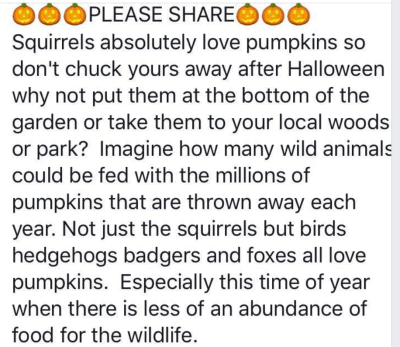
And when you’re all done with your pumpkins, don’t throw them in the trash. Instead, treat the wildlife in your gardens and local woods who can make very good use of them.

Screen Shot 2019-10-15 at 4.24.54 PM


creativity

Joy today: How Twitter gave me my new writing opportunity

As many of you know, I’ve been working on my science writing and bringing since into my career as a product developer. I’m so excited to share that over the next few months, one of my favorite biomimicry publications is going to publish a series of pieces I’ve been wanting to write. I’m over the moon excited about this, and as a source of inspiration, I wanted to share how it all came about.

Twitter magic and the glass sponge
I’m pretty active on Twitter where my feed is mashup of different topics, two main ones being my writing and my work in biomimicry. A couple of weeks ago, I learned about the glass sponge for a grad school assignment.

Very quick recap: the glass sponge lives on the ocean floor over 1000 meters below sea level and is one of the oldest species in existence today. It builds one of the the most stable structures on Earth with the minimal amount of material needed. Its glass is transparent, flexible, and created from sea minerals (such as calcium carbonate, salt, and carbon dioxide) at ocean temperatures (~4 degrees Celsius, ~39 degrees Fahrenheit). It is created and then biodegrades without any toxic waste. Human-made glass is extremely fragile, expensive, and dirty to create—glass and cement production generates 5-7% of the Earth’s greenhouse gas emissions. It requires very hot temperatures in a kiln and therefore is also energy intensive.

Though we’ve known about the glass sponge for decades, engineers, designers, and scientists have no idea how it creates its glass and we’ve never been able to replicate its far superior product. It’s an absolute mystery. But when we learn its secrets, it has the potential to transform our construction industry into one that’s sustainable, clean, and healthy for the planet.

Power to the crowd
So…back to my writing. I wrote a tweet about the magnificent glass sponge just as part of my regular social media promotion of science and biomimicry. It got a lot of attention and became the 2nd most shared story about biomimicry on Twitter the week I posted it, second only to one my Mashable. That got the attention of this publication, and they asked me if I’d like to write something for them. And heck yes, I would!

What I’ll be writing
They asked me to pitch a topic to them. True to my brand, I gave them 10 pitches hoping there might be one in there that they’d like. To my surprise, they loved them all and asked me to write one a month. So, we’re off the races and here are the first few topics that will be coming out in the next few months:

1. Biomimicry and the Green New Deal (November)
2. Biomimicry and materials science (December)
3. Biomimicry makes the case for species conservation (January)
4. Medical applications of biomimicry (February)

I tell this story because I want it to inspire you to get out there and shout about what you love, what fascinates you, not because you hope it gets you something but just because you love it so much that you can’t keep it to yourself. I’m thrilled by this development in my writing. Shocked even. And even if no one liked the glass sponge tweet, it wouldn’t have mattered because I love it and wanted to share it.

The big publishing take-away
That’s the bit no one ever told me about publishing. In the age when people are obsessed with platform and followers and likes and retweets, too many of us have forgotten about joy. That’s the thing to focus on. That’s the secret sauce that keeps us going. Fill up your head, heart, hands, and feeds with joy, and see what happens. It’s a skeleton key that unlocks doors we didn’t even know were there.

creativity

Joy today: How to write a nonfiction book proposal

I started my first nonfiction book proposal tonight. I wasn’t sure how to craft one so I turned to Eric Smith’s website. Eric is an agent, author, and one of the most generous people in the publishing industry. I highly recommend all his Twitter and website to every writer I know!

He shares his tips for a successful nonfiction book proposal he put together with one of his clients. He also links to several excellent posts by Jane Friedman, Nathan Bransford, and Brian Klems who provide amazing advice for nonfiction book proposals on their own websites.

Happy proposing, and writing!