creativity

Living in gratitude on my 5-year cancer journey

Me outside the Perlmutter Cancer Center in NYC on October 29th after seeing my surgeon on the 5-year anniversary of my discharge from surgery

Last week I celebrated 5 years since the bilateral mastectomy that saved my life and removed any sign of cancer from my body. My friend, Wayne, describes journeys like this as a log flume. When we begin, we’re at the top of a terrifying drop. We’re scared, nervous, unsure, hopeful, confused, anxious. All the emotions of the human condition are raw and tumbled in our minds and hearts. We’re trying to keep our head up and our eyes ahead. we don’t want to take that plunge into the unknown. But we have to. We can’t turn around. The only way out is through.

And so, we take a deep breath, and we let ourselves fall. We face all the things we were afraid of, and then some. In every health challenge journey, circumstances arise that we never expected. In my case, I had to have another surgery 3 weeks later because lymph nodes that biopsied negative came back positive in the pathology. All the nodes from that second surgery were, thankfully, negative. Then I nearly died, twice, from a life-threatening allergy to Taxol, a common chemo drug, that shut down my lungs in the middle of COVID. My oncologist at the time thought I was being overly dramatic about my side effects when in fact I was suffocating. (I fired her from my care team, and she no longer sees patients.) My pulmonology team thought my lungs might be permanently scarred and I may need to have an oxygen tank for the rest of my life. Thanks to science and diligence, I fully recovered and now I’m healthier and stronger than ever.

I spent the evening of my 5-year surgery anniversary producing and hosting NYC’s Secrets & Lies – Ghost Stories. The irony isn’t lost on me—that I nearly became a ghost myself with so much life I still wanted to live and that storytelling and creativity have been two of my greatest teachers and healers.

In the wee hours of the morning after my surgery, I woke up in recovery. High as a kite on a massive amount of drugs, my nurse ran around the hospital to find me a turkey sandwich and to this day it’s the best thing I’ve ever eaten. I happily gobbled it down, watched a Harry Potter film on my tablet, and cried enormous tears of gratitude. There was less of my body in the world, but I was still alive, still breathing, and cancer-free. My greatest wish that morning was to see the sunrise so my nurse got me out of bed and wheeled me to one of the lounge spaces in the recovery wing so I could see the sun come up over the East River and the FDR Drive. I will never forget that view.

My surgery team members came to see me before I was discharged. My plastic surgeon who had placed the first installment of my reconstruction – the tissue expanders that would go on to cause 14 months of constant pain – told me that I woke up from anesthesia very quickly, before I’d even left the operating room. I began gushing how grateful and thankful I was to the whole surgery team. She said the entire team was laughing and crying right along with me. I have zero memory of this, and I wish I’d been fully conscious to remember it. Leave it to me to bring the funny in the darkest of times!

Then my breast surgeon came to check me before discharge. Through our masks, I thanked her for saving me and she said, “Sweetie, I’m just part of the team. And every person in this hospital shows up every day with the only goal being to help you heal. And you will heal. And how you feel now – the pain and the fear – it won’t always feel this way. We’re going to get through this together.” My dear friend, Marita, picked me up from the hospital and drove me home to where my sister and my dog were waiting for me. In the following months, so many beautiful friends sent me care packages, messages, cards, and food, and came to visit me from a distance – outside and masked. The trying times we made it through! I’m so thankful for everyone who cheered me on and helped me in a million different ways. I wouldn’t be here without you.

It’s fitting that exactly 5 years at that exact time she came to see me in recovery that I had my 5-year check-up with my breast surgeon. She gave me a clean bill of health, and we talked about the next 5 years of meds. She eased my mind and soothed my heart, as she always does, with science and compassion. We have a plan to keep me cancer-free, and I feel ready to start this next chapter.

I left her office with tears in my eyes and my head, heart, and spirit filled with gratitude for every second of these past 5 years. I’m even grateful for the worst days on this journey because I got to live them. Every morning, my first thought is, “Whew, I got another one!” Long may that tradition continue.

Below are photos of me on the day of my surgery and the morning after when I woke up and saw the sunrise

creativity

Using science to build strong bones as a cancer survivor

Me at Ravinia when I visited friends in Chicago this weekend

Some personal health news and a story about the power of science. 2 years ago, I went for a bone density test. Unsurprisingly it showed that my current “f*ck cancer” meds had decreased my bone density numbers into the osteopenia range with 1 number from my low back on the border for osteoporosis.

At that point, my oncology team and I decided to play defense. I added the equivalent of Harry Potter’s Skele-gro to my arsenal of daily weight-bearing exercises, a very healthy diet, and no alcohol that I was already doing. The hope was the new med would stabilize my numbers and keep osteoporosis at bay.

I just had my 2 year bone density test. Some of my numbers have improved by a lot. A couple stayed the same. The number for my low back tipped by -.1, taking me into osteoporosis.

I bursted into tears. I spend an incredible amount of time and effort looking after my health. Ani DiFranco wasn’t joking when she sang, “self-preservation is a full-time occupation.” How was this fair? What else was I supposed to do to stop this?

I pulled myself together and messaged my oncologist to ask about next steps.

I took myself for a walk and gave myself a pep talk. The med is working. Healing isn’t linear. I know this. Like an arrow, sometimes we have to be pulled back a bit to fly forward.

By the time I got home, my oncologist had responded. I expected to see a recommendation for more meds. “This is status quo. You’re on protective meds and will be done with the meds causing this side effect in a year. This will get better.”

The new medications I’ll switch to in a year, which will mark 5 years since the end of my active cancer treatment, don’t diminish bone density. They will likely protect my bone health and possibly improve my numbers. And my oncologist will keep me on the Skele-gro until I’m out of osteoporosis land.

My bone health isn’t where I want it to be. Not yet. I’ll get there, one day at a time, thanks to science.

creativity

The latest cancer treatment is in your medicine cabinet right now

Photo by Hal Gatewood on Unsplash

Open up your medicine cabinet and have a look around. You may have the latest cancer treatment front and center—aspirin. Yep. Good ole regular aspirin that costs ~$0.05 per tablet.

The discovery of aspirin’s nature roots dates back to ancient civilizations. Sumerians, Egyptians, and Greeks used willow bark as a pain reliever. The 18th- and 19th-century ushered in a host of developments that led to modern day aspirin. In 1763, English clergyman Edward Stone observed willow bark reduced fevers. In 1828, German chemist Joseph Buchner isolated salicin as the active chemical in willow bark. In 1853, French chemist Charles Gerhardt synthesized salicylic acid, a derivative of salicin. In 1897, German chemist Felix Hoffmann, working for the Bayer company, synthesized acetylsalicylic acid (ASA), a more stable and less irritating form of salicylic acid. He named the new compound “aspirin,” a combination of the words “acetyl” and “spiraea,” a plant related to willow. Bayer patented aspirin on March 6, 1899, and began marketing it as a pain reliever and fever reducer. 

Fast forward 126 years, almost exactly to the day. Scientists have now uncovered how aspirin works to stop some cancers such as breast, bowel, and prostate from spreading (known as metastasis.) Metastasis, the spread of cancer cells from primary tumors to distant organs, is the cause of 90% of cancer deaths globally.

When cancer first spreads, there’s a window of opportunity for treatment when cancer cells are particularly vulnerable. By stimulating the immune system during this window of time, aspirin could prevent spread and recurrence in patients with early cancer. The study, published on March 5, 2025 in the journal, Nature, will support ongoing clinical trials in humans, to work out who is most likely to benefit based on the many different aspects of tumors (known as biomarkers.) It’s also important to note that aspirin is known to increase bleeding risk and can cause extreme stomach upset and toxicity so this treatment must only be done under the recommendation and supervision of a medical team.

Professor Rahul Roychoudhuri in the Department of Pathology at the University of Cambridge, who led the work, said, “Despite advances in cancer treatment, many patients with early stage cancers receive treatments, such as surgical removal of the tumor, which have the potential to be curative, but later relapse due to the eventual growth of micro metastases–cancer cells that have seeded other parts of the body but remain in a latent state.

“Most immunotherapies are developed to treat patients with established metastatic cancer, but when cancer first spreads there’s a unique therapeutic window of opportunity when cancer cells are particularly vulnerable to immune attack. We hope that therapies that target this window of vulnerability will have tremendous scope in preventing recurrence in patients with early cancer at risk of recurrence.”

Aspirin is less expensive than antibody-based therapies, so more accessible globally. It also has fewer side effects than many cancer treatments and could therefore be better tolerated by patients to protect and preserve quality of life without compromising other aspects of a person’s health.

I have a long day of medical appointments with my oncology team at NYU’s Perlmutter Cancer Center next week on March 25th. (These are my regular check-ups and include the administration of some of my medications that I have to have done by my medical team.) I’ll absolutely discuss with them the potential of aspirin to help keep me cancer-free, and keep you updated on their response. I love to participate in research studies – not only does it help me, but it also helps me pay forward all of the benefits I’ve received from others who participated in research that make my treatments possible. Curing cancer takes a village, and maybe someday, a daily dose of aspirin.

creativity

New research to relieve radiation fibrosis for cancer patients

Photo by Oksana Taran on Unsplash

Some nerdy science news! Ever since my early breast cancer diagnosis in 2020, I’ve participated in a number of scientific studies and new medical treatments. Last week I began a new one after one of my doctors suggested it as a way to help support my body’s ongoing healing.

I had my bilateral mastectomy in October 2020. When the pathology was done, the research team found that lymph nodes in my left breast were positive for cancer cells even though they had biopsied negative. Additionally, I had something called “vascular invasion” on my left side. This means a few pesky breast cancer cells were trying to make their way out of my breast tissue by traveling through my blood vessels and lymphatic system. I was fortunate that my surgery removed them and brought their journey to an end before they could do any more damage. We also did a second surgery under my left arm 2 weeks after my mastectomy to test those lymph nodes. Thankfully, all of the lymph nodes under my left arm were cancer-free (just like the ones under my right arm!) However, there was a very slight possibility that one or two of those cancer cells on the left side got away without us knowing. On the off chance that this happened, my radiation oncology team suggested radiation just on the left side to ensure we stopped them. (There was no vascular invasion on my right side, so radiation on the right side wasn’t needed.) Also, there was one lymph node very close to my lung and heart on the left side that was a tiny bit enlarged. Because of its location near my heart and lung, it was too risky to biopsy or remove it. So, radiation would be used to kill any cancer cells that might be trying to hang out in that lymph node.

In total, I had 6 weeks of radiation, 5 days each week, for a total of 30 radiation sessions. The last 5 sessions were a “boost” week meaning the radiation was stepped up to a higher level and aimed right at that lymph node near my heart and lung. Though I’m grateful for these lifesaving treatments, the side effects were a bit rough. I got a 3rd degree burn the size of a baseball in the center of my chest and it caused the muscles, ligaments, and tendons on the left side to tighten up considerably. Though I’ve regained almost all of my mobility in my upper body through a lot of hard work, those muscles, ligaments, and tendons on my left side are still very tight and my left shoulder rolls in very slightly as a result. This condition is called radiation fibrosis.

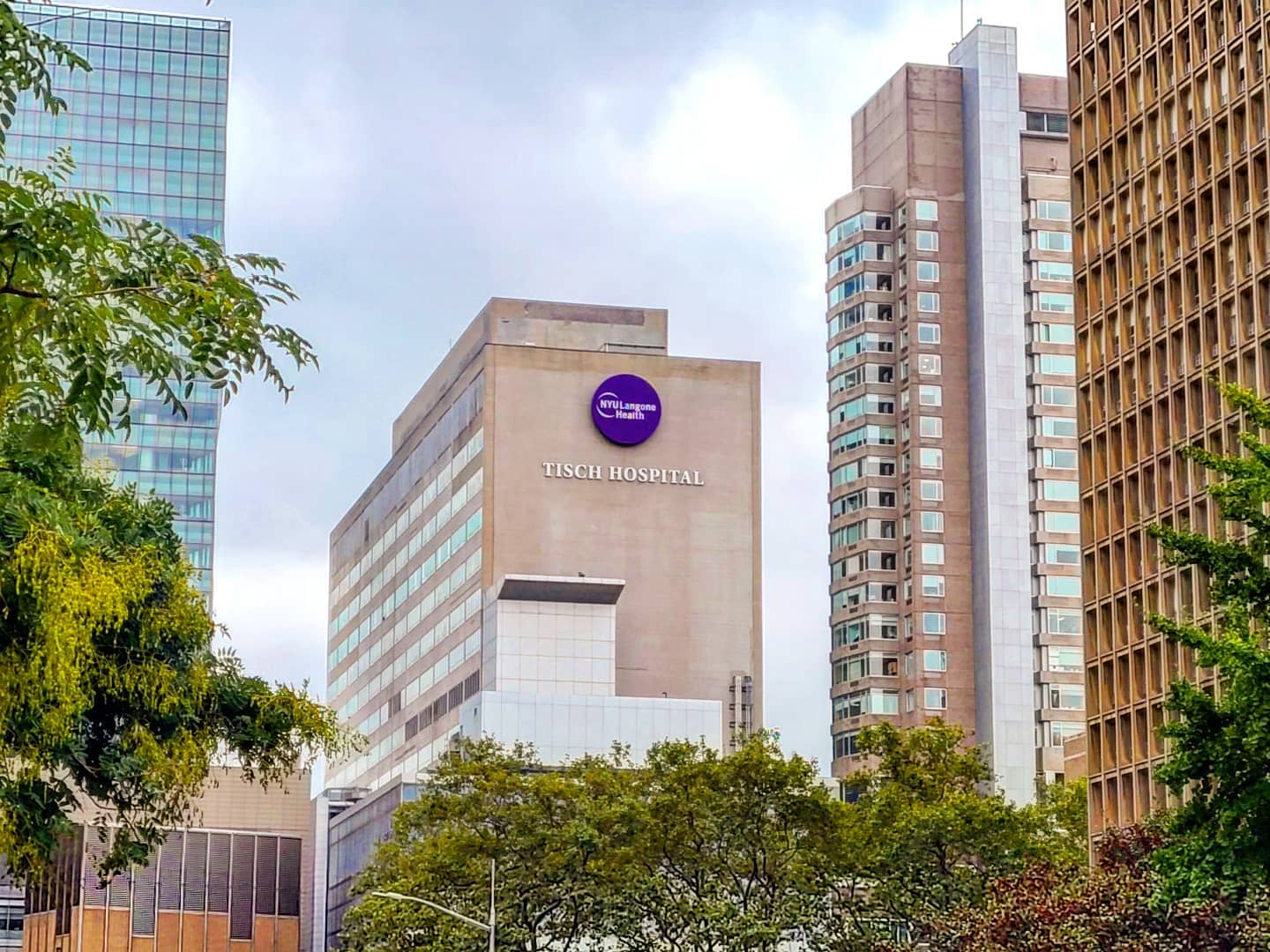
All of my medical cancer care is through NYU Langone Health in New York City. They recently hired Dr. Yingrong Zhu, a physiatrist who specializes in breast cancer survivorship. A physiatrist, also known as a physical medicine and rehabilitation (PM&R) physician, is a medical doctor specializing in diagnosing and treating conditions affecting the musculoskeletal system, nervous system, and other bodily functions, with the goal of restoring function and improving quality of life.

I went to see Dr. Zhu this week and had a fantastic experience. She explained that the effects of radiation can persist for 20 years – I had no idea! – so this issues I’m having with tightness deserve attention. She also explained that because I work out and stretch every day (including stretches given to me by my physical therapy team right after my active treatment), more physical therapy wasn’t likely to help me. However, she told me about some small scientific studies that show a 6-month course of vitamin E 1000 i.u. supplements combined with a medication called pentoxifylline ER can help release tension in muscles affected by radiation fibrosis and lead to increased mobility.

Together, Dr. Zhu and I decided it was worth me trying this new medication combo. The side effects are minimal, and she’s had a few other patients who have benefitted from it. It’s too soon to tell if it will help me, but I’m always willing to try anything that helps support my health and well-being. I also see this as an opportunity to not only help myself, but also to help others by sharing my experience with this new treatment. I’m excited about the possibility of regaining more of my mobility and improving my quality of life. Here’s hoping that someday I’ll be able to do my beloved yoga backbends again!

creativity

NIH funding freeze endangers American lives and the US economy

Photo by National Cancer Institute on Unsplash. Chanelle Case Borden, Ph.D., a postdoctoral fellow in the National Cancer Institute’s Experimental Immunology Branch, pipetting DNA samples into a tube for polymerase chain reaction, or PCR, a laboratory technique used to make multiple copies of a segment of DNA.

Earlier this week, I wrote in my Togetherhood newsletter about the history and scientific research of Gila monster venom that led to Novo Nordicks’s medications Ozempic and Wegovy. This research began at the National Institutes of Health and led to some of the most profitable and promising drugs. These types of advances are now in danger because the Trump administration has frozen much of the $47 billion the US spends annually on biomedical research like this through 60,000 NIH grants.

The US houses the world’s leading medical labs that research cancer, dementia and Alzheimer’s, heart disease, child health, and diabetes to name just a few. NIH grants provide significant funding to these labs. To make sure the grants are used efficiently and ethically, there’s an extensive review process of grant applications. When the Trump administration froze the funding, they stopped all these review processes. These frozen funds also caused many research labs and universities that house them to halt hiring and PhD and post-doc admissions. Even if they released the funding today, it would take weeks or months to restart all these processes.

Additionally, freezing these funds is negatively impacting the economy and US competitiveness on the world stage. Every $1 of NIH spending generates more than $2 dollars in US economic activity. Healthcare is the biggest industry in the US. Without the foundation of NIH-funded research, the industry is in crisis. The US produces more influential health science research than the next 10 leading countries, combined. Every day that goes by, lives and livelihoods of Americans are in jeopardy. Please call your reps today and tell them to fight to restore NIH funding. Your life and the lives of those you love depend on it.

creativity

A monster created Ozempic

Gila monster. 2023. Photo by David Clode on Unsplash

If you’ve benefitted from the medications Ozempic, Wegovy, and others like them to treat diabetes and support weight management, thank the Gila monster. They have a hormone (exendin-4) that controls their blood sugar and delays the stomach from emptying, prolonging feelings of fullness. It’s similar in chemical composition to our GLP-1 hormone that performs the same functions in our bodies. However, the Gila monster’s exendin-4 allows them to stay healthy while eating only 5 to 10 times per year.

This ability to fast for long periods of time without impacting their health piqued the interest of endocrinologist Dr. John Eng and his team of researchers in the 1980s and 1990s. They set out to discover if a medication that mimics exendin-4 would help humans manage their blood sugar and weight.

A component of their venom, the Gila monster’s exendin-4 while similar to our GLP-1 was found by Eng and his team to be effective for much longer. In clinical trials, one injection of a medication inspired by exendin-4 helped diabetics keep their blood sugar under control for an entire week and decreased their appetite, helping them to lose weight, too.

Though it took decades of testing and evaluation, exenatide, a synthetic version of exendin-4 was approved by the FDA in 2005 to treat Type-2 diabetes. Research continued to evaluate it as a treatment for obesity and weight management. That research led the creation of semaglutide, the active ingredient in the drugs Ozempic and Wegovy.

Gila monsters are our elders. They trace their ancestry back to the Cretaceous period when dinosaurs ruled the planet, 145 – 66 million years ago, nearly 60 million years before our earliest ancestors made an appearance. Gila monsters are in essence “living fossils”. In that time, they evolved astounding abilities that we’re just beginning to fully understand.

Unfortunately, this creature who survived the catastrophic asteroid that wiped out the dinosaurs is steadily being wiped out by us. Their population is declining due to the pet trade and the destruction of habitat from agriculture and urbanization despite the fact that without them, the multi-billion-dollar drugs Ozempic, Wegovy, and others wouldn’t exist.

Nature, and the species with whom we share this one planet, are intricately tied to our health and well-being. Stories like that of the Gila monster and Ozempic remind us that nature is a research lab, pharmacy, archive, library, concert hall, and constant source of inspiration. When we threaten the lives of other species, we compromise our own opportunities to live well. There’s no getting around it: We are a part of nature, not apart from nature. How bright our future will be depends on how much we respect and safeguard the natural world, and the health of the ecosystems within which we all live.

creativity

How I endured 2 years taking Verzenio

My last dose of Verzenio. Photo by Christa Avampato.

A little over two years ago, I wrote an article about my decision to take Verzenio to prevent breast cancer recurrence. On April 14th, I took my last dose of the medication and now I feel like a new person. Taking Verzenio at the maximum dose for two years was one of the most challenging parts of cancer treatment. Still, I’m glad I took it as part of doing everything I possibly can to stay healthy. I’m beyond grateful that the medication was delivered to my door every month free of charge to me because my health insurance paid the entire cost – $14,000 per month for a grand total of $336,000.

The indignities of cancer treatment are many, and I’ve experienced most of them. Verzenio certainly caused me a lot of anguish. Every day I had at least a low-grade stomach ache, and often much worse. I carried medication to deal with these issues everywhere I went, and often had to use it. Alcohol and grapefruit were off limits. I worried about everything I ate because anything could make me sick at any time. I had to constantly manage fatigue that sleep couldn’t fix, insomnia, depression, hair thinning, dry and sensitive skin, weight gain and aching joints, decreasing bone density, and the possibilities of developing liver and lung issues, being immunocompromised, and having anemia. Mercifully, my blood work was always normal when it was checked by my oncologist every three months – partly from my constant management of my diet and partly because I was very lucky.

Despite all that, that were bright spots, too, when I would discover something that helped, at least for some amount of time. Probiotics lessened the stomach issues, and I stopped drinking coffee, paired everything with carbs, upped my protein intake, and limited spicy, acidic, adventurous food. Audiobooks, an eye mask, and meditating helped me sleep, or at least rest. When I couldn’t sleep, I would often imagine myself traveling over coral reefs in the company of my dog, Phin, with a whale tour guide whom my imagination named Blue. Creativity was a great help on sleepless nights.

Shampoo and conditioner bars from Kitsch slowed the hair thinning. The dryness of my skin was eased by products from Good Molecules, Cetaphil, and HyaloGyn. Daily exercise and fish oil supplements eased my aching joints. The Zometa infusions I get every six months are helping me regrow the bone density I’ve lost. I kept anemia at bay with daily protein shakes. I bought a digital scale to monitor my weight every day, and experimented with recipes that were high nutrition, low-calorie, economical, and not too complicated to make.

Managing depression required a daily recalibration. My dog, Phineas, was my biggest support in that effort. Losing him in January of this year was a devastating loss and the grief at times felt unbearable. Verzenio made his passing even worse. To keep my head up, I did something every day that brought me joy – I spent time with friends, listened to music, watched movies, read books, visited museums, and did things I loved to do – writing, learning from and about nature, running, taking long walks, making art, and studying for my master’s program in sustainability. Joy was one of my saviors during active treatment and it helped with Verzenio, too. Though sometimes I had no choice but to just let myself feel sad, frustrated, and depressed. I cried a lot. Knowing the depression was driven by the medication helped. Knowing this was my now and not my forever encouraged me to keep going, to keep moving.

If all this sounds exhausting, I can assure you it was. Now that I’ve been off the medication for nearly a month, I can see how much effort it took to be on it. In the moment, I tried my best not to acknowledge that. I’ve spent most of the past four years since my diagnosis with my head down, focused on getting to this finish line.

Now that I feel better and lighter, I’m lifting my gaze. Right now, the field of my future is wide open. That’s equal parts exciting, and scary. I don’t know what lies ahead. Sometimes I feel like I’m on the edge of a cliff. And that’s okay because even on the cliff, I’m dancing, fully alive. I’m just glad to be here, and to be healthy. Verzenio was a part of making that possible.

So, if I had it to do over again, would I take Verzenio? Absolutely, unequivocally, yes. This is a life worth fighting for.

creativity

The benefits of Zometa for early-stage breast cancer survivors

Me getting my recent Zometa infusion at Perlmutter Cancer Center

This is me at Perlmutter Cancer Center this week getting an infusion of Zometa, my own version of the Harry Potter Skele-Gro potion. The medications I take to prevent cancer recurrence have the unfortunate side-effect of decreasing my bone density. Zometa has the dual benefit of regrowing bone and reducing the risk of breast cancer recurrence. Isn’t that cool? The hope is I’ll only need 4 infusions (once every 6 months) so I’m halfway there! I also got all my annual bloodwork done and it’s perfect.

I get this infusion once every 6 months in the same chemo ward I went to during those dark days of active treatment in the midst of the pandemic before vaccines. I remember how sick and scared I was, how my dreams were on hold, and maybe out of reach. I’d flip through pictures of University of Cambridge and University of Oxford having put my graduate school applications to study environmental sustainability on hold, hoping I’d live to pursue those dreams.

Now I’m 3 months from finishing my degree at Cambridge Institute for Sustainability Leadership. The dream came true. It was a dream delayed but not a dream denied, thanks to the incredible care I received and the many people who made it possible for me to heal. Science and medicine are incredible. Better living through chemistry.

Managing through ongoing care can be exhausting. I’m also extraordinarily lucky to have access to the best medical care in the world. There are so many who don’t. And if this is what it takes to maintain my health and live the life I imagine, that’s fine with me. There is so much I’m learning on the journey, and I’m grateful to be able to use it to help others.

creativity

A Year of Yes: A near-death experience this week changed my life

I’m posting these embarrassing selfies for your benefit:

I got off a plane from vacation in Vancouver. It was a fantastic trip—more on that later. This post is about you. Well, it’s about you via a story about me. I’ll be brief. My eye started to hurt on the plane. Nothing big; just noticeable. I got home, picked up my dog from boarding, and decided to take a nap. I woke up with my eye crusted shut. My doctor, via video call, thought it was a case of pink eye and prescribed antibiotics. 24 hours later, the swelling, redness, and oozing got much worse, and then spread to my second eye. I got on a video call with my doctor again, and she was alarmed to see how much my condition had deteriorated. She sent me to the emergency room.

I didn’t have pink eye. I had a condition known as periorbital cellulitis. It’s an extremely dangerous infection if left untreated, and can be lethal by causing sepsis or meningitis. It’s usually caused by an insect bite or another similar kind of trauma. I’m immensely lucky that I have access to great, timely medical care. Again, my gut instinct to get help saved me, and I’m incredibly grateful for that.

Now the bit about you:

1.) If you’re sick, please, please, please get medical help quickly. Don’t worry that you’re being a hypochondriac. If you think something is wrong, it’s much better to get it checked.

2.) Do what you love. Please. What you’re passionate about, what lights you up, what makes you curious to learn more and more. Create beautiful art. Write. See your friends. Help people. Share what you have. Fall in love. Adopt a dog. Live. If you’re in a job or a relationship you don’t love, go. Quickly. Don’t waste your time. You never know how much of it you have. Your life can turn on a dime, from something as insignificant as an insect bite. So wear bug repellent and sunscreen because you might as well give yourself your best shot at your best life.

creativity

A Year of Yes: Mark A. Smith’s story of surviving and thriving

Mark A. Smith posted this story on LinkedIn this week. It was so powerful for me that I have to share it with all of you. My favorite of his learnings detailed here: “No one learns in the middle of a crisis. Survive. Breathe. Reflect.” If this doesn’t personify the power of yes, then I don’t know what does. Thank you, Mark, for you bravery and tenacity. I’m so glad you’re still with us.

“23 years ago today my parents and doctor walked into my ICU room, held my hands, and told me I had only a few months to live. I had a rare disease called Wegener’s Granulomatosis and had 18 tumors throughout my lungs, kidneys, and airway.

16 years of chemotherapy, 200,000+ pills, 34 surgeries, and a million prayers later and I’m still around to annoy everyone on LinkedIn. Here is some of what I’ve learned — I’ll hope you find some value:

– We have the capacity to find joy in all things. A negative attitude is worse than a tumor. The best of life can come from the worst of life.

– Everyone has a difficult trial. Everyone. Be compassionate.

– When your looks get taken away, you better have a solid character or you’re screwed. – Priorities are revealed when abilities are stripped. Put them in order before life forces it upon you.

– No one learns in the middle of a crisis. Survive. Breathe. Reflect.

– Life is too short to take offense. Assume the best and move on. One day our children will struggle. We must endure our own trials so that, when needed, we can look in their eyes with perfect credibility and say, “I’ve been through the same struggle. I know your pain. You can do this.”

Happy New Year, my friends. Thank you for all you add to my life.”

See Mark’s post here.