
A few months ago, I asked myself the question, “In 5 years, what would I like to be doing in my career on a daily basis?” I could only think of 1 answer: I want to spend more time with animals. While animals have always played an important role in my life, they’ve only once been a (very small) part of my career. I thought about working at a museum, zoo, animal hospital, or a nonprofit like the ASPCA or Wildlife Conservation Society. I explored those ideas and found that the jobs that match my experience are all administrative, and that’s not what I wanted. I wanted actual work with animals.
I care deeply about making our cities sustainable, living, breathing, joyful places. They aren’t now, and I think my passion for changing this coupled with my experience in product development and management, and business is not only helpful but critical.
So I began to think about how to bring my profession in business and product, and my passion for science together. Biomimicry—the study of biological structures and processes, and the application of their wisdom to our built environment—is that answer to my question. Biomimicry involves learning from the wisdom of all six kingdoms of life: animals, plants, protists, fungi, archaeans (single cell organisms found in extreme environments like boiling water), and eubacteria (single cell organisms mainly found in soil and other organisms).
This reflection was part of what prompted me to think about getting some formal education in biomimicry. That’s how I found the online graduate program, Master of Science in Biomimicry at Arizona State University. I’ve applied and am waiting to hear if I’m accepted into the program. They only take a small handful of people every year. Despite the odds, I put my best foot forward in my application. And in the meantime, I’m reading and learning everything I can about the field and its application.
I continually evaluate my life and career. Every day I ask myself if I’m happy, and I then I answer the question why or why not. This reflection holds me accountable to me. And even better, it also helps me find and follow my dreams.

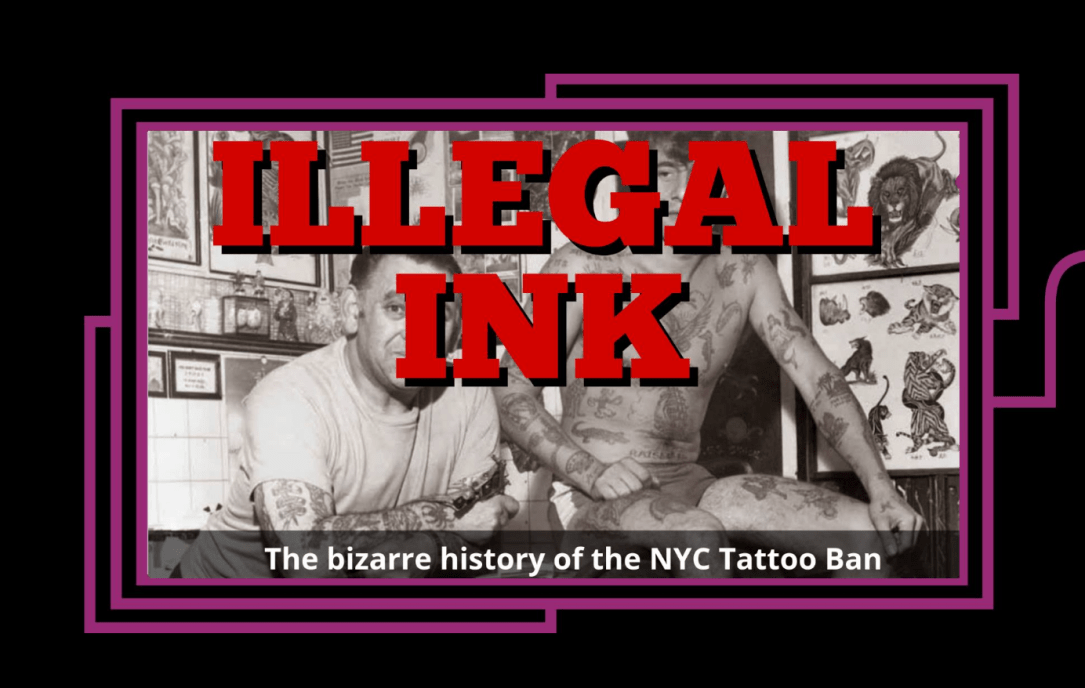 I picked my tattoo design that I’ll get on stage (!) at Caveat when we host incredible speakers at the storytelling show Illegal Ink. They’ll discuss New York City’s 36-year tattoo ban. You can get inked, too, by our flash artists! Storytelling + a tattoo = best #SundayFunday ever. Come hang with us next Sunday, Sept 30th, at 7pm! (Getting a tattoo is not required.)
 If your idea of a good Friday night involves secret New York City history in a storied museum learning about tattoo art, then I have an event for you! And the best part—all proceed go to support the restoration and public display of a rare collection of tattoo art housed at the Seaport Museum.
 You’ve always wanted to be in a secret society, right? These skeleton keys are your way in and I’m saving one just for you. To claim it,

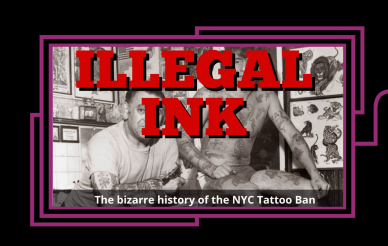 I became enamored with tattoos and tattoo history a few years ago when a friend of mine found getting a tattoo as a way to give meaning to a grave injury. Then a few months ago, I learned that tattooing had been illegal in New York City, the city that gave rise to tattoo culture in the U.S., for nearly 4 decades in recent history. The more I learned about this prohibition of ink, the more fascinated I became with the reasons behind it and the characters who played a part in it.
 Christa Avampato