creativity

How being a writer will help me get my dream job working with fossil fuel companies

In September, I’m starting a Master’s program at University of Cambridge in Sustainability Leadership. It’s my intention to use that degree as a springboard to work with fossil fuel companies — and convince them that it’s in their best and most profitable interest to stop producing fossil fuel and invest everything they’ve got in clean renewable energy. 

I’ve talked to a few people about this dream. Most laugh at me. Some think I’m wasting my time and talents on this dream. Some think I’ll never be able to do it. 

Here’s why it’s worth trying: 89% of CO2 emissions come from fossil fuels and industry

We could do everything else right when it comes to slowing down or, dare we imagine, to reversing climate change and it won’t matter if we don’t quickly and massively reduce and eventually eliminate fossil fuel production.

What Chief Justice John G. Roberts Jr. got wrong about the SCOTUS majority opinion on the EPA
The SCOTUS majority ruling in West Virginia v. EPA removed the ability of the EPA to limit emissions by power plants. The majority opinion is a travesty for many reasons. It also happens to be false, or at least incomplete. “There is little reason to think Congress assigned such decisions to the Agency,” Roberts wrote. “A decision of such magnitude and consequence rests with Congress itself.”

That last bit about Congress isn’t entirely true. The energy industry could make the choice to limit, or eliminate, its emissions.

I know some of you are laughing at that idea. You know what’s even more laughable? Imagining that Congress will get its act together to make it happen.

I understand why people hate on and rail against capitalism. However, it’s the economic paradigm that powers the world. We barely have time to get for-profit businesses to change their behaviors before the planet faces irreversible damage that will compromise life on this planet. We absolutely don’t have time to reinvent and adopt a new world economy before that happens.

Yes, capitalism is deeply flawed and yes, I wish humans were neurologically wired to act in the best interests of the greater community rather than themselves. I can’t change either of those facts and neither can you, not in time to protect the planet.

We have to work with what we have right now. We don’t have time to lament over human selfishness. We have to use it to our advantage; that’s exactly how nature would solve climate change and it’s exactly what we need to do. Now. It’s what I plan to do by working with fossil fuel companies. 

What fossil fuel companies care about
Fossil fuel companies don’t produce fossil fuel because they love it. There is precious little to love about dirty fuel that’s poisoning the planet and poisoning us. Fossil fuel companies love two things: money and power. Their long-term profits and power aren’t in fossil fuel. It’s in renewables for one simple reason — they’re cheaper to produce and are, as the name implies, limitless. Imagine the economics of a business built on inexpensive, infinite raw materials that produces a final product that protects the health of every living being? You don’t have to imagine it. It’s here. It’s renewable energy. 

What West Virginia cares about
Why did West Virginia bring this case against the EPA? Jobs. Plain and simple. Money and income. West Virginia and other fossil fuel producing states have no particular attachment to fossil fuel except history and a large number of jobs. 

If they could preserve jobs, or better yet increase the number of them and the income those jobs generate, they’d do it. With renewables, they can retrain people, preserve their beautiful land, water, and wildlife, protect workers, increase tax revenue, and promote the health of all beings. But they can’t do it alone. We have to work with them. We have to support them. 

The power of legacy
Legacy is a powerful motivator. As Hamilton says, “Who lives? Who dies? Who tells your story?” In addition to money and power, fossil fuel companies and those who head them care about legacy and how they will be remembered. In 2019, BP spent millions on an advertising campaign about its low-carbon energy and cleaner natural gas when 96% of its annual expenditure is on oil and gas. This was greenwashing to the extreme, and BP isn’t alone. Greenwashing is a fossil fuel industry problem

Saudi Aramco, Chevron, Drax, Equinor, ExxonMobil, INEOS, RWE, and Shell have all done it. The advertising campaign they all need, rooted in truth, that will send their stock prices soaring, generate priceless innovative partnerships, and cause the best and brightest talent around the world to work for and with them is this: “We will reduce the production of fossil fuel by at least 50% by 2030 and completely replace it with renewable energy by the year 2050.”

I’ve been to Saudi Arabia, met with some of the highest officials in Saudi government, and traveled to the Empty Quarter. Saudi Arabia and its neighbors have the geographic space and wealth to be the largest renewable suppliers in the world. Forget greening the desert there. Create the solar fuel farms we need on land that has very little life to disturb. 

Fossil fuel companies are fiercely competitive. Once one company does this, the rest of them will scramble to do the same. There’s a first mover advantage here. With this kind of decision, they will rewrite the history of this planet and forever be remembered as the company that protected and saved life on Earth in its darkest hour. Now that is a legacy.

Why I’m built for this work
I’ve worked inside a number of large multinational matrix for-profit companies. Many are populated with enormous egos and deep pockets. 

Bureaucracy doesn’t grind me down; it sharpens my resolve. 

I love finding out what makes people tick and what they care about most. Then I show them how my projects help them in their pursuits of what matters to them. I learned this skill as a fundraiser and as a product developer who had to internally lobby for project funding. My mentors were the best of the best at this. They showed me how it’s done, and done well.

Being a writer will help
While building a successful business career working with a variety of startups, nonprofits, and Fortune 500 companies, I also honed my communications and storytelling skills by building a strong portfolio as a writer, author, journalist, editor, interviewer, public speaker, and podcaster. 

This shift from fossil fuels to clean renewables is as much about storytelling as it is about science and business. 

Being a writer means I’m constantly inventing characters with motives. I build worlds with words. Now I will use my words to paint the picture of what a clean, sustainable, and healthy world looks, feels, sounds, smells, and tastes like. 

While the climate change movement has done an excellent job of describing the grim future we’ll face if we don’t shift away from fossil fuels, they haven’t shown us the alternative of a happy, joyful future on this planet. We need to long for that alternative so much that we’re willing to change and endure the transition, which may be painful, expensive, and inconvenient.

My cancer was environmentally-driven
During the COVID-19 pandemic prior to vaccines, I was diagnosed with and treated for early stage breast cancer. My doctors believe my cancer was driven, at least in part, by environmental factors. We can’t prove this definitively, but when we triangulate all the data we know about my case it becomes clear that the environment was at least a major contributor. 

Nothing motivates and activates like nearly dying. My health, your health, and the health of the planet are inextricably linked. And they’re worth fighting for. I’m fighting for all of us, and that means I have to work with fossil fuel companies. 

In the words of the late great Babe Ruth, it’s tough to beat someone who never gives up, and I won’t give up until we get this done. 

Change is an inside job
While change can be driven by outside pressure, I’ve seen change happen quicker and more extensively when pursued on the inside of an organization. Sometimes to get things done, we’ve got to go into the belly of the beast. We have to walk right into the lion’s den armed with the undaunted courage and willful determination to sit with the lion, understand their perspective, and then show them how you can all move forward together for everyone’s benefit. 

I know it’s going to be a steep climb. I know there is a chance it may not work. There is a chance I’ll come home empty-handed with nothing to show for my effort and time. 

There’s also a chance that it could work. There’s a chance that this could be the most meaningful, valuable thing I ever do with my life that will make the world a better place for all beings. And so with that hope and that goal, I’m going to give it my best shot.

Allowing climate change to progress unabated is akin to burning down our own house and wondering why we have no place to live. Nothing survives — not a company, a government, nor a living being — if the planet perishes. With that in mind, there is no work more important than getting fossil fuel companies to stop producing fossil fuel. This work is what matters most.

creativity

I can’t stop thinking about Yellowstone

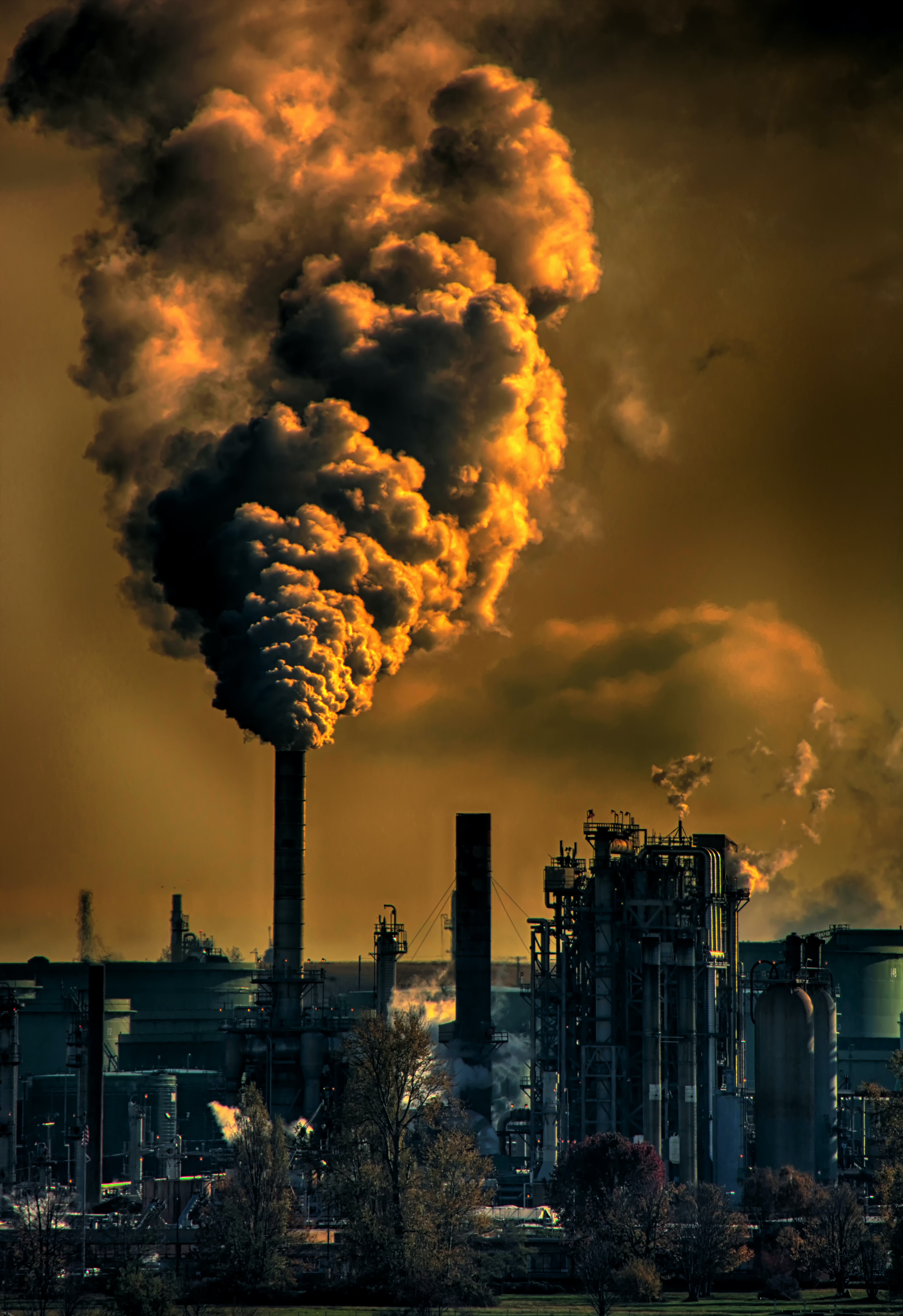
Photo by Markus Spiske on Unsplash

On Sunday night, I sat down to work on my novel-in-progress. All I could think about was the devastation in Yellowstone that could take years to restore and cost billions of dollars. You’ve got to write what’s in your heart and on your mind. This is what poured out of me:

Many of us are watching the recent flooding in Yellowstone National Park with horror, and rightly so. To see whole structures carried away as if they were weightless is terrifying. What struck me is how quickly the devastation came and went from the top headlines. Did any of us change anything about the way we live after seeing the footage? Very few, if any. The reason, unfortunately, is science. 

Though scientists across the globe have largely rallied around data that supports the impacts of climate change on our planet and the rapidly closing window of time left to truly stave off the worst consequences, scientists have also been reluctant to draw direct connections between catastrophic events like Yellowstone’s flooding and climate change. Their reluctance is so common that media articles and reports often reference it in environmental coverage. 

For example, in a recent New York Times article, the reporters say this in the opening: “It is difficult to directly connect the damage in Yellowstone to a rapidly warming climate — rivers have flooded for millenniums …”

With sweeping statements like that, the well-intentioned reporters have given climate deniers all the fuel they need to shrug their shoulders and go about their day exactly as they have every other day. Or worse—this is a simple explanation they use to convince others that scientists have no idea what they’re talking about and that everything is just fine. This behavior is destroying the planet and will ultimately destroy us.

Our hand-wringing about “direct connections” is going to cost us our lives and livelihoods. It’s time for us to get off the sidelines and stop taking the role of being our own worst enemies. Climate scientists can look to other areas of science to see how to inspire action, namely medicine. 

Very little in the field of medicine is certain. A lot of medicine is educated guessing. Standards of care often read something akin to “given your situation and what we have observed with those who we believe are similar to you, we believe this course of treatment may help.” I know this first-hand because I’m currently taking a medication after beating early-stage breast cancer that is still experimental with some studies showing that it has a possible chance of reducing the risk of recurrence for someone like me. 

There are caveats all over that statement, but you know what? If it can’t hurt, might help, and my insurance covers it, I’m taking it. I want to live a long, healthy life. Most of us do. For that singular reason we exercise, eat healthy food, try to manage our stress level, don’t smoke, limit (or eliminate) alcohol, go to the doctor for check-ups and exams, and take medications that could help us. Is any of that advice perfect? No. Are we guaranteed a specific outcome if we do all those things? No. But why not give ourselves every possible advantage we can, right?

Climate scientists could model their approach on medicine. Even if they can’t make a perfect case for cause and effect between climate change and a single catastrophe like Yellowstone flooding, does it seem likely that the two are related? Yes. Could an increase in wildfires, droughts, and more severe storms be related to a warming planet? Yes. Could an acceleration of species extinction be driven by deforestation and the pollution of our air, oceans, and water ways? Yes. Could the continuous and increasing supply of greenhouse gases being pumped into the air be destabilizing our atmosphere? Yes. Then why not do everything possible to mitigate the impacts that could have such dire consequences on the life of every living being on the planet?

We want to live long, healthy lives so we do everything we can to try to make that possible. Why not do the same for the planet that we all need? Even if you and I do everything right when it comes to the health of our bodies and minds, if the health of the planet as a whole suffers, what we do for our own individual health will be for naught. 

The planet needs a standard of care—limit or eliminate pollution in all its forms; reduce, reuse, and recycle; replace fossil fuel consumption with clean, renewable sources of energy; stop food waste; stop deforestation and replenish the forests we’ve lost. 

None of these changes will be simple nor pain-free. We have to reinvent how we live and the systems that make our lives and economies function. The transition will be difficult, expensive, and, for a while, inconvenient. But you know what’s more difficult, expensive, and inconvenient? Having a planet that’s in such poor health that it can no longer sustain life—ours or anyone else’s. Why take that risk when there is another way? Why not give ourselves and all those who (hopefully) come after us the best chance to live and live well?

We don’t need certainty and one-to-one causations for climate action. If a high probability and correlation is good enough for the science we use to sustain our bodies, then it’s good enough for the science to sustain our planet. By the time we have inarguable certainty, it will be too late for all of us. That’s a risk none of us should willingly take. 

creativity

JoyProject podcast: Joyful News 6.14.22—the dinosaur edition

Joyful News 6.14.22 – the dinosaur edition

Joyful News is a set of stories I’ve gathered from around the world that spark joy. This week’s stories are all about dinosaurs:

Available everywhere you get your podcasts and at this link where you can also read a transcript.

creativity

The Great Green Wall of Africa

The Great Green Wall plan. Image by NASA.

A lot of my writing life revolves around science, environmental sustainability, and biomimicry. This Fall, I’m starting a graduate program in Sustainability Leadership at University of Cambridge. As I prepare for that program, I’m researching different programs around the world that are restoring land and protecting species from the effects of climate change.

I recently learned about a project called the Great Green Wall. From their website:

Growing a World Wonder
The Great Green Wall is an African-led movement with an epic ambition to grow an 8,000km natural wonder of the world across the entire width of Africa. Once complete, the Great Green Wall will be the largest living structure on the planet, 3 times the size of the Great Barrier Reef.

A decade in and roughly 15% underway, the initiative is already bringing life back to Africa’s degraded landscapes at an unprecedented scale, providing food security, jobs and a reason to stay for the millions who live along its path. 

The Wall promises to be a compelling solution to the many urgent threats not only facing the African Continent, but the global community as a whole–notably climate change, drought, famine, conflict, and migration. 

Improving Millions of Lives
The Great Green Wall is taking root in Africa’s Sahel region, at the southern edge of the Sahara desert – one of the poorest places on the planet.

More than anywhere else on Earth, the Sahel is on the frontline of climate change and millions of locals are already facing its devastating impact. Persistent droughts, lack of food, conflicts over dwindling natural resources, and mass migration to Europe are just some of the many consequences.

Yet, communities from Senegal in the West to Djibouti in the East are fighting back. 

Since the birth of the initiative in 2007, life has started coming back to the land, bringing improved food security, jobs and stability to people’s lives.

A Global Symbol
The Great Green Wall isn’t just for the Sahel. It is a global symbol for humanity overcoming its biggest threat – our rapidly degrading environment.

It shows that if we can work with nature, even in challenging places like the Sahel, we can overcome adversity, and build a better world for generations to come.

Growing More Than Trees
More than just growing trees and plants, the Great Green Wall is transforming
the lives of millions of people in the Sahel region.    

The Great Green Wall makes a vital contribution to the UN Sustainable Development Goals (known as the SDGs)—a global agenda which aims to achieve a more equitable and sustainable world by 2030. It’s rare to find a project that impacts all of the SDGs and the Great Green Wall does just that.

We can all be involved in this effort. Visit https://www.greatgreenwall.org/ to learn more.

01- Containing2.jpg
Growing a new world wonder across the entire width of Africa.
Growing fertile land, one of humanity’s most precious natural assets. 
Artboard 21 copy 10@0.5x.png
Growing a wall of hope against abject poverty.
Growing food security, for the millions that go hungry every day. 
Artboard 21 copy 11@0.5x.png
Growing health and wellbeing for the world’s poorest communities. 
Artboard 21 copy 12@0.5x.png
Growing improved water security, so women and girls don’t have to spend hours everyday fetching water. 
Artboard 21 copy 9@0.5x.png
Growing gender equity, empowering women with new opportunities.
Artboard 21 copy 14@0.5x.png
Growing sustainable energy, powering communities towards a brighter future. 
04- jobs.jpg
Growing green jobs, giving real incomes to families across the Sahel. 
Artboard 21 copy 5@0.5x.png
Growing a reason to stay
to help break the cycle of migration.
Artboard 21 copy 13@0.5x.png
Growing sustainable consumption patterns,
to protect the natural capital of the Sahel. 
Growing resilience to climate change in a region where temperatures are rising faster than anywhere else on Earth. 
Growing a symbol of peace in countries where conflict continues to displace communities. 
Artboard 37@0.5x.png
Growing a symbol of interfaith harmony across Africa.
Artboard 21 copy 8@0.5x.png
Growing strategic partnerships to  accelerate rural development across Africa

creativity

Sharing my biomimicry journey

This year marks 25 years since the release of Janine Benyus’s book Biomimicry: Innovation Inspired by Nature. The Biomimicry Institute is marking the occasion with a set of videos from biomimicry practitioners about how they got interested in biomimicry. I’m honored to be asked to participate and have them share my journey in this short video. Learn why I decided to pursue biomimicry and how storytelling can help us build a more sustainable world.

creativity

Write every day: Teaching 300 students about biomimicry this week

pawel-czerwinski-lWBZ01XRRoI-unsplash
Photo by Paweł Czerwiński on Unsplash

This week, I have the great pleasure and honor to teach biomimicry to 300 high school and college students through a program run by the Wildlife Conservation Society. (WCS is famously known in the U.S. for all of New York’s zoos including the Bronx Zoo, central Park Zoo, and New York Aquarium!) The feedback was terrific with some of them saying this was the best presentation they’ve had in their entire summer program and a few of them reaching out to me personally asking if I’d mentor them.

They’ve filled me with joy and I’m grateful to all of them and to WCS for the opportunity to share my passion for nature as our greatest design teacher. I’m one tiny step closer to my goal of finding a way to get biomimicry into every high school and college in the country. If you’d like me to present to your group or class (young children, teens, or adults), please let me know!

creativity

Write every day: I finished my biomimicry graduate program

I bursted into tears yesterday when I turned in my final assignment for my capstone project to complete my biomimicry graduate school program. A year and a half ago I started this journey and I wasn’t sure where it would take me but I knew I was fulfilling a dream I’d had since I was a kid—to bring science into my career in a deep and meaningful way. There was no way I could have known then the spotlight that would be on science now, or how important it would be to finish my program now and get out into the world and use it. So here’s what I’m doing with it, starting today…welcome to the world Beyond Plastic.

creativity

Write every day: I was accepted to the 2020 ComSciCon Flagship Workshop

Screen Shot 2020-04-22 at 7.16.55 PMI’m so excited to share the news that I was accepted into the ComSciCon Flagship workshop, a science communication event for graduate students. 950 graduate students applied this year for 50 slots. This year’s event was supposed to be in Boston but will be held online because of COVID-19. I’m honored to participate at this critical time in our history when science and science communication are having massive impacts on every area of our lives in every corner of the world. I can’t wait to meet and learn with the other attendees and all of the invited experts. To learn more about this event and the organization, please visit https://comscicon.com/comscicon-2020-flagship-workshop.

 

creativity

Write every day: Finding hope in science

Need to hear about hopeful ways science and biomimicry are working to stop the spread of COVID-19? I’m honored to be presenting my research and work at this Call to Action webinar on Tuesday, 4/7 at 2pm EDT with my colleagues and you can attend! The webinar is free and you need to register to receive the log-in information. Register at: bit.ly/2Ra2AF5

87AA1433-4F58-4A0D-AEF2-C87C6392DBBE

creativity

Joy today: My writing about biomimicry’s role in the Green New Deal and the Blue New Deal

I’m so excited to share that I reached one of my big writing goals for 2019: I wrote and published two pieces about biomimicry for a science publication. I’m so grateful to The Biomimicry Institute for reaching out to me and asking me to write for them. My two pieces about biomimicry’s pivotal role in the Green New Deal (a set of policies to protect the health of our planet) and the Blue New Deal (a subset of Green New Deal policies that focuses on the health of our oceans) are now live. You can read them at the links below. I’d love to know what you think!

The Green New Deal and Finding Hope through Biomimicry (Part 1)

Going Blue: Transforming the Oceans’ Vicious Cycle into a Virtuous One with Biomimicry (Part 2)