creativity

Ditch the Mower, Find the Wonder! 🌿 Your Guide to a Wild(ish) Lawn

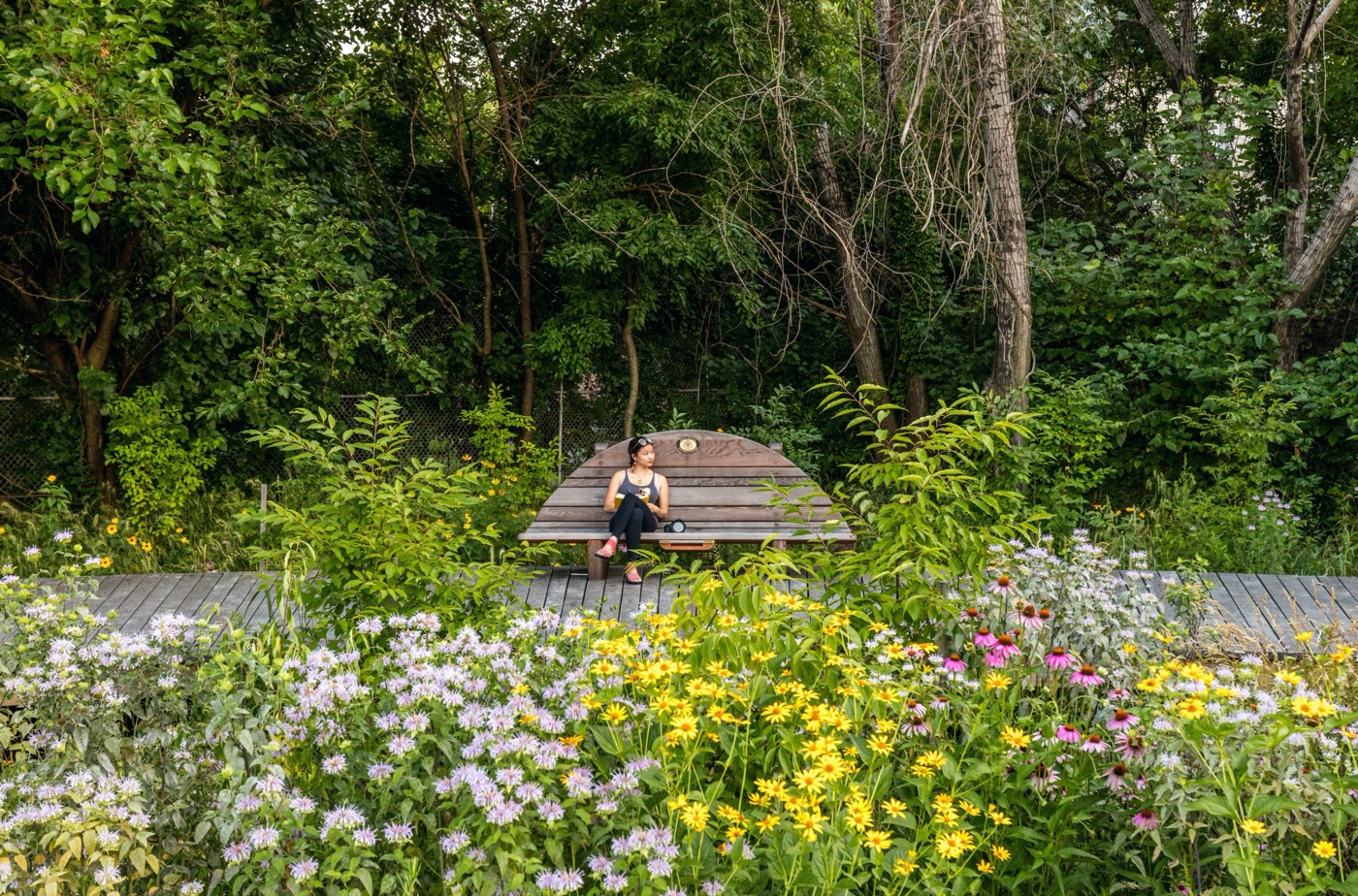
Photo by Elisa on Unsplash

As spring flourishes in all its glory (hello, sunshine!), you might be eyeing that lawnmower with a familiar sigh. But what if I told you less work for you could mean more life in your lawn? This week, let’s talk about a trend that’s buzzing with benefits: letting your lawn go a little wild!

Forget the pressure of a perfectly manicured green carpet. In reality, that perfect lawn is nearly dead. A wilder lawn isn’t about letting things run completely rampant (unless that’s your jam!). It’s about consciously creating a more natural, vibrant, and wonderfully low-maintenance space that’s teeming with life. And that wild lawn has benefits for you, your bank account, wildlife, and this beautiful planet we all share.

Why Let Your Lawn Loosen Up? More Buzz, Less Fuss!

  • Become a Local Wildlife Hotspot: Think of it — your very own mini-nature reserve! Longer grasses and native “weeds” (I prefer “wildflowers-in-disguise” like clover and dandelions) become a five-star restaurant and hotel for bees, butterflies, ladybugs, and songbirds. You’ll be amazed at who shows up!
  • Kick Back & Relax (More!) and Save Money: Less mowing, less watering, less fertilizing… need we say more? A wilder lawn means more time for you to actually enjoy your outdoor space, not just work on it. And it also saves you money.
  • Better For You, Better for the Planet: Wild lawns are surprisingly powerful. Their diverse plant life helps soak up rainwater (reducing runoff), improves soil health, and even captures more carbon. You’ll also naturally reduce (or eliminate!) the need for chemical pesticides and fertilizers, which is a win for everyone. And again, it saves you money.
  • A Feast for the Senses: Swap out the monotonous green for a shifting tapestry of textures, colors, and gentle movement. Watch wildflowers bloom and seed, listen to the hum of happy pollinators, and discover the intricate beauty of a natural ecosystem right outside your door.

Ready to Embrace Your Lawn’s Wild Side? It’s Easier (and Less Expensive) Than You Think!

Going wild doesn’t mean your yard needs to look messy. It’s about intentional choices that welcome and embrace nature. Here’s how to get started:

  1. Start Small, Mow Tall: You don’t have to go all-in at once. Designate a section of your lawn — maybe the back corner, or a strip along the fence — to let grow longer. Even raising your mower blades to 3–4 inches on the parts you do mow makes a big difference for tiny critters and plant health.
  2. “No Mow May” (and Beyond!): You might have heard of “No Mow May” — it’s a fantastic initiative by Bee City USA, a nonprofit that connects communities of people and pollinators in mutually-beneficial ways, to give emerging pollinators a head start! Why not extend the idea? Try mowing less frequently throughout the growing season. Every two weeks? Once a month for certain areas? Experiment and see what works for you.
  3. Love Your “Weeds”: Those dandelions? Early spring food for bees! Clover? It’s a nitrogen-fixer, meaning it naturally fertilizes your soil, and pollinators adore it. There’s a lot to love about these volunteer plants.
  4. Sprinkle Some Native Charm: Consider overseeding parts of your lawn with native low-growing wildflowers (spread wildflower seed over an existing lawn without disturbing the soil) or a “bee lawn” mix suitable for your geographic region. These plants are adapted to our climate and provide the best resources for local wildlife. A quick search for “bee lawn” mix or a visit to a local native plant nursery can provide great options.
  5. Create “Cues to Care”: Worried about what the neighbors might think? Keep the edges of your wilder areas neatly mown. This creates a look of “intentional wildness” and shows your landscape is cared for, not neglected. A small, friendly sign explaining your lawn is a “Pollinator Paradise” or “Wildlife Life” area can also work wonders and tell your story, raising awareness, advocating for wildlife, and encouraging your neighbors to give it a try, too.
  6. Patience is Your Superpower: Transforming a conventional lawn into a mini-meadow takes time. Don’t get discouraged. Enjoy observing the changes each week and season. You’re creating a living landscape, and every small step is a win.

Wild Fact: Allowing your grass to grow taller encourages deeper root systems, making your lawn more drought-tolerant. Less watering for you, less money spent, fewer resources used, and more resilience for your yard!

Ready to trade some mowing time for more butterflies and birdsong? Letting your lawn go a little wild is a simple, rewarding way to make a big difference for your local ecosystem and your own well-being.

Happy wilding!

creativity

How trees are saving our morning cup of coffee

Nespresso Colombian coffee farm using agroforestry. Photo from Nespresso.

As I sip my morning coffee, I am grateful for trees. What do trees have to do with our coffee? In Colombia, everything. Trees are changing Colombian coffee, and the planet, for the better.

Arabica coffee grows at altitudes between 1,500 and 2,000 feet, on the sides of steep mountains. Colombian farmers have to consider ways to decrease soil erosion and increase biodiversity to pollinate their coffee crops. Collaborating with Nespresso, Cornell Lab of Ornithology, and PUR, they are rewilding their land and everyone is benefitting.

At Climate Week NYC, Andrew Nobrega at PUR, Julie Reneau at Nespresso, and Viviana Ruiz-Gutierrez at Cornell Lab of Ornithology reviewed their research, actions, and inspiring outcomes. Below, the picture on the left is a coffee monoculture in Colombia just south of Bogotá, meaning it only has coffee planted. The picture on the right shows agroforestry and regenerative agriculture— same amount of land, same amount of coffee planted, and filled in with other tree and plant species.

Nespresso presentation at 2024 Climate Week NYC. Photo by Christa Avampato.

In less than a decade, biodiversity above and below ground has increased between 10% and 20%. Farmers have diversified their income streams with additional crops, improved soil quality and water resources, decreased soil erosion, increased land resilience to storms and other climatic events, and sequestered carbon. Most importantly to the farmers, they have improved the quality of their coffee. 

Coffee was never meant to be a monoculture. It’s a forest plant that thrives in shade, which is exactly the optimal environment that agroforestry and regenerative agriculture practices provide. For more information on these programs at Nespresso, visit https://www.sustainability.nespresso.com/regenerative-agriculture.

creativity

Humans aren’t wired to protect nature—but that’s not the whole story

“People partner with nature”. I created this image with the help of Canva’s Magic Media AI tool 

As a storyteller and sustainability advocate I focus on people who aren’t committed (yet) to protecting nature because that’s where the greatest change happens. This means I’m often faced with people who deny climate change, feel hopeless, or think technology and / or someone else will restore the planet’s health. 

As you can imagine, I have to employ a number of tactics to remain optimistic and motivated. One way I do this is by listening to podcasts about people doing incredible work in nature. I’m passionate about rewilding, or as David Balharry, CEO of Scotland’s John Muir Trust, reframes it “nature’s freedom to repair itself”. This passion led me to Ben Goldsmith’s Rewilding the World podcast. Ben spoke to David in episode 1 of the second season. They discuss rewilding the Scottish Highlands, an area I’m hoping to visit this summer. 

The entire episode is enlightening, and one point in particular helped me. No species in history, humans included, has ever been hardwired to protect the planet. They (we) are hardwired to promote the successful perpetuation of our genetics. Said another way, at their base all living things first focus on their future generations surviving and thriving. This means people aren’t naturally focused on environmental conservation. It must be intentional. It’s a skill that takes practice. Therefore, the work I’m doing with naysayers, the hopeless, and technocrats is training and re-skilling them. I’m a teacher, a guide, and learning takes times. That reframe is helping me think about my work with more compassion and patience. 

I also want to be clear that our instinct for genetic survival is only part of who we are. Human beings have an enormous cerebral cortex unique (as far as we know) in the animal kingdom. Our brains simultaneously act and reflect on our actions to inform our future behavior and shape our thoughts. We can think long-term, imagine future scenarios, and bring them to fruition, even if we don’t always exercise that ability as deftly as we could. 

Our long-term planning capabilities make us unique and distinct from other species. This doesn’t mean we’re smarter, wiser, or superior. It means we have a responsibility to be conscientious global citizens who care for each other and future generations, other species with whom we share this planet, and ecosystems that make our existence possible. 

Over half of our global GDP depends on nature, in addition to providing our basic needs for clean air, water, and food. We can’t live without nature. If we’re thoughtful about our behavior, we can help nature help us. Scientist Dr. Robin Wall Kimmerer’s research shows humans can assist and enhance nature’s regeneration. That’s a partnership and story well worth the investment of our time, efforts, and money. 

creativity

Rewilding the World with Ben Goldsmith

If you’re interested in rewilding—the practice of restoring and protecting wild places and the many species who call those wild places home — the podcast Rewilding the World with Ben Goldsmith is incredible. Ben speaks to some of the most influential people behind the most exciting and dramatic rewilding projects across the globe including Turkey, the Balkans, Chile, Argentina, Africa’s Sahel, India, England, Scotland, the UK, Spain, Portugal, Western North America, Kazakhstan, Saudi Arabia, the Sinai peninsula, Transylvania, Carpathia, Romania, and the Great Plains of the U.S. (What a list!)

Not only has this podcast further ignited my passion for rewilding and the promise it holds to make this a healthier, more sustainable world for all beings, but it’s also grown my list of places to travel to, my reading list, and my desire to care for wild places in any and every way I can. In a world that’s often dark and difficult, rewilding is a bright light of hope and joy that shows us what’s possible when we realize we are a part of nature, not apart from nature. 

Right now there are 20 episodes to enjoy, and Ben will be back again with a fresh set of episodes in early 2024. I’m so grateful for his efforts and the work being done by all of his inspiring guests.