creativity

Greener Horizons: NYC’s First-Ever Urban Forest Plan Takes Root!

Forest Park, Queens. Photo by Daniel Avila/NYC Parks. https://www.nycgovparks.org/highlights/nyc-parks-most-photogenic-woodland-areas

For a city known for its concrete jungle, New York City is making a bold and exciting commitment to its natural side — the city’s first-ever Urban Forest Plan, a monumental undertaking that promises to transform our urban landscape and bring the benefits of nature to every corner of the five boroughs.

What is the Urban Forest Plan?

Mandated by Local Law 148 of 2023, this groundbreaking plan sets an ambitious goal: to increase New York City’s tree canopy cover from its current 22% to a robust 30% by 2035. But it’s more than just planting trees; it’s a comprehensive roadmap for managing, protecting, and equitably expanding the city’s entire “urban forest”—which includes over 7 million trees on public and private land, from street trees and parks to natural forests and even private yards.

Why is this Plan So Important?

The benefits of a thriving urban forest are immense and crucial for a city like ours:

  • Cooler City: Trees are natural air conditioners, mitigating the urban heat island effect that makes our city hotter, especially in neighborhoods with less green space. They can lower street temperatures by several degrees, providing vital relief during scorching summers.
  • Cleaner Air: Our urban trees act as natural filters, removing thousands of tons of air pollutants annually, which can significantly improve public health, particularly for those with respiratory issues.
  • Stormwater Management: Tree roots absorb millions of gallons of stormwater runoff, helping to reduce flooding and protect our waterways from pollution.
  • Enhanced Well-being: Studies consistently show that access to green spaces improves mental health, reduces stress, and promotes physical activity. A greener city means a healthier, happier populace.
  • Biodiversity Boost: Expanding the tree canopy creates vital habitats for birds, insects, and other wildlife, enriching the city’s biodiversity.
  • Environmental Justice: Historically, tree canopy has been unequally distributed across the city, with lower-income neighborhoods often having fewer trees and facing greater environmental burdens. This plan aims to address these disparities by prioritizing equitable tree planting in disadvantaged communities.

Community at the Core

One of the most exciting aspects of the Urban Forest Plan is its emphasis on community involvement. The city recognizes that for this plan to truly succeed, it needs the input, experiences, and recommendations of New Yorkers from all walks of life. Various community engagement events—including workshops and “walk-shops” in different boroughs—have been held, and a public survey is open (though note that the deadline for input is June 30, 2025 – so if you haven’t participated, there’s still a brief window!). This collaborative approach ensures that the plan reflects the diverse needs and desires of our neighborhoods.

Looking Ahead

The Urban Forest Plan is a testament to New York City’s commitment to a more sustainable, resilient, and livable future. It acknowledges that trees are not just a luxury, but essential infrastructure that provides invaluable services to our communities. As this plan takes root, we can look forward to a greener, healthier, and more equitable New York City for generations to come.

To learn more and get involved, visit the city’s Urban Forest Plan website at https://www.urbanforestplan.nyc/

creativity

Nature’s Ancient Sages: What Bristlecone Pines Teach Us About Thriving

A gnarled, ancient bristlecone pine on White Mountain Road in Bishop, California. Photo by Donna Elliot on Unsplash

Have you ever wondered what it takes to survive for thousands of years in some of the most unforgiving environments on Earth? Look no further than the remarkable bristlecone pine (Pinus longaeva.) They are living legends, silent witnesses to millennia of history, and powerful teachers for us all.

Found clinging to rocky, high-altitude slopes in the White Mountains of California, the Great Basin, and other western ranges, bristlecone pines endure brutal winds, extreme temperature swings, nutrient-poor soil, and minimal moisture. Yet, they don’t just survive; they thrive with an astonishing longevity. One of the oldest known living organisms on Earth is a Bristlecone Pine named Methuselah, estimated to be over 4,800 years old! Imagine, it was a seedling when the pyramids of Egypt were being built!

What’s their secret to such incredible resilience?

  • Slow and Steady Wins the Race: Unlike many faster-growing trees, bristlecones grow incredibly slowly. They conserve energy and resources, focusing on long-term survival over rapid expansion. (In our world obsessed with growth, what a business lesson that is!)
  • Always Run Defense: Their dense wood contains a high amount of resin — a sticky substance produced by trees as a defense mechanism. It hardens when exposed to air and that forms a protective barrier, making them highly resistant to insects, fungi, and rot.
  • Adaptability is Key: Their root systems are shallow but extensive, allowing them to capture what little moisture and nutrients are available from a wide swath of land. Their needles, which they can retain for decades, are adapted to retain water in dry conditions.
  • Embrace Adversity and Go Where Others Won’t: The very conditions that would kill other trees seem to strengthen bristlecones. The harsh winds sculpt their trunks into gnarled, twisted masterpieces, giving them a unique and beautiful character that inspires every artist who sees them. The lack of competition at high altitudes allows them to dominate their niche. (As we know, unsexy business niches can be wildly successful for this reason, too!)
  • The Power of Perseverance: Even when parts of the tree die, the bristlecone continues to live and grow from the remaining sections, often forming dramatic “flagged” branches that appear to be dead or dying. These branches are like scars worn as badges of honor — testaments to the tree’s enduring struggles.

What can these ancient sages teach us about navigating our own lives?

The bristlecone pine offers profound lessons in resilience, adaptability, and perseverance — qualities that are invaluable in our fast-paced and often challenging world, especially in business.

  1. Embrace “Slow Growth”: In a society that often glorifies rapid success, the bristlecone reminds us of the power of steady, sustainable progress. Don’t be discouraged by seemingly slow advancements; true strength and longevity often come from a deliberate, methodical approach. I recently read a quote by Sharon Olds that really hit home: “I was a late bloomer. But anyone who blooms at all, ever, is very lucky.”
  2. Find Your Niche and Adapt: Like the bristlecone thriving where others falter, identify your unique strengths and adapt to your environment. Instead of fighting against challenges, look for ways to work with them, turning obstacles into opportunities.
  3. Resilience Through Adversity: Life will inevitably throw harsh conditions our way. The bristlecone teaches us that these very struggles can sculpt us, making us stronger and more unique. Don’t fear the difficult times; learn from them and let them shape your character.
  4. Persevere, Even When Parts Feel Worn: There will be moments when we feel depleted or broken. The bristlecone shows us that even when parts of us feel exhausted, we can continue to grow and thrive from the remaining, healthy parts. Focus on what still functions and keep moving forward.
  5. Find Beauty in Your Scars: The gnarled, twisted forms of the bristlecone pines are considered incredibly beautiful. Our own struggles and challenges leave marks on us, but these scars can be a testament to our strength and resilience, making us uniquely beautiful with stories to tell.

The next time you face a challenge, take a moment to reflect on the bristlecone pine. Let its ancient wisdom inspire you to stand tall, adapt to the winds of change, and embrace the slow, steady process of becoming stronger, wiser, and more resilient.

creativity

Destruction can be a new beginning

Redwood trees sprout from burned trees in Yosemite. Photo by Chris Daines. Creative Commons license. https://www.flickr.com/photos/staticantics/4966177427/

For most species, including humans, wildfires represent a dire threat. But against all odds, fire’s fast-moving flames, smoke-filled skies, and relentless heat don’t always signal death in nature. Some species have evolved extraordinary adaptations to turn destruction into an opportunity — a gateway to survival and even proliferation. Their stories reveal how nature’s resilience and ingenuity can flourish in the face of destruction, and how following their lead can help us do the same.

1. Pyrophilous (“fire-loving”) beetles

Commonly known as fire beetles, these species have infrared sensors that detect heat, and antennae receptors that detect smoke. Together, these sensors and receptors guide them to the fires from up to 80 miles away. But why would a beetle want to fly into the fire?

Scorched forests provide them with everything they need to help create the next generation — the intense heat lifts the bark from the tree trunks where the beetles lay their eggs; without competition from other insects and free from the threat of predators, the larvae have the decaying wood as an abundant food source.

These beetles also jump start the rewilding process after a fire to help rebuild the ecosystem. As they break down the decaying wood, they speed up the recycling of nutrients into the soil and accelerate the growth of new plants and trees.

How can we put the beetle’s adaptations to work for us? Studying the structure of their sensors and receptors could help engineers and designers develop tools to help us identify fires from long-range distances, allowing us to deploy fire fighters and resources earlier and more quickly to extinguish them sooner and more effectively. These beetles also teach us that within the ashes of destruction lie opportunities for something new to grow and begin the process of rebuilding.

2. Woodpeckers

Black-backed, red-cockaded, and white-headed woodpeckers see post-fire landscapes as tasty buffets. They feast on the beetle larvae abundant in these areas. The woodpeckers keep the beetle populations under control to balance the newly forming ecosystems recovering from wildfires. The open, grassland conditions that are present in the early stages of forest recovery are perfect places for woodpeckers to nest and forage for food.

Woodpeckers show us that places that don’t look perfect can often be perfect for our needs.

3. Redwood trees

After a fire, redwood trees sprout new seedlings. This process is known as epicormic sprouting. They store energy in dormant buds under their bark. Even after centuries, these buds can sprout. They also sprout new growth from the roots of burned trees. This ability to resprout from dormant buds and from their roots, even after the tree dies, gives redwoods an advantage over tree species that reproduce through seeds alone.

Redwoods developed this adaptation to prepare for difficult times, giving them the best chance of propagating the next generation, even if the trees themselves wouldn’t live to see that future themselves.

These three species are exemplars of how to survive and thrive through difficulties and disturbances. Right now, we’re facing multiple, painful challenges in our world. Feelings of hopelessness and helplessness are understandable. Life on Earth has existed for nearly 4 billion years, and nature has faced a constant barrage of challenges throughout and adapted. Beetles, woodpeckers, and redwoods are three examples of how to rise to and overcome challenges: always seek opportunity everywhere, even and especially in the places that don’t sparkle and shine; contribute and be part of the rebuilding community; in times of plenty, prepare for times of scarcity.

When the student is ready, the teacher will appear. Nature has the lessons we need to learn. We can benefit from nature’s nearly 4 billion years of accumulated wisdom if we are willing to put aside our own egos. Are we ready and willing to be nature’s students?

creativity

How trees are saving our morning cup of coffee

Nespresso Colombian coffee farm using agroforestry. Photo from Nespresso.

As I sip my morning coffee, I am grateful for trees. What do trees have to do with our coffee? In Colombia, everything. Trees are changing Colombian coffee, and the planet, for the better.

Arabica coffee grows at altitudes between 1,500 and 2,000 feet, on the sides of steep mountains. Colombian farmers have to consider ways to decrease soil erosion and increase biodiversity to pollinate their coffee crops. Collaborating with Nespresso, Cornell Lab of Ornithology, and PUR, they are rewilding their land and everyone is benefitting.

At Climate Week NYC, Andrew Nobrega at PUR, Julie Reneau at Nespresso, and Viviana Ruiz-Gutierrez at Cornell Lab of Ornithology reviewed their research, actions, and inspiring outcomes. Below, the picture on the left is a coffee monoculture in Colombia just south of Bogotá, meaning it only has coffee planted. The picture on the right shows agroforestry and regenerative agriculture— same amount of land, same amount of coffee planted, and filled in with other tree and plant species.

Nespresso presentation at 2024 Climate Week NYC. Photo by Christa Avampato.

In less than a decade, biodiversity above and below ground has increased between 10% and 20%. Farmers have diversified their income streams with additional crops, improved soil quality and water resources, decreased soil erosion, increased land resilience to storms and other climatic events, and sequestered carbon. Most importantly to the farmers, they have improved the quality of their coffee. 

Coffee was never meant to be a monoculture. It’s a forest plant that thrives in shade, which is exactly the optimal environment that agroforestry and regenerative agriculture practices provide. For more information on these programs at Nespresso, visit https://www.sustainability.nespresso.com/regenerative-agriculture.

creativity

A tree grows in Brooklyn

5 trees, actually, and in my kitchen. Two weeks ago, I planted 12 trees at their most vulnerable stage – grafts from existing trees sent to me by the Arbor Day Foundation that looked like nothing more than twigs. They’re in a planter in my Brooklyn kitchen. Of the 12, 5 now have tiny leaves: 2 Eastern Redbuds, 2 Washington Hawthorns, 1 White Flowering Dogwoods. This is thrilling because most trees at this stage rarely survive, and I’ve never planted trees in this stage before.

I’m very interested in learning more about tree propagation as the impacts of climate change grow more urgent every day. I’m thinking about a few tree-centered startups to pursue after I finish my Masters in Sustainability Leadership at University of Cambridge in two months. Growing these beauties counts as research! Nature’s wisdom is boundless, and I’m so happy to be her forever student.

creativity

What tree saplings teach us about potential

This is a photo of pure potential and a crazy dream. 12 tree saplings in their youngest and most vulnerable state: 3 eastern redbuds, 2 sargent crabapples, 2 washington hawthorns, 3 white flowering dogwoods, and 2 crapemyrtles. They all begin as a single twig with wispy roots.

The next time you’re looking at a fully grown tree, consider all the energy, effort, and time they took to transform themselves. If you’re thinking of doing something new or growing in a new direction, think of a tree. If they can grow from a fragile shoot into a towering figure who provides shade, clean air, food, and a home for so many species, who stands tall in the face of difficulty, then you can grow into who you want to be.

Over the next few months, I’ll be looking after these little ones in the hopes of giving them to my Brooklyn neighbors to plant in their yards when they’re a bit bigger and stronger. I’m sure there will be many lessons in this botanical endeavor. For now, these are the words they’re speaking to me: surround yourself with love and nourishment, and see how you flourish.

creativity

Honoring Phineas in his favorite part of Central Park

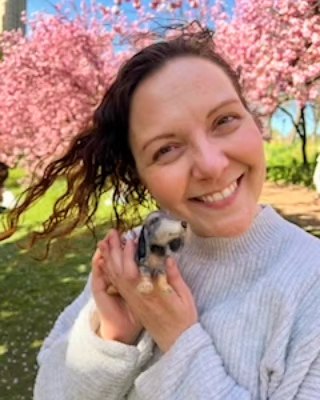
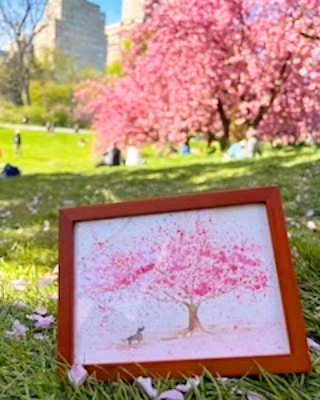
Get yourself a friend like this: Ashley painted my soul dog, not once but twice, and then on her day off from her intense job went with me to Central Park to commemorate him by taking photos under his favorite cherry trees in full bloom of the paintings she painted and the felt likeness of him given to me by another sweet friend.

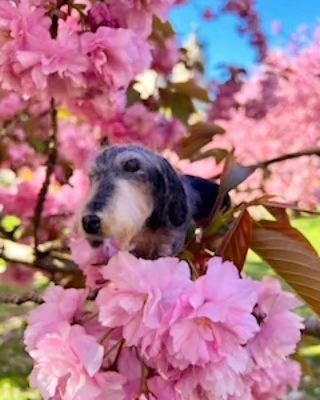
The locket I’m wearing has a lock of Phin’s hair in it. Phinny was certainly with us as we saw 5 dachshunds on our visit. His way of saying, “Hi, Mom! Hi, Ashley! I love you.” A pair of them, Otto and Oliver, were just 7 months old. Their dads had lost their 13-year-old dachshund, Arthur, a year before getting Otto and Oliver. “Nothing can bring the joy of your dog back as much as another dog.”

It’s been 3 months since Phinny passed away in my arms. This visit to his favorite part of the park during his favorite time of year with my dear friend did my broken heart so much good. I realize now this grief will never leave me. I’m learning how to carry it while also finding joy every day. We contain multitudes. Phinny is still teaching me. He’s always teaching me. Our love story continues. 💗🐶💗🌸💚🌸

creativity

Trust the timing of your life

Flowering trees in my Brooklyn neighborhood. Photo by Christa Avampato.

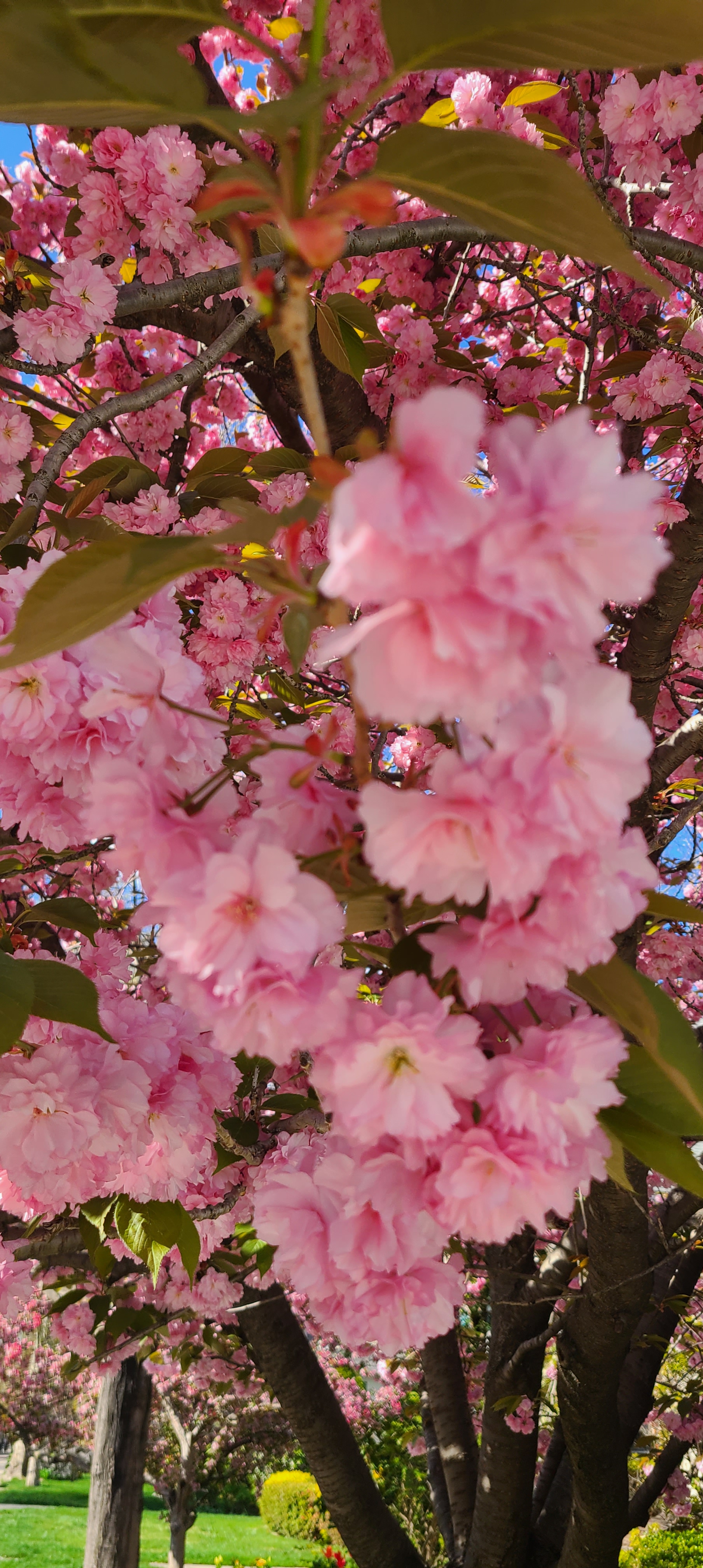
Yesterday I should have been inside working but the warmth and sun kept me outside most of the day. I was walking around gobsmacked by my beautiful Brooklyn neighborhood bursting with flowering trees. Cherry, apple, pink dogwood, lilac, redbud.

I’ve been thinking of buying a small home outside the city. On my walk yesterday I realized my neighborhood has everything I want and then some. Walkable, friendly neighborhood feel, plenty of green space, good public transit, 20 minutes by train to the beach and 20 minutes by train into Manhattan, delicious food, local shops. And unlike most other New York City neighborhoods, it’s mostly single-family homes. I ended up in exactly the right place, exactly where I wanted to be. So now I’m thinking about buying a home right here.

Sometimes, I wish I’d already done certain things. I wish I’d already met the love of my life, owned a home, had or created my dream job. And then I remember how important it is to trust the timing of our lives. Maybe I haven’t been ready for any of those things until now. And because none of that has materialized yet, I did lots of other things that have been wonderful in their own right. Maybe there were certain things I needed to learn first.

It may have taken longer than I would have liked to reach this point in life, but we arrive when we arrive. Maybe I had to travel through many other lives first to fully appreciate this moment, when anything and everything feels possible. I see my dog, Phineas, in all of it. He led me right to where I needed to be, and only then did he know it was okay to go. I just wish he was still here to see own home in springtime.

(Below are photos I took in my Brooklyn neighborhood. I can’t believe I live here!)

creativity

What we can learn from Eastern Redbud trees

Eastern Redbud. Brooklyn, NY. Photo by Christa Avampato.

My Brooklyn neighborhood is in full bloom with flowering trees putting on a colorful show for all of us. One of the trees that always catches my eyes this time of year is the Eastern Redbud. They grow bright pink, purple, and red buds directly from their trunks. Known as cauliflory and found mostly in the tropics in species such as cacao, jackfruit, and papaya, the evolutionary purpose of this adaptation has a few hypotheses.

1.) Foster as many partnerships as possible
With the ability to grow flowers on the trunk, the Eastern Redbud can produce more flowers, allowing for more seed dispersal and pollination opportunities. Additionally, more animals can act as pollinators. For example, small mammals climbing onto the tree trunks wouldn’t normally play a role in pollination when the flowers are on delicate branches that cannot support the weight of these mammals. However, with flowers growing on the main trunk that can support them, they act as pollinators for the redbuds just as much as birds and small insects.

For us, emulating a redbud means considering all of the potential partnerships we have around us. How can we change what we’re doing to help them help us? Even if someone doesn’t normally play a certain role, could they fill that role if we altered the system in a way that allows them to participate?

Eastern Redbud. Brooklyn, NY. Photo by Christa Avampato.

2.) Energy and resource savings
Without the need to grow a network on many delicate branches, flowering directly on the trunk saves the tree energy, water, and food. These resources can be poured into creating more flowers and therefore greater pollination and seed dispersal. The redbud certainly takes advantage of this, and in full bloom appears to explode with flowers.

There is nothing worse in nature than waste. Wasted energy can and often does mean the difference between life and death. Are we using all the resources we have in the most optimal way? Can we change how we operate to make better use of the resources we have to meet our ends goals?

3.) A matter of physics
In the case of trees such as cacao, jackfruit, and papaya, the fruit is too heavy for small delicate branches to bear. The weight of the fruit requires a sturdier structure so they grow directly from the trunk. This also allows the fruit to grow to a larger side, and again, allows for greater seed dispersal.

Sometimes we’re forced to do things a certain way for the sake of practicality and to best meet our end goal. Necessity may be the mother of invention, but practicality is the agent of adaptation, moving us along to do exactly what needs to be done.

Eastern Redbud. Brooklyn, NY. Photo by Christa Avampato.

creativity

Brooklyn’s flowering trees and a necklace to honor my dog, Phineas

Magnolias in Brooklyn. Photo by Christa Avampato.

This is my first spring in my new neighborhood in Brooklyn and it’s loaded with flowering trees! I went out for a long walks over the last few days, taking in the warmth and light, the scent of flowers, and the explosion of colors. My dog, Phinny, would have loved these days. I loved them for both of us.

Cherry blossoms in historic Green-wood Cemetery, Brooklyn. Photo by Christa Avampato.

It’s hard to believe Phin passed away two months ago. I’ve been looking for a locket for a few months to carry him with me everywhere I go. On Monday, the day of the eclipse!, this one arrived. It has a blue forget-me-not flower pressed into the front. It now holds a lock of Phinny’s fur. All he ever wanted in life was to always be with me. I took him with me whenever I could (and then some!) Spiritually, he’s forever with me. Now, he’s physically with me always, too, and we’re traveling together. Our love story continues.

Me in Prospect Park, Brooklyn, wearing the locket honoring my dog, Phineas.

Today is also the anniversary of the founding of the ASPCA in New York City in 1866. Phinny prompted me to become a monthly donor almost 9 years ago for his birthday. I’m so grateful for their work and honored to support their lifesaving mission for all these years.

My soul dog, Phineas, on a healthy and happy day in Central Park, Manhattan. Photo by Christa Avampato.

It’s also national hug your dog day. I wish I could hug Phineas today, so please hug your dogs for me. They are never with us long enough no matter how long their lives are. Love every day you get with yours. Here are some blooms to brighten your Wednesday.

Cherry blossoms in Brooklyn. Photo by Christa Avampato.